Matching skills Worksheets for Ages 5-7
34 filtered results
-
From - To
Enhance your child's learning with our "Matching Skills Worksheets" designed specifically for ages 5-7. These engaging and interactive worksheets focus on developing critical matching skills through fun activities that encourage recognition of patterns, shapes, and vocabulary. Perfect for young learners, these resources support cognitive development while ensuring children enjoy their educational journey. With a variety of themes and difficulty levels, our printable worksheets cater to every child's unique learning pace. Watch your little one grow in confidence and knowledge as they explore the exciting world of matching—ideal for classroom use or at-home learning! Download today and spark the joy of discovery!
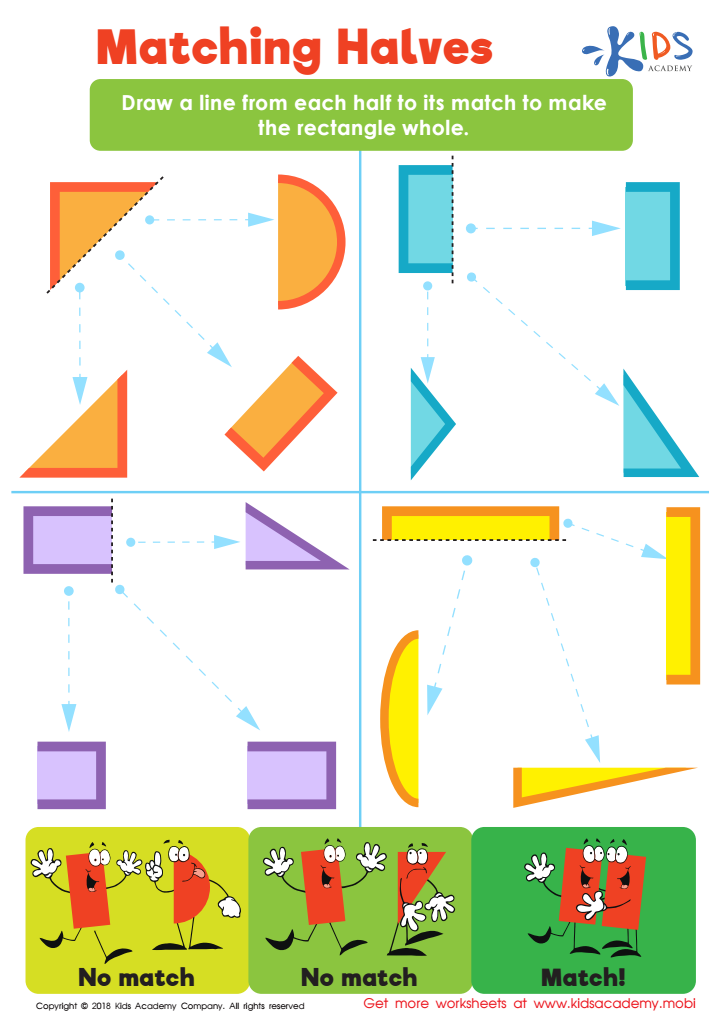
Matching Halves Worksheet
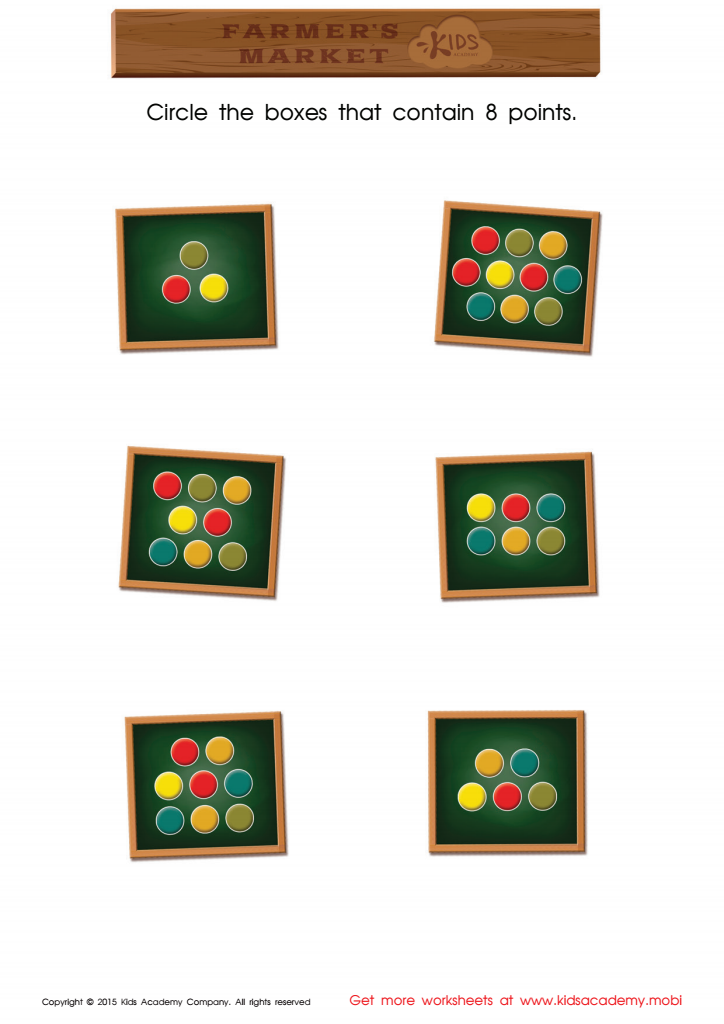
Count and Match Points 8 Math Worksheet
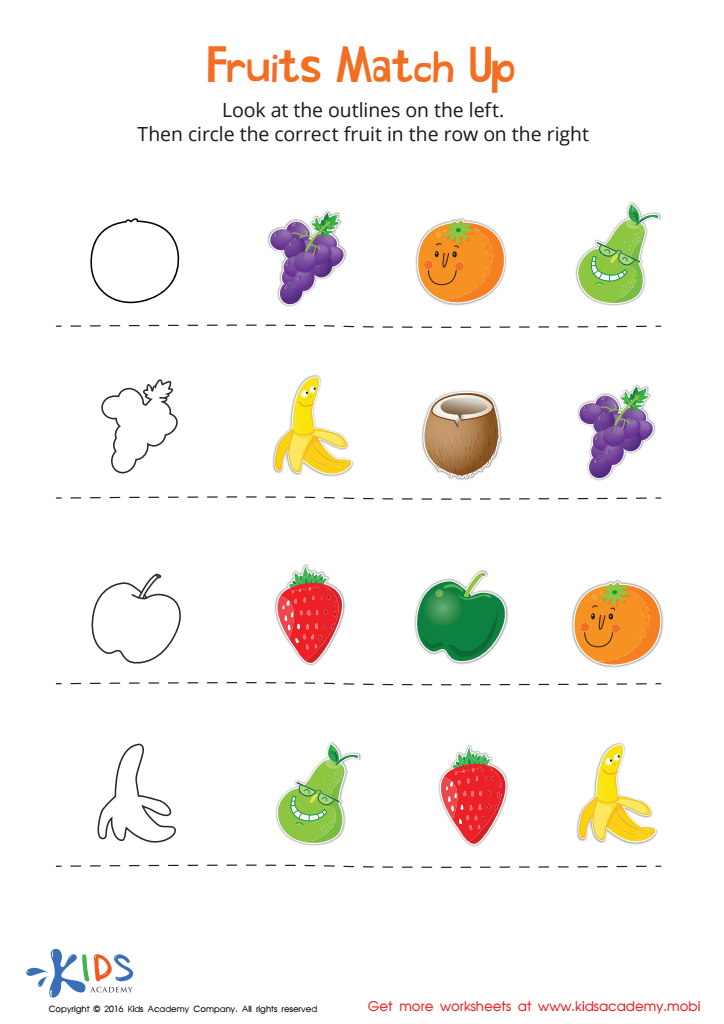
Fruits Match Up Worksheet
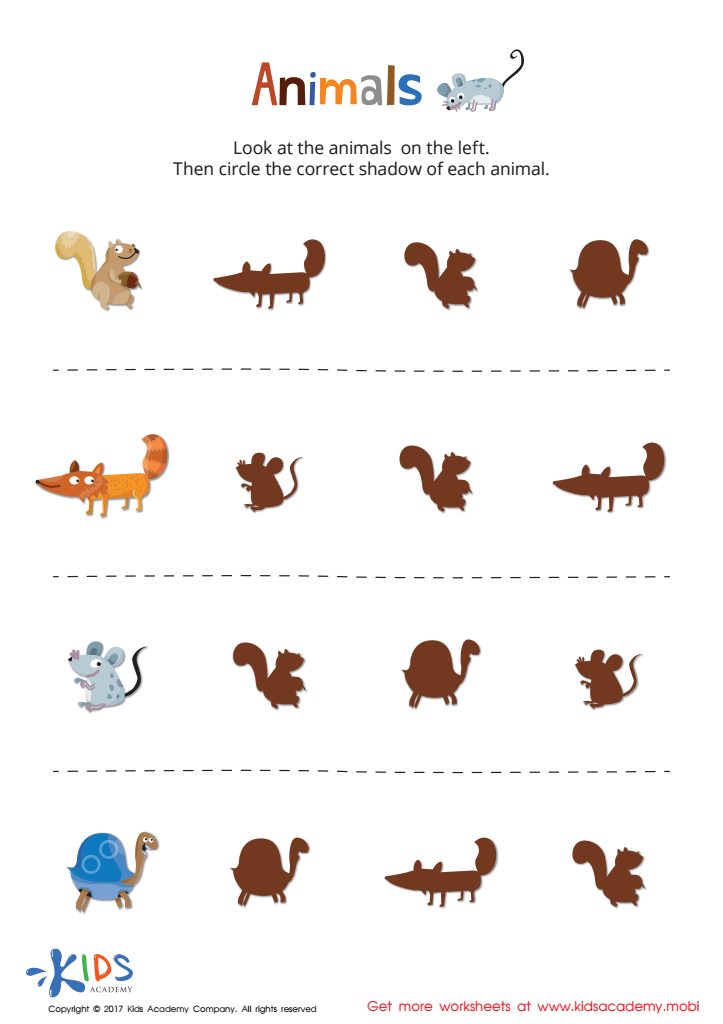
Animal Shadows Sorting Worksheet
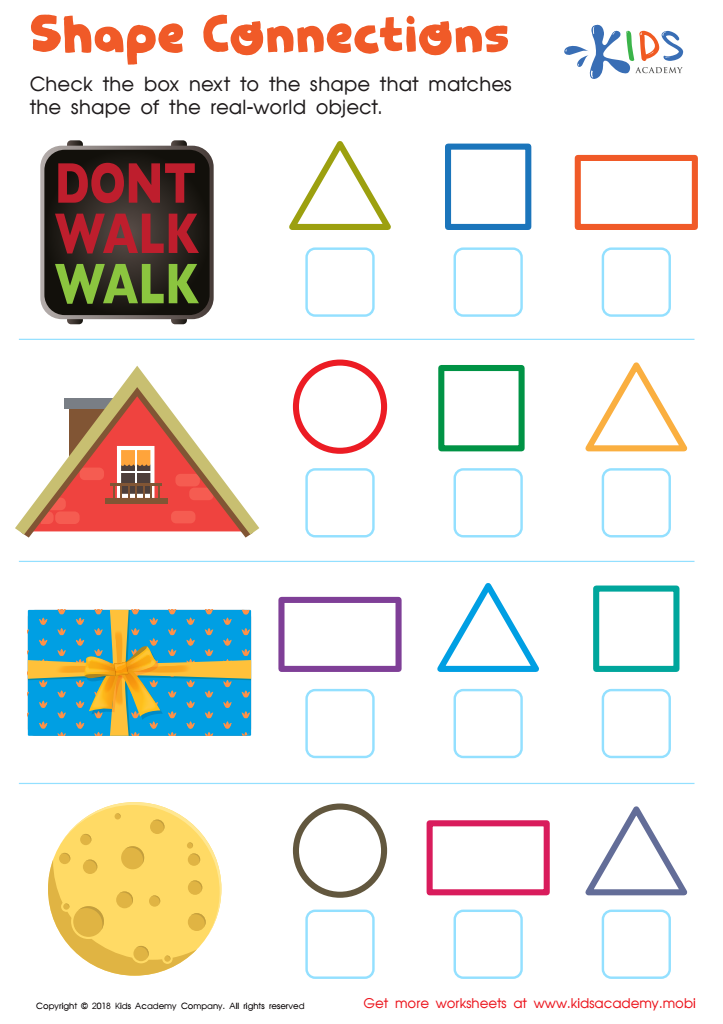
Shape Connections Worksheet
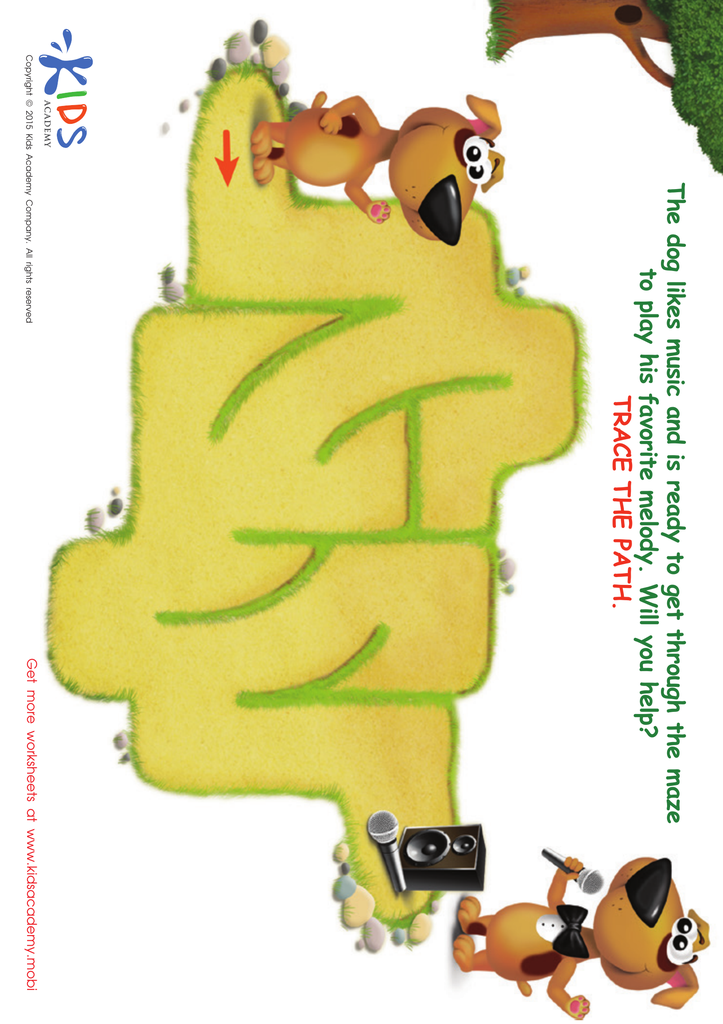
Singer Maze Worksheet
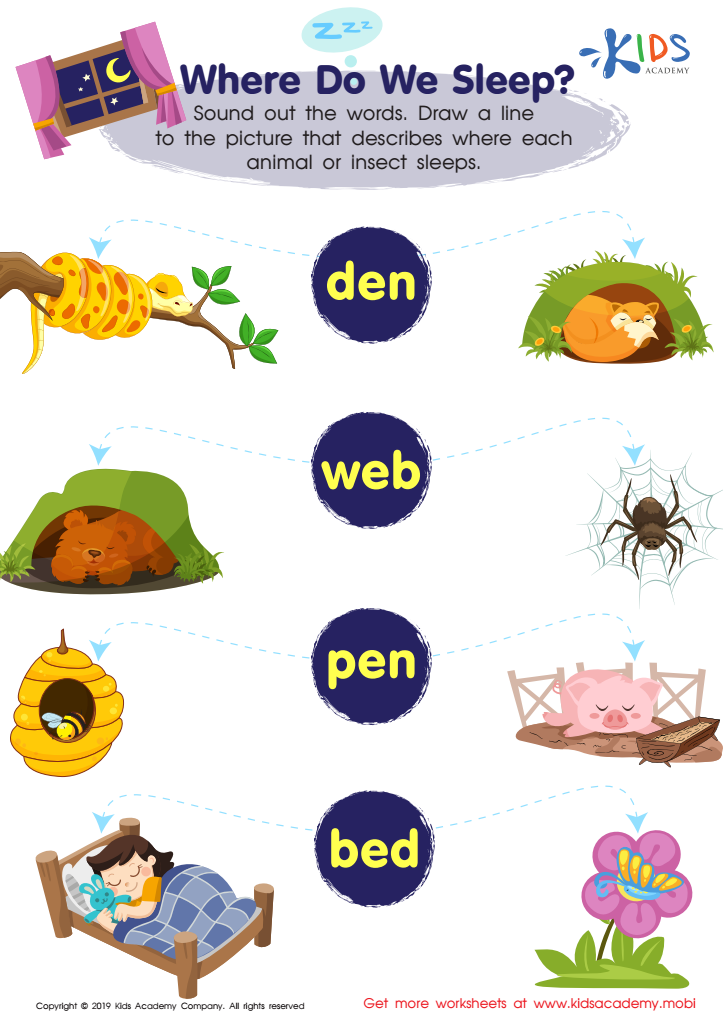
Where Do We Sleep Worksheet
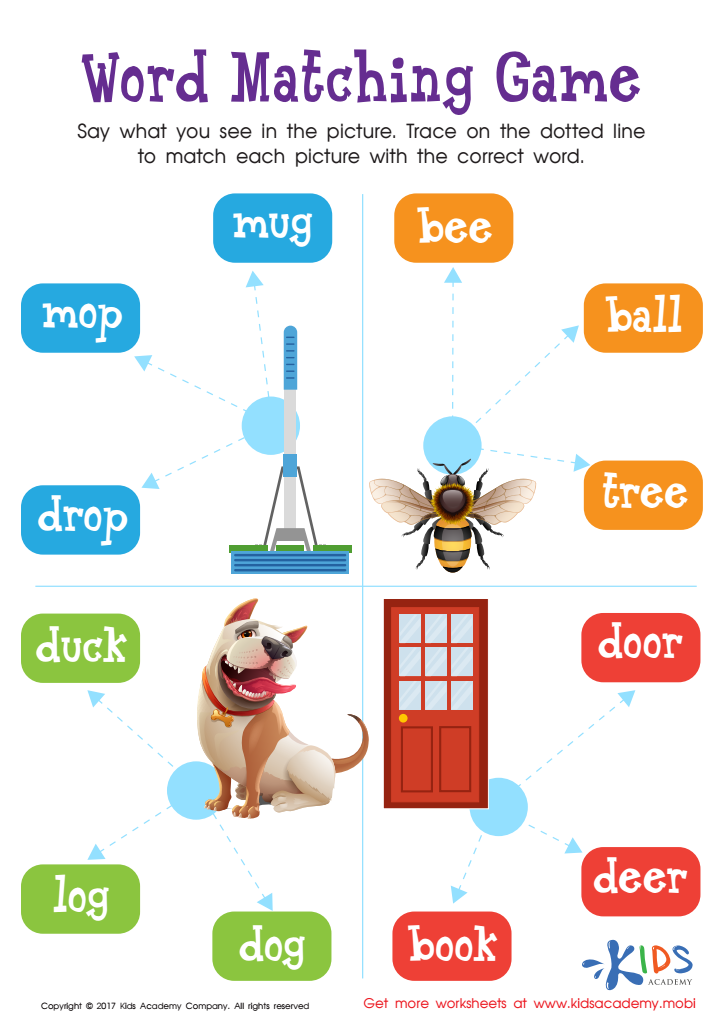
Word Matching Game Worksheet
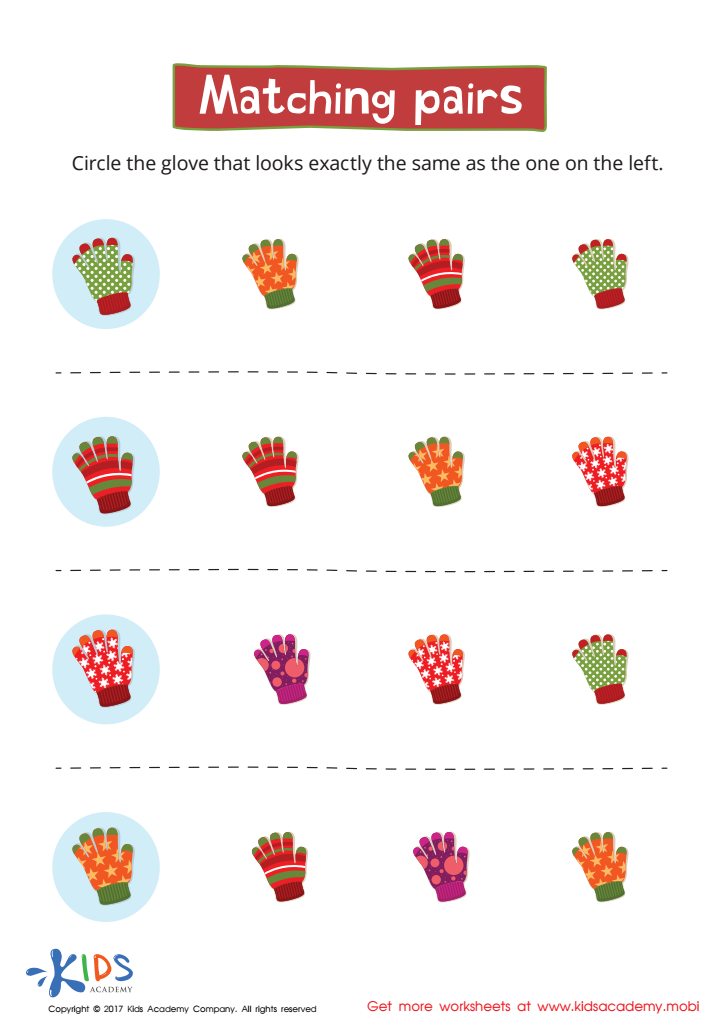
Matching: Matching Pairs Worksheet
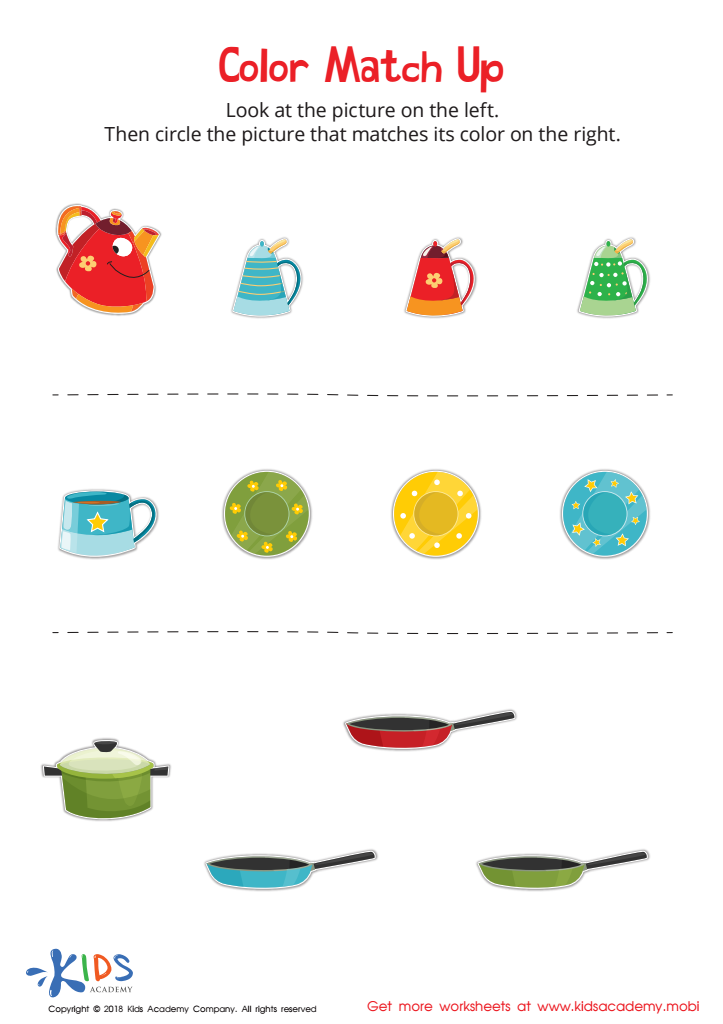
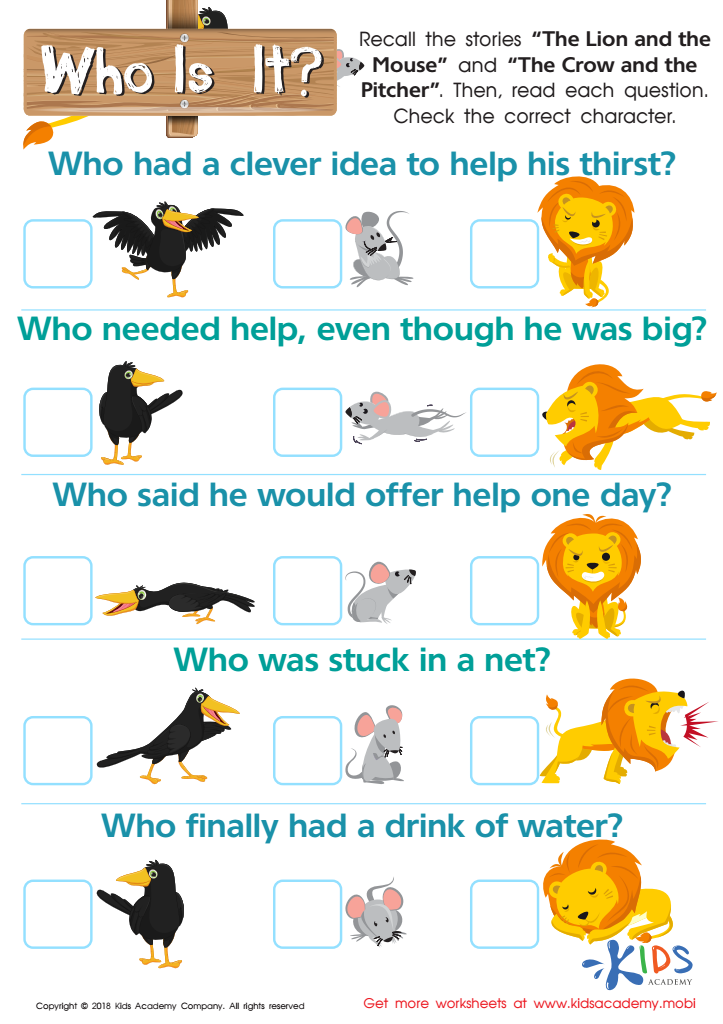
Who Is It? Worksheet
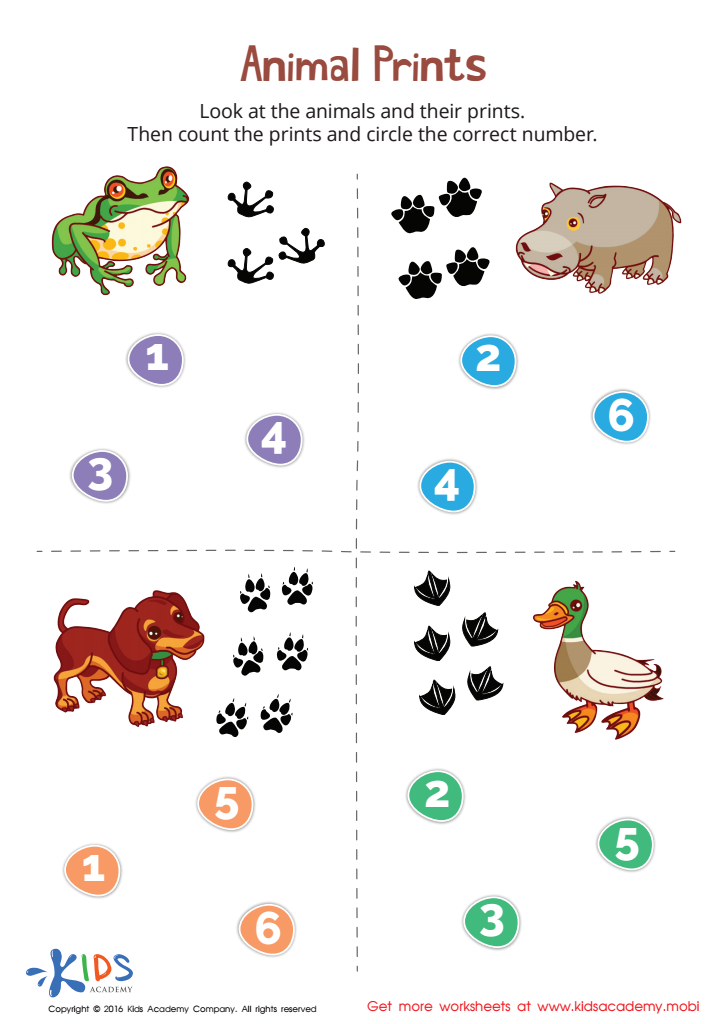
Animal Prints Match-Up Worksheet
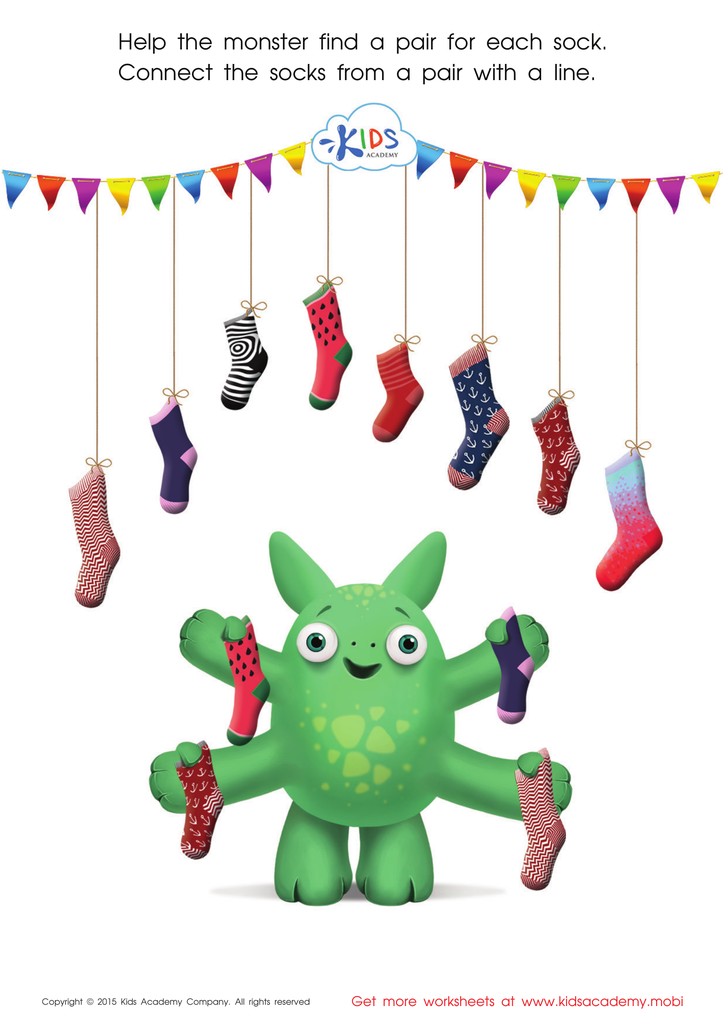
Math Matching Game: Monsterв's Socks Worksheet
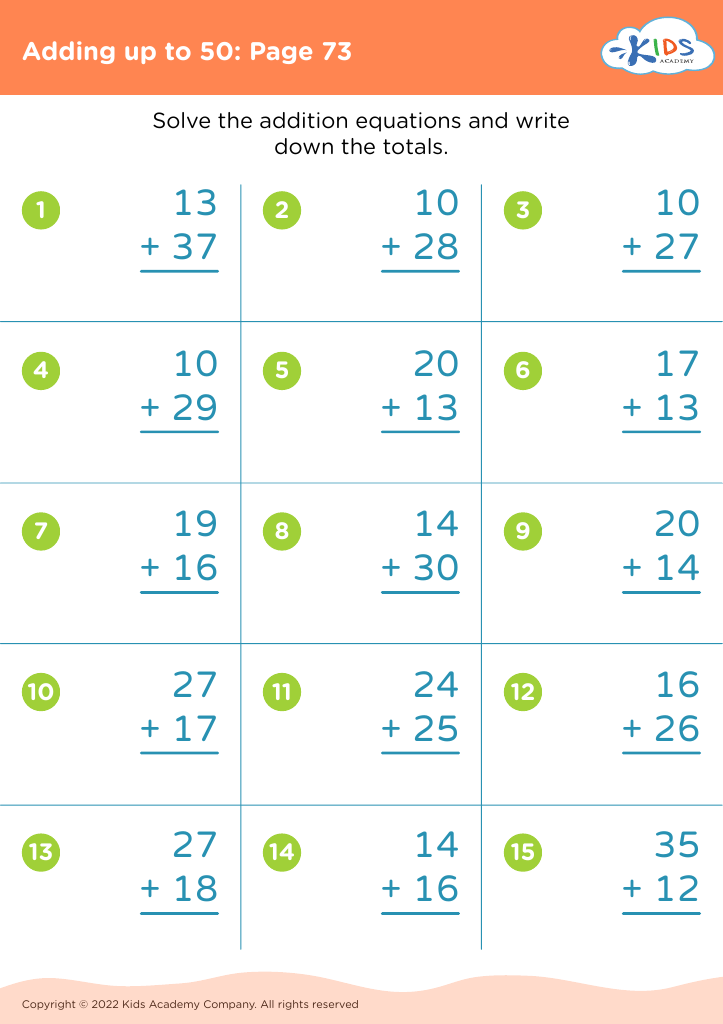
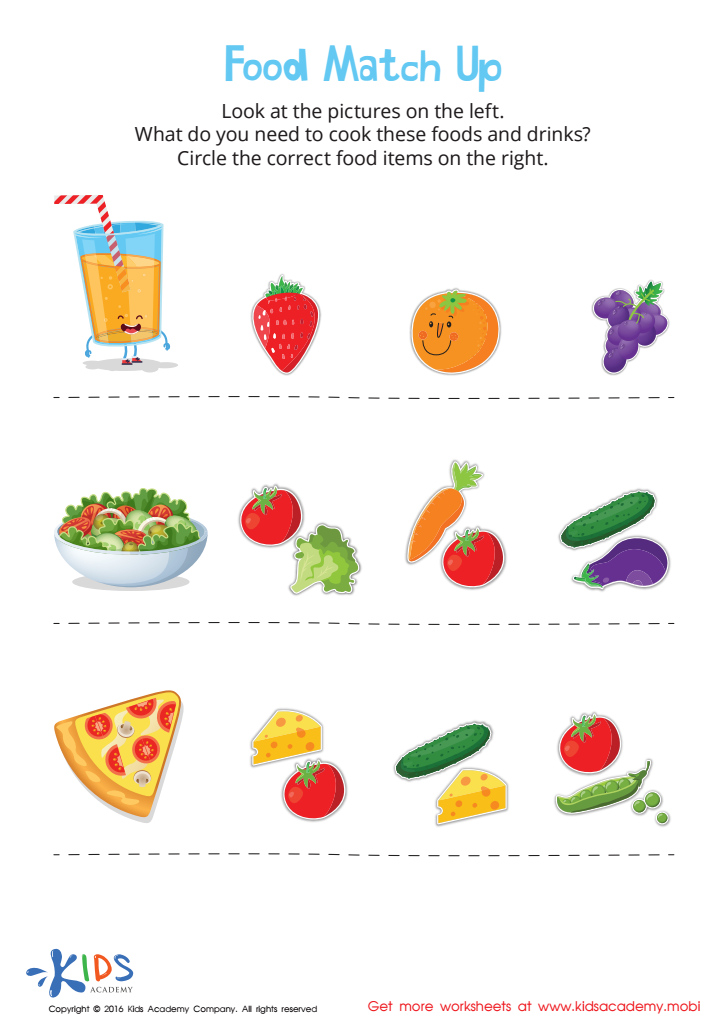
Food Match Up Worksheet
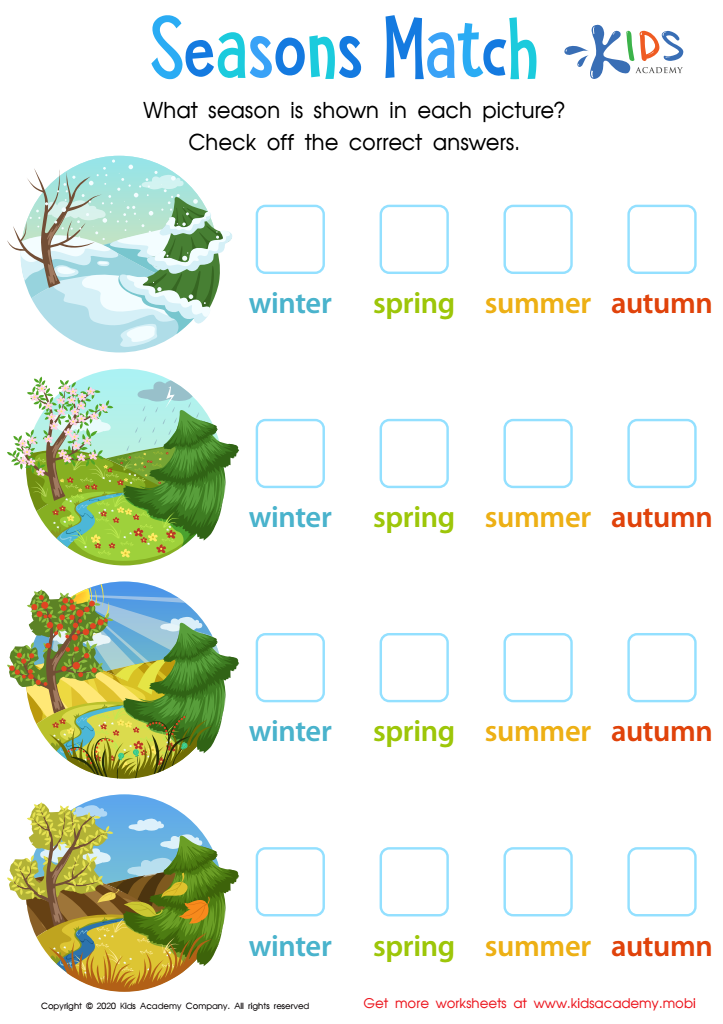
Seasons Match Worksheet
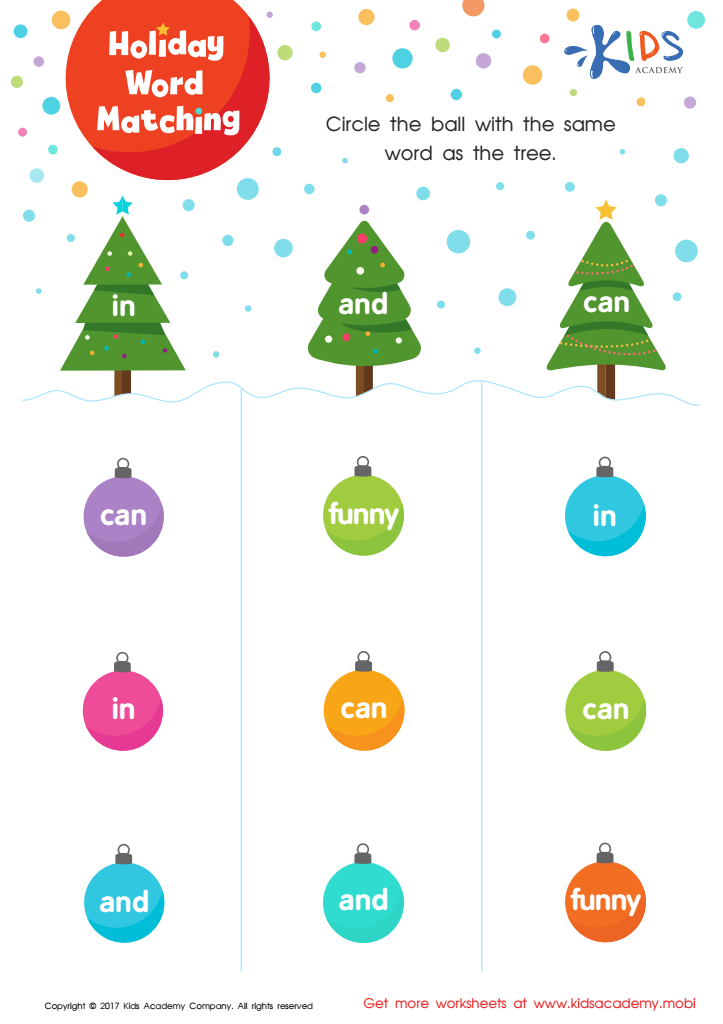
Holiday Word Matching Worksheet
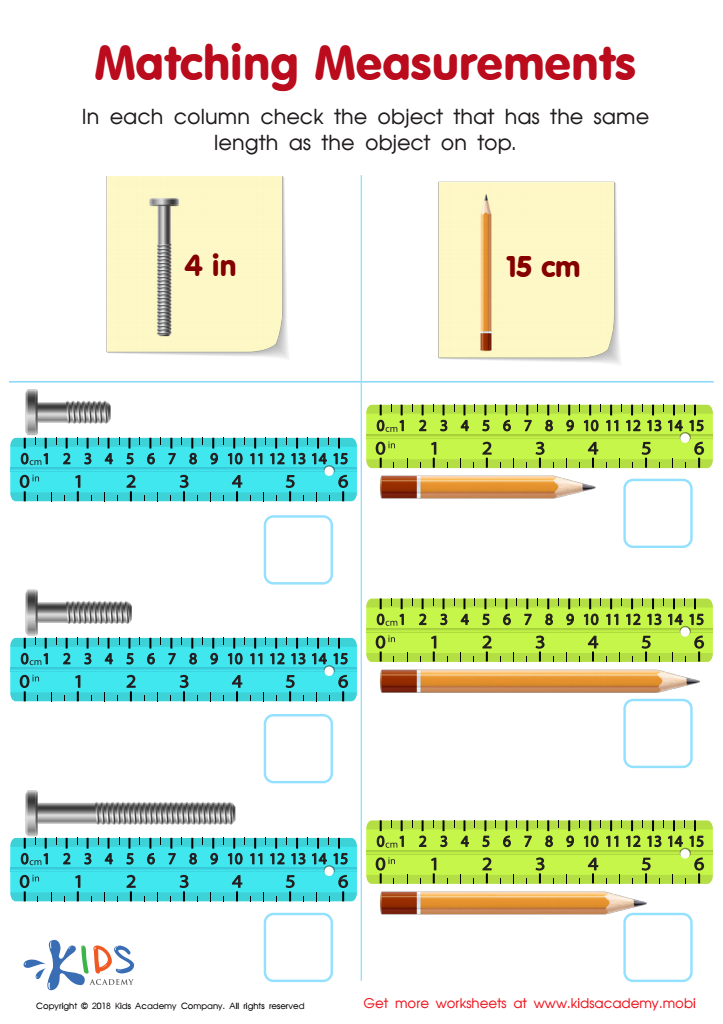
Matching Measurements Worksheet
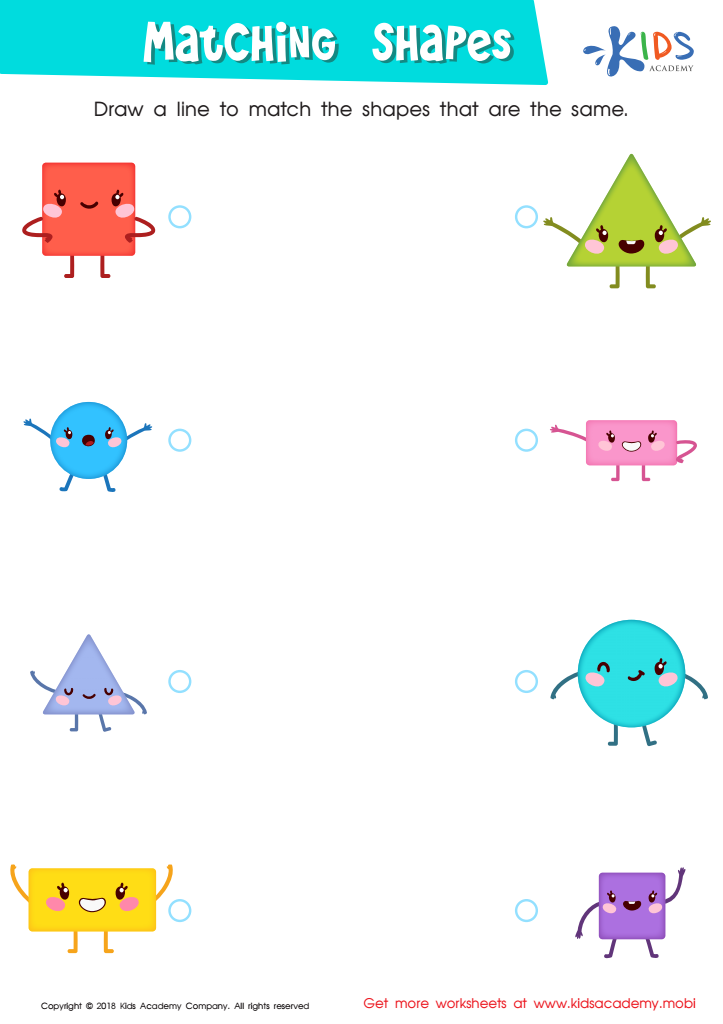
Matching Shapes Worksheet
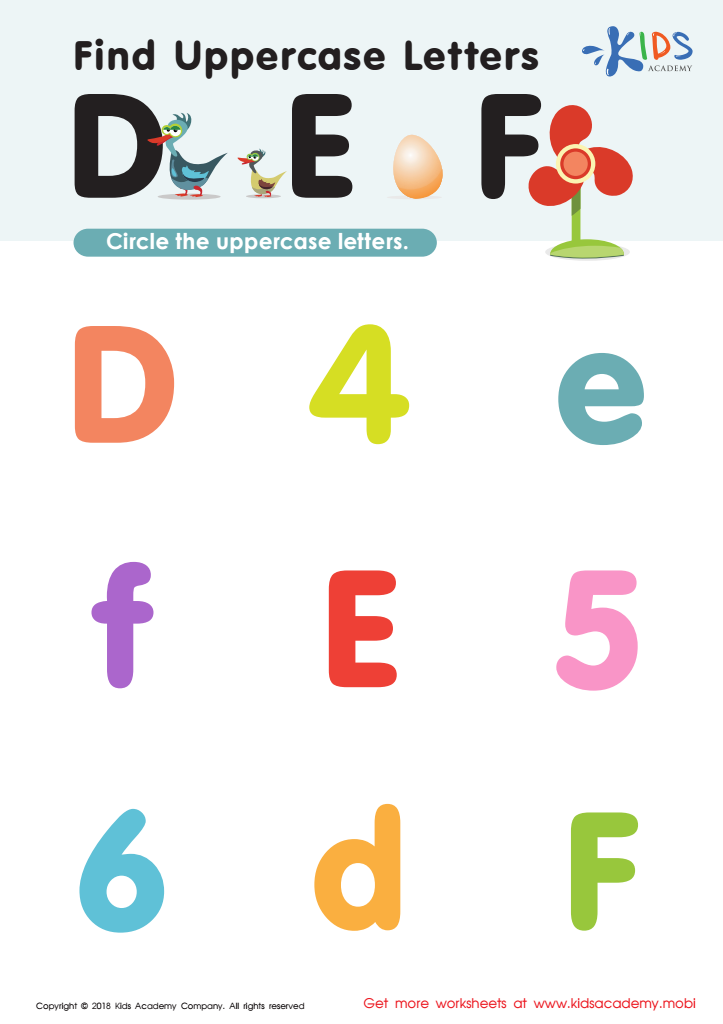
Find Uppercase Letters D, E, and F Worksheet
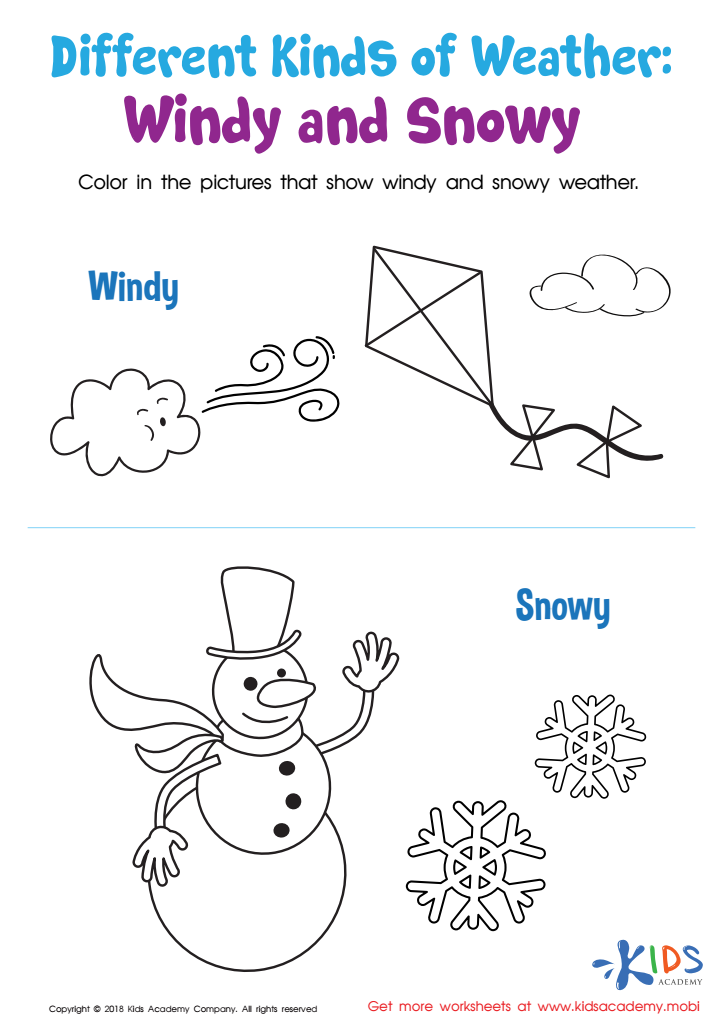
Different Kinds of Weather: Windy and Snowy Worksheet
 Assign to My Students
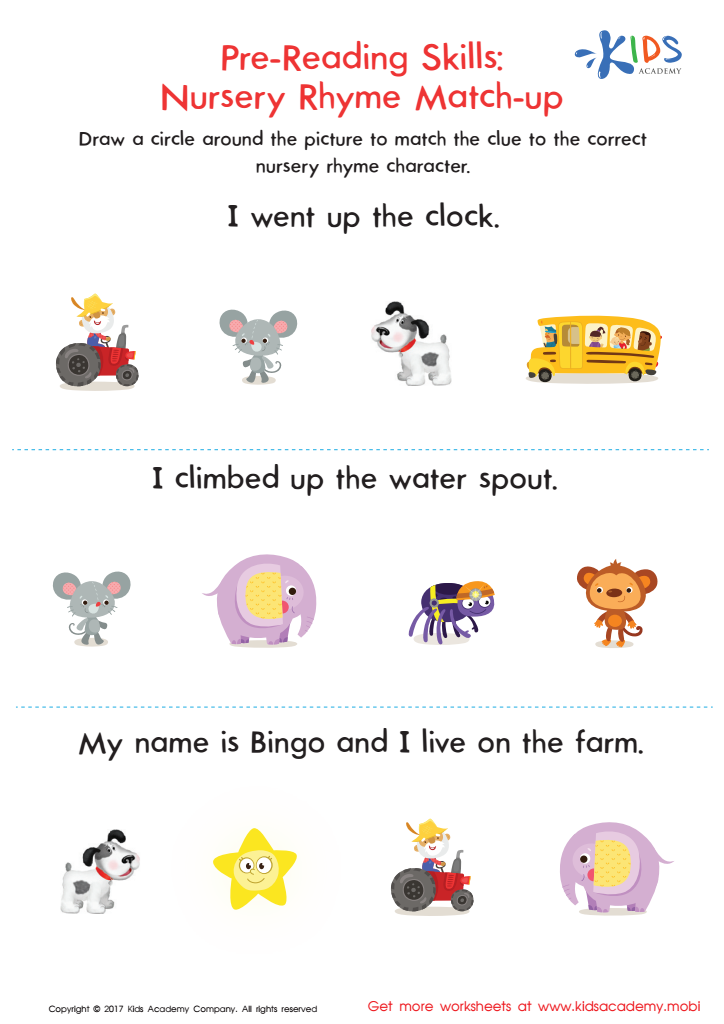
Nursery Rhyme Match–Up Worksheet







Matching skills are fundamental skills that play a crucial role in early childhood development, particularly for children aged 5 to 7 years. Parents and teachers should care about these skills for several reasons.
Firstly, matching skills help enhance cognitive development. When children engage in matching activities, such as pairing objects or identifying similar shapes and colors, they develop critical thinking and problem-solving abilities. These cognitive processes lay the foundation for more advanced skills they will learn later in life.
Secondly, matching activities promote social skills and cooperation. Group activities, such as matching games, encourage children to interact, collaborate, and communicate with their peers, fostering teamwork and social competence.
Moreover, developing matching skills is essential for literacy and numeracy. For example, recognizing letters and numbers requires an understanding of similarities and differences. Mastering these foundational skills prepares children for future academic success.
Finally, matching skills can enhance a child's self-esteem. As children successfully pair items or identify similarities, they gain confidence in their abilities, promoting a positive attitude toward learning.
In summary, caregivers should prioritize matching skills as they are integral to cognitive, social, and academic development, creating a holistic approach to nurturing well-rounded, confident learners.








