Filters

826 filtered results

Clear all filters
Favorites
With answer key
Interactive

826 filtered results

Difficulty Level

Grade


Check out this FREE "Number Recognition" Trial Lesson for age 5-7!

Enrichment

Favorites
With answer key
Interactive
  • 5-7
  • Number Recognition
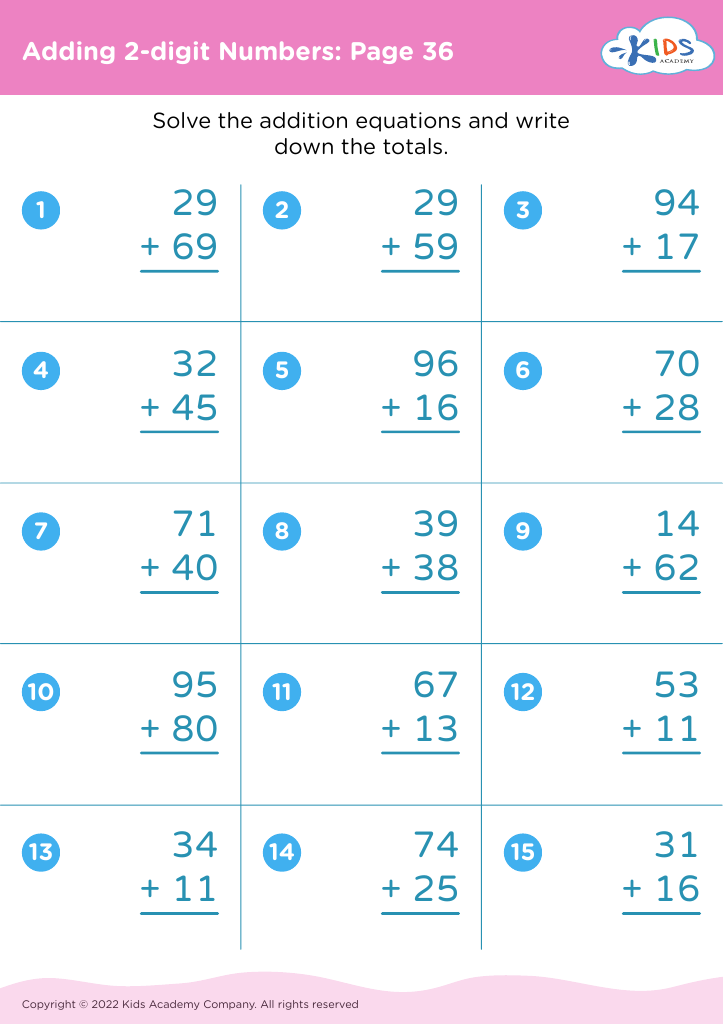
Adding 2-digit Numbers: Page 36

Adding 2-digit Numbers: Page 36

Adding 2-digit Numbers: Page 36
Worksheet
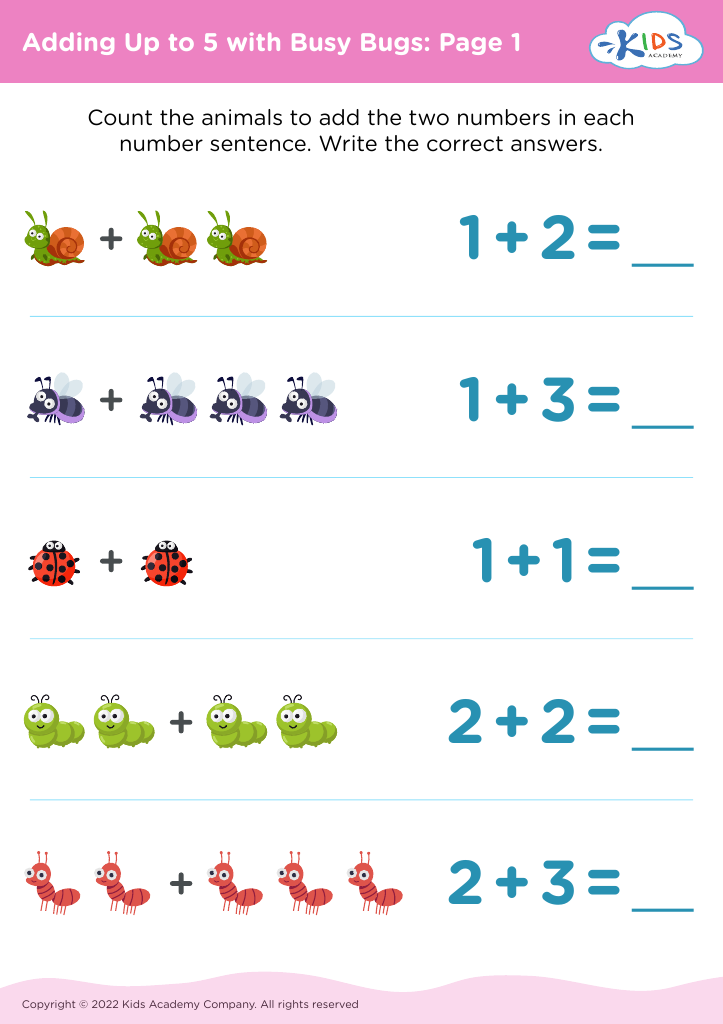
Adding Up to 5 with Busy Bugs: Page 1
Worksheet
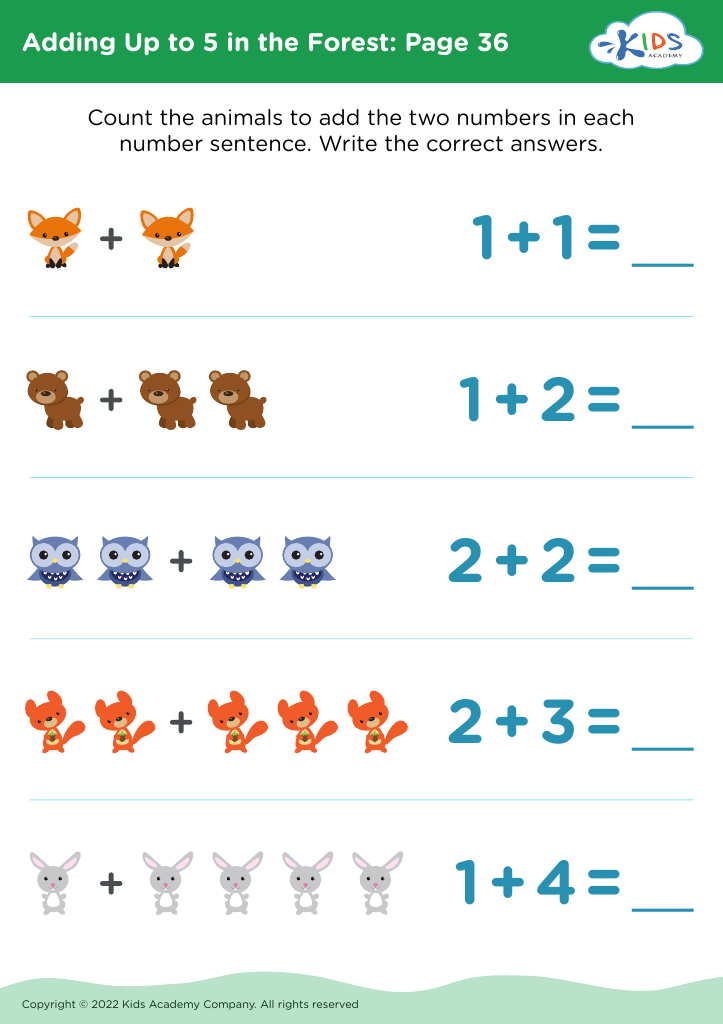
Adding Up to 5 in the Forest: Page 36
Worksheet
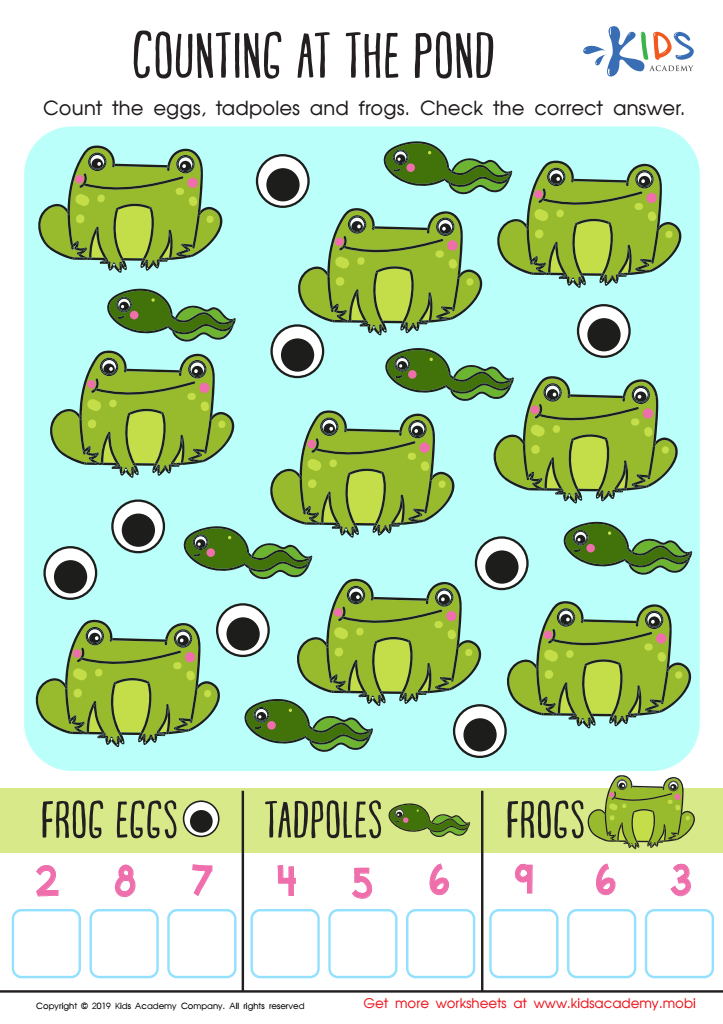
Counting at the Pond Worksheet

Counting at the Pond Worksheet

Ask your kids what they see in the picture. Can they identify the animal? Where does it live, what does it eat and what sound does it make? These questions will help get them in the math mood. Help them count the eggs, tadpoles and frogs, then check the answer.
Counting at the Pond Worksheet
Worksheet
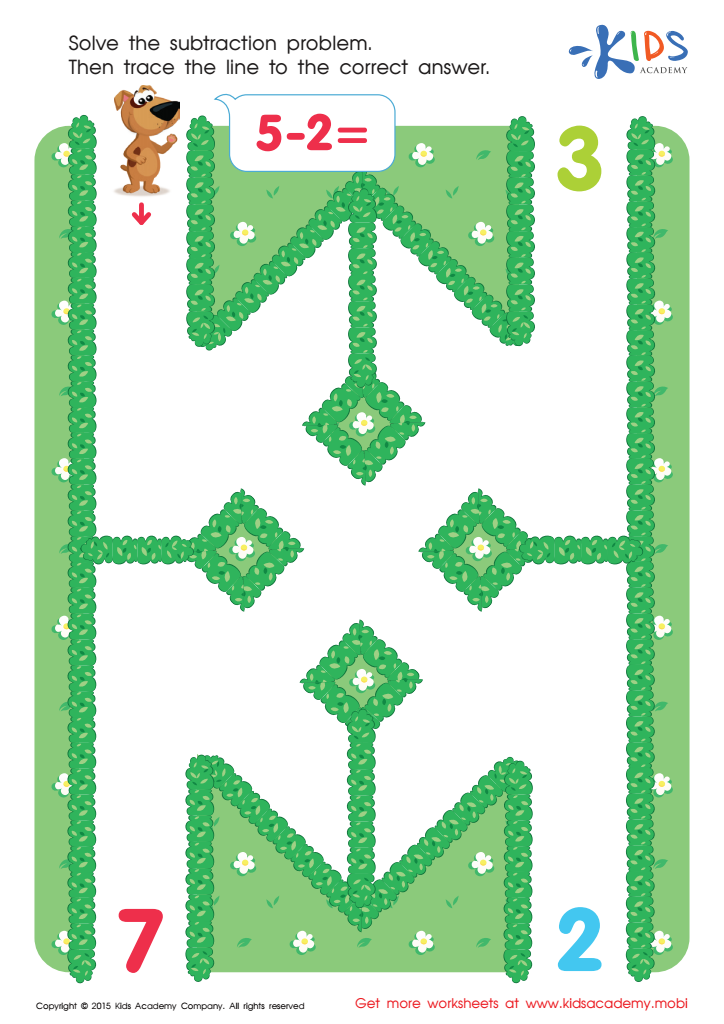
Math: Five Minus Two PDF Worksheet

Five Minus Two Worksheet

Help the dog find its way by practising subtraction - trace the path and make sure to have fun!
Five Minus Two Worksheet
Worksheet
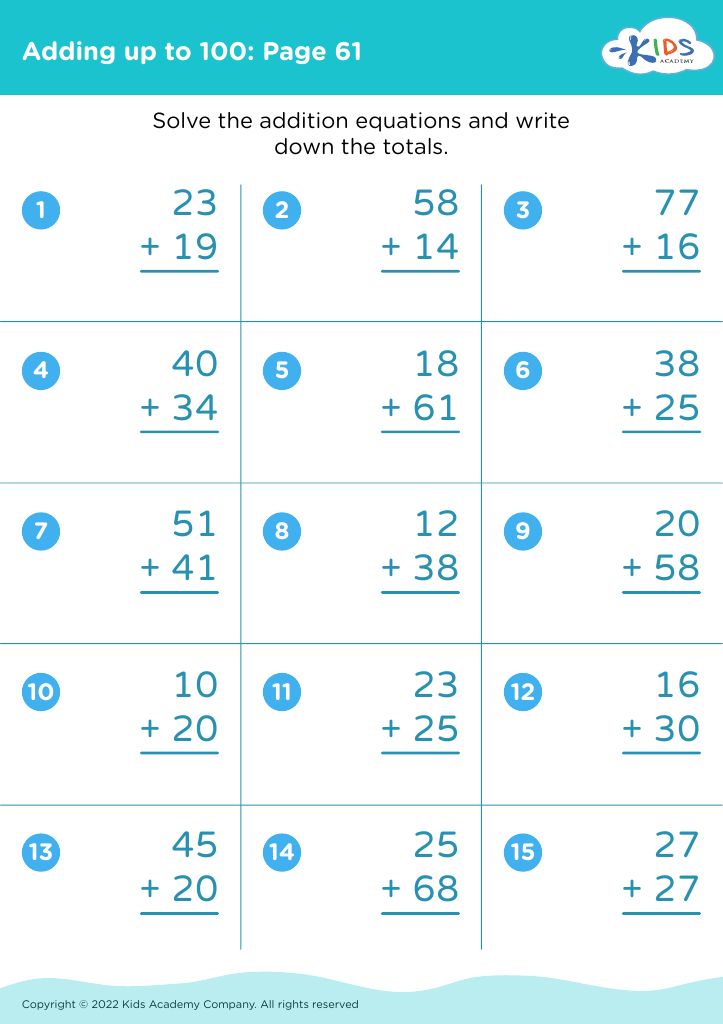
Adding up to 100: Page 61

Adding up to 100: Page 61

Adding up to 100: Page 61
Worksheet
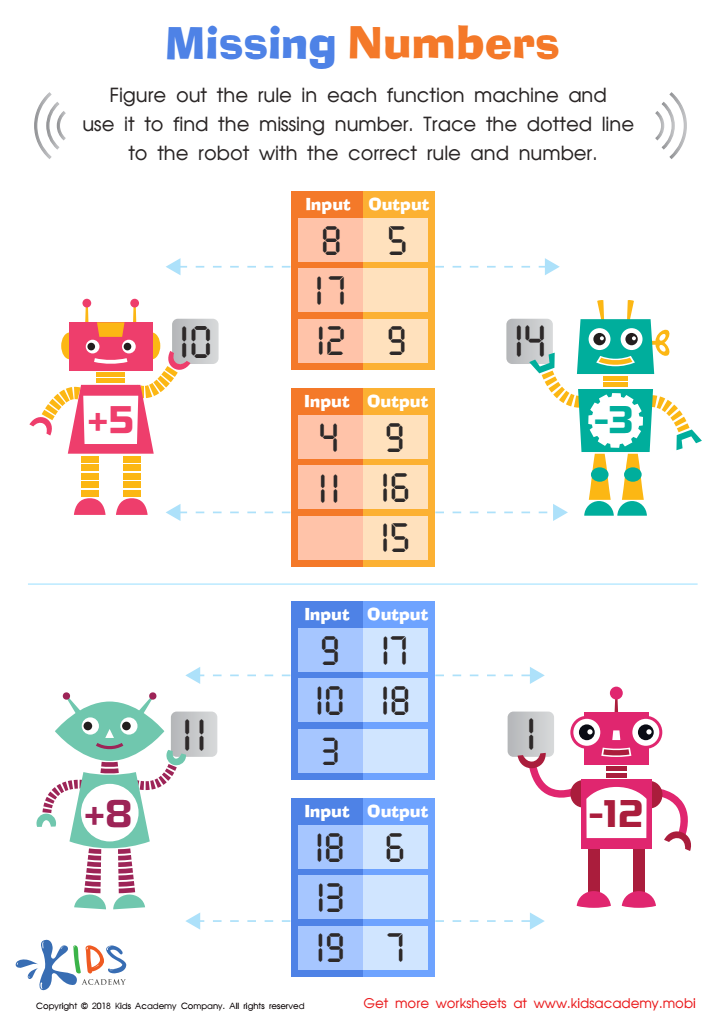
Missing Numbers Worksheet
Missing Numbers Worksheet
Elementary students can learn the important pre-algebra skill of solving for missing numbers! Our robots guide them along with number-filled bellies and missing answers in their hands. Kids can examine the other numbers in each graph, use the rule to solve the missing number, and check their work with the missing number to ensure correctness.
Missing Numbers Worksheet
Worksheet
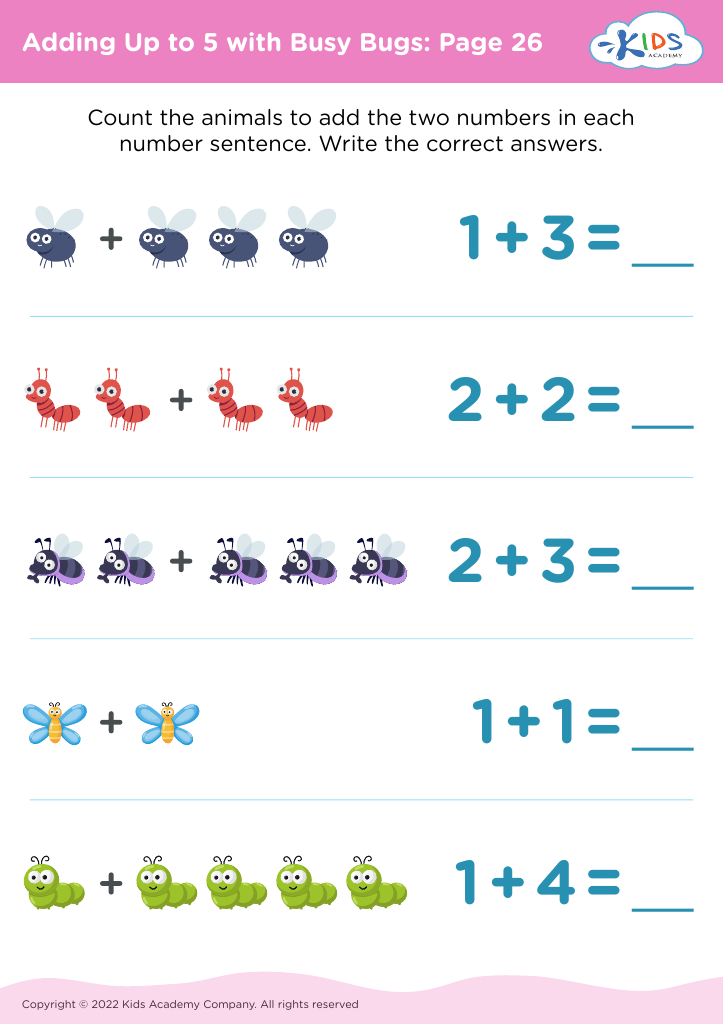
Adding Up to 5 with Busy Bugs: Page 26
Worksheet
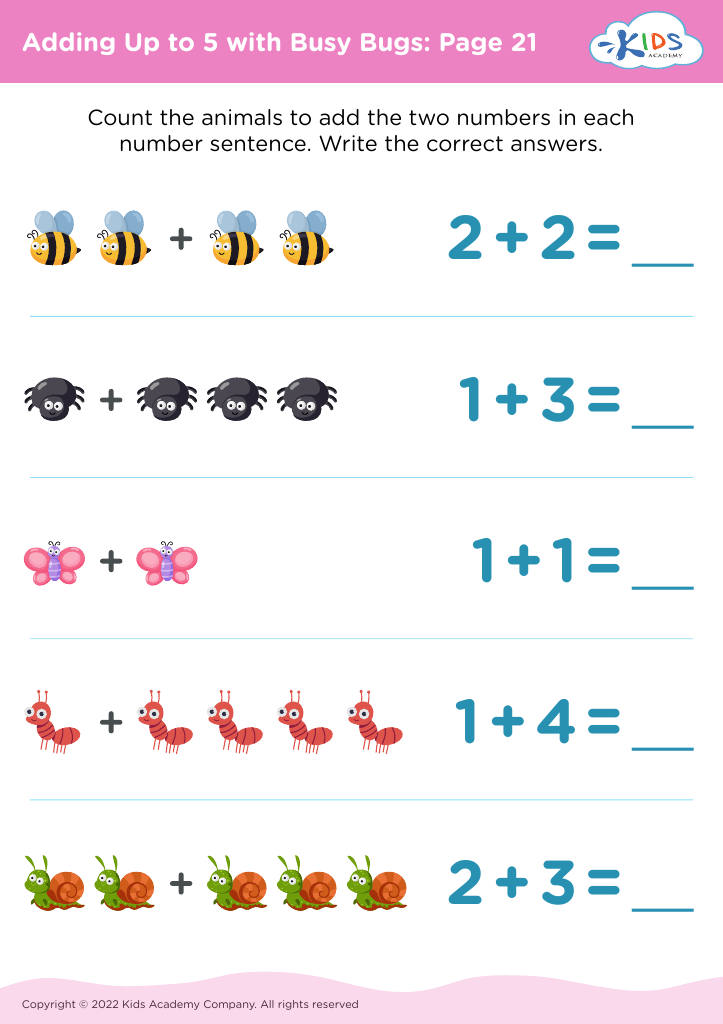
Adding Up to 5 with Busy Bugs: Page 21
Worksheet
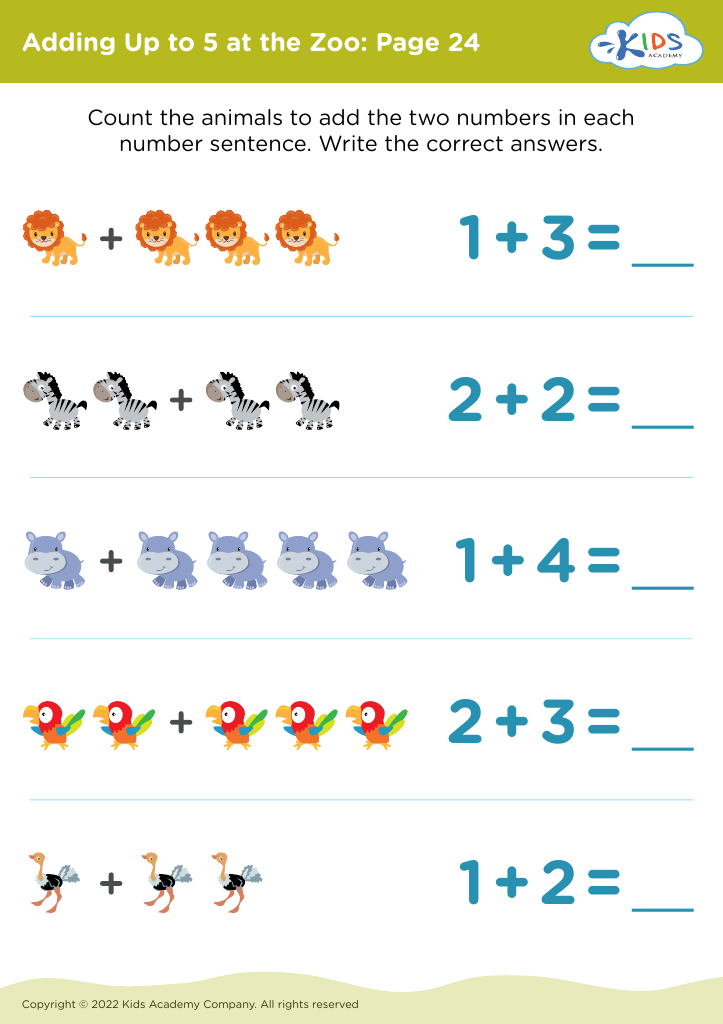
Adding Up to 5 at the Zoo: Page 24
Worksheet
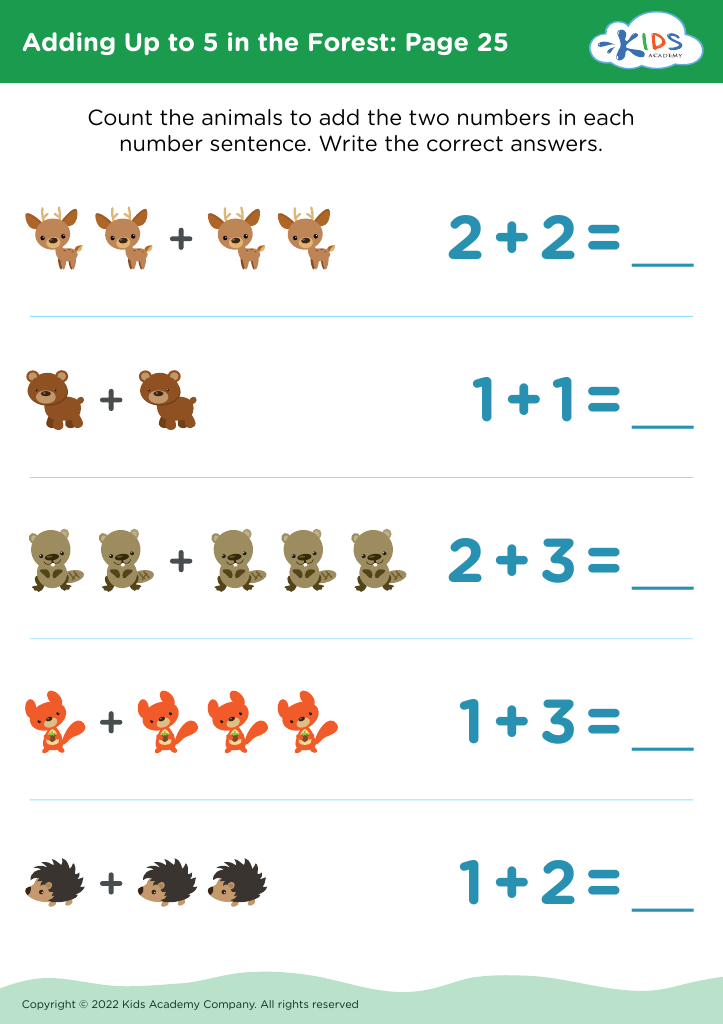
Adding Up to 5 in the Forest: Page 25
Worksheet
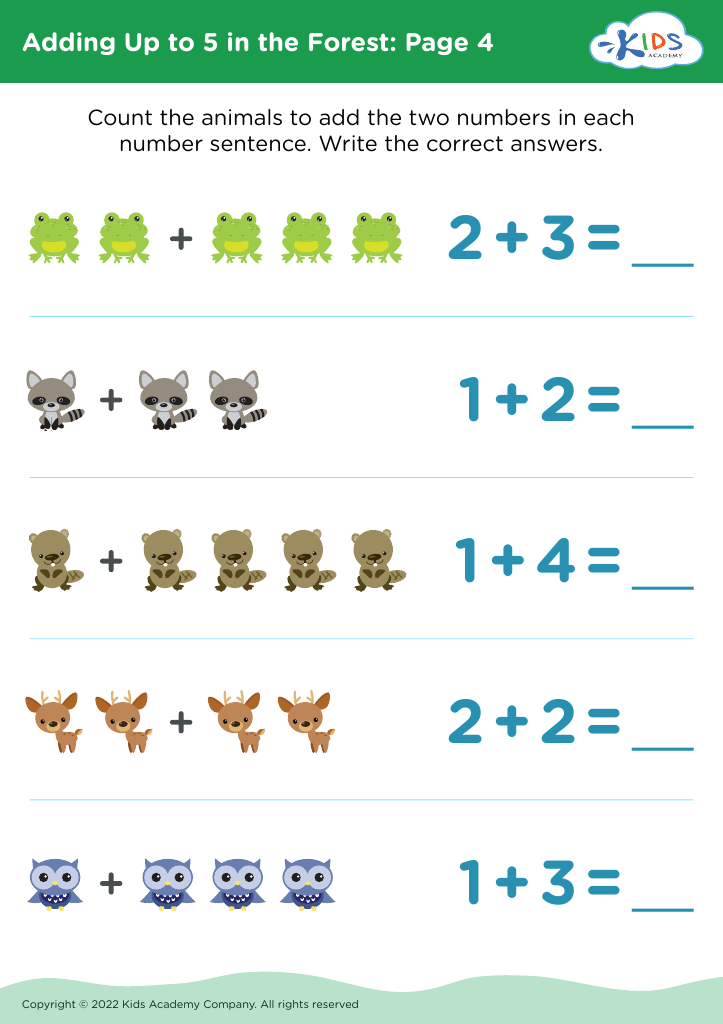
Adding Up to 5 in the Forest: Page 4
Worksheet
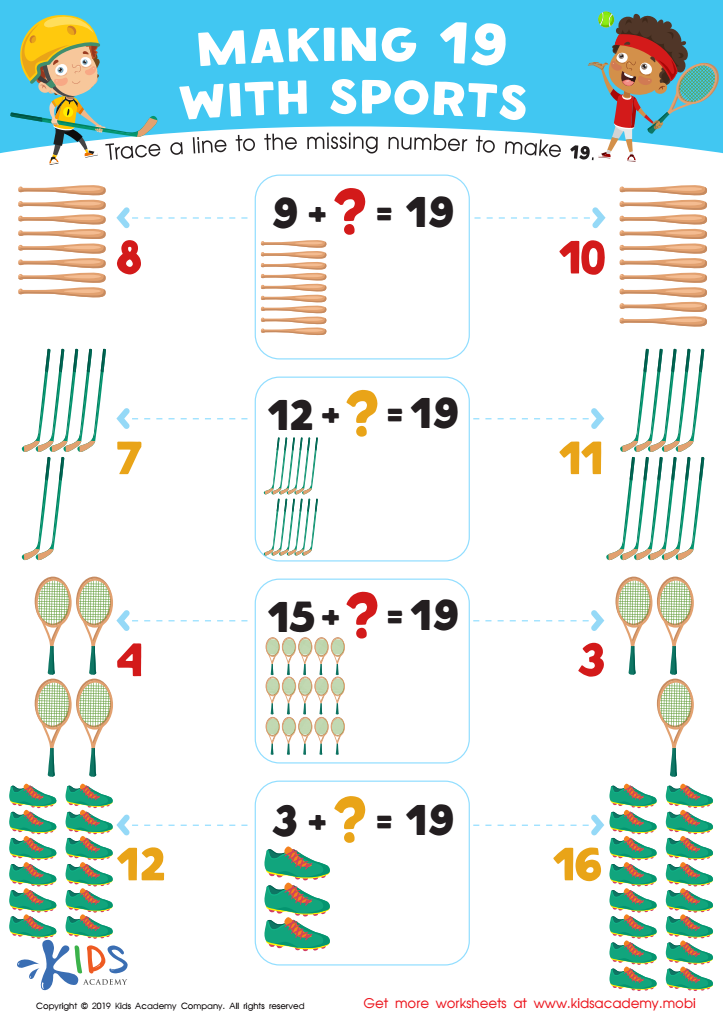
Making 19 with Sports Worksheet

Making 19 with Sports Worksheet

As kids grow, so does their learning. Help them master simple addition with four equations in the worksheet. By finding the missing numbers to make 19, and tracing a line to the answer, your kids will improve their math skills.
Making 19 with Sports Worksheet
Worksheet
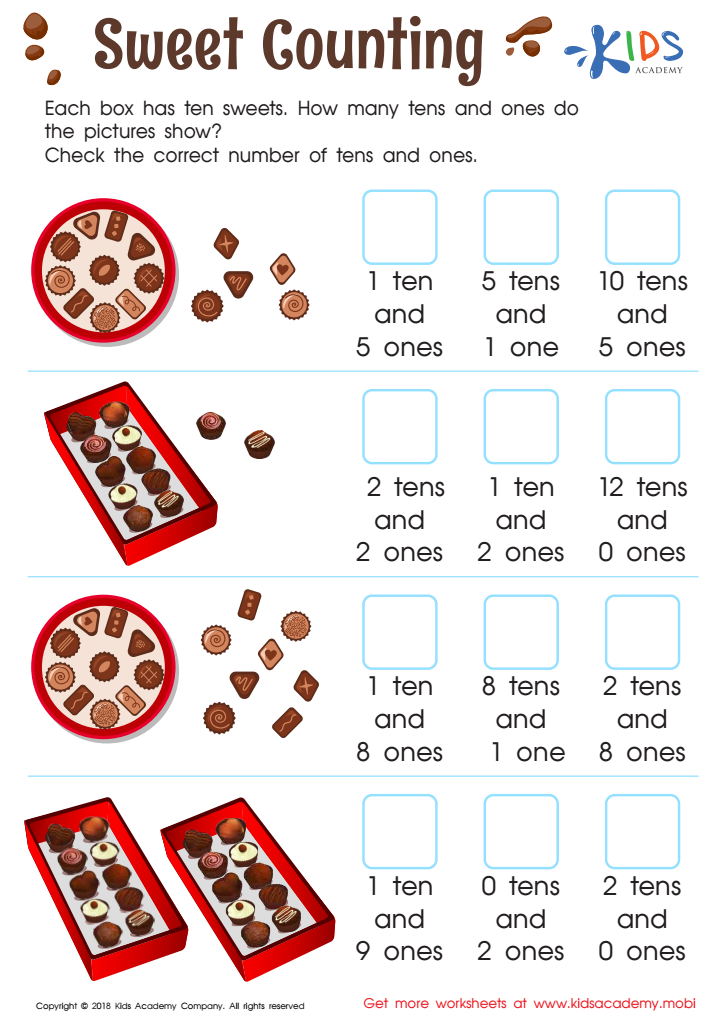
Sweet Counting - Part 2 Worksheet
Sweet Counting - Part 2 Worksheet
Kids adore sweets! Make counting fun with this sweet-themed worksheet. Guide your child to count chocolates in boxes of 10, plus individual candies. Group them into tens and ones. Ask: "How many ones and tens are in each row?" Check the answer and complete the practice sheet.
Sweet Counting - Part 2 Worksheet
Worksheet
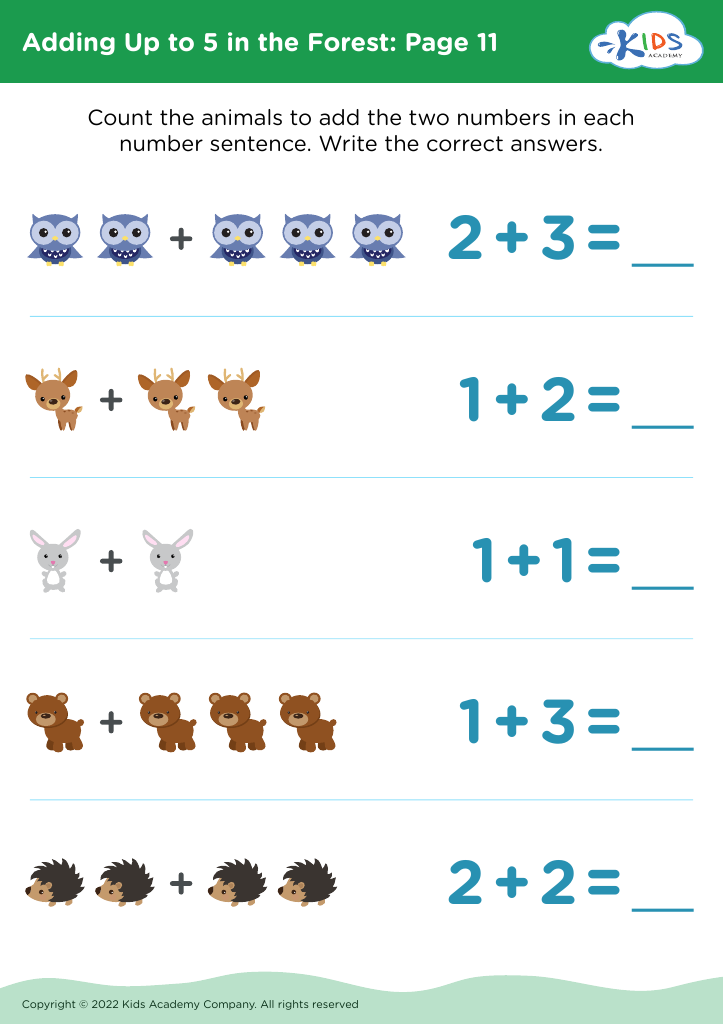
Adding Up to 5 in the Forest: Page 11
Worksheet
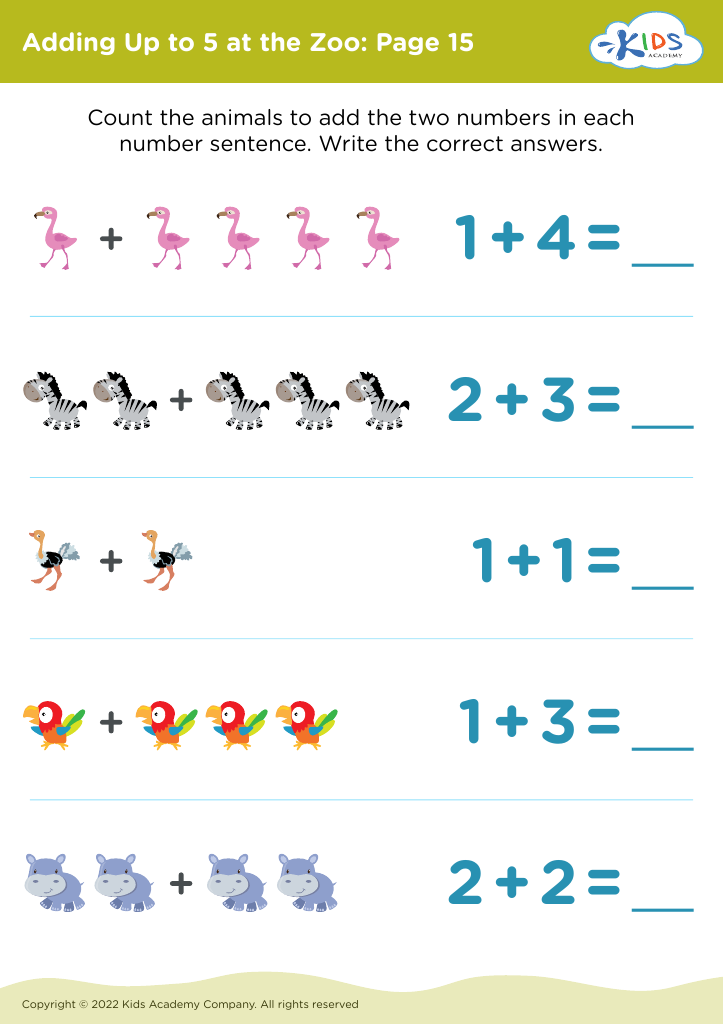
Adding Up to 5 at the Zoo: Page 15
Worksheet
Math PDF Worksheets - Count and Match: 6 – 10

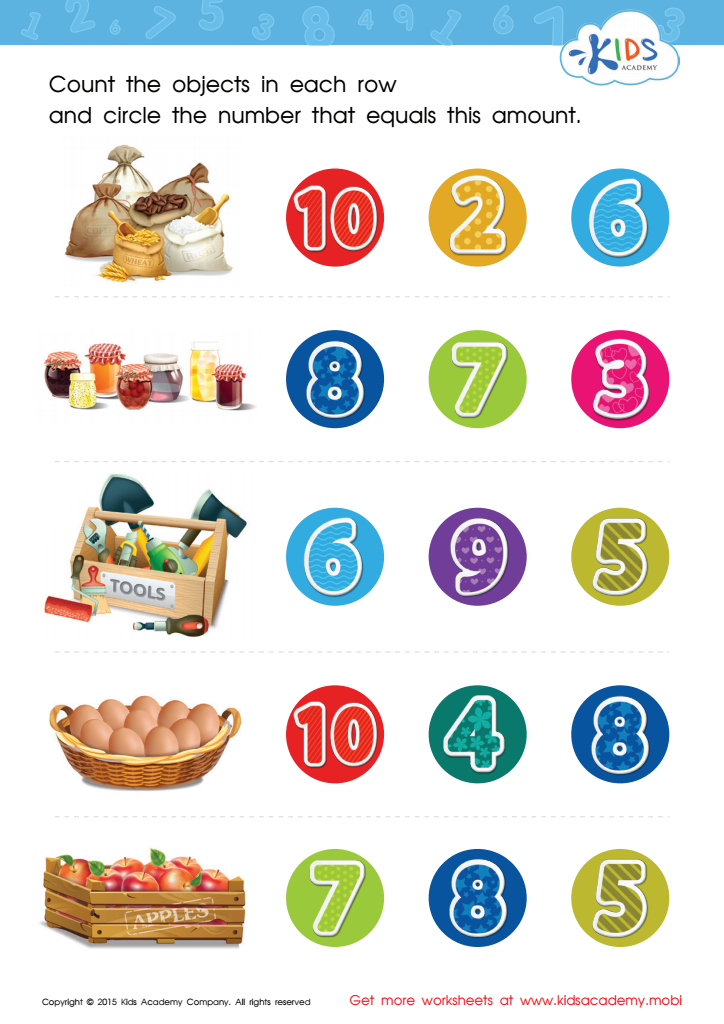
Count and Match 6 – 10 Math Worksheet
Print this fun math worksheet for your kindergartener and help them practice counting up to ten! They'll draw a line from the objects to the correct numbers, visualizing the problem and having fun at the same time. Kids Academy offers more free printable worksheets. Get them now!
Count and Match 6 – 10 Math Worksheet
Worksheet
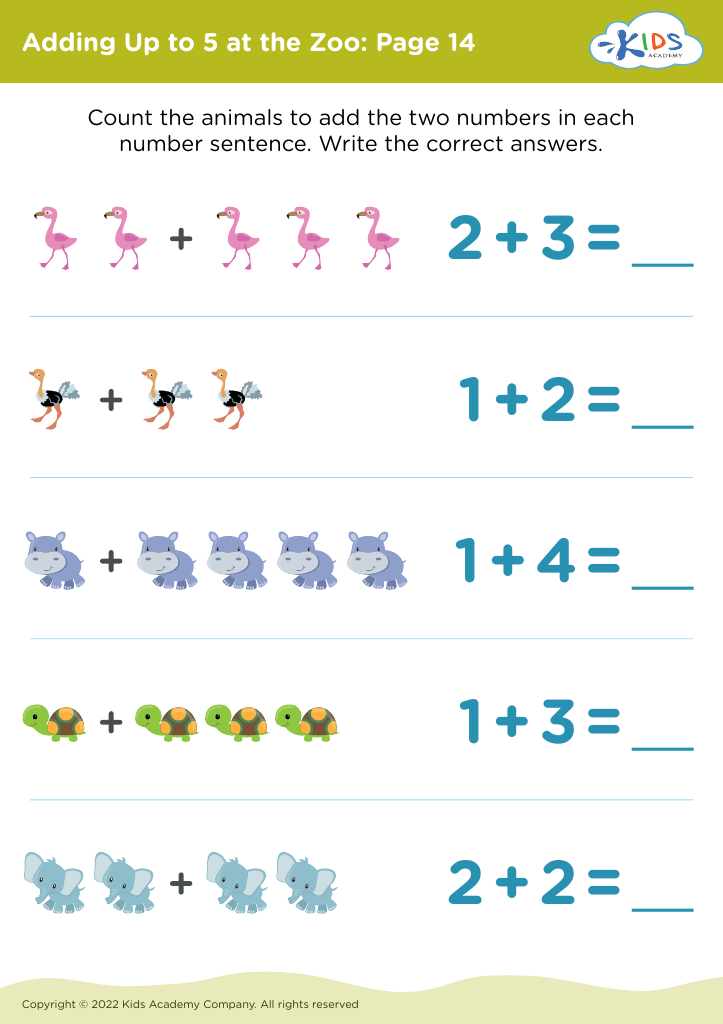
Adding Up to 5 at the Zoo: Page 14
Worksheet
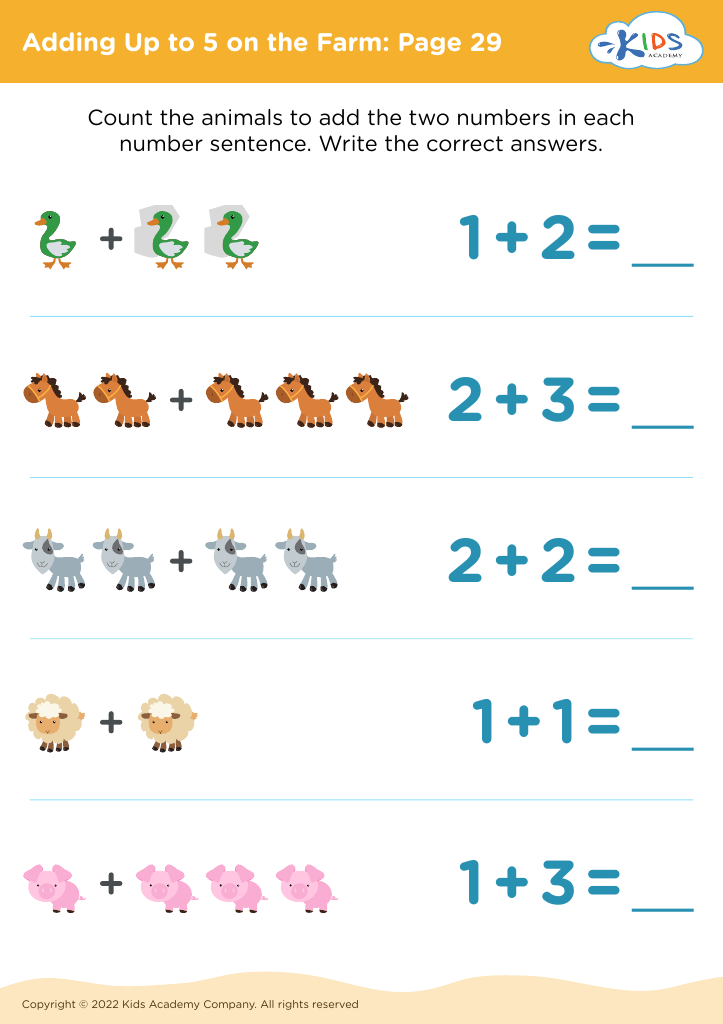
Adding Up to 5 on the Farm: Page 29
Worksheet
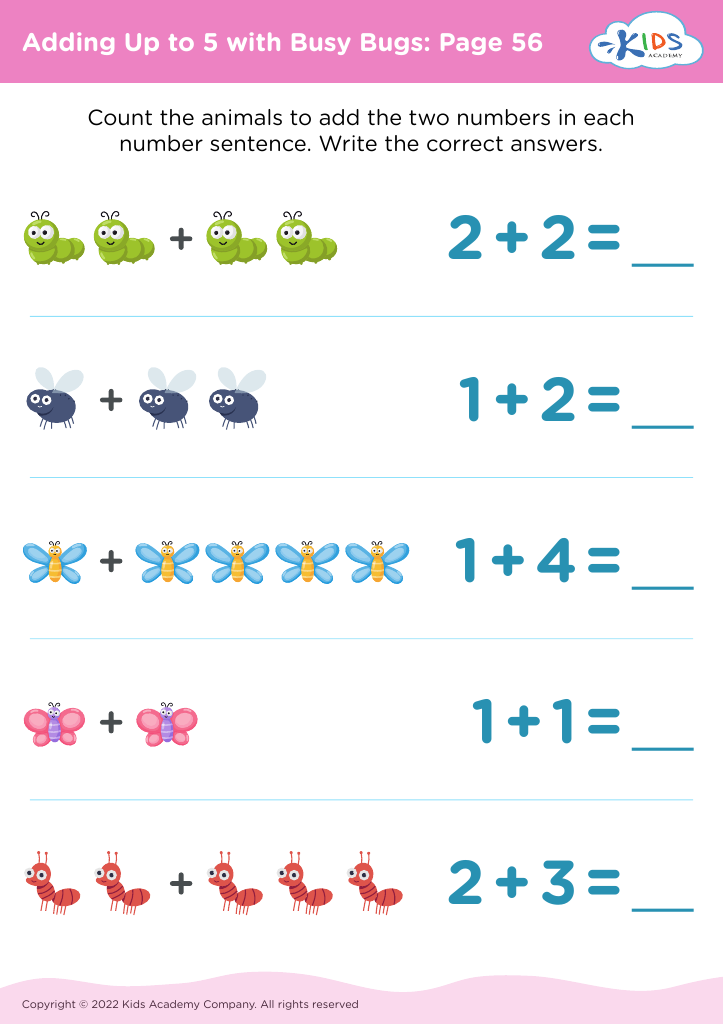
Adding Up to 5 with Busy Bugs: Page 56
Worksheet
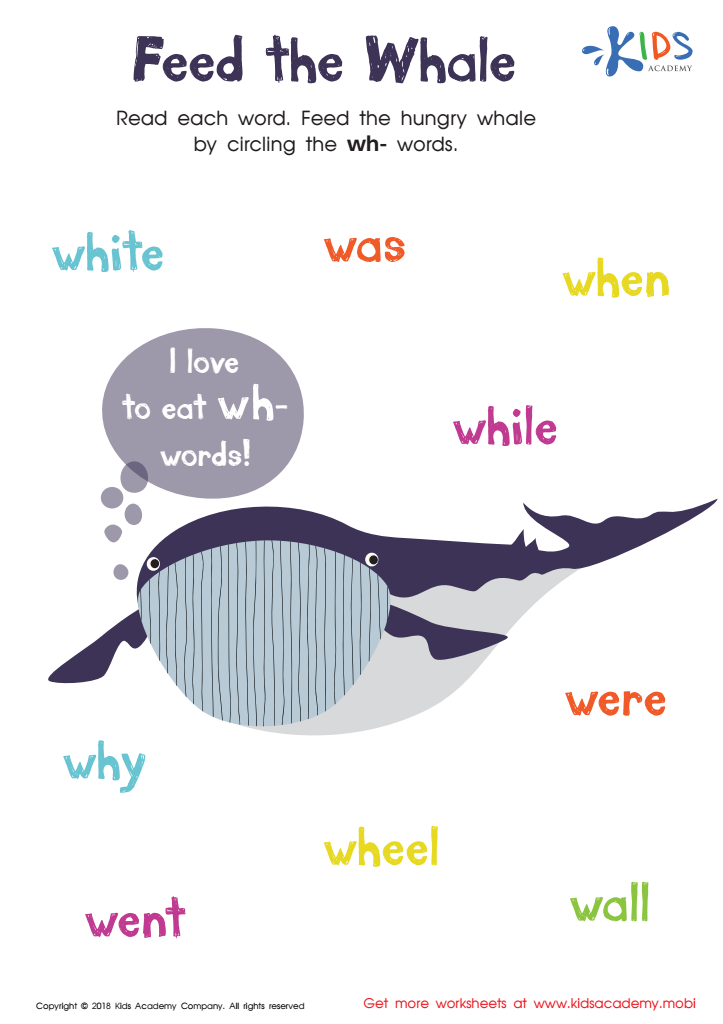
Feed the Whale Worksheet
Feed the Whale Worksheet
Help your early reader build beginning consonant and blend recognition with this fun whale worksheet! They'll feed the whale wh- words, circle sight words, and build fine motor skills—all while discriminating between differently colored words.
Feed the Whale Worksheet

Worksheet
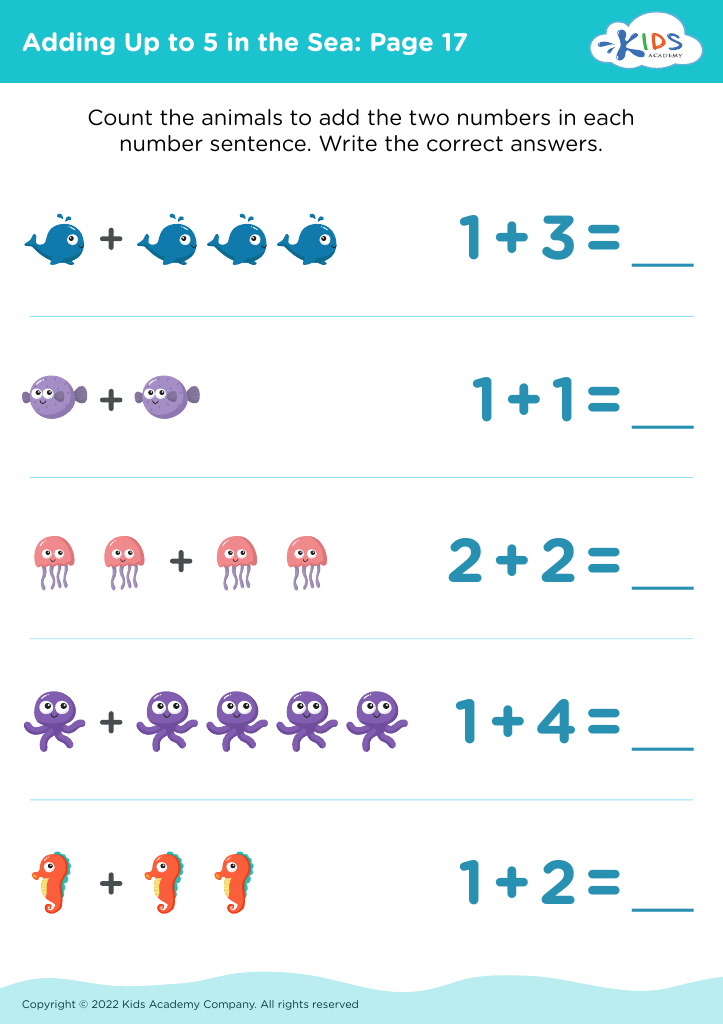
Adding Up to 5 in the Sea: Page 17
Worksheet
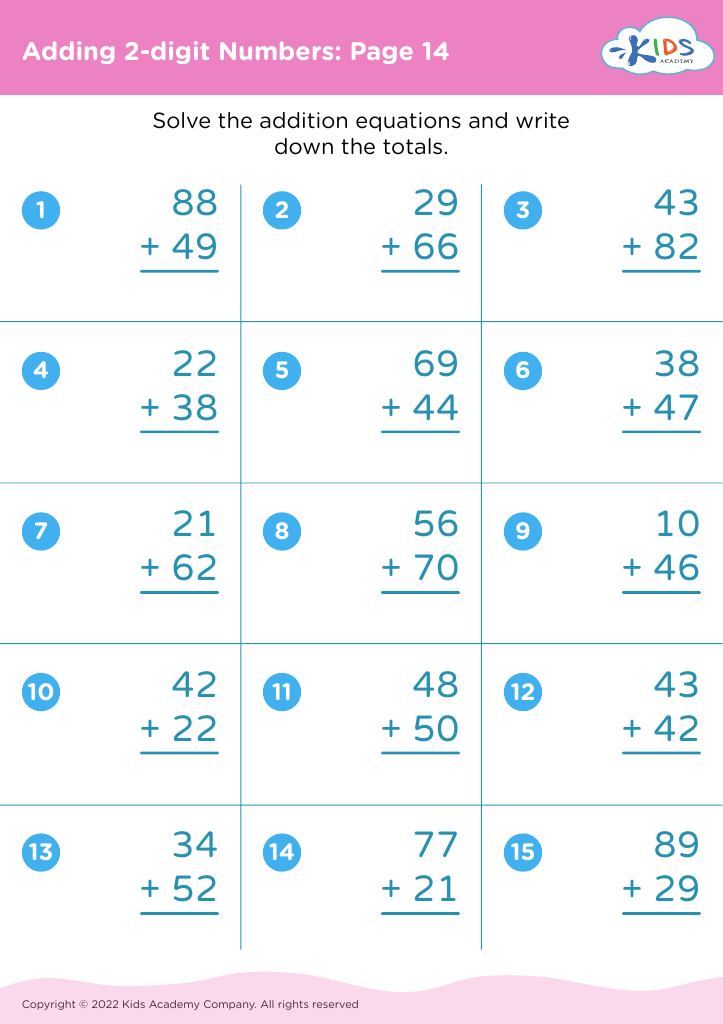
Adding 2-digit Numbers: Page 14

Adding 2-digit Numbers: Page 14

Adding 2-digit Numbers: Page 14
Worksheet
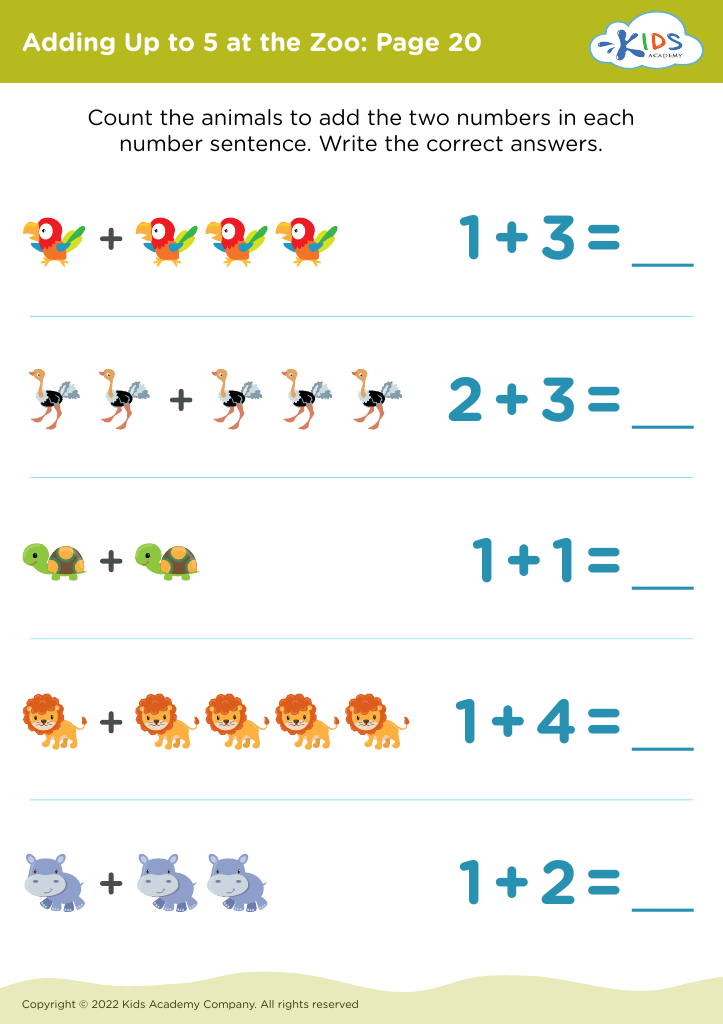
Adding Up to 5 at the Zoo: Page 20
Worksheet


Number recognition is a foundational skill critical for the early stages of a child's education, laying the groundwork for more complex mathematical understanding. For children aged 5-7, developing number recognition is essential as it helps them comprehend and identify numbers, their values, and sequences.

Firstly, number recognition facilitates everyday activities, such as counting objects, reading page numbers, or understanding time. This early competency instills confidence, making children more eager to explore mathematical concepts further. Moreover, it enhances cognitive skills like memory and attention, crucial for overall academic success.

Secondly, number recognition is the precursor to arithmetic skills, such as addition and subtraction, which are fundamental competencies in early education. Without a solid grasp of number recognition, children may struggle with basic math operations, leading to potential difficulties in more advanced math-related subjects in later years.

Additionally, early proficiency in number recognition often correlates with better performance in other subjects. For example, pattern recognition, an essential skill in reading and problem-solving, is reinforced through counting and number identification activities.

Parents and teachers play a pivotal role in nurturing these skills through engaging activities, games, and practical applications. By prioritizing number recognition, they create a positive learning environment that fosters curiosity, supports academic achievement, and nurtures lifelong skills in young learners.