Filters

826 filtered results

Clear all filters
Favorites
With answer key
Interactive

826 filtered results

Difficulty Level

Grade


Check out this FREE "Number Recognition" Trial Lesson for age 5-7!

Making 10's

Favorites
With answer key
Interactive
  • 5-7
  • Number Recognition
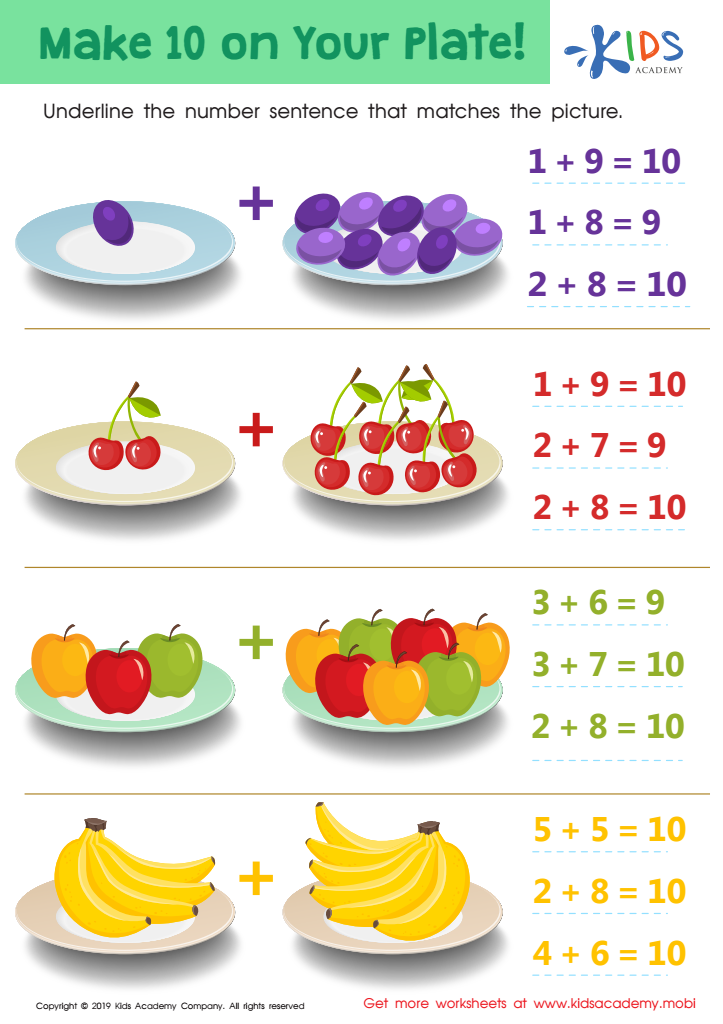
Make 10 on Your Plate! Worksheet

Make 10 on Your Plate! Worksheet

Get your students interested in this exercise by asking them to identify the fruits in the picture. Then, carefully count all the groups of fruit and add them up. Help preschoolers underline the number sentence that matches the picture. Engage their taste buds in a fun way with four different equations!
Make 10 on Your Plate! Worksheet
Worksheet
Adding Up to 5 in the Sea: Page 71
Worksheet
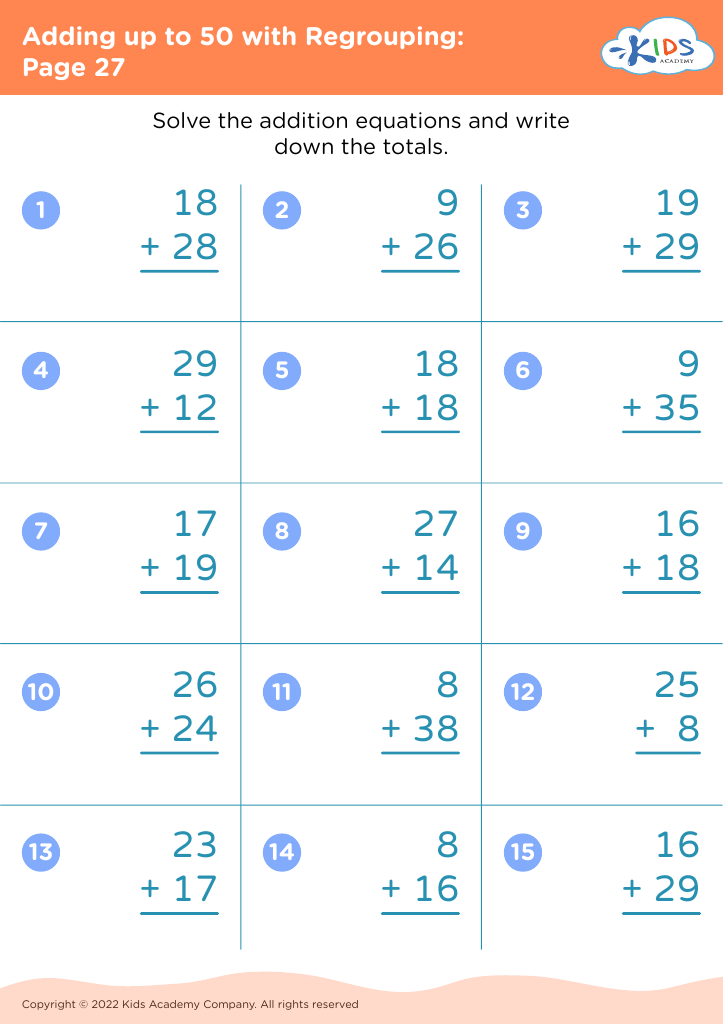
Adding up to 50 with Regrouping: Page 27
Worksheet
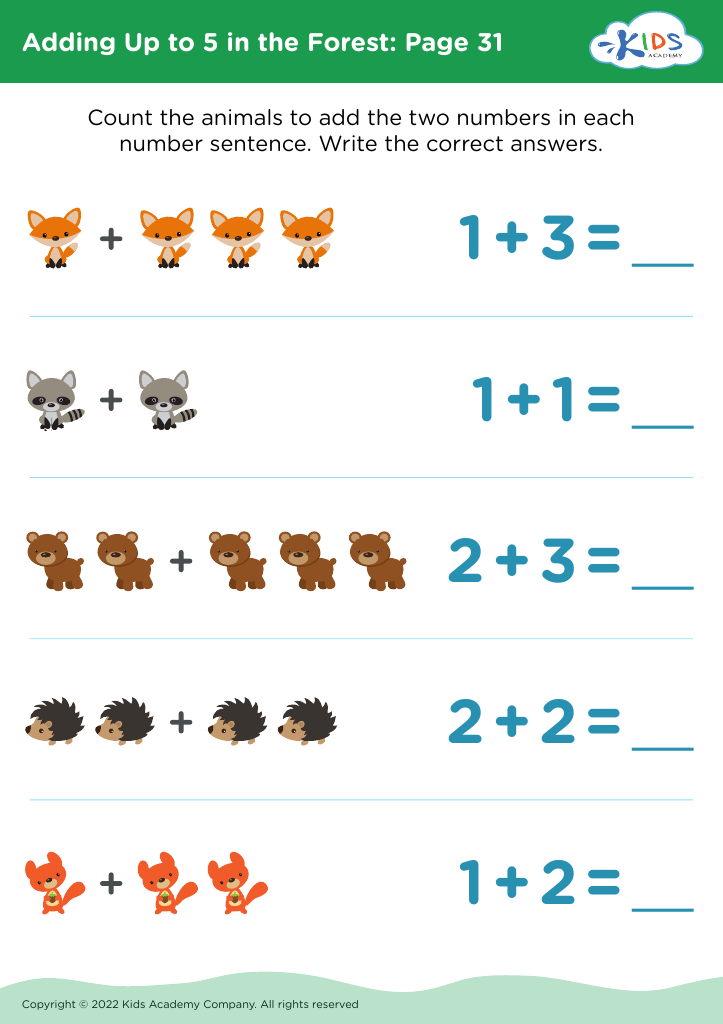
Adding Up to 5 in the Forest: Page 31
Worksheet
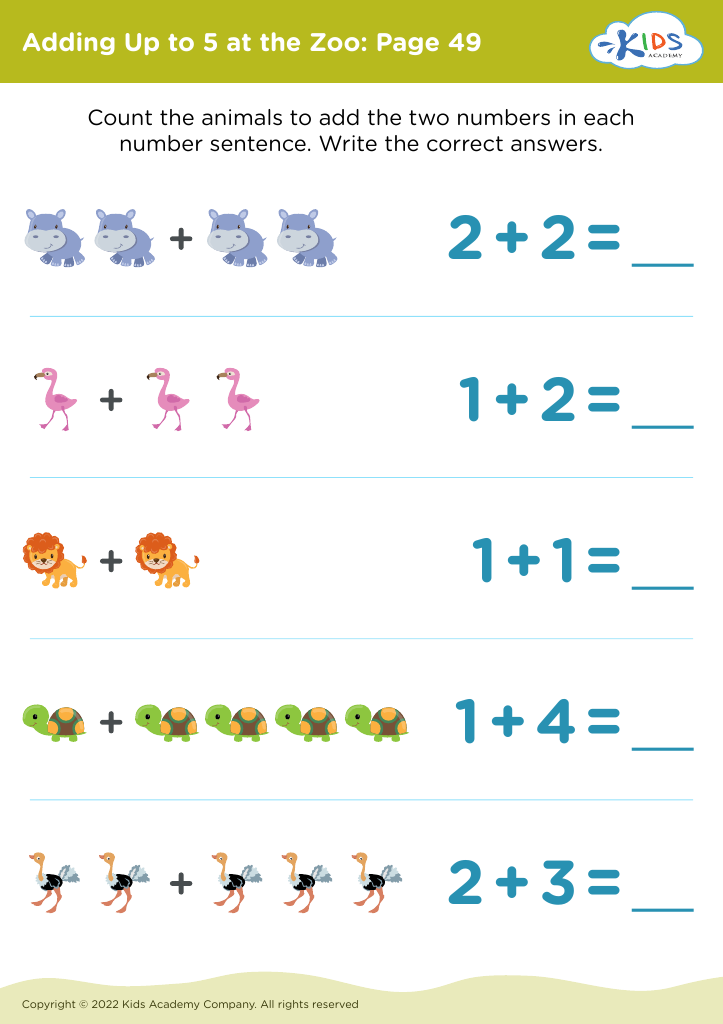
Adding Up to 5 at the Zoo: Page 49
Worksheet
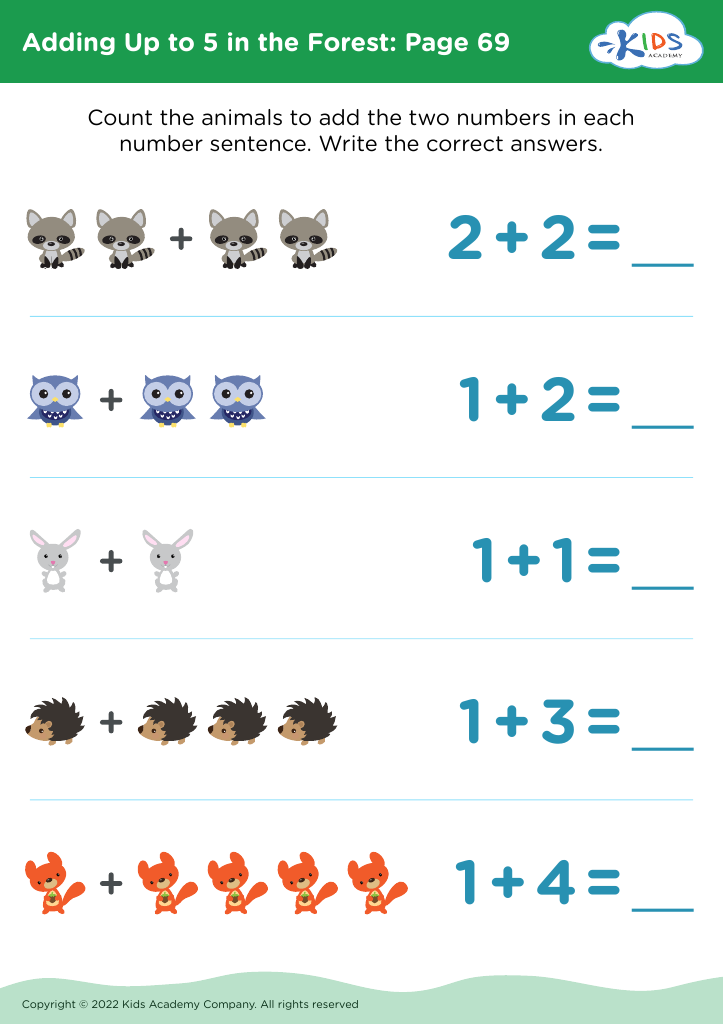
Adding Up to 5 in the Forest: Page 69
Worksheet
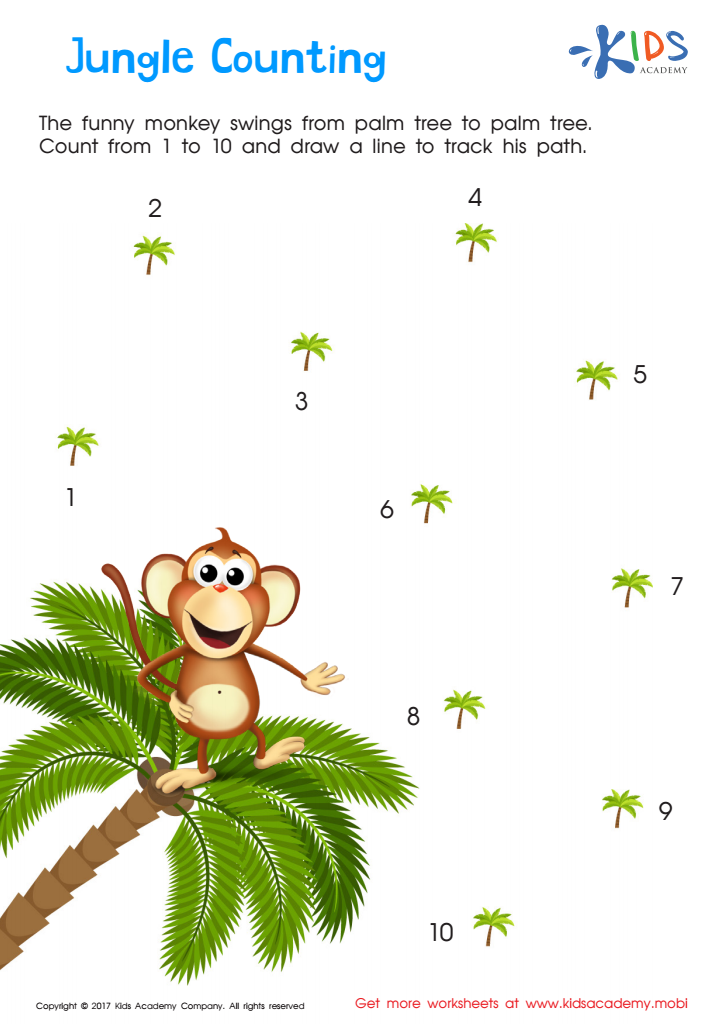
Dot to Dot Numbers 1-10

Jungle Counting Connect Dots Worksheet

Help your child count from 1-10 and practice problem solving skills with this dot to dot worksheet. Your child will enjoy helping the cute monkey swing from tree to tree while honing their math skills. Let them have a jungle-themed counting adventure!
Jungle Counting Connect Dots Worksheet
Worksheet
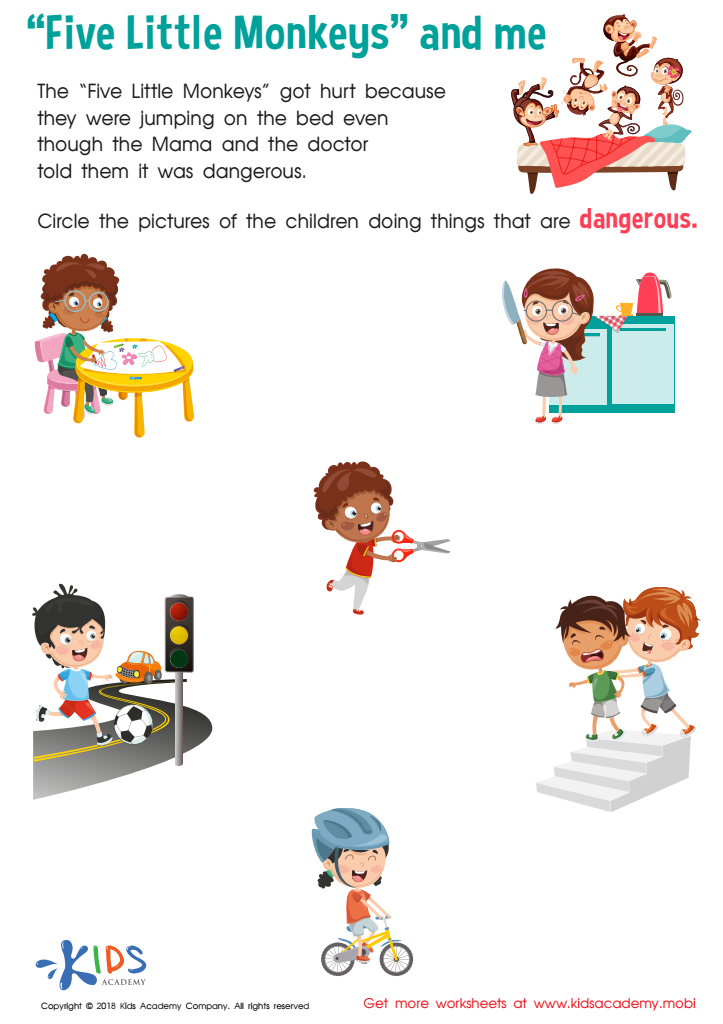
Five Little Monkeys and Me Worksheet

Five Little Monkeys and Me Worksheet

This free PDF worksheet provides preschoolers an understanding of danger and appropriate play. It allows them to recognize dangerous situations and why they can be risky, granting kids perspective from both parents and teachers. It's a fun, safe way to help them internalize what's dangerous and what's not.
Five Little Monkeys and Me Worksheet
Worksheet
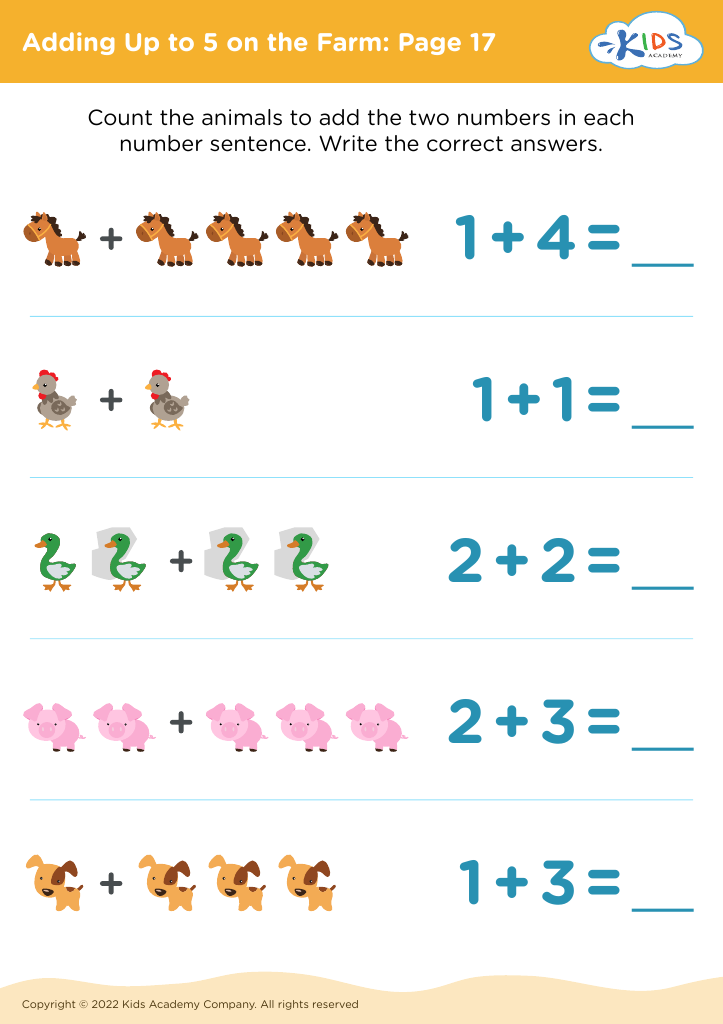
Adding Up to 5 on the Farm: Page 17
Worksheet
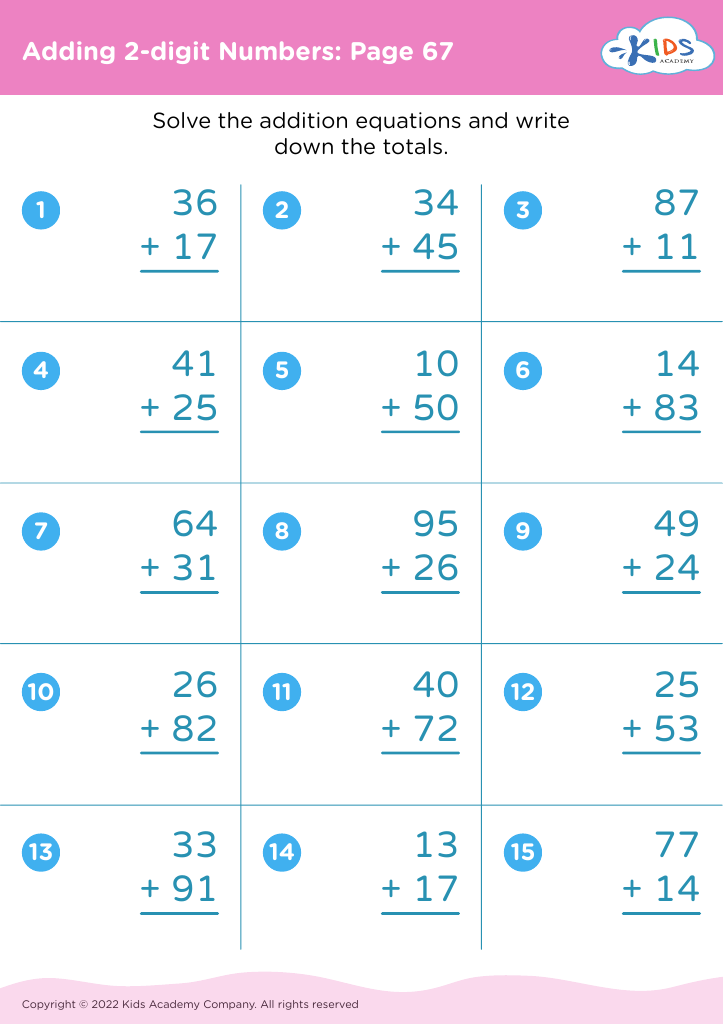
Adding 2-digit Numbers: Page 67

Adding 2-digit Numbers: Page 67

Adding 2-digit Numbers: Page 67
Worksheet
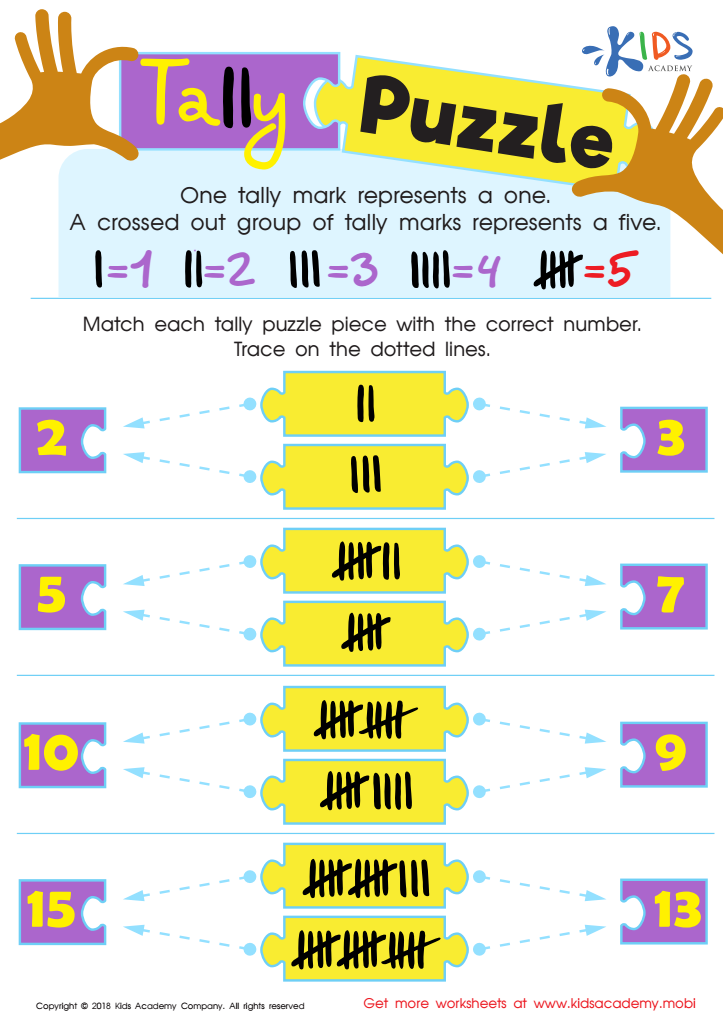
Tally Puzzle Worksheet

Tally Puzzle Worksheet

Kids love puzzles, and this bright worksheet will let them practice tallies and matching numbers. It teaches them to count and assign values, critical for doing math problems quickly and accurately later. It also leads to strategies like counting by 5s.
Tally Puzzle Worksheet
Worksheet
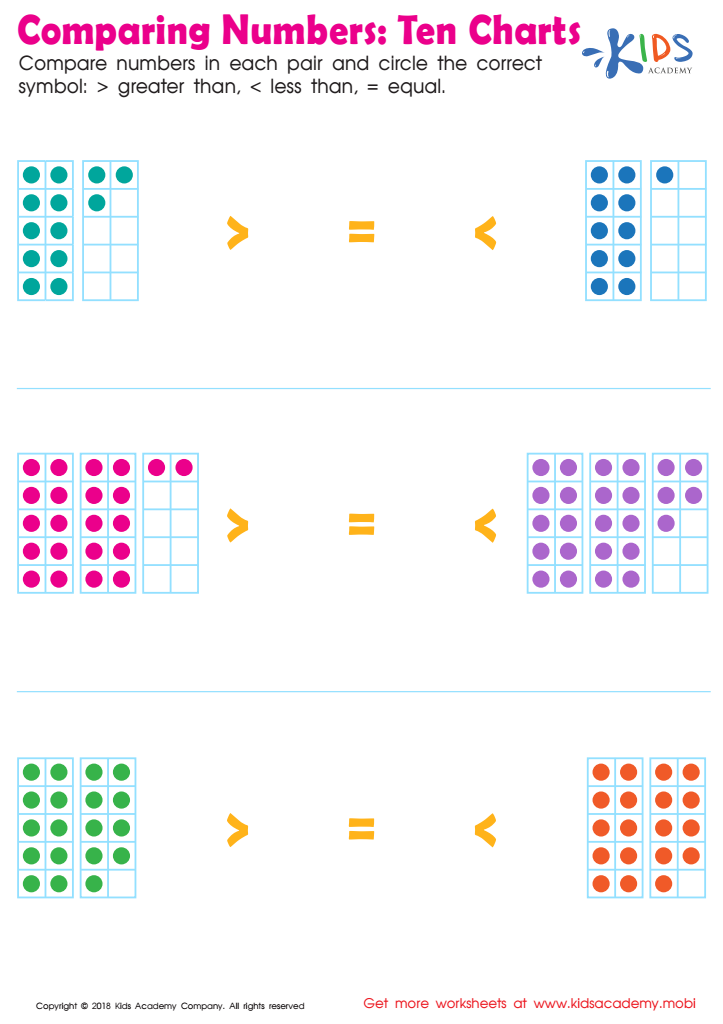
Ten Charts Worksheet

Ten Charts Worksheet

Help your child learn numbers in a creative way using this printable worksheet. They'll learn the difference between numbers, how to add them, and the symbols of "greater than", "less than" and "equals to". They can compare two sides, and identify which is greater, less or equal. Let their maths knowledge bloom!
Ten Charts Worksheet
Worksheet
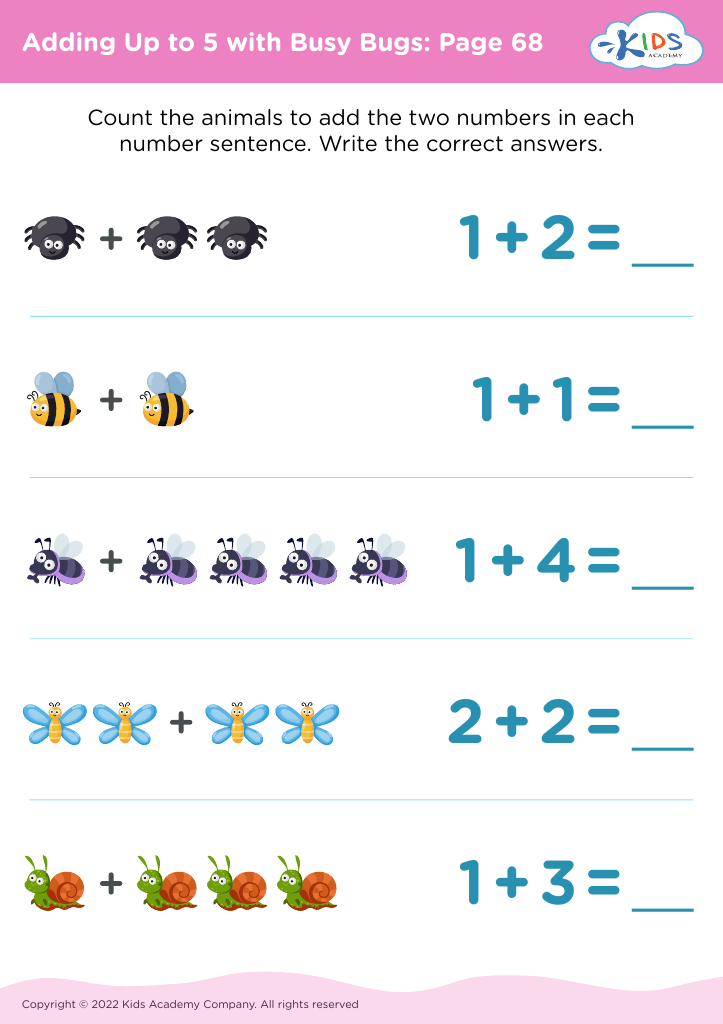
Adding Up to 5 with Busy Bugs: Page 68
Worksheet
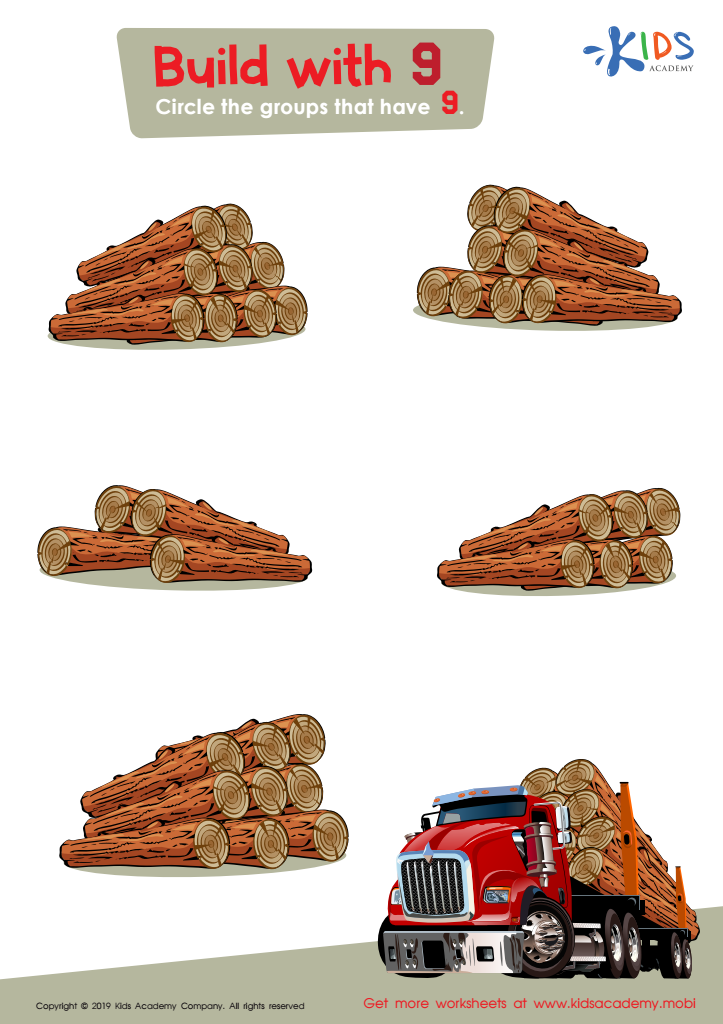
Build with 9 Worksheet
Build with 9 Worksheet

Your students' learning journey can be challenging, but ultimately rewarding. This worksheet helps them practice counting: count the logs in all the groups and circle those with 9 logs.
Build with 9 Worksheet
Worksheet
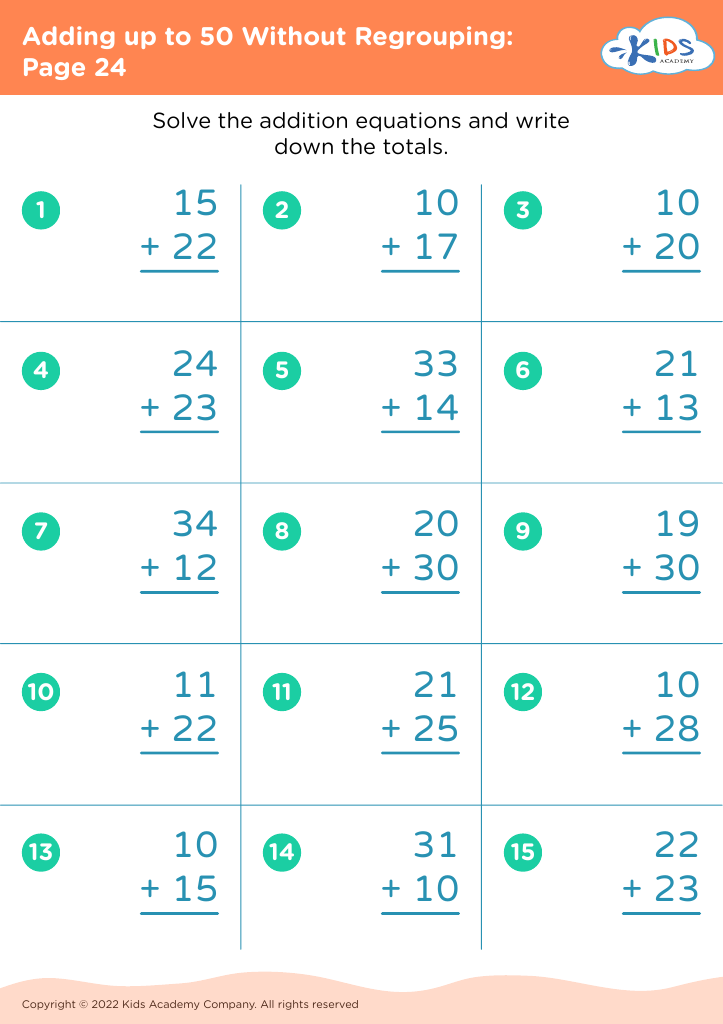
Adding up to 50 Without Regrouping: Page 24
Worksheet
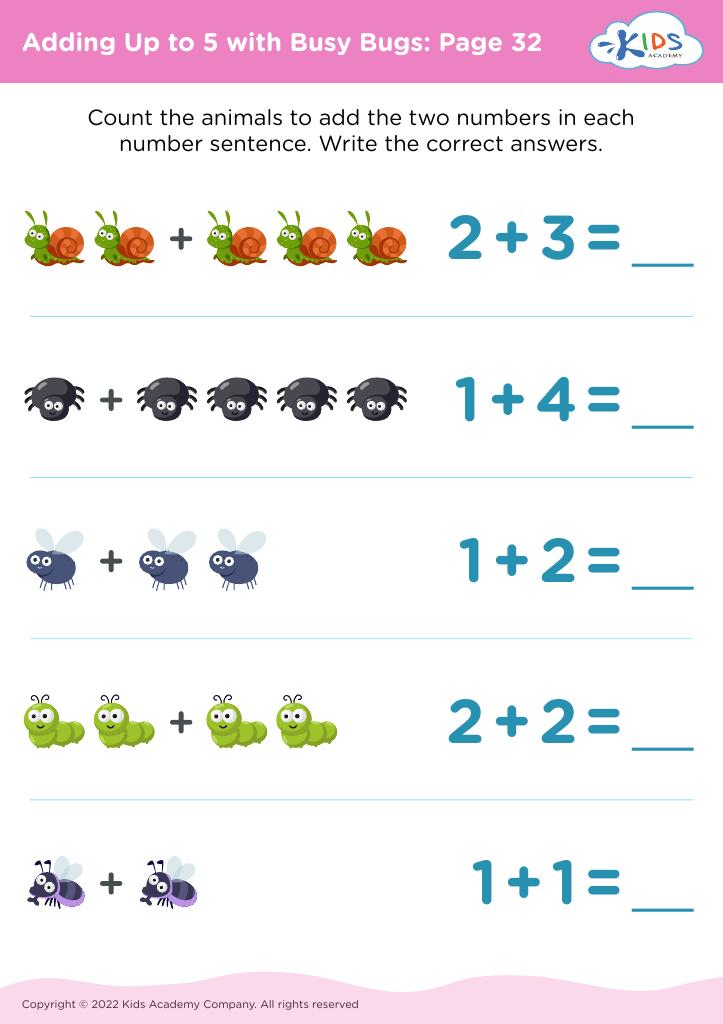
Adding Up to 5 with Busy Bugs: Page 32
Worksheet
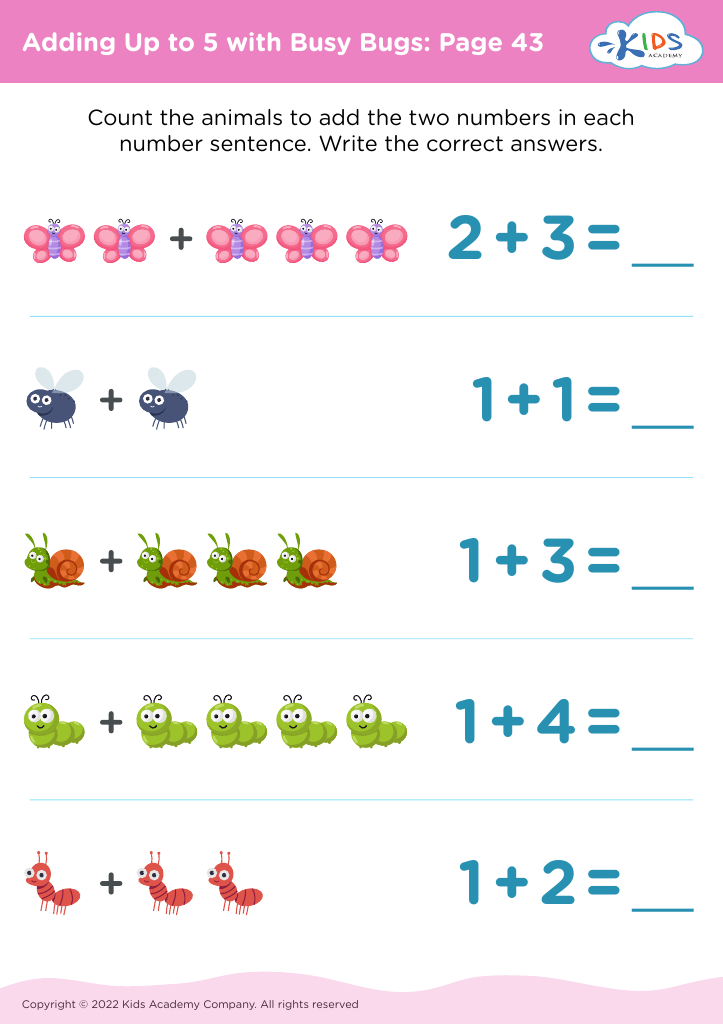
Adding Up to 5 with Busy Bugs: Page 43
Worksheet
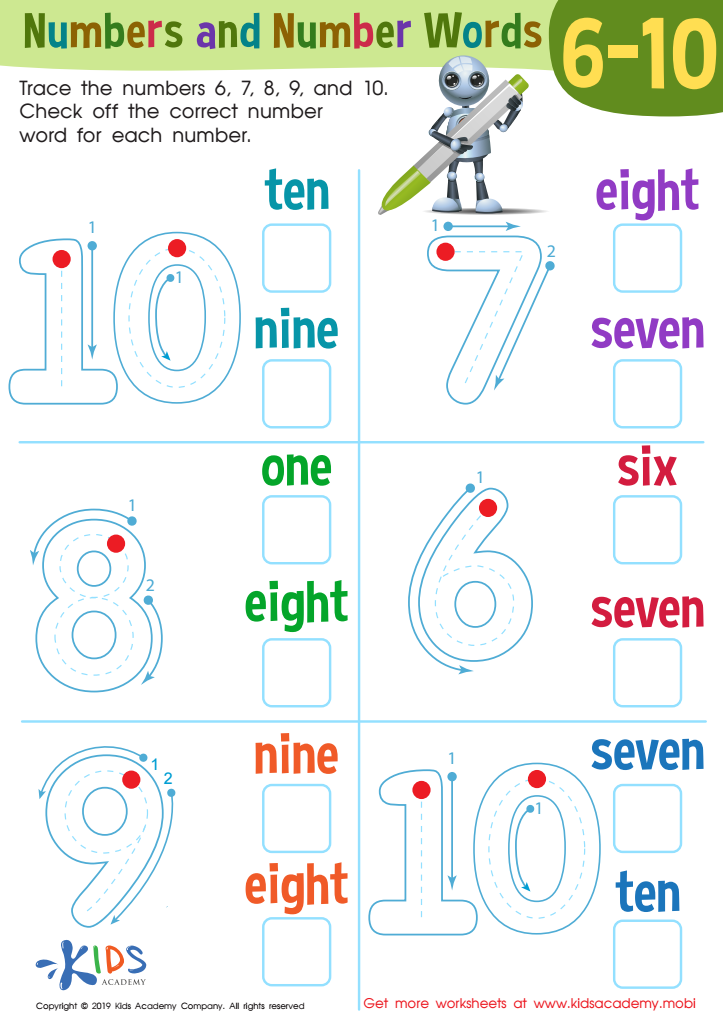
Numbers and Number Words 6–1 Worksheet
Numbers and Number Words 6–1 Worksheet
As children explore numbers and words, parents and teachers can help them learn to count and read with activities such as this worksheet. Here, the student traces numbers 6-10 and then selects the right number words to match. A fun and interactive way to learn!
Numbers and Number Words 6–1 Worksheet
Worksheet
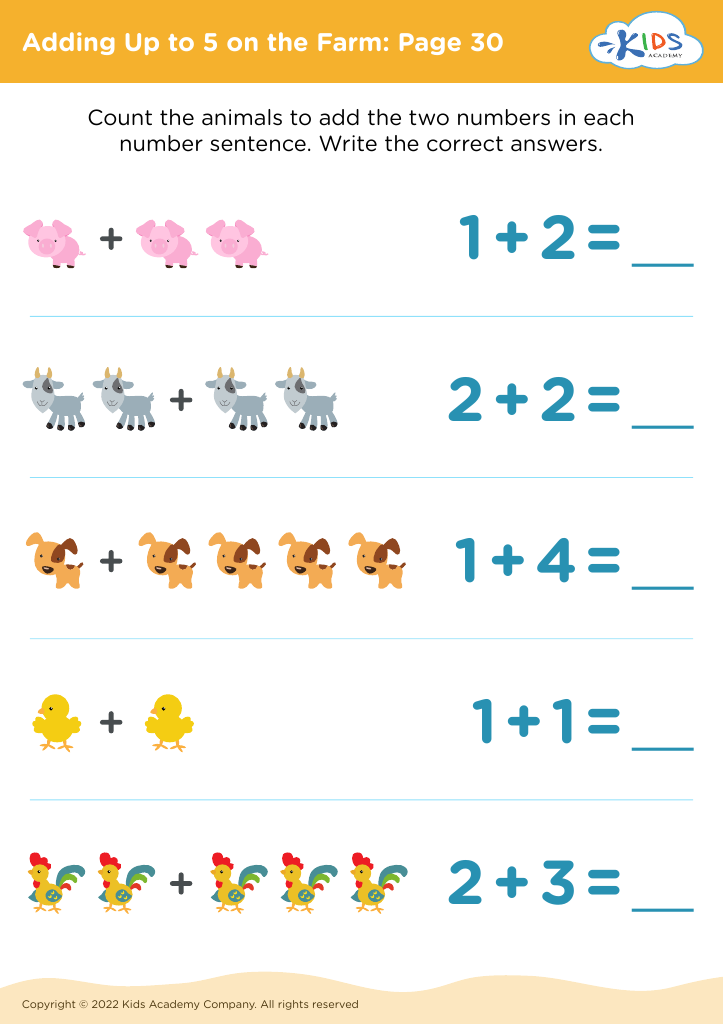
Adding Up to 5 on the Farm: Page 30
Worksheet
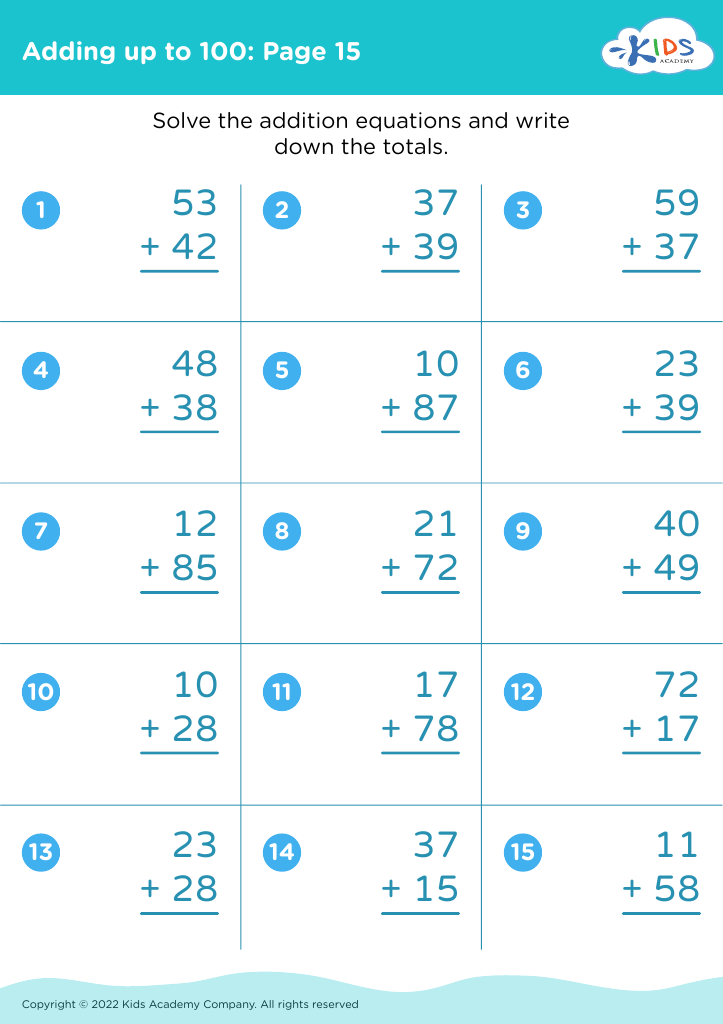
Adding up to 100: Page 15

Adding up to 100: Page 15

Adding up to 100: Page 15
Worksheet
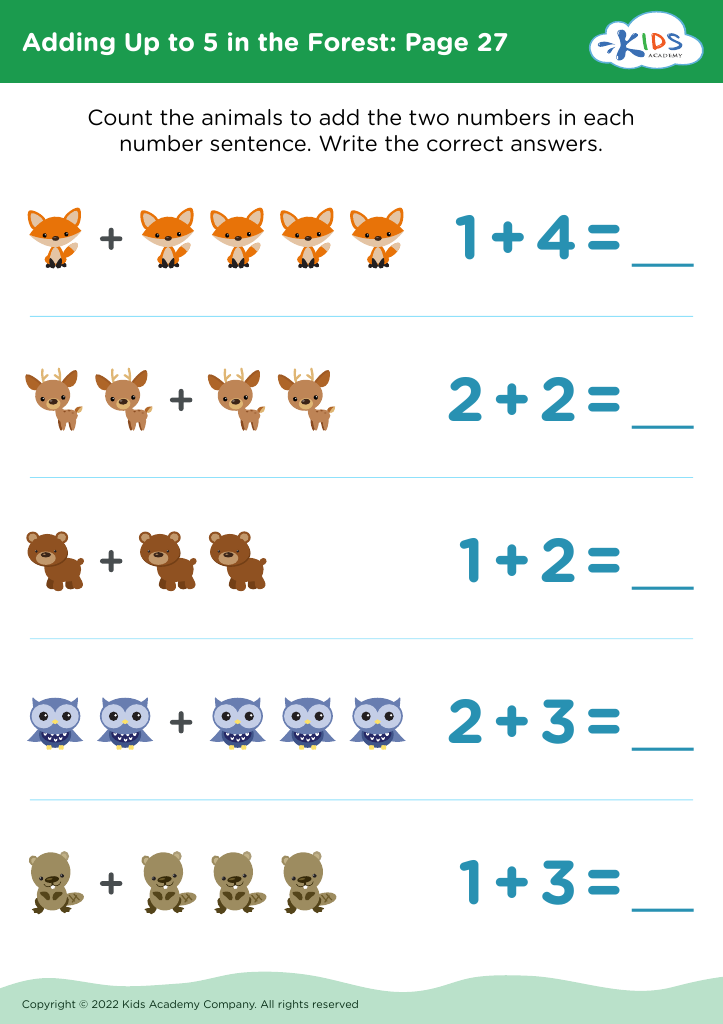
Adding Up to 5 in the Forest: Page 27
Worksheet
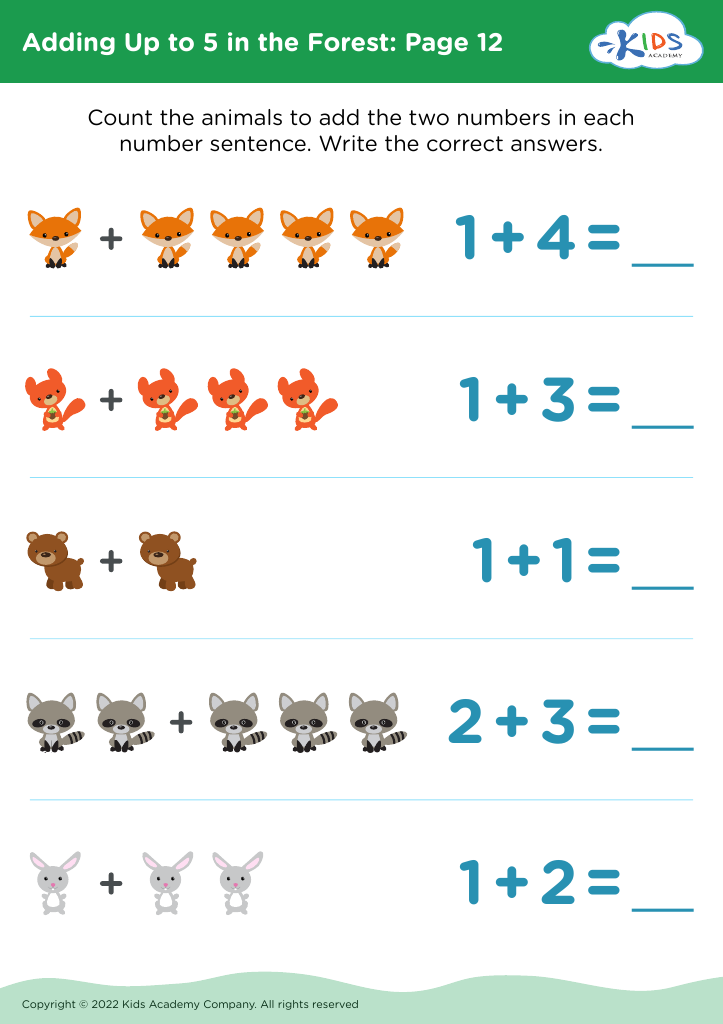
Adding Up to 5 in the Forest: Page 12
Worksheet
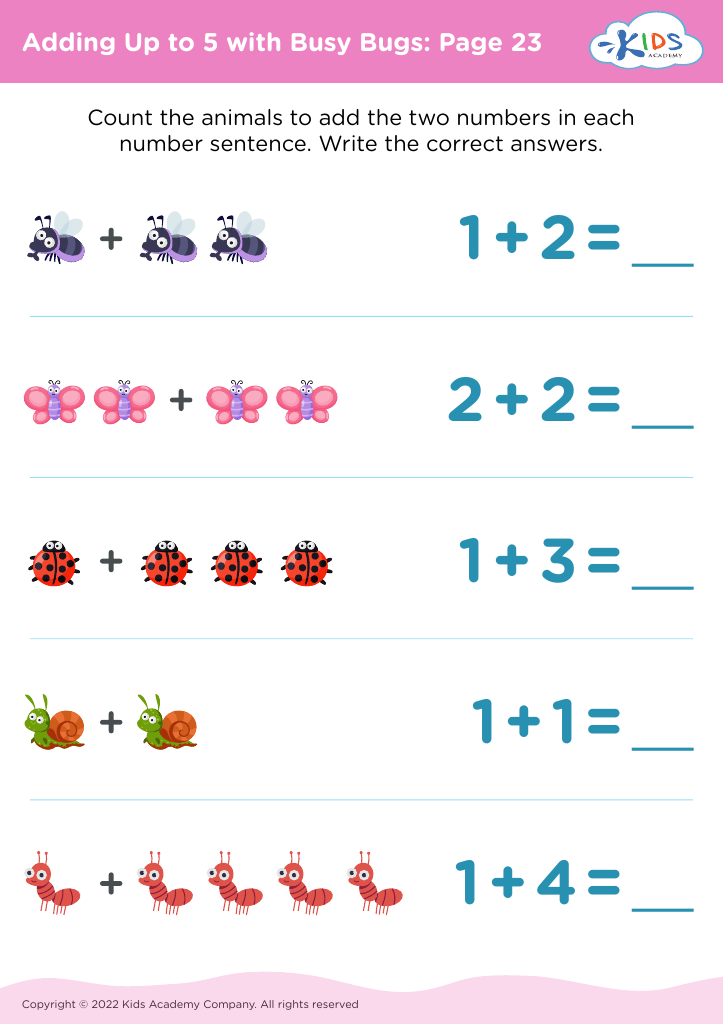
Adding Up to 5 with Busy Bugs: Page 23
Worksheet
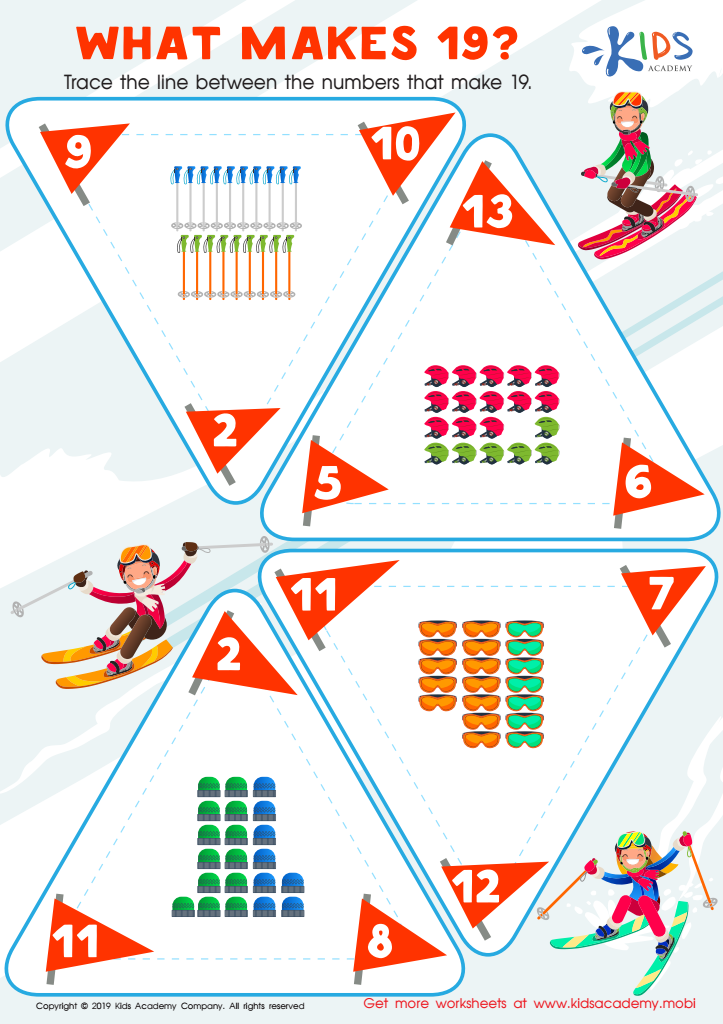
What Makes 19? Worksheet


What Makes 19? Worksheet

As a parent, it's your responsibility to help your kids learn. Put on the teacher hat and use this worksheet to teach them addition tricks. Help them count and add the objects, trace a line between the numbers that make 19, and take their learning a step further.
What Makes 19? Worksheet
Worksheet


Number recognition is a foundational skill critical for the early stages of a child's education, laying the groundwork for more complex mathematical understanding. For children aged 5-7, developing number recognition is essential as it helps them comprehend and identify numbers, their values, and sequences.

Firstly, number recognition facilitates everyday activities, such as counting objects, reading page numbers, or understanding time. This early competency instills confidence, making children more eager to explore mathematical concepts further. Moreover, it enhances cognitive skills like memory and attention, crucial for overall academic success.

Secondly, number recognition is the precursor to arithmetic skills, such as addition and subtraction, which are fundamental competencies in early education. Without a solid grasp of number recognition, children may struggle with basic math operations, leading to potential difficulties in more advanced math-related subjects in later years.

Additionally, early proficiency in number recognition often correlates with better performance in other subjects. For example, pattern recognition, an essential skill in reading and problem-solving, is reinforced through counting and number identification activities.

Parents and teachers play a pivotal role in nurturing these skills through engaging activities, games, and practical applications. By prioritizing number recognition, they create a positive learning environment that fosters curiosity, supports academic achievement, and nurtures lifelong skills in young learners.