Critical Thinking 2D Shapes Worksheets for Ages 5-7
5 filtered results
-
From - To
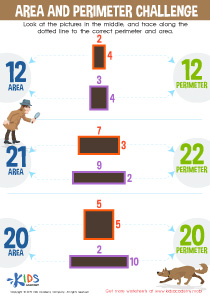
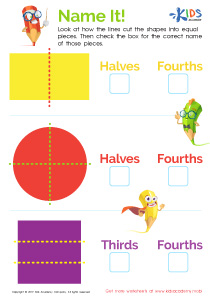
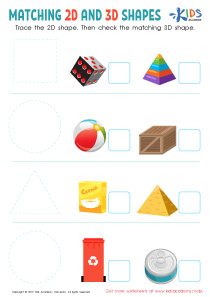
Enhance your child’s critical thinking skills with our meticulously crafted 2D Shapes Worksheets designed for ages 5-7. At Kids Academy, we believe in merging fun with learning, helping young minds explore geometric concepts while nurturing their analytical abilities. These worksheets encourage kids to recognize, compare, and categorize various shapes, fostering a solid foundation in geometry. Each activity is created to promote problem-solving and logical reasoning, making learning both interactive and effective. Perfect for classroom use or at-home practice, our 2D Shapes Worksheets are an excellent tool to support your child’s early mathematical development. Dive into a world of shapes and critical thinking today!
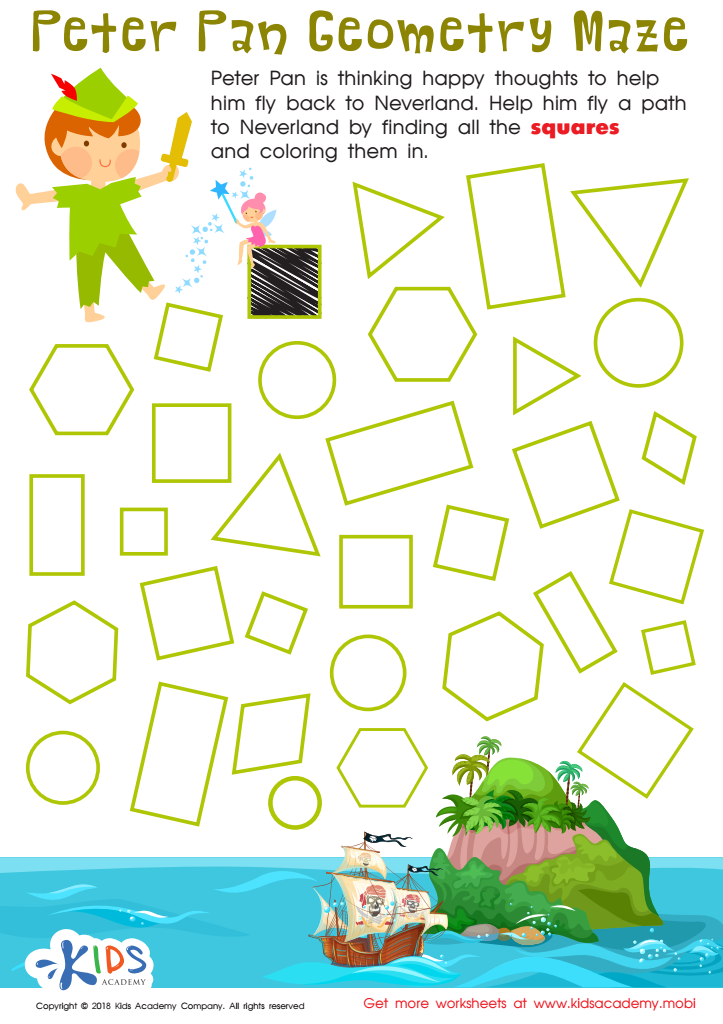
Peter Pan Worksheet
 Assign to My Students


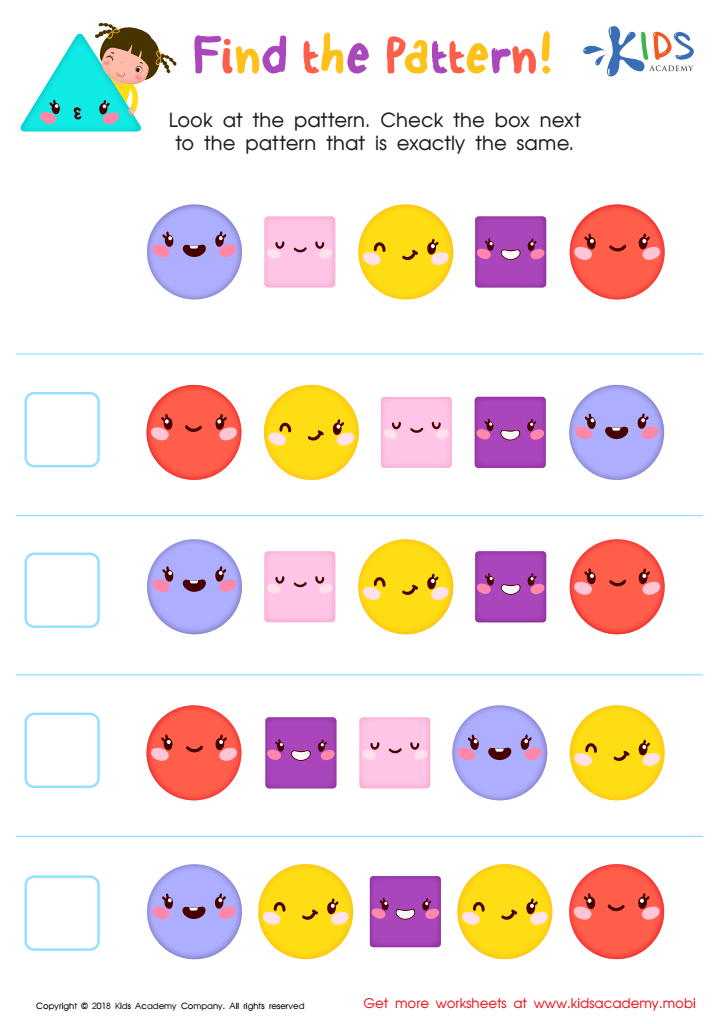
Find the Pattern Worksheet
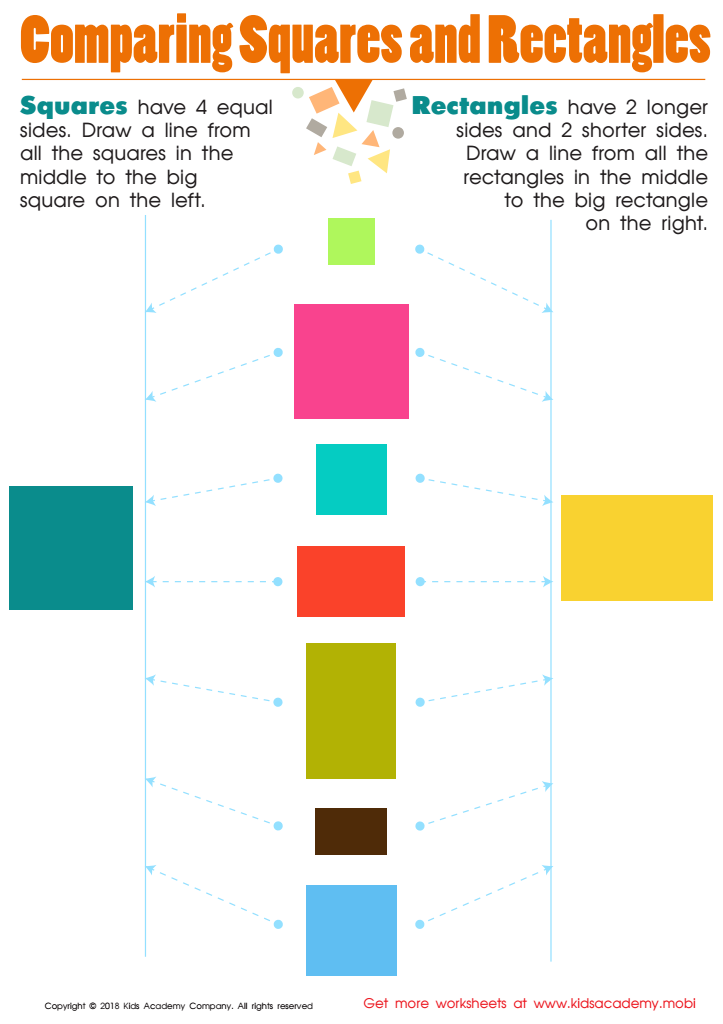
Comparing Squares Rectangles Worksheet
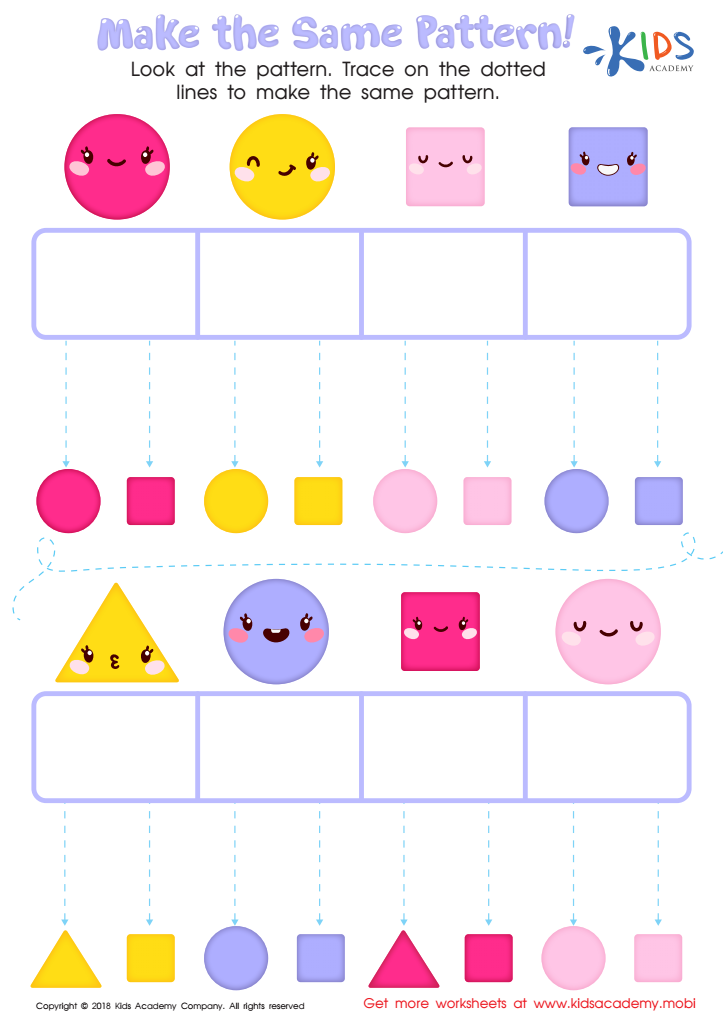
Make the Same Pattern Worksheet
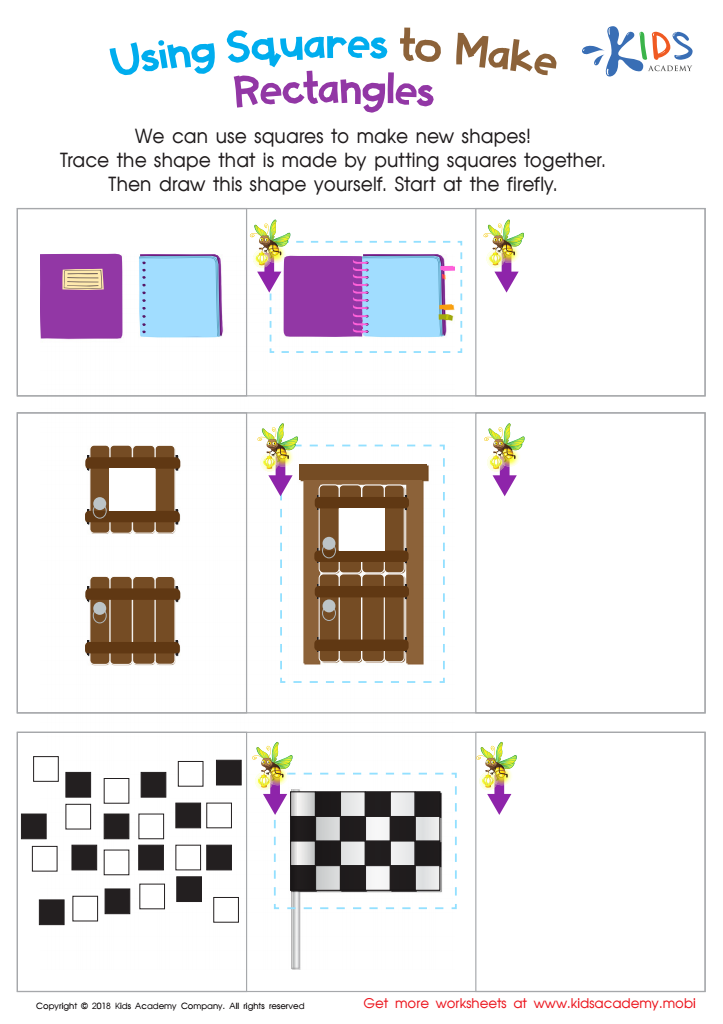
Using Squares to Make Rectangles Worksheet








Parents and teachers should place great importance on incorporating critical thinking with 2D shapes for children aged 5-7 as it lays the groundwork for essential cognitive and analytical skills. At this age, young minds are highly receptive and adept at absorbing new information, making it an ideal period for introducing fundamental mathematical concepts.
Engaging with 2D shapes such as squares, triangles, circles, and rectangles helps children develop spatial awareness, a critical early math skill. By identifying, comparing, and analyzing 2D shapes, they learn to recognize patterns and categorize objects based on their attributes. This understanding is crucial for grasping more complex mathematical concepts later in their educational journeys.
Critical thinking exercises around 2D shapes encourage problem-solving, decision-making, and logical reasoning. For instance, activities that ask children to sort shapes based on size or find differences and similarities stimulate their ability to think critically, articulate their reasoning, and make informed choices.
Additionally, these activities promote fine motor skills and the coordination necessary for writing and other academic tasks. Through engaging, hands-on experiences with shapes, youngsters build confidence and a positive attitude toward learning, laying a robust foundation for successful education. Therefore, nurturing critical thinking with 2D shapes for ages 5-7 is an investment in their intellectual and academic growth.