Counting proficiency Addition & Subtraction Worksheets for Ages 5-7
11 filtered results
-
From - To
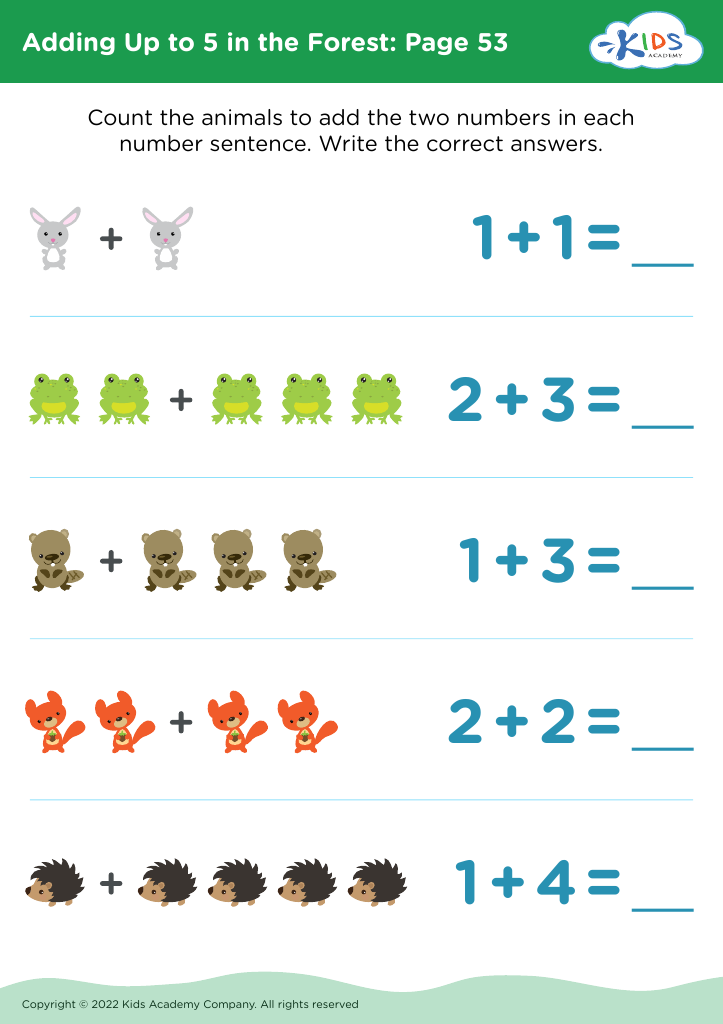
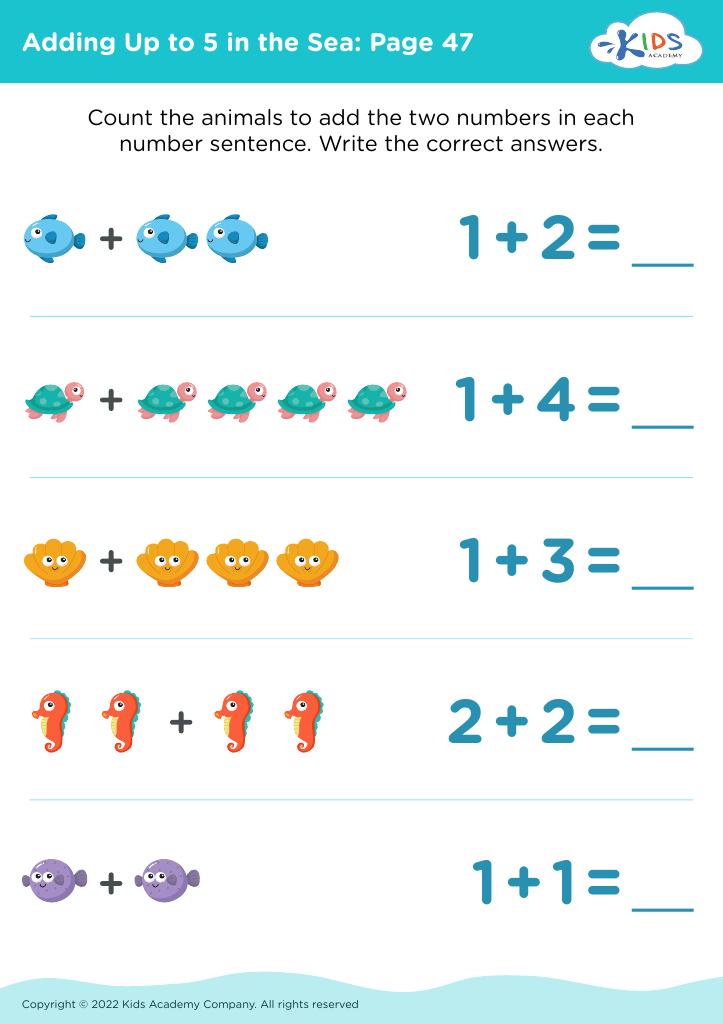
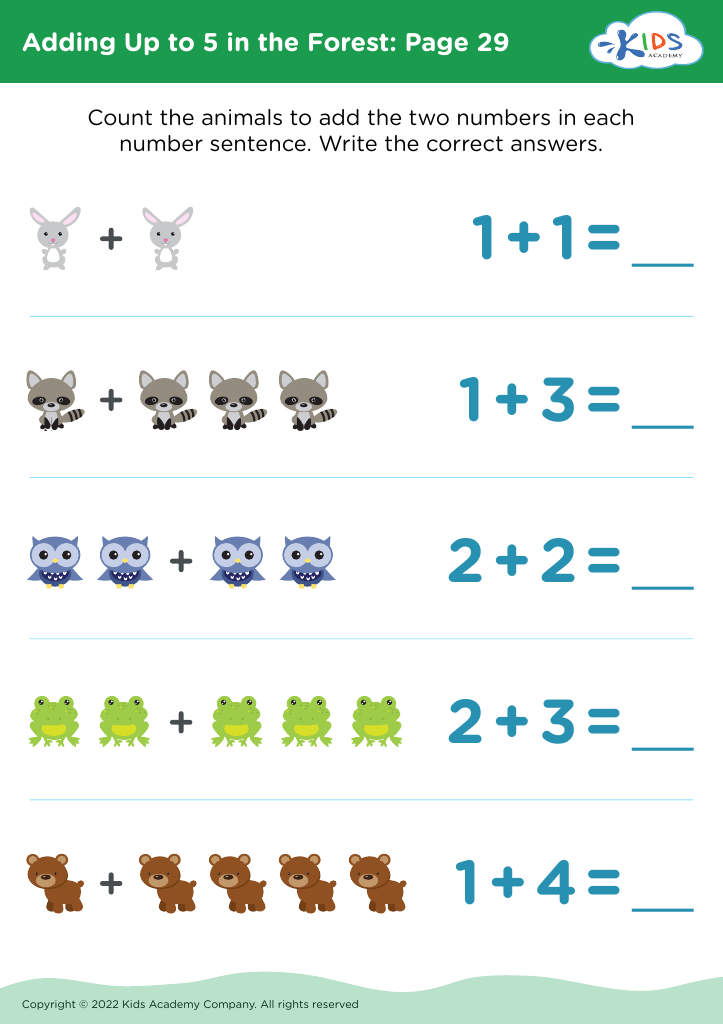
Boost your child's math skills with our Counting Proficiency Addition & Subtraction Worksheets, designed specifically for ages 5-7. These engaging worksheets help young learners develop essential counting skills while mastering addition and subtraction concepts. Fun and interactive exercises make learning enjoyable, encouraging kids to practice their math in a playful way. Whether at home or in the classroom, our resources are perfect for reinforcing counting understanding, supporting skill retention, and building confidence in early math abilities. Download our worksheets today and watch your child's proficiency in counting, addition, and subtraction grow as they learn through play!
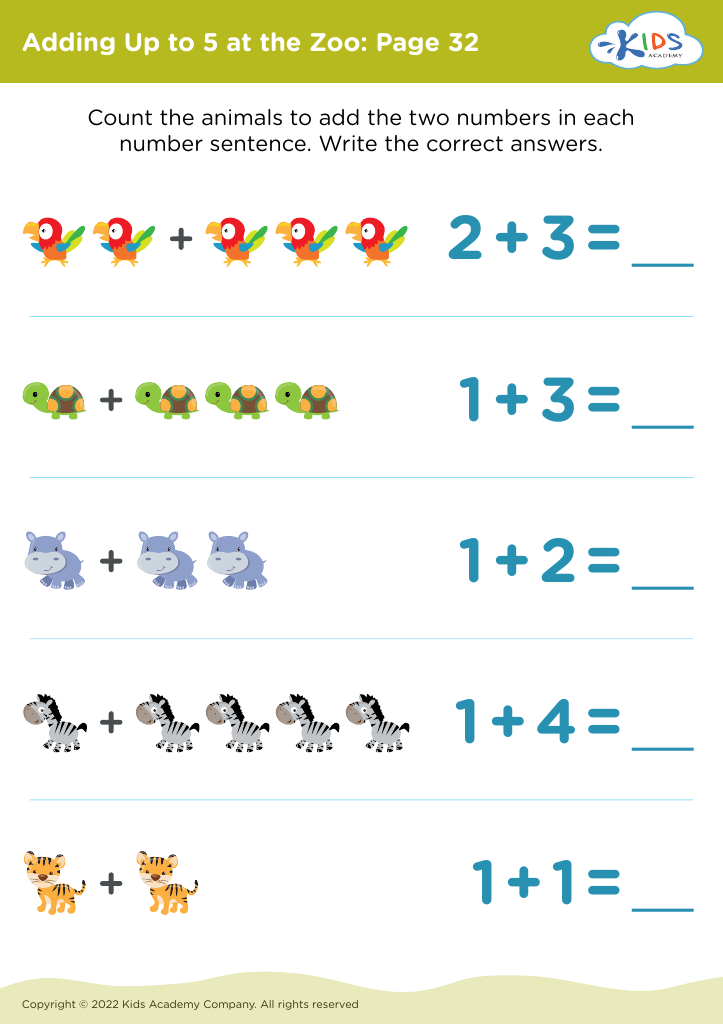
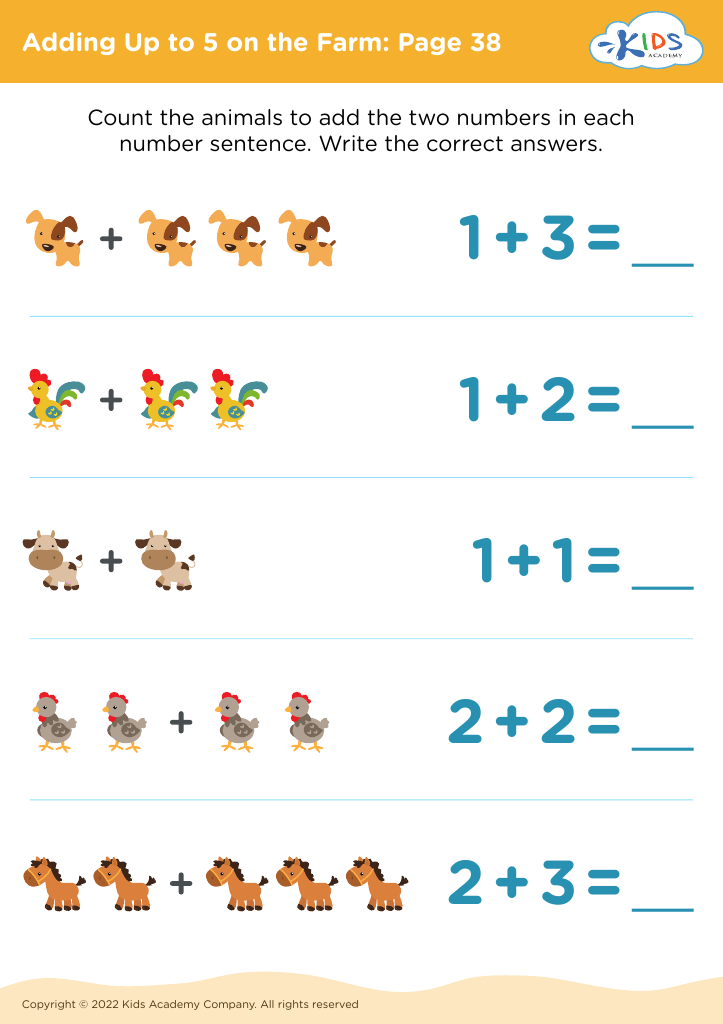
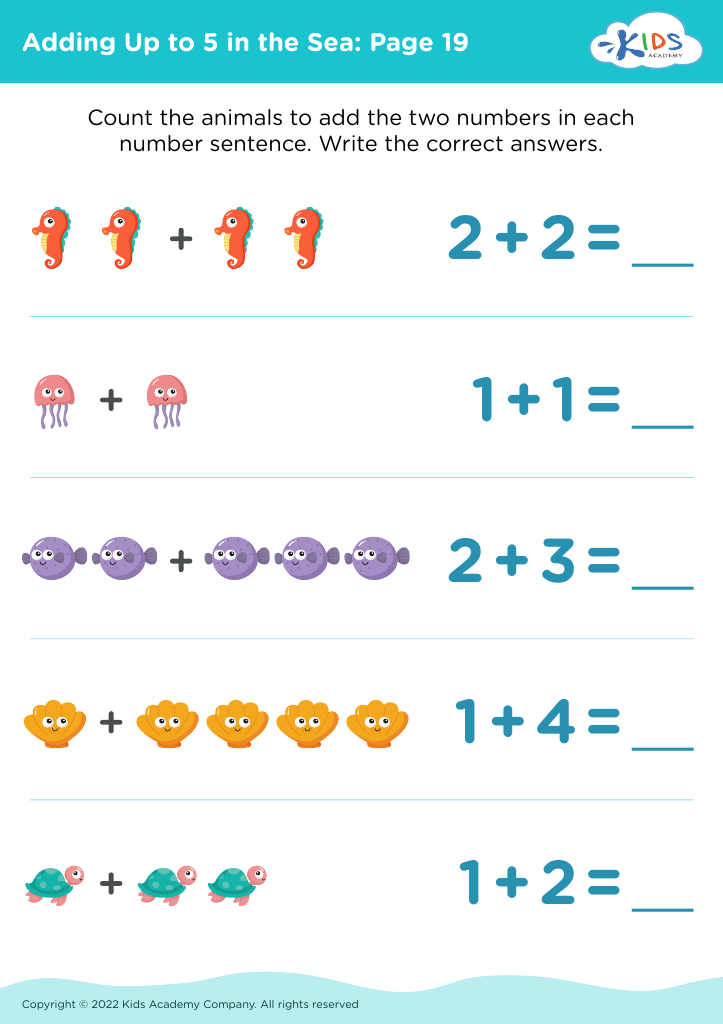
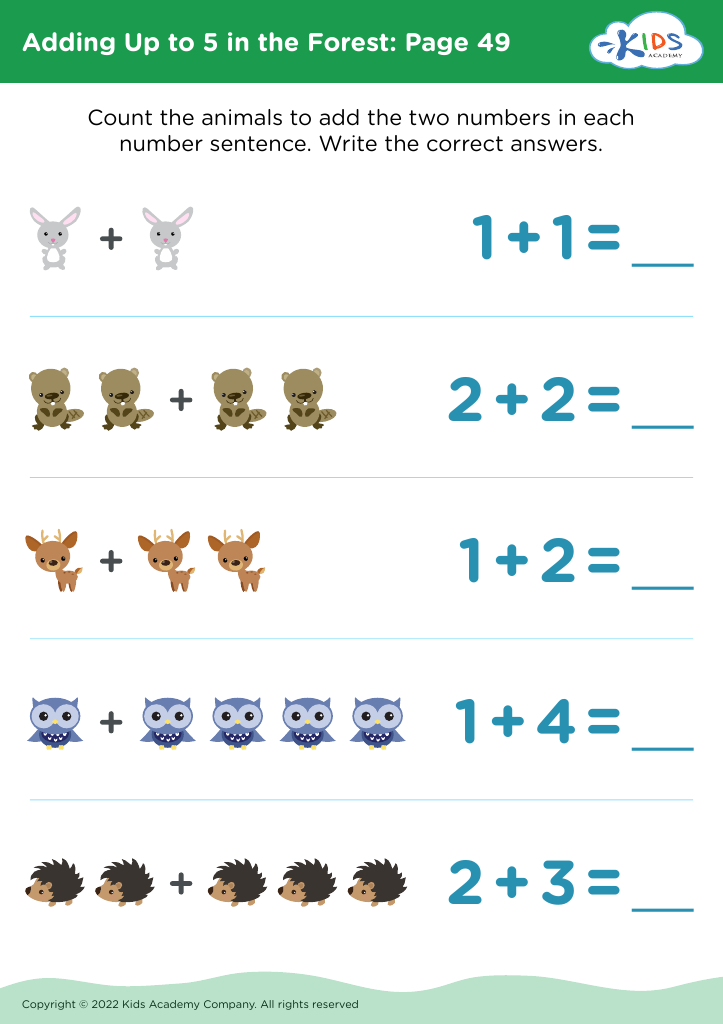
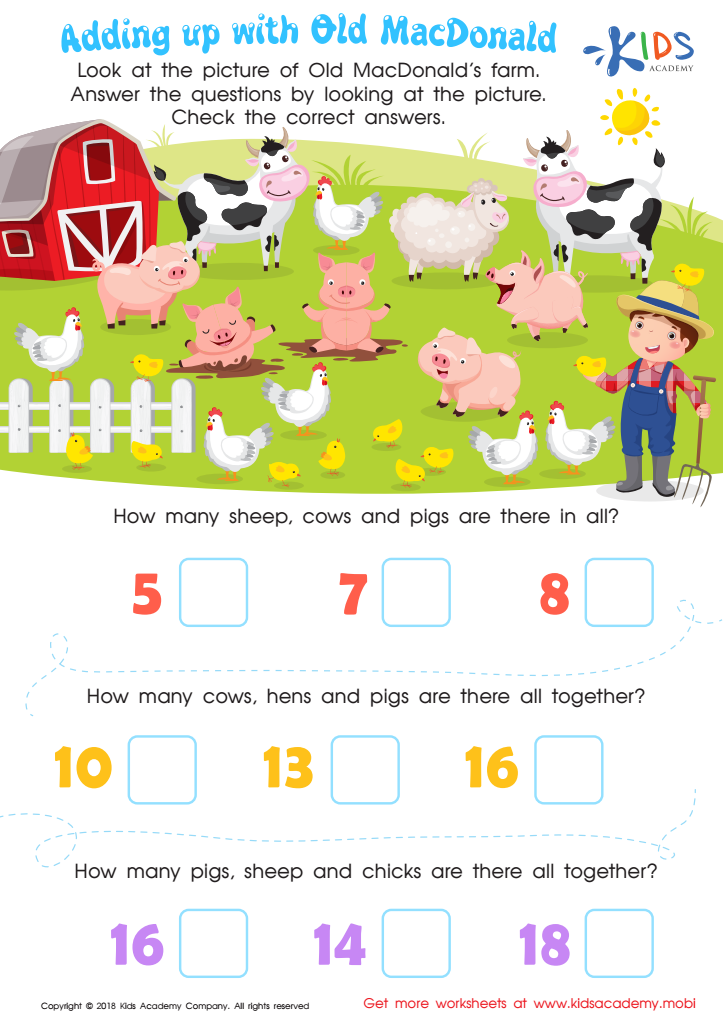
Adding Up with Old MacDonald Worksheet
 Assign to My Students
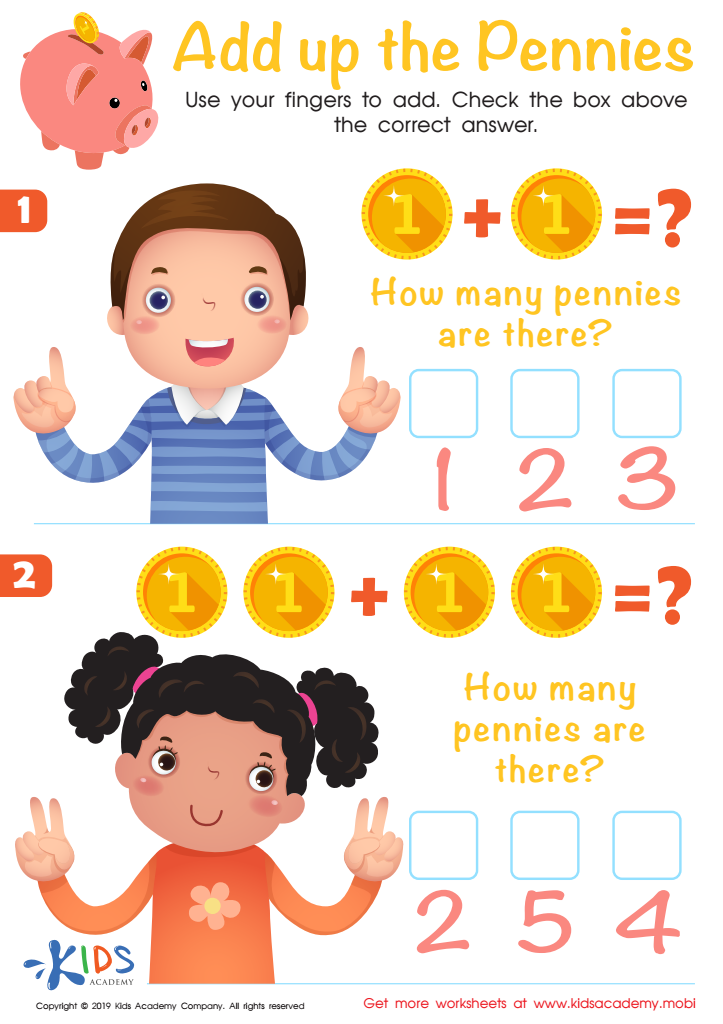
Add up the Pennies Worksheet
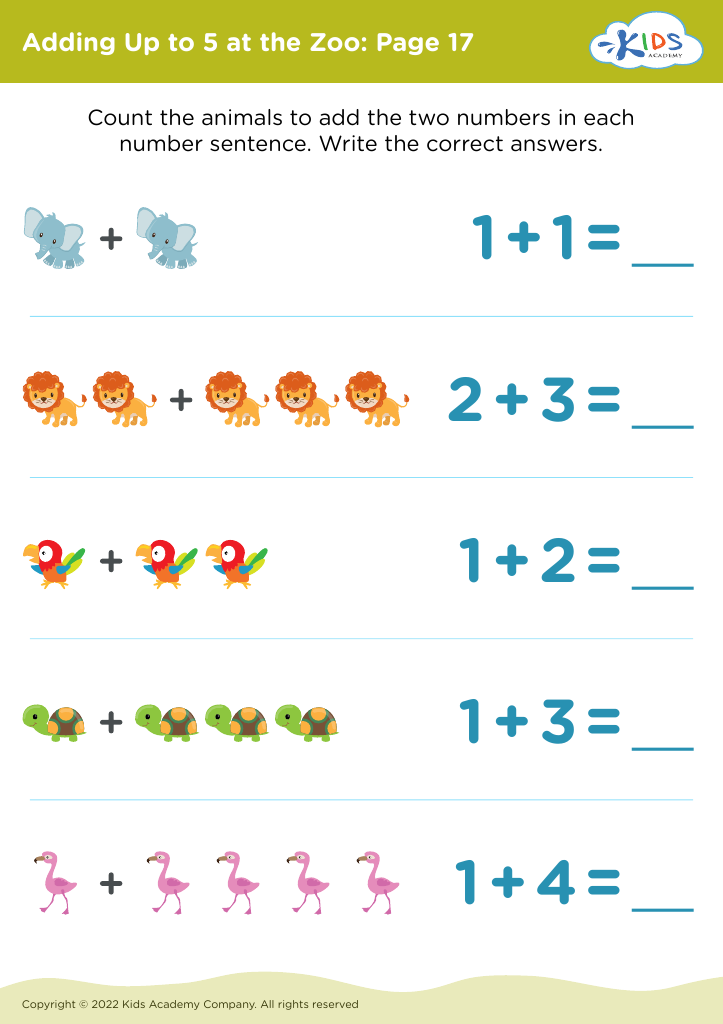
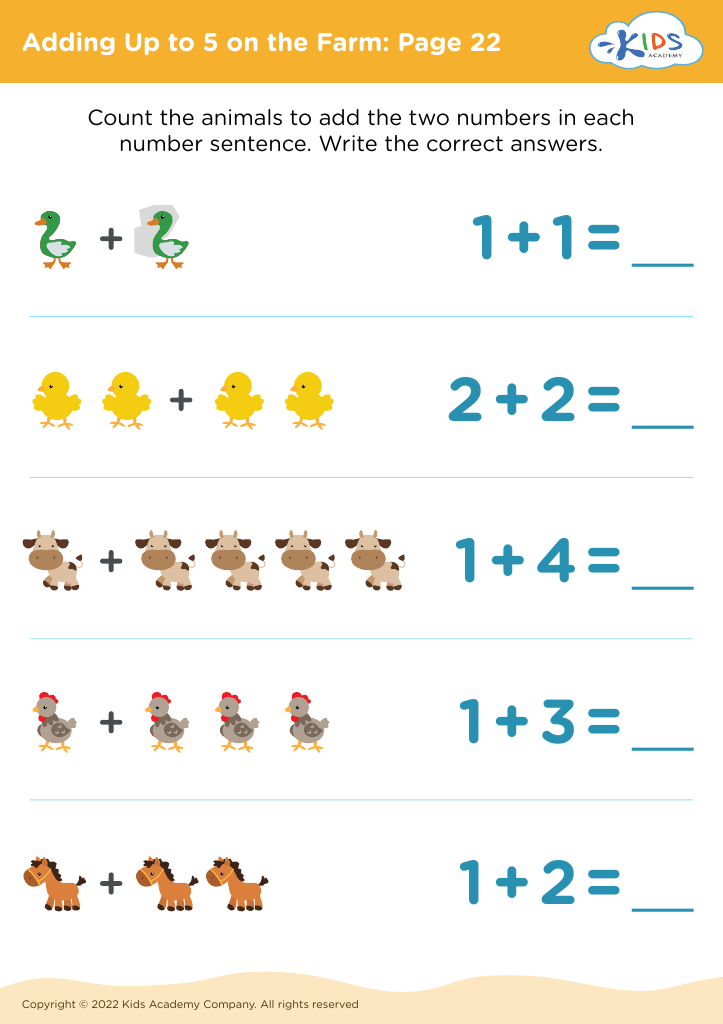








Counting proficiency in addition and subtraction is critical for children aged 5-7, as it lays the foundation for future mathematical understanding and problem-solving skills. During this developmental stage, children develop cognitive abilities and a sense of numeracy that will serve them throughout their academic journey and beyond.
Parents and teachers should care about this proficiency because it fosters critical thinking and boosts confidence in young learners. When children master counting and basic arithmetic, they develop essential skills such as logical reasoning, pattern recognition, and the ability to quantify their environment. These skills are not solely academic; they contribute to everyday tasks, ranging from managing time to budgeting resources.
Moreover, early mastery promotes a positive attitude toward mathematics. When children experience success in counting and simple operations, they build confidence, reducing math anxiety as they encounter more complex concepts later in schooling. Additionally, a strong foundation in addition and subtraction is essential for grasping more advanced topics like multiplication, division, and fractions.
Thus, prioritizing counting proficiency in early education sets the stage for lifelong learning, enables children to thrive in mathematical tasks, and instills confidence and curiosity in the pursuit of knowledge.








