Filters

251 filtered results

Clear all filters
Favorites
With answer key
Interactive

251 filtered results

Difficulty Level

Grade


Check out this FREE Trial Lesson on Addition & Subtraction for age 5-7!

Writing Number Sentences for Addition Picture Problems

Favorites
With answer key
Interactive
  • 5-7
  • Counting skills
  • Addition & Subtraction
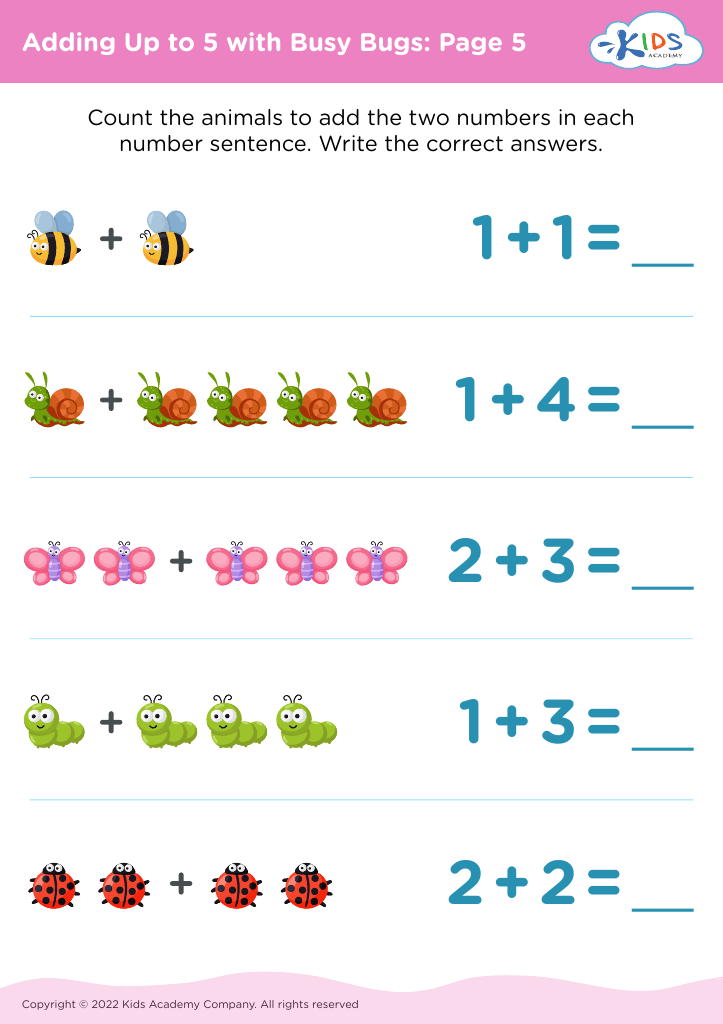
Adding Up to 5 with Busy Bugs: Page 5
Worksheet
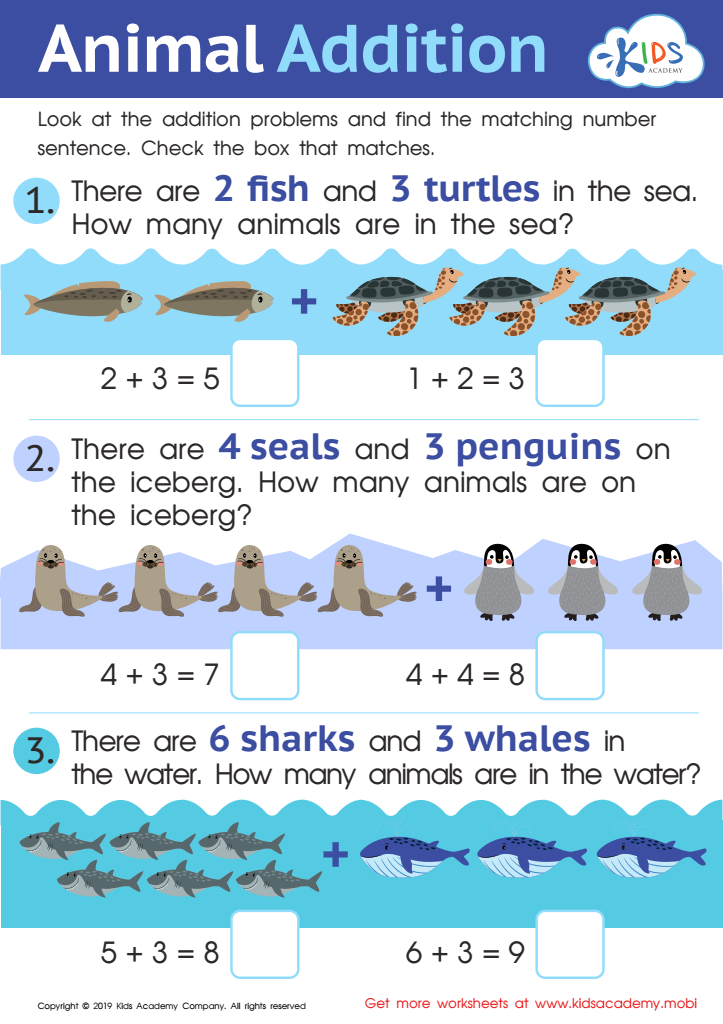
Animal Addition Worksheet

Animal Addition Worksheet

Get your kids learning addition and subtraction with this fun worksheet! Show them that solving equations can be enjoyable and help them match number sentences to the correct boxes. By doing this together, you'll create a positive learning experience that your kids won't forget.
Animal Addition Worksheet
Worksheet
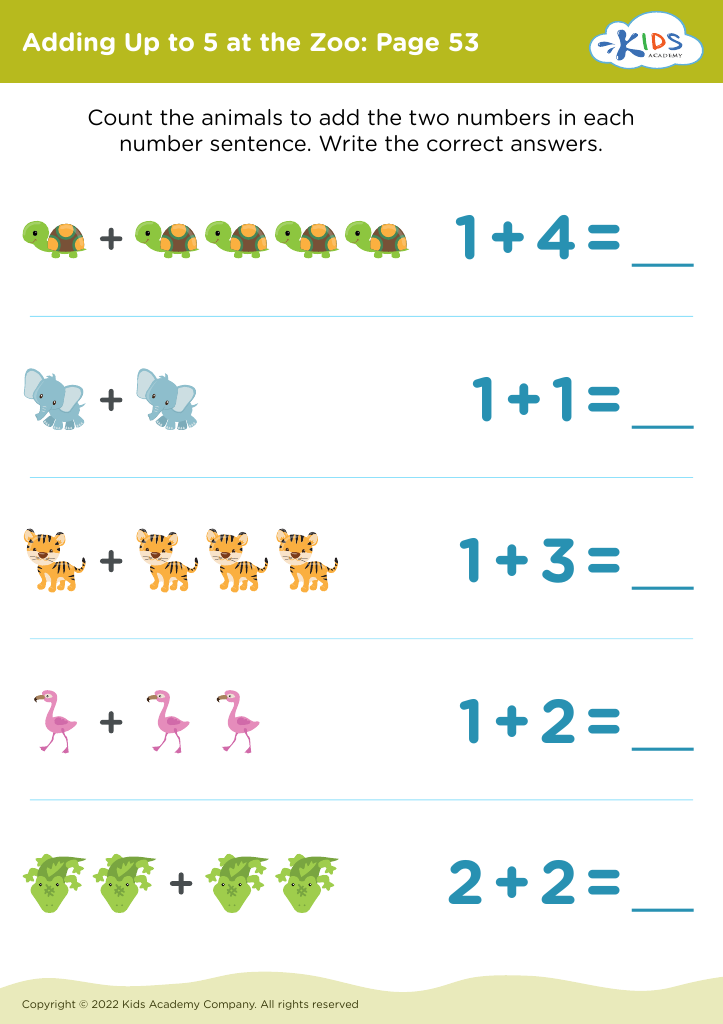
Adding Up to 5 at the Zoo: Page 53
Worksheet
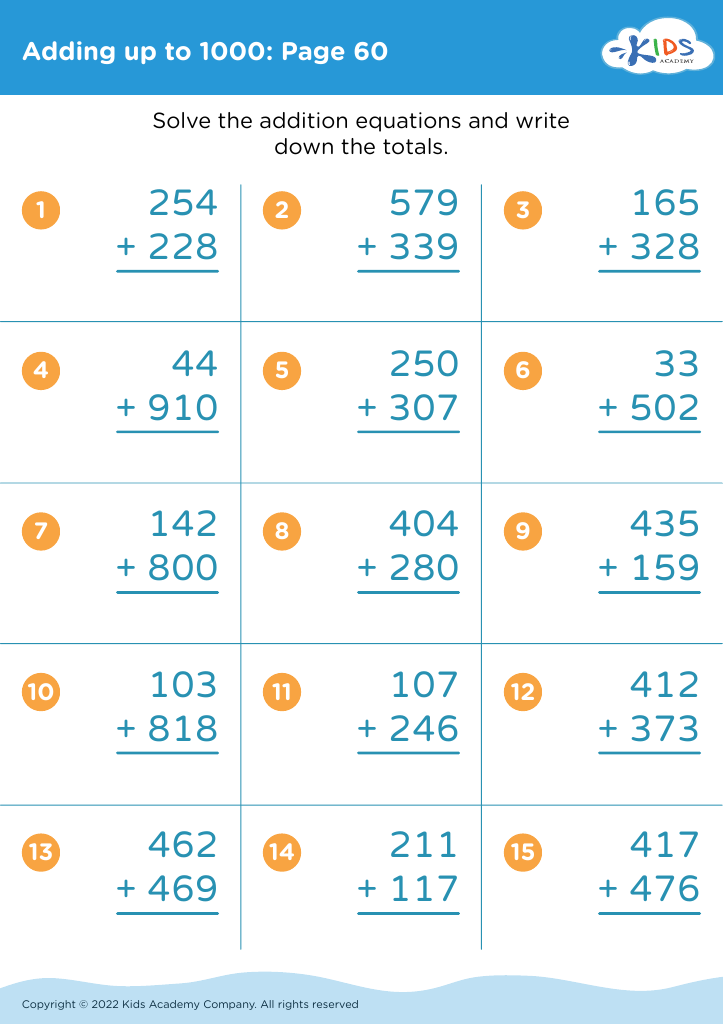
Adding up to 1000: Page 60

Adding up to 1000: Page 60

Adding up to 1000: Page 60
Worksheet
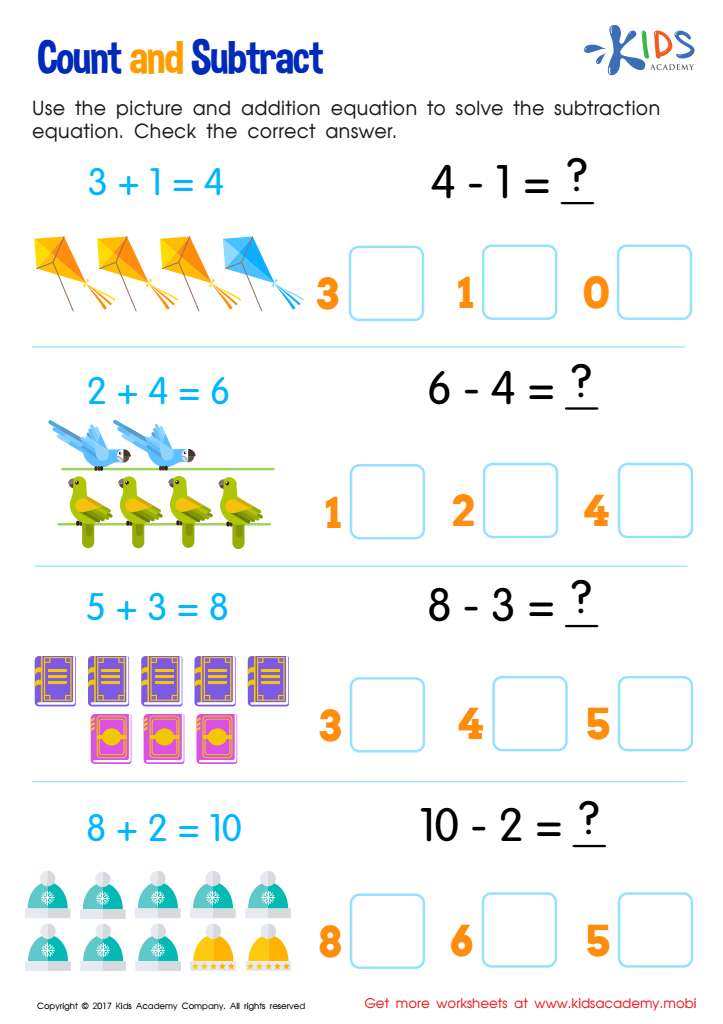
Count and Subtract Worksheet

Count and Subtract Worksheet

This worksheet helps your child learn math via colorful pictures and equations. Count the items together, adding and subtracting as necessary. Your child will be challenged to get the correct total, thereby developing their math skills.
Count and Subtract Worksheet
Worksheet
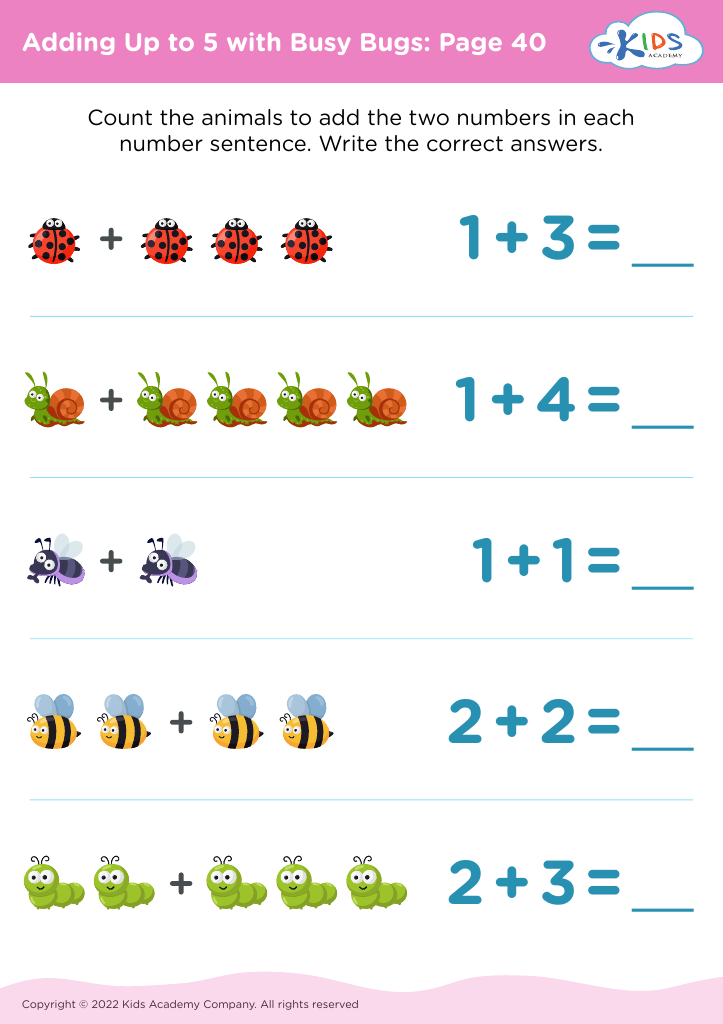
Adding Up to 5 with Busy Bugs: Page 40
Worksheet
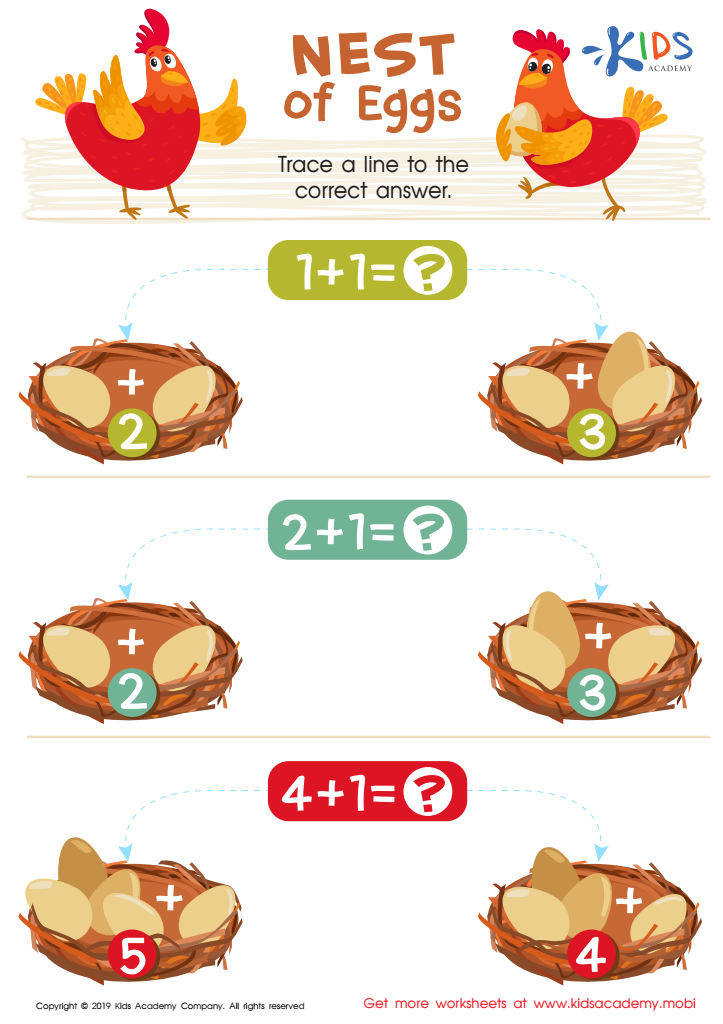
Nest of Eggs Worksheet

Nest of Eggs Worksheet

Help your kids learn math with this worksheet. First discuss the picture with them and then work through the three equations. Encourage them to trace the correct answer afterwards. With your assistance, they'll soon be able to confidently add numbers.
Nest of Eggs Worksheet
Worksheet
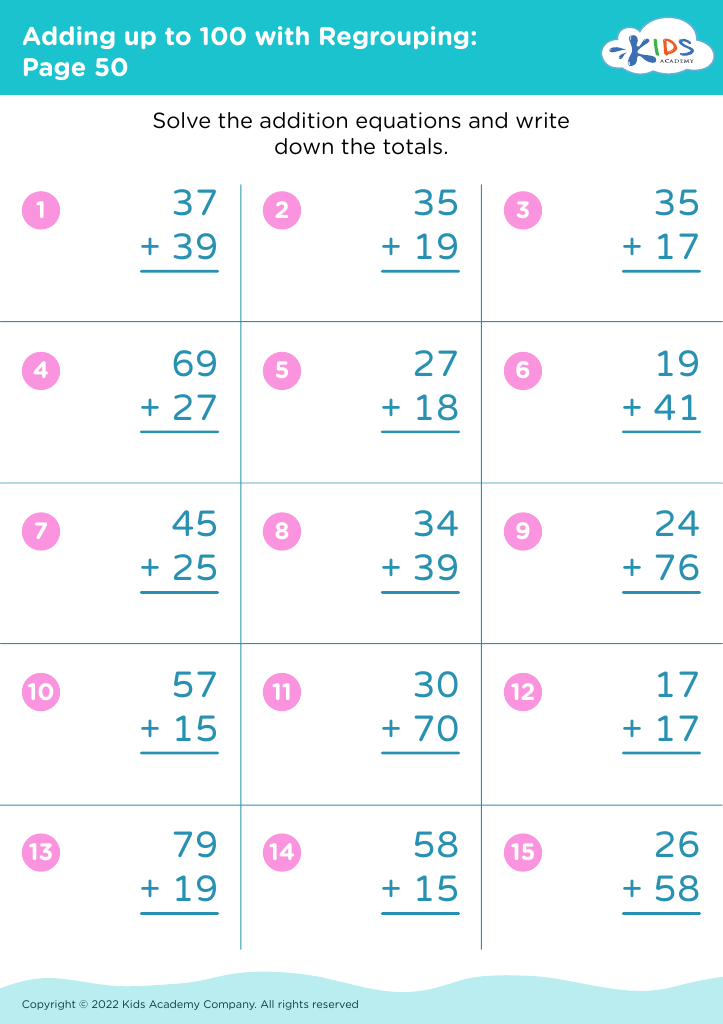
Adding up to 100 with Regrouping: Page 50
Worksheet
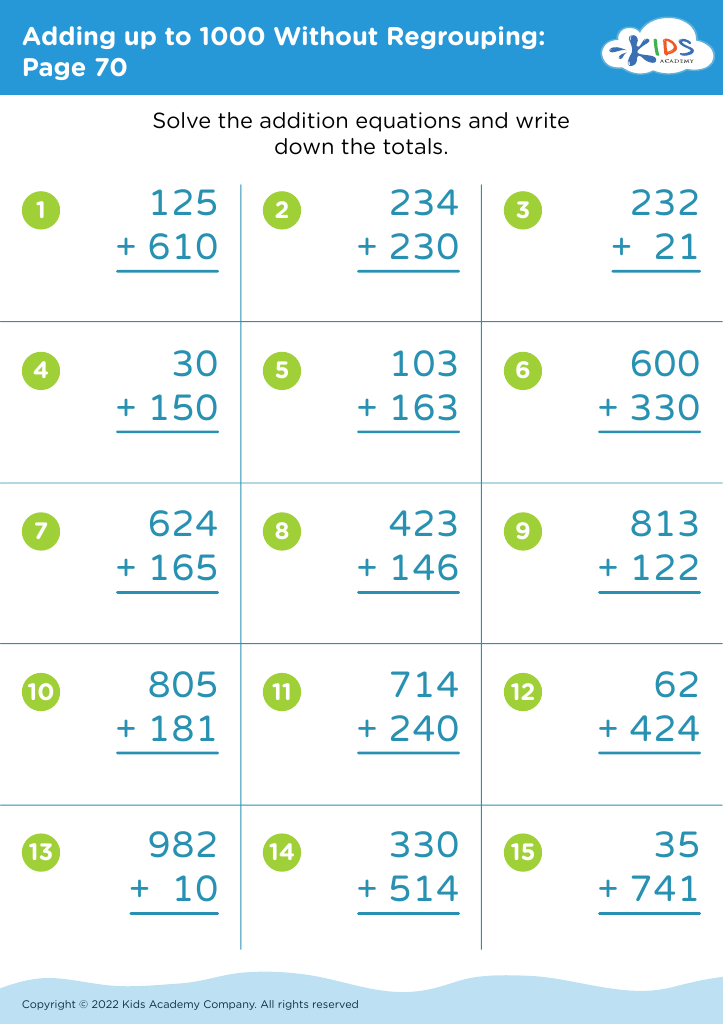
Adding up to 1000 Without Regrouping: Page 70
Worksheet
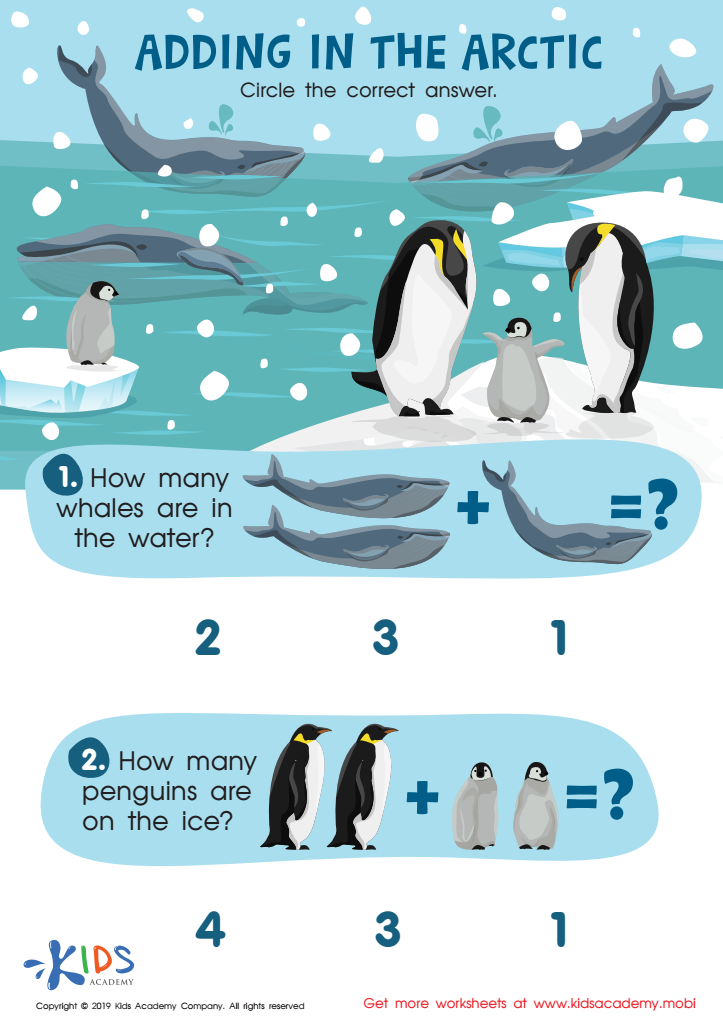
Adding in the Arctic Worksheet
Adding in the Arctic Worksheet
Introduce your kids to the Arctic with this worksheet. Let them look at the pictures, teach them the name of the animals, and help them add up the correct number. Ask your kids to tell you some of the animals found there and what the weather is like. It's a fun and educational way to learn more about the Arctic.
Adding in the Arctic Worksheet
Worksheet
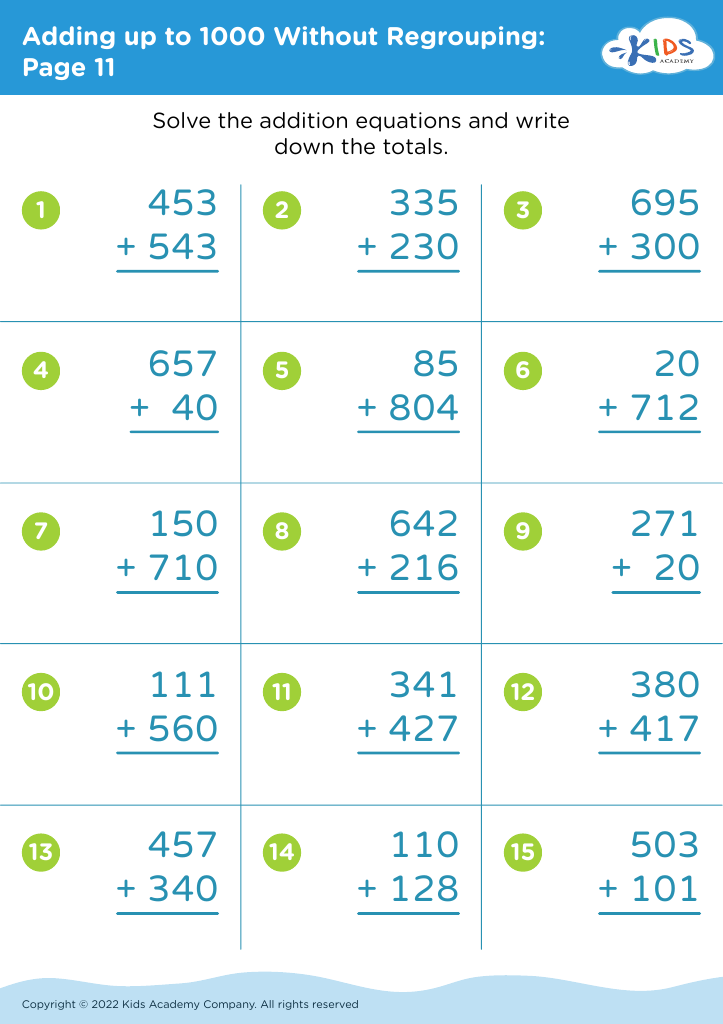
Adding up to 1000 Without Regrouping: Page 11
Worksheet
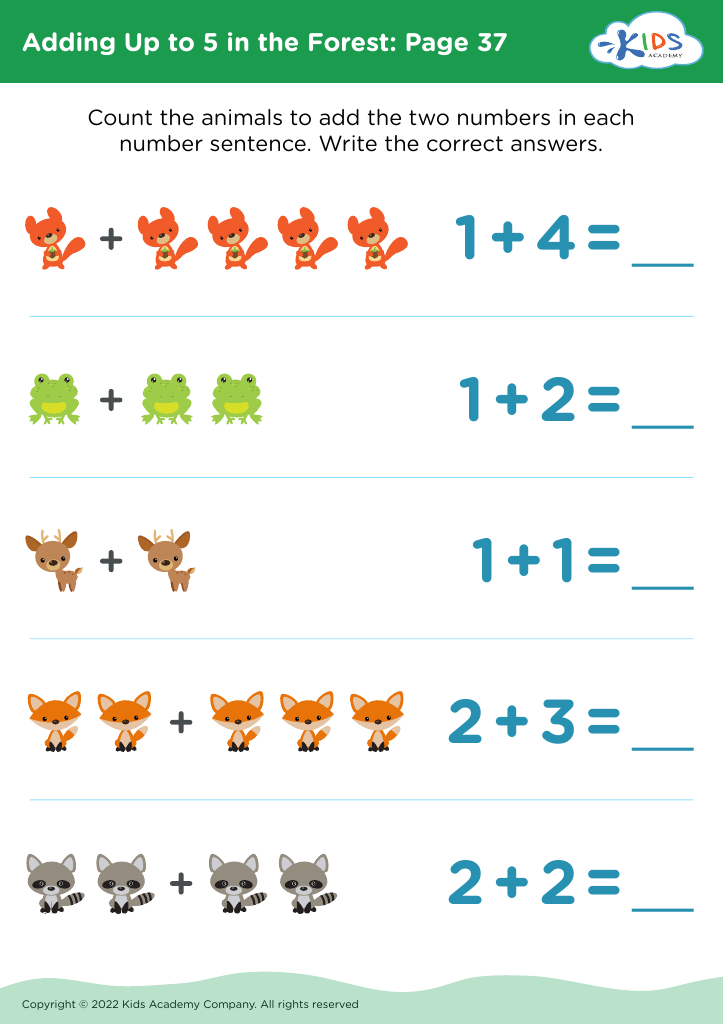
Adding Up to 5 in the Forest: Page 37
Worksheet
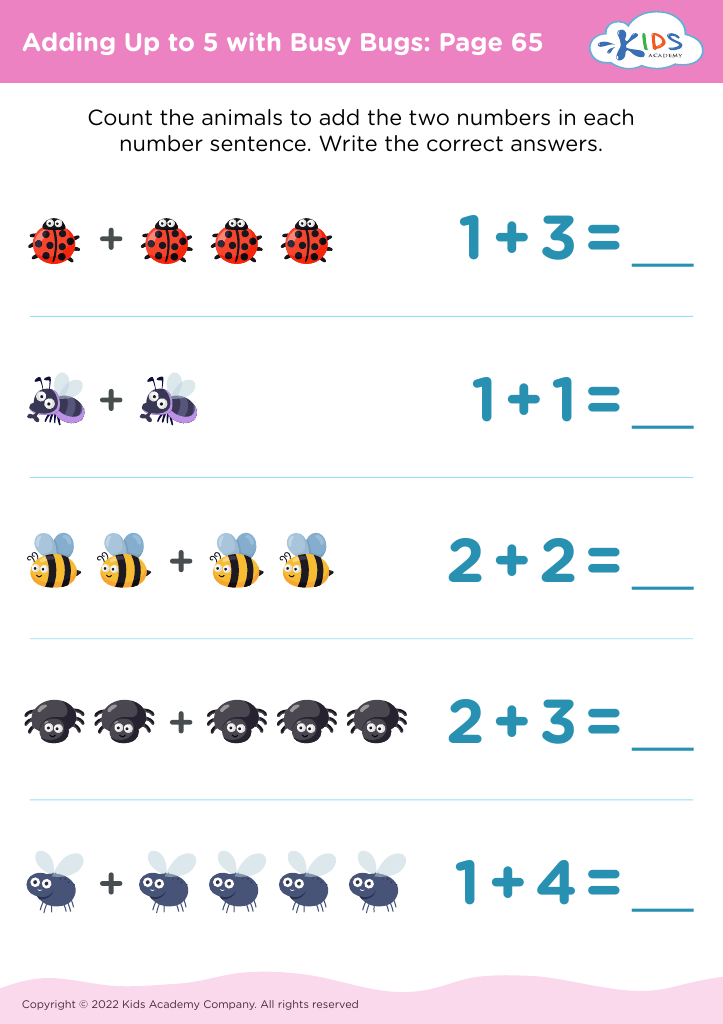
Adding Up to 5 with Busy Bugs: Page 65
Worksheet
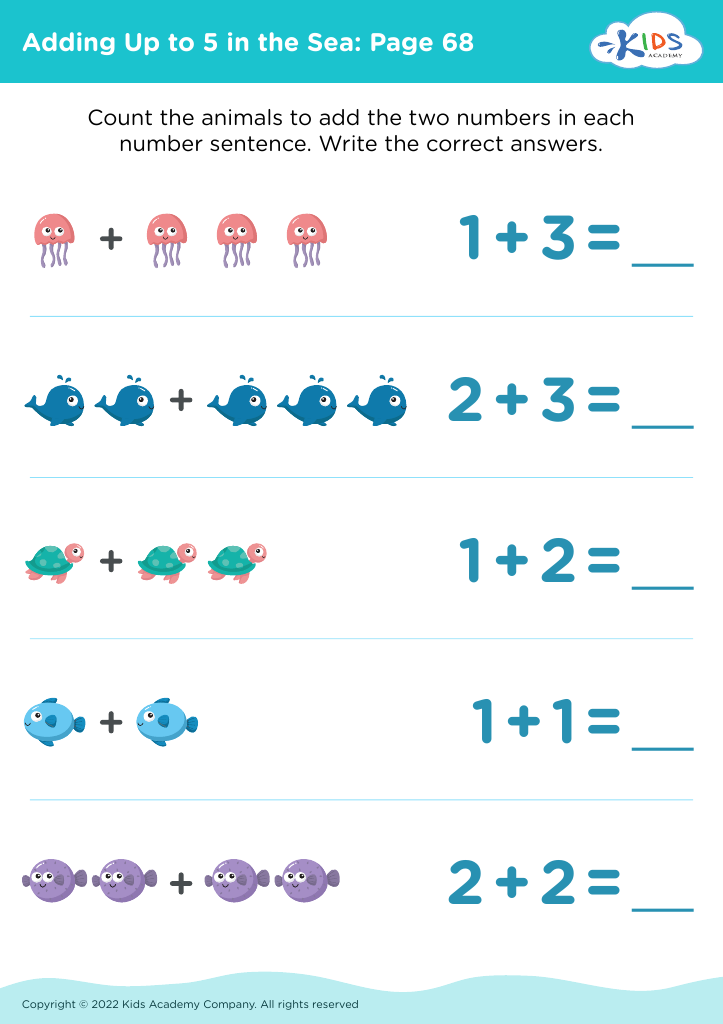
Adding Up to 5 in the Sea: Page 68
Worksheet
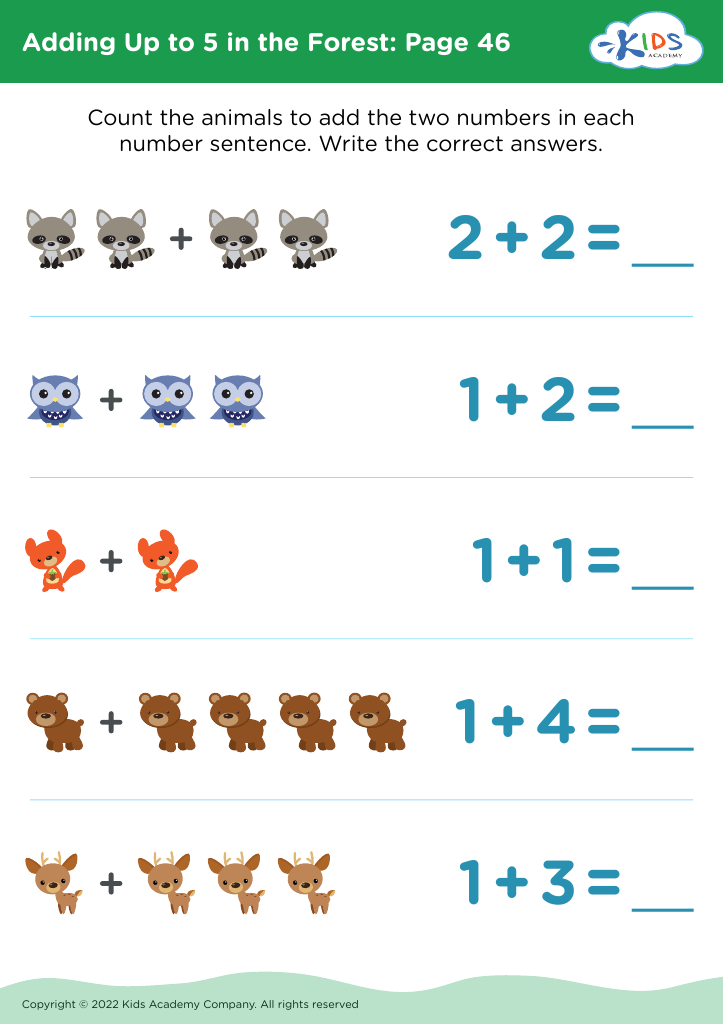
Adding Up to 5 in the Forest: Page 46
Worksheet
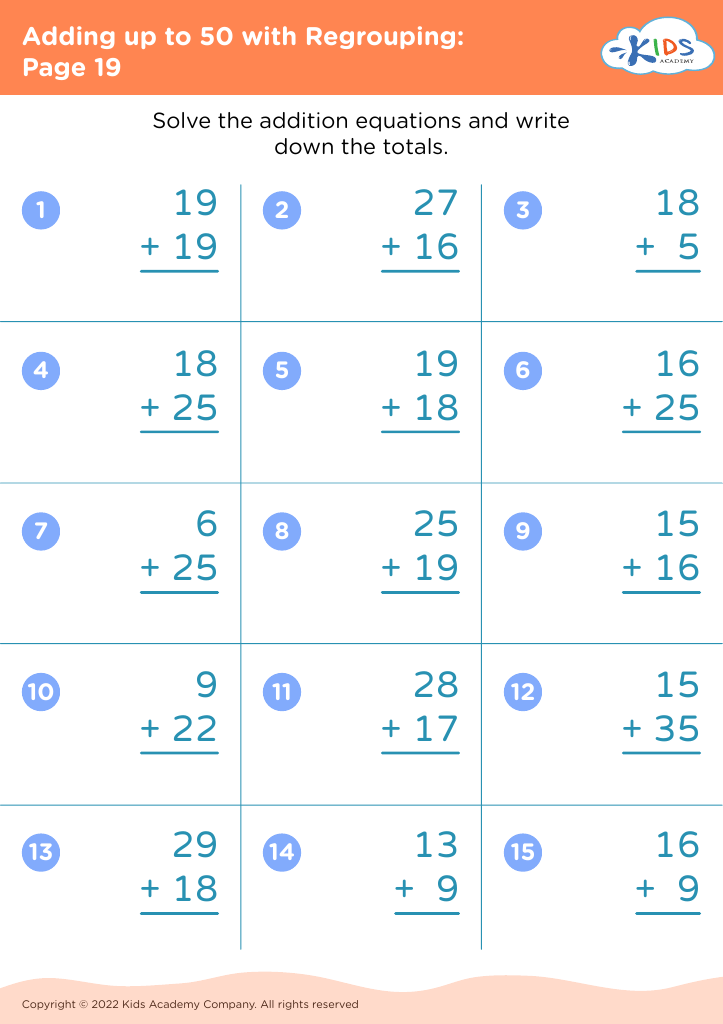
Adding up to 50 with Regrouping: Page 19
Worksheet
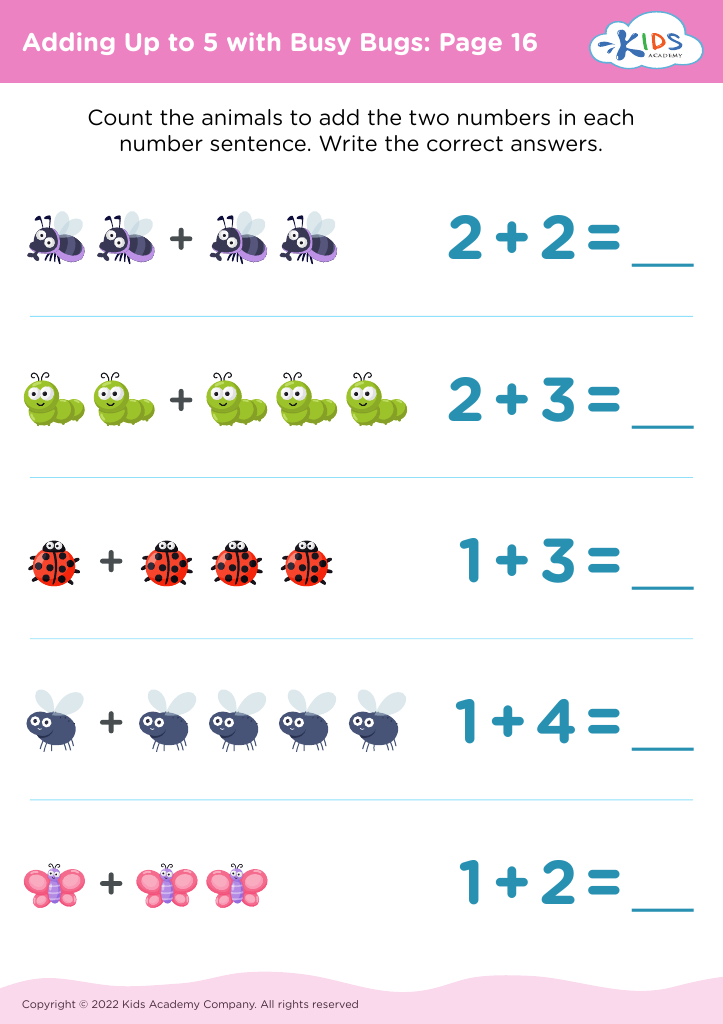
Adding Up to 5 with Busy Bugs: Page 16
Worksheet
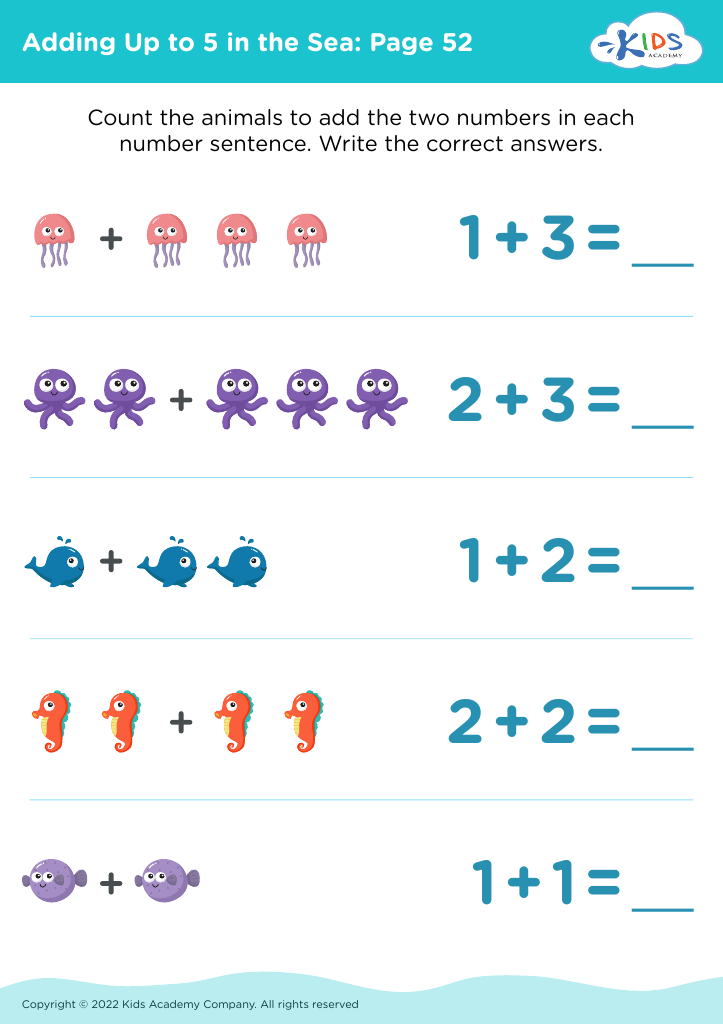
Adding Up to 5 in the Sea: Page 52
Worksheet
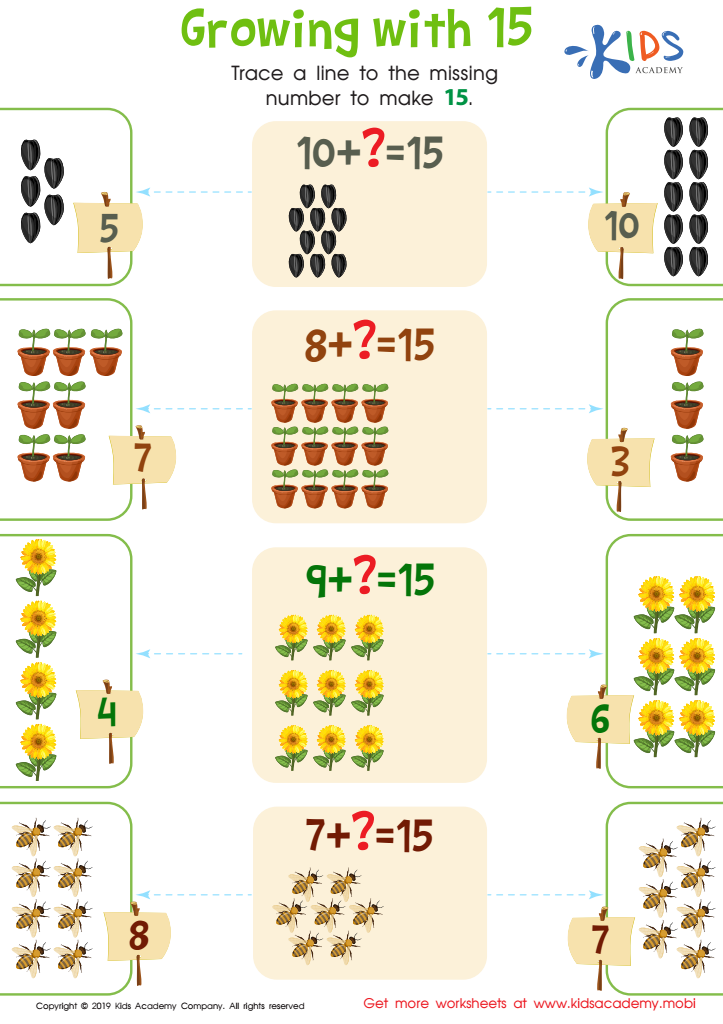
Growing with 15 Worksheet
Growing with 15 Worksheet
Remind your kids that adding different sets of numbers can give the same total (e.g. 2+3=5, 4+1=5). Test their understanding by asking them for more examples. Move onto the worksheet: count objects, then trace the line to the number making a total of 15.
Growing with 15 Worksheet
Worksheet
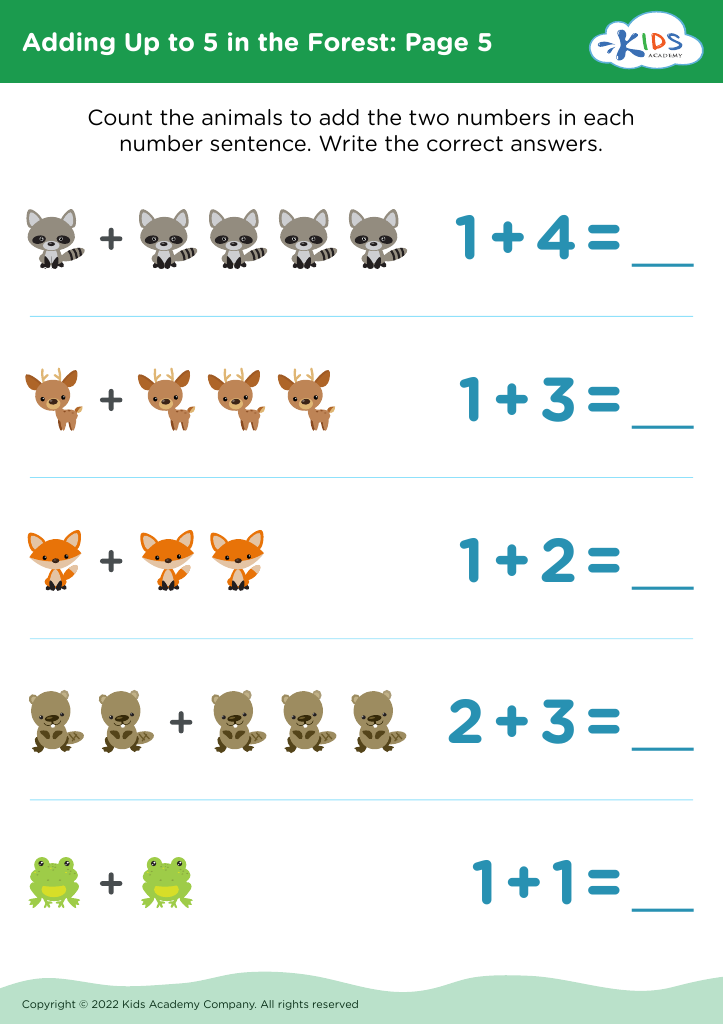
Adding Up to 5 in the Forest: Page 5
Worksheet
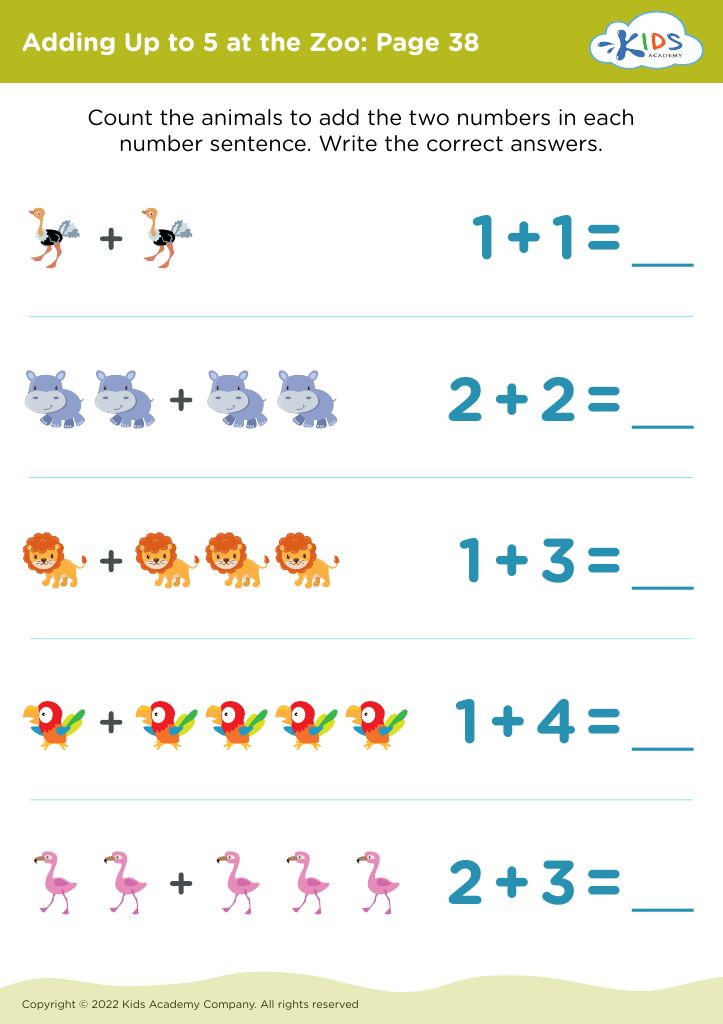
Adding Up to 5 at the Zoo: Page 38
Worksheet
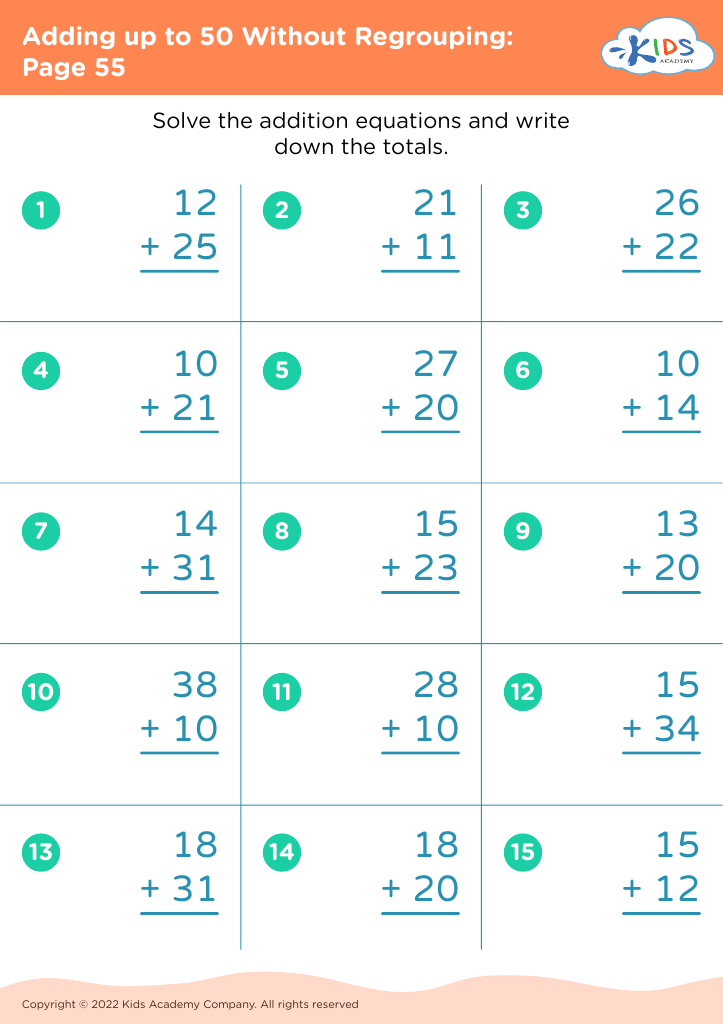
Adding up to 50 Without Regrouping: Page 55
Worksheet
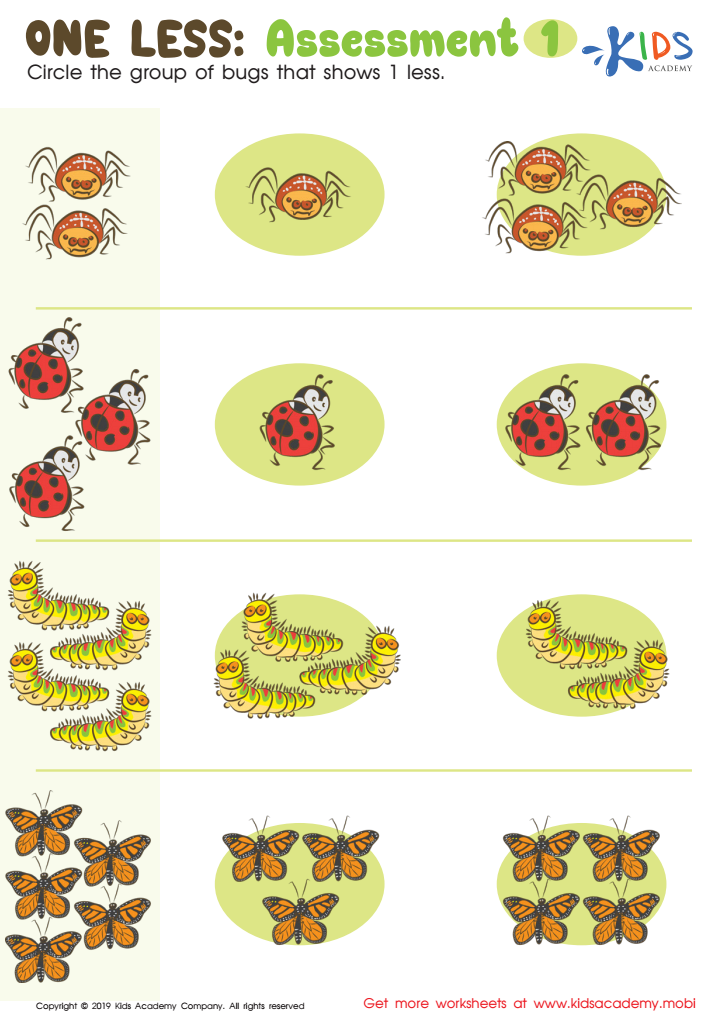
One Less: Assessment 1 Worksheet

One Less: Assessment 1 Worksheet

Help your kids with counting using this worksheet that has pictures of bugs! There are four different bugs and insects. Show them each one and ask them to count, then circle the group that has 1 less than the previous group. Don't worry if your kids don't like bugs - it's just a picture!
One Less: Assessment 1 Worksheet

Worksheet
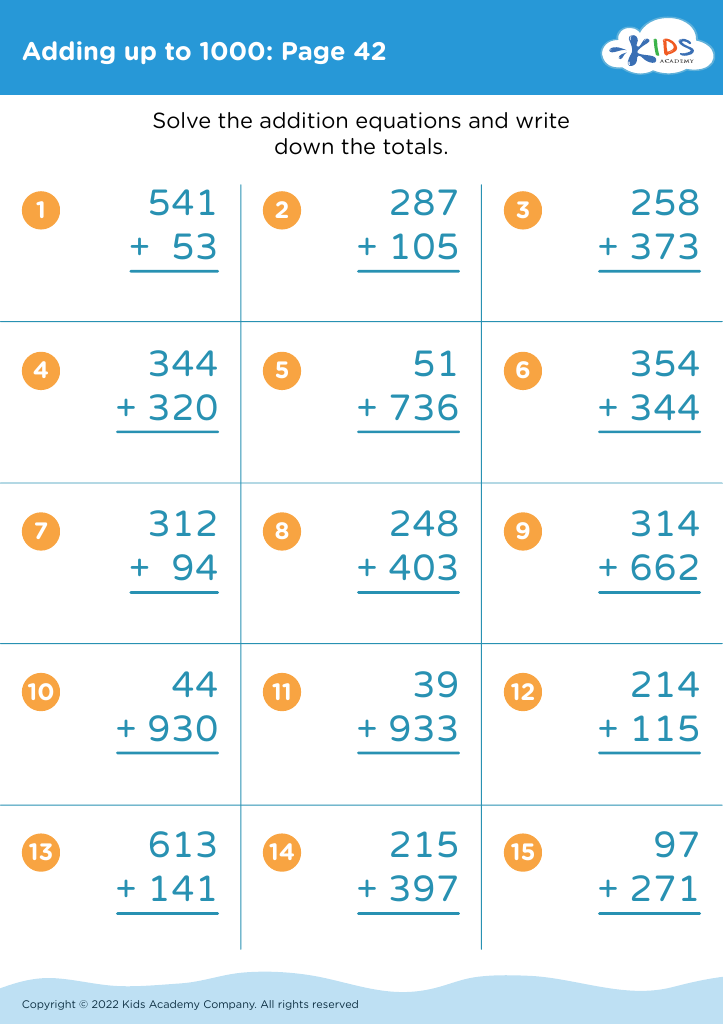
Adding up to 1000: Page 42

Adding up to 1000: Page 42

Adding up to 1000: Page 42
Worksheet


Counting skills and the ability to perform basic addition and subtraction are foundational for young learners aged 5-7. At this stage, children are developing their cognitive abilities, and a solid understanding of these concepts not only fosters numerical proficiency but also boosts overall literacy in math.

Parents and teachers should care about counting skills, addition, and subtraction for several reasons. Firstly, these skills are essential for everyday tasks, such as budgeting, measuring, and sharing. Mastery of counting lays the groundwork for more complex math concepts, making future learning easier and more effective.

Moreover, these skills enhance critical thinking and problem-solving abilities. By exploring addition and subtraction, children learn to analyze situations, make predictions, and verify outcomes—capabilities that extend beyond the math classroom.

Finally, developing these foundational skills instills a sense of confidence in young learners. When children grasp these basic concepts, they are more likely to approach future math challenges with a positive attitude, reducing anxiety around the subject. In essence, nurturing counting, addition, and subtraction not only prepares children for academic success but also equips them with crucial life skills that will serve them well throughout their lives.