Fraction representation Addition & Subtraction Worksheets for Ages 5-7
3 filtered results
-
From - To
Our Fraction Representation: Addition & Subtraction Worksheets for ages 5-7 provide young learners with a fun and engaging way to practice fundamental math skills. Tailored to early grade students, these worksheets offer visually appealing exercises that simplify the concepts of adding and subtracting fractions. With colorful illustrations and step-by-step instructions, children will build confidence in their abilities while developing a strong foundation in fractions. Perfect for classroom use or extra practice at home, these worksheets equip kids with essential knowledge to excel in math. Help your child master fractions through engaging and interactive learning tools from Kids Academy!
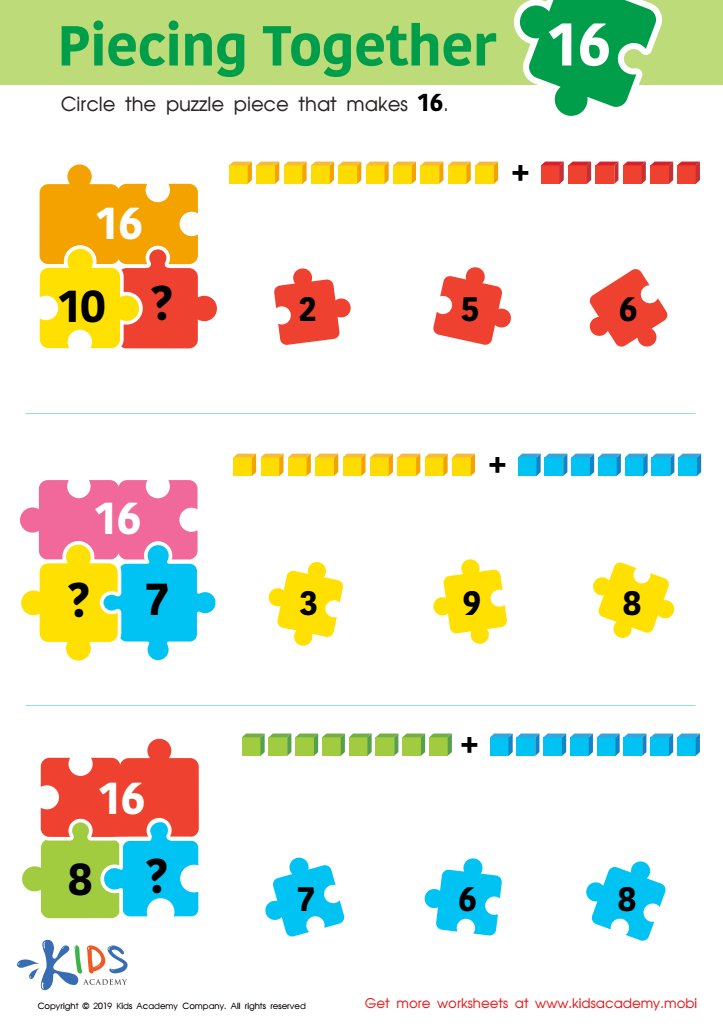
Piecing Together 16 Worksheet
 Assign to My Students
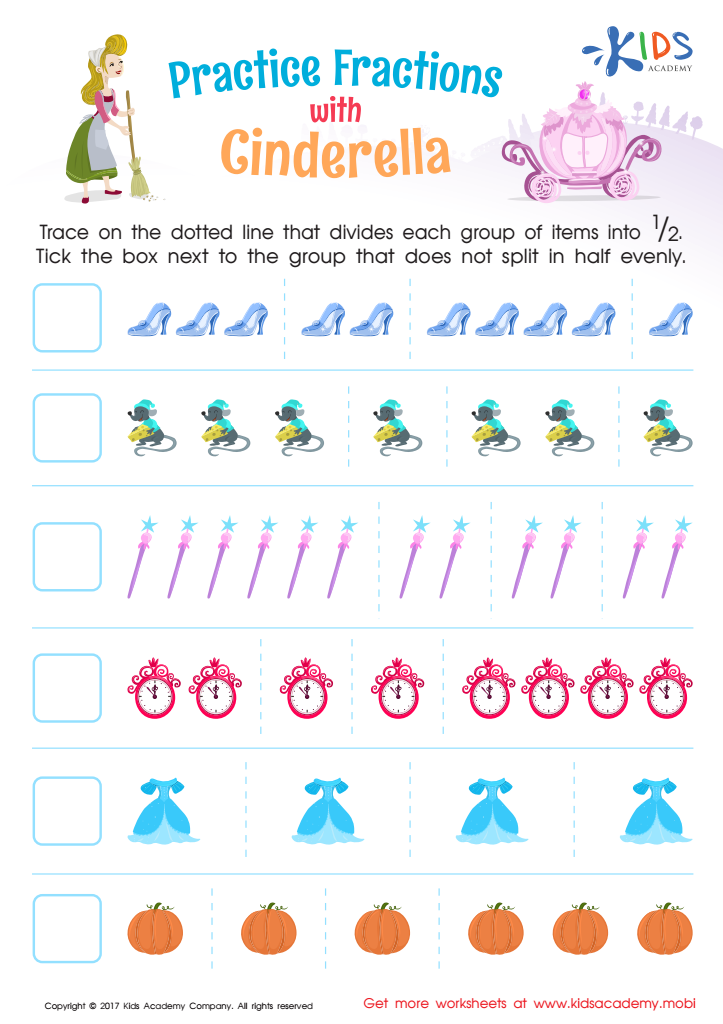
Fractions: Cinderella Printable








Understanding fraction representation, as well as addition and subtraction of fractions, is essential for young learners, even at ages 5-7. Introducing these concepts early lays the foundation for critical future mathematical skills. Here's why parents and teachers should prioritize this:
First, grasping fractions at a young age enhances cognitive flexibility. Children learn to see numbers in multiple ways, breaking away from the whole number mentality, thus strengthening their number sense.
Second, it ties directly into everyday life experiences. Children frequently encounter fractions in daily scenarios like sharing treats or dividing toys, making the concept relatable and practical.
Third, early introduction to fractions prepares children for more advanced mathematical concepts. A solid foundation in fraction representation can lead smoothly into more complex topics such as ratios, percentages, and algebra, promoting long-term academic success.
Moreover, fostering an early interest in fractions can boost confidence and reduce anxiety around math. When children understand these foundational concepts early on, they develop a more positive attitude toward the subject overall.
Finally, fractions teach problem-solving skills and logical thinking. Figuring out how to add or subtract parts of a whole encourages critical thinking and precision, skills that are invaluable across all areas of learning and future day-to-day activities.
Incorporating fraction lessons through engaging, age-appropriate activities can thus significantly contribute to a child's overall mathematical literacy and cognitive growth.








