Problem-Solving Skills Division Worksheets for Ages 5-7
3 filtered results
-
From - To
Enhance your child's mathematical foundations with our Problem-Solving Skills Division Worksheets for ages 5-7. Designed to make learning division both fun and effective, these printable worksheets focus on developing critical thinking and problem-solving abilities. Each engaging activity uses colorful visuals, relatable scenarios, and step-by-step guidance to simplify complex concepts. Our worksheets cater to the diverse learning styles of young learners, ensuring they stay motivated and confident as they tackle basic division. Give your child the tools they need to succeed in math while nurturing a love for learning with these valuable educational resources.
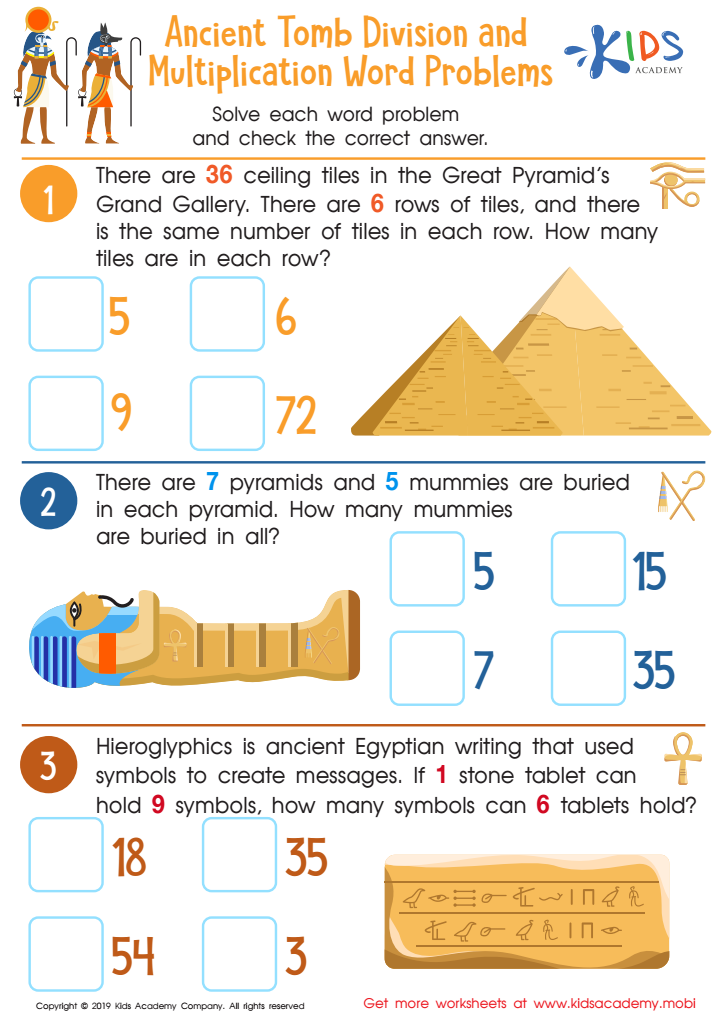
Ancient Tomb Division and Multiplication Word Problems Worksheet
 Assign to My Students
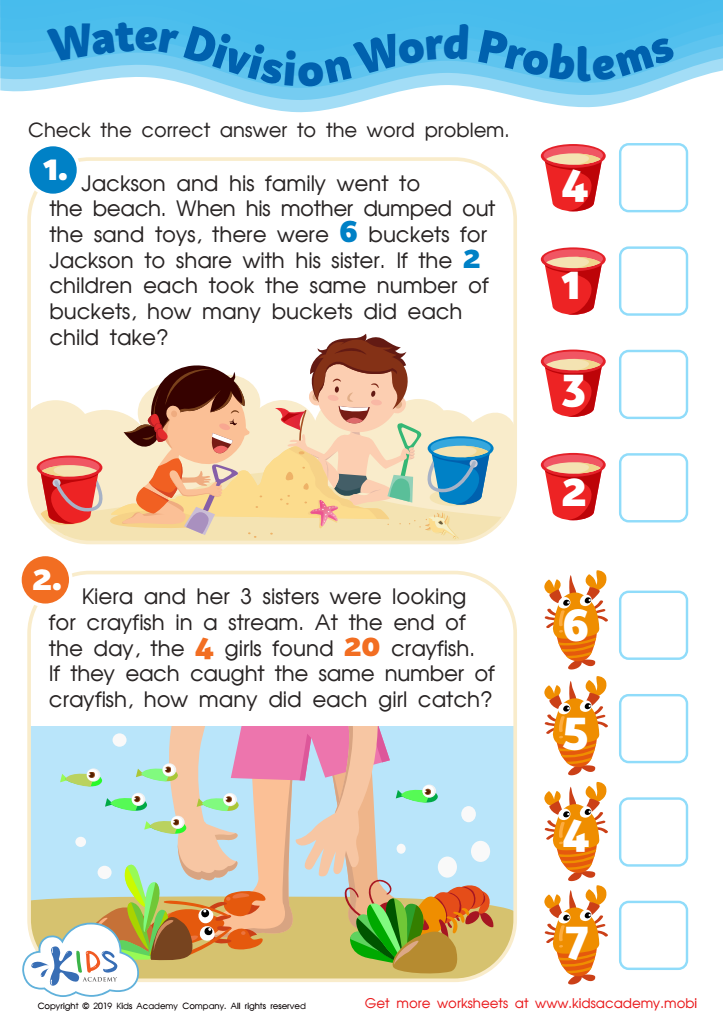
Water Division Word Problems Worksheet
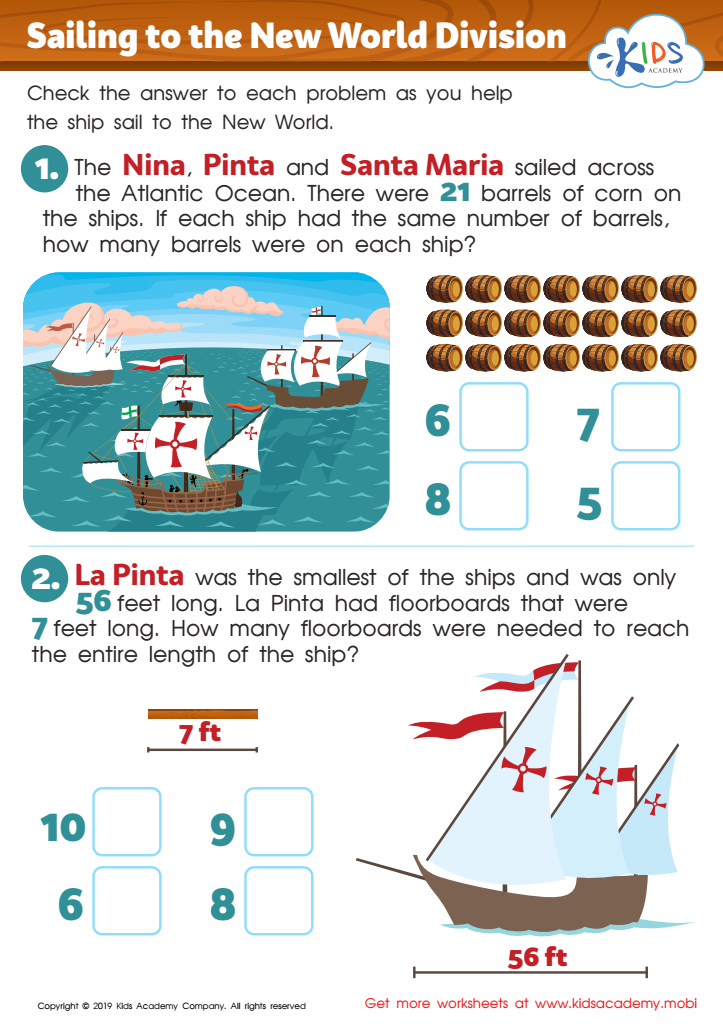
Sailing to the New World Division Worksheet








Problem-solving skills are essential for young children aged 5-7 because they lay the foundation for future learning and development. At this crucial stage, kids are like sponges, rapidly absorbing information from their surroundings. Introducing problem-solving activities helps develop critical thinking, creativity, and resilience, skills that will benefit them throughout their educational journey and into adulthood.
For parents and teachers, focusing on problem-solving allows children to learn how to approach challenges methodically. When children engage in problem-solving, they learn to break down tasks into manageable steps, fostering analytical skills. By navigating these small challenges, they gain confidence and perseverance, learning that it’s okay to make mistakes and try again—key components of a growth mindset.
Moreover, problem-solving promotes social development. Collaborative problem-solving activities teach children how to communicate, share ideas, and work effectively with others, enhancing their social and emotional intelligence. This cooperation and the sharing of diverse ideas enrich their understanding and solutions.
Lastly, early exposure to problem-solving can spark an interest in subjects like math and science. Concepts like division become easier to grasp when children have foundational problem-solving skills. Parents and teachers who prioritize these skills provide children with tools necessary for academic success and practical life skills.








