Categorization skills Geometry Worksheets for Ages 5-7
4 filtered results
-
From - To
Unlock the potential in young learners with our engaging and educational "Categorization Skills Geometry Worksheets" for ages 5 to 7. Through bright, interactive exercises, children explore geometrical shapes and their properties, honing critical thinking and categorization skills. These worksheets encourage kids to sort, match, and classify shapes, promoting a solid understanding of geometric concepts in a fun, approachable way. Perfect for early math learners, our worksheets support cognitive development, spatial awareness, and problem-solving abilities. Equip your child with the foundational skills needed for future success in math through engaging, expertly-designed activities by knowledgeable educators.
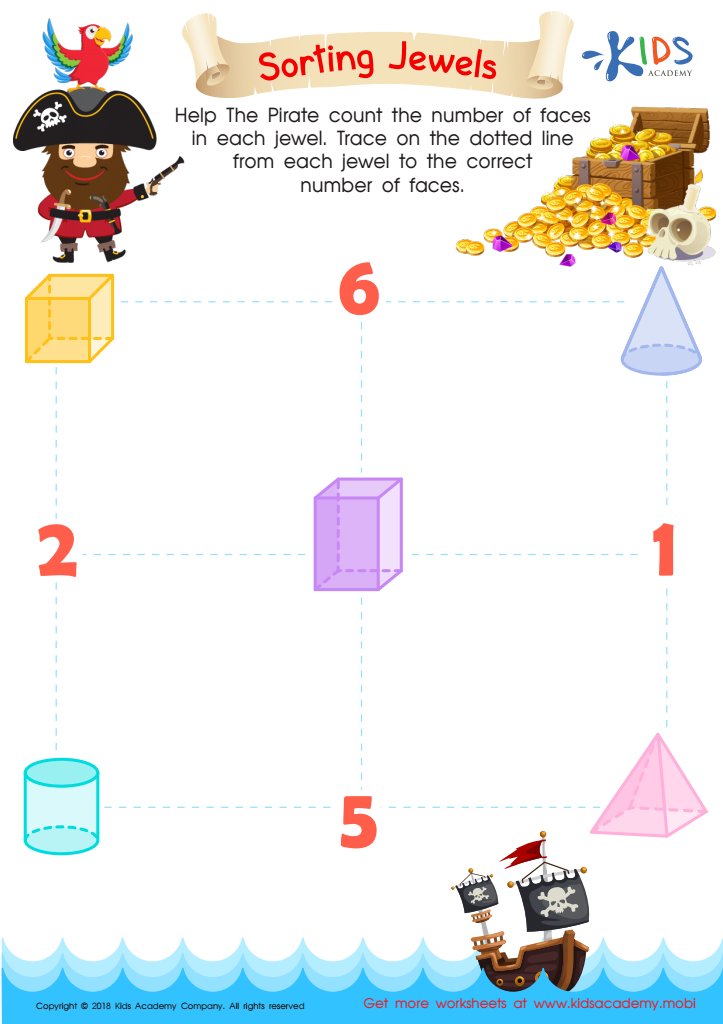
Sorting Jewels Worksheet
 Assign to My Students











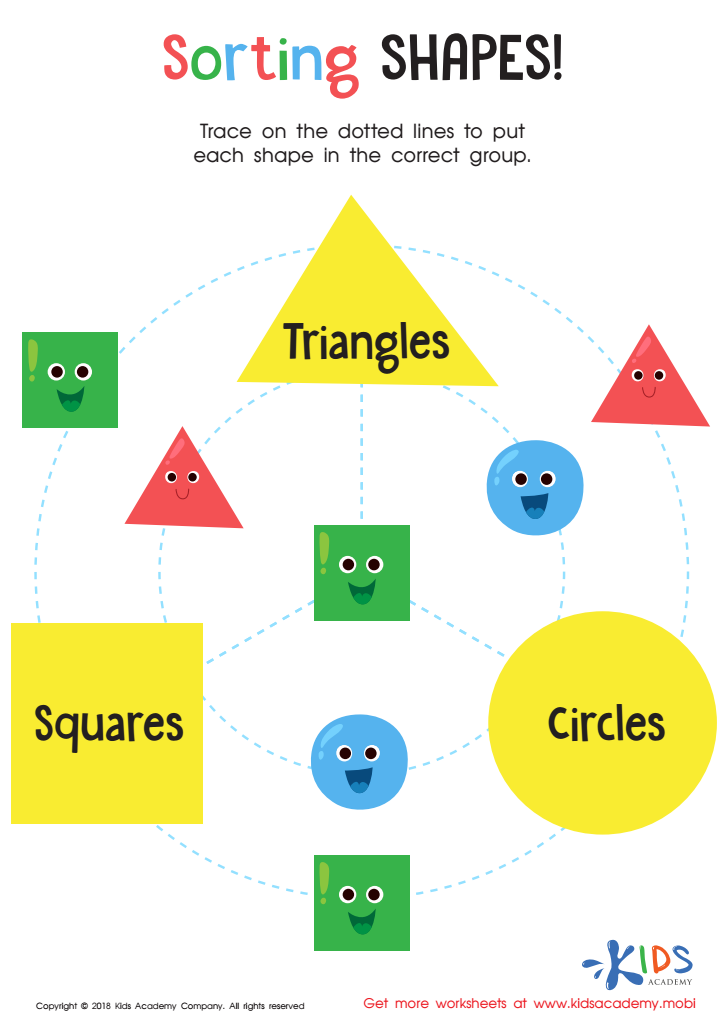
Sorting Shapes - Part 3 Worksheet
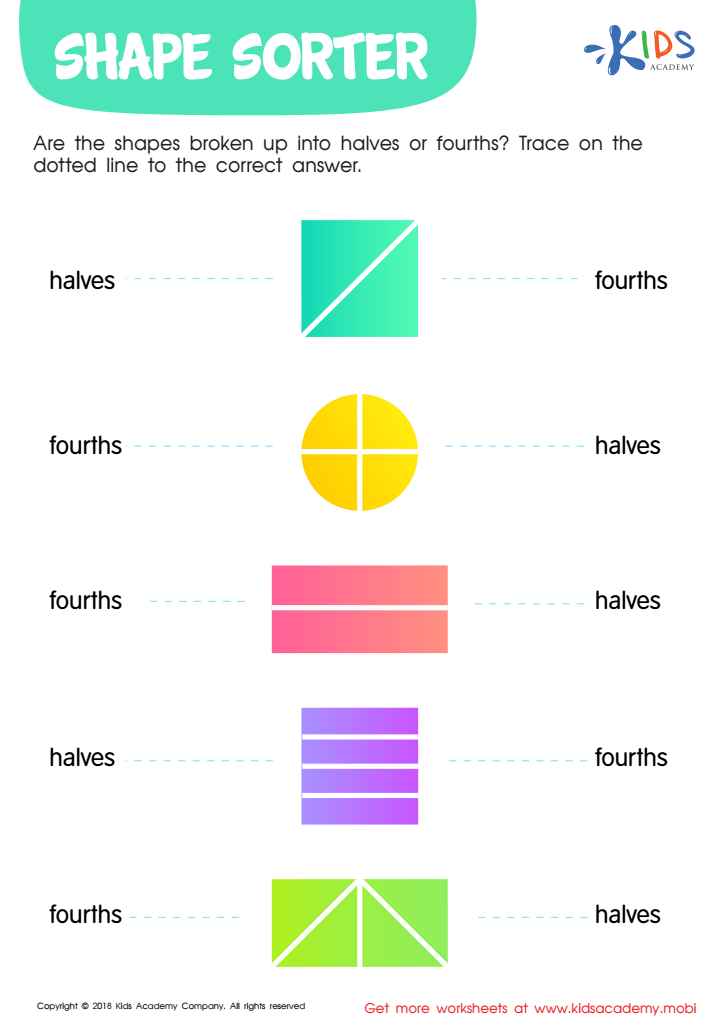
Shape Sorter Worksheet
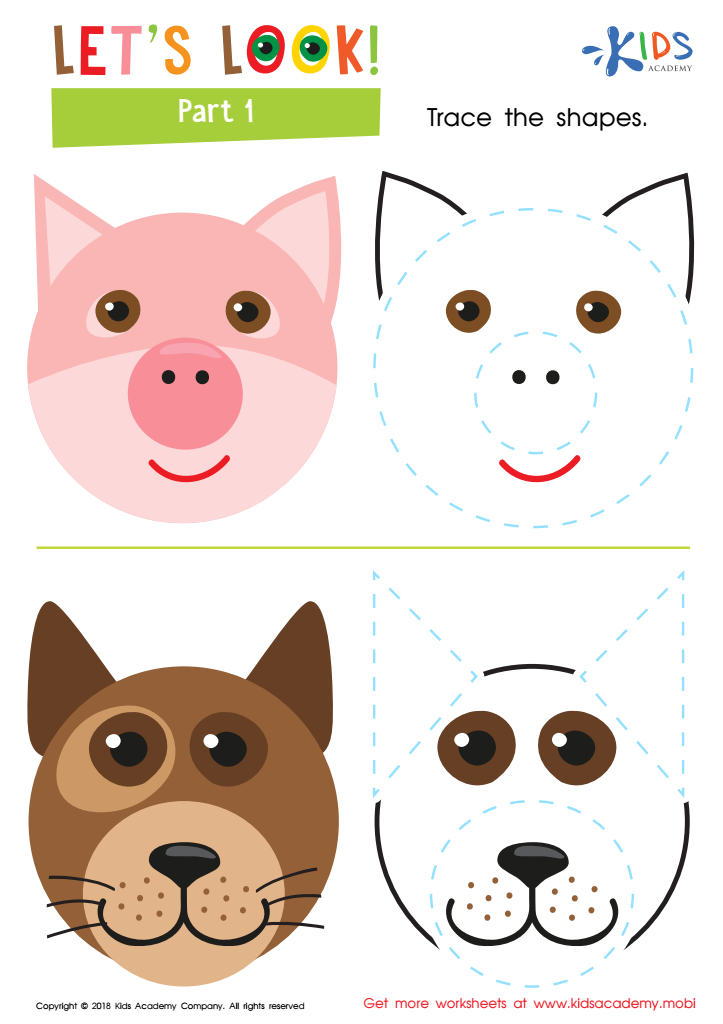
Let's Look! Part 1 Worksheet








Parents and teachers should care about categorization skills in geometry for children ages 5-7 because these skills lay the foundation for critical cognitive development and academic success. At this age, children are naturally curious and starting to understand the world around them through patterns and shapes. Developing strong categorization skills in geometry helps them make sense of their environment by recognizing, comparing, and grouping different shapes in a systematic way.
Geometry in early childhood education supports spatial reasoning, which is crucial for problem-solving and critical thinking. When children learn to categorize shapes, they enhance their ability to analyze objects, recognize their properties, and understand relationships between them. This skill not only fosters mathematical thinking but also boosts language development as they learn to describe and communicate their observations effectively.
Moreover, early exposure to geometry and categorization prepares children for future, more complex mathematical concepts. It helps them perform better in subjects like science, technology, engineering, and mathematics (STEM) by building a strong mathematical foundation. Additionally, hands-on activities, such as sorting blocks or drawing shapes, increase fine motor skills and encourage collaboration with peers, promoting social and emotional development.
In summary, focusing on categorization skills in geometry for young children is vital for their overall cognitive growth, academic readiness, and the development of essential life skills.








