Visual Perception Skills Geometry Worksheets for Ages 5-7
3 filtered results
-
From - To
Unlock the world of geometry for your early learners with our engaging Visual Perception Skills Geometry Worksheets designed specifically for ages 5-7! These worksheets provide a fun and effective way to enhance your child's ability to interpret and analyze shapes, spatial relationships, and patterns. By completing these activities, children will build essential visual perception skills, fostering critical thinking and problem-solving abilities. Our colorful, age-appropriate worksheets make learning enjoyable and interactive, ensuring your little ones stay motivated while mastering foundational geometry concepts. Perfect for classroom use or at-home learning, these resources are essential for developing confident young mathematicians. Explore the joy of learning today!
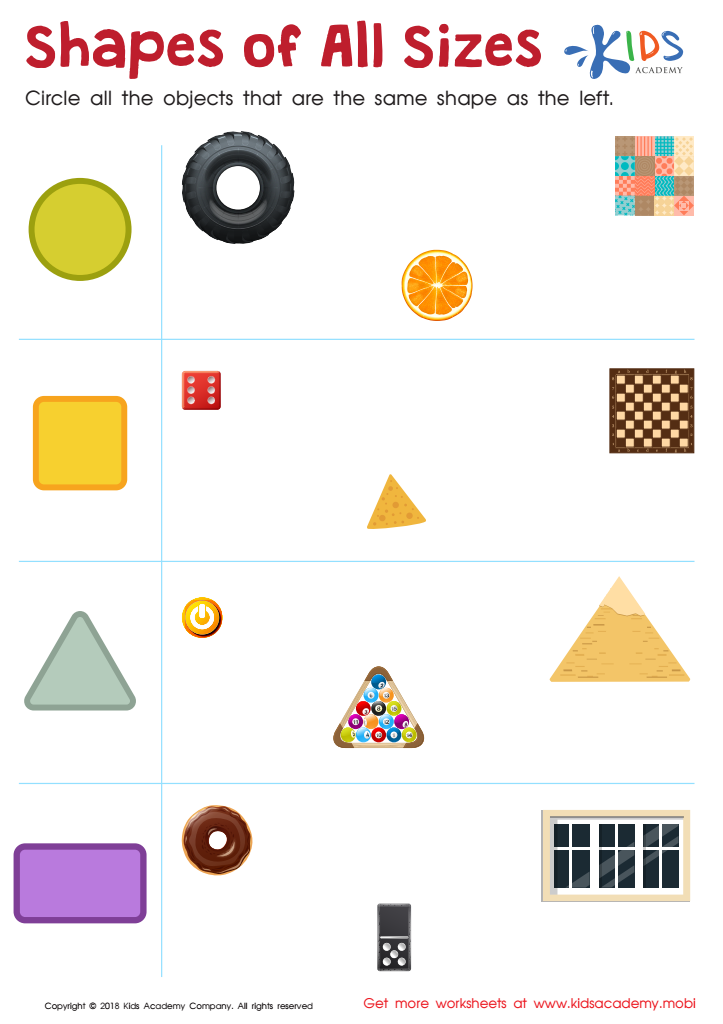
Shapes of All Sizes Worksheet
 Assign to My Students











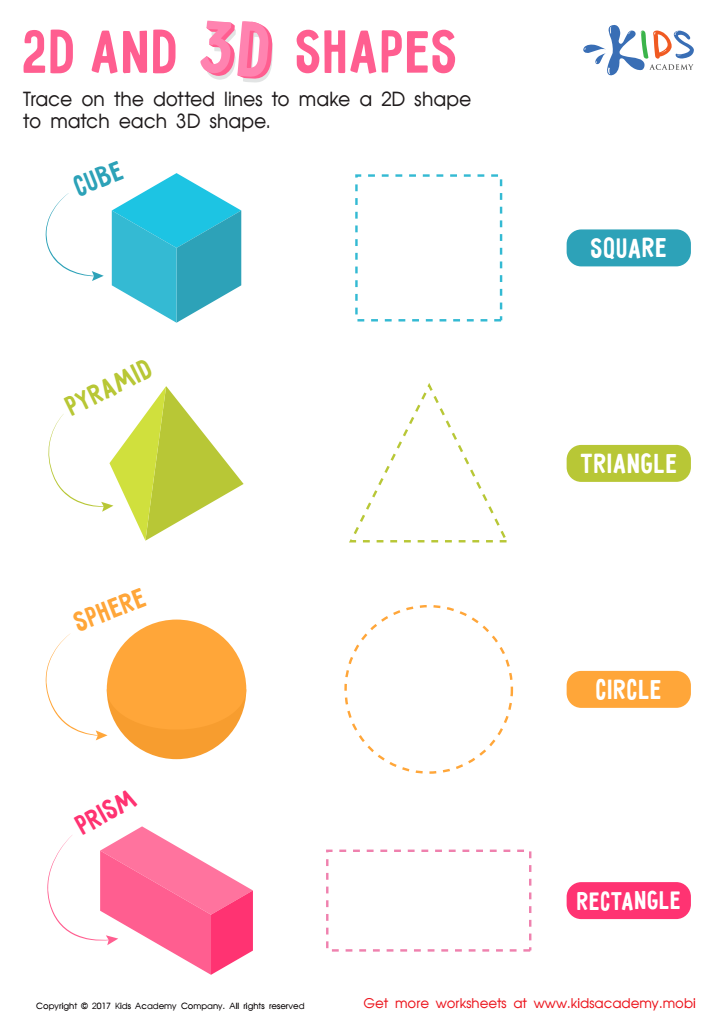
2D and 3D Shapes Worksheet
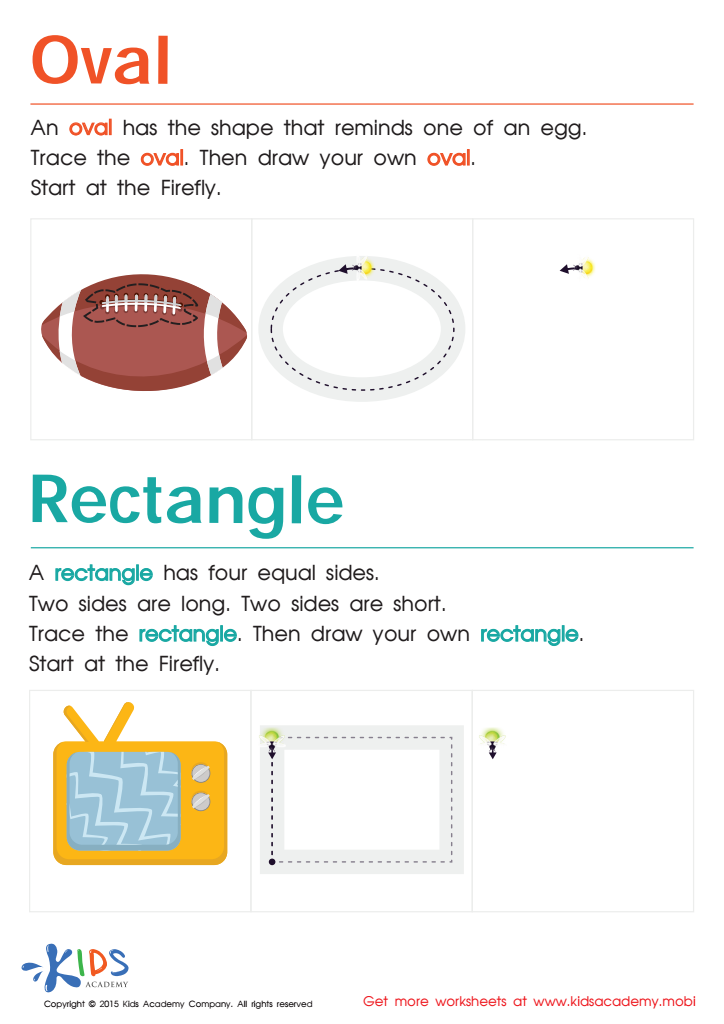
Easy Drawing of Ovals And Rectangles Worksheet








Visual perception skills are crucial for children's learning, particularly in geometry for ages 5-7. During this developmental stage, children are learning to recognize shapes, patterns, and spatial relationships, which form the basis of geometric understanding. Strong visual perception enables children to identify, manipulate, and understand geometric concepts, which contributes significantly to their overall academic success.
For parents and teachers, fostering these skills facilitates not just proficiency in math but enhances problem-solving and critical-thinking abilities across various subjects. Children with well-developed visual perception can interpret graphs, understand coordinates, and apply geometric concepts in real-world situations. This foundational knowledge builds confidence and promotes a positive learning experience.
Moreover, early development of these skills can prevent future learning challenges. If visual perception skills are neglected, children may struggle with geometry later on, leading to anxiety and disengagement from math. By actively engaging children in activities that promote visual perception—such as puzzles, buildable toys, and interactive games—parents and teachers can ensure that they equip children with the essential tools needed to thrive academically. Ultimately, investing in children’s visual perception skills helps nurture their intellectual growth, setting the stage for lifelong learning and success.








