
Associative learning Numbers Worksheets for Ages 5-7
3 filtered results
Difficulty Level
Grade
Age
-
From - To
Subject
Activity
Standards
Discover our engaging Associative Learning Numbers Worksheets designed for children ages 5-7! These worksheets effectively help young learners make connections between numbers and their meanings through fun activities. By using visuals, real-life examples, and interactive exercises, children can enhance their numerical understanding and association skills. Our resources promote critical thinking and problem-solving, ensuring a well-rounded math foundation. Ideal for homeschooling or classroom use, these worksheets support cognitive development while making learning enjoyable. Explore our collection today and give your child the tools they need to succeed in numeracy with confidence! Perfect for reinforcing concepts learned in school.
Favorites
With answer key
Interactive
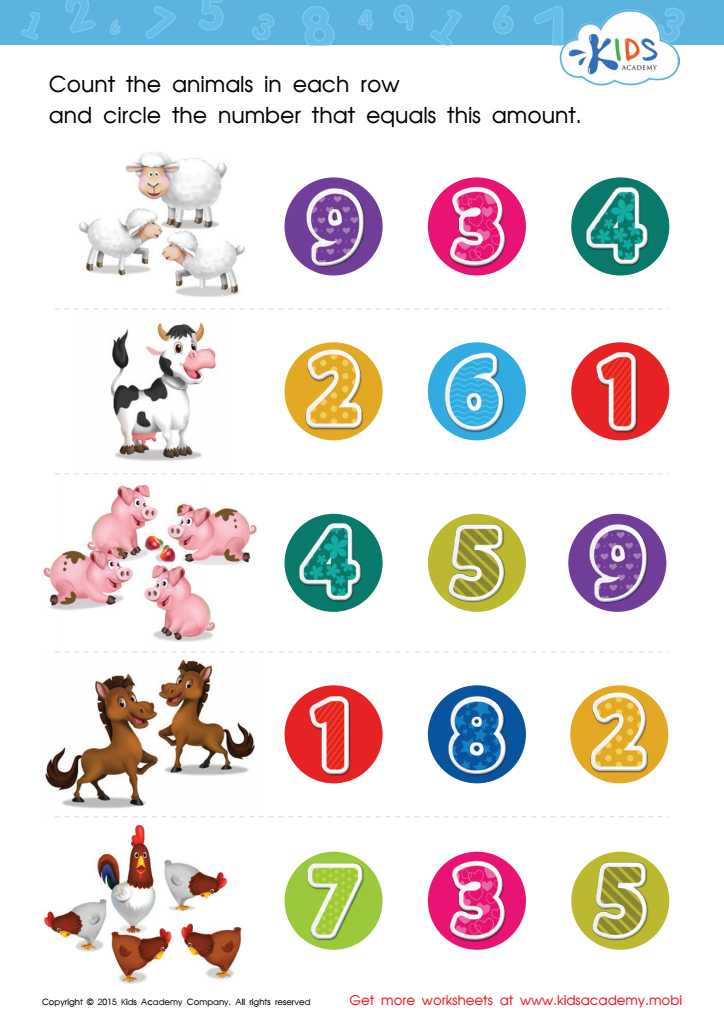
Count and Match 1 – 5 Math Worksheet
Find the colorful worksheet aimed to help your little learner develop their math skills. Count the cute animals and identify the correct numbers based on the Singapore Math method. This worksheet is a fantastic way to start your kid on their mathematical journey.
 Assign to My Students
Count and Match 1 – 5 Math Worksheet
Worksheet
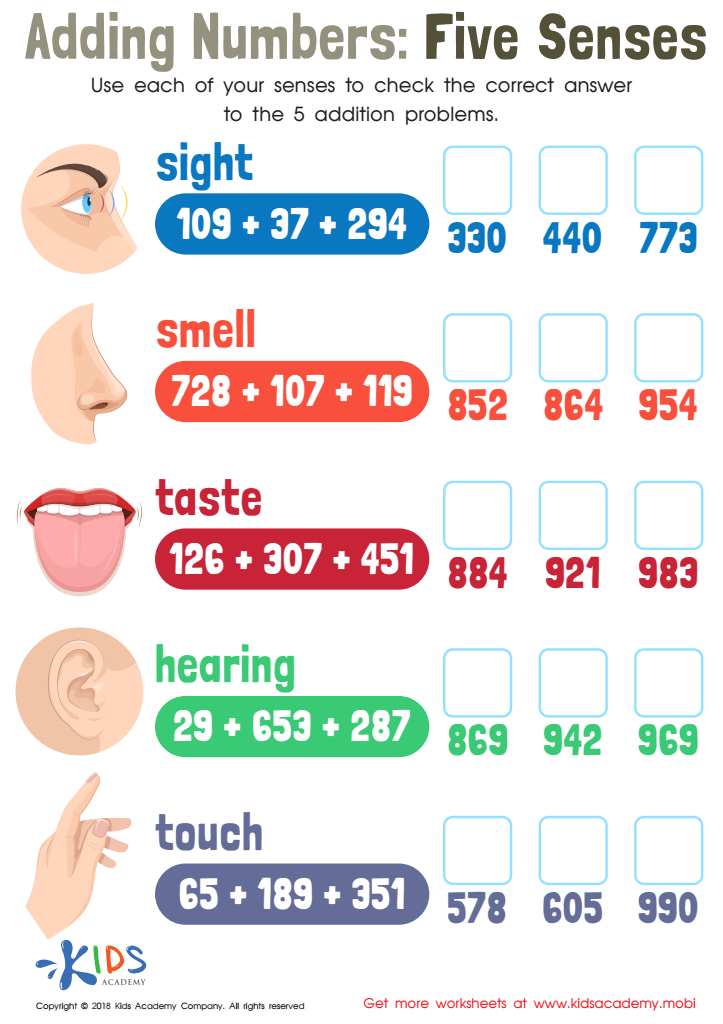
Adding Numbers: Five Senses Worksheet
Help your child identify the five senses on their body: eye, nose, tongue, ear, and skin. Explain that they're used for seeing, smelling, tasting, hearing and touching. Then, have them solve the five addition problems in the worksheet and check the correct answers.
Adding Numbers: Five Senses Worksheet
Worksheet
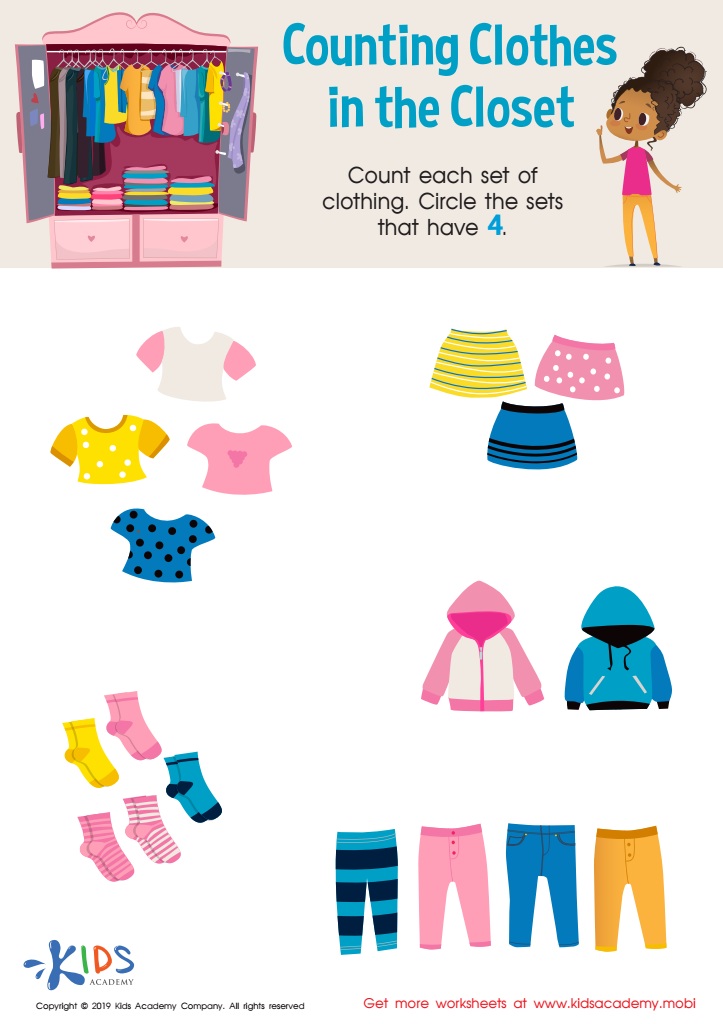
Counting Clothes Worksheet
Help your kids become better counters with fun exercises and objects they can relate to. Print out this worksheet and assist your kid in counting 5 sets of clothing. Have them circle the sets that have 4 so they can master counting small numbers. Strengthen their math skills with your help.
Counting Clothes Worksheet
Worksheet
Join Kids Academy for Free
Who is primarily going to use this learning content?








Associative learning, particularly regarding numbers, is crucial for children aged 5-7 as it lays the foundation for future mathematical skills. At this stage, children begin to connect new information to existing knowledge, enabling deeper understanding and retention. When parents and teachers engage students in associative learning with numbers, children begin to recognize relationships between quantities, symbols, and words, fostering critical thinking skills.
During these formative years, children also develop numerical fluency, allowing them to compute and solve problems efficiently. Associative learning involves making connections, such as linking the number "5" to a visual representation (like five apples) or relating it to everyday situations (like sharing five cookies). This multisensory approach makes math more relatable and less intimidating.
Additionally, associative learning enhances cognitive functions, encouraging kids to approach problems creatively. As they associate numbers with patterns and concepts, they develop a strong mathematical foundation, promoting confidence in their abilities.
Moreover, when parents and teachers prioritize this approach, they're empowering children to become lifelong learners. Fostering a positive attitude towards numbers can lead to improved academic performance and success in advanced mathematical concepts as they grow. Thus, prioritizing associative learning in young learners is essential for confident and capable mathematicians.








