Counting skills Numbers Worksheets for Ages 5-7 - Page 8
170 filtered results
-
From - To
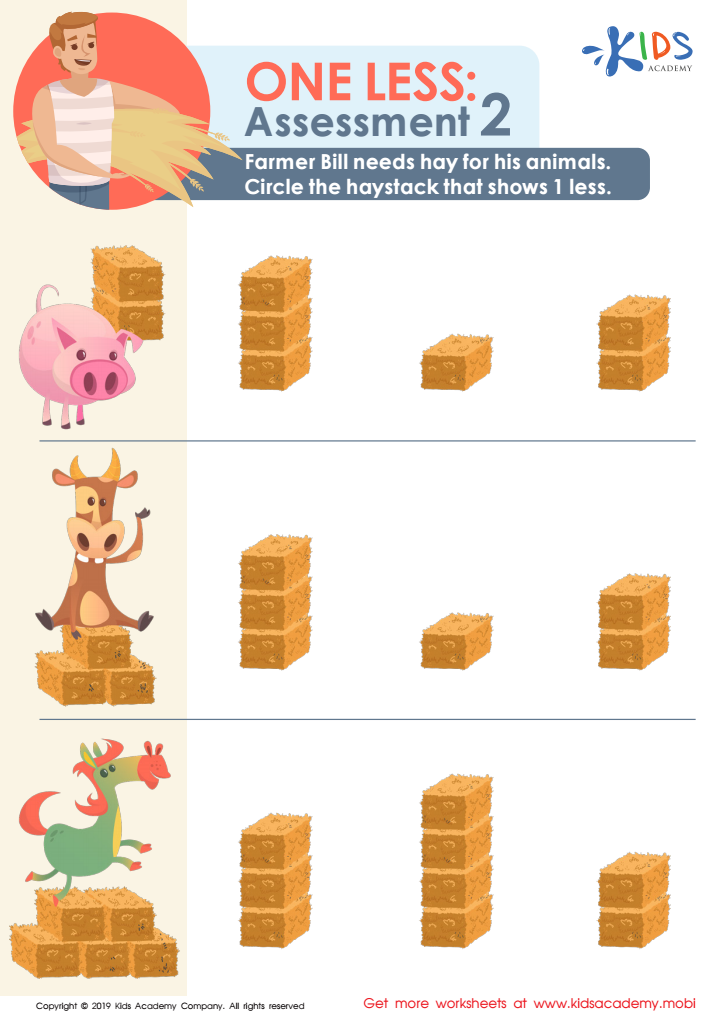
One Less: Assessment 2 Worksheet
 Assign to My Students

Night Sky Numbers Worksheet








Counting skills are fundamental building blocks for children's mathematical understanding, particularly for those aged 5 to 7. During this critical developmental stage, children are not only mastering basic counting but are also laying the groundwork for more advanced math concepts. Parents and teachers should prioritize counting skills because they enhance cognitive development, improve problem-solving abilities, and boost confidence in academic settings.
Counting helps children recognize numbers and understand sequences, forming the foundation for addition, subtraction, and even more complex operations. Engaging in counting activities fosters an early love for math, making learners more enthusiastic and less intimidated by the subject as they progress in their education.
Moreover, counting skills are often linked to everyday life applications—such as measuring ingredients for a recipe or counting change—making math relevant and realistic. By actively involving children in counting games and activities, parents and teachers can promote critical thinking, fine motor skills, and auditory processing.
Investing time in developing counting skills at this age will enable children to tackle math with greater ease and pave the way for future academic success, paving the way for a more competent and confident learner.








