Improve counting skills Numbers Worksheets for Ages 5-7
5 filtered results
-
From - To
Enhance your child's counting abilities with our engaging numbers worksheets designed for ages 5-7. At Kids Academy, we provide a wide variety of printable worksheets that make learning fun and effective. These educational resources focus on improving counting skills through interactive activities such as number tracing, counting objects, and simple addition and subtraction exercises. Our worksheets are visually appealing and age-appropriate, ensuring young learners stay interested while practicing essential math skills. Give your child a head start in mathematics by incorporating our expertly crafted counting worksheets into their daily routine. Explore our collection and watch their confidence grow!
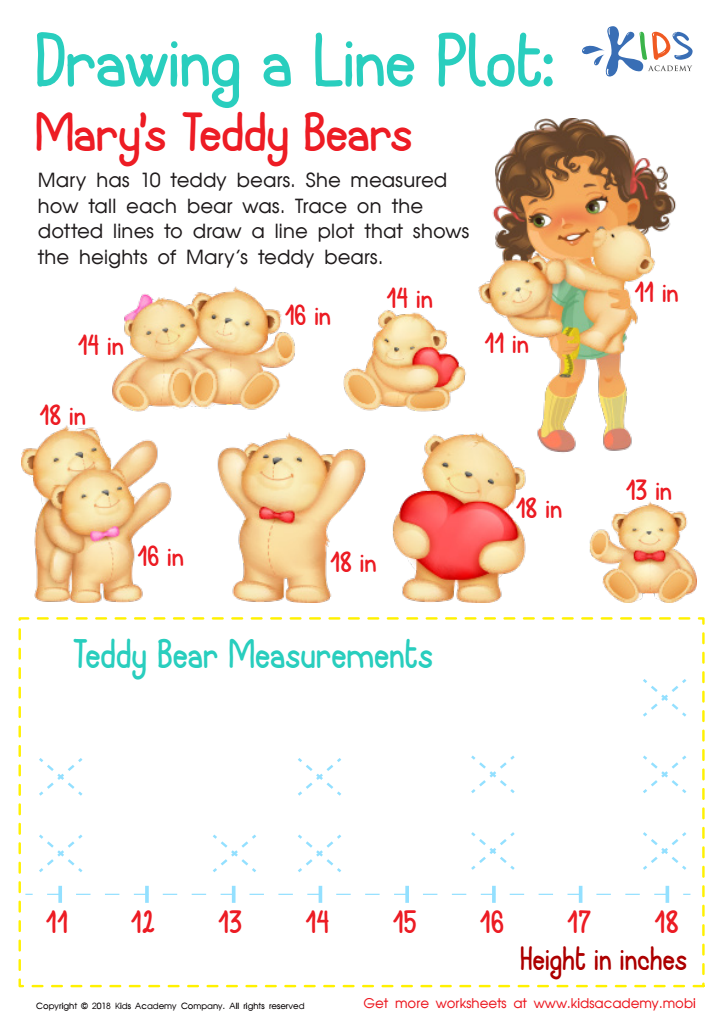
Drawing and Line Plot: Mary's Teddy Bears Worksheet
 Assign to My Students
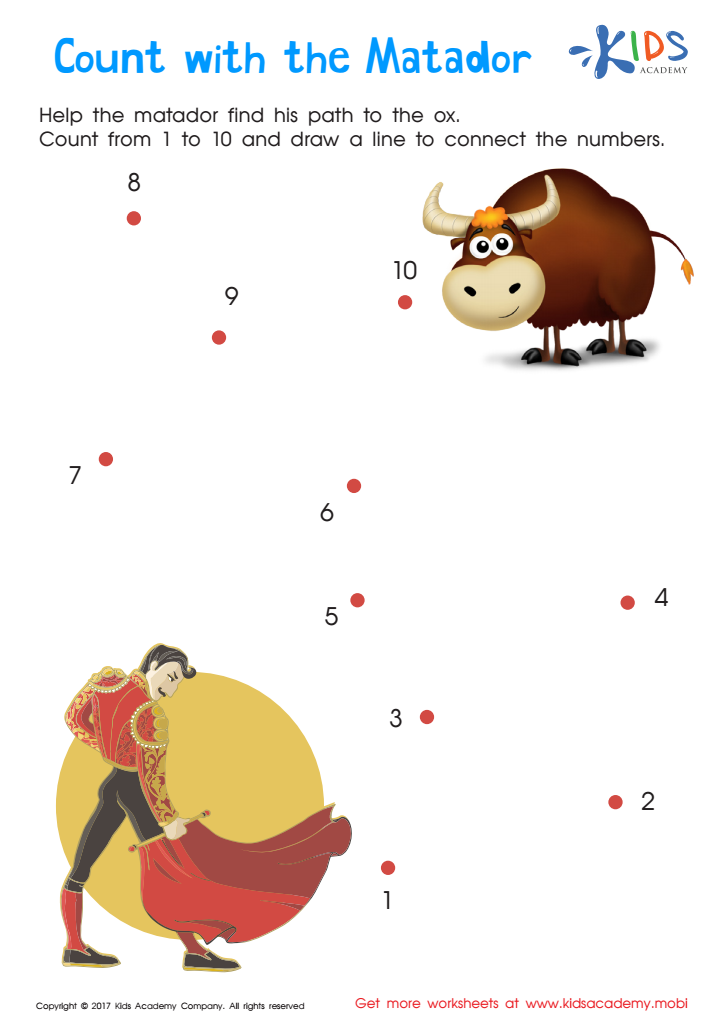
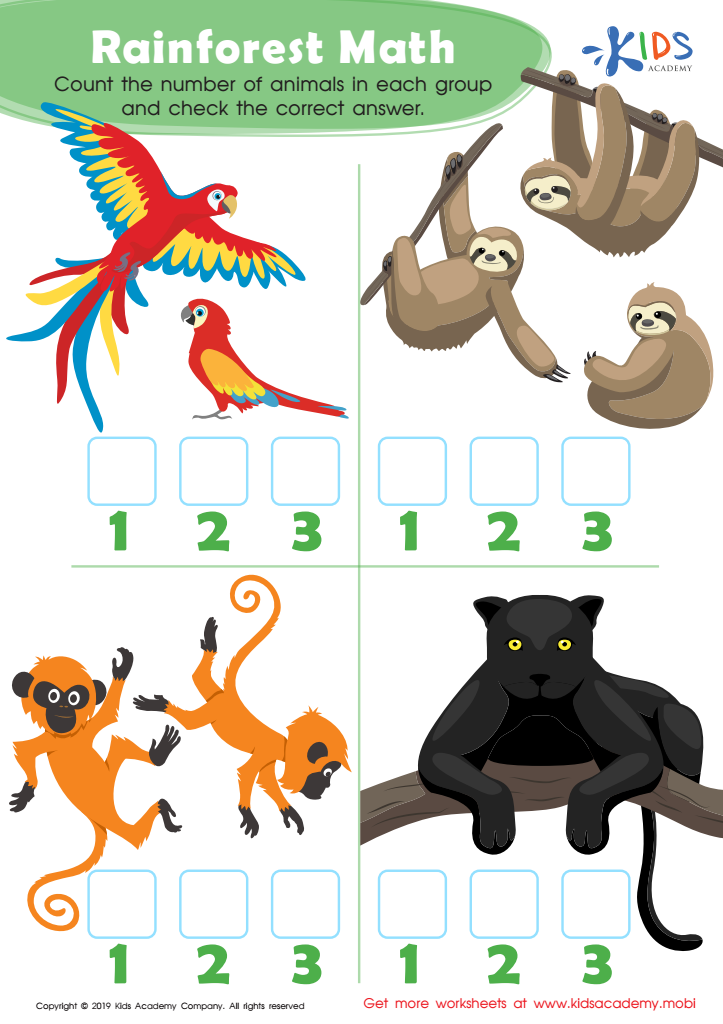
Rainforest Math Worksheet
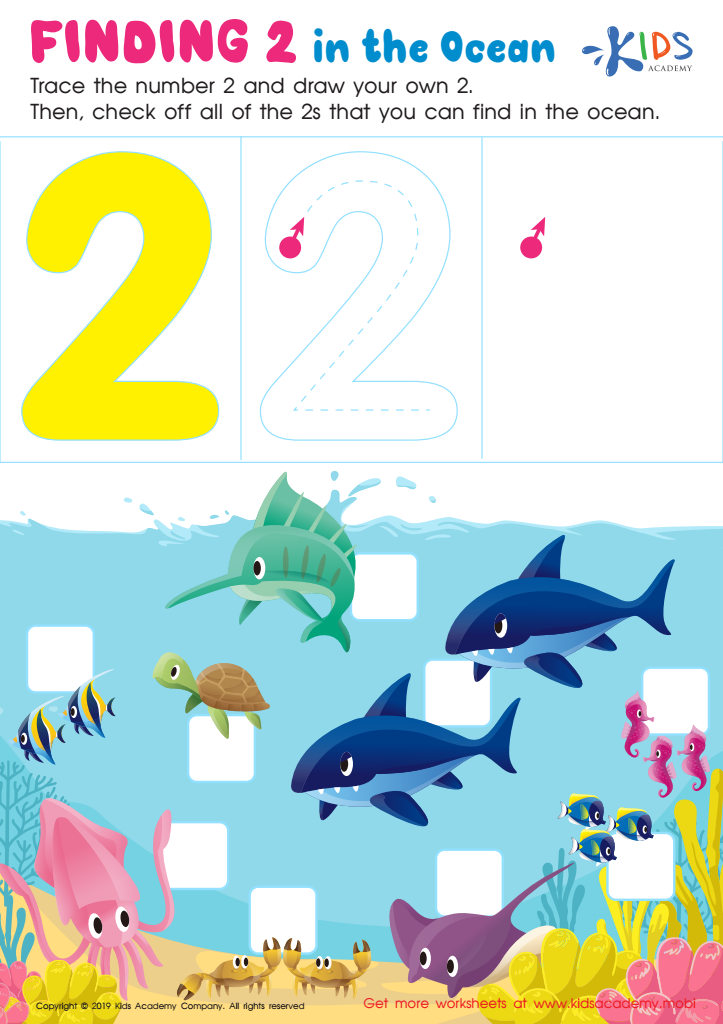
Finding 2: In the Ocean Worksheet
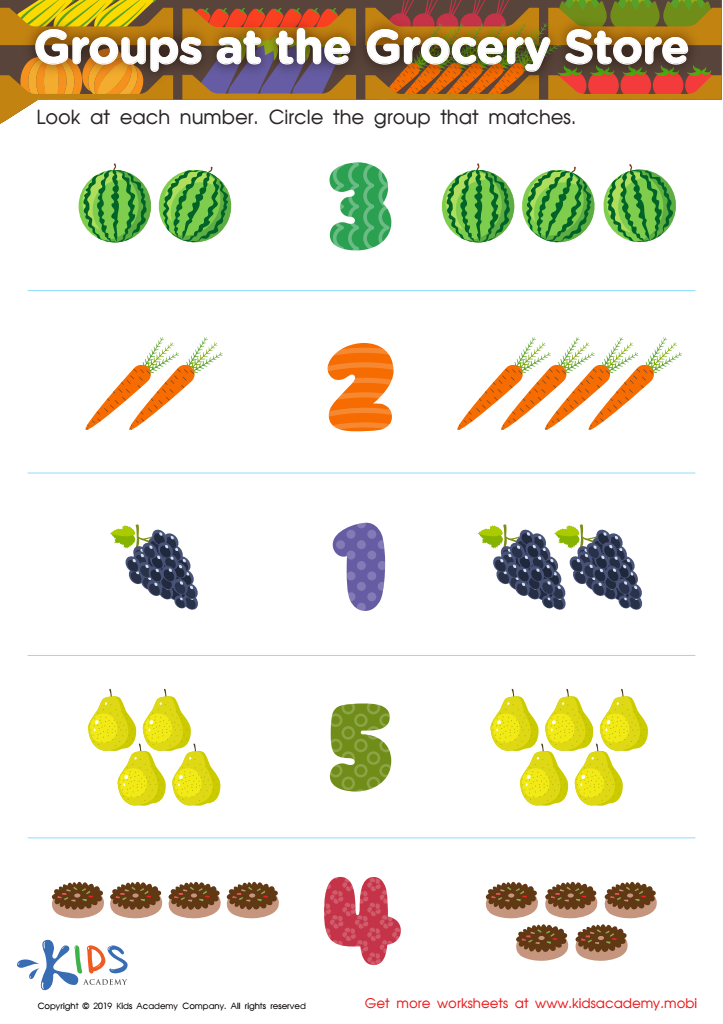
Groups at the Grocery Store Worksheet








Developing strong counting skills for children ages 5-7 is crucial for several reasons. Firstly, counting represents the foundational step in mathematical understanding. It paves the way for more complex math concepts like addition, subtraction, multiplication, and division. Children who are confident with numbers are better equipped to tackle future math problems and ultimately excel in their academic journey.
Furthermore, counting is not limited to math alone; it plays a significant role in everyday life. Whether it's telling time, handling money, or even following a recipe, a solid grasp of numbers simplifies everyday tasks. These early skills help children develop a sense of order and pattern recognition, fostering critical thinking and problem-solving abilities.
On top of academic and practical benefits, mastering counting can boost a child’s confidence. When children successfully learn to count, it provides a sense of accomplishment that motivates them to take on new challenges. This positive reinforcement is essential for a child’s overall development and encourages a lifelong love for learning.
Finally, building strong counting skills at an early age can aid in early detection of learning difficulties, allowing interventions to be made sooner. In sum, strong counting skills form an essential building block for a child's educational success, daily functionality, emotional well-being, and future career skills.








