Pattern recognition Numbers Worksheets for Ages 5-7
4 filtered results
-
From - To
Discover our engaging Pattern Recognition Numbers Worksheets designed specifically for children aged 5-7! These interactive resources help young learners develop essential cognitive skills through fun and colorful activities. Kids will explore patterns with numbers, improving their ability to identify sequences, enhance critical thinking, and build a solid math foundation. Each worksheet is crafted to inspire creativity and encourage problem-solving, making math enjoyable. Ideal for at-home practice or classroom use, our worksheets support early learners in mastering number patterns while boosting confidence in their mathematical abilities. Start your child's journey towards math success with our exciting pattern recognition worksheets!
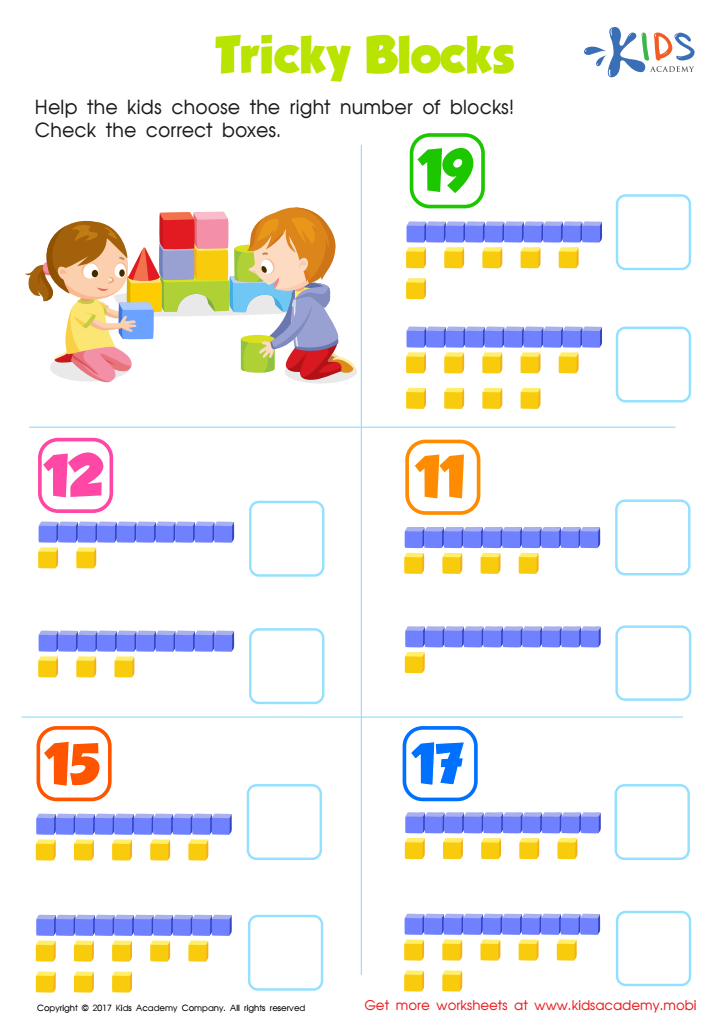
Tricky Blocks Worksheet
 Assign to My Students
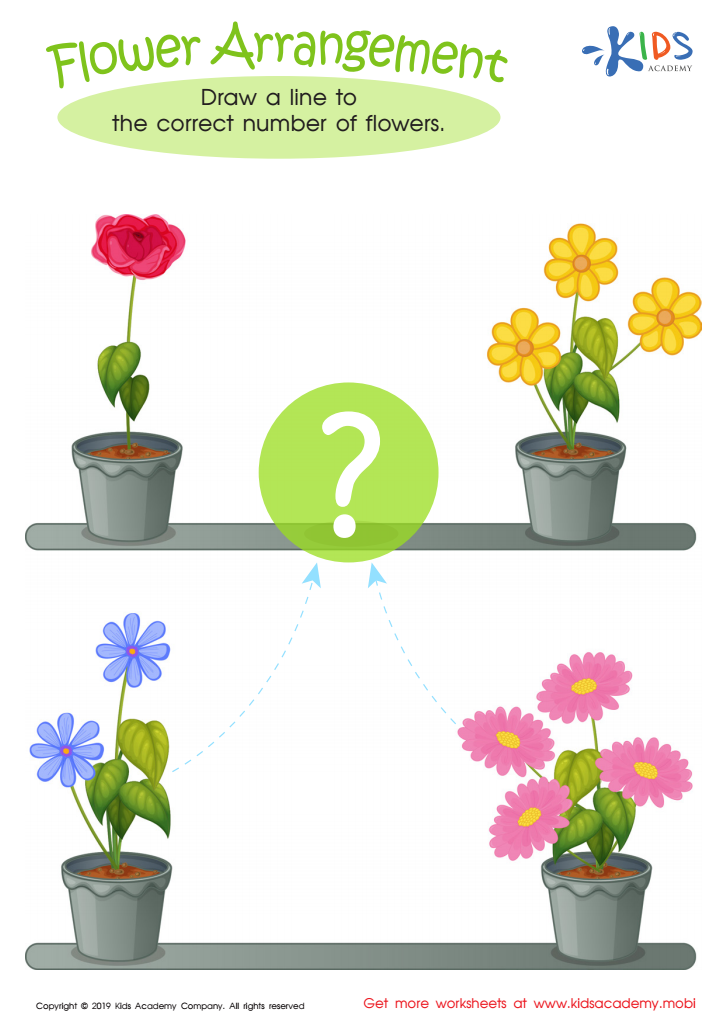
Flower Arrangement Worksheet
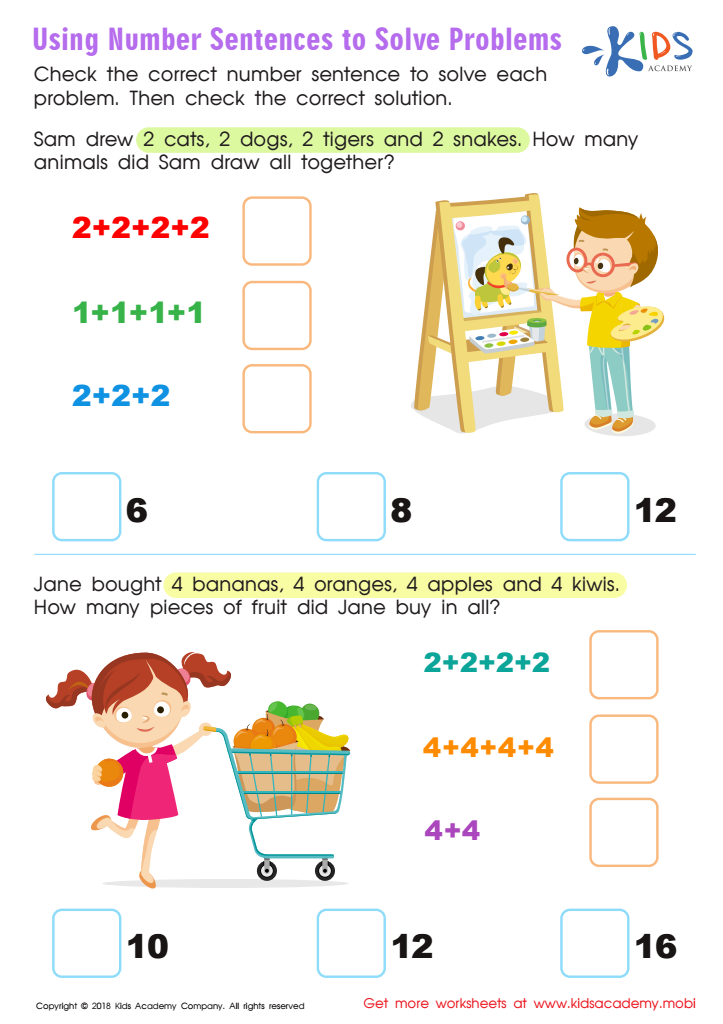
Using Number Sentences to Solve Problems Worksheet
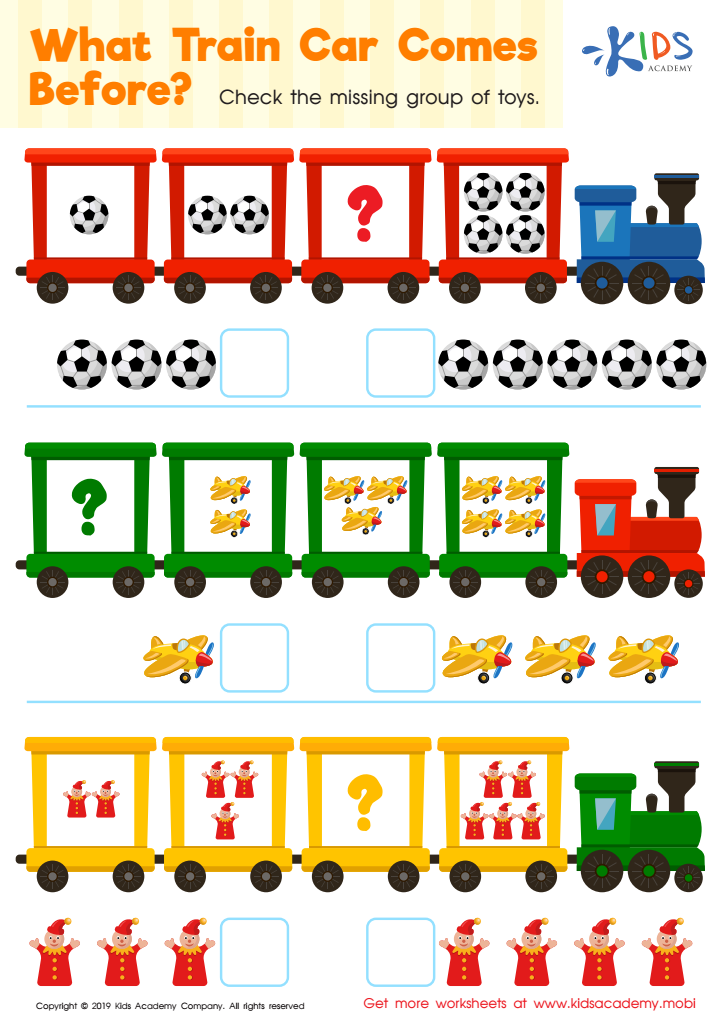
What Train Car Comes Before? Worksheet








Pattern recognition in numbers is a crucial skill for children aged 5 to 7 and has significant implications for their overall cognitive development and future learning. By allowing children to recognize, create, and extend patterns, we not only enhance their mathematical abilities but also foster critical thinking skills that are essential across all subjects.
At this age, children are naturally curious and eager to explore concepts that are foundational in mathematics, such as addition, subtraction, and number operations. Engaging them in activities that promote pattern recognition helps them understand the relationships between numbers, paving the way for more complex problem-solving in later grades. Additionally, recognizing patterns aids in developing predictive reasoning; for instance, if a child knows the pattern in an alternating sequence, they can predict what comes next.
Moreover, focusing on patterns encourages children to engage in discussions and collaborative learning, vital for social skills and language development. Parents and teachers play a key role in introducing fun and interactive ways of exploring patterns, such as through games, songs, and hands-on activities, making learning enjoyable and effective. Ultimately, fostering this skill sets children up for academic success and enhances their confidence in tackling future mathematical challenges.








