Understanding tens Numbers Worksheets for Ages 5-7
4 filtered results
-
From - To
Discover our engaging "Understanding Tens Numbers Worksheets" designed specifically for children ages 5-7! These worksheets provide a fun and interactive way for young learners to grasp the concept of tens in mathematics. Aligned with early educational standards, our activities help kids identify, count, and work with tens, building a strong numerical foundation. Each worksheet is thoughtfully crafted to enhance problem-solving skills and promote independent learning. With colorful graphics and stimulating exercises, your child will enjoy mastering essential math skills while having fun! Perfect for classrooms or at-home learning, our worksheets provide valuable practice to support your child's educational journey.
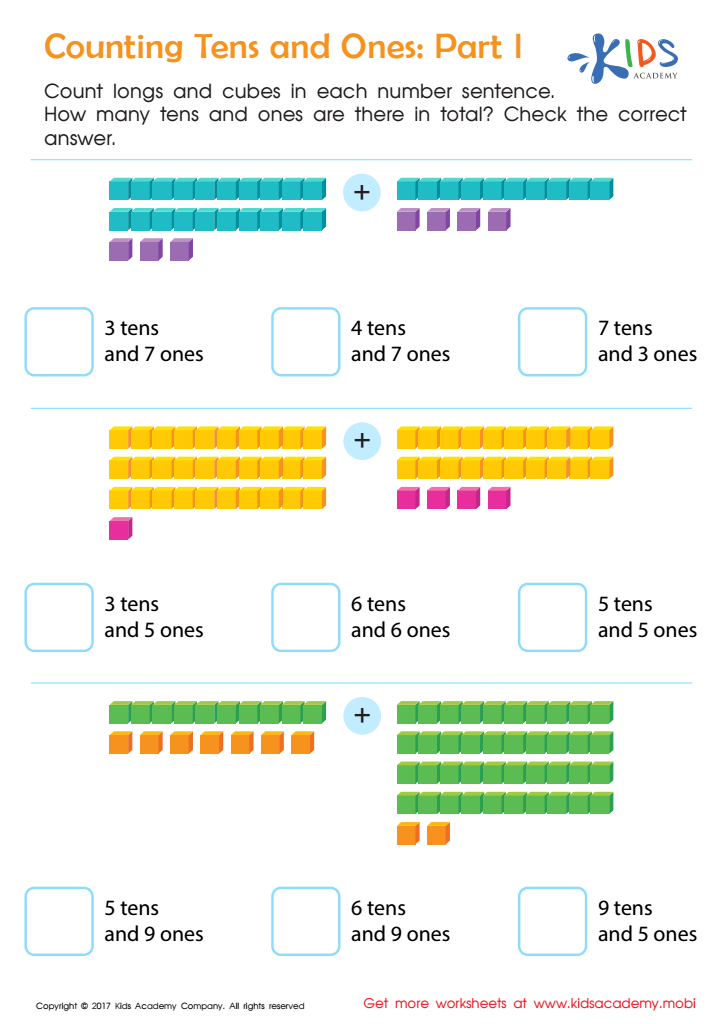
Counting Tens and Ones: Part 1 Worksheet
 Assign to My Students
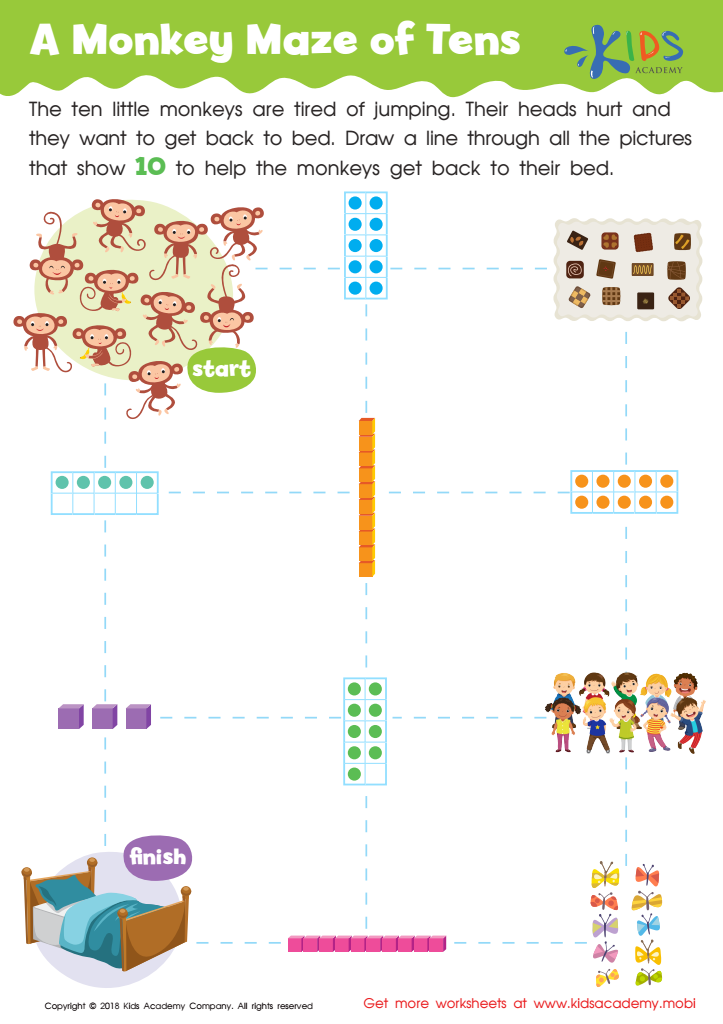
A Monkey Maze of Tens Worksheet
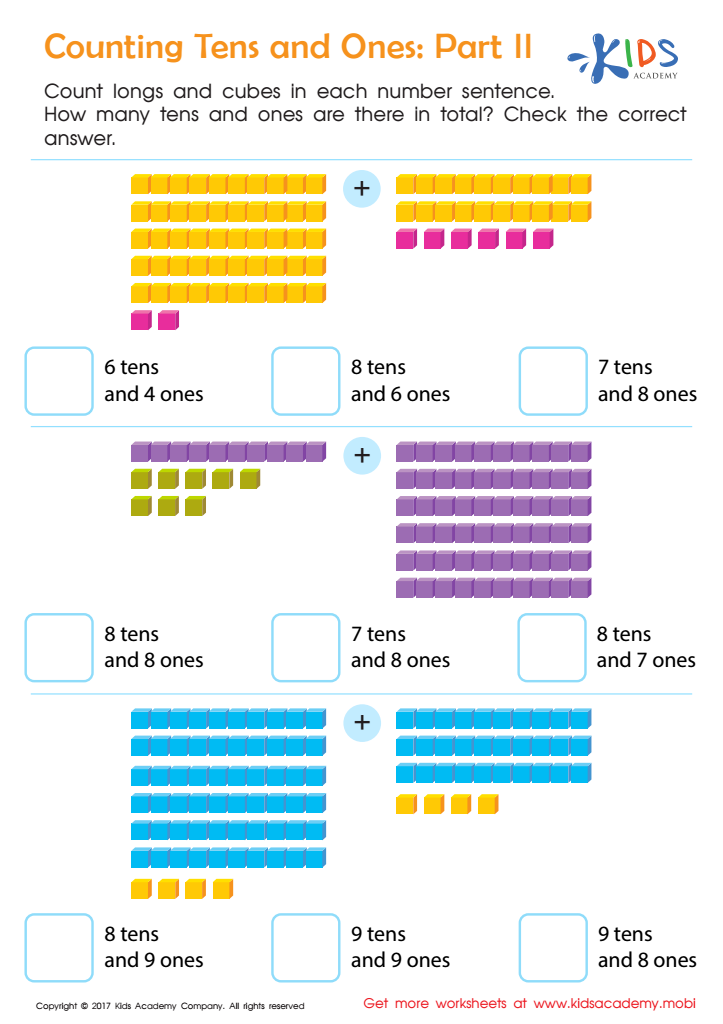
Counting Tens and Ones: Part 2 Worksheet
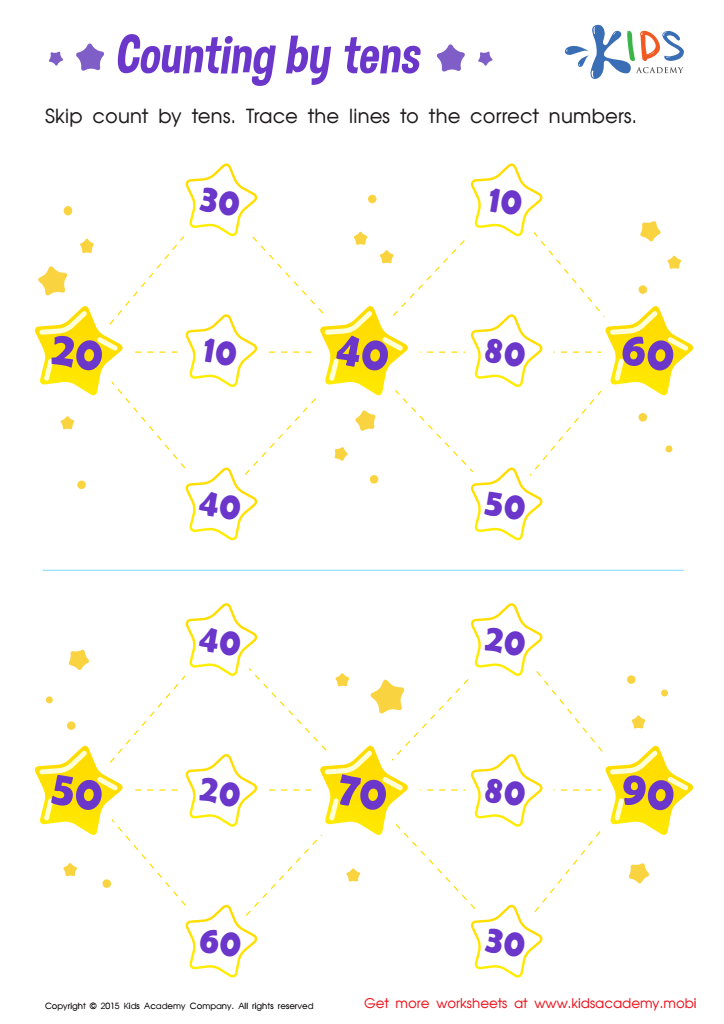
Learn Dozens: Counting by Tens Printable








Understanding tens and numbers is crucial for children aged 5-7, as it lays the foundation for their mathematical development and everyday life skills. At this age, students are transitioning from recognizing numbers to grasping their value and relationship, which is vital for more complex mathematical concepts later on.
When children understand the grouping of tens, they develop a sense of place value, which helps them comprehend larger numbers and perform operations like addition and subtraction more easily. For example, knowing that the number 30 is made up of three groups of ten allows children to intuitively grasp number operations. This understanding promotes confidence in their math skills, reduces anxiety toward learning, and enhances problem-solving abilities.
Moreover, recognizing tens aids in decoding real-world applications, such as counting money or telling time, making math relatable and practical in everyday situations. For parents and teachers, fostering this understanding encourages children to engage with mathematics positively and meaningfully. Ultimately, establishing a strong numerical foundation supports students' long-term academic success and equips them with essential skills necessary for life beyond school.








