Comparing lengths Math Worksheets for Ages 5-7
16 filtered results
-
From - To
Transform learning into an adventure with our "Comparing Lengths Math Worksheets for Ages 5-7"! Perfectly crafted for young minds, these engaging and educational worksheets help children understand basic measuring, comparing, and ordering skills. Each activity provides hands-on practice in identifying longer, shorter, and equal lengths, fostering critical thinking and early math confidence. These worksheets are vibrant and fun, making it easy for children to grasp the concept of measurement through interactive tasks and visual aids. Designed by educators, they align with school curriculum to support your child's academic journey in an enjoyable and memorable way.
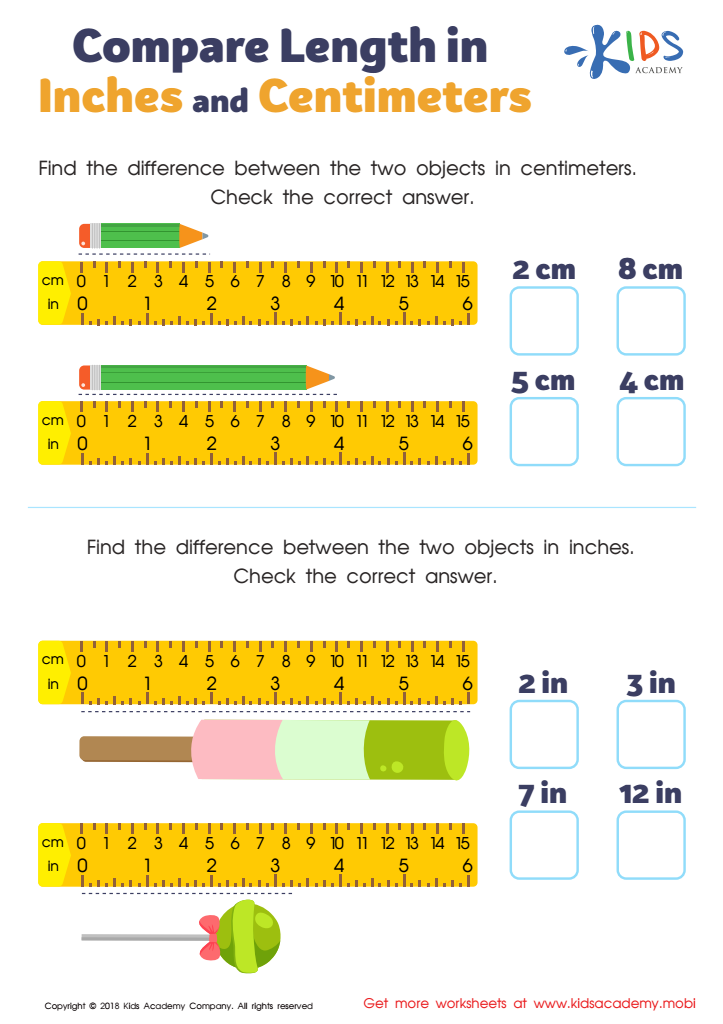
Compare Length in Inches and Centimeters Worksheet
 Assign to My Students
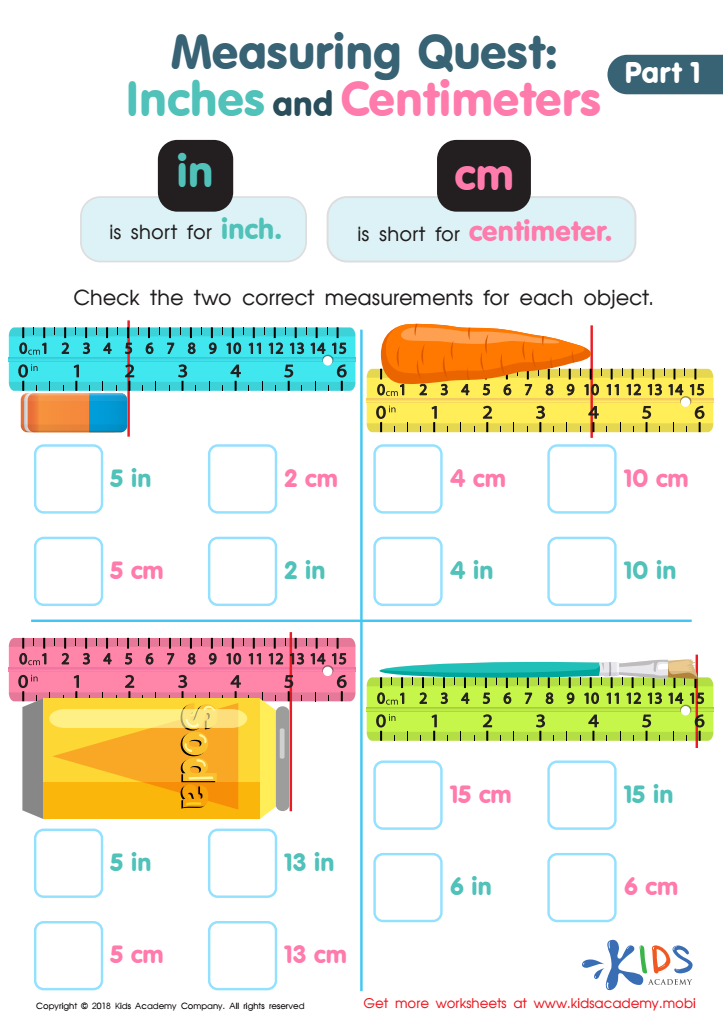
Measuring Quest: Inches and Centimeters Worksheet
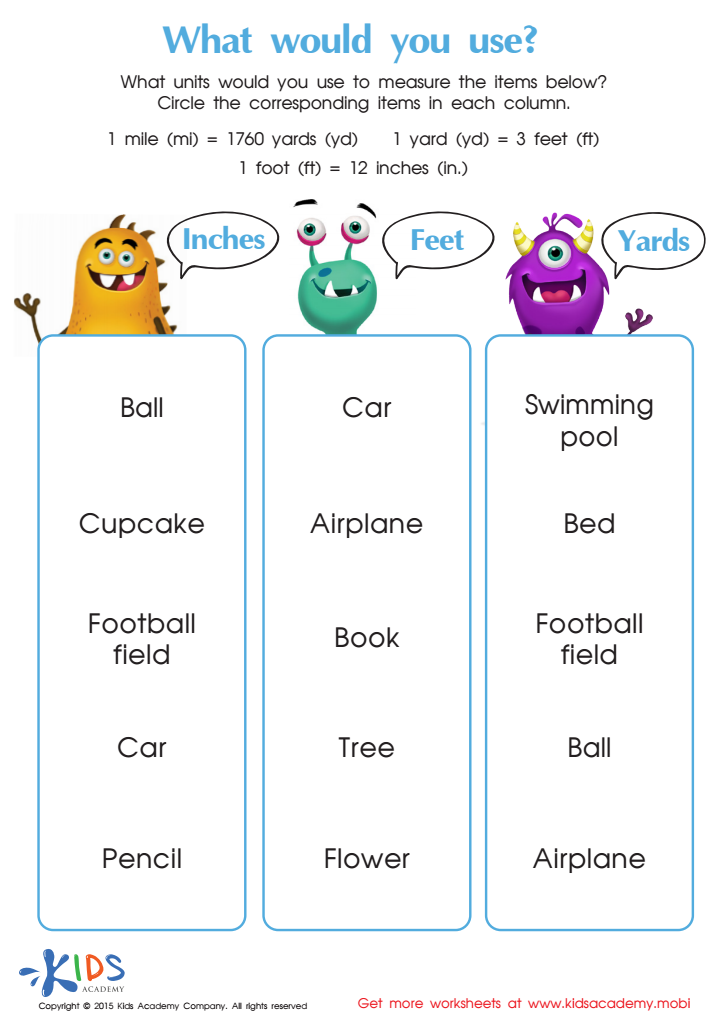
Learning about measuring objects in inches, feet and yards Worksheet
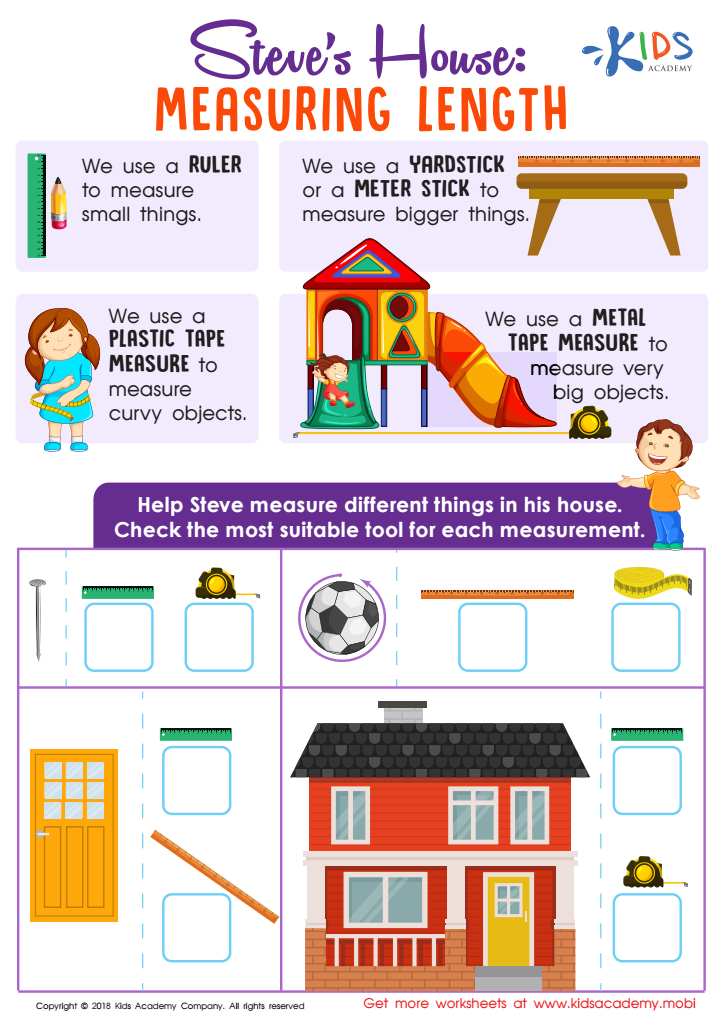
Steve's House: Measuring Length Worksheet
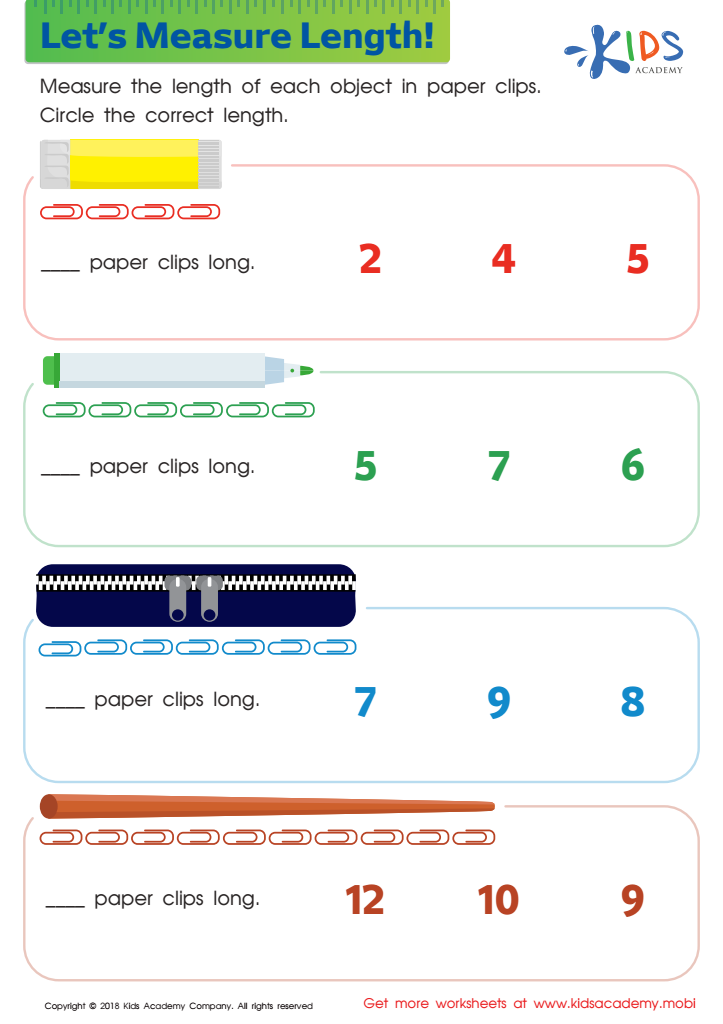
Lets Measure Length Worksheet
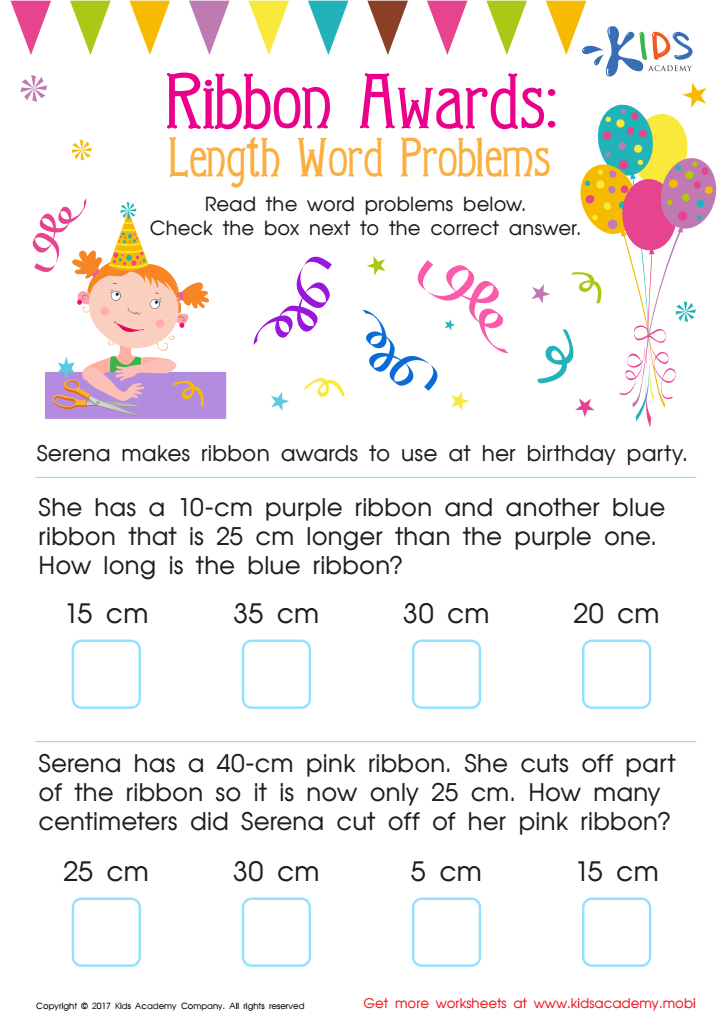
Length Word Problems Worksheet
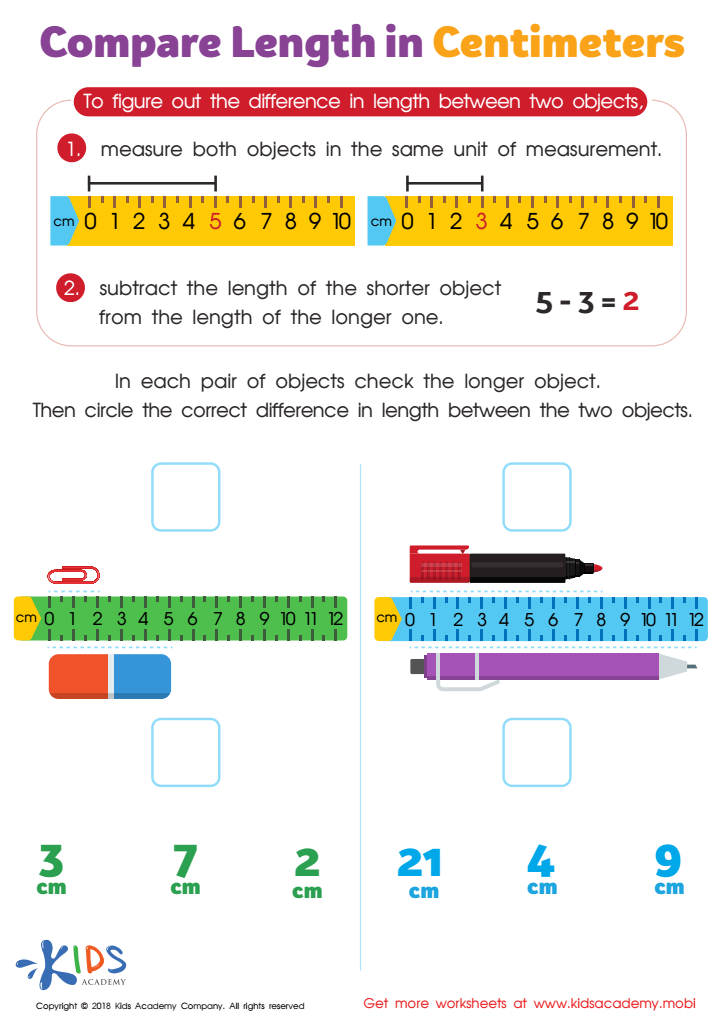
Compare Length in Centimeters Worksheet
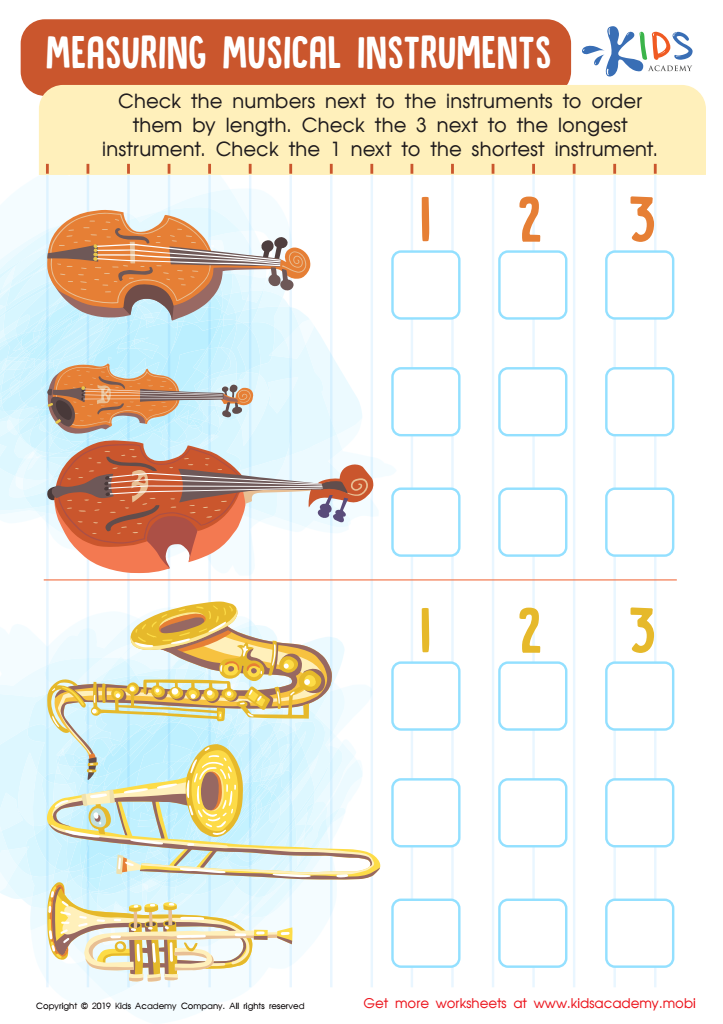
Measuring Musical Instruments Worksheet
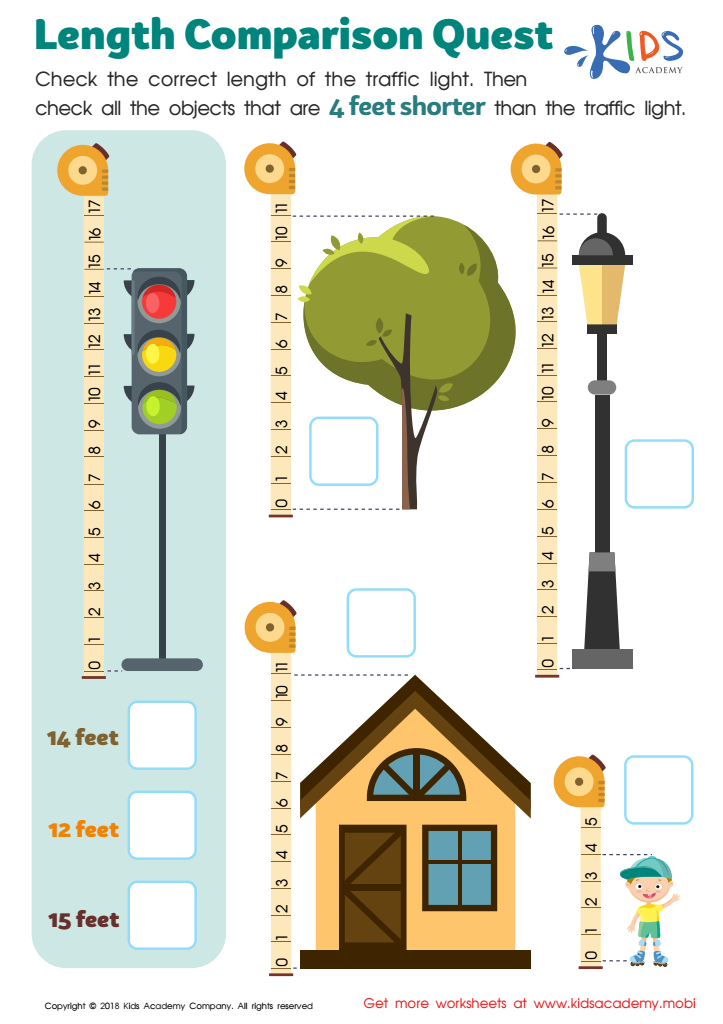
Length Comparison Quest Worksheet
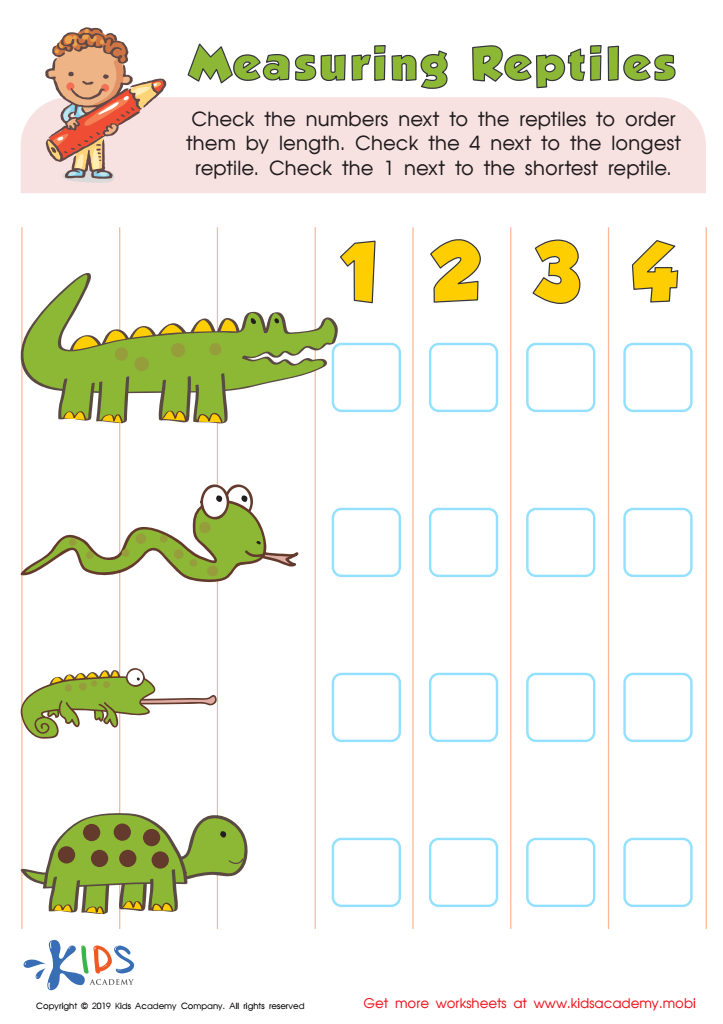
Measuring Reptiles Worksheet
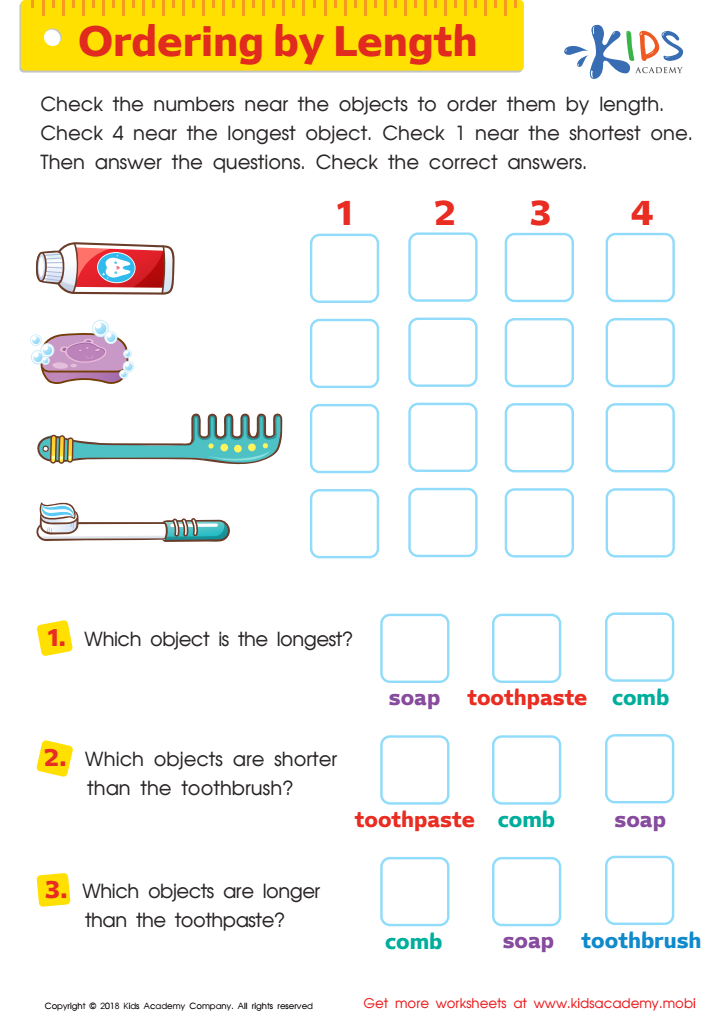
Ordering by Length Worksheet
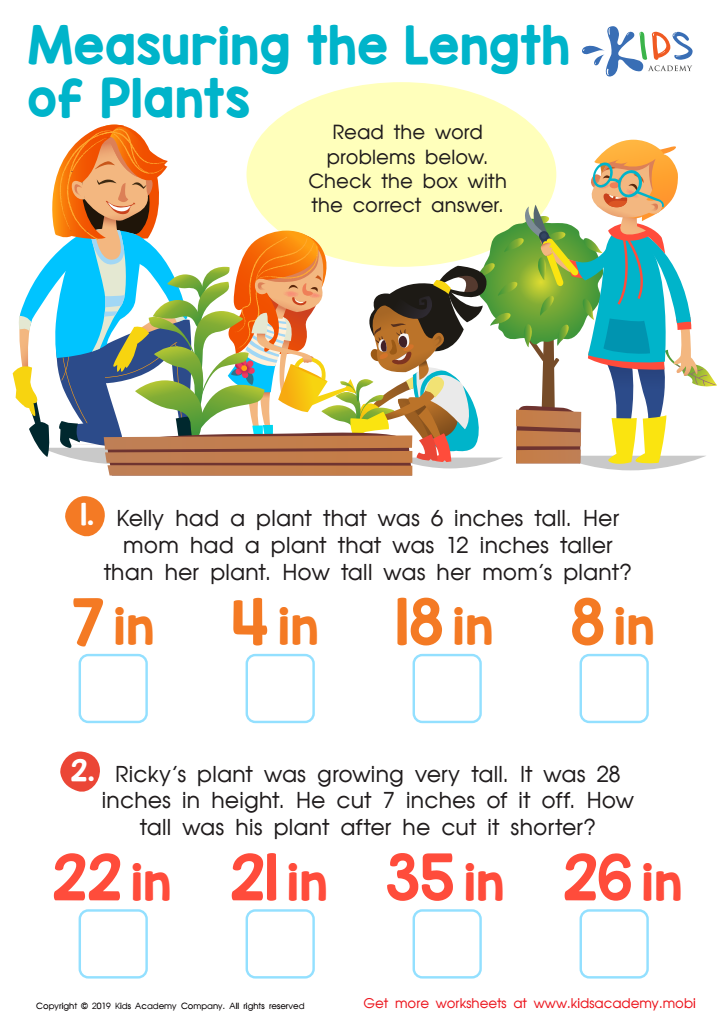
Measuring the Length of Plants Worksheet
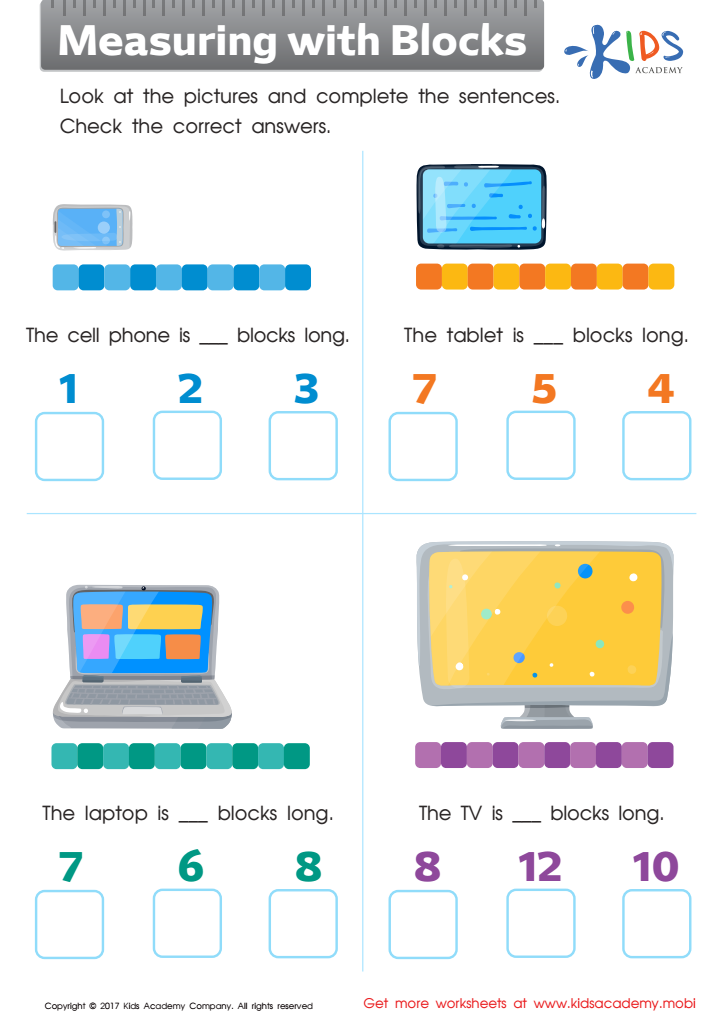
Measuring with Blocks Worksheet
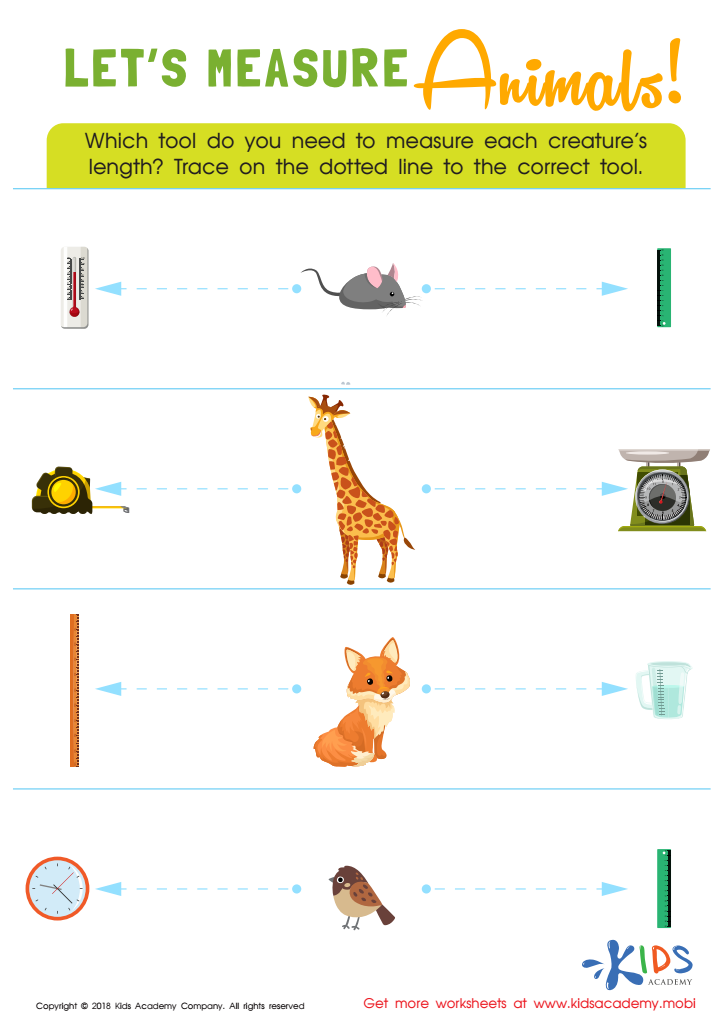
Let's Measure Animals! Worksheet
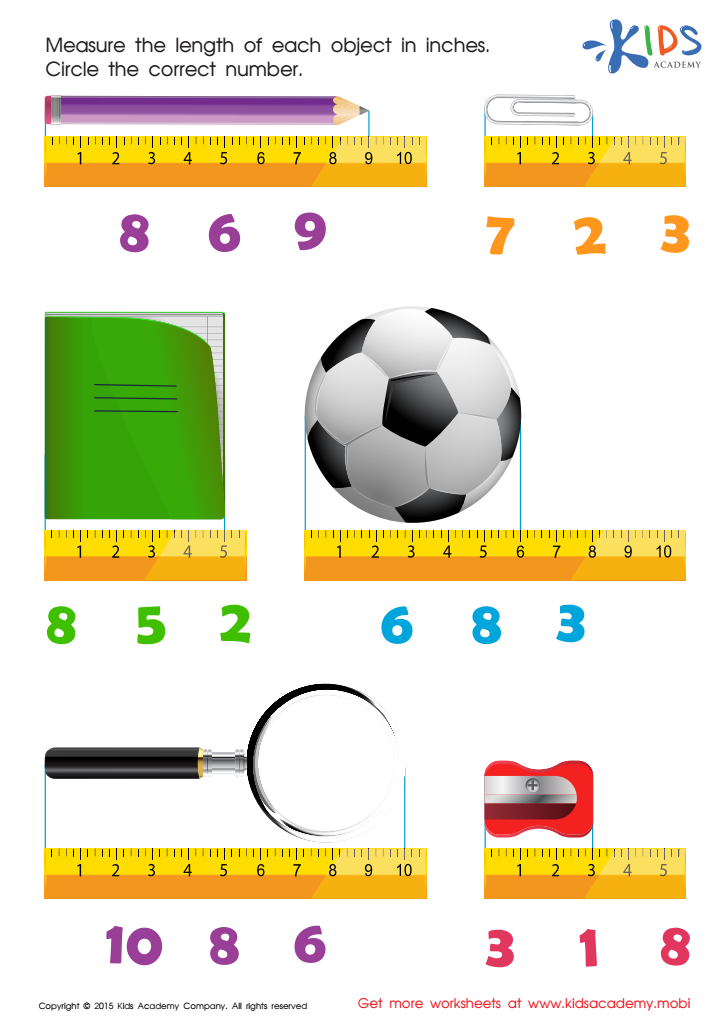
Learning measuring objects in inches Worksheet








Comparing lengths represents a fundamental concept in early childhood mathematics, crucial for a child's cognitive development. At ages 5-7, children are developing their understanding of the world around them, and comparing lengths teaches them to discern differences and similarities, critical thinking, and problem-solving skills. Through hands-on activities like measuring objects with rulers or using non-standard units such as blocks, children start grasping the concept of measurement and spatial awareness.
Introducing basic measurement concepts helps children develop the vocabulary necessary for describing objects, bolstering their communication skills. Terms like "longer," "shorter," "taller," and "equal" become ingrained, facilitating mathematical conversations. Such activities also lay the groundwork for more advanced math topics. Understanding length comparisons connects directly to number sense, counting, addition, and subtraction.
Engaging in practical experiences ensures that children are not just memorizing facts but are internalizing mathematical principles in a meaningful, concrete manner. For parents and teachers, fostering a curiosity about lengths and measurements now will build a strong educational foundation, making future mathematical and scientific learning more intuitive and approachable. Thus, entering this realm at an early age sets a precedent for lifelong analytical skills.








