Enhancing problem-solving abilities in young learners is crucial for their mathematical development. Our specially designed math worksheets for ages 5-7 focus on building critical thinking skills through engaging and interactive activities. Each worksheet encourages children to tackle problems creatively, develop logical reasoning, and improve their understanding of basic math concepts. With colorful illustrations and age-appropriate challenges, these worksheets make learning fun and effective. Help your child gain confidence in their abilities as they explore numbers, patterns, and simple equations, fostering a strong foundation in mathematics. Start nurturing their problem-solving skills today and watch them thrive in their academic journey!

Check out this FREE Trial Lesson on Math for age 5-7!

Lesson 1- Partitioning Shapes

Favorites
With answer key
Interactive
  • 5-7
  • Enhancing problem-solving abilities
  • Math
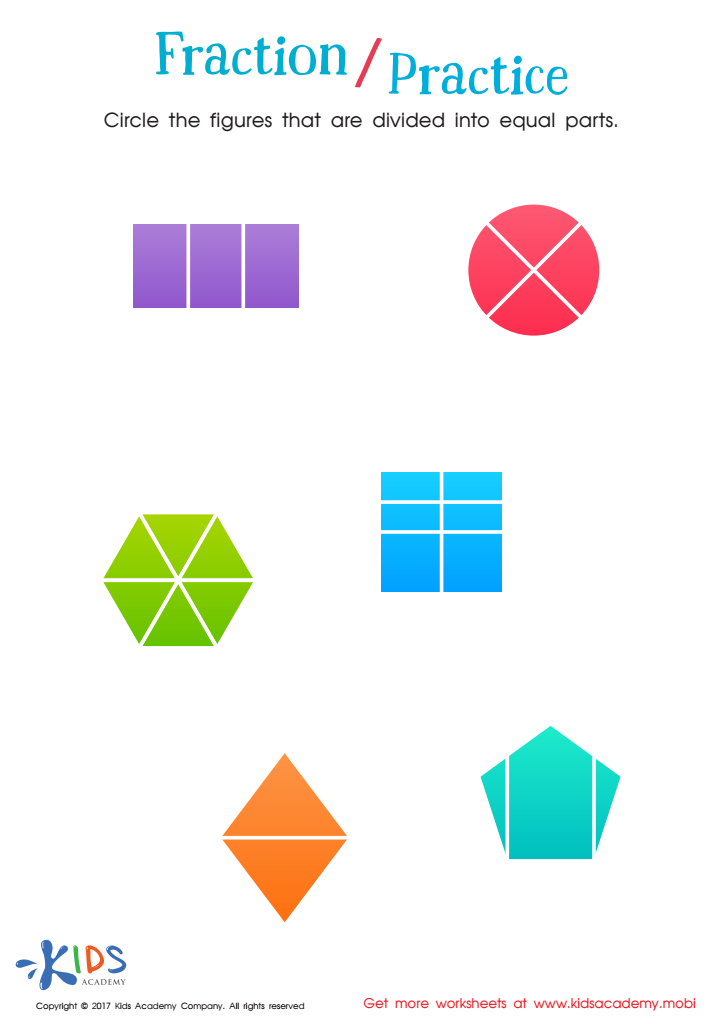
Fraction Practice Printable

Fractions: Shapes Worksheet

Get your printable now. Kids learn math differently today than you did in school; understanding concepts rather than memorizing facts. Help your child understand fractions with this printable worksheet. It'll help your child recognize parts of a whole, identify equal parts and build a foundation for numeracy. A better understanding sets kids up for math success! Get your printable now.
Fractions: Shapes Worksheet
Worksheet
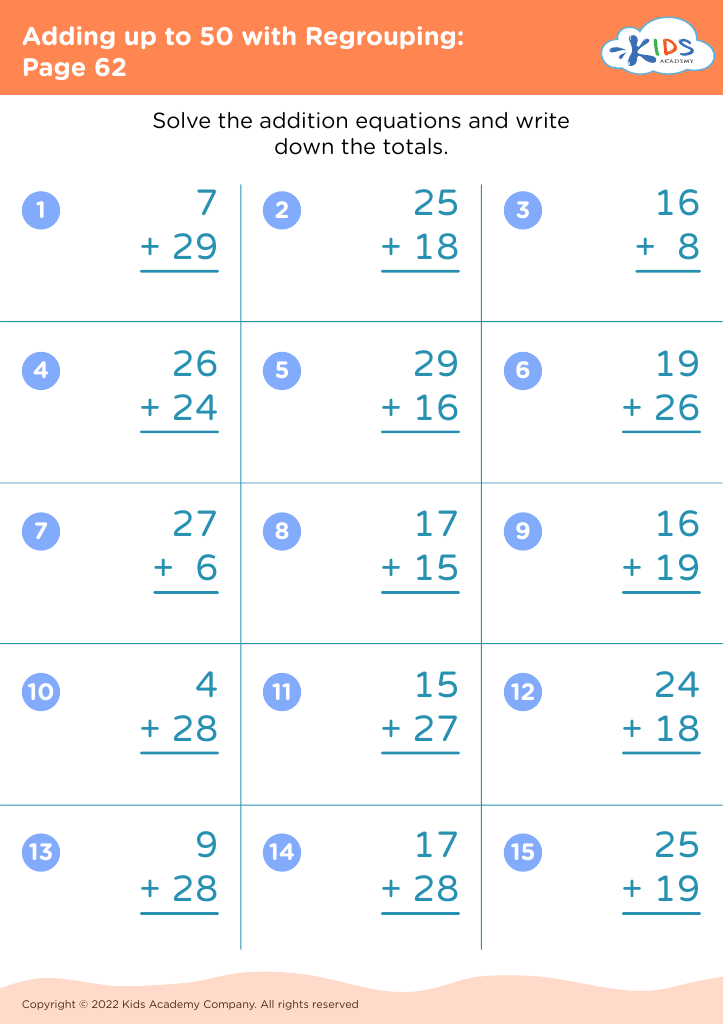
Adding up to 50 with Regrouping: Page 62
Worksheet
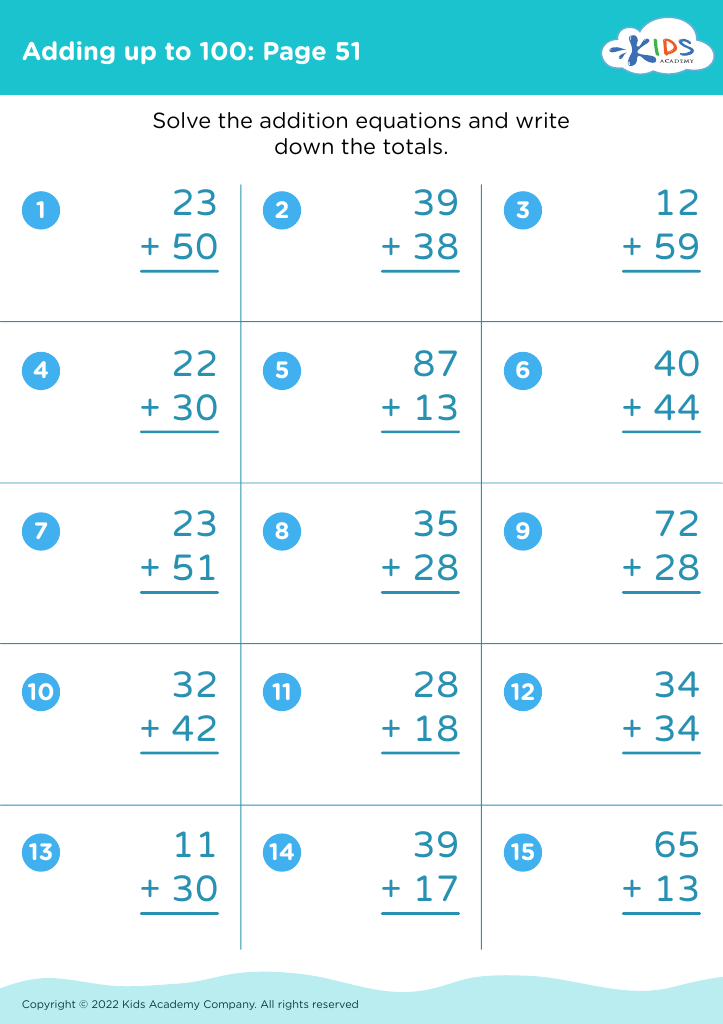
Adding up to 100: Page 51

Adding up to 100: Page 51

Adding up to 100: Page 51
Worksheet
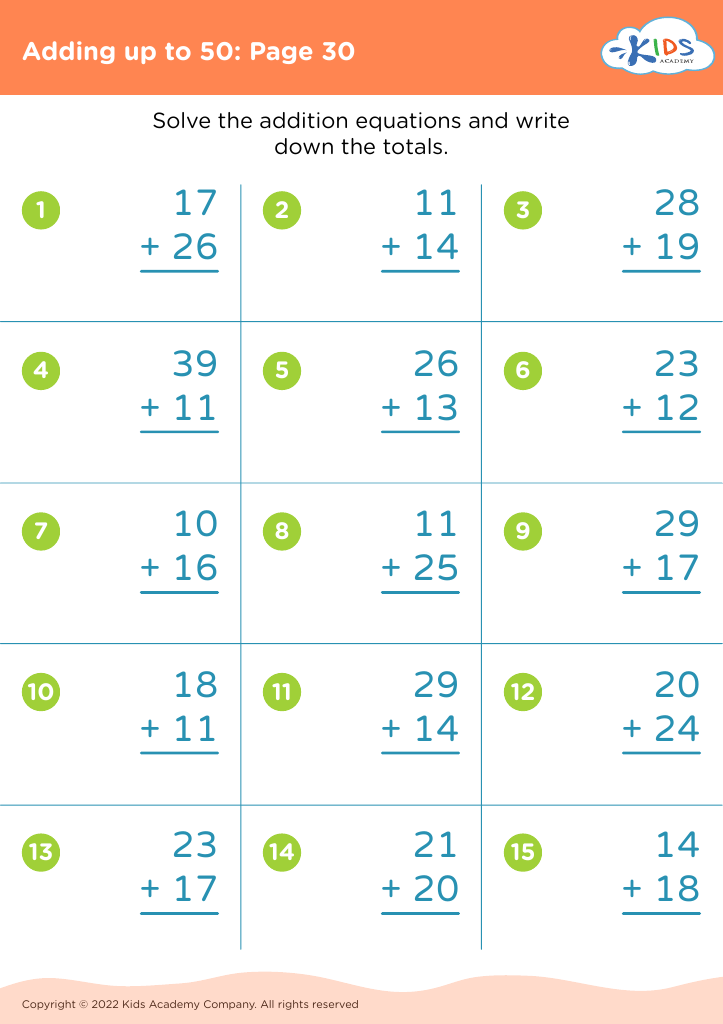
Adding up to 50: Page 30

Adding up to 50: Page 30

Adding up to 50: Page 30
Worksheet
Julia's Shopping Graph Worksheet
Julia's Shopping Graph Worksheet
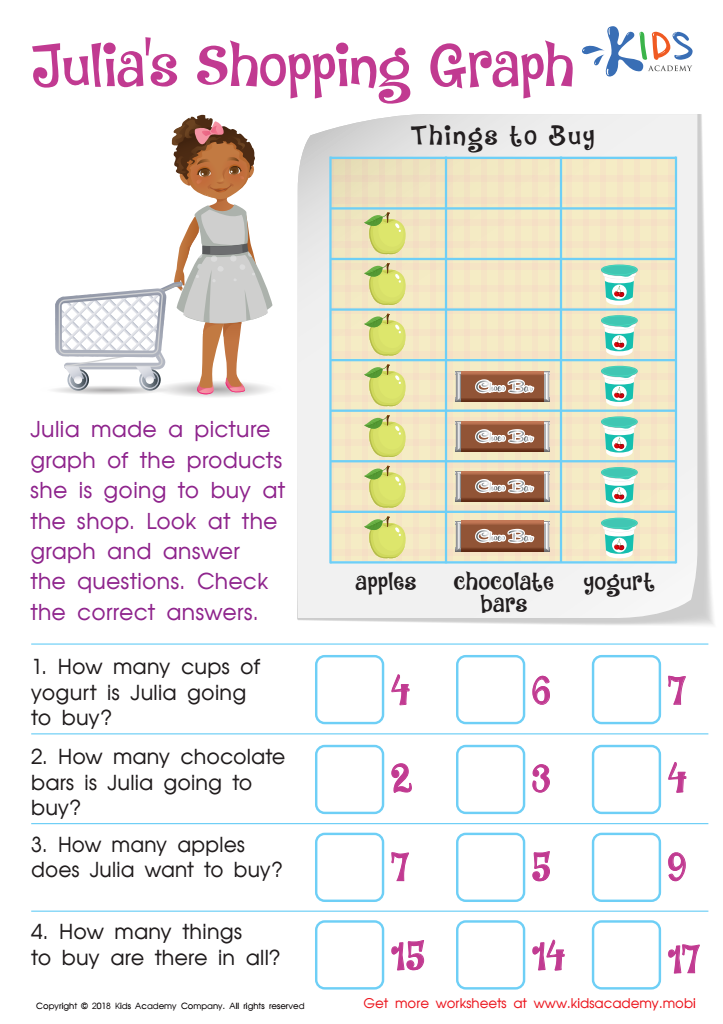
This fun PDF worksheet provides little mathematicians with practice using pictographs. They will answer questions about Julia's graph, helping to assess their understanding of reading and interpreting data. Counting and choosing the correct answer is sure to be an enjoyable experience!
Julia's Shopping Graph Worksheet
Worksheet
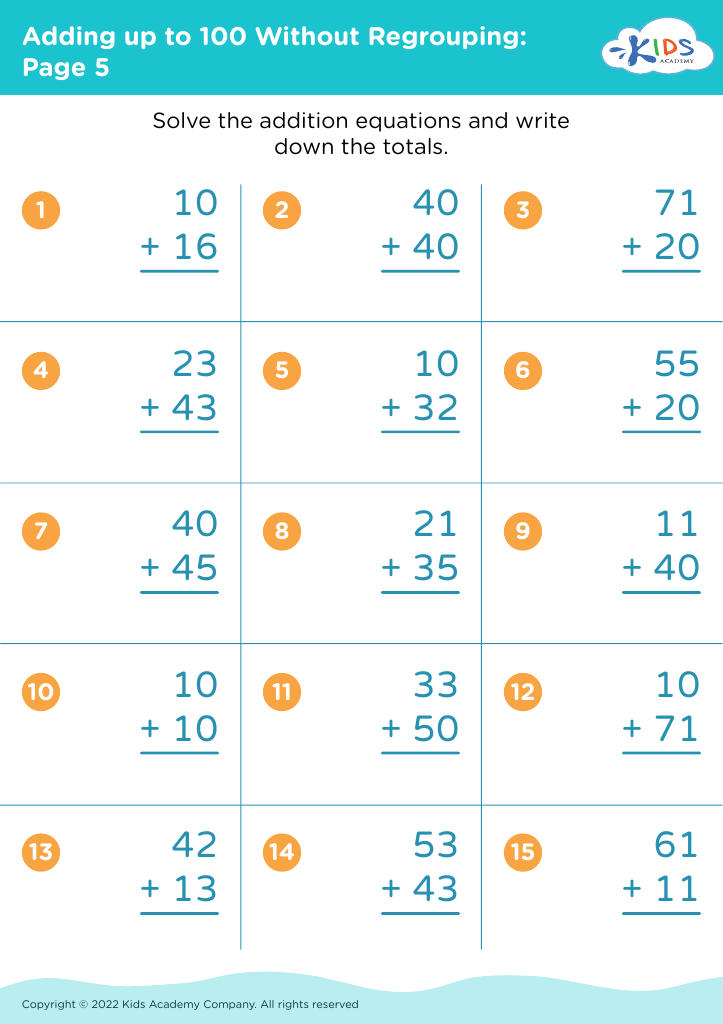
Adding up to 100 Without Regrouping: Page 5
Worksheet
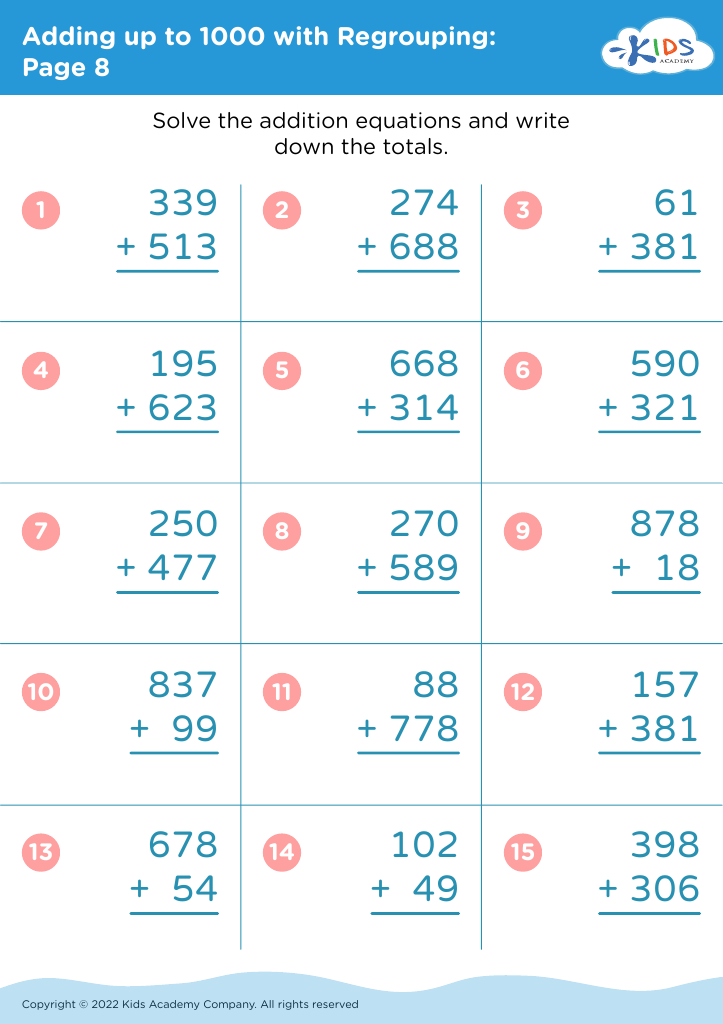
Adding up to 1000 with Regrouping: Page 8
Worksheet
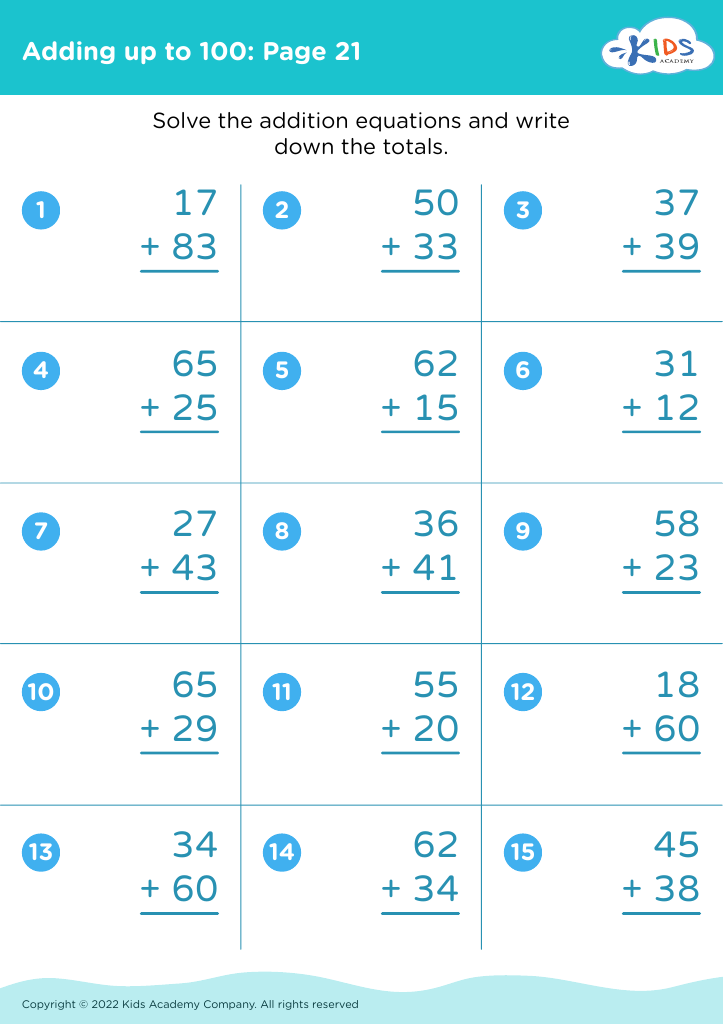
Adding up to 100: Page 21

Adding up to 100: Page 21

Adding up to 100: Page 21
Worksheet
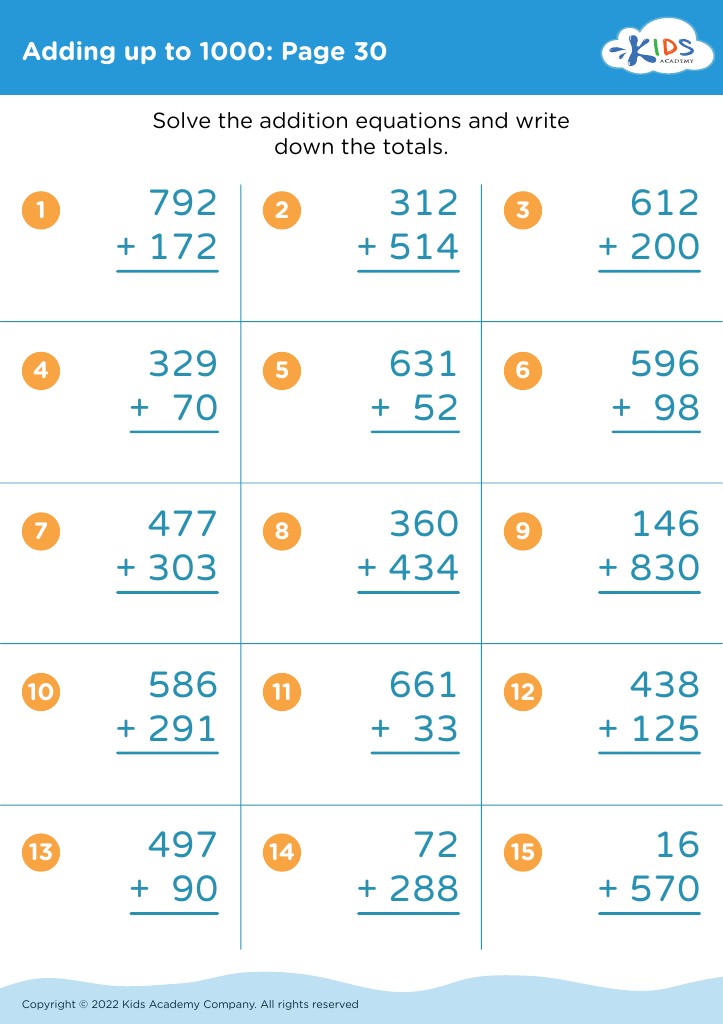
Adding up to 1000: Page 30

Adding up to 1000: Page 30

Adding up to 1000: Page 30
Worksheet
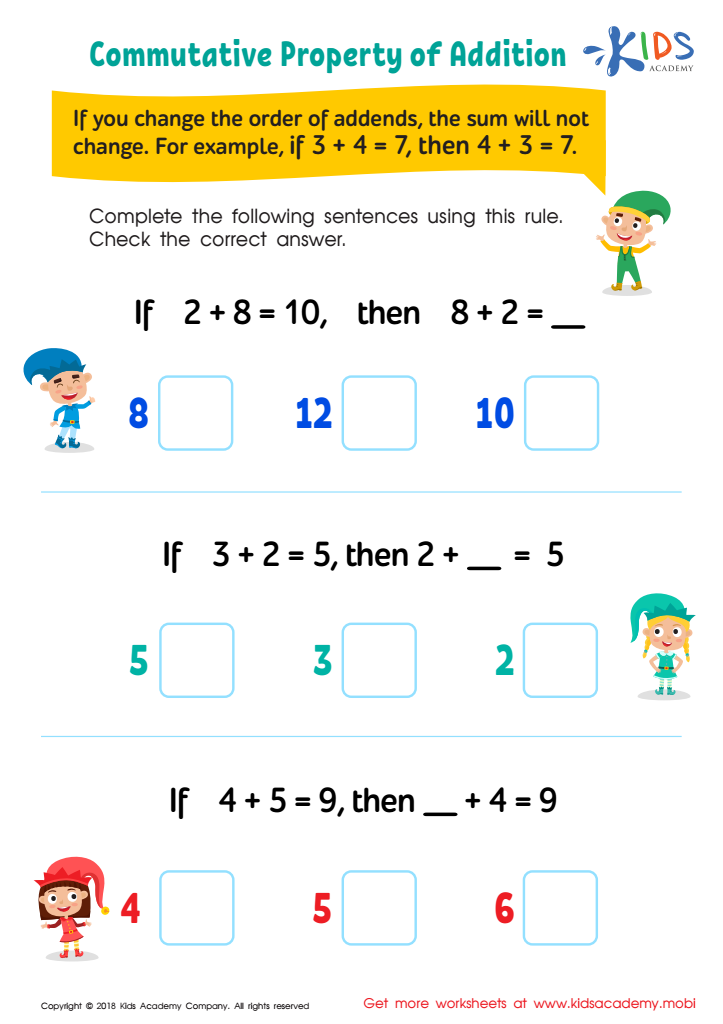
Commutative Property of Addition Worksheet
Commutative Property of Addition Worksheet

Master the commutative property of addition with Kids Academy's worksheet! Kids will have fun with silly elves as they complete the rows, switching or adding the addends. Observe that the sum stays the same no matter the order of the numbers!
Commutative Property of Addition Worksheet
Worksheet
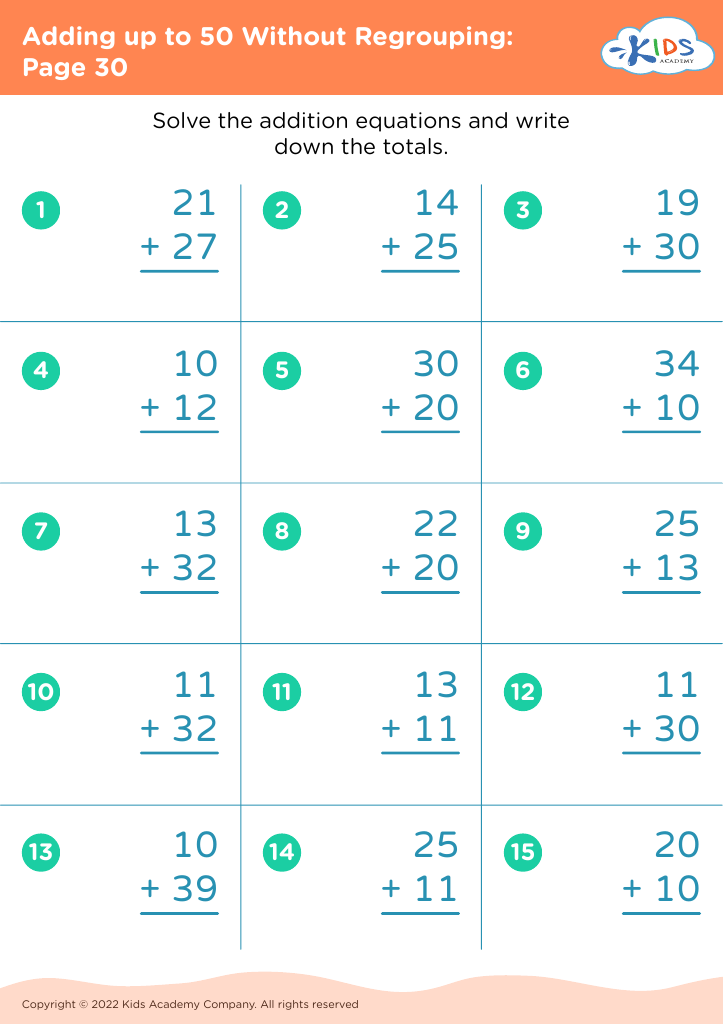
Adding up to 50 Without Regrouping: Page 30
Worksheet
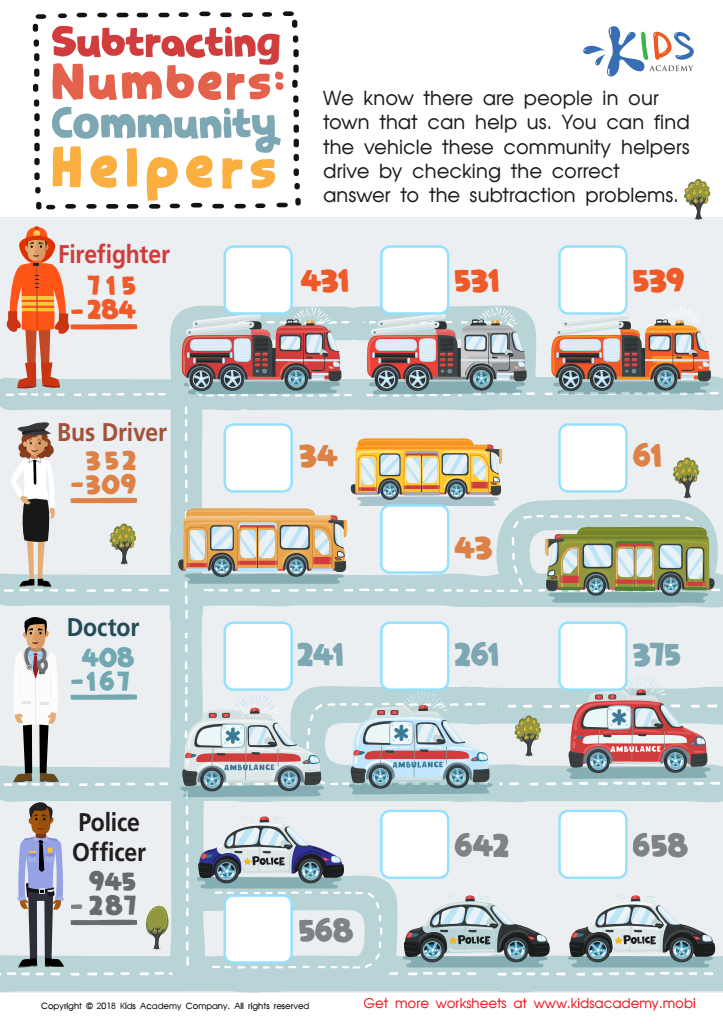
Subtracting Numbers: Community Helpers Worksheet


Subtracting Numbers: Community Helpers Worksheet

A community is an area of different people, buildings and other elements. People in a community have varied roles and work together to make it thrive. Ask your child what community helpers they know and how they help. Match the helpers to their vehicles by solving subtraction problems!
Subtracting Numbers: Community Helpers Worksheet

Worksheet


Enhancing problem-solving abilities in mathematics for children aged 5-7 is crucial for several reasons. At this early stage, children are developing foundational cognitive skills that will influence their future academic success. Math problem-solving encourages critical thinking and instills a sense of persistence. When children face challenges, learning to navigate them develops resilience and adaptability—skills that are invaluable both in and out of the classroom.

Furthermore, early mathematical competencies lay the groundwork for later learning. As children master basic concepts, they build confidence, which fosters a love for learning. Engaging in hands-on activities and playful problem-solving can make math enjoyable, encouraging intuitive understanding rather than rote memorization.

Parents and teachers play a vital role in nurturing these abilities by creating opportunities for exploration and discussion. Engaging children in everyday math—whether through games, puzzles, or practical activities—can make abstract concepts tangible and relatable. This approach not only helps them grasp mathematical concepts but also enhances their overall cognitive development.

Ultimately, prioritizing problem-solving skills in young learners equips them with the tools to confront complex challenges throughout their educational journeys and helps develop lifelong learners equipped to navigate a rapidly changing world.