Money counting skills Math Worksheets for Ages 5-7
4 filtered results
-
From - To
Help your child master essential money-counting skills with our expertly designed math worksheets for ages 5-7. At Kids Academy, our printable resources aid young learners in recognizing coins, understanding monetary value, and developing basic addition and subtraction skills through engaging, hands-on activities. Perfect for both classroom and home environments, these interactive worksheets promote confidence and practical knowledge in handling money. Empower your child’s learning journey today with fun and educational exercises, preparing them for future financial literacy and everyday situations. Explore our collection for enjoyable and effective math practice tailored to young minds.
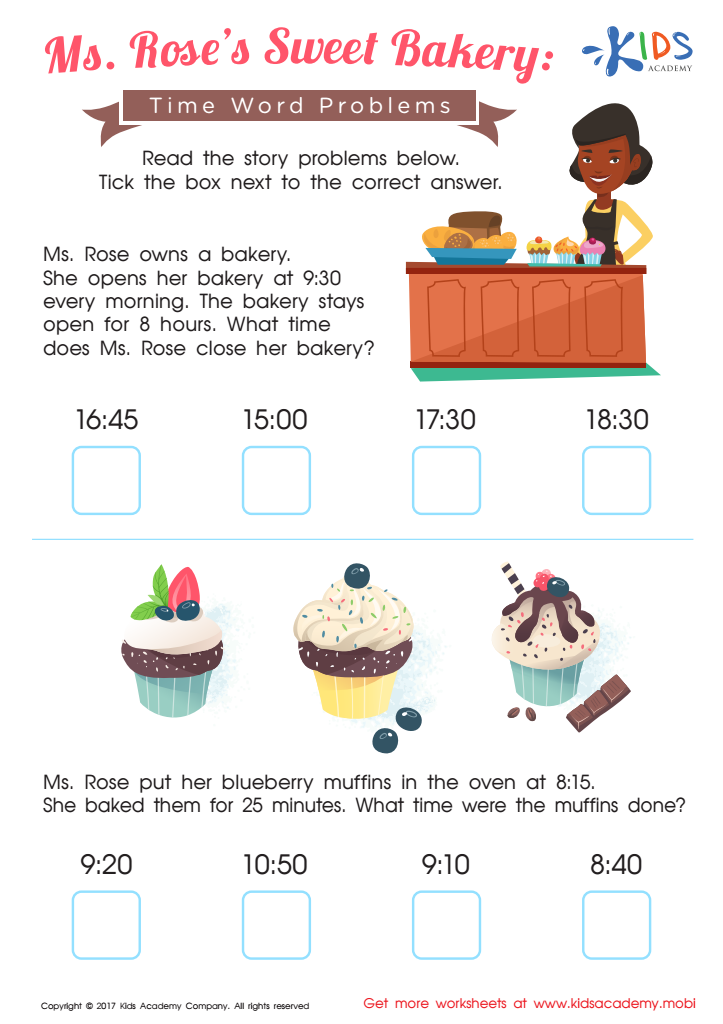
Ms. Roseв's Sweet Bakery Time Worksheet
 Assign to My Students
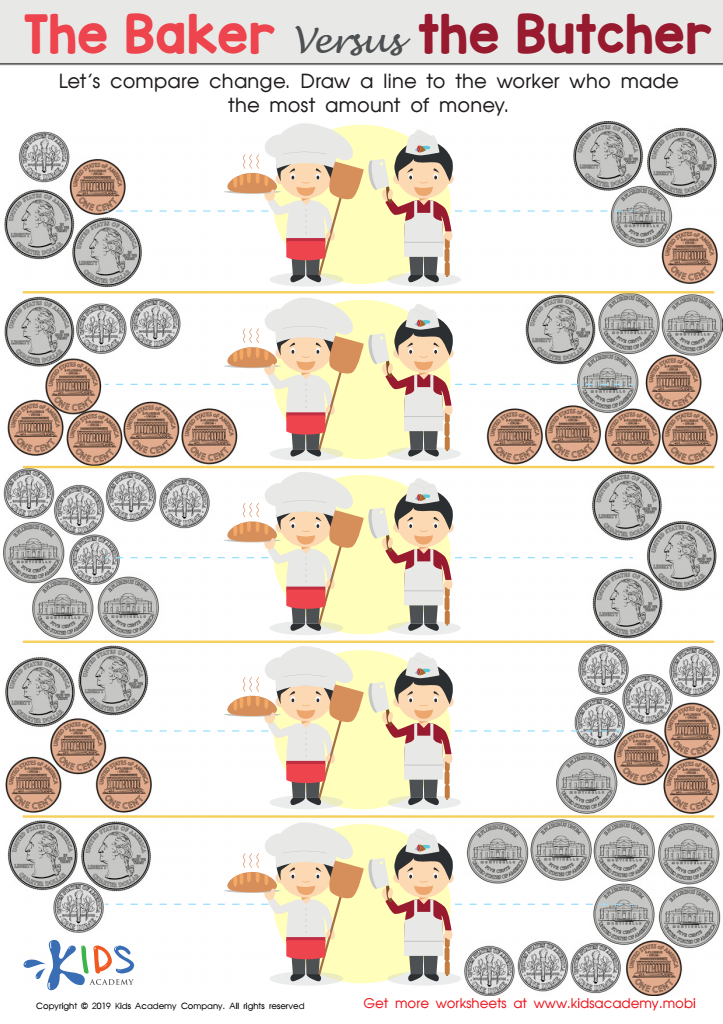
The Baker versus the Butcher Worksheet
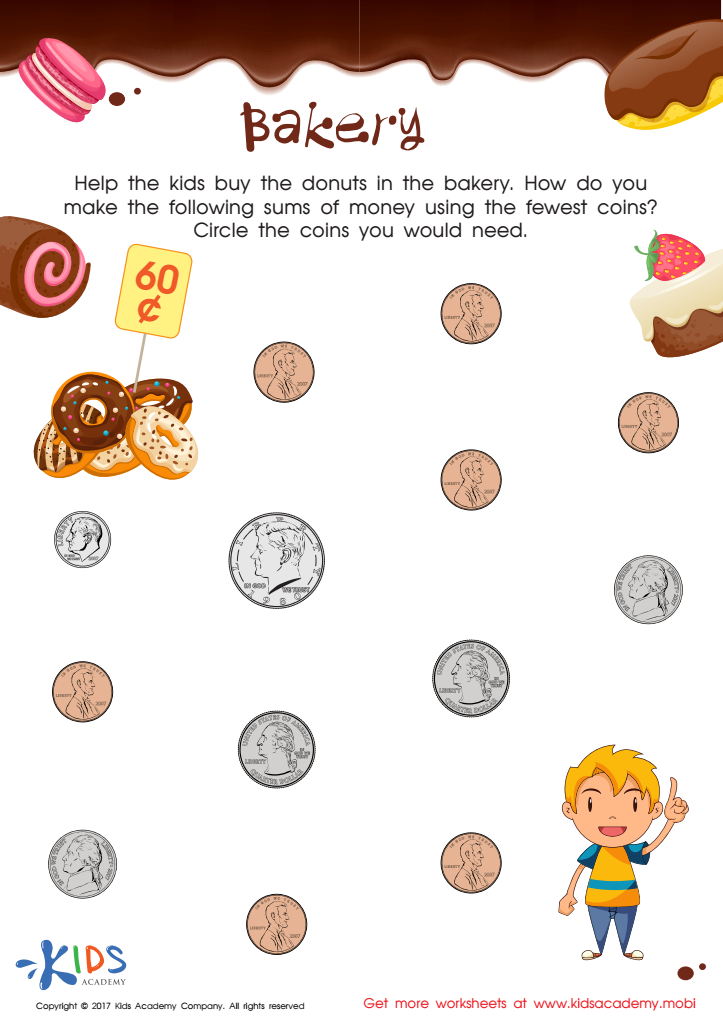
Counting Coins Worksheet
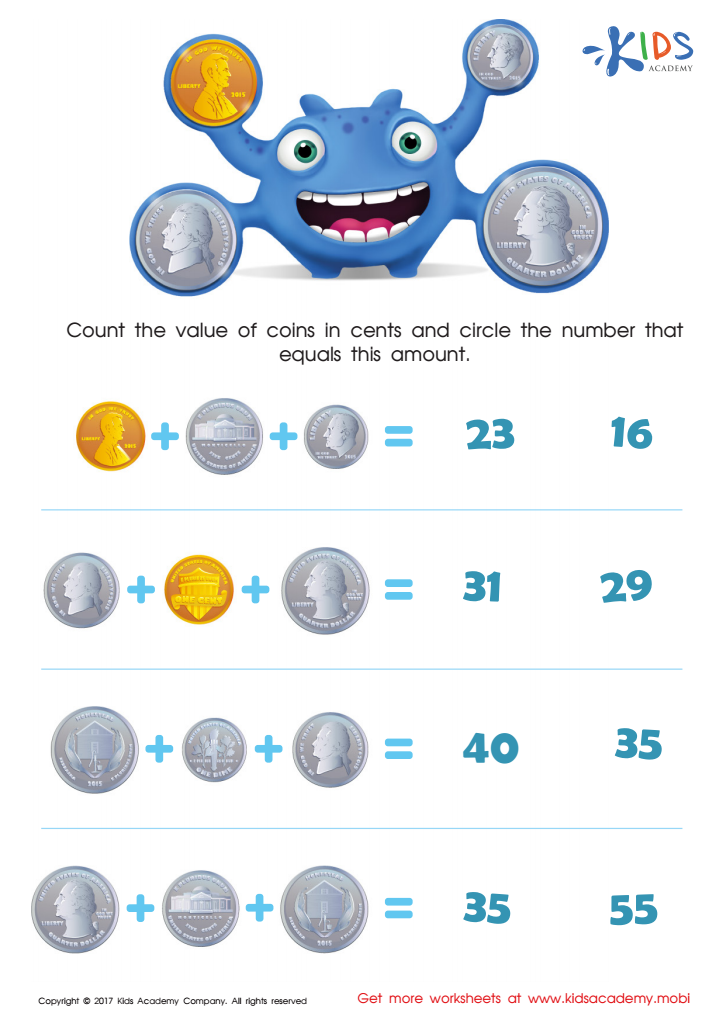
Counting the Coins Money Worksheet








Money counting skills are fundamental for young children ages 5-7 because they provide a practical and engaging way to develop essential mathematical abilities and life skills. At this age, children are naturally curious and eager to learn about the world around them. Introducing concepts like identifying coins and bills, understanding their values, and simple addition and subtraction using money captures their interest and makes math fun.
When children learn to count money, they are simultaneously enhancing their number recognition, comparison, and counting skills. These activities also foster critical thinking and problem-solving abilities by requiring youngsters to make decisions about transactions or how to combine different denominations to reach a certain amount.
Furthermore, teaching money skills cultivates a sense of financial literacy early on. Understanding the value of money and its basic usage lays the groundwork for responsible financial habits in later life. This knowledge can empower children to make wiser choices about saving and spending, instilling a sense of independence and confidence in their financial capabilities.
For parents and teachers, incorporating money counting into everyday activities at home and school provides a meaningful, real-life context for mathematical learning. This holistic approach not only ensures foundational competence in math but also equips children with valuable life-long skills.








