Matching skills Matching Worksheets for Ages 5-7
6 filtered results
-
From - To
Enhance your child's learning journey with our engaging Matching Skills Worksheets tailored for ages 5-7! These fun and interactive worksheets are designed to help young learners develop essential matching and recognition skills while enjoying a range of educational activities. Perfect for classroom use or at-home practice, our worksheets promote cognitive development and strengthen memory through colorful illustrations and relatable content. Ideal for parents and teachers seeking effective teaching resources, our matching worksheets foster important skills such as critical thinking and pattern recognition. Explore our collection today to support your child's growth and make learning a delightful adventure!
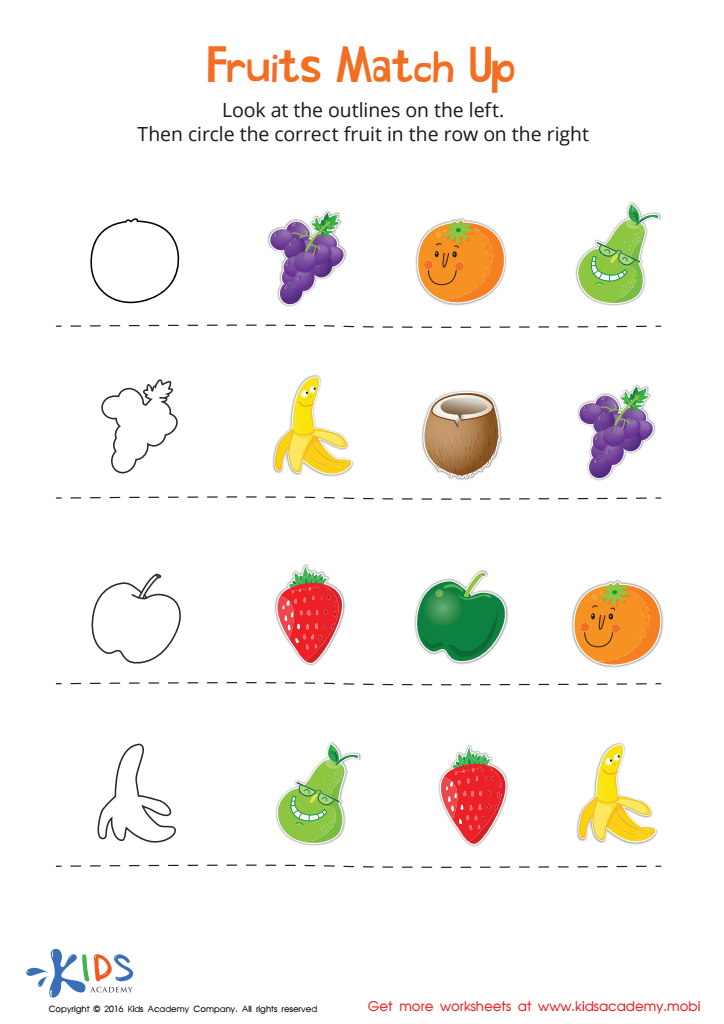
Fruits Match Up Worksheet
 Assign to My Students
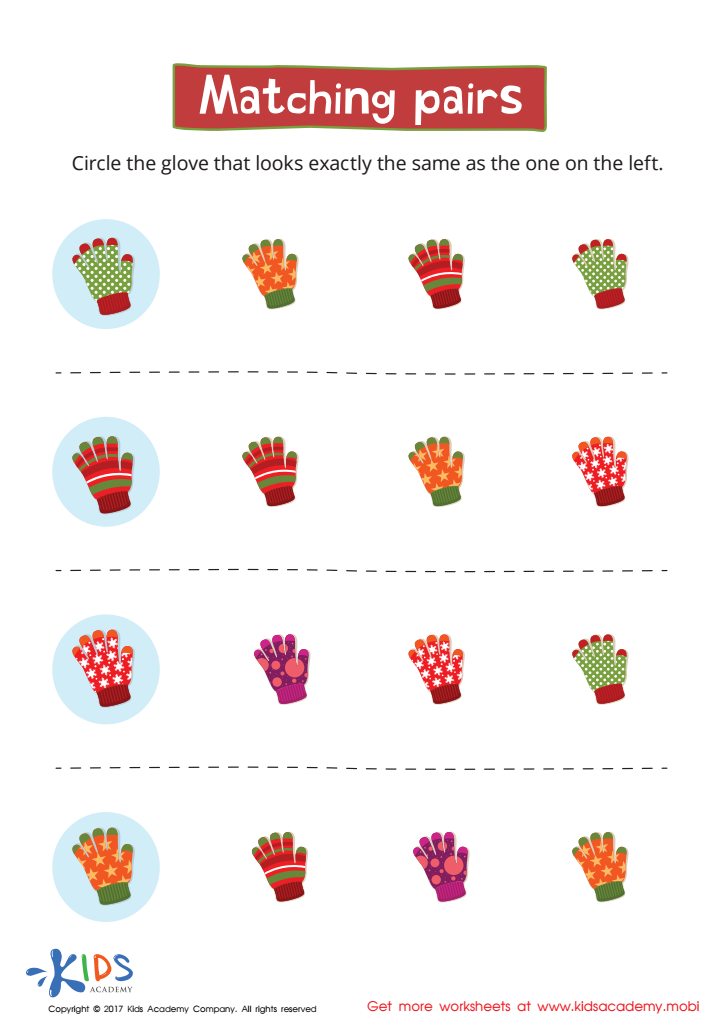
Matching: Matching Pairs Worksheet
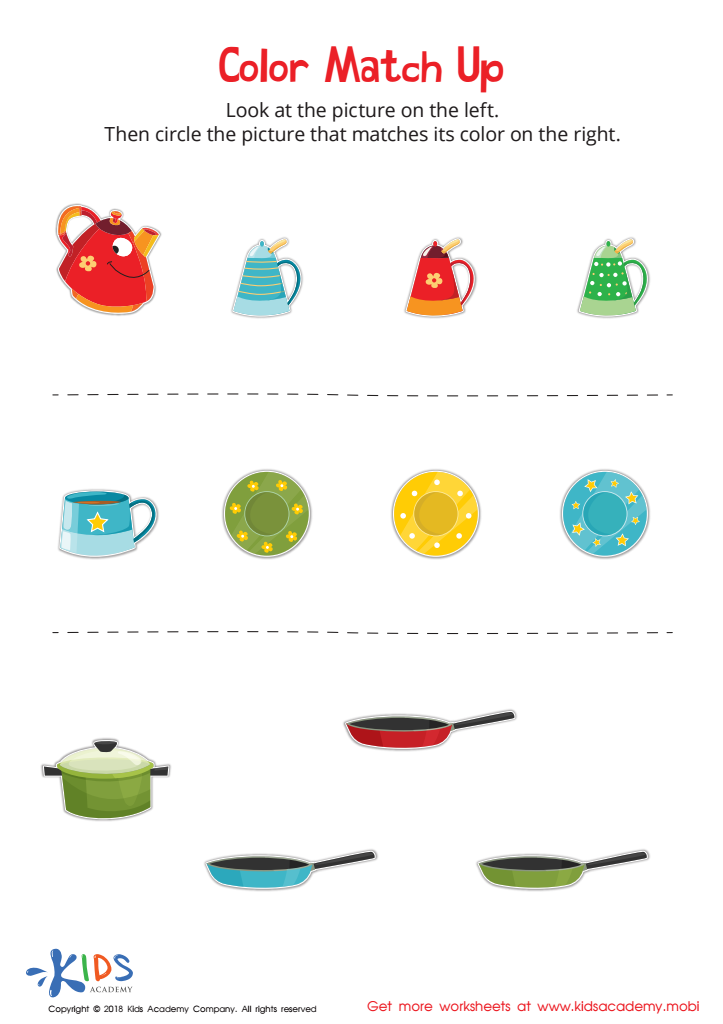
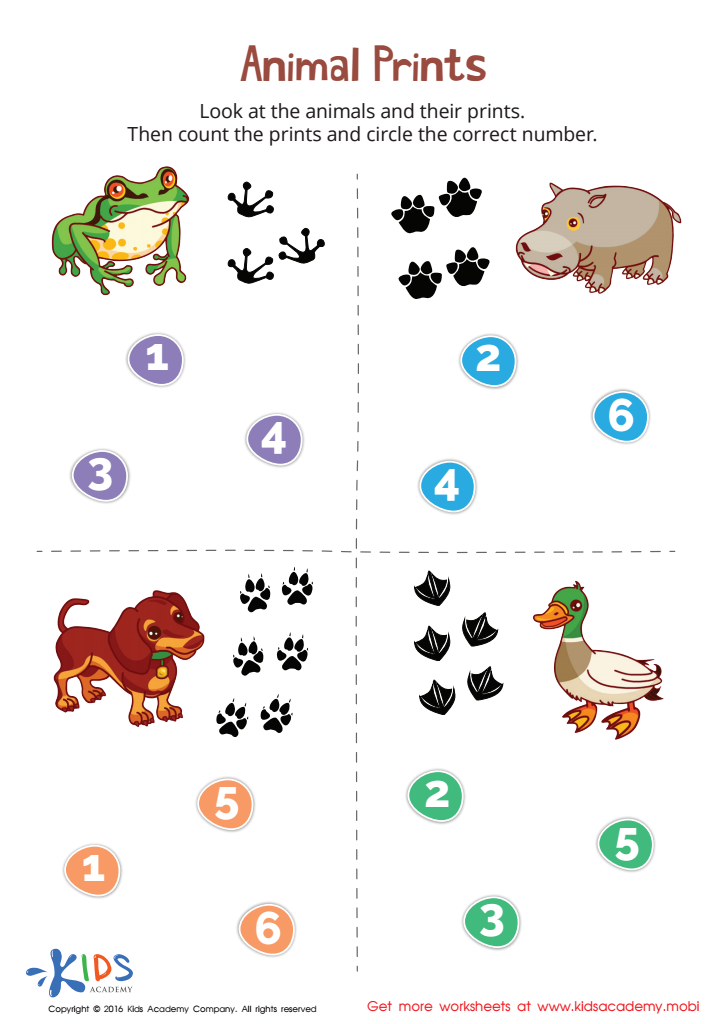
Animal Prints Match-Up Worksheet
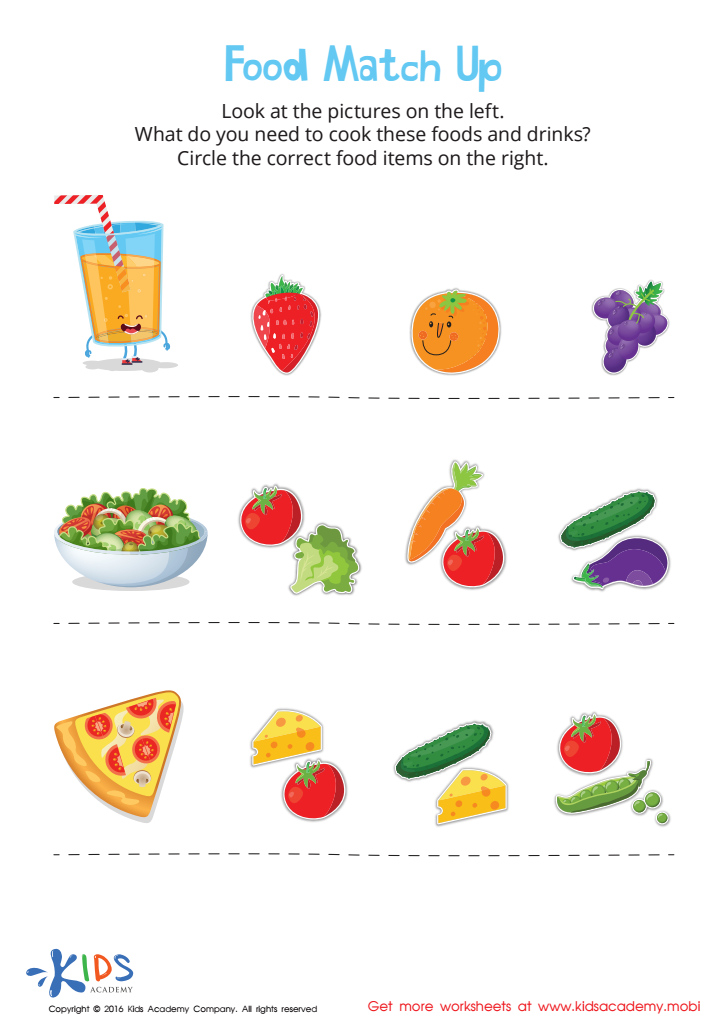
Food Match Up Worksheet
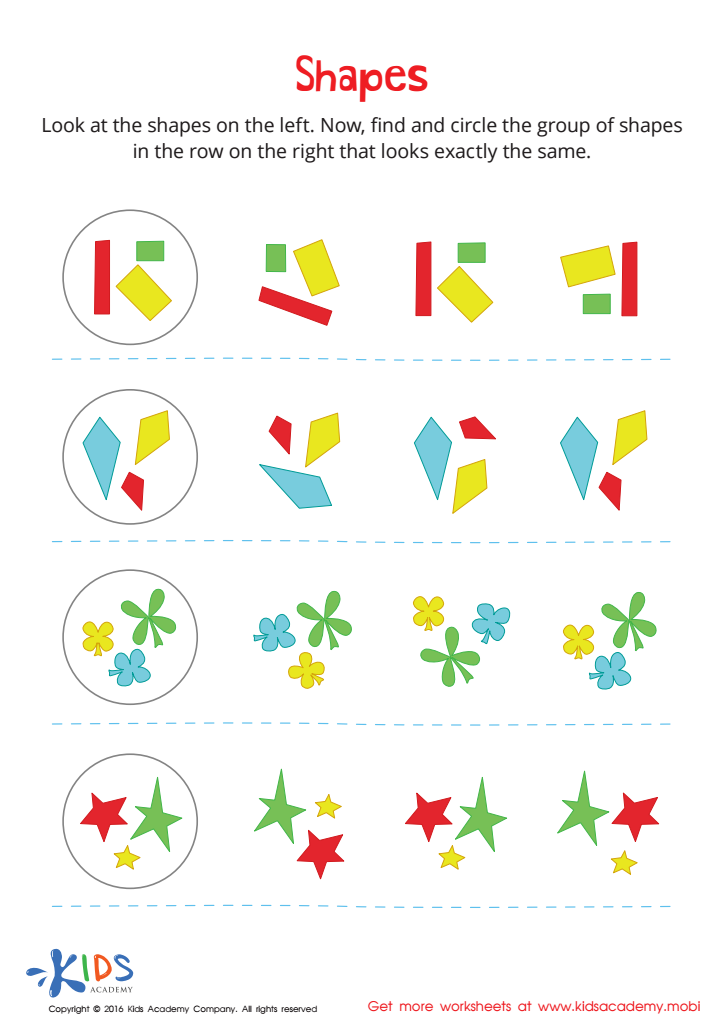
Shapes Worksheet







Matching skills are crucial for children aged 5-7 as they lay the foundation for cognitive development and early academic success. At this age, children are naturally curious and eager to engage. Developing matching skills helps enhance their memory, attention to detail, and critical thinking abilities. These skills involve recognizing similarities, identifying patterns, and categorizing objects, which fosters analytical thinking essential for subjects like math, science, and literacy.
Moreover, strong matching skills aid in building social skills. Through matching games and activities, children learn to collaborate, share, and communicate with peers, which are important for their emotional and social development. Teachers and parents can easily incorporate matching activities into everyday routines, making learning fun and interactive. This not only keeps children engaged but also boosts their confidence as they achieve small victories.
Additionally, matching skills are foundational for later educational tasks like reading comprehension and problem-solving. Young learners who master these abilities are better equipped to tackle more complex concepts in the future. Thus, investing time in developing matching skills in early education can lead to more successful learning experiences as children progress to higher grades.








