Fine Motor Skills Numbers 11–20 Worksheets for Ages 5-7
6 filtered results
-
From - To
Enhance your child's fine motor skills with our engaging Numbers 11–20 worksheets, designed for ages 5-7. These interactive printables help young learners familiarize themselves with numbers while improving their hand-eye coordination and dexterity. Our carefully crafted activities include tracing, coloring, and cutting exercises that make learning fun and effective. Ideal for home or classroom use, these worksheets encourage independent practice and creativity, ensuring that children grasp essential numerical concepts. Support your child's early math development while fostering essential motor skills, and watch them gain confidence as they master numbers 11-20 with ease! Perfect for parents and teachers alike!
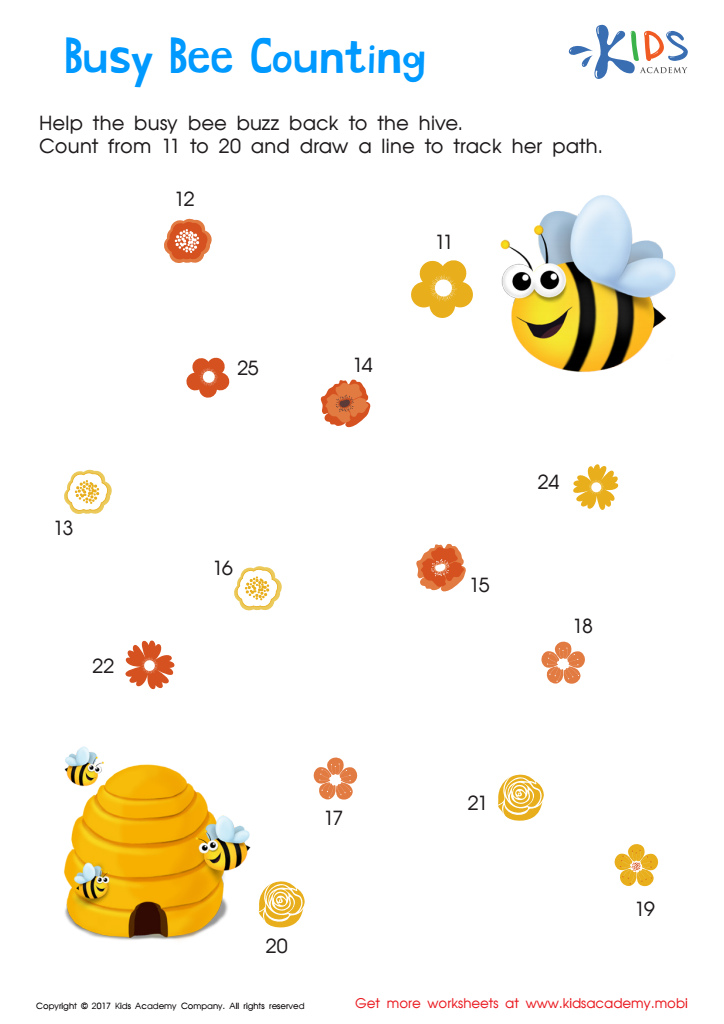
Ordering 11–20: Busy Bee Counting Worksheet
 Assign to My Students
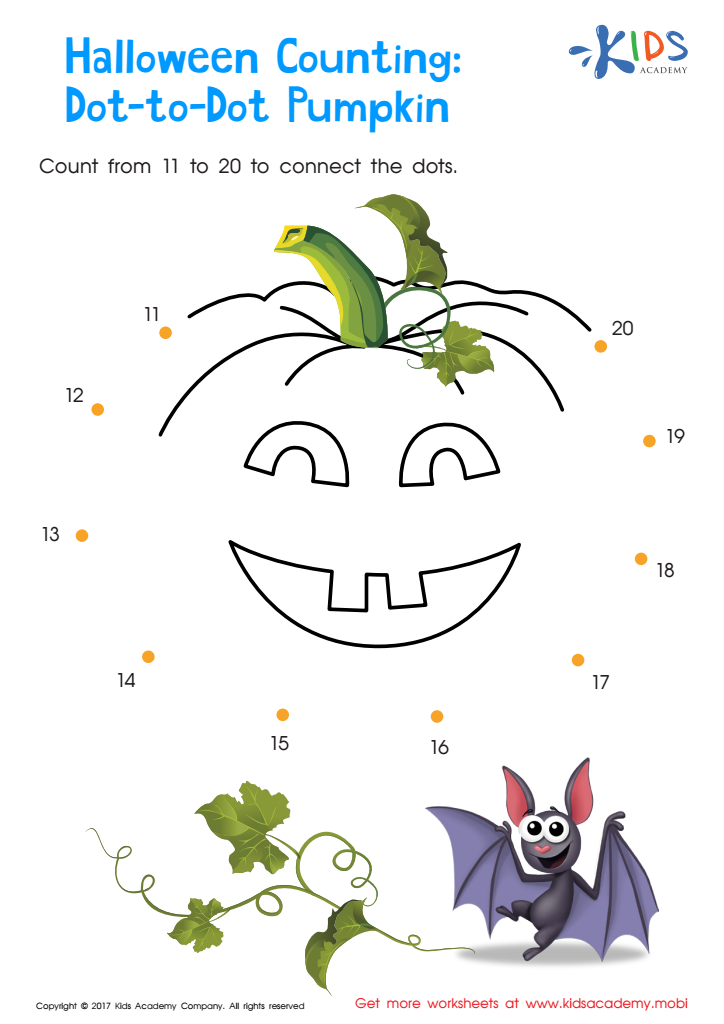
Ordering 11–20: Halloween Counting Worksheet
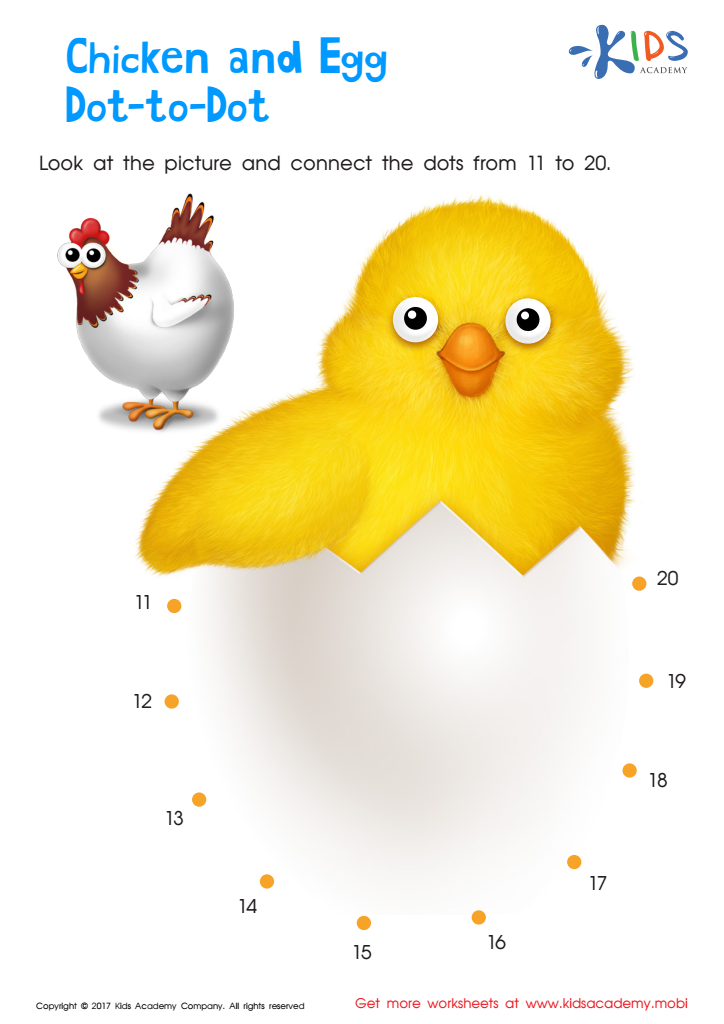
Ordering 11–20: Chicken & Egg Dot–to–dot Worksheet
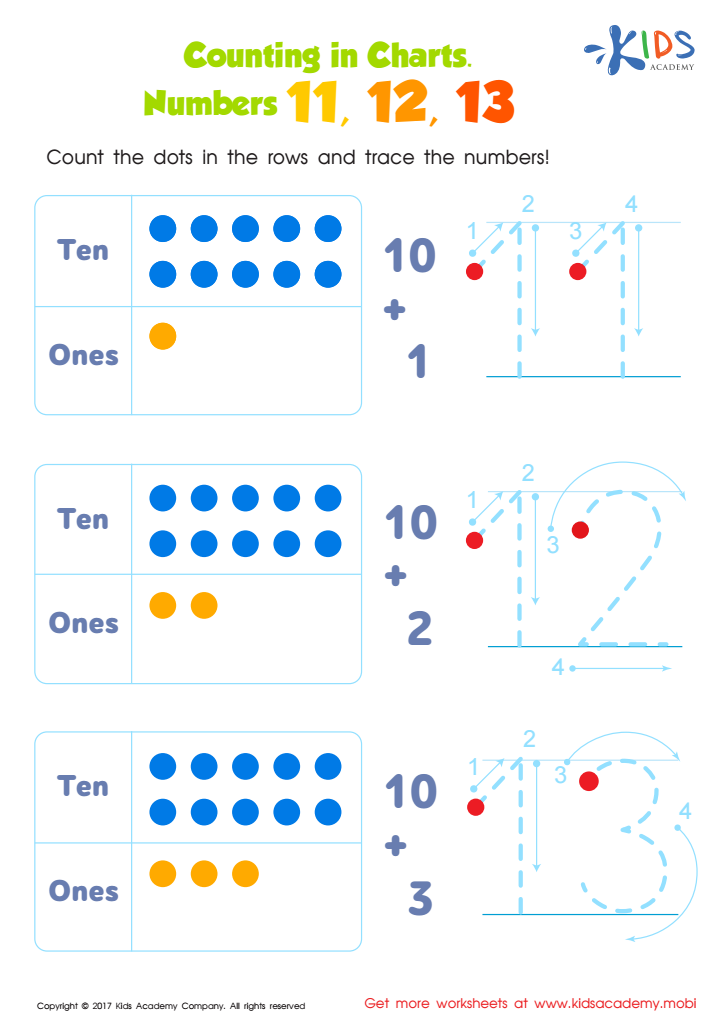
Number Tracing Worksheet For Kindergarten
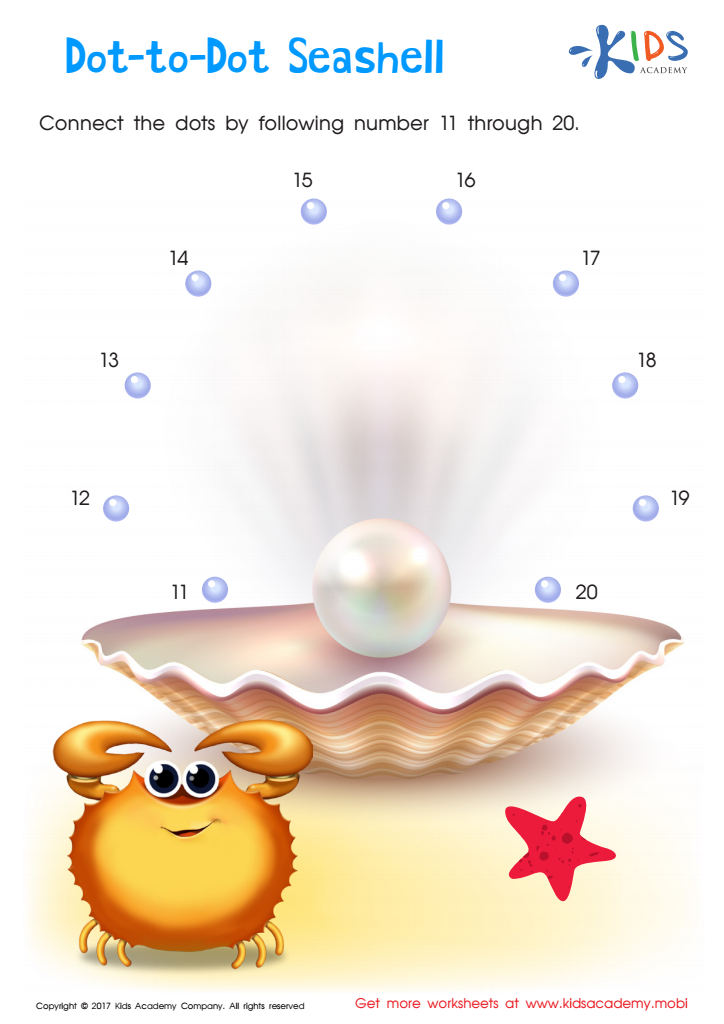
Ordering 11–20: Dot–to–dot Seashell Printable



Fine motor skills are crucial for children aged 5-7 as they form the foundation for various everyday tasks and academic success. These skills involve the precise movements of small muscles, particularly in the hands and fingers, allowing children to manipulate objects, write, and engage in art activities. Mastering numbers 11-20 through fine motor activities fosters both numerical understanding and motor development.
First, fine motor activities help children learn to recognize and form the numbers 11-20 properly. Activities like tracing, gripping pencils, or manipulating objects like beads or blocks enhance their dexterity and control. These foundational skills are vital for handwriting, which becomes increasingly important in their educational journey.
Second, strong fine motor skills link closely with cognitive development. Manipulating small objects and engaging in hands-on activities reinforce numerical concepts, promoting counting, number sense, and the ability to solve simple math problems.
Finally, these skills also foster independence. When children can successfully perform tasks involving numbers and physical manipulation, they gain confidence, encouraging a love for learning.
In summary, focusing on fine motor skills in association with numbers 11-20 enriches children's learning experiences, setting the stage for their future academic achievements and personal growth.