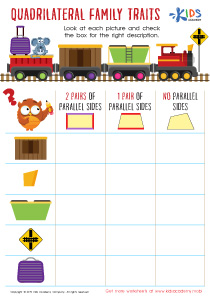
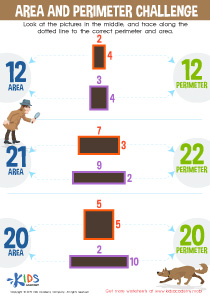
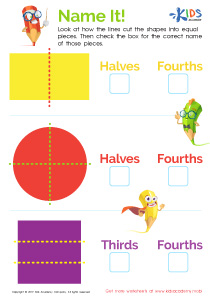
Problem-Solving Skills Tracing Shapes Worksheets for Ages 5-7
4 filtered results
-
From - To
Enhance your child's problem-solving skills with our engaging Tracing Shapes Worksheets designed for ages 5-7! These expertly crafted worksheets are perfect for young learners to develop spatial awareness, fine motor skills, and critical thinking. By tracing a variety of shapes, children will boost their confidence and build a solid mathematical foundation. Each worksheet is visually appealing and provides a fun and interactive way to master essential geometry concepts. Ideal for both classroom and at-home learning, our Problem-Solving Skills Tracing Shapes Worksheets make learning enjoyable and effective for your little ones!
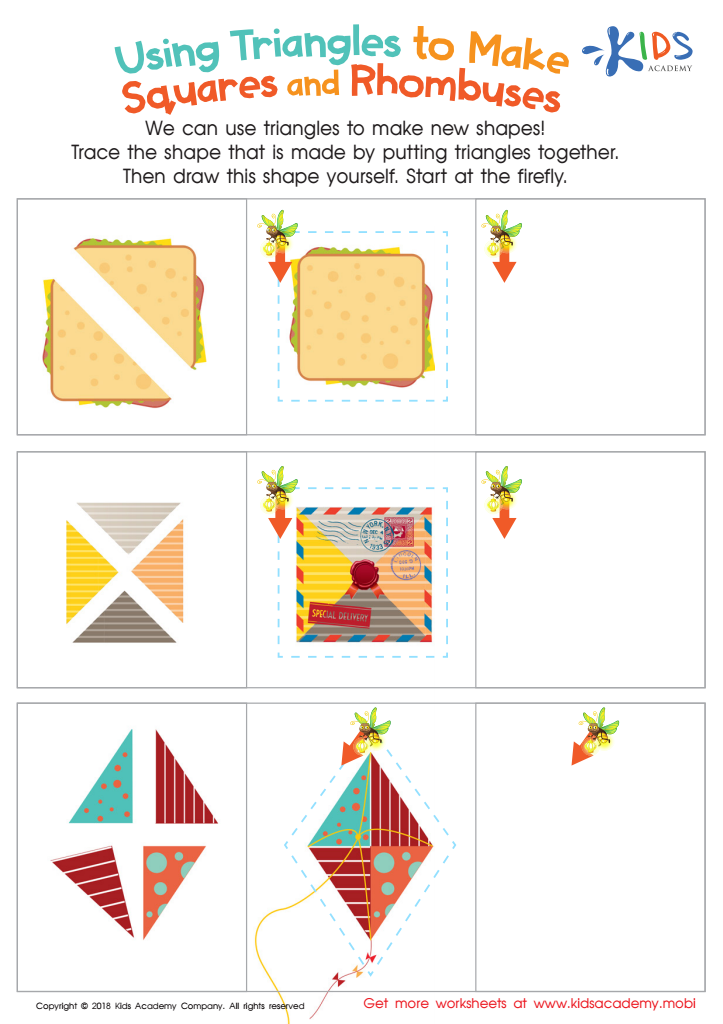
Using Triangles to Make Squares and Rhombuses Worksheet
 Assign to My Students
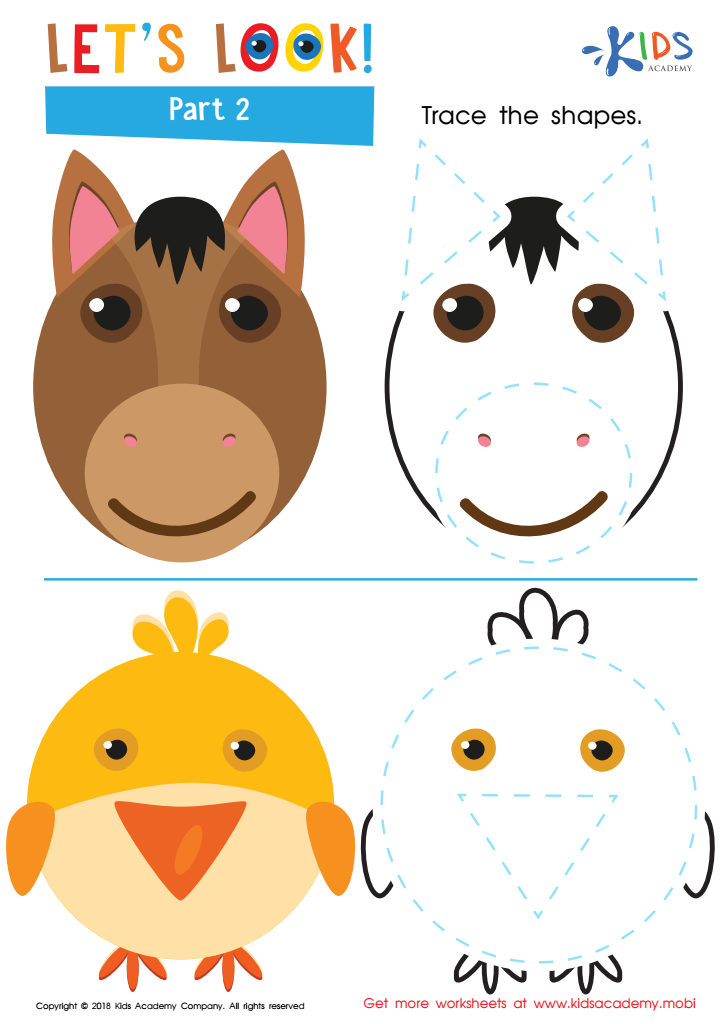
Let's Look! Part 2 Worksheet
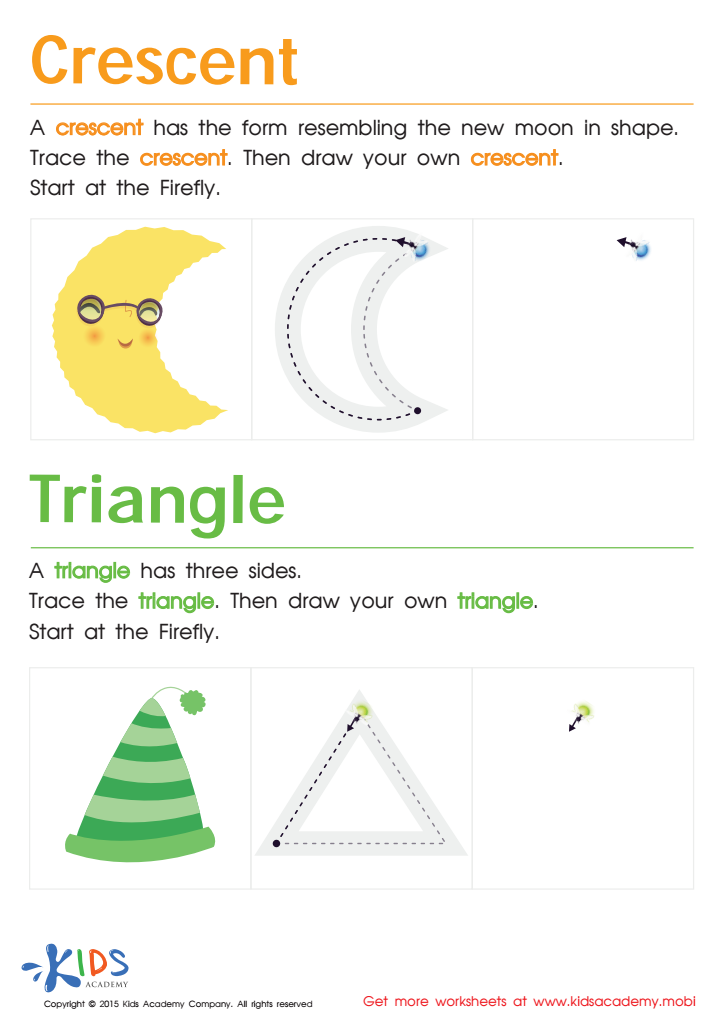
Learning to Draw Crescents And Triangles Worksheet
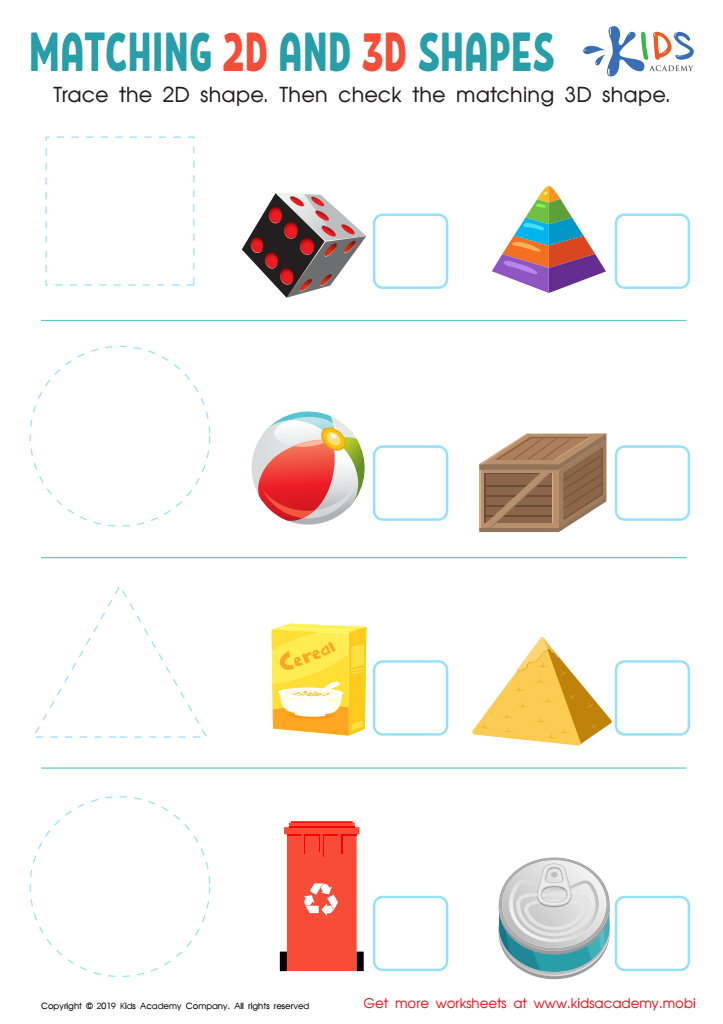
Matching 2D and 3D Shapes Worksheet








Problem-Solving Skills Tracing Shapes is critical for children aged 5-7 as it lays a foundational cornerstone for cognitive development, fine motor skills, and early math abilities. At this young age, children's brains are rapidly developing, meaning they are highly receptive to new information and skills. Engage them in tracing shapes directly supports this developmental phase, helping them recognize patterns, understand spatial relationships, and enhance their hand-eye coordination.
When children trace shapes, they learn to pay attention to details, follow directions, and see tasks through to completion—an early form of problem-solving. The fine motor control required in tracing translates to better handwriting and the capacity to complete more complex tasks independently. It also subtly introduces mathematical concepts such as geometry, symmetry, and proportions, helping children grasp more abstract concepts later.
Moreover, the activities align with playful learning, which research shows to be highly effective for younger children. Parents and teachers who invest in shape-tracing activities support children’s ability to tackle various challenges creatively and logically. Encouraging these skills promotes academic success and builds confidence, setting a strong precedent for lifelong learning and adaptability. By fostering problem-solving abilities early on, parents and teachers help build a generation capable of innovative thinking and sustained concentration.