Reading Non-Fiction Worksheets for Ages 5-7 - Page 4
74 filtered results
-
From - To
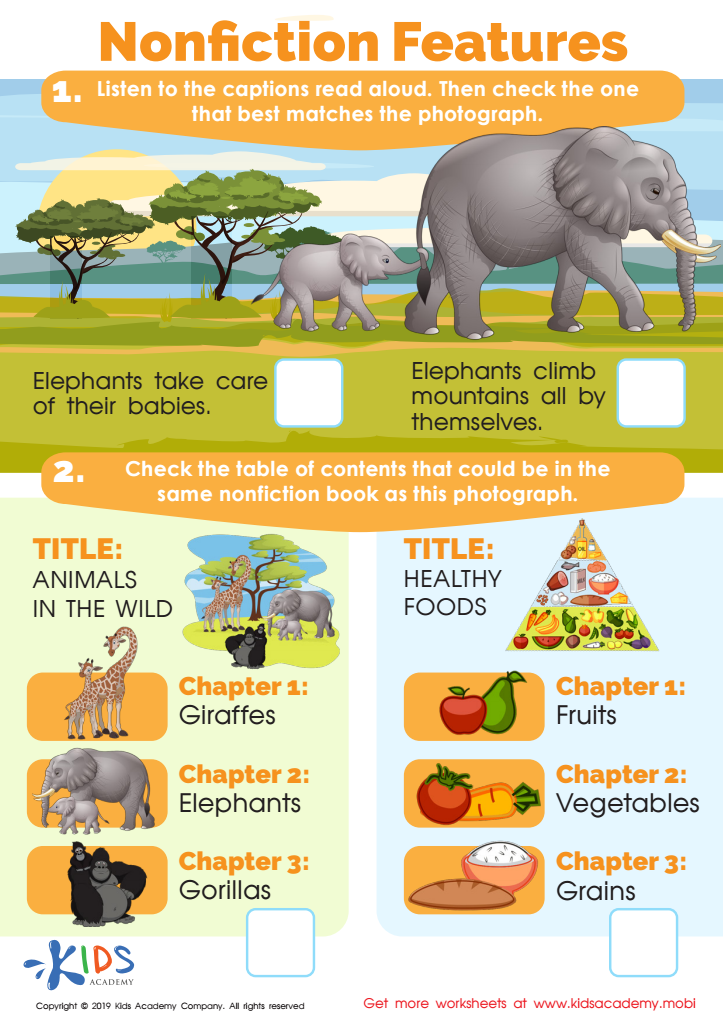
Nonfiction Features Worksheet
 Assign to My Students
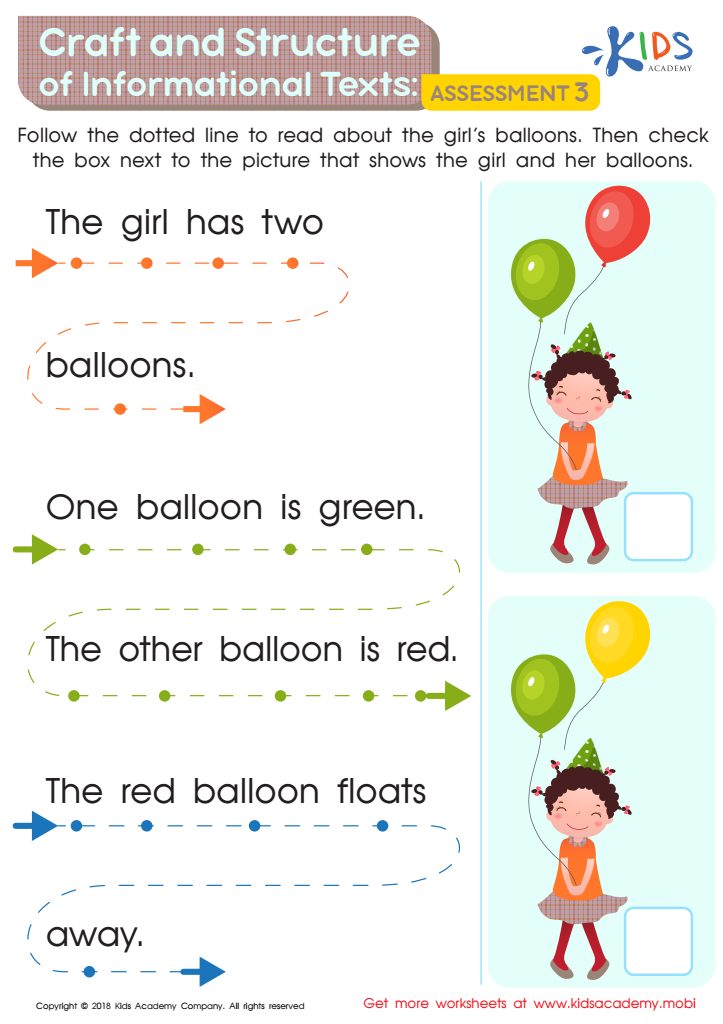
Craft and Structure of Informational Texts: Assessment 3 Worksheet








Reading non-fiction for ages 5-7 is incredibly important, and both parents and teachers should prioritize it for several reasons. First, non-fiction texts help young children build a rich and robust vocabulary by exposing them to informational language and subject-specific terms. This exposure enhances their word knowledge and comprehension skills, which are crucial for academic success.
Second, non-fiction reading widens a child's understanding of the world around them. Through engaging with real-world topics like animals, plants, science, and history, children satisfy their natural curiosity and develop a sense of wonder about various facts and phenomena. This connection to the broader world helps form a foundation of background knowledge vital for meaningful learning across many subjects.
Third, non-fiction texts foster critical thinking and inquiry skills. When children read about how things work or why things happen, they naturally begin to ask questions, seek answers, and develop their reasoning abilities. These skills are not only vital for academic growth but also for lifelong learning and problem-solving.
Lastly, the diversity offered by non-fiction texts encourages inclusivity and appreciation for different cultures, practices, and viewpoints. As children discover real-life stories and facts from various perspectives, they build empathy and understanding, key components for social development.
By integrating non-fiction reading into early education, parents and teachers pave the way for well-rounded, inquisitive, and knowledgeable individuals.








