Rhyme recognition Songs Worksheets for Ages 5-7
3 filtered results
-
From - To
Discover our engaging "Rhyme Recognition Songs Worksheets" specifically designed for children aged 5 to 7. These worksheets combine the joy of music with essential literacy skills, helping young learners identify and understand rhymes through captivating songs. Each worksheet features vibrant illustrations and easy-to-follow activities that encourage creativity while enhancing reading comprehension. Perfect for classrooms or at-home learning, these resources foster a love for language and improve auditory skills. Whether singing along or completing fun exercises, children will boost their phonemic awareness and rhyme recognition abilities, laying a strong foundation for future reading success. Start your child's rhyming adventure today!
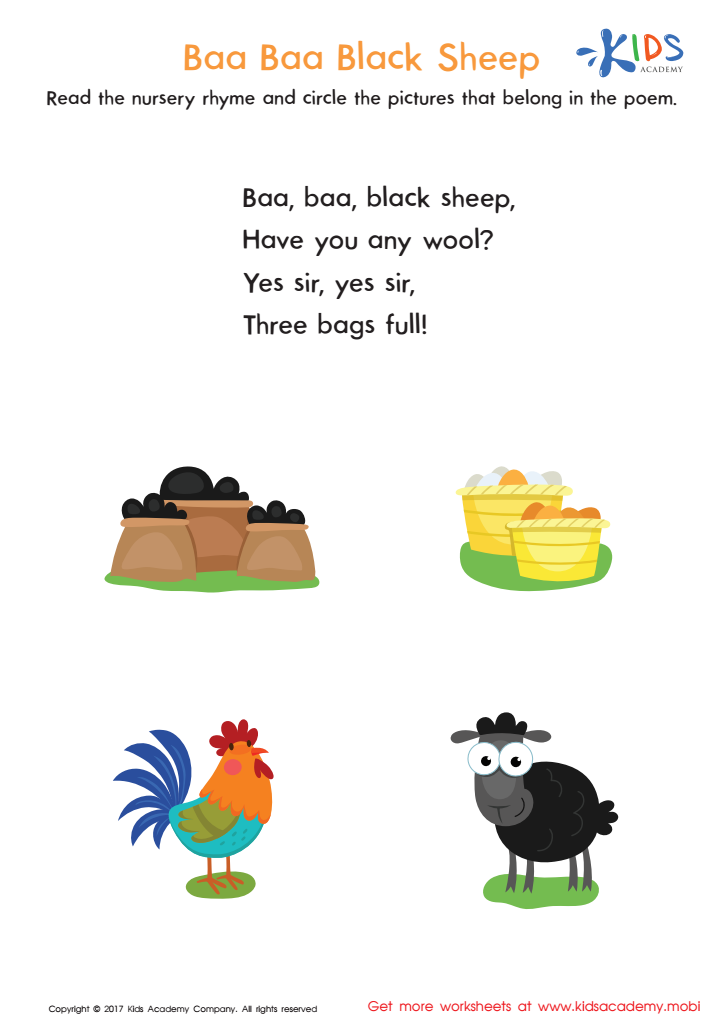
Baa Baa Black Sheep Printable
 Assign to My Students
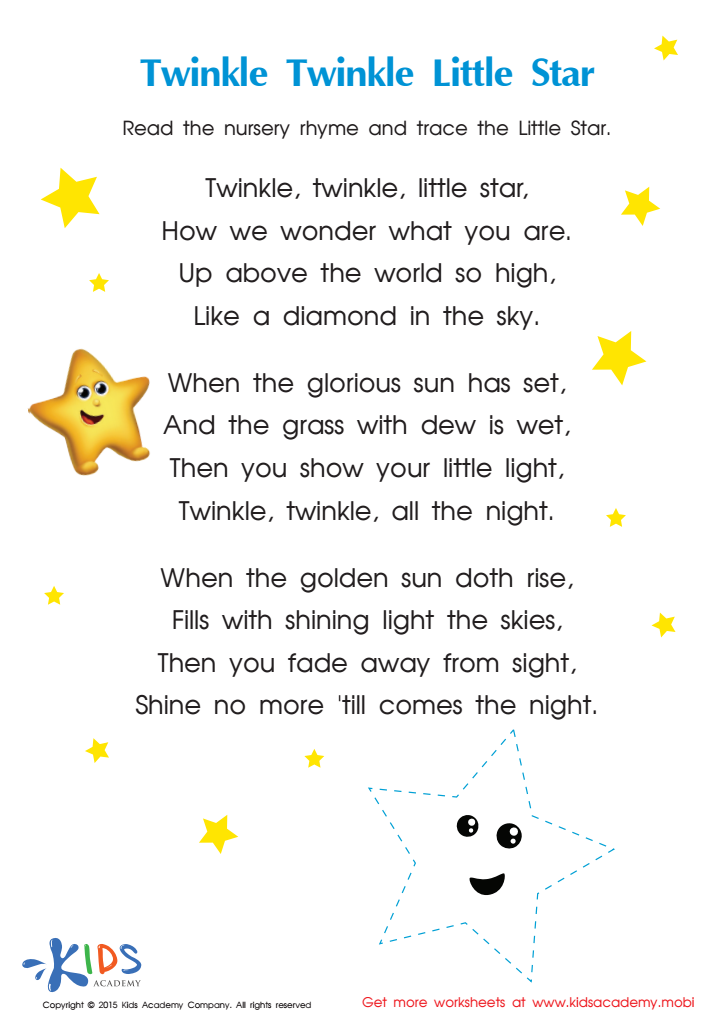
Nursery Rhymes: Twinkle Little Star Worksheet
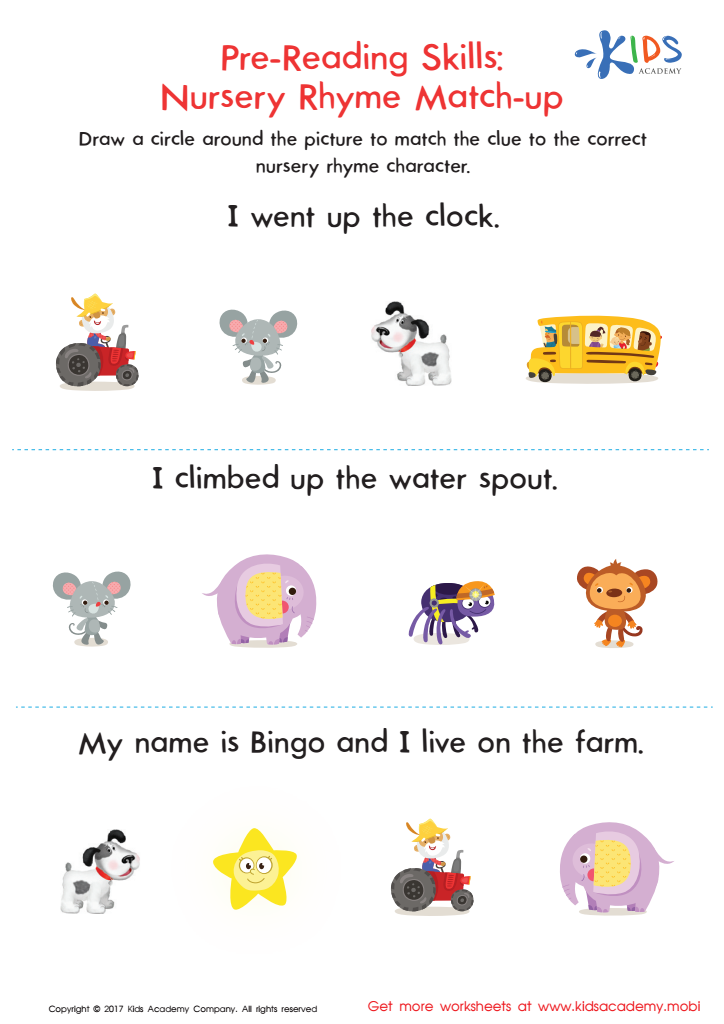
Nursery Rhyme Match–Up Worksheet








Rhyme recognition songs are vital for early childhood education, especially for children aged 5 to 7. During this critical developmental stage, phonemic awareness—understanding the sound structure of words—is foundational for literacy skills, including reading and spelling. Rhyme recognition positions children to discern similar sounds, helping them to predict and decode unfamiliar words more effectively.
Additionally, these songs enhance vocabulary acquisition. Children are introduced to new words within a fun and engaging context, aiding retention and recall. Musical and rhythmic patterns reinforce memory, allowing children to remember words and their pronunciations more readily.
Moreover, rhyme recognition fosters listening skills and encourages a joyful engagement with language. This creativity in language use nurtures imagination, enhancing cognitive development.
Lastly, sing-along activities promote social skills and teamwork. Engaging with peers or family members in rhyme recognition songs encourages collaboration and builds confidence in communication.
In summary, parents and teachers should prioritize rhyme recognition songs as they are not just educational tools; they also make learning enjoyable, reinforcing essential cognitive and social skills that contribute to a child's overall development.








