Developing analytical skills Science Worksheets for Ages 5-7
3 filtered results
-
From - To
Enhance your child's critical thinking with our tailored science worksheets designed specifically for ages 5-7 at Kids Academy. These engaging activities will help young learners develop essential analytical skills through fun and interactive exercises. Our expertly crafted worksheets promote observational skills, pattern recognition, and logical reasoning, crucial for young minds to explore and understand the world. From identifying similarities and differences to basic problem-solving, our resources are designed to ensure kids learn through play. Perfect for use at home or in the classroom, our worksheets provide a solid foundation in early science education, setting the stage for lifelong learning and curiosity.
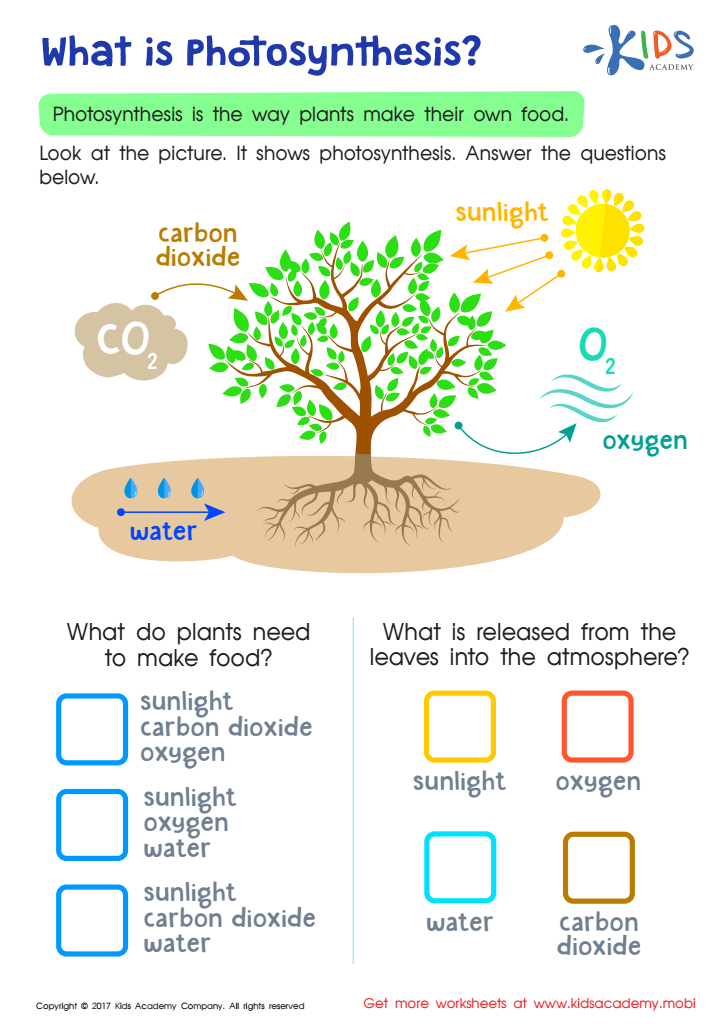
What is Photosynthesis Printable
 Assign to My Students
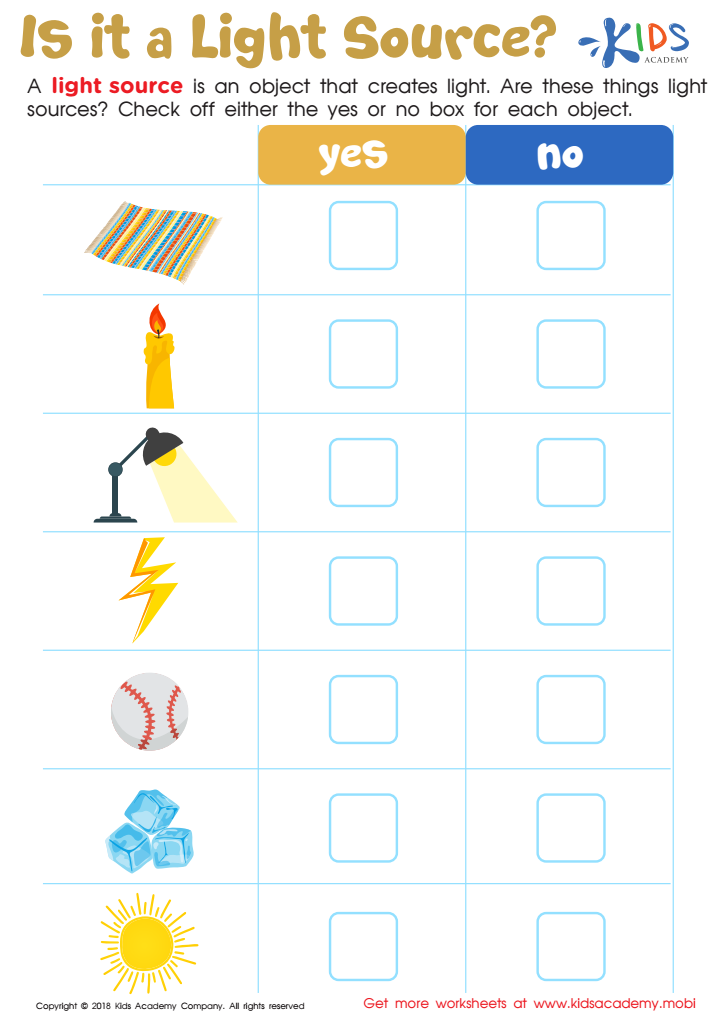
Is It a Light Source? Worksheet
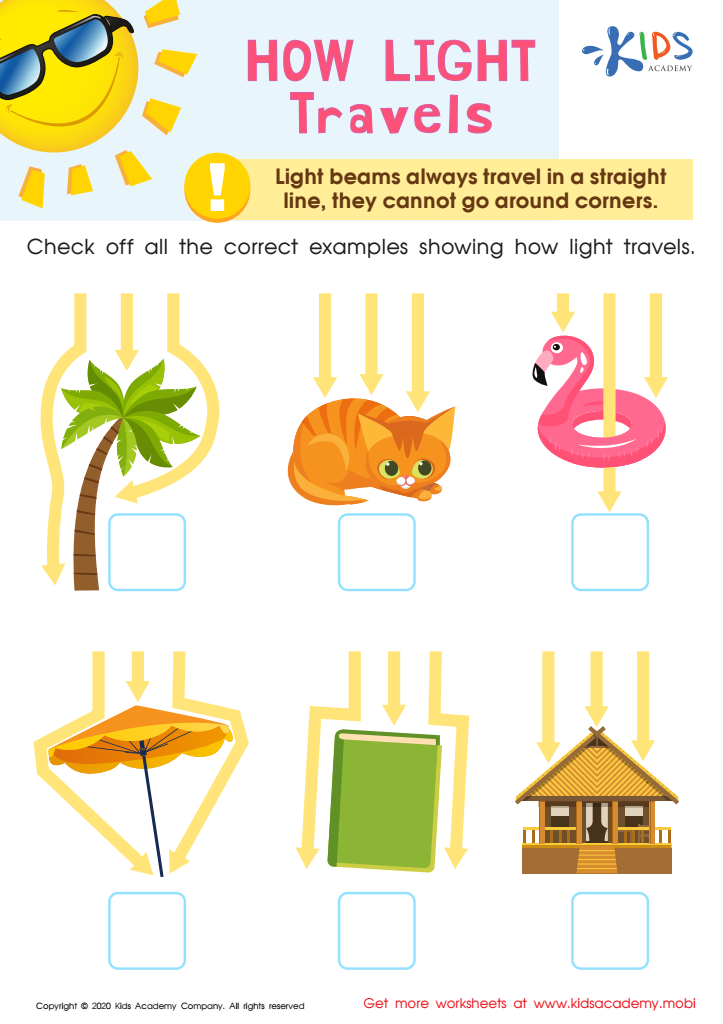
How Light Travels Worksheet







.jpg)
Developing analytical skills in science for children aged 5-7 is essential as these early years are foundational for cognitive development. Analytical skills, including observation, questioning, and problem-solving, help young children understand the world around them. Nurturing these skills early fosters curiosity and a love for learning, laying the groundwork for future academic achievement.
When children engage with scientific concepts, they learn to observe carefully and think critically. For instance, simple activities like comparing the growth of plants under different conditions can teach them to make predictions and draw conclusions based on evidence. These foundational skills are applicable across all subjects, enabling kids to approach problems methodically and think independently.
Moreover, developing analytical skills enhances a child's ability to communicate their ideas effectively. They learn to describe what they see, explain their thought processes, and ask pertinent questions, which are vital for effective communication and collaboration.
For parents and teachers, fostering these skills means investing in an approach to education that's more about engagement and discovery rather than rote memorization. This not only makes learning enjoyable but also prepares children for the increasingly complex problem-solving and critical thinking required in future educational and life challenges. Ultimately, by prioritizing these skills, we empower young learners to become innovative thinkers and lifelong learners.







