Understanding directions Science Worksheets for Ages 5-7
4 filtered results
-
From - To
Dive into the world of Understanding Directions Science Worksheets designed specifically for children aged 5-7. Our engaging and educational resources help young learners develop essential directional skills, reinforce spatial awareness, and build a strong foundation in early science education. These worksheets use fun illustrations and interactive activities to teach concepts like left, right, up, and down, guiding children through various scenarios they encounter daily. Perfect for classroom and home use, parents and teachers can join in the learning journey, ensuring their kids grasp the important fundamentals with confidence and ease. Start exploring today!
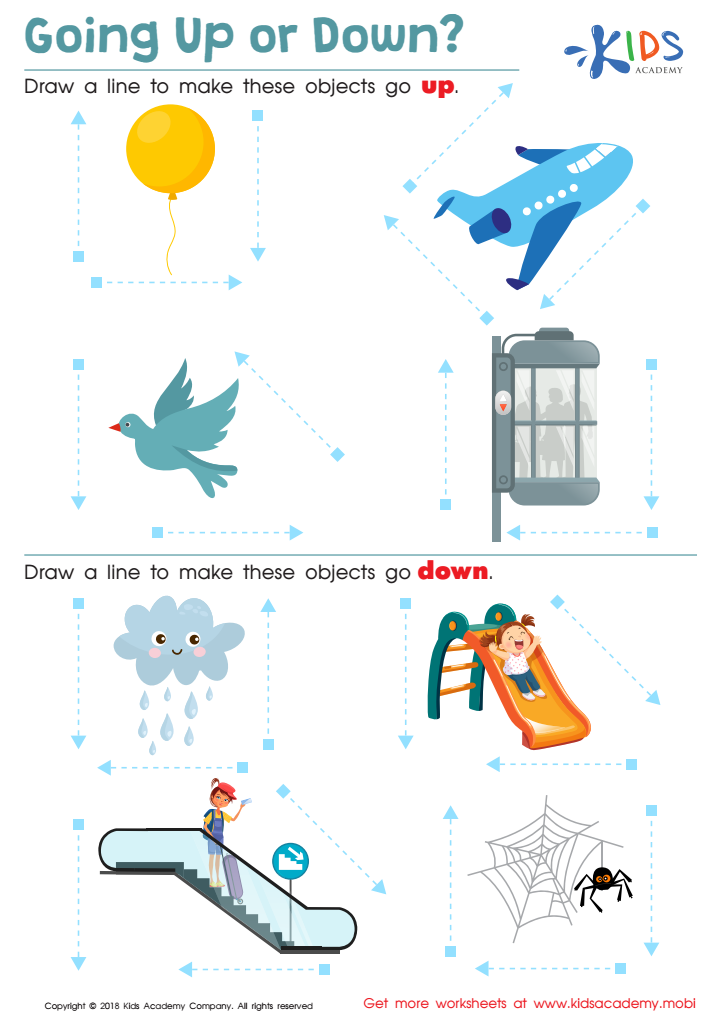
Going up or Down? Worksheet
 Assign to My Students
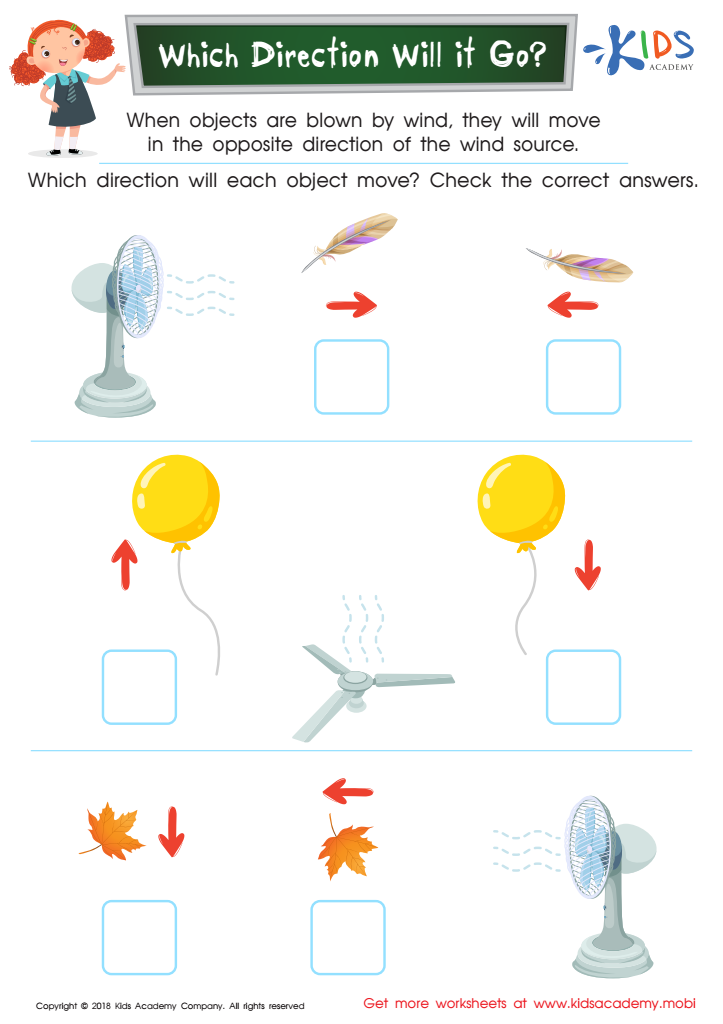
Which Direction Will it Go? Worksheet
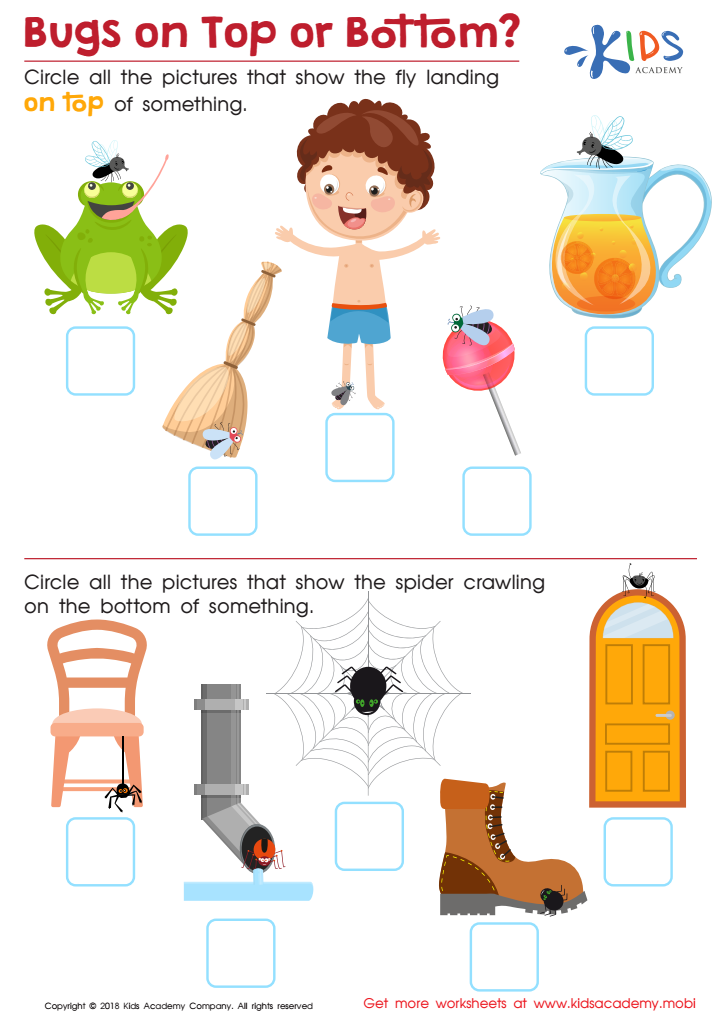
Bugs on Top or Bottom? Worksheet
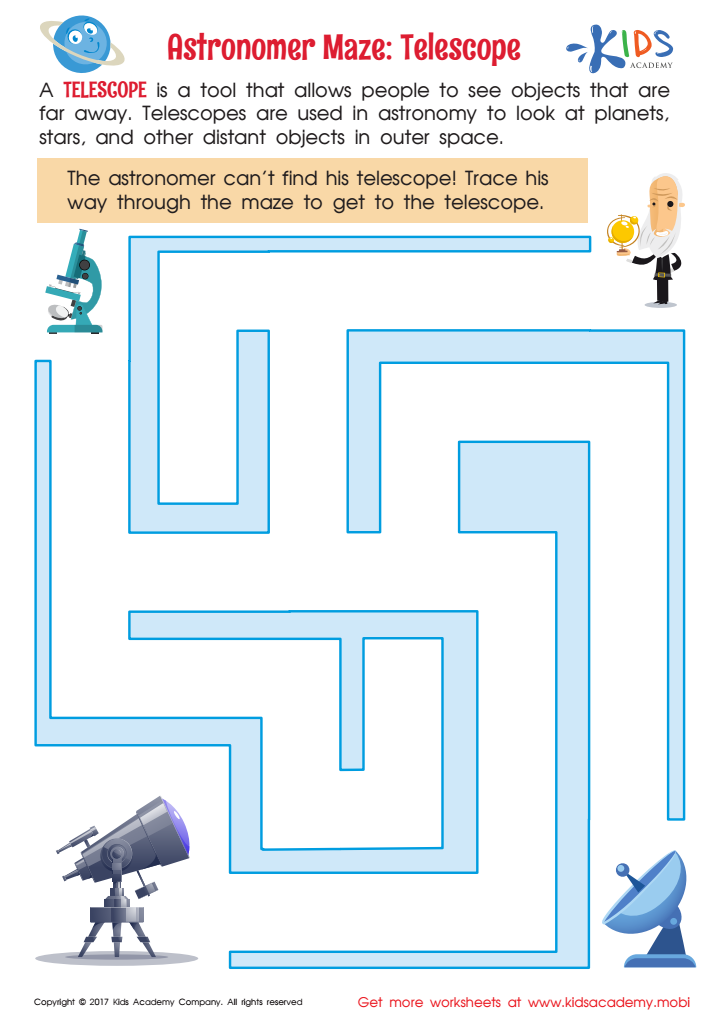
Astronomer Maze: Telescope Worksheet








Understanding directions is a cornerstone of early science education for children aged 5-7. At this developmental stage, learning how to follow and interpret directions builds foundational skills in critical thinking and problem-solving—abilities essential for lifelong learning. When parents and teachers emphasize understanding directions, they help children grasp basic scientific concepts such as cause and effect, sequences, and spatial awareness.
First, it enhances cognitive development by encouraging children to think logically about how to get from a starting point to a destination. For example, following steps to plant a seed or complete a simple experiment teaches children how to observe and predict outcomes.
Second, these activities boost children's confidence and independence. Successfully following directions allows them to achieve goals on their own, fostering a positive attitude toward learning. This independence is crucial for their future educational journey.
Third, it sets the groundwork for collaboration and cooperation in group settings. Children learn to listen, interpret instructions, and contribute to collective tasks, essential for classroom dynamics and beyond.
Therefore, investing time in teaching and reinforcing the concept of understanding directions enriches the early education experience, offering kids a toolkit of skills that are key for academic success and everyday problem-solving.







