Understanding pollination Science Worksheets for Ages 5-7
3 filtered results
-
From - To
Discover the amazing world of pollination with our engaging Science Worksheets designed for children ages 5-7! These fun and interactive resources introduce young learners to the vital process of pollination, showcasing how plants reproduce and contribute to our ecosystem. Through colorful visuals and simple activities, kids will explore the roles of bees, butterflies, and other pollinators in nurturing plants and producing fruits and vegetables. The worksheets encourage curiosity and scientific thinking, making learning enjoyable and accessible. Perfect for classrooms or at home, these materials are essential for sparking an early interest in science and nature! Explore our "Understanding Pollination" worksheets today.
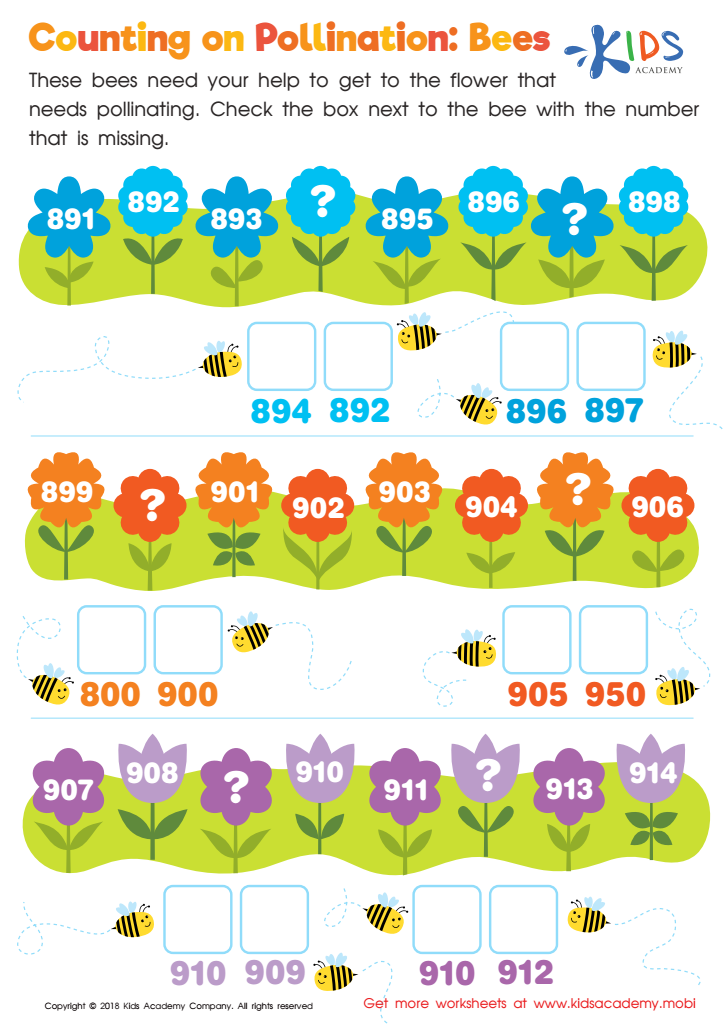
Counting on Pollination: Bees Worksheet
 Assign to My Students
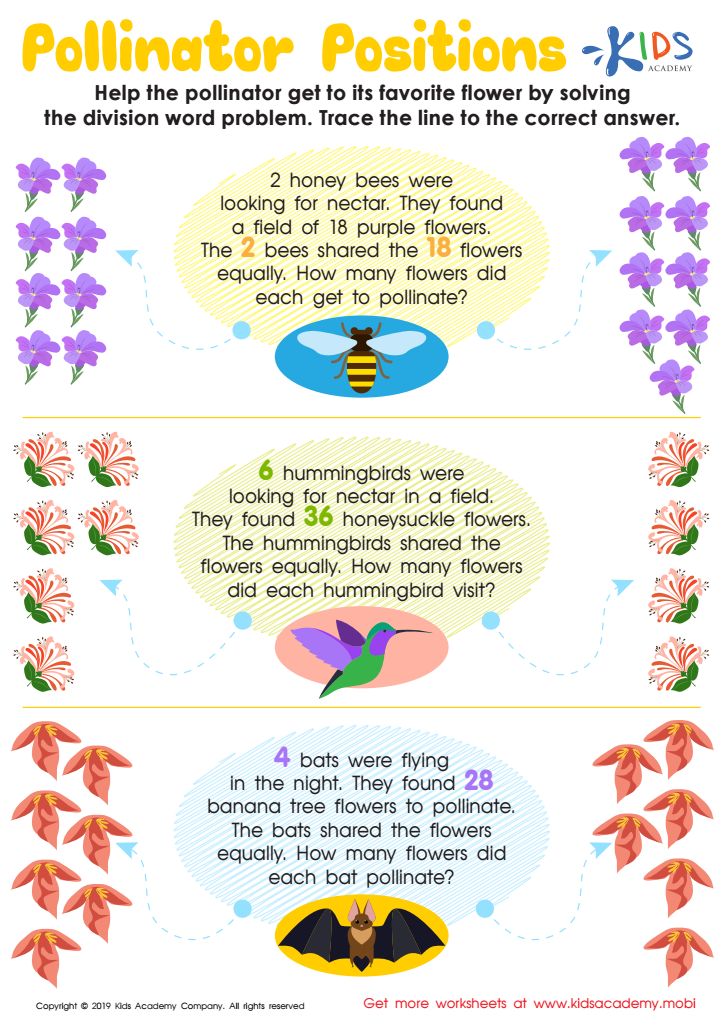
Pollinator Positions Worksheet
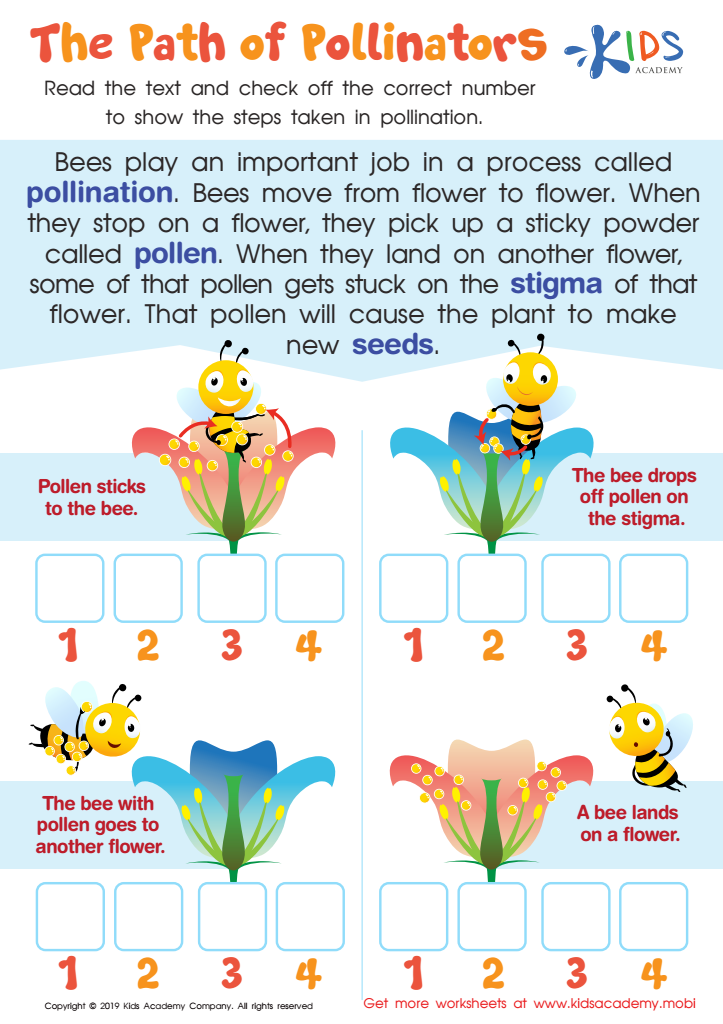
The Path of Pollinators Worksheet





Understanding pollination science is essential for parents and teachers of children aged 5-7 because it fosters an early appreciation for nature and the environment. Pollination is at the heart of many ecosystems and is crucial for the growth of fruits, vegetables, and flowers that children interact with daily. By learning about how bees, butterflies, and other pollinators work, children can grasp the interconnectedness of life, which helps build foundational scientific thinking.
Engaging with pollination science promotes curiosity and inquiry-based learning. Children naturally love to explore and ask questions, and discussing topics like where their food comes from or how plants grow aligns perfectly with their innate curiosity. It also provides opportunities to initiate hands-on activities, like planting seeds or observing pollinators in action, turning lessons into memorable and enjoyable experiences.
Moreover, as concerns about declining pollinator populations grow, teaching young learners about this topic instills a sense of responsibility towards protecting the environment. By establishing a solid understanding of pollination at a young age, we equip children with the knowledge and values to become environmentally conscious citizens who advocate for ecological balance throughout their lives.







