Weather Vocabulary Science Worksheets for Ages 5-7
3 filtered results
-
From - To
Discover the magic of weather with our engaging Weather Vocabulary Science Worksheets for Ages 5-7. Perfect for young learners, these printable worksheets enhance understanding of key weather terms through fun activities, colorful illustrations, and easy-to-follow instructions. From sunny days to rainy spells, children will build essential vocabulary, improve reading skills, and foster a love for science. Ideal for classroom or home use, these worksheets support early learning aligned with educational standards. Equip your child with the tools to spark curiosity and deepen knowledge about the world around them. Start your weather adventure today!
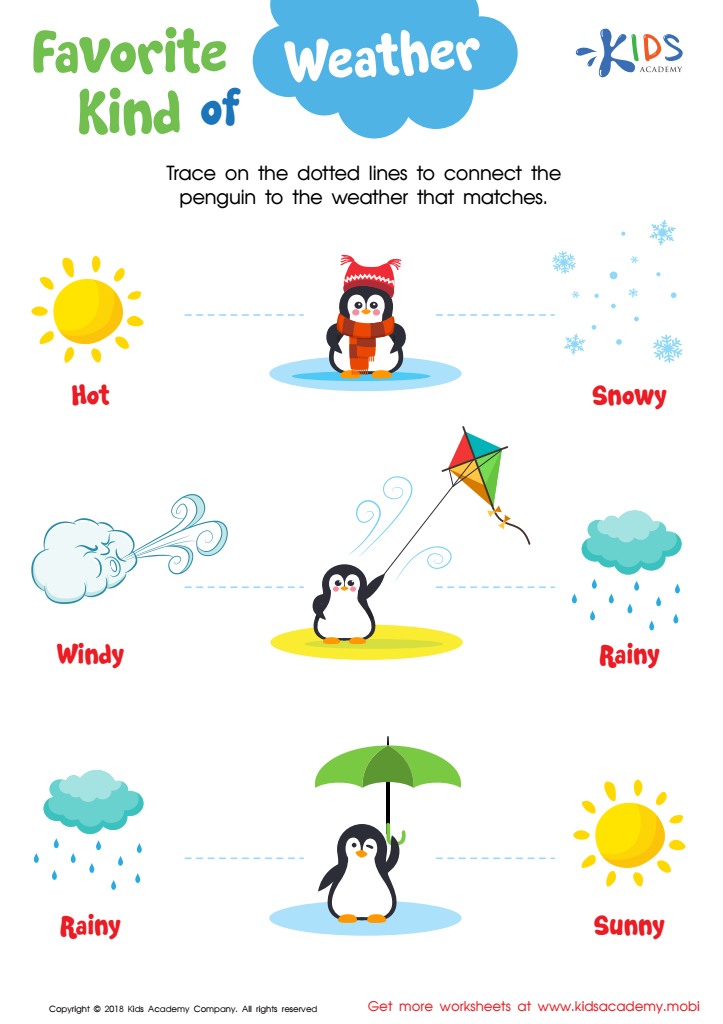
Favorite Kind of Weather Worksheet
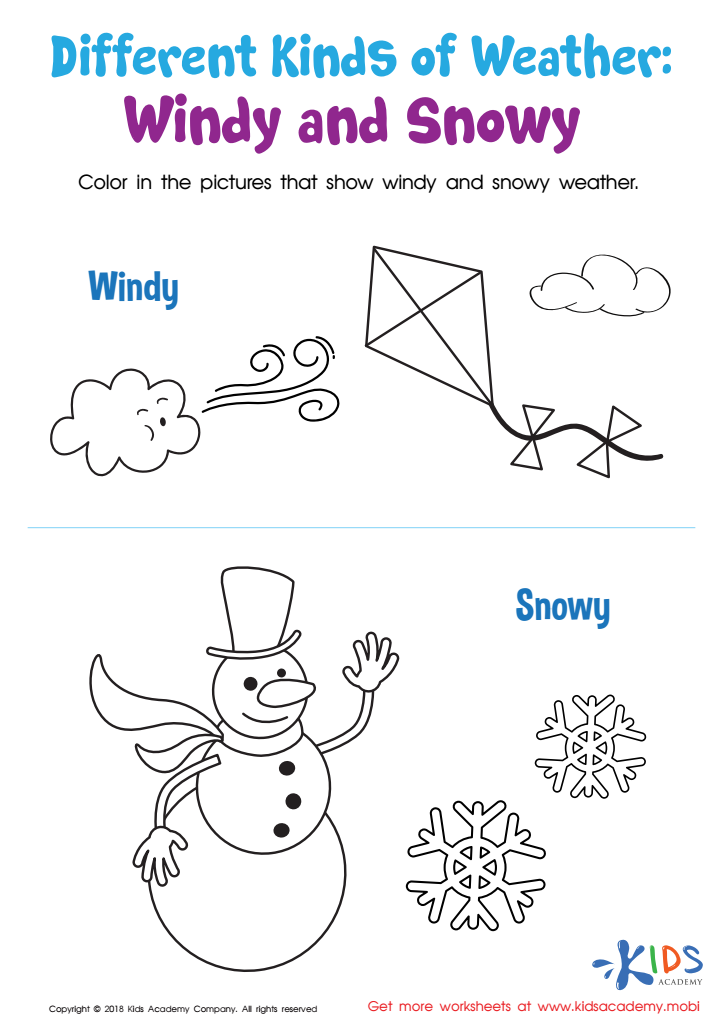
Different Kinds of Weather: Windy and Snowy Worksheet
 Assign to My Students






Understanding weather vocabulary is essential for young children, ages 5-7, as it lays the foundation for important scientific concepts and cultivates an early interest in the natural world. For parents and teachers, caring about this facet of science education means supporting children's cognitive and linguistic development while fostering curiosity.
Introducing weather vocabulary helps children make sense of their environment. Words like "cloudy," "sunny," "rainy," and "stormy" enable them to articulate their observations and experiences. These terms broaden their descriptive language skills, aiding effective communication. Furthermore, discussing weather patterns opens up opportunities to teach cause-and-effect relationships, critical thinking, and problem-solving. For example, children learn why rain is essential for plants, sparking interconnected lessons in biology and ecology.
Besides the immediate educational benefits, early exposure to weather science shapes children's understanding of sustainability and environmental stewardship. Awareness about different weather phenomena also aids in personal safety, such as knowing what to do in a thunderstorm. Engaging activities—like weather charts, simple experiments, and storytime—can make learning about weather fun and memorable.
By nurturing an interest in weather and introducing associated vocabulary, parents and teachers equip children with the tools to understand and engage with the world around them, paving the way for future scientific inquiry and responsible citizenship.







