
Understanding ecosystems Our Planet and Environment Worksheets for Ages 5-7
3 filtered results
Difficulty Level
Grade
Age
-
From - To
Subject
Activity
Standards
Explore the fascinating world of ecosystems with our engaging "Understanding Ecosystems" worksheets, designed specifically for children aged 5-7. These interactive resources introduce young learners to the basics of ecosystems, emphasizing the importance of plant and animal relationships, habitats, and natural environments. Each worksheet features colorful illustrations and age-appropriate activities that make learning fun and accessible. From identifying different ecosystems to understanding their elements, these worksheets encourage curiosity and a love for nature. Perfect for classroom use or home schooling, our materials inspire kids to explore, question, and appreciate the interconnectedness of our planet and environment. Start nurturing young scientists today!
Favorites
With answer key
Interactive
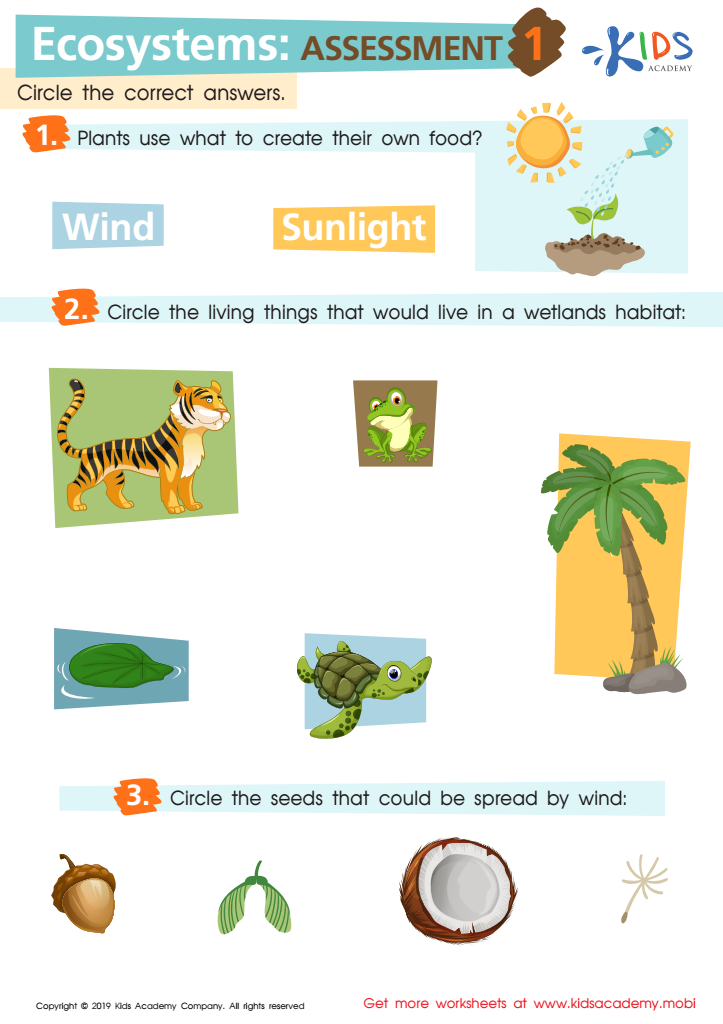
Ecosystems: Assessment 1 Worksheet
Before starting the worksheet, remind your child of the basics of the ecosystem, e.g. plants need light and winds carry small seeds. Encourage them to identify the images in the colorful printout. Ask them the questions and help them circle the correct answers.
 Assign to My Students
Ecosystems: Assessment 1 Worksheet
Worksheet
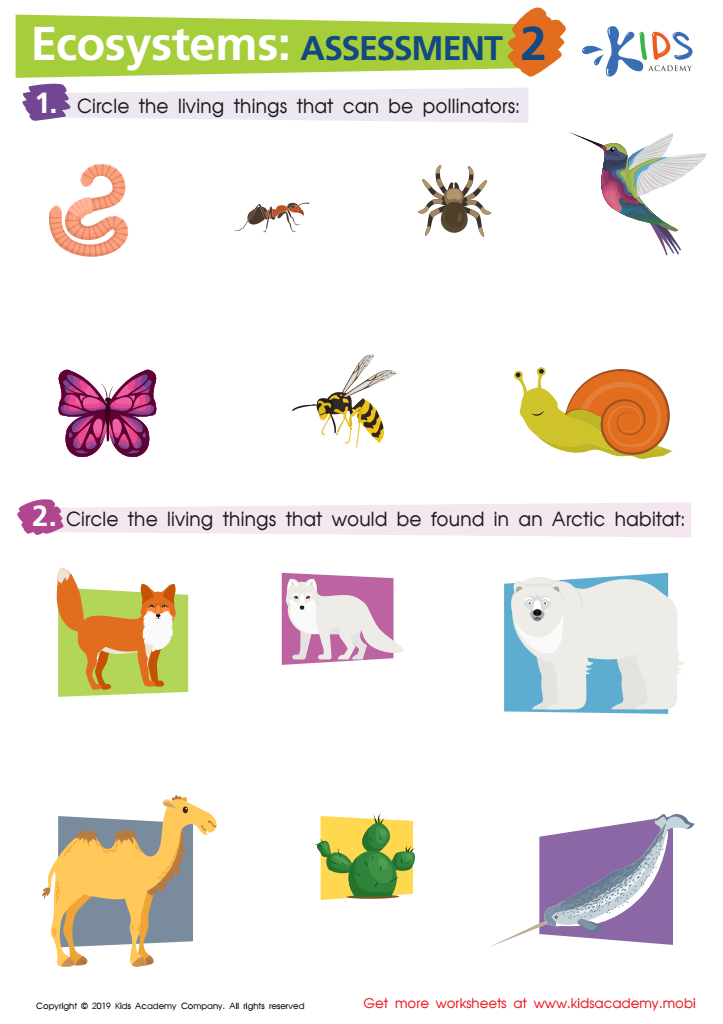
Ecosystems: Assessment 2 Worksheet
Pollinators are living or non-living things that help pollen spread. Test your child's knowledge of the ecosystem with this worksheet. Point out animals in the picture, then ask the simple questions. Help your child circle the right answers.
Ecosystems: Assessment 2 Worksheet
Worksheet
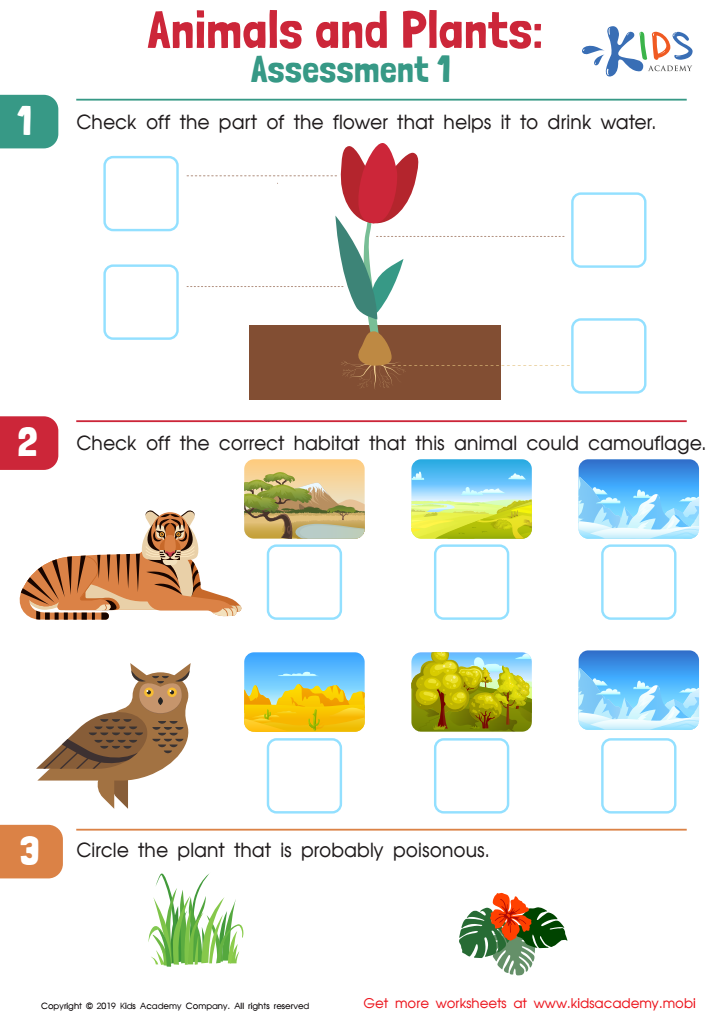
Animals and Plants: Assessment 1 Worksheet
Do you want to easily assess your child's understanding of basic science concepts? This colorful PDF offers a free opportunity for them to test their knowledge about parts of a flower, poisonous plants, animal habitats and more! Bright pictures make it fun and easy for you to see what they know.
Animals and Plants: Assessment 1 Worksheet
Worksheet
Join Kids Academy for Free
Who is primarily going to use this learning content?






Understanding ecosystems and our planet's environment is essential for children aged 5-7 because it fosters awareness and appreciation of nature from an early age. Education on ecosystems helps children comprehend the interconnectedness of living organisms, including plants, animals, and humans. By learning about habitats, food chains, and biodiversity, they develop a sense of responsibility towards their surroundings.
Moreover, this knowledge lays the foundation for environmental stewardship. When young learners understand the impact of pollution, habitat destruction, and climate change, they are more likely to adopt eco-friendly practices. Engaging children in conversations about their environment instills curiosity and critical thinking skills, encouraging them to explore and ask questions about the world around them.
Additionally, teaching about ecosystems enhances social and emotional skills. Collaborative activities, like planting trees or creating classroom gardens, promote teamwork and instill values such as empathy and kindness.
Incorporating lessons on our planet and the environment into educational settings prepares children to be informed decision-makers in the future. Ultimately, fostering a generation that cares for the planet is crucial for a sustainable future, making it vital for parents and teachers to prioritize this aspect of education in early childhood.







