Categorizing objects Physical Science Worksheets for Ages 5-7
3 filtered results
-
From - To
Introduce young learners to the fascinating world of physical science with our "Categorizing Objects" worksheets, designed specifically for ages 5-7. These engaging printable activities help children explore the concept of categorization by sorting a variety of everyday objects based on their characteristics, such as size, shape, color, and material. By participating in these hands-on exercises, students will enhance their observational skills, critical thinking, and ability to recognize relationships between objects. Each worksheet offers interactive challenges that make learning fun! Foster a strong foundation in scientific literacy with these essential resources that promote curiosity and exploration in young minds. Download now and start categorizing!
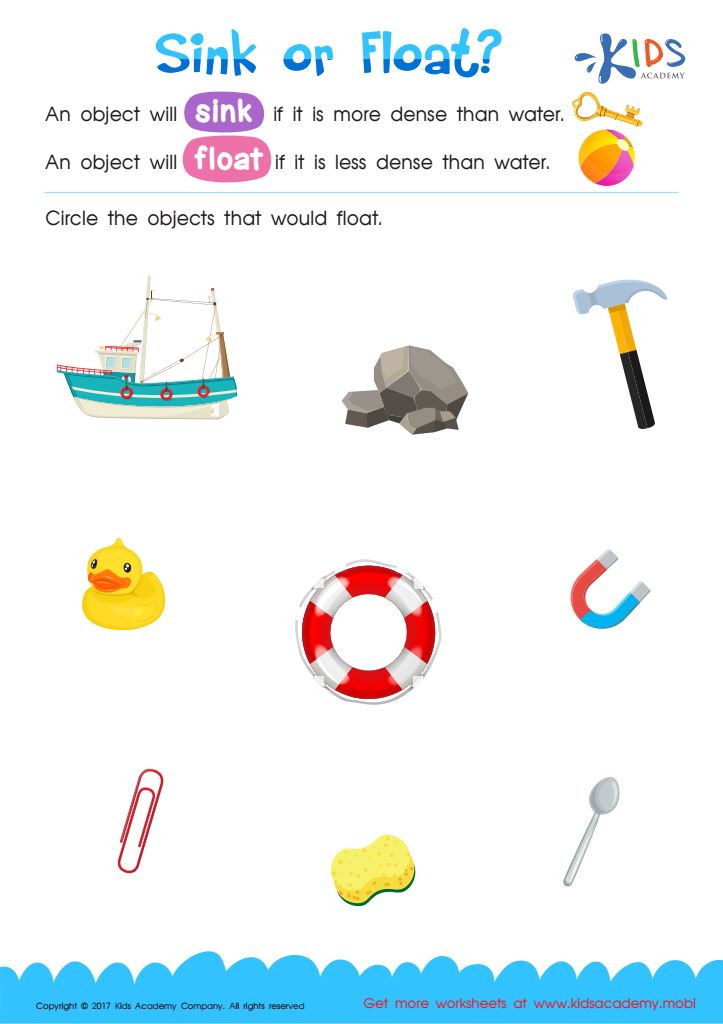
Sink or Float Printable
 Assign to My Students
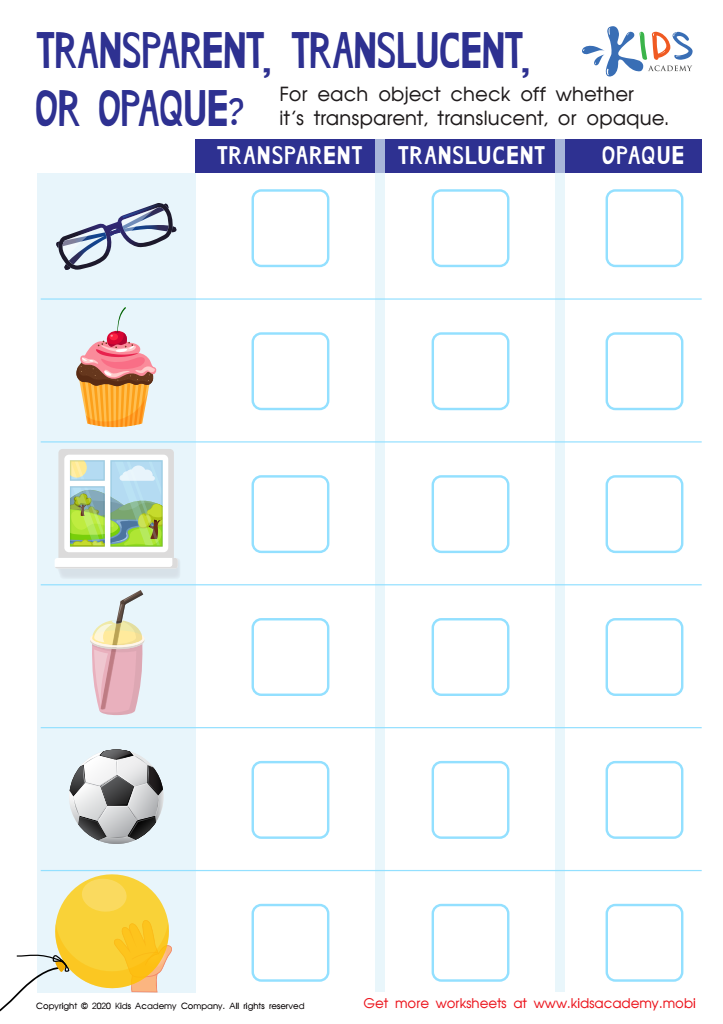
Transparent, Translucent, or Opaque Worksheet
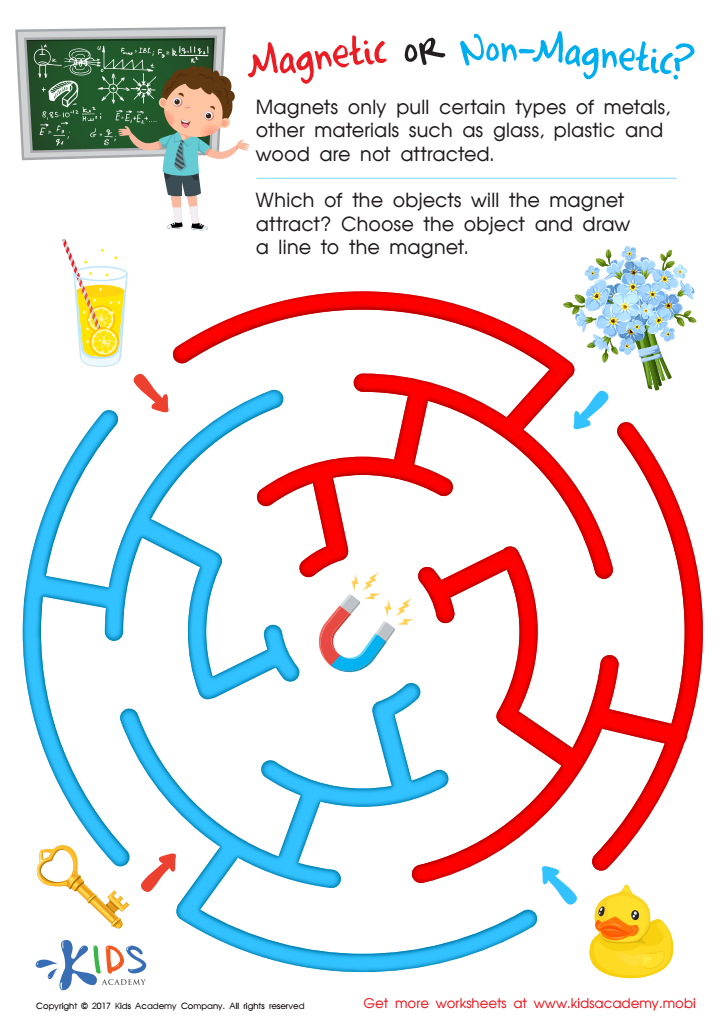
Magnetic or Non–Magnetic Worksheet






Categorizing objects is a fundamental concept in physical science that significantly benefits children aged 5-7. For parents and teachers, understanding this concept is crucial because it lays the groundwork for critical thinking and problem-solving skills.
Firstly, categorizing helps young learners recognize patterns and relationships among objects. By grouping items based on attributes like size, shape, or color, children enhance their observational skills and learn to analyze their environment, fostering curiosity about the world around them.
Additionally, categorization is essential for cognitive development. It aids in conceptual understanding and improves memory by organizing information, making it easier for children to retrieve and apply knowledge in different contexts. This skill translates into improved academic performance and promotes a love for learning.
Socially, categorizing can serve as a collaborative activity, stimulating communication skills and teamwork among children. They learn to express their observations and ideas while respecting different perspectives.
Ultimately, nurturing the ability to categorize in early childhood primes them for future scientific exploration and instills a systematic approach to understanding the complexity of the world, making it a vital focus for educators and caregivers alike.







