Animal Classification Plants and Animals Worksheets for Ages 5-7
5 filtered results
Difficulty Level
Grade
Age
-
From - To
Subject
Activity
Standards
Discover the vibrant world of animal classification with our Plants and Animals Worksheets for Ages 5-7! Designed to align with early science curricula, these engaging worksheets help young learners explore and differentiate between various animal groups. Each worksheet offers fun activities and vivid illustrations that make learning about mammals, birds, reptiles, amphibians, and fish an exciting adventure. Perfect for classroom use or at-home enrichment, these resources support critical thinking and observational skills. Inspire curiosity and a love for science with our hands-on, developmentally appropriate materials, tailored specifically for young minds eager to explore the wonders of nature.
Favorites
With answer key
Interactive
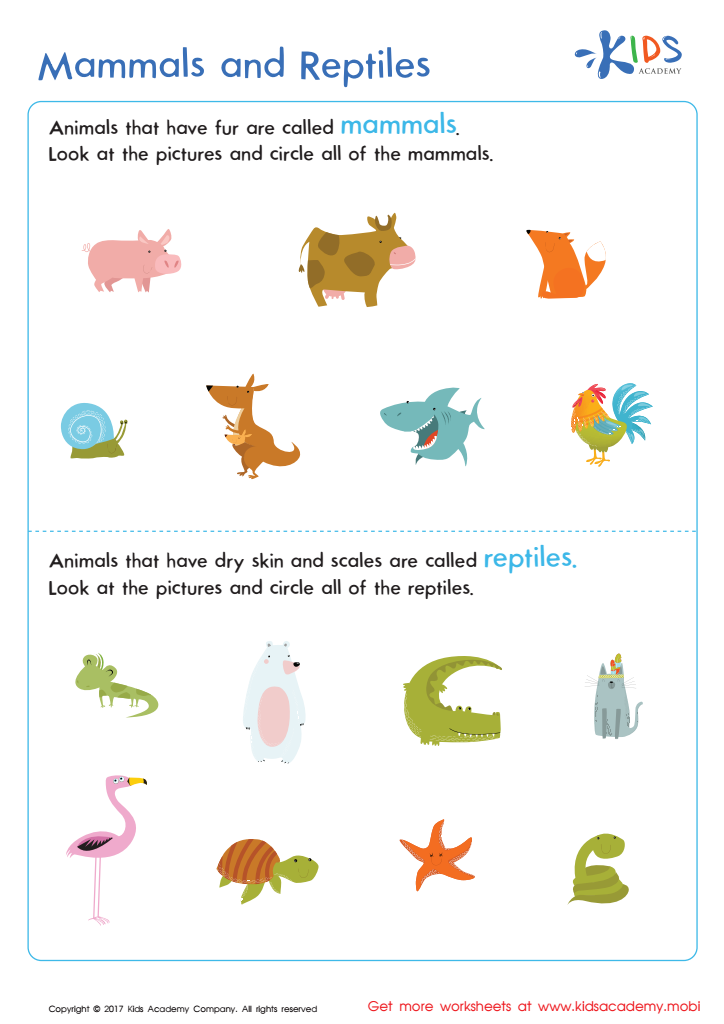
Mammals and Reptiles Worksheet
Challenge your child to identify mammals and reptiles with this worksheet. It's a great way to help them recognize the differences between these two types of animals.
 Assign to My Students
Mammals and Reptiles Worksheet
Worksheet

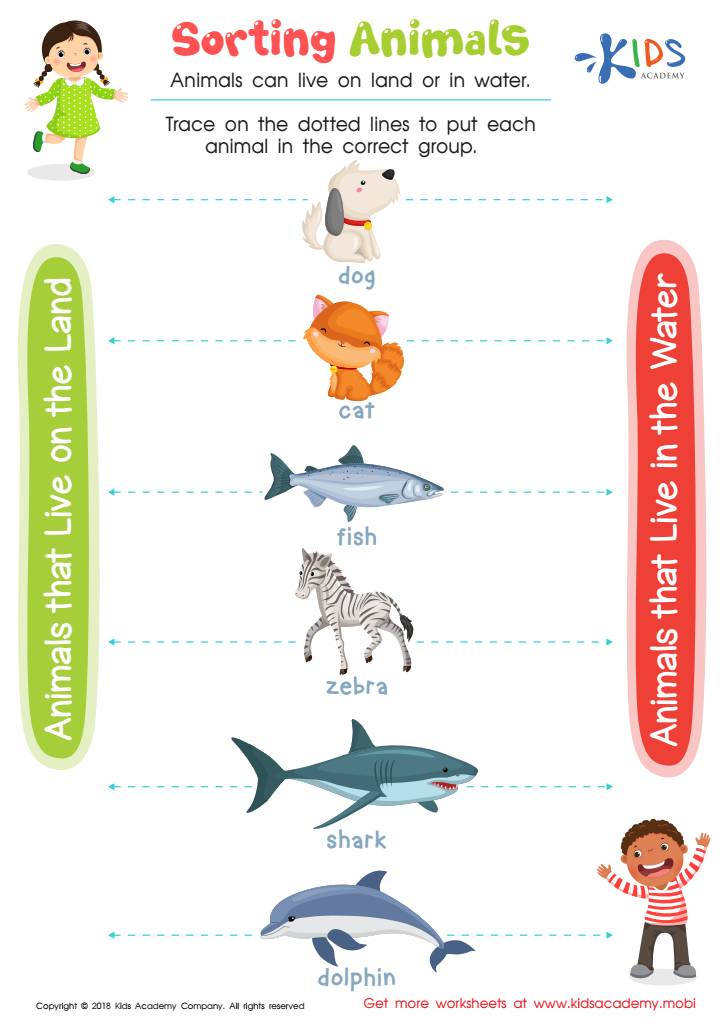
Sorting Animals Worksheet
Your kids will love this free, interactive worksheet! With image clues, they can read and trace the animal names, and then sort them into groups of land or water animals. It's an enjoyable way to boost their critical thinking, fine motor and prior knowledge skills.
Sorting Animals Worksheet
Worksheet
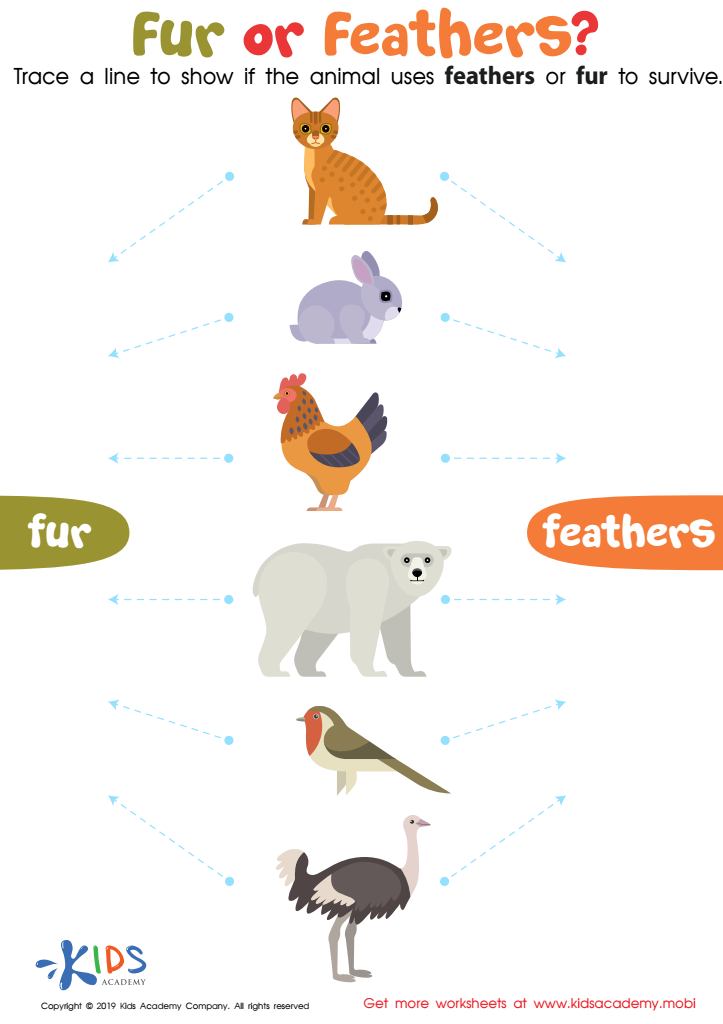
Fur or Feathers? Worksheet
Examine animals you see daily. How do they differ from humans? With a pet in your home, ask your child to touch it and identify what covers the animal's body - fur or feathers? Birds have feathers, while mammals have fur. Guide your kids to identify animals in this worksheet and determine if fur or feathers keep them alive.
Fur or Feathers? Worksheet
Worksheet
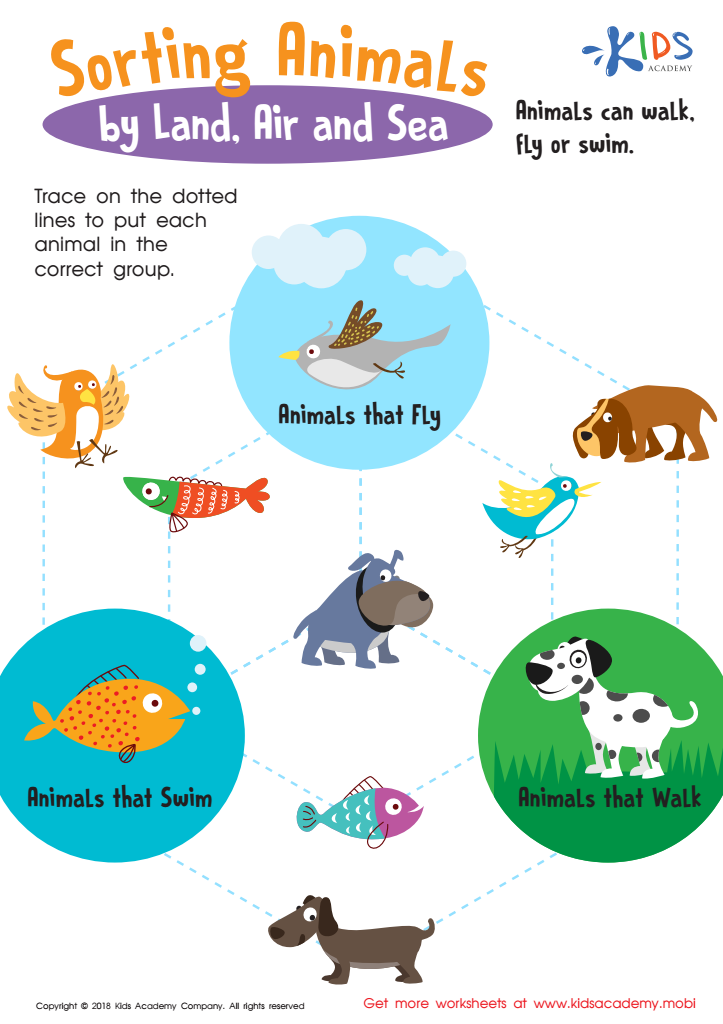
Sorting Animals by Land, Air and Sea Worksheet
Kids will use critical thinking and fine motor skills with this worksheet! They'll analyze animal traits and draw lines to sort them into groups of those that fly, swim, or walk. It's a fun way to hone skills and have a great time!
Sorting Animals by Land, Air and Sea Worksheet
Worksheet
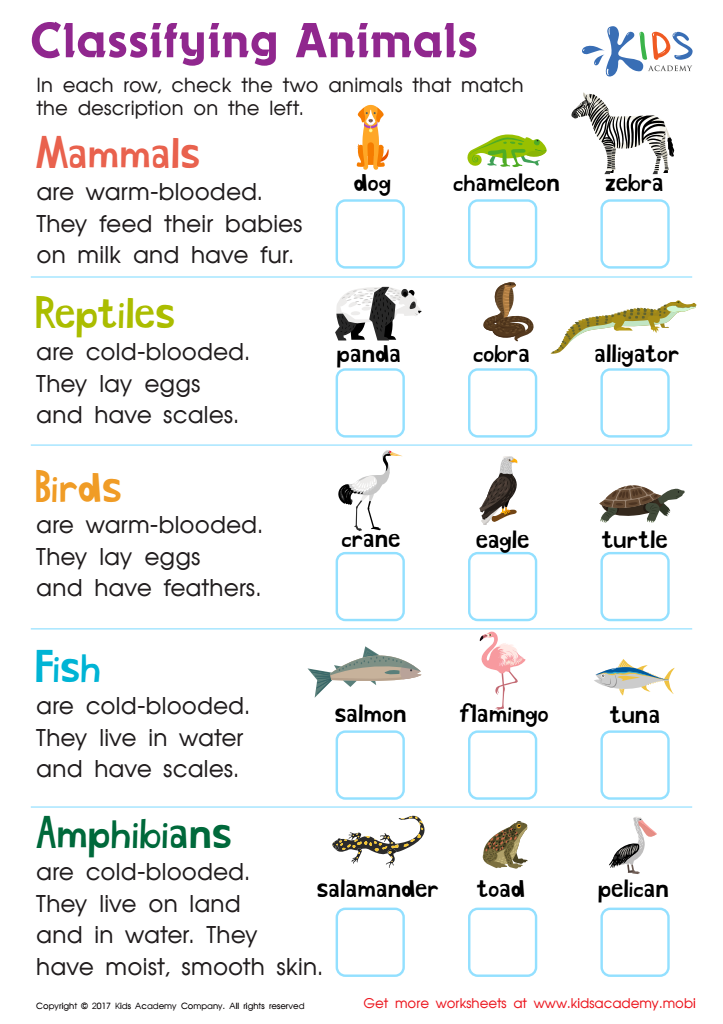
Classifying Animals Worksheet
Print the 2nd grade animal classification worksheet and help kids study the differences between mammals, reptiles, birds, fish and amphibians. Let them pick two examples from the options given.
Classifying Animals Worksheet
Worksheet
Join Kids Academy for Free
Who is primarily going to use this learning content?








Parents and teachers should pay attention to teaching Animal Classification and Plant and Animal concepts to children aged 5-7 because it lays a crucial foundation for their understanding of the natural world. This foundational knowledge fosters curiosity and a sense of discovery, which are essential for lifelong learning. By classifying animals and plants, children can better grasp how different living things interact, survive, and adapt to their environments.
Early exposure to these concepts helps develop observational and critical thinking skills. When children learn to group animals into categories like mammals, reptiles, or birds, and plants into categories like trees, flowers, and grasses, they start to notice patterns and relationships. This enhances their cognitive abilities and sharpens their problem-solving skills.
Additionally, understanding the basic principles of classification teaches children the importance of organization and categorization, skills that are valuable across many educational disciplines. It also teaches respect and appreciation for biodiversity. Knowledge about animals and plants encourages children to care about the environment and promotes a sense of responsibility towards preserving different species, which is vital for their development as conscientious global citizens.
In summary, focusing on Animal Classification and Plant and Animal concepts nurtures intellectual growth, environmental awareness, and critical life skills in young children.