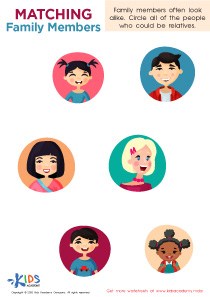
Understanding citizenship Social Studies Worksheets for Ages 5-7
6 filtered results
-
From - To
Explore the foundations of citizenship with our engaging Social Studies worksheets designed for ages 5-7! These educational resources introduce young learners to important concepts of community, responsibility, and cooperation in a fun, accessible way. Perfect for both classroom and at-home learning, our expertly crafted sheets include vibrant activities that foster social skills and an understanding of what it means to be a good citizen. Kids will enjoy drawing, coloring, and problem-solving while gaining valuable knowledge about rules, roles, and relationships in their community. Set the stage for lifelong civic awareness with our 'Understanding Citizenship' worksheets!
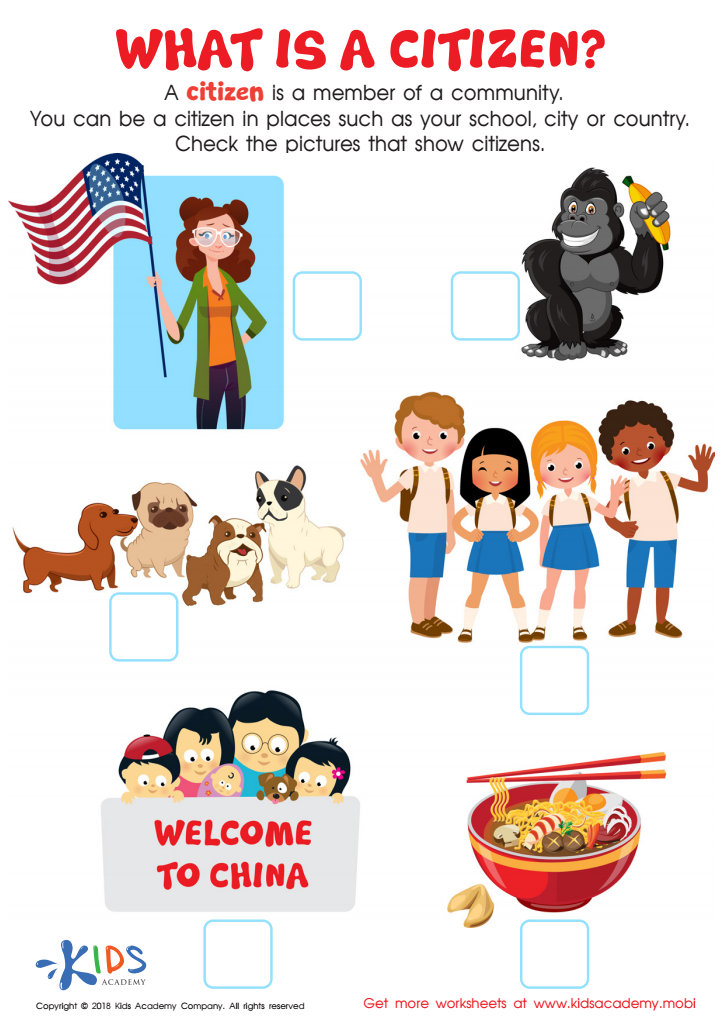
What is a Citizen? Worksheet
 Assign to My Students
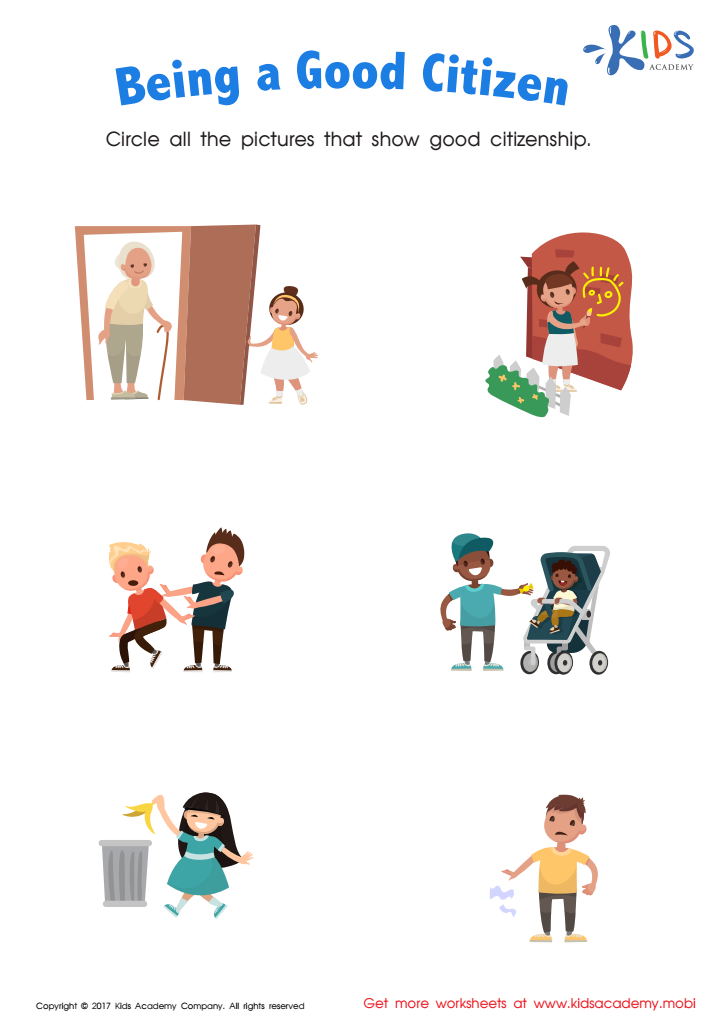
Being a Good Citizen Printable
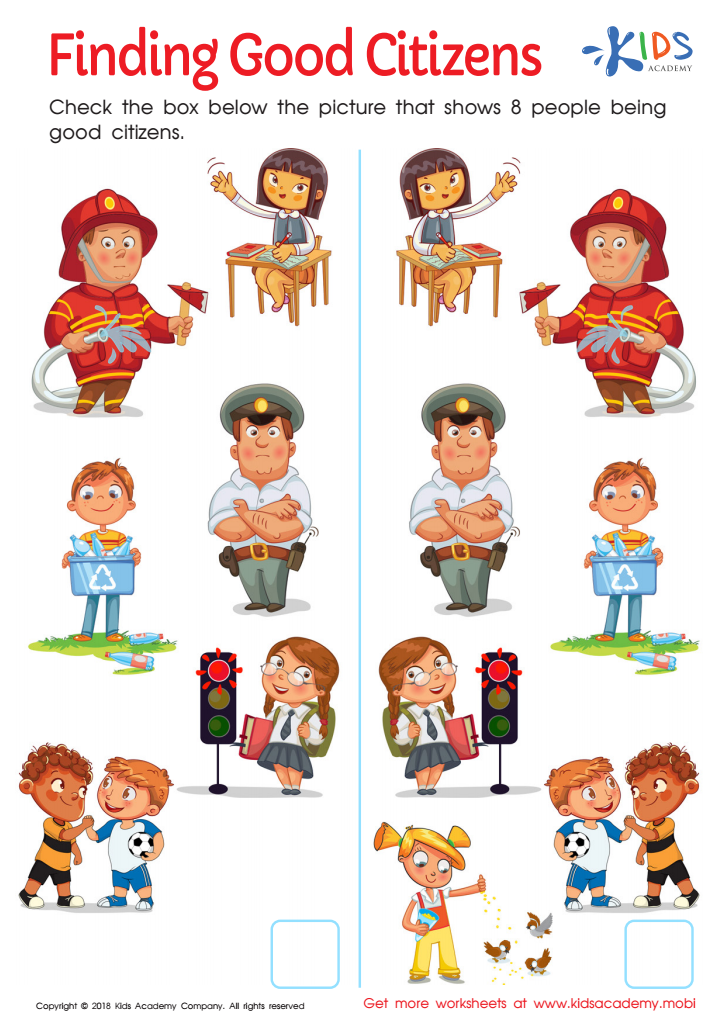
Finding Good Citizens Worksheet
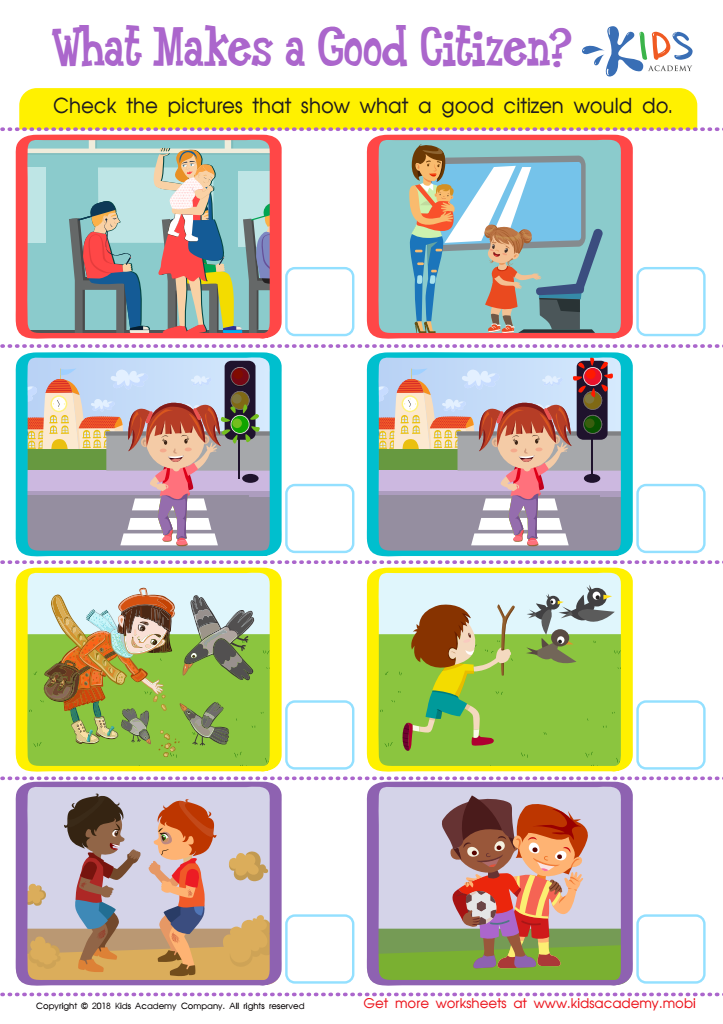
What Makes a Good Citizen? Worksheet
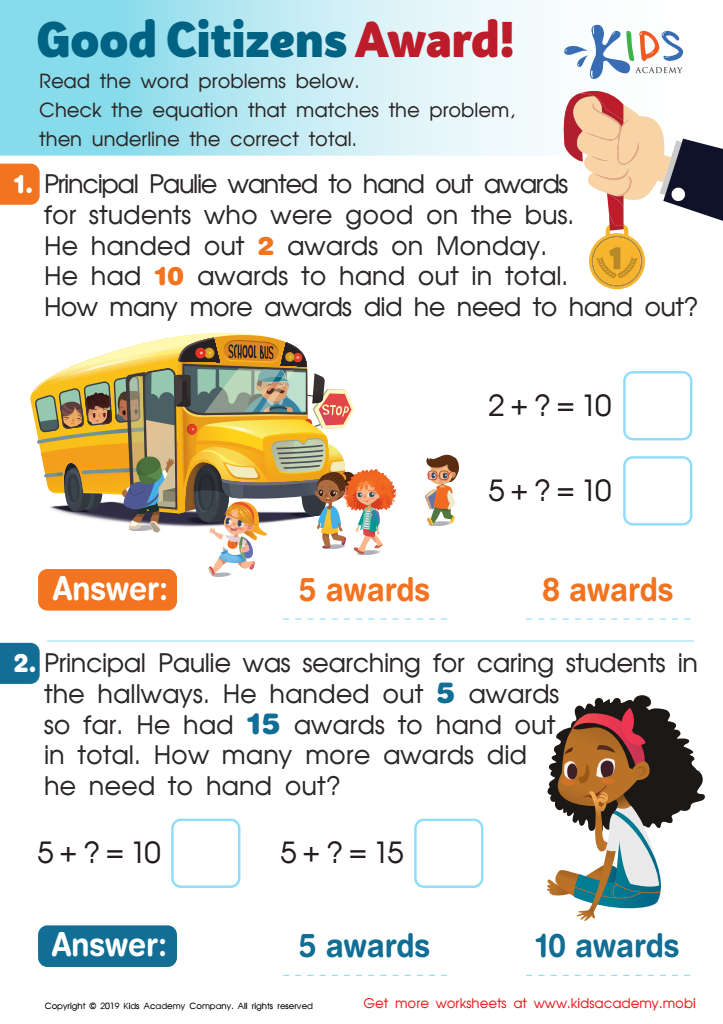
Good Citizens Award! Worksheet
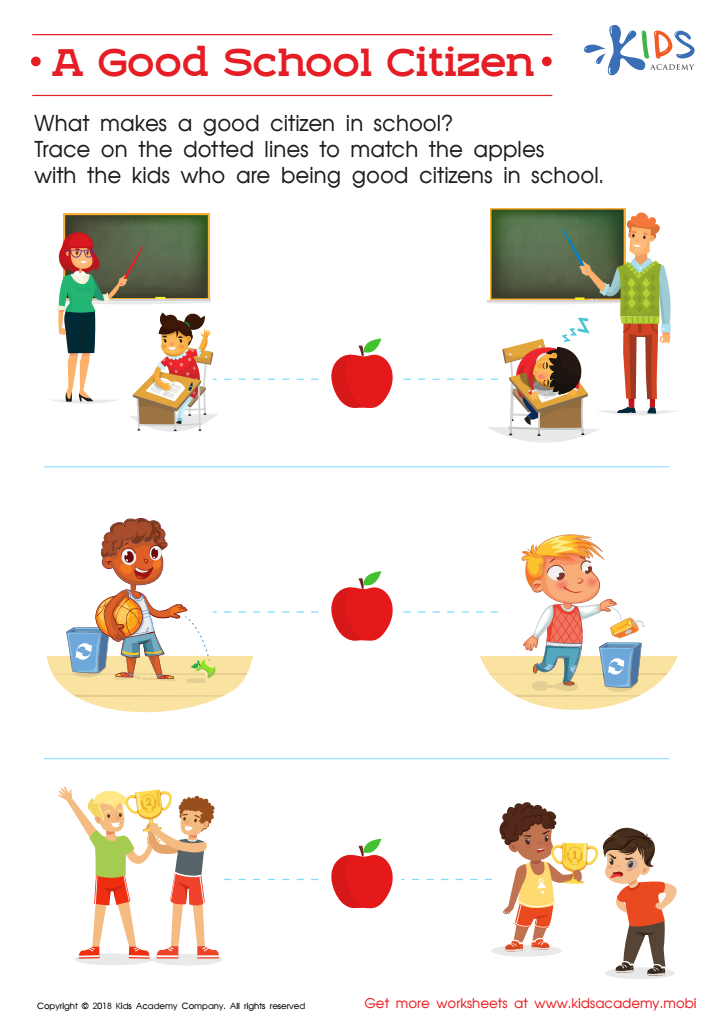
A Good School Citizen Worksheet



.jpg)

.jpg)


Understanding citizenship in social studies for ages 5-7 is crucial for fostering well-rounded, informed, and socially responsible individuals. At this formative age, children are starting to shape their identities and understand their roles within various communities, including family, school, and society. Teaching them about citizenship helps lay the foundation for empathy, responsibility, and an appreciation for diversity.
First, early lessons in citizenship promote empathy by encouraging children to recognize and respect the feelings and perspectives of others. This upbringing can lead to more harmonious classrooms and communities, as children learn to cooperate and resolve conflicts constructively. This sense of empathy is vital for nurturing compassionate individuals who contribute positively to society.
Second, teaching citizenship instills a sense of responsibility and fairness. By understanding the importance of rules, duties, and shared spaces, children can adopt positive behaviors that support communal well-being. This paves the way for responsible decision-making and active participation in community activities, both critical components of a functioning society.
Finally, early exposure to diverse cultural, social, and economic backgrounds through social studies encourages inclusivity and reduces prejudices. An appreciation for diversity enriches children’s worldview and teaches them to value and respect different perspectives, laying groundwork for more tolerant future generations.
In summary, early education in citizenship helps children develop important social skills, a sense of responsibility, and an appreciation for diversity, all essential for thriving in and contributing to a complex, interconnected world.