
Punctuation usage Writing Worksheets for Ages 5-7
3 filtered results
Difficulty Level
Grade
Age
-
From - To
Subject
Activity
Standards
Our "Punctuation Usage Writing Worksheets for Ages 5-7" are designed to make learning punctuation fun and engaging for young learners. These printable worksheets help children understand and apply punctuation marks like periods, question marks, exclamation points, and commas. Through a variety of interactive activities, games, and exercises, kids will master the basics of sentence structure and punctuation rules. These resources aim to enhance writing skills, boost confidence, and foster a love for writing. Ideal for classroom use or home practice, our worksheets provide a strong foundation for future grammar proficiency.
Favorites
With answer key
Interactive
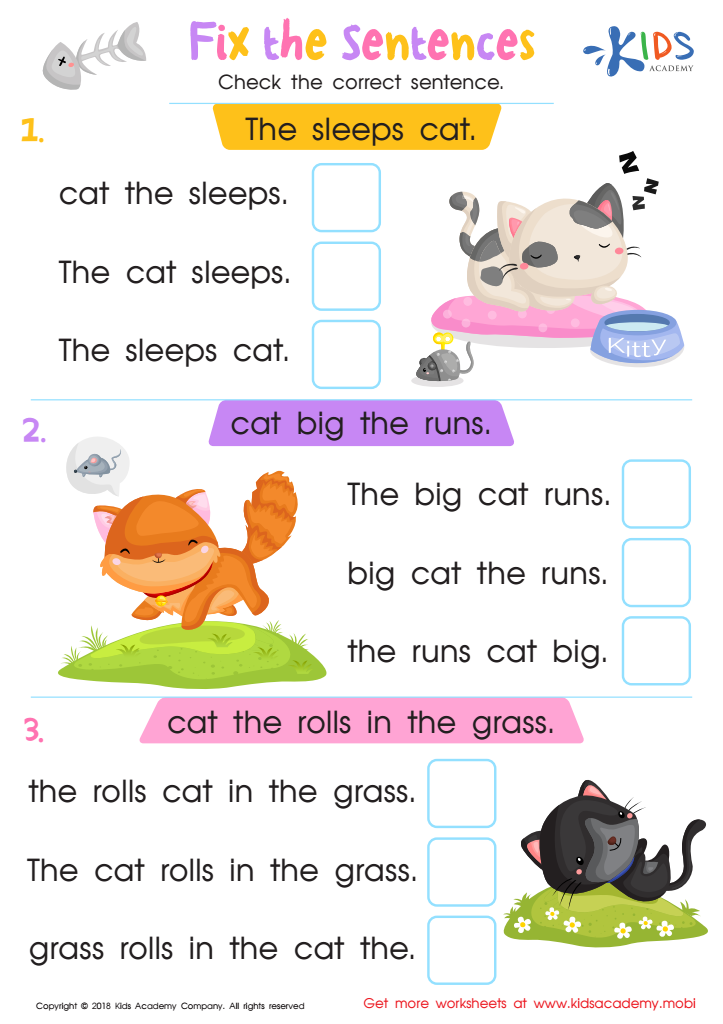
Fix the Sentences Worksheet
Once your students know the alphabet, teach them words. Then move on to constructing sentences. If they have a handle on sentence structure, give them this worksheet. Ask them to read the sentences and check the correct one.
 Assign to My Students
Fix the Sentences Worksheet
Worksheet
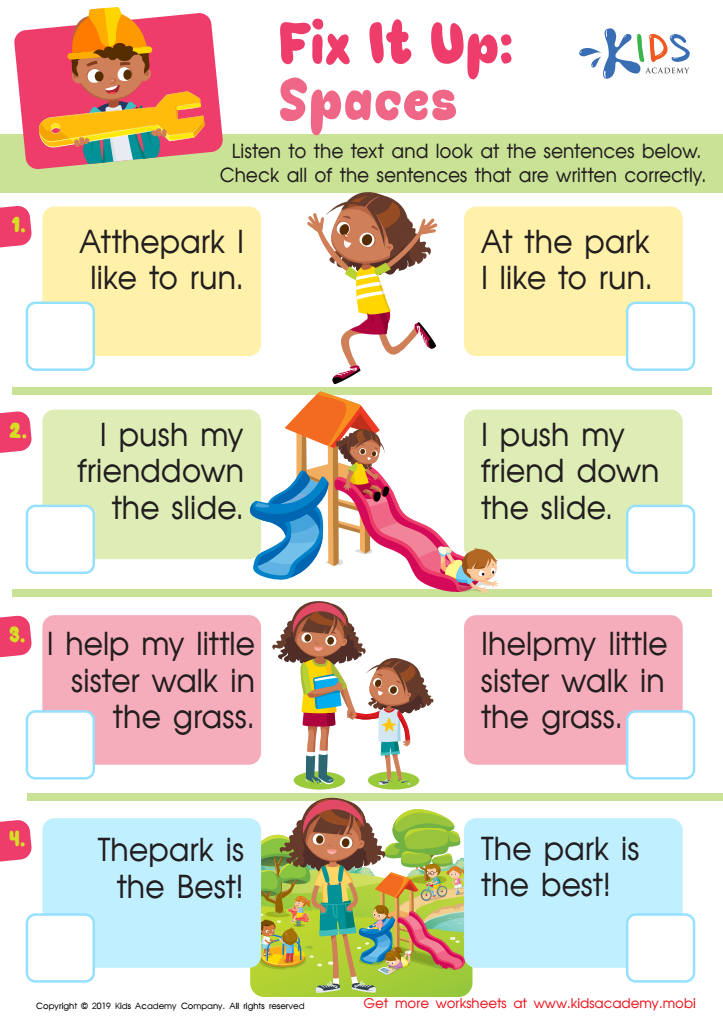
Fix Spaces Worksheet
Encourage kids to check sentences in the worksheet for proper spacing. Explain that clear, orderly writing needs spaces between words, otherwise words can become jumbled and hard to understand. Show them how to identify correctly spaced sentences.
Fix Spaces Worksheet
Worksheet
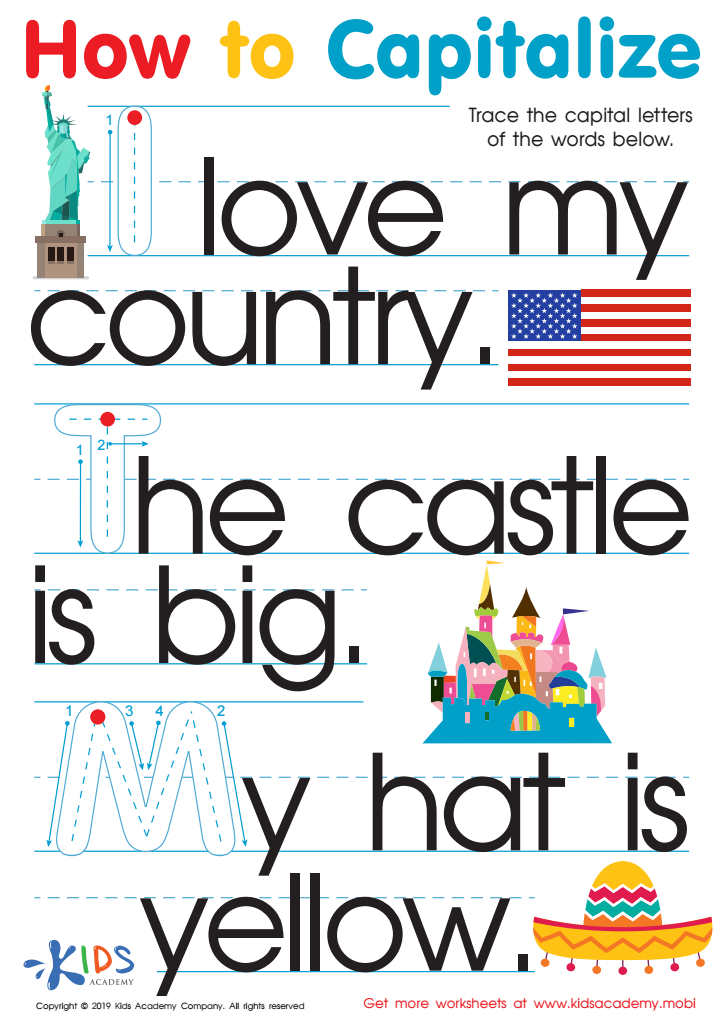
How to Capitalize Worksheet
Capitalizing letters is important in English. This worksheet will help your child learn how to write them. Words such as "the" and "I" will be covered, with visuals such as the Statue of Liberty, the American Flag, a castle, and a sombrero. The "How to Capitalize" PDF is a great way to sharpen your child's writing and aid their success!
How to Capitalize Worksheet
Worksheet
Join Kids Academy for Free
Who is primarily going to use this learning content?







Proper punctuation usage is vital for young learners, as it lays the foundation for clear and effective communication. For children aged 5-7, learning correct punctuation ensures that they can accurately express their thoughts and understand others. This skill supports improved reading comprehension, as punctuation marks like periods, commas, and question marks help delineate sentence structure and meaning, guiding young readers to grasp the correct intonation and pauses.
Moreover, early mastery of punctuation reduces confusion and errors in writing, promoting consistency and clarity. It helps children develop stronger writing habits and reduces the likelihood of frustration, enabling them to communicate more effectively as they progress in their education. For both parents and teachers, emphasizing correct punctuation fosters good habits early on, preventing the reinforcement of bad habits that can be harder to break later.
Additionally, proficiency in punctuation boosts a child's confidence in their writing and reading abilities. It provides them with a sense of accomplishment as they see themselves producing well-structured sentences and allows them to take pride in their work. In essence, caring about punctuation uses in early grades sets the stage for academic success and contributes to the overall development of strong literacy skills.








