Vowel Diphthongs Worksheets for Ages 5-8 - Page 2
27 filtered results
-
From - To
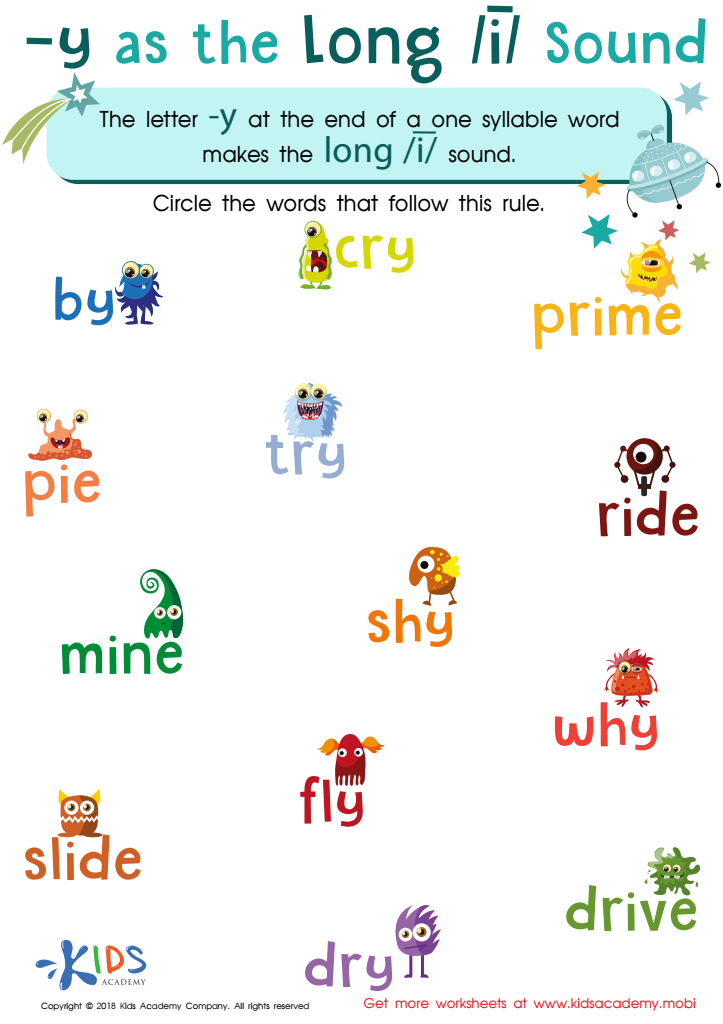
Reading: Y as Long I Worksheet
 Assign to My Students
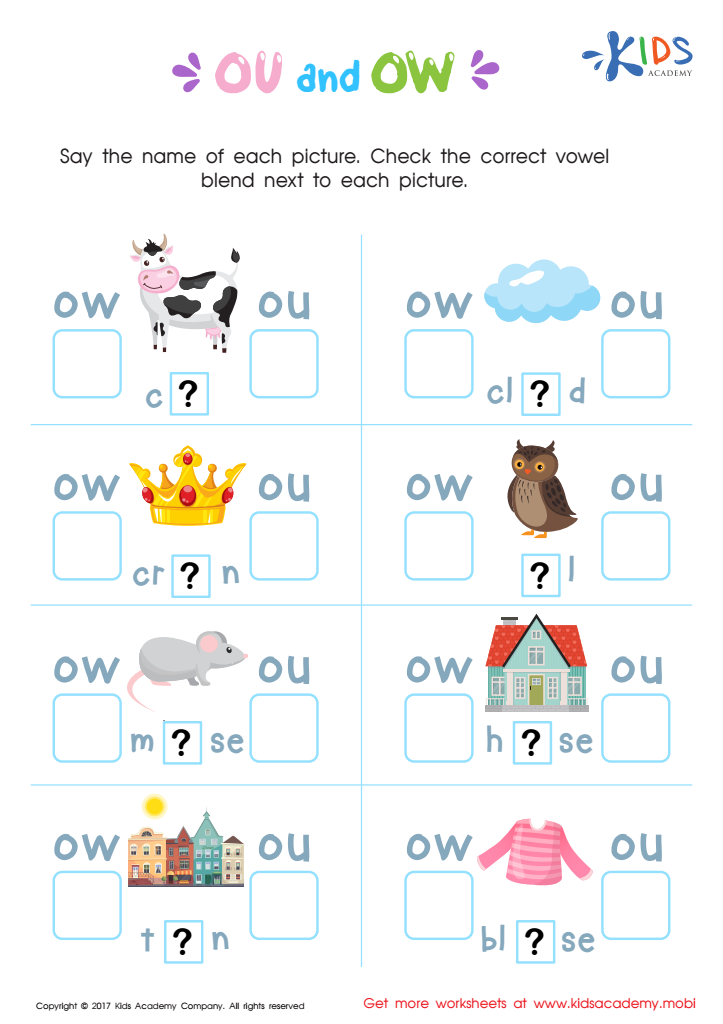
OU and OW Words Worksheet
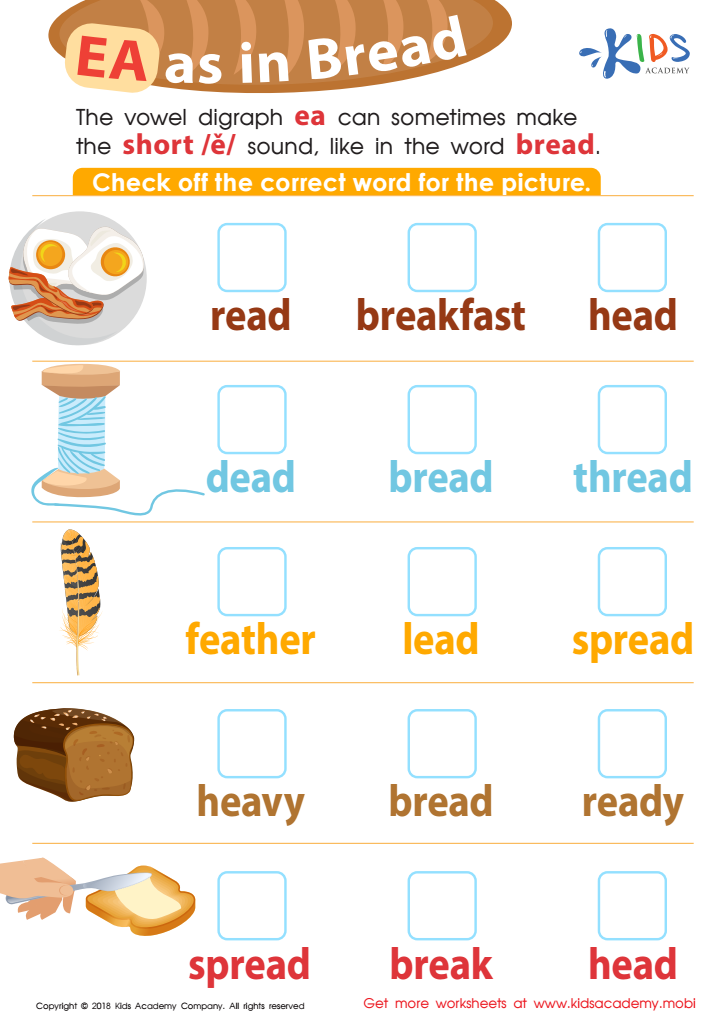
Reading: EA as in Bread Worksheet


Vowel diphthongs are important phonetic constructs that blend two vowel sounds within a single syllable, creating a unique sound that can affect reading, writing, and language comprehension for young learners. For children aged 5-8, understanding and mastering vowel diphthongs—such as those found in words like "coin," "loud," and "play"—can significantly enhance their phonemic awareness, which is crucial to their literacy development.
Parents and teachers should care about vowel diphthongs because they form the building blocks of effective communication skills. When children grasp diphthongs, they improve their ability to decode unfamiliar words, which boosts their confidence and independent reading skills. It enriches their vocabulary, allowing for better expression in both oral and written formats.
Moreover, early exposure to diphthongs can foster better spelling habits and minimize common errors, ultimately impacting their long-term academic success. Engaging children with playful learning activities centered on diphthongs can make the process enjoyable and memorable. In short, a solid foundation in vowel diphthongs empowers young learners academically, socially, and emotionally, paving the way for lifelong literacy skills and communication prowess.