Vowels and Consonants Worksheets for Ages 5-8 - Page 2
29 filtered results
-
From - To
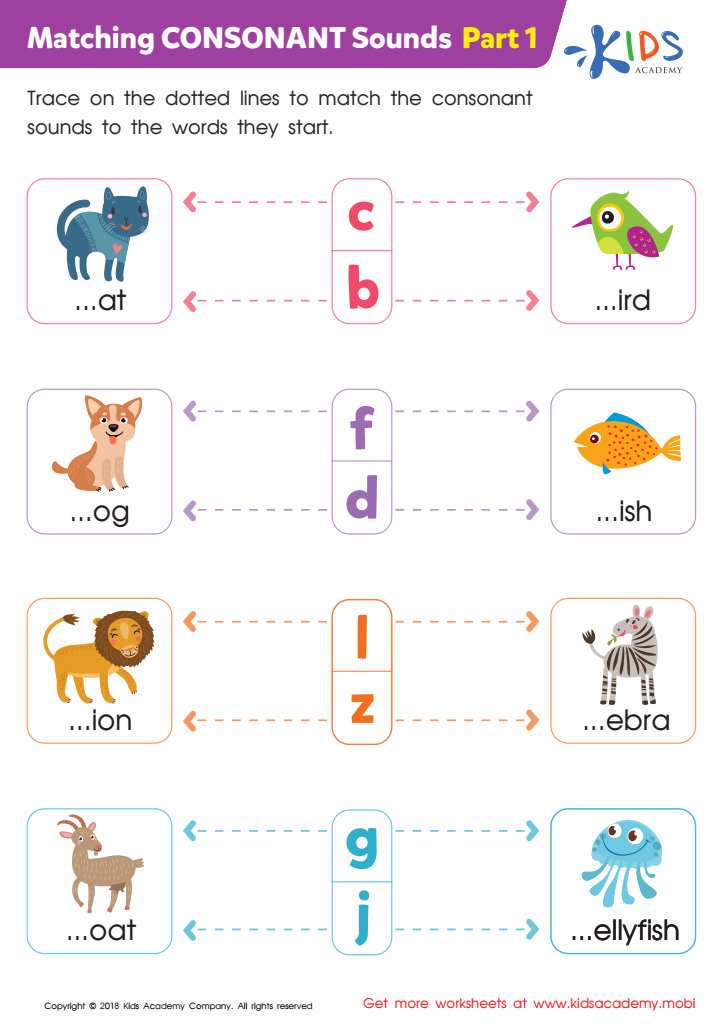
Matching Consonant Sounds: Part 1 Worksheet
 Assign to My Students
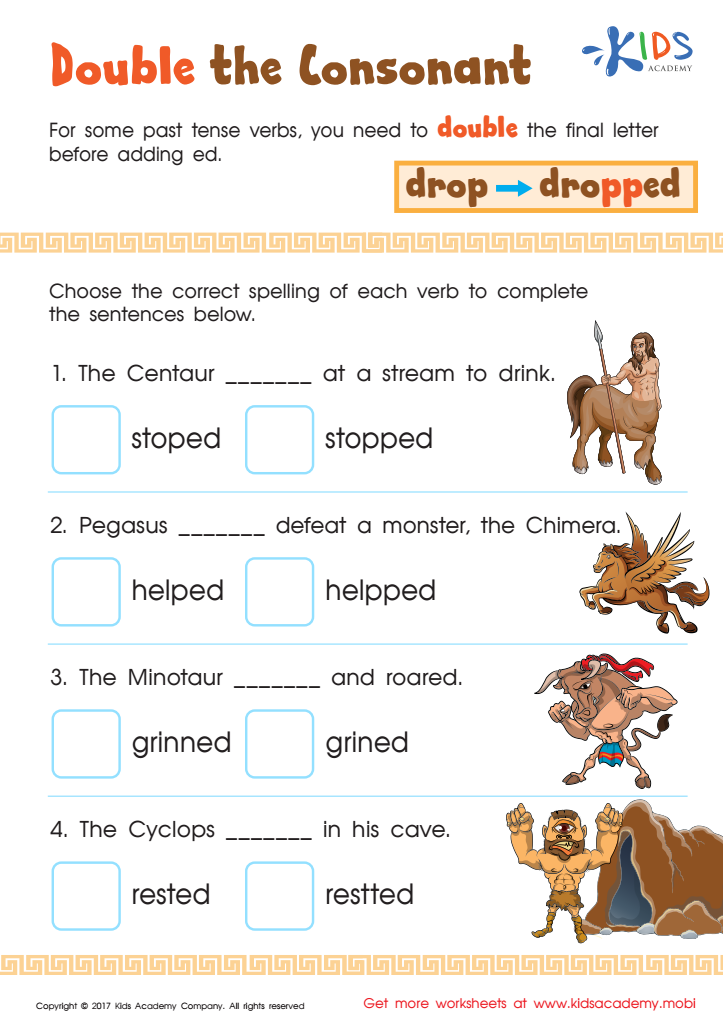
Double Consonant Spelling Worksheet
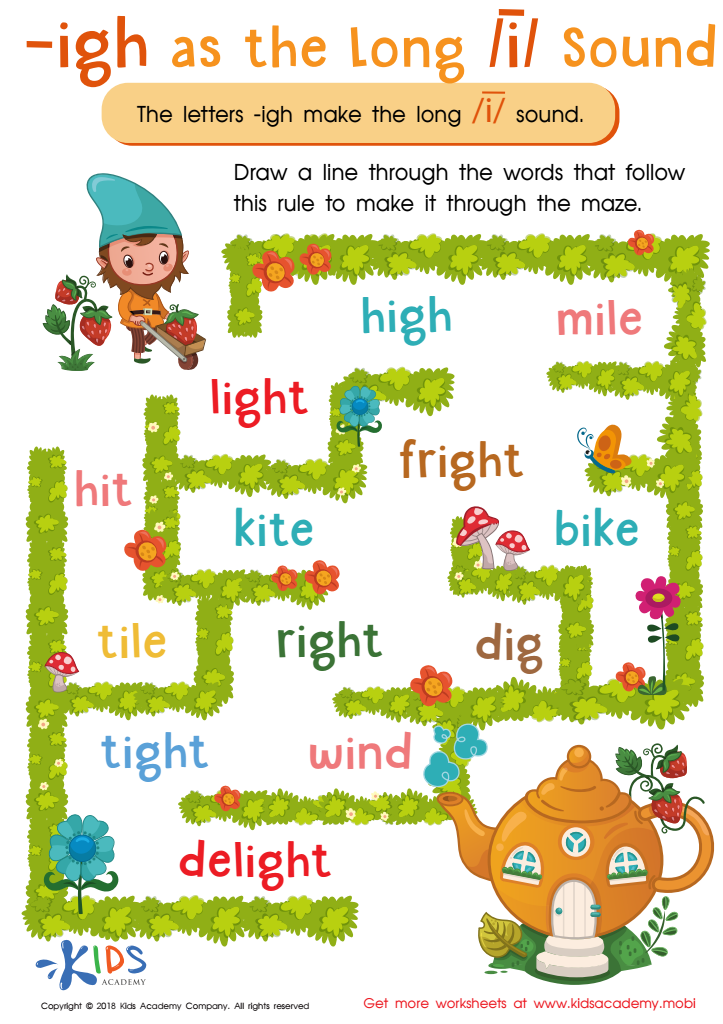
Reading: IGH as Long I Worksheet
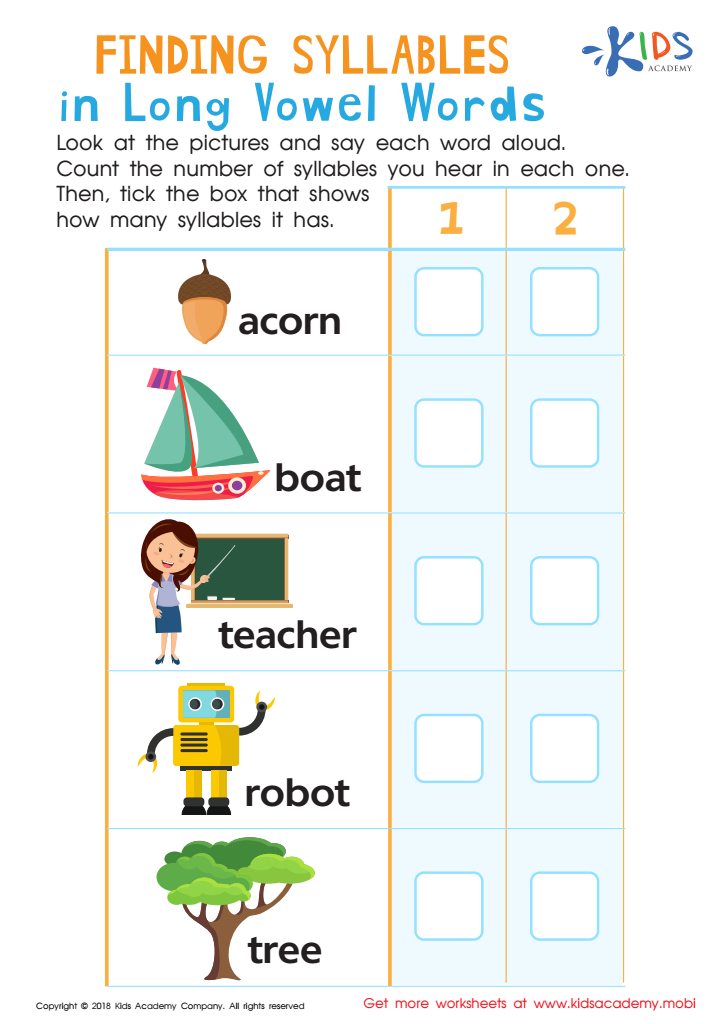
Finding Syllables in Long Vowel Words Worksheet
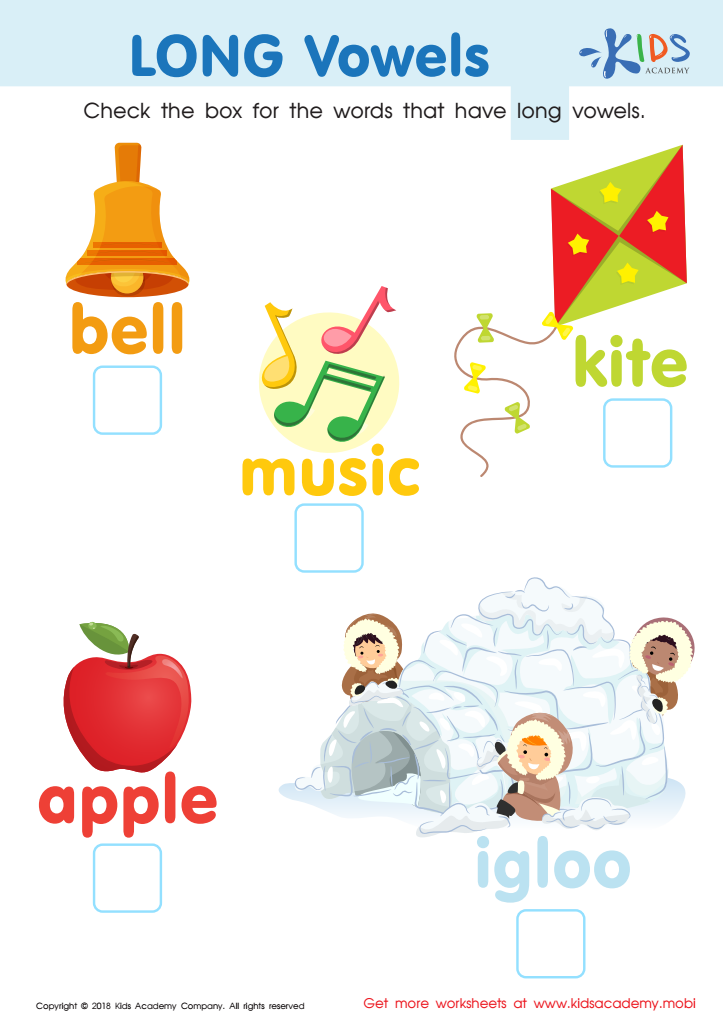
long vowels Worksheet



Understanding vowels and consonants is crucial for the literacy development of young learners aged 5-8. These two groups of letters serve different functions in language, and mastery over them lays the groundwork for reading and writing. Vowels (a, e, i, o, u) are the building blocks of syllables, making them essential for word formation. Consonants, on the other hand, provide structure and meaning, allowing children to differentiate between words and sounds.
By focusing on these fundamental components of language, parents and teachers can enhance children's phonemic awareness, an essential skill for reading. Recognizing how vowels and consonants work together enables students to decode words, improving their reading fluency and comprehension. Additionally, early phonetic skills foster spelling abilities and vocabulary development, while instilling a sense of confidence in new readers.
Furthermore, engaging children with fun activities using vowels and consonants—such as songs, games, and rhymes—not only makes learning enjoyable but also reinforces understanding. Thus, a solid grasp of these elements equips students with critical literacy skills that will serve as a foundation for future academic success and lifelong learning. Investing in this understanding is a vital step in fostering a love for reading and communication.







