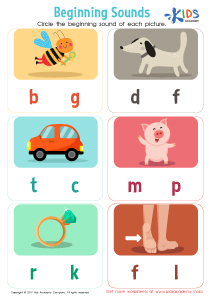
Vowels Worksheets for Ages 5-8 - Page 5
98 filtered results
-
From - To
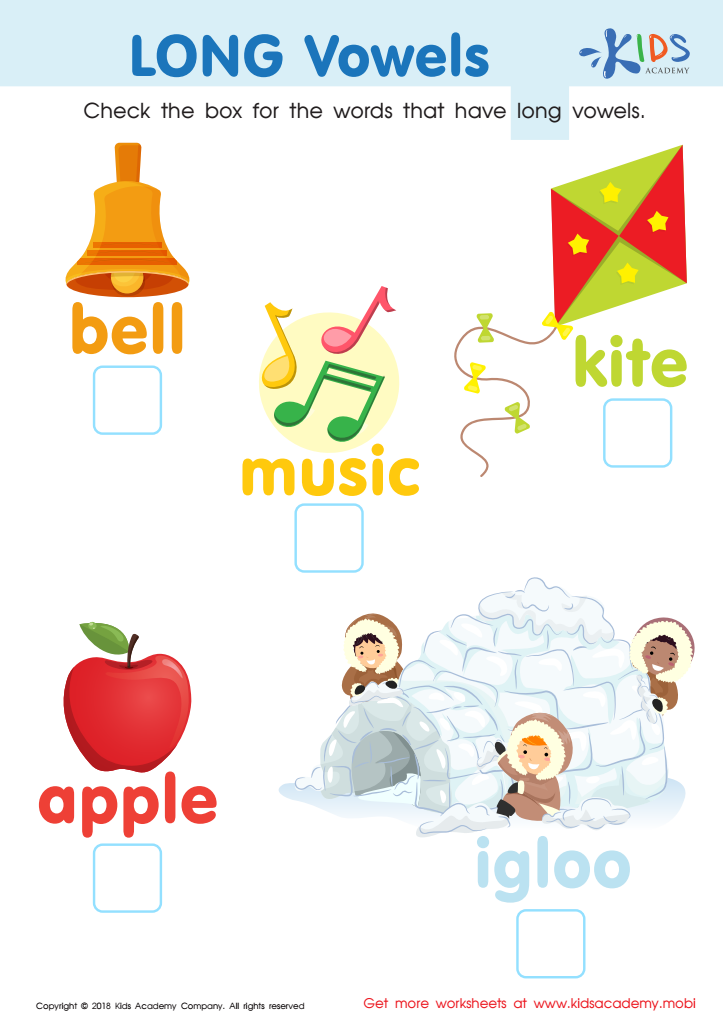
long vowels Worksheet
 Assign to My Students
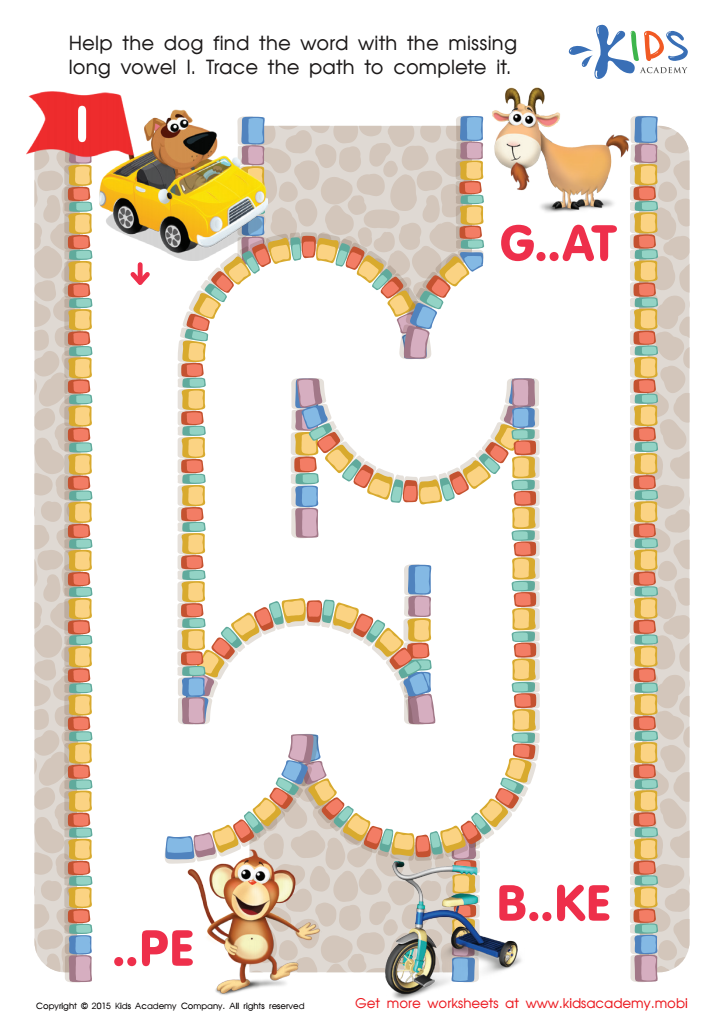
Long Vowel Sound I Worksheet





Vowels are foundational elements of language and play a crucial role in literacy development for children aged 5-8. Understanding vowels is key to helping young learners decode words, develop reading fluency, and enhance their writing skills. Vowels (A, E, I, O, U) help form syllables, and recognizing them allows children to sound out and pronounce words accurately, boosting their confidence and interest in reading.
Moreover, vowels influence word meaning and pronunciation, affecting how children communicate and express themselves. Early mastery of vowels prepares students for more complex literacy skills, such as reading comprehension and spelling. Engaging with vowels can also support phonemic awareness, a critical skill where children learn to identify and manipulate sounds in words, laying the groundwork for their future academic success.
Parents and teachers should prioritize vowel instruction through playful and engaging methods—such as songs, games, and hands-on activities—displaying the excitement of learning. By solidifying vowel knowledge in young learners, caregivers can cultivate a strong foundation in literacy that will last a lifetime, encouraging a love for reading and writing that extends far beyond the classroom. Prioritizing vowels is an investment in children's educational journey and lifelong communication skills.