
Animal recognition Worksheets for Ages 5-8
121 filtered results
Difficulty Level
Grade
Age
-
From - To
Subject
Activity
Standards
Discover a fun and educational resource with our Animal Recognition Worksheets for ages 5-8! These engaging worksheets are designed to help young learners identify and classify various animals, enhancing their observation skills and understanding of the animal kingdom. Each worksheet includes colorful illustrations and interactive activities that promote recognition of animal characteristics, habitats, and sounds. Perfect for reinforcing classroom learning or engaging in home study, our worksheets foster a love for wildlife and encourage critical thinking. Whether you're a parent or teacher, these animal activities will captivate your child's imagination and support their educational journey. Get started today and watch them explore the wonders of nature!
Favorites
With answer key
Interactive
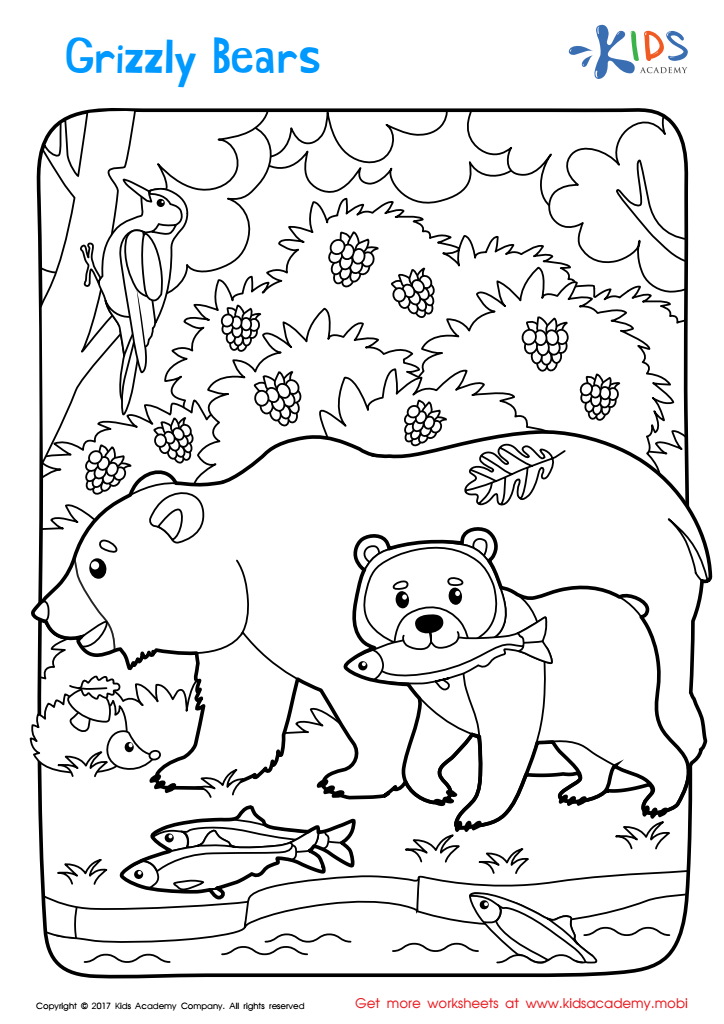
Free Printable Grizzly Bear Coloring Page
Today we're exploring the Great Plains and its most popular inhabitant: the grizzly bear! Our free printable coloring page introduces kids to the bear's natural habitat and food, like salmon and berries. Join us for a fun and educational experience!
Download (PDF)
 Assign to My Students
Assign to My Students
Free Printable Grizzly Bear Coloring Page
Worksheet
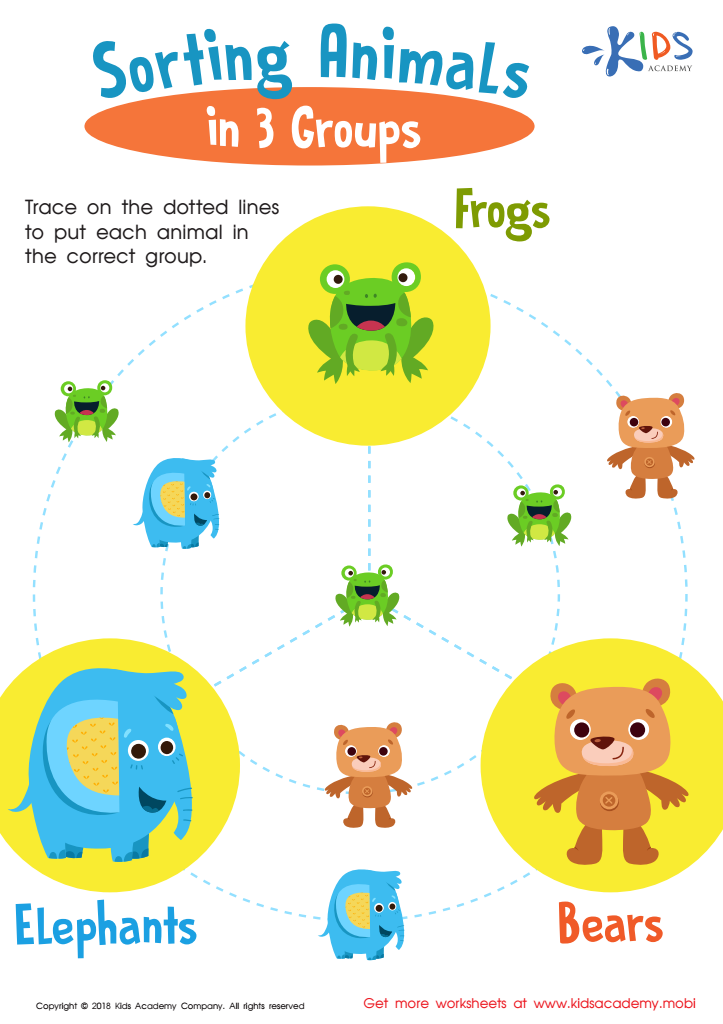
Sorting Animals in 3 Groups Worksheet
Let your kids practice and build skills for future Venn Diagrams with this PDF worksheet. They'll trace lines to match and group animals, and learn the differences and similarities of animals by categorizing with pictures and words. Plus, it's a great way to develop fine motor skills.
Sorting Animals in 3 Groups Worksheet
Worksheet
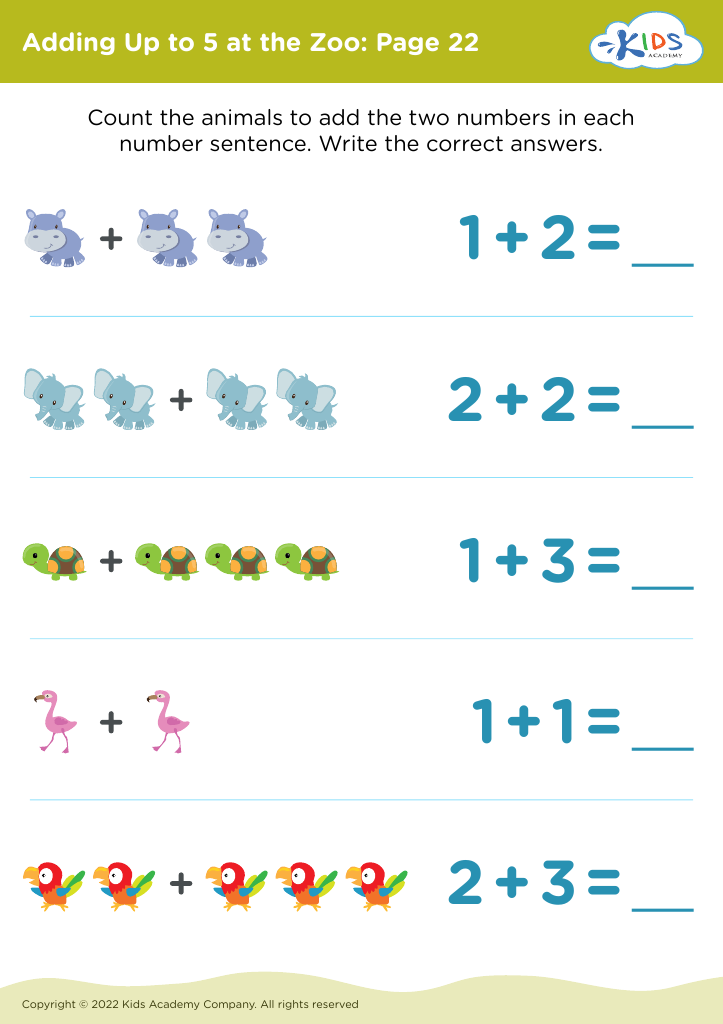
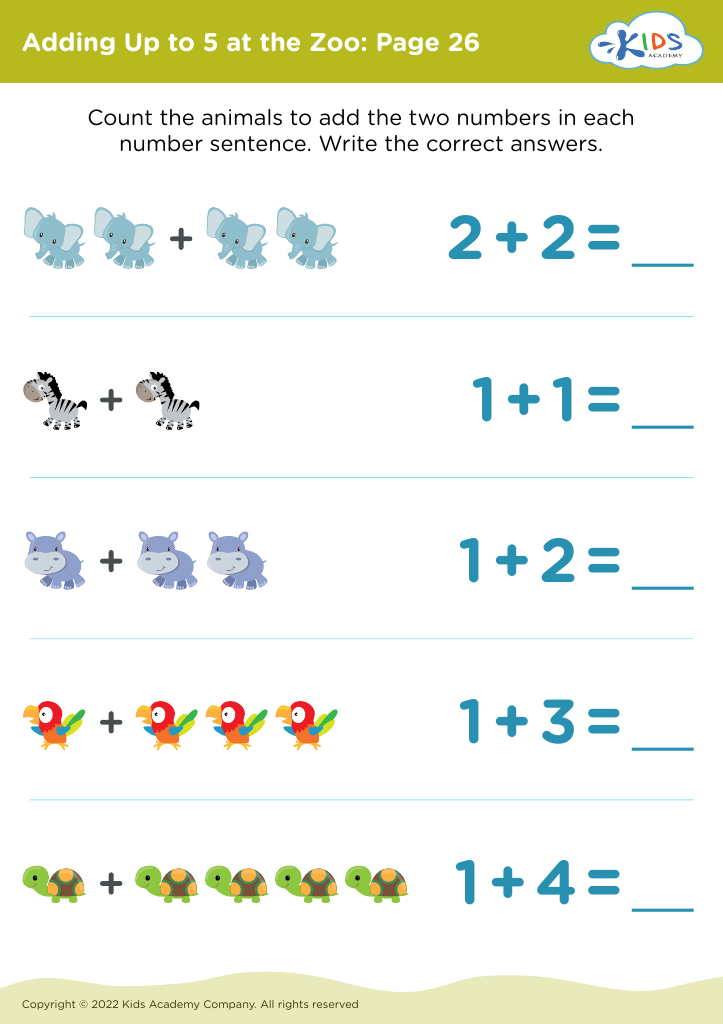
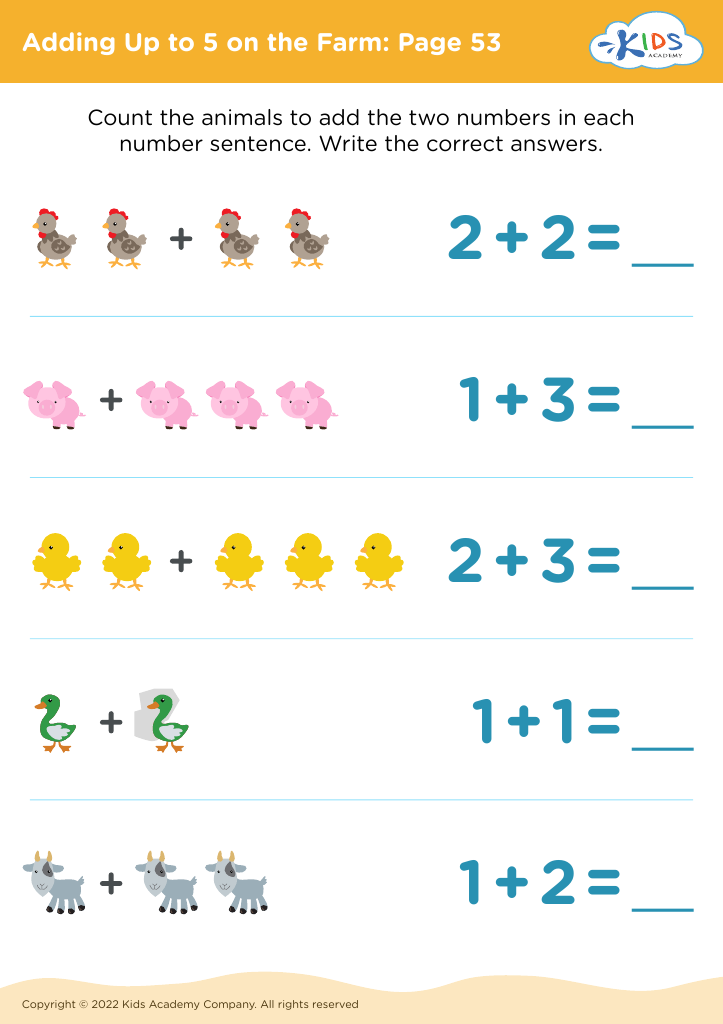
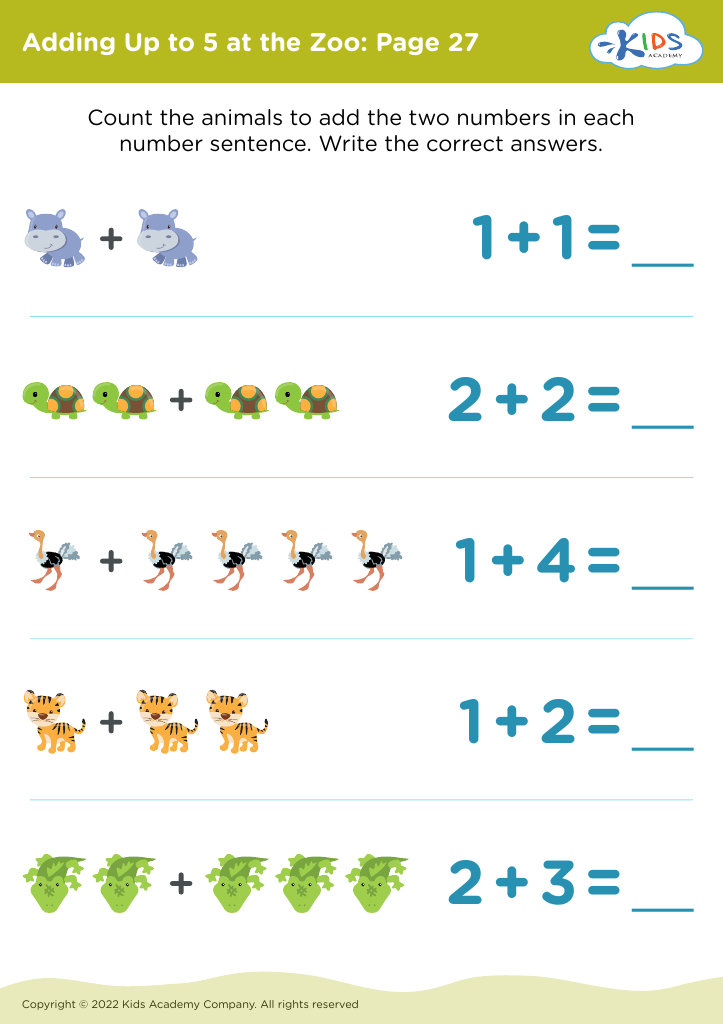
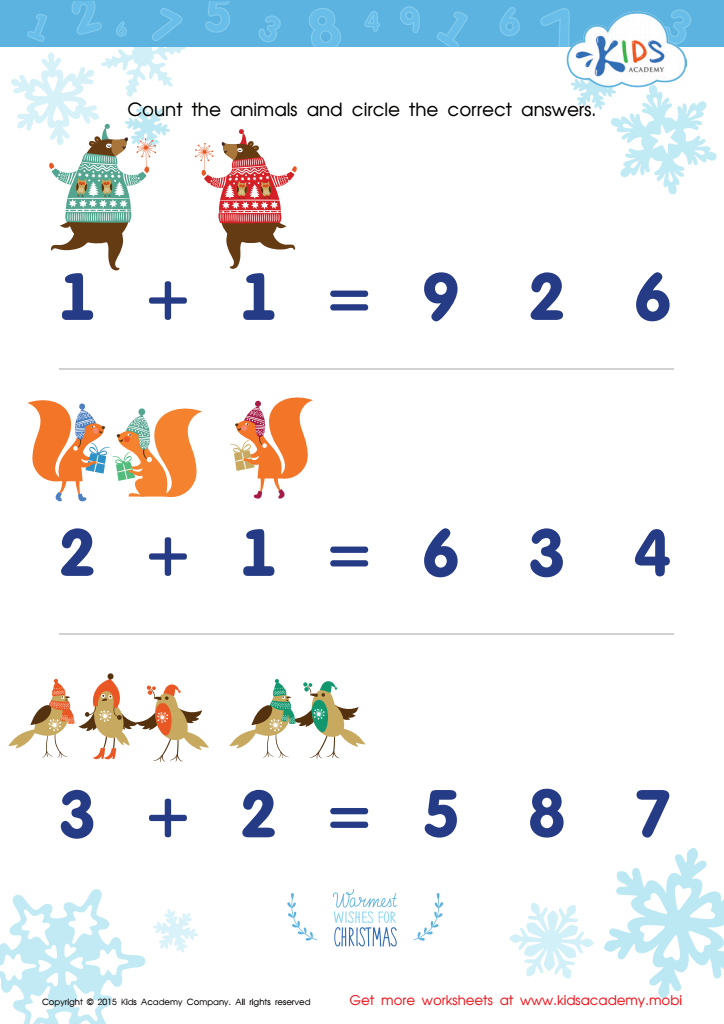
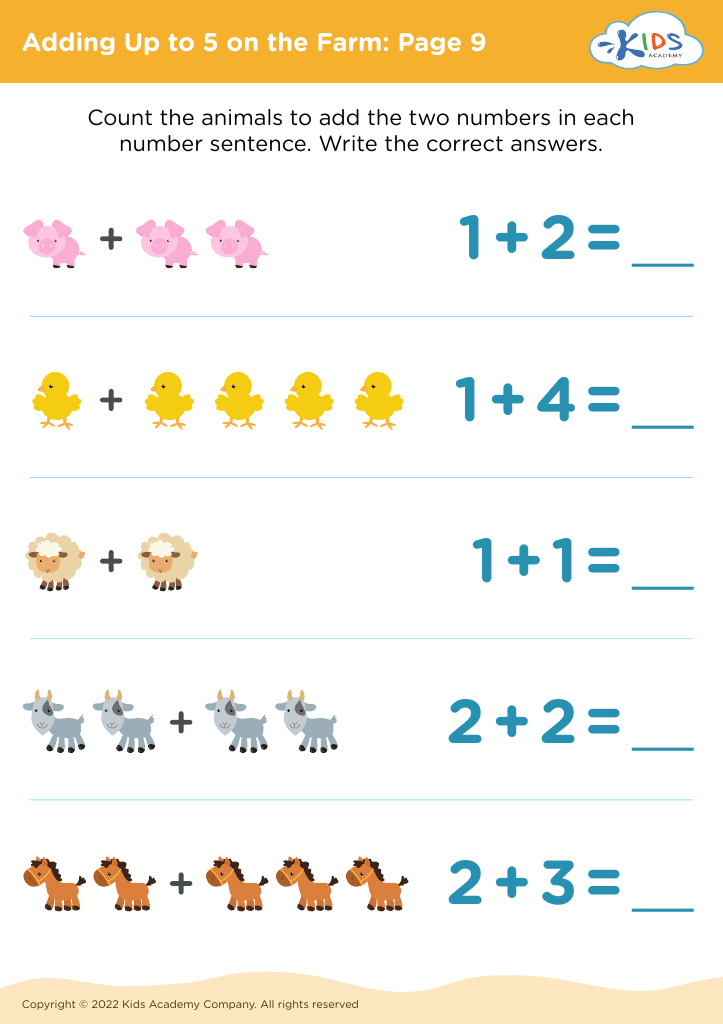
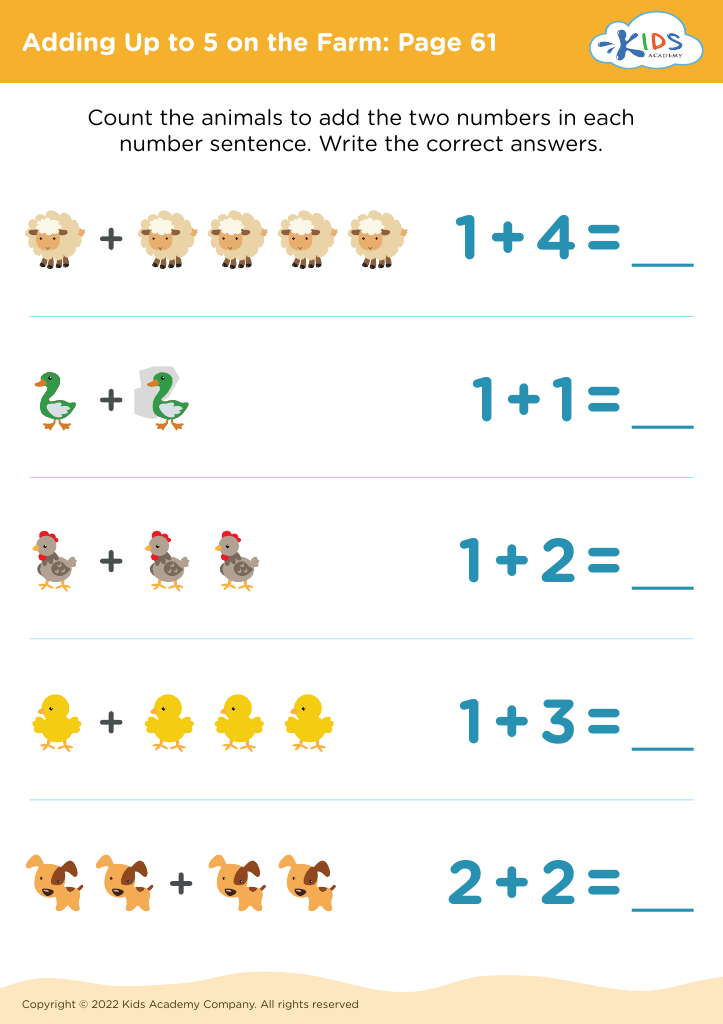
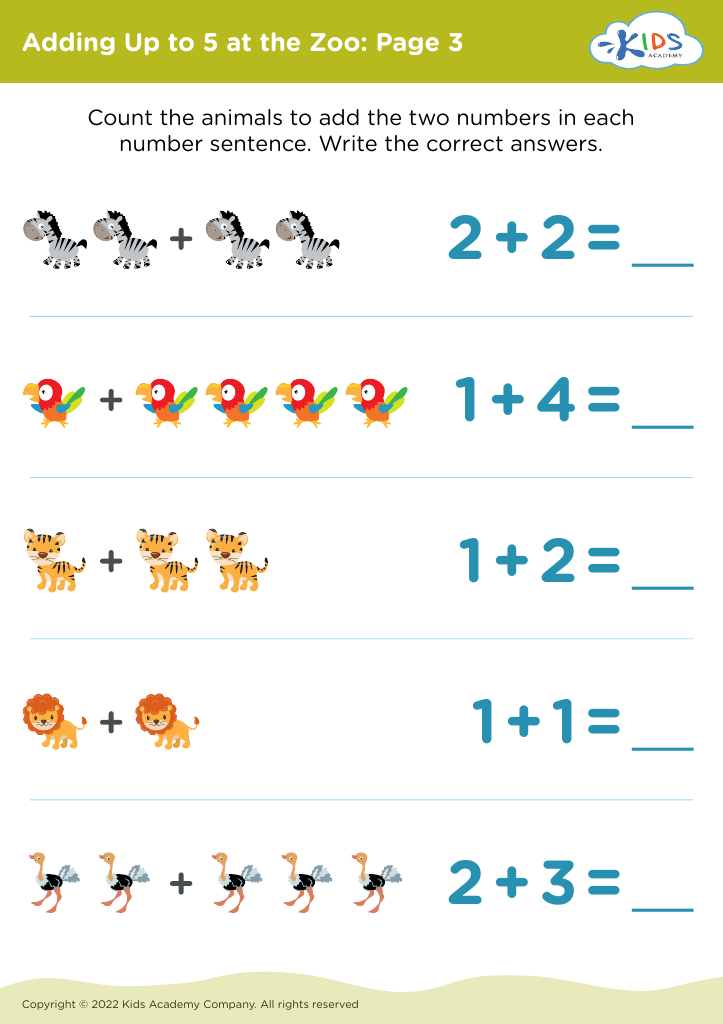
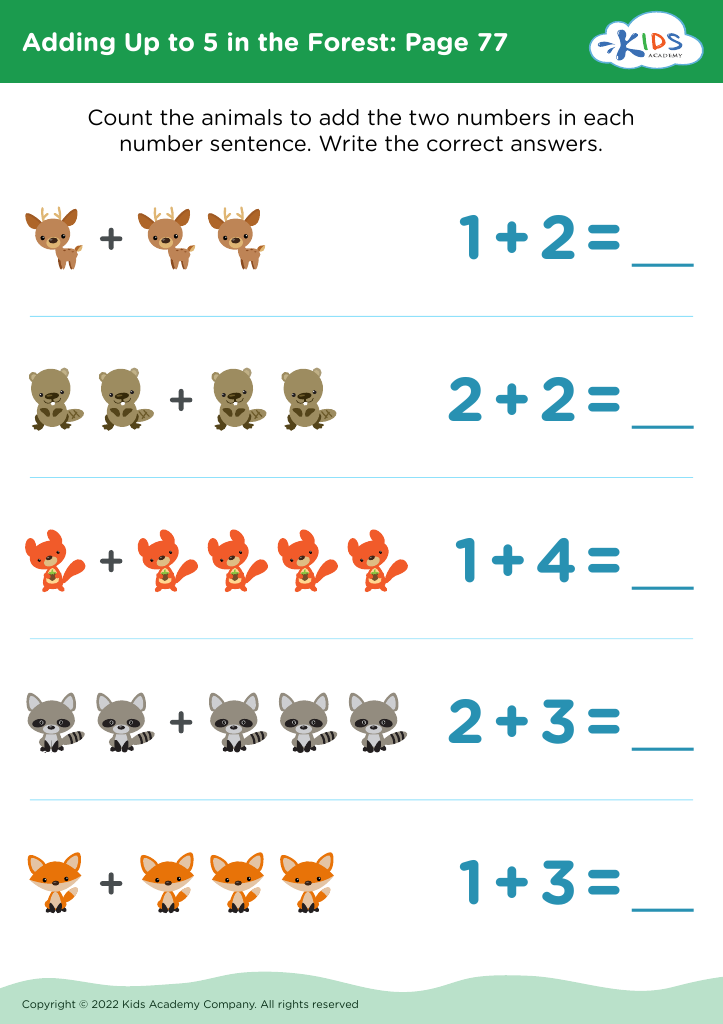
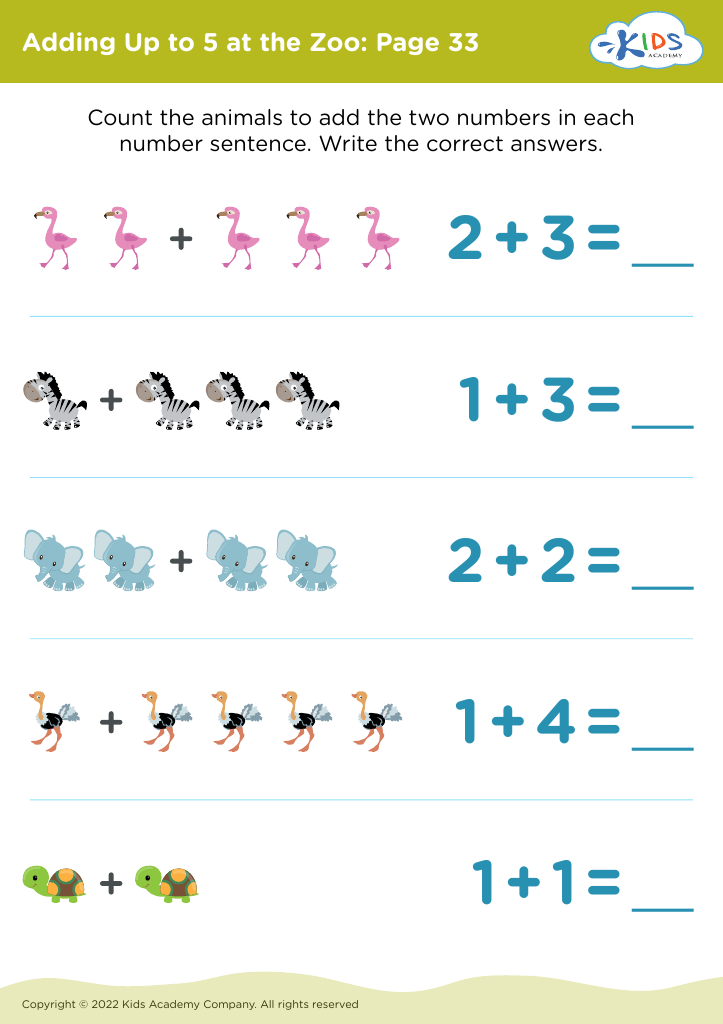
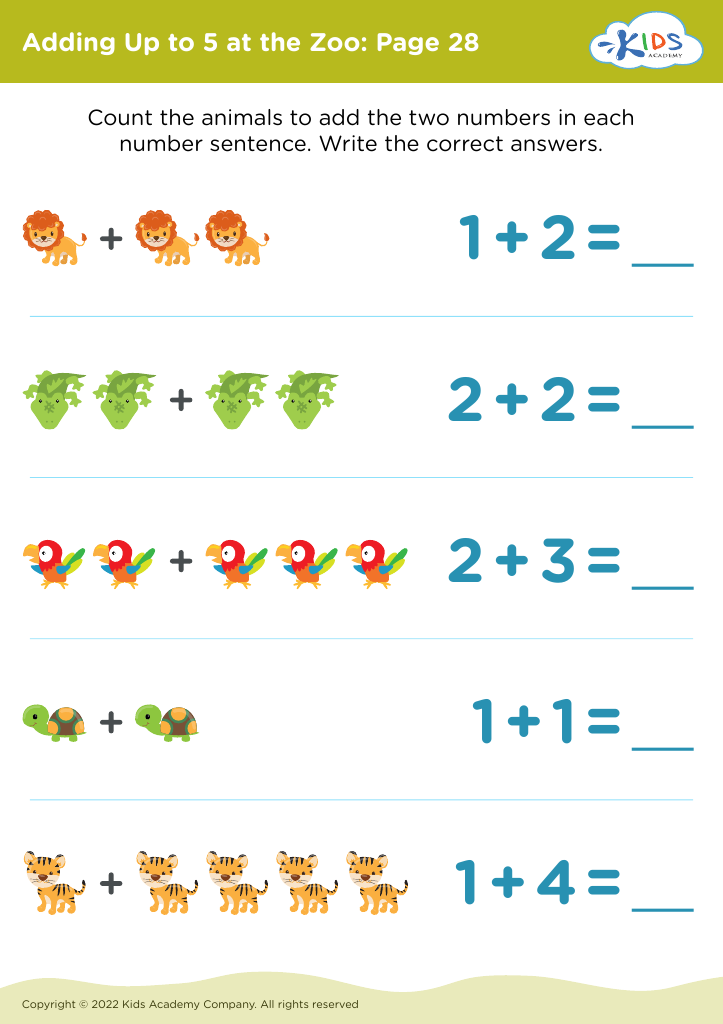
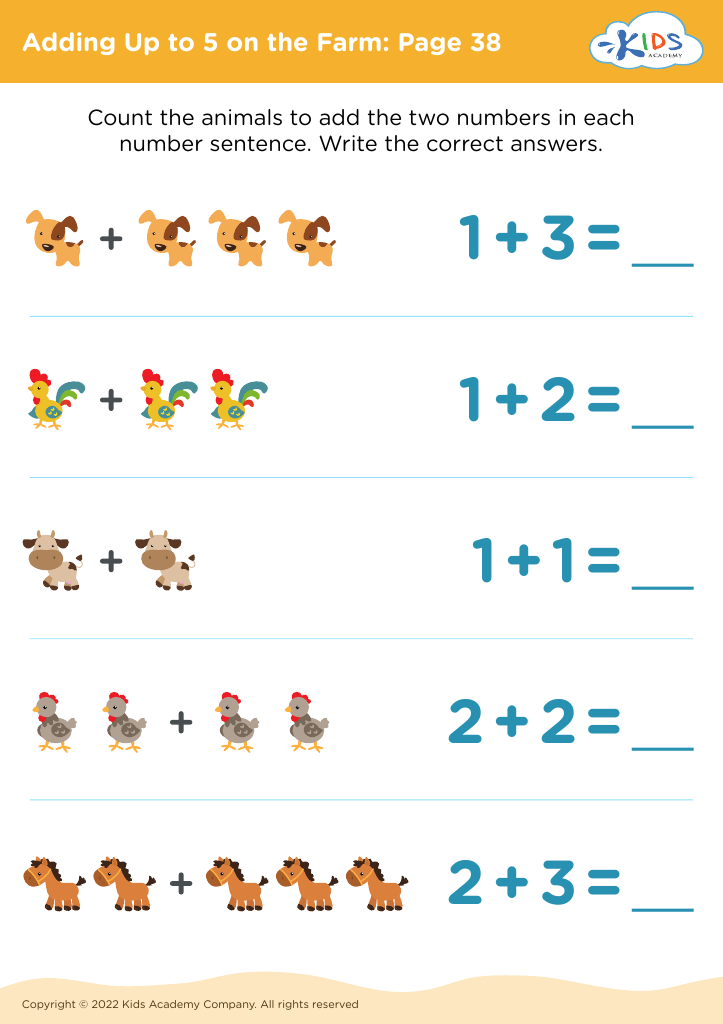
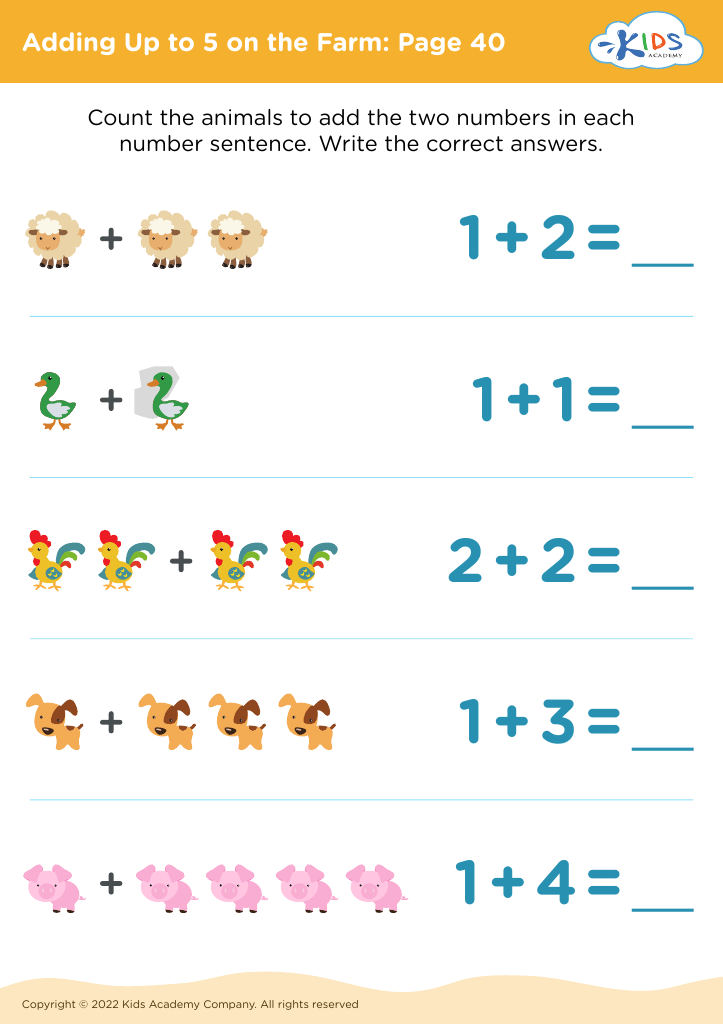
Count Funny Animals Worksheet
Get your kid in the Christmas spirit with this festive addition worksheet! They'll have fun counting the colorful animals and writing in the numbers. Our graphic layout makes it easy for them to visualize and solve the task. Print it out and help your kid keep their math skills sharp this winter with Kids Academy!
Count Funny Animals Worksheet
Worksheet
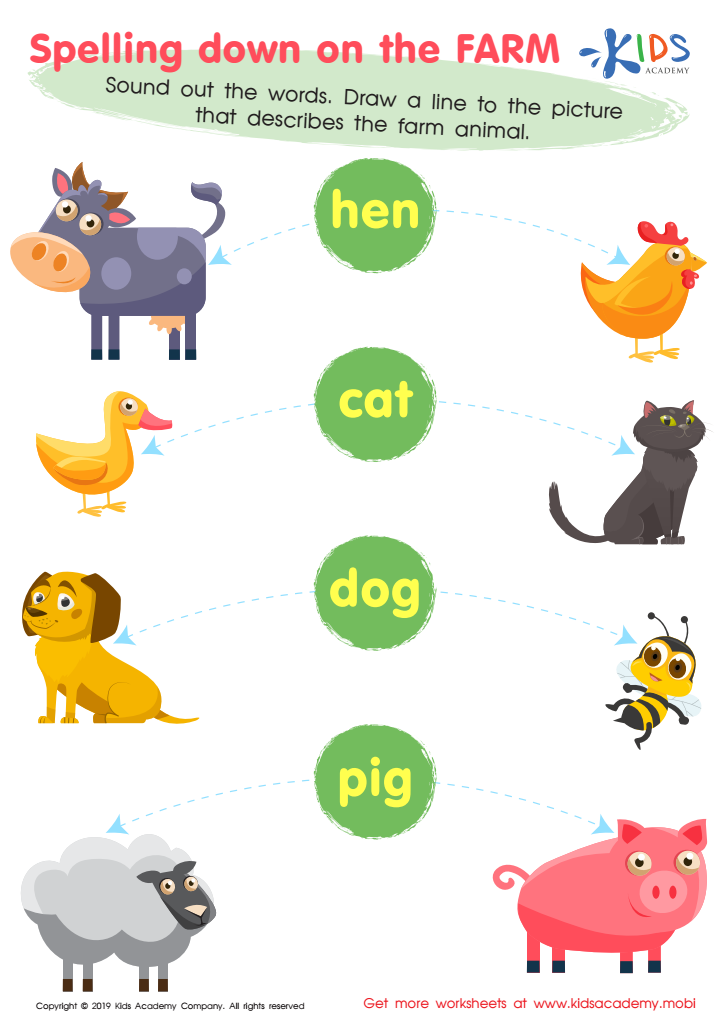
Spelling Down on the Farm Worksheet
Want to help your kids nail their spelling? Introduce them to this farm animal worksheet! Get them to look at the animals in the tracing sheet, name them and then sound out the words. Have them draw a line to the picture that describes it. You'll be surprised at how quickly their skills improve.
Spelling Down on the Farm Worksheet
Worksheet
Join Kids Academy for Free
Who is primarily going to use this learning content?








Animal recognition is an essential skill for children aged 5-8, as it fosters critical cognitive and social development. First, recognizing various animals enhances a child's understanding of the natural world, promoting curiosity and a sense of wonder. This understanding is foundational for later learning in biology, ecology, and environmental studies.
Moreover, learning about animals cultivates empathy and respect for living beings. Children engage with stories and activities that emphasize kindness toward animals, shaping them into compassionate individuals. Recognizing animals in their environments can also bolster observation skills, encouraging children to explore, ask questions, and draw insightful connections between their daily lives and the world around them.
Additionally, animal recognition can serve as a powerful tool in literacy development. Many children's books and educational games utilize animals to teach vocabulary, storytelling, and symbolic thinking. By engaging with animal-themed materials, children enhance language skills and ignite a passion for reading.
For parents and teachers, promoting animal recognition at this developmental stage lays the groundwork for well-rounded, informed, and empathetic individuals. Encouraging curiosity about animals not only supports academic growth but also nurtures critical life skills. Thus, incorporating animal learning in educational settings should be a priority.








