Filters

389 filtered results

Clear all filters
Favorites
With answer key
Interactive

389 filtered results

Difficulty Level

Grade


Welcome to our Counting Practice Worksheets page for ages 5-8! Designed to enhance your child’s numeracy skills, these engaging worksheets provide a fun and interactive way to practice counting. From basic number recognition to addition and pattern identification, our resources cater to various learning styles. Each worksheet is crafted to reinforce foundational math concepts while encouraging independent learning. Perfect for classroom use or at-home practice, our worksheets are easy to print and can be effortlessly integrated into your child's daily routine. Foster a love for numbers and watch your young learner thrive with our counting activities!

Check out this FREE "Counting practice" Trial Lesson for age 5-8!

Counting Faces 3D

Favorites
With answer key
Interactive
  • 5-8
  • Counting practice
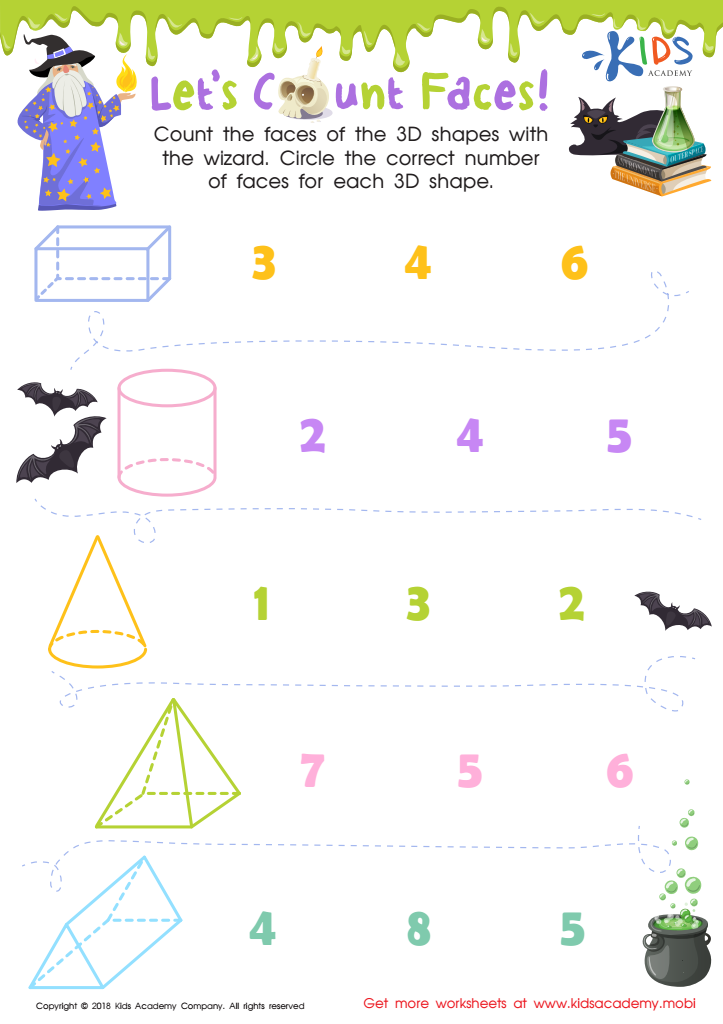
Let's Count Faces! Worksheet

Let's Count Faces! Worksheet

Help the wizard count the faces of 3D shapes! Ask your kids to identify the shapes before beginning, then have them circle the correct number of faces. Enjoy this fun wizard-themed worksheet with your kids!
Let's Count Faces! Worksheet
Worksheet
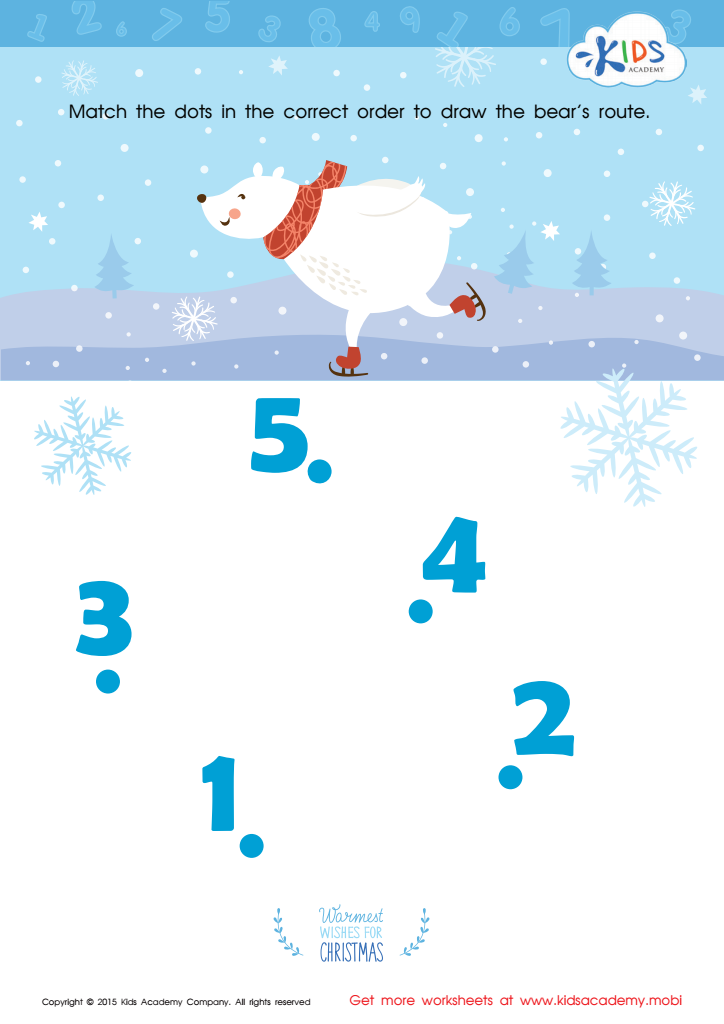
Math PDF Worksheet: Drawing the Bear’s Route by Number

Drawing the Bear's Route by Number Worksheet
This winter-themed math worksheet is perfect for counting practice. Have fun learning and celebrating the season with your kindergartener as they trace and recognize numbers. It also helps develop fine motor muscles. For more fun, check out the math worksheets on Kids Academy.
Drawing the Bear's Route by Number Worksheet
Worksheet
Skip Counting by Three

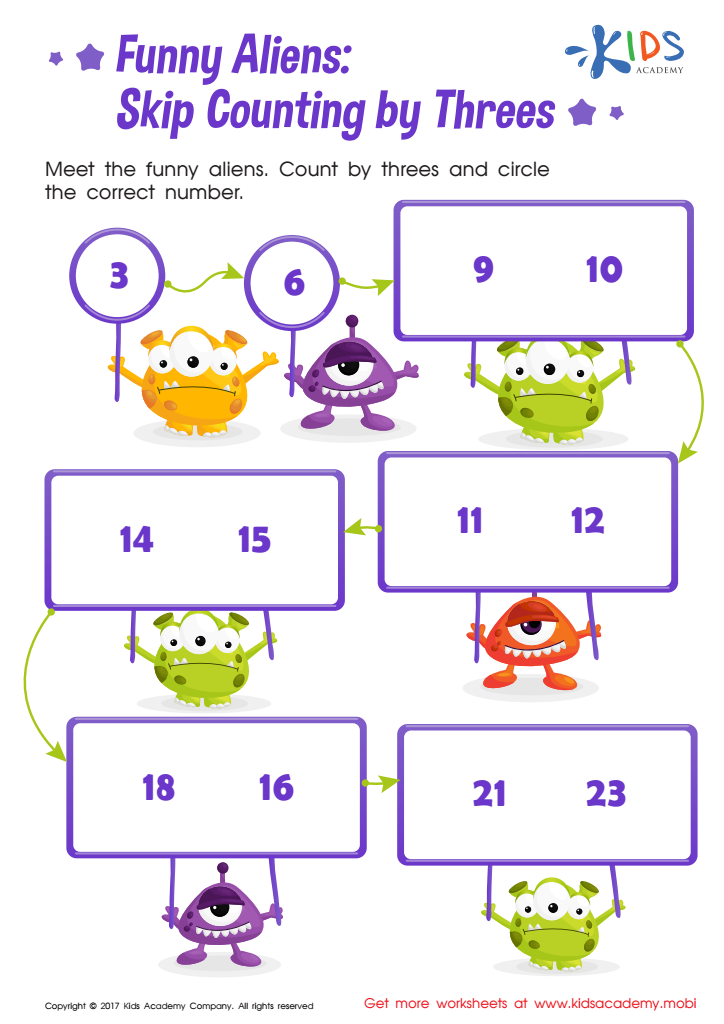
Skip Counting by 3s: Funny Aliens Printable
Blast off to outer space learning fun with this skip counting by 3 worksheet!
Skip Counting by 3s: Funny Aliens Printable
Worksheet
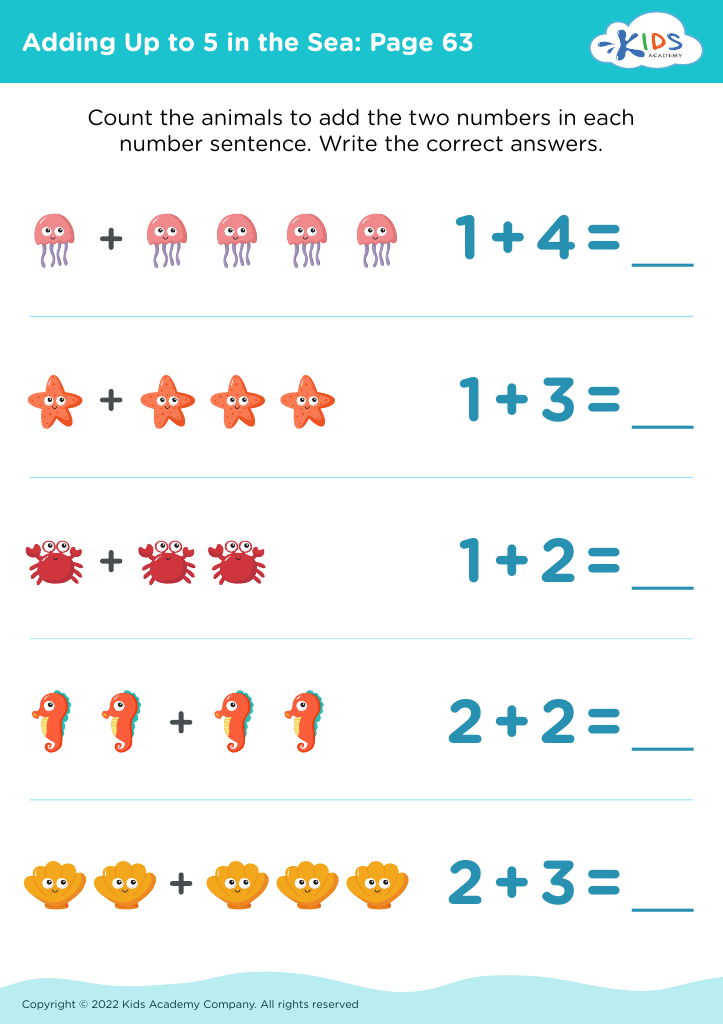
Adding Up to 5 in the Sea: Page 63
Worksheet
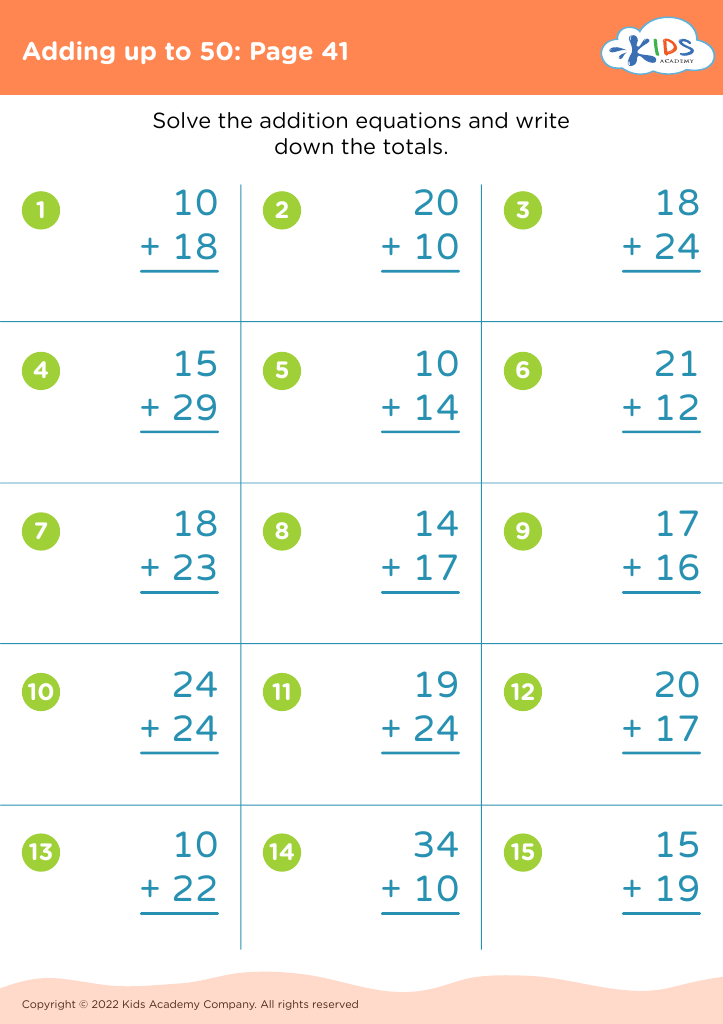
Adding up to 50: Page 41

Adding up to 50: Page 41

Adding up to 50: Page 41
Worksheet
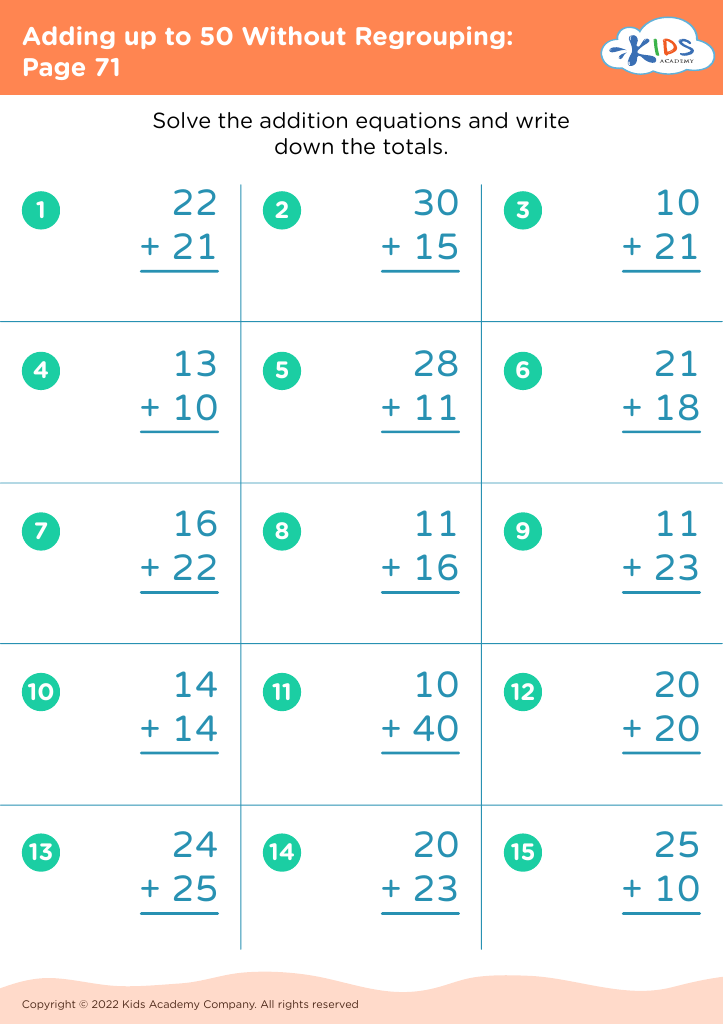
Adding up to 50 Without Regrouping: Page 71
Worksheet
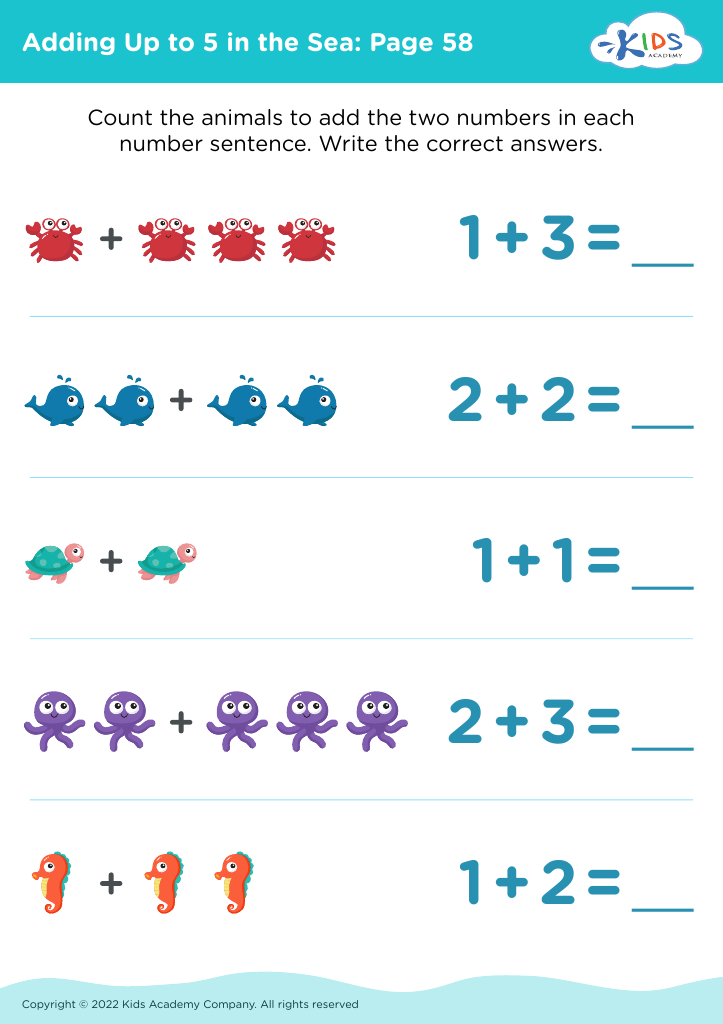
Adding Up to 5 in the Sea: Page 58
Worksheet
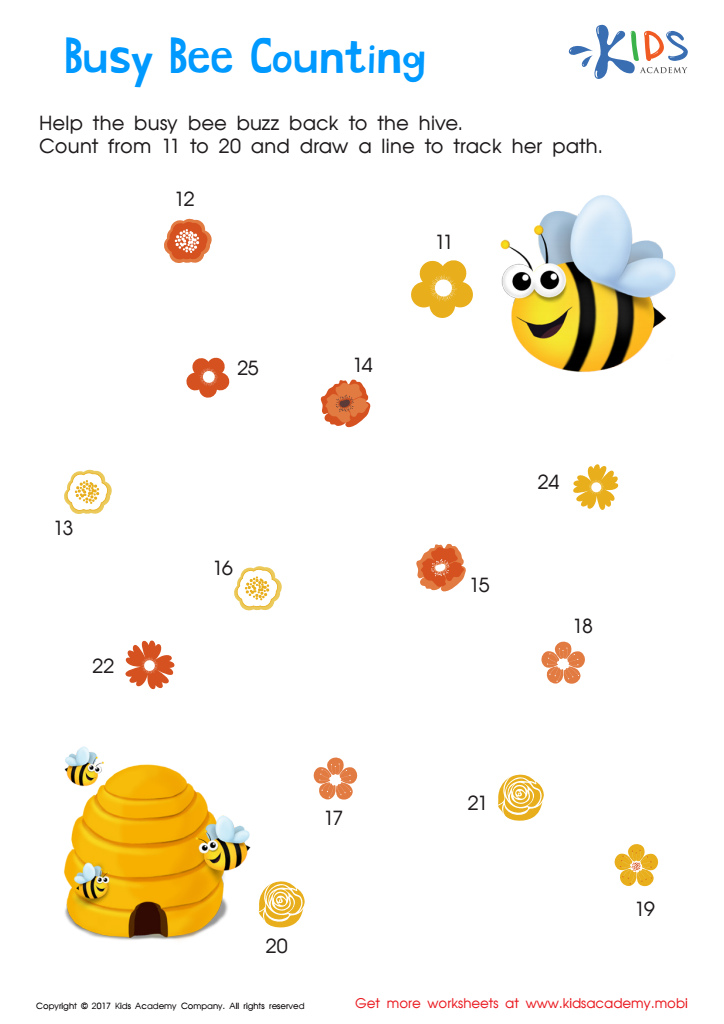
Сounting from 11 to 20 Worksheet

Ordering 11–20: Busy Bee Counting Worksheet
Help your child master counting from 11 to 20 with our connect the dot counting worksheet. Kids will have fun counting, drawing and problem-solving with this vibrant worksheet. With clear directions, adorable pictures and a sense of purpose, your child will develop crucial numeracy skills without even knowing it!
Ordering 11–20: Busy Bee Counting Worksheet
Worksheet
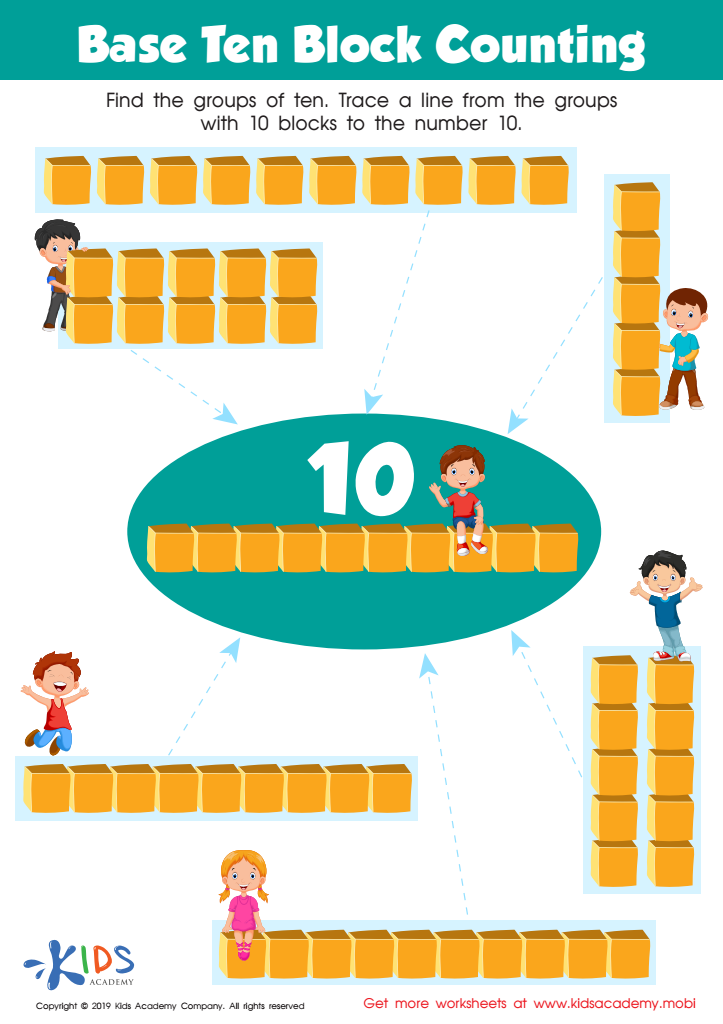
Base Ten Block Counting Worksheet

Base Ten Block Counting Worksheet

Introduce your kids to counting with educational DVDs and video games. Then use this worksheet: look at the picture and help them find the groups of ten; trace a line from the groups with 10 blocks to the number 10. This will help them practice and gain a better understanding of counting.
Base Ten Block Counting Worksheet
Worksheet
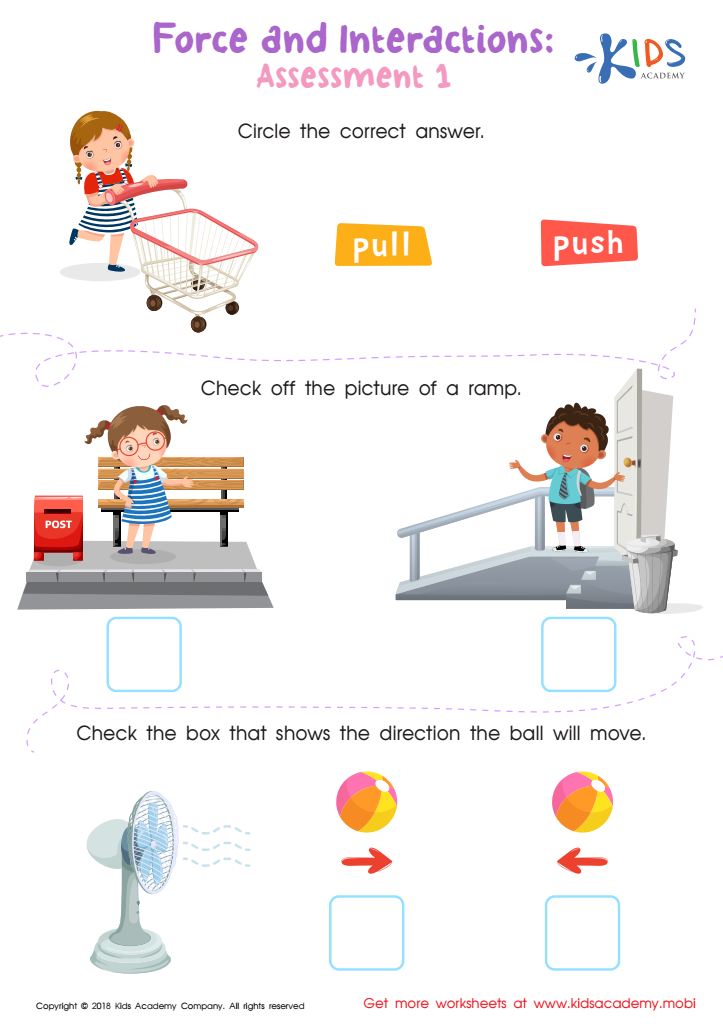
Force and Interactions: Assessment 1 Worksheet
Force and Interactions: Assessment 1 Worksheet
Test your students' knowledge of pushing, pulling, ramps and wind with this worksheet. The first task requires them to identify push or pull pictures. The second asks them to identify a ramp and the third to explain which direction a ball will move when exposed to wind.
Force and Interactions: Assessment 1 Worksheet
Worksheet
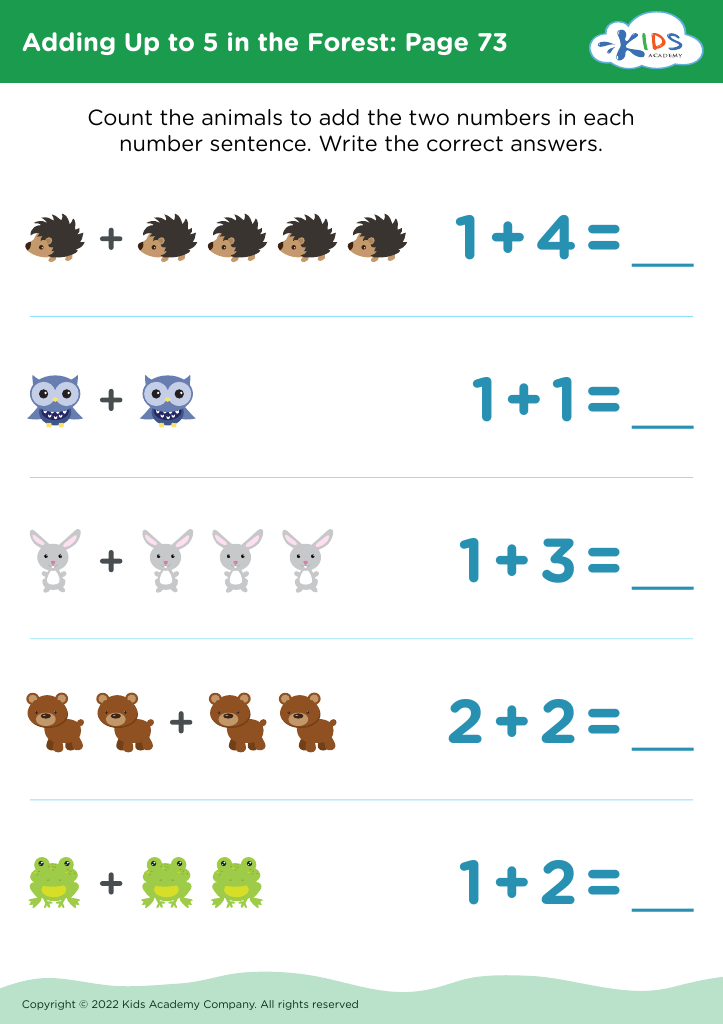
Adding Up to 5 in the Forest: Page 73
Worksheet
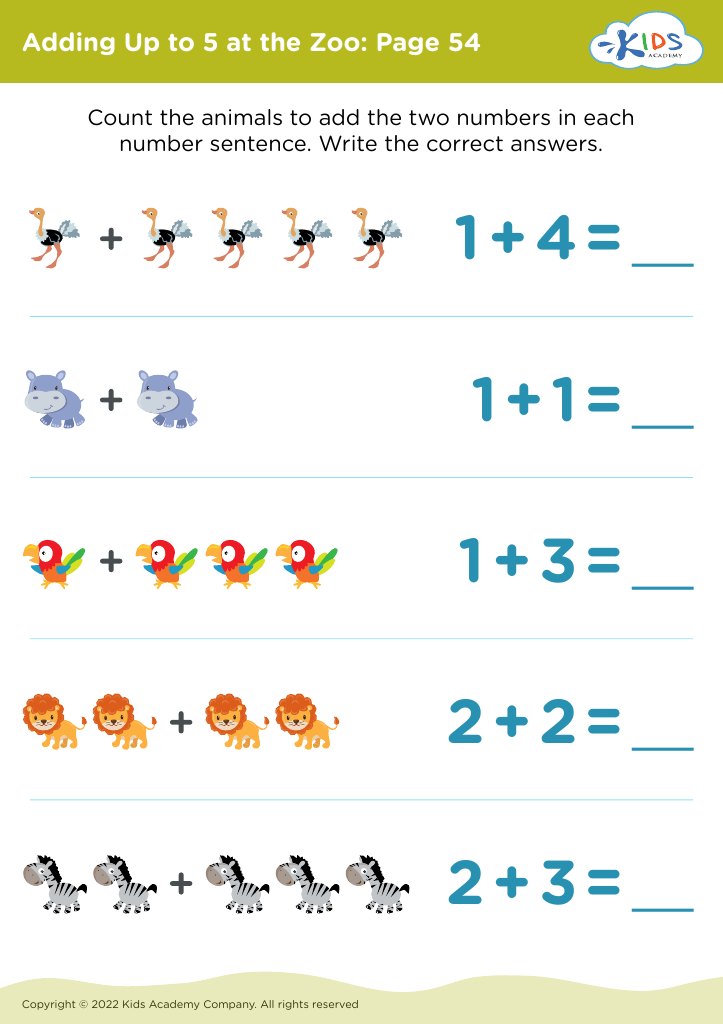
Adding Up to 5 at the Zoo: Page 54
Worksheet
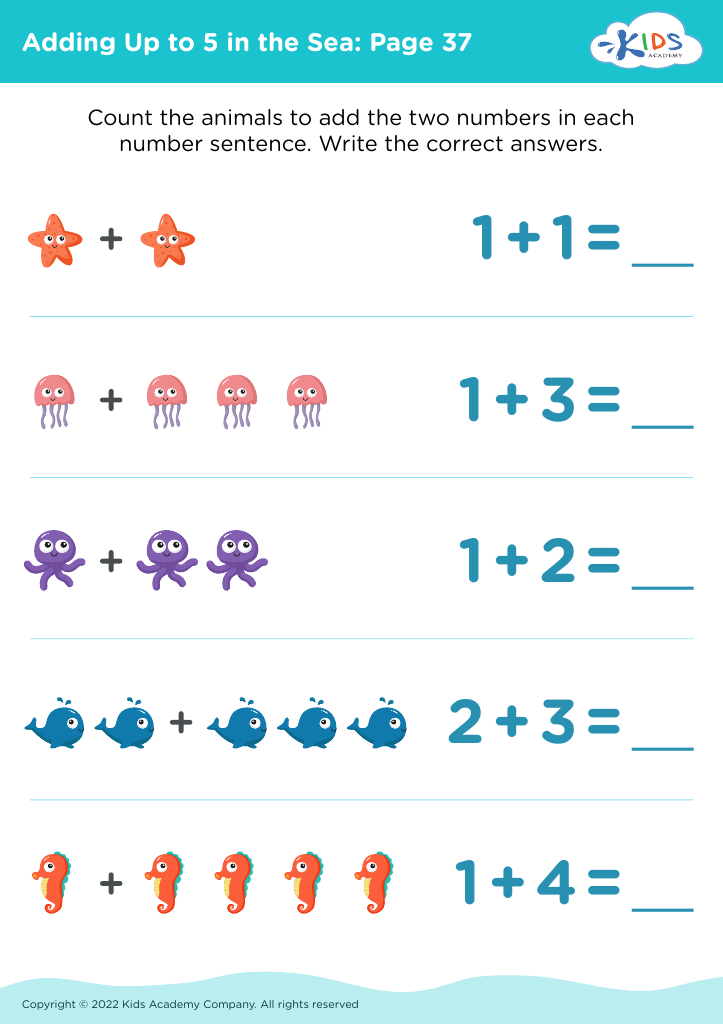
Adding Up to 5 in the Sea: Page 37
Worksheet
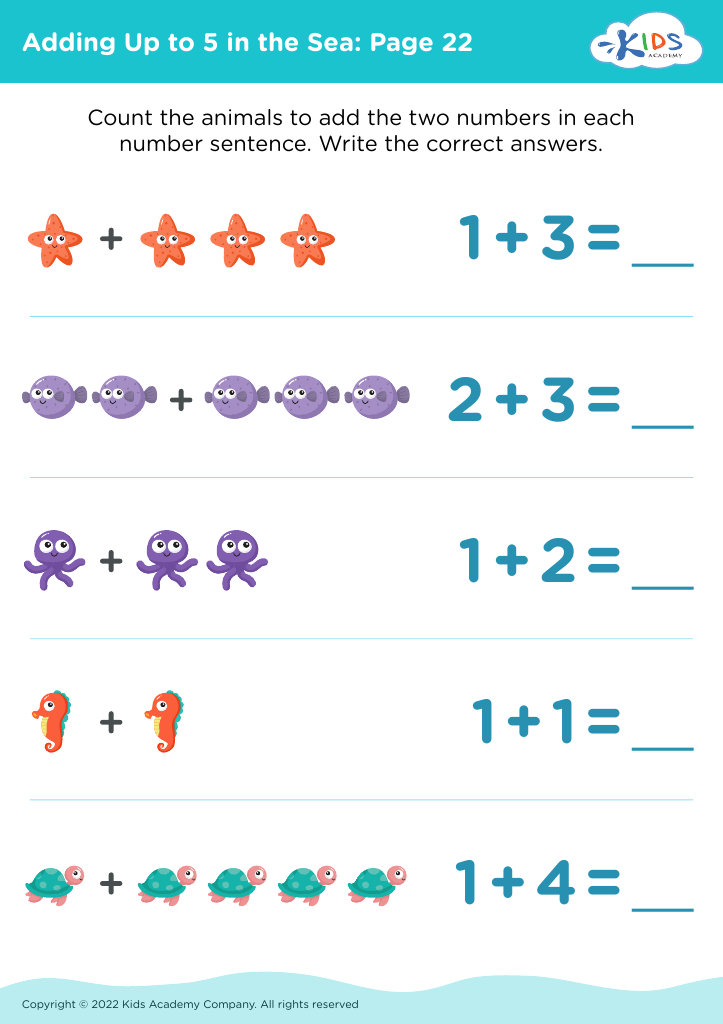
Adding Up to 5 in the Sea: Page 22
Worksheet
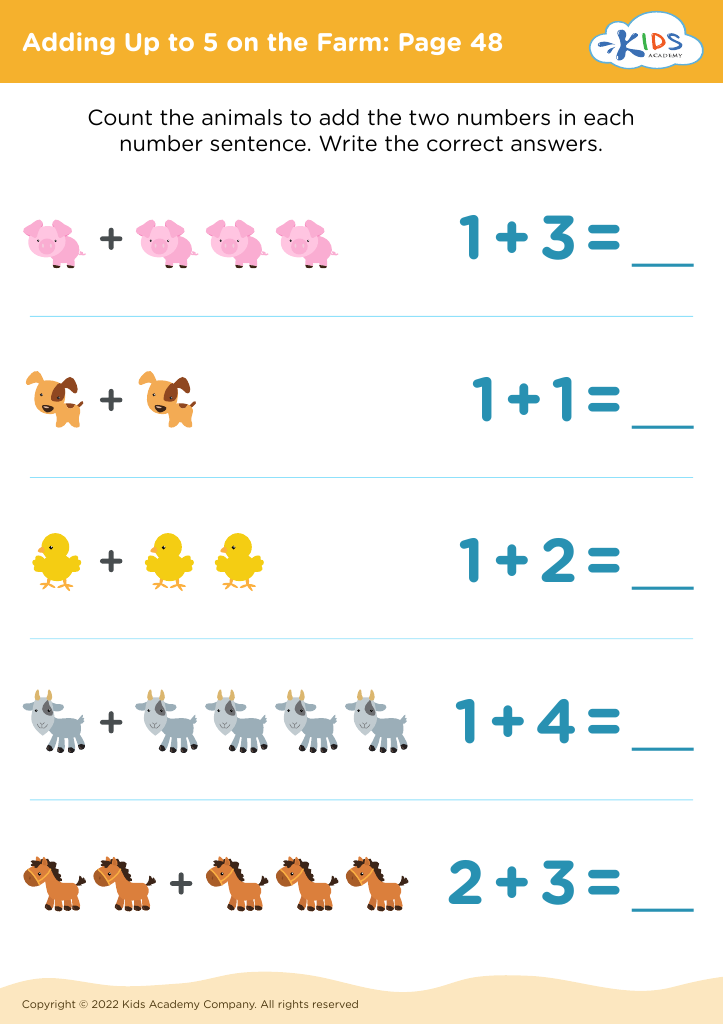
Adding Up to 5 on the Farm: Page 48
Worksheet
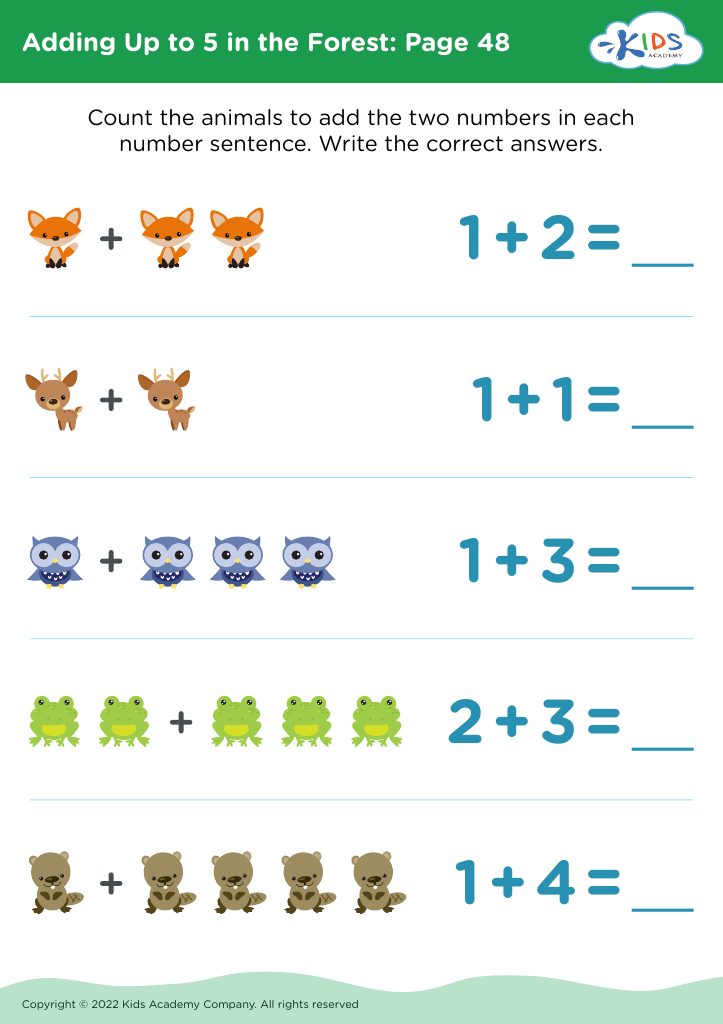
Adding Up to 5 in the Forest: Page 48
Worksheet
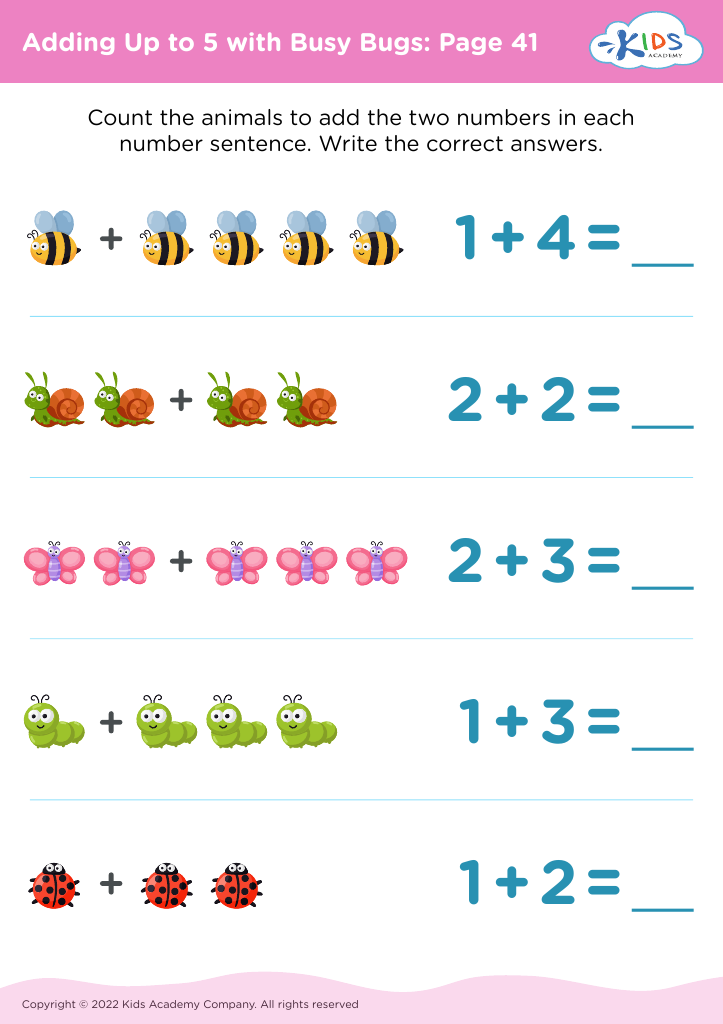
Adding Up to 5 with Busy Bugs: Page 41
Worksheet
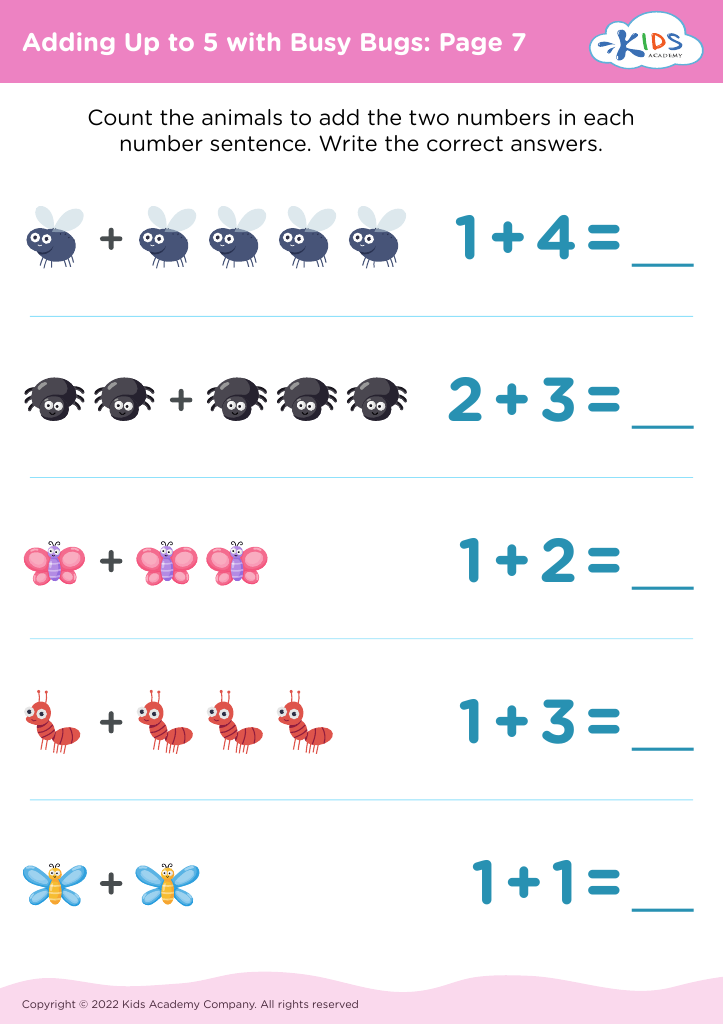
Adding Up to 5 with Busy Bugs: Page 7
Worksheet
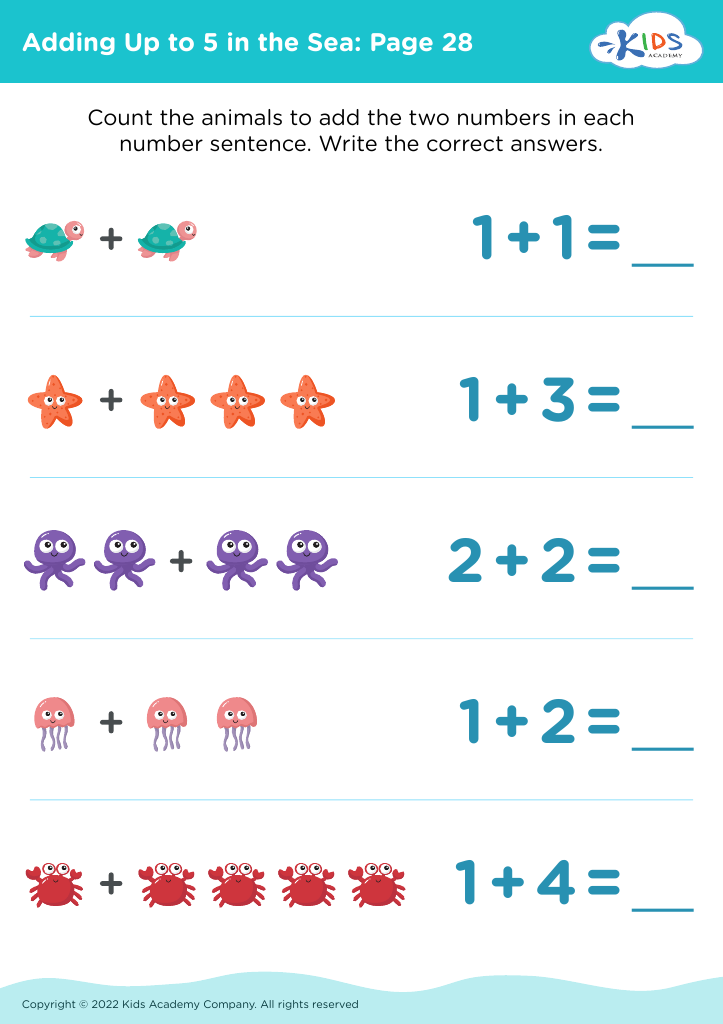
Adding Up to 5 in the Sea: Page 28
Worksheet
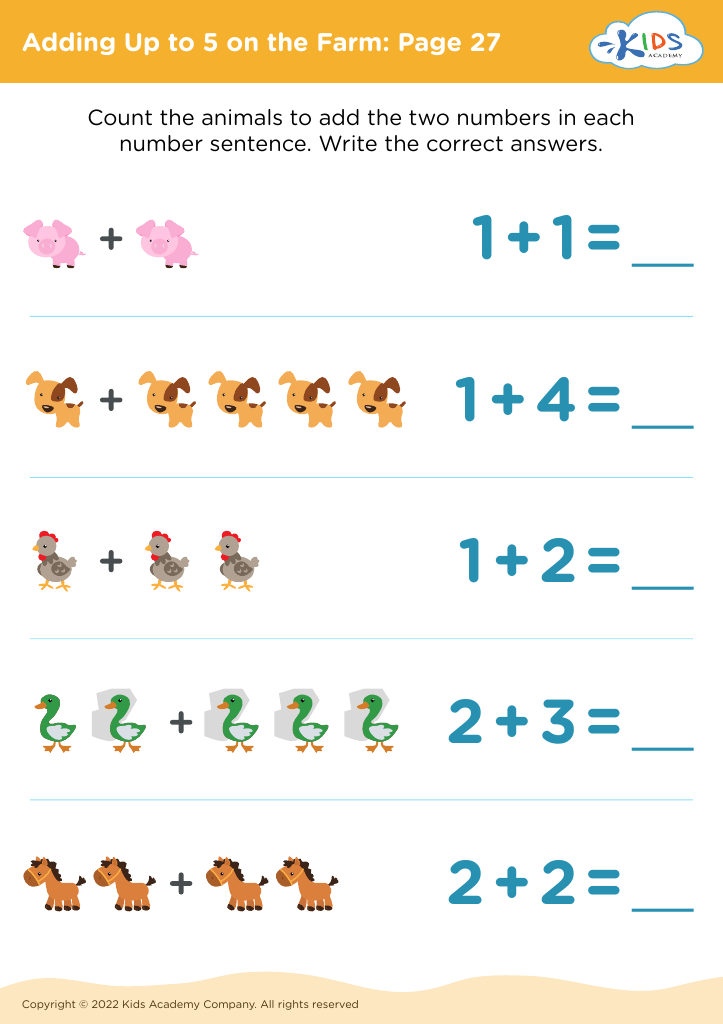
Adding Up to 5 on the Farm: Page 27
Worksheet
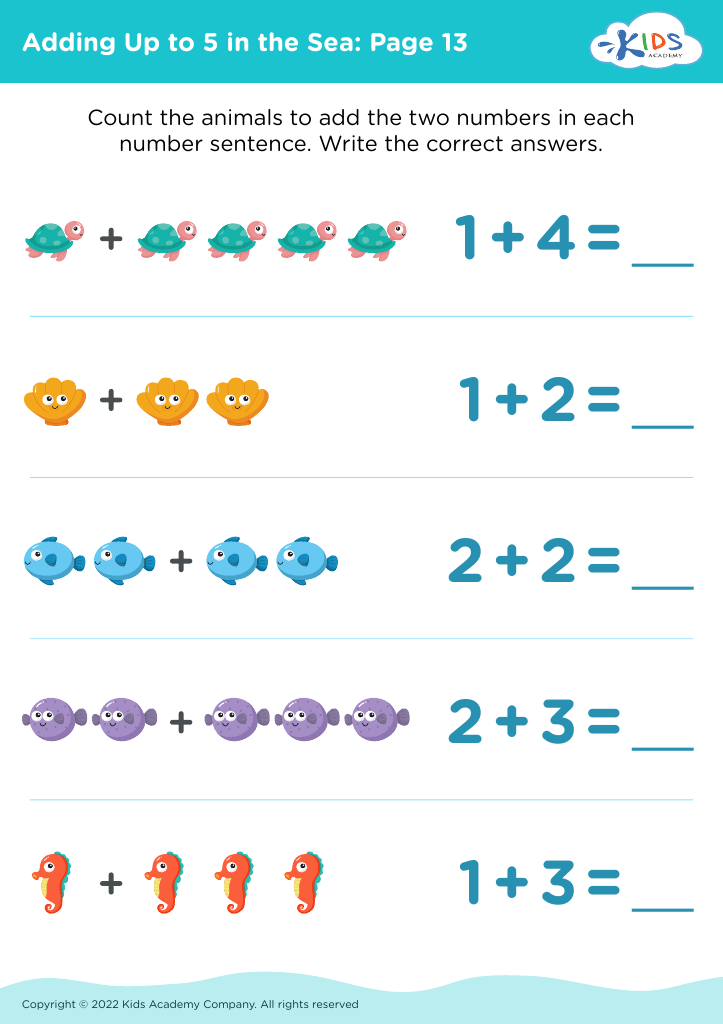
Adding Up to 5 in the Sea: Page 13
Worksheet
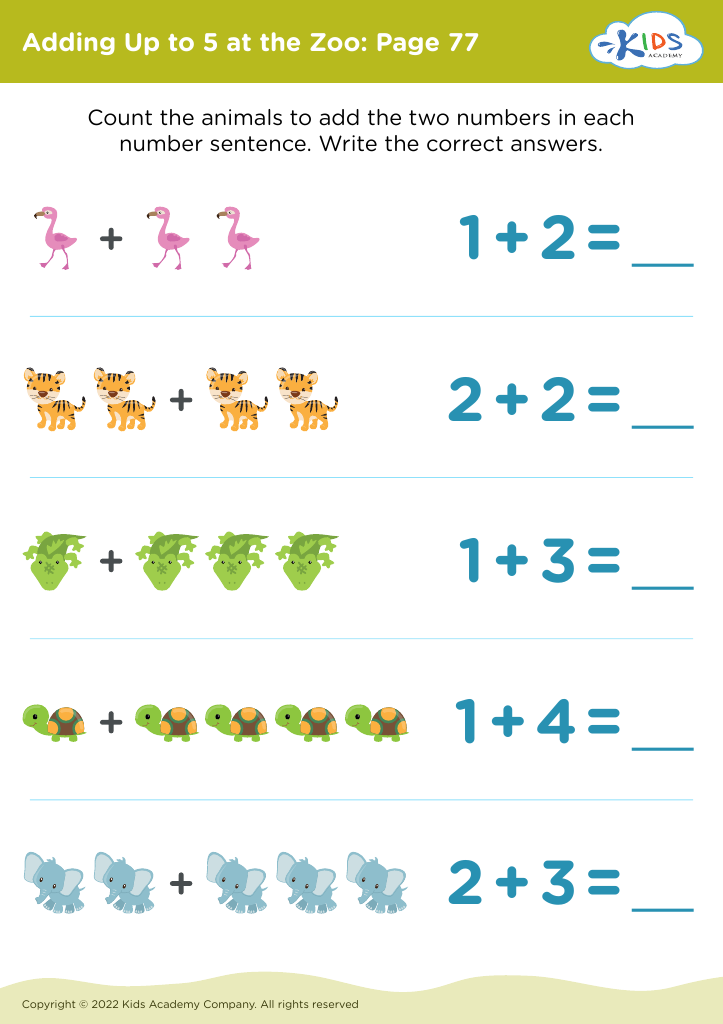
Adding Up to 5 at the Zoo: Page 77
Worksheet
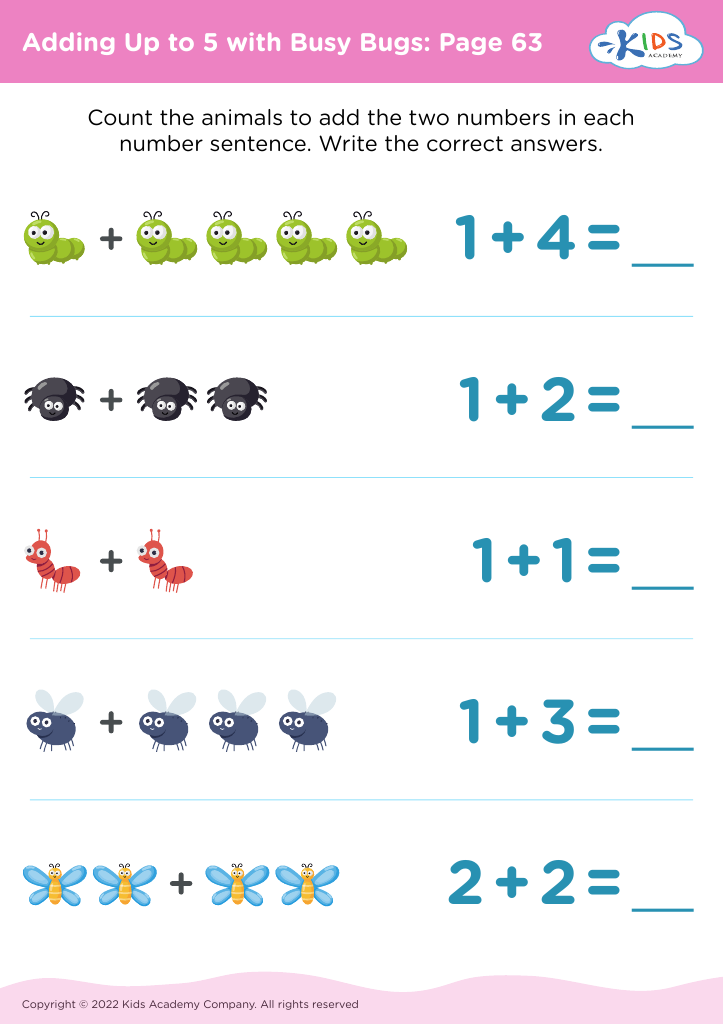
Adding Up to 5 with Busy Bugs: Page 63
Worksheet
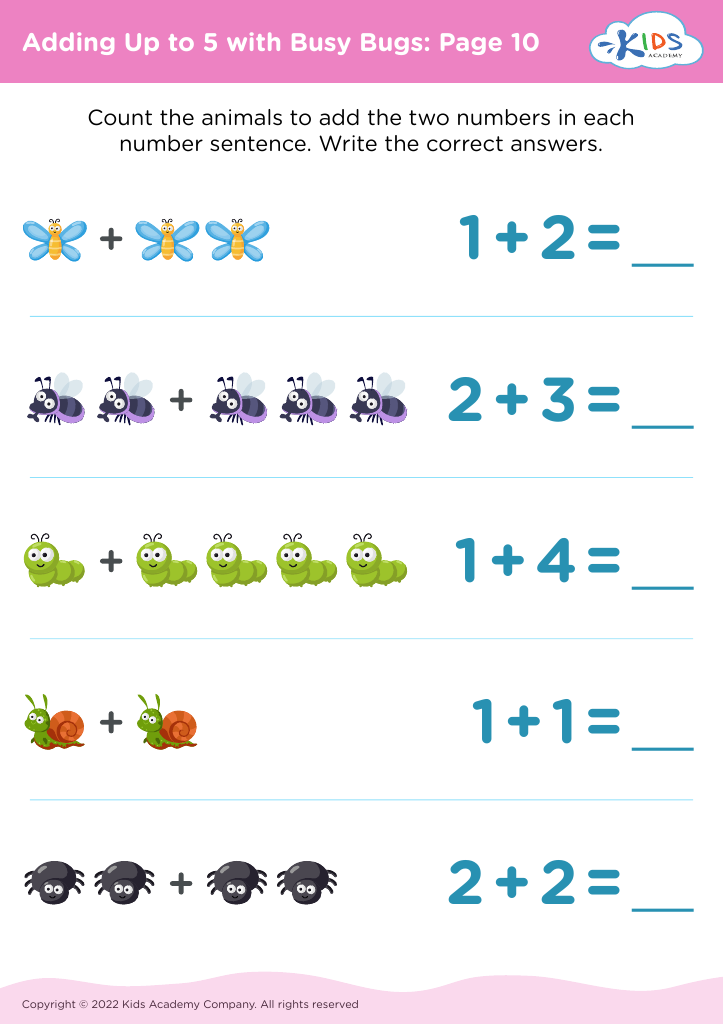
Adding Up to 5 with Busy Bugs: Page 10
Worksheet


Counting practice for children ages 5-8 is a foundational skill that lays the groundwork for future math competency and overall academic success. At this stage, children are developing their number sense, which is critical for understanding not just mathematics but also concepts in science, economics, and daily life. Engaging in counting activities enhances cognitive skills, promotes problem-solving abilities, and improves motor skills through hands-on experiences like using counters, fingers, or objects around them.

Additionally, counting practice fosters a sense of confidence and encourages positive attitudes towards math. As children gain proficiency in counting, they develop a sense of achievement, which can translate into longer-term interests in math and science subjects as they progress through their education. Counting also serves as a social activity that can strengthen parent-child or teacher-student relationships, making learning fun and engaging.

Furthermore, research has shown that early exposure to counting and numerical concepts can support later academic achievement, helping to close achievement gaps. For these reasons, parents and teachers should prioritize counting practice, ensuring that children have ample opportunities to explore numbers creatively and effectively, building a solid foundation for lifelong learning.