Filters

848 filtered results

Clear all filters
Favorites
With answer key
Interactive

848 filtered results

Difficulty Level

Grade


Check out this FREE "Number Recognition" Trial Lesson for age 5-8!

X

Favorites
With answer key
Interactive
  • 5-8
  • Number Recognition
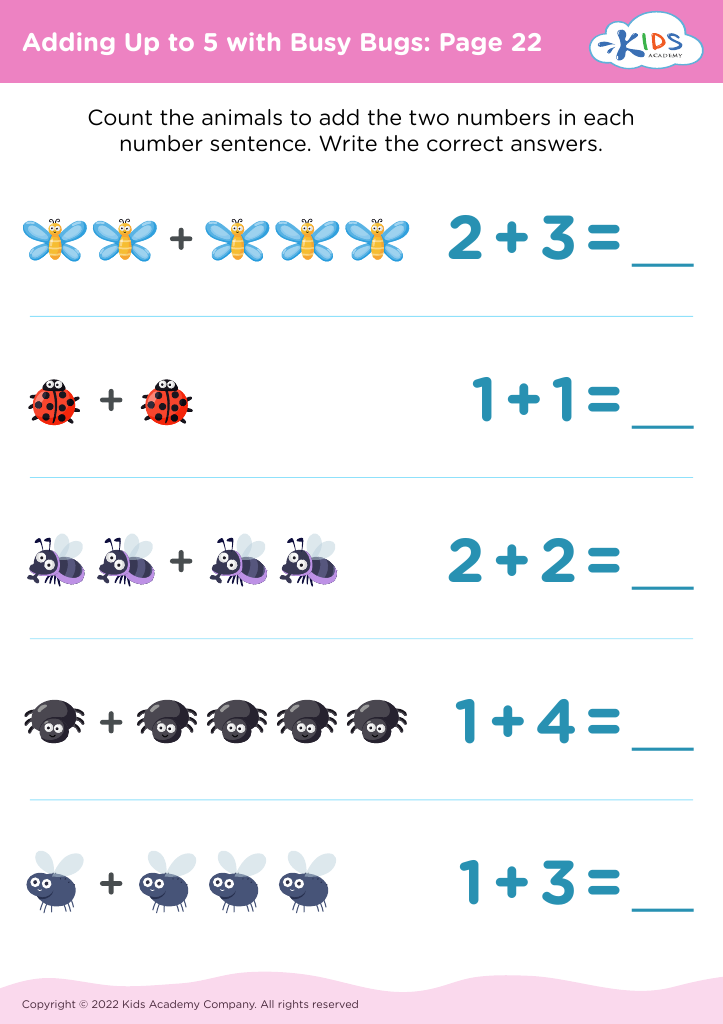
Adding Up to 5 with Busy Bugs: Page 22
Worksheet
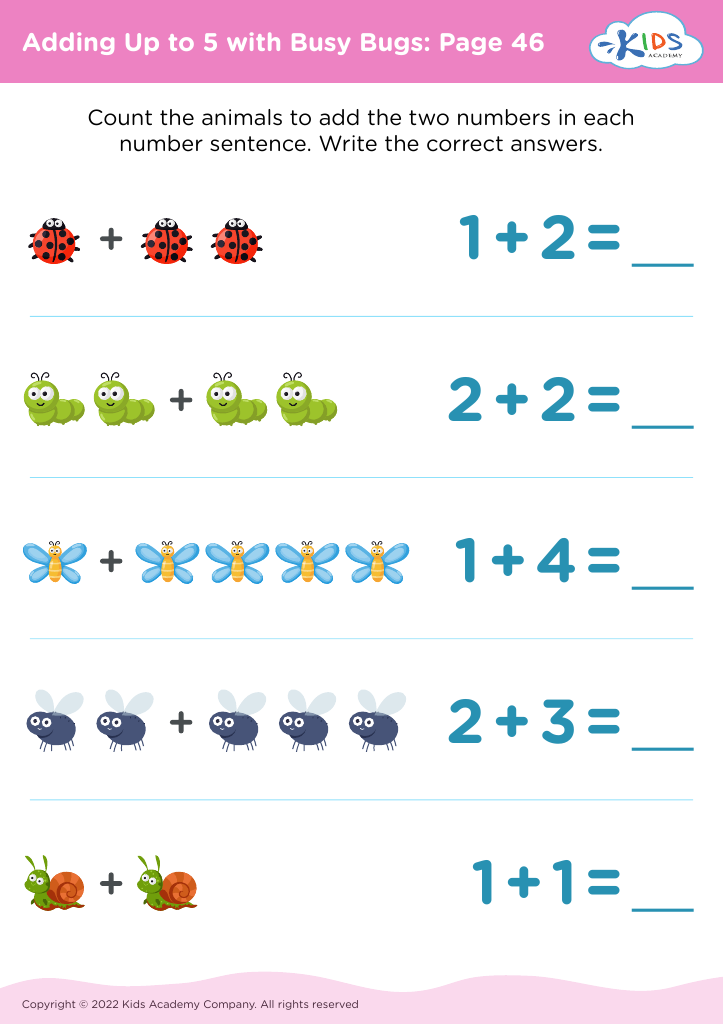
Adding Up to 5 with Busy Bugs: Page 46
Worksheet
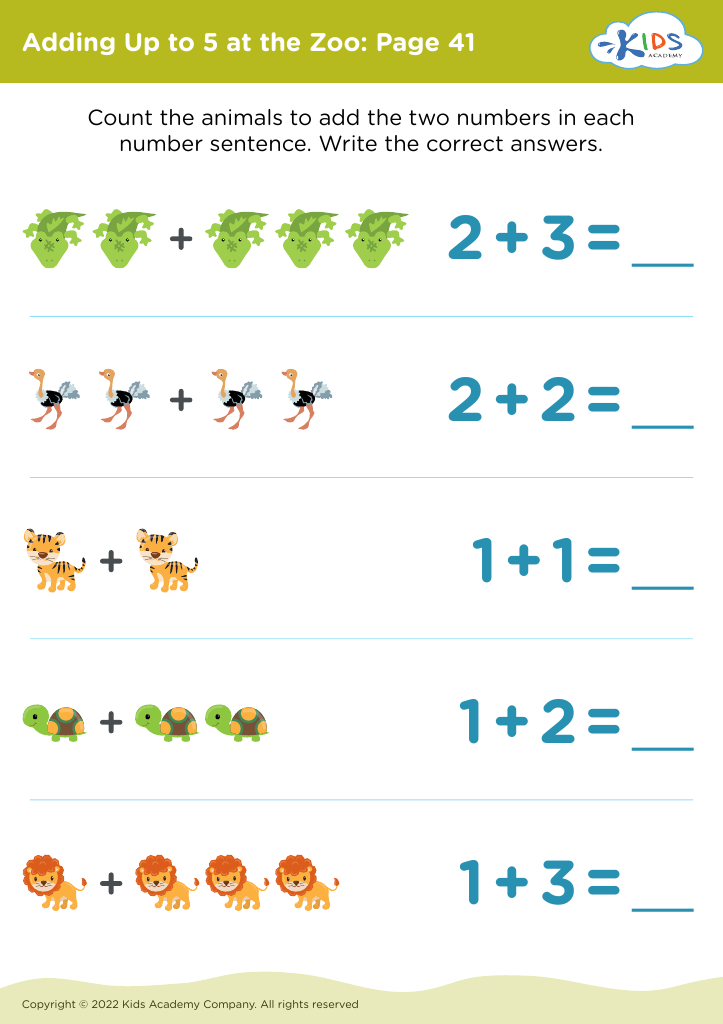
Adding Up to 5 at the Zoo: Page 41
Worksheet
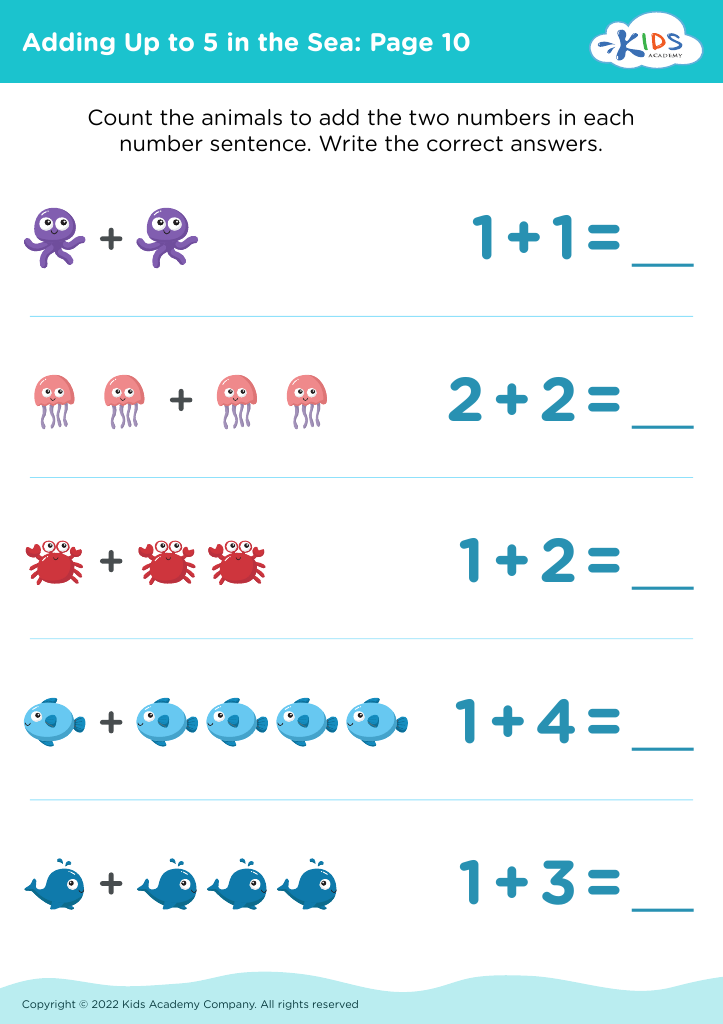
Adding Up to 5 in the Sea: Page 10
Worksheet
Connect the Dots Numbers 1-10 PDF

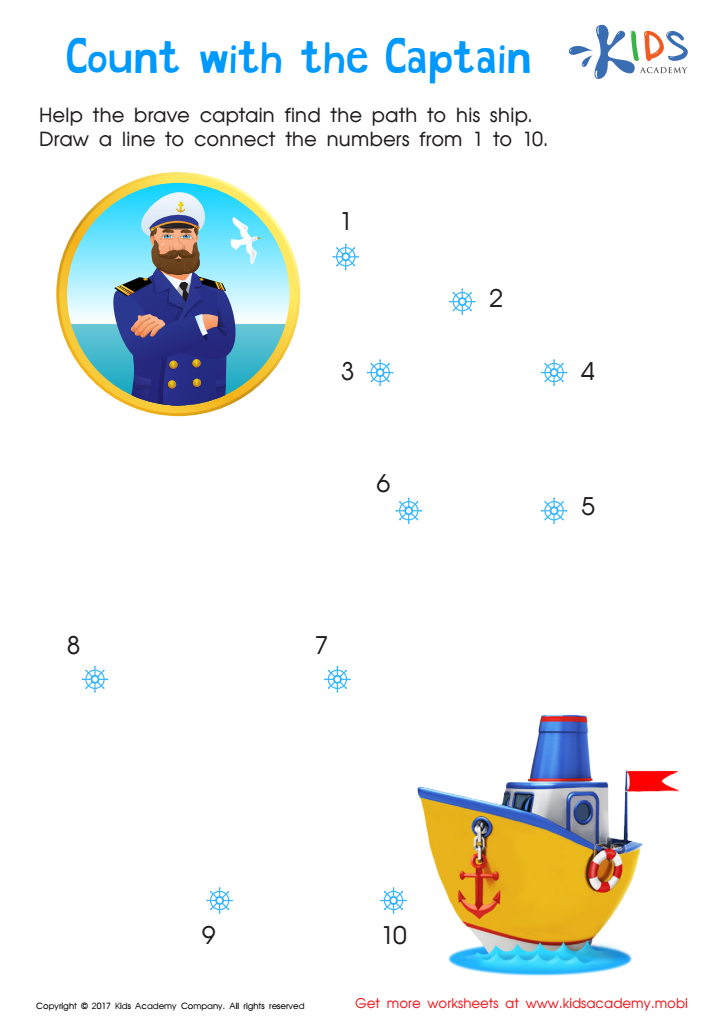
Count with the Captain Connect Dots Worksheet

All aboard! Help the captain set sail with this fun connect the dots numbers 1-10 PDF! Motivate your child to practice counting and numeracy, as they help the captain find his way to his ship. Problem solving skills and recognition of numbers in print are also developed. Reward your child after completion and they'll be unaware of the skills honed.
Count with the Captain Connect Dots Worksheet
Worksheet
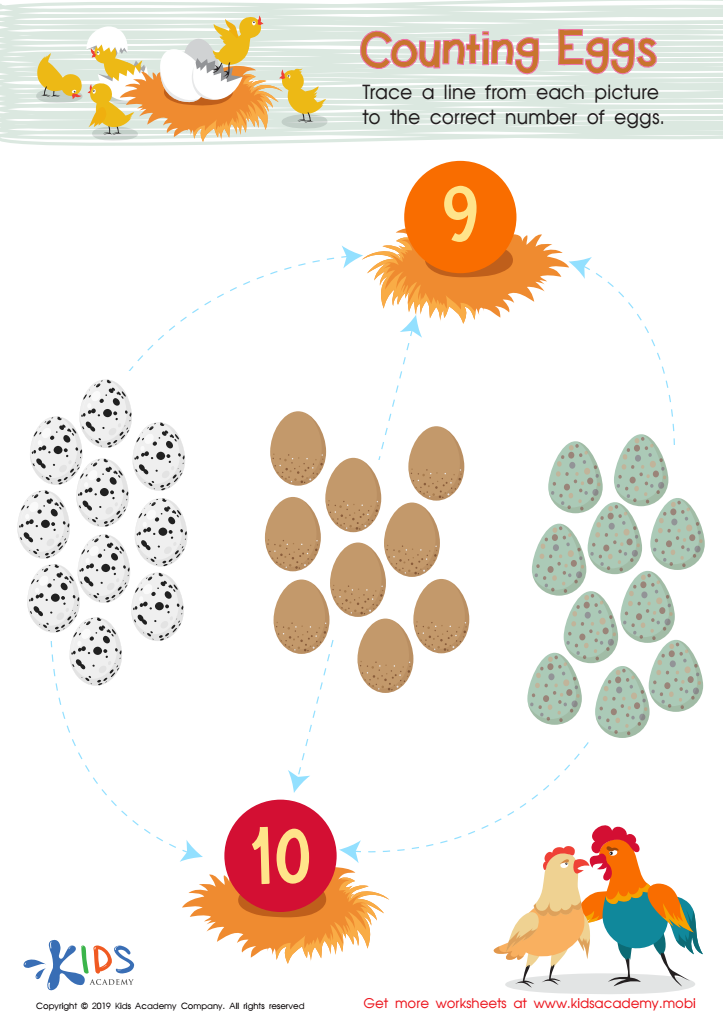
Counting Eggs Worksheet

Counting Eggs Worksheet

This worksheet is great for teaching kindergarteners to count and add numbers. It includes colorful pictures of eggs with numbers to trace. Help students count the eggs and draw a line to the right number. This will make learning fun and easy!
Counting Eggs Worksheet
Worksheet
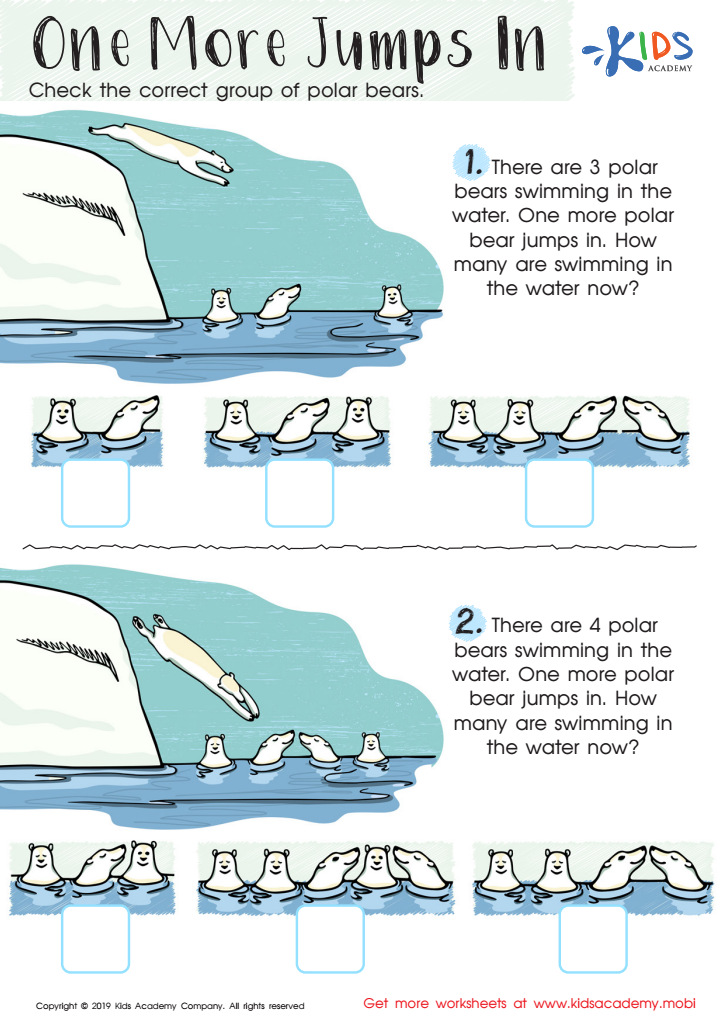
One More Jumps In Worksheet

One More Jumps In Worksheet

Polar bears live in the Arctic which is always cold and snowy. Show your kids pictures of polar bears swimming in the water. Read the text and help them count correctly to answer the questions in the first and second sections.
One More Jumps In Worksheet
Worksheet
Learn numbers for kindergarten worksheet

Learn Number For Kindergarten Worksheet
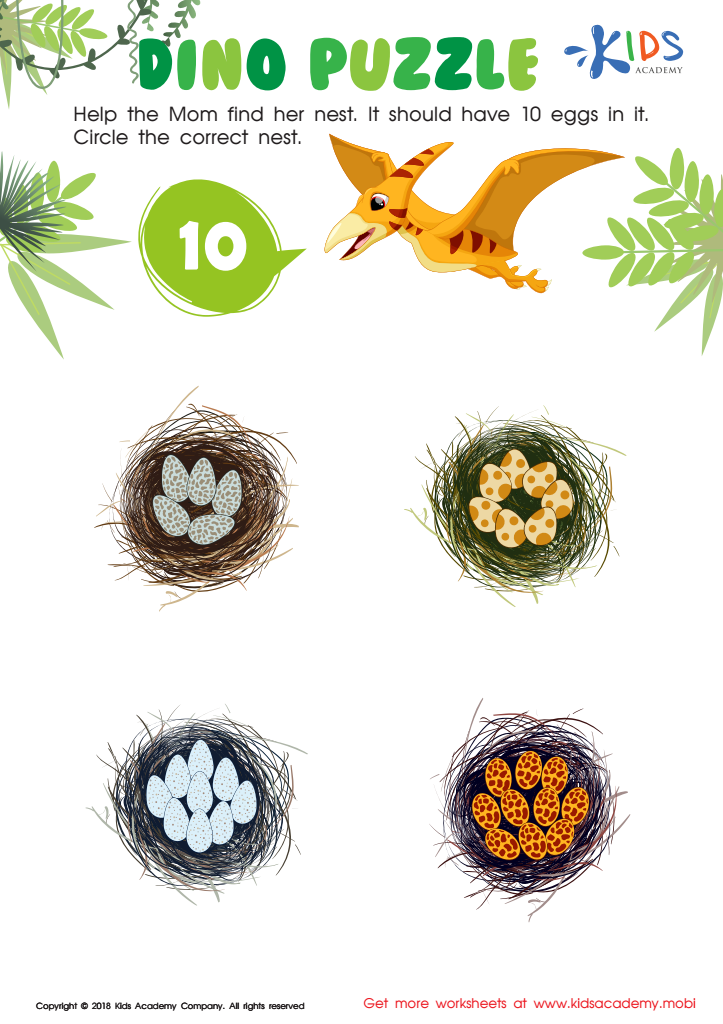
Let your kid have fun helping dino mom find her nest! This learn numbers worksheet for kindergarteners helps them practice counting skills. Count the eggs in each nest to find the one with 10 eggs! A great way to make early counting enjoyable!
Learn Number For Kindergarten Worksheet
Worksheet
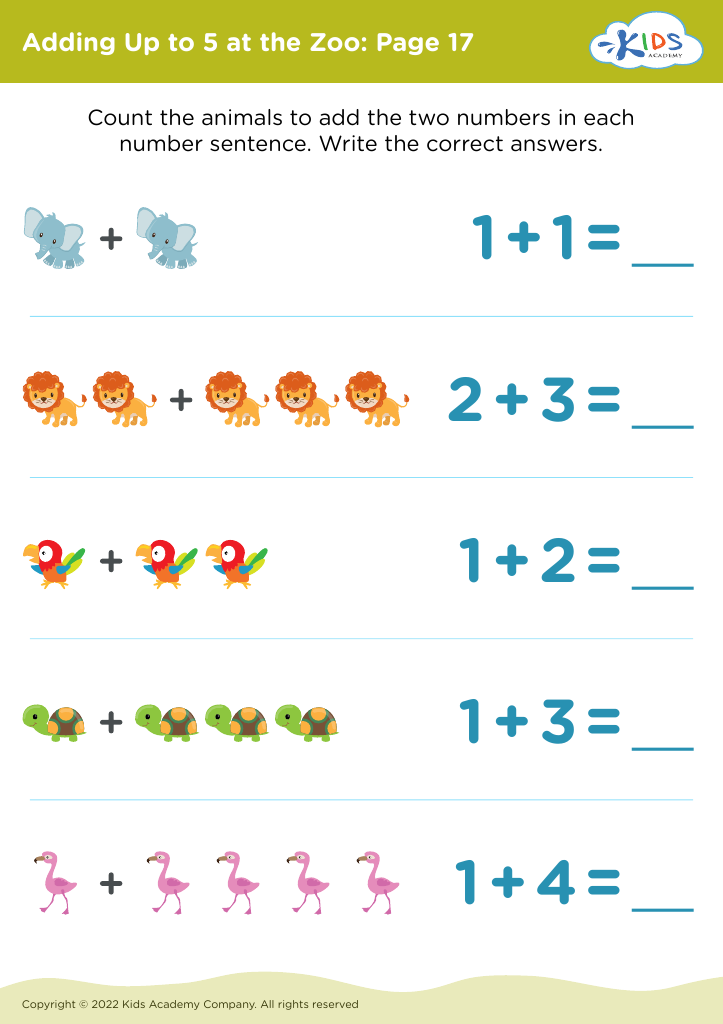
Adding Up to 5 at the Zoo: Page 17
Worksheet
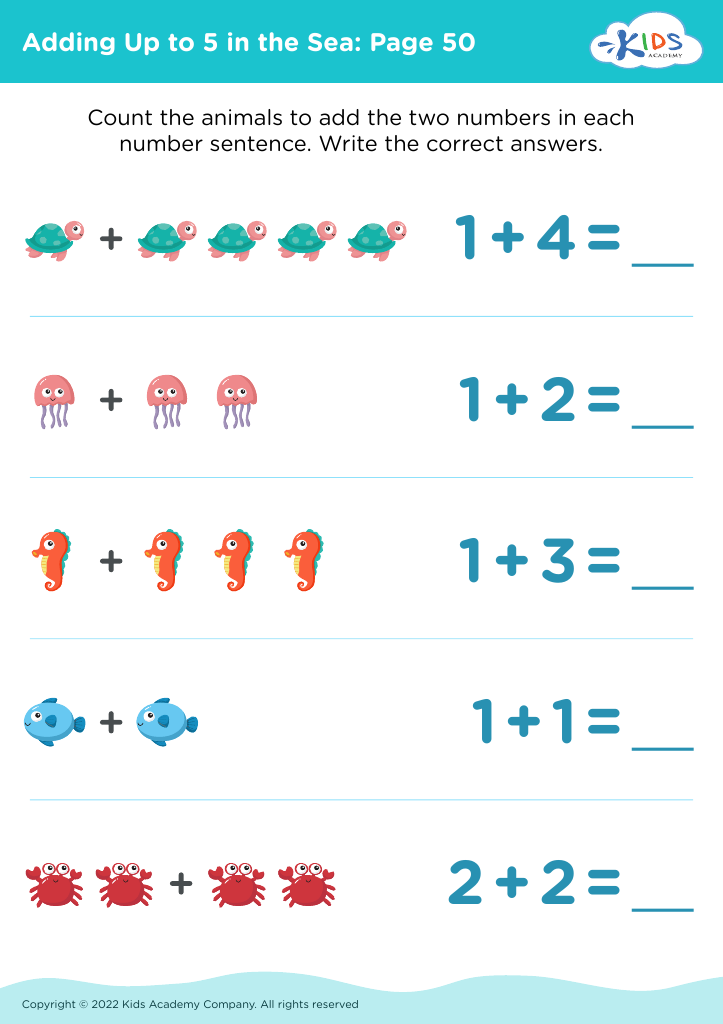
Adding Up to 5 in the Sea: Page 50
Worksheet
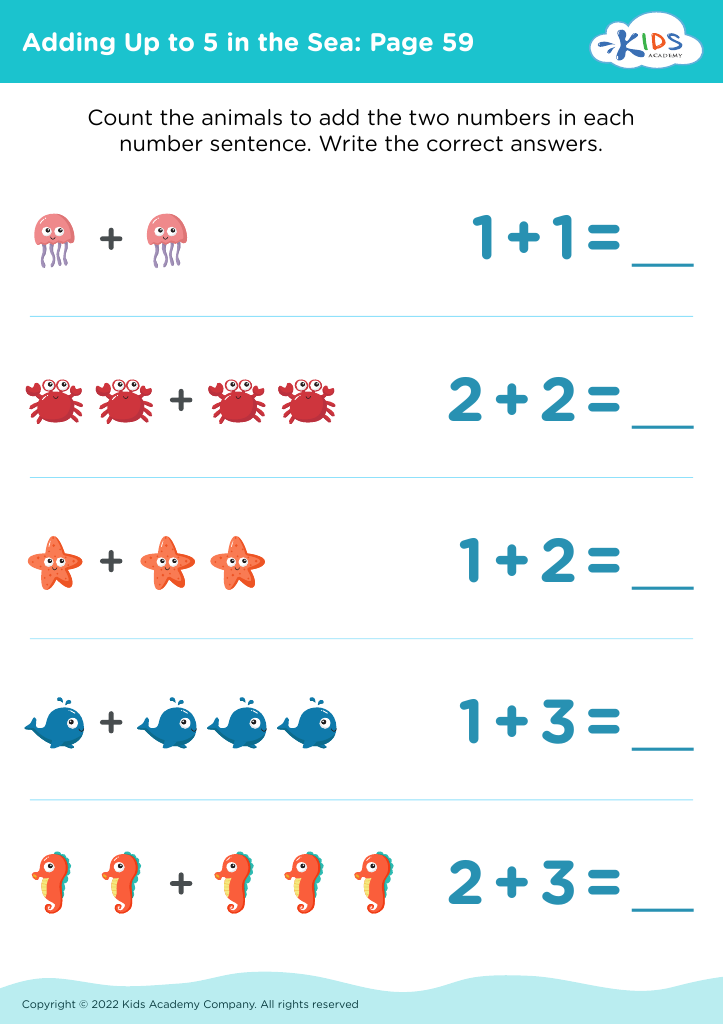
Adding Up to 5 in the Sea: Page 59
Worksheet
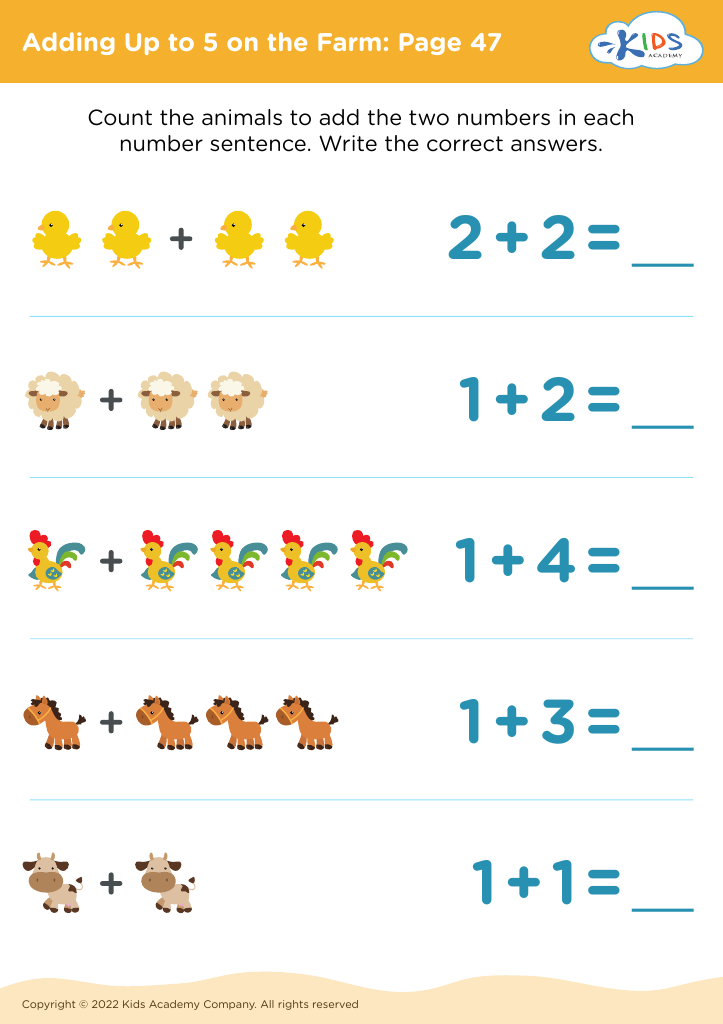
Adding Up to 5 on the Farm: Page 47
Worksheet
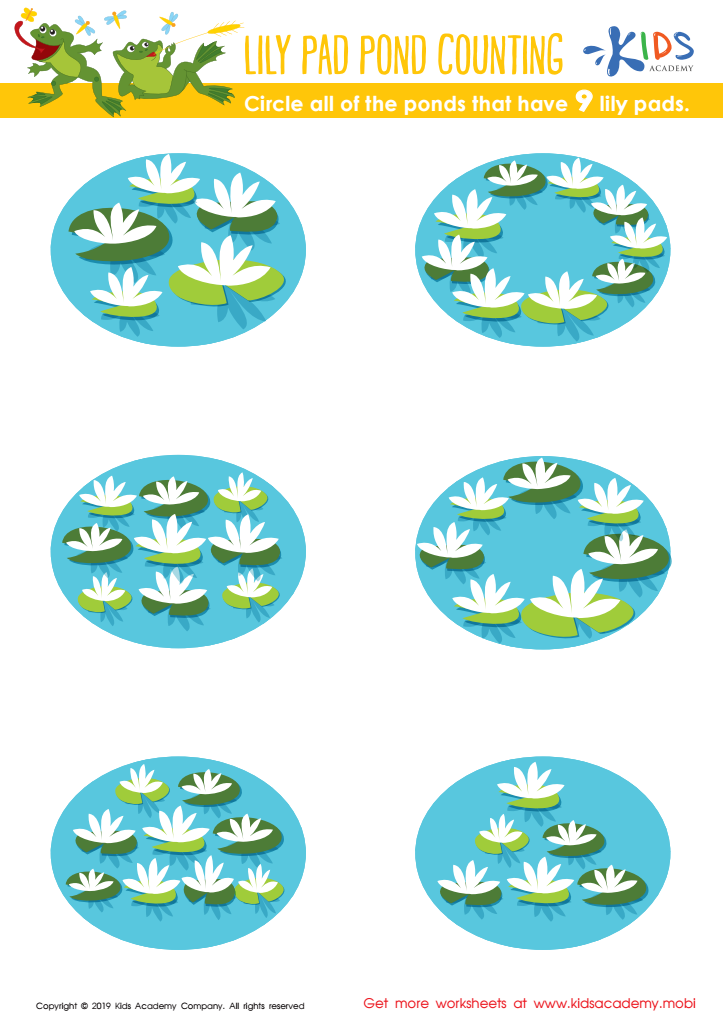
Lily Pad Pond Counting Worksheet
Lily Pad Pond Counting Worksheet
Counting can be fun with this colorful worksheet. Guide and be patient with your kids as they write numbers and count the six groups of lily pads. Help them circle the ponds with 9 lily pads, and watch them learn better and faster.
Lily Pad Pond Counting Worksheet
Worksheet
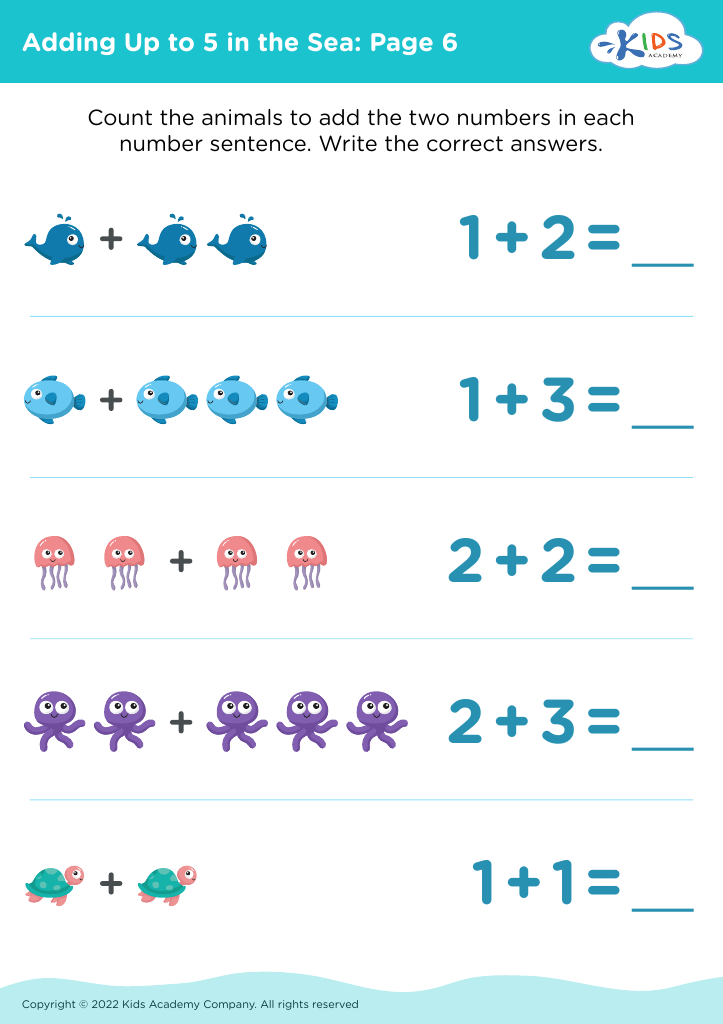
Adding Up to 5 in the Sea: Page 6

Adding Up to 5 in the Sea: Page 6

Adding Up to 5 in the Sea: Page 6
Worksheet
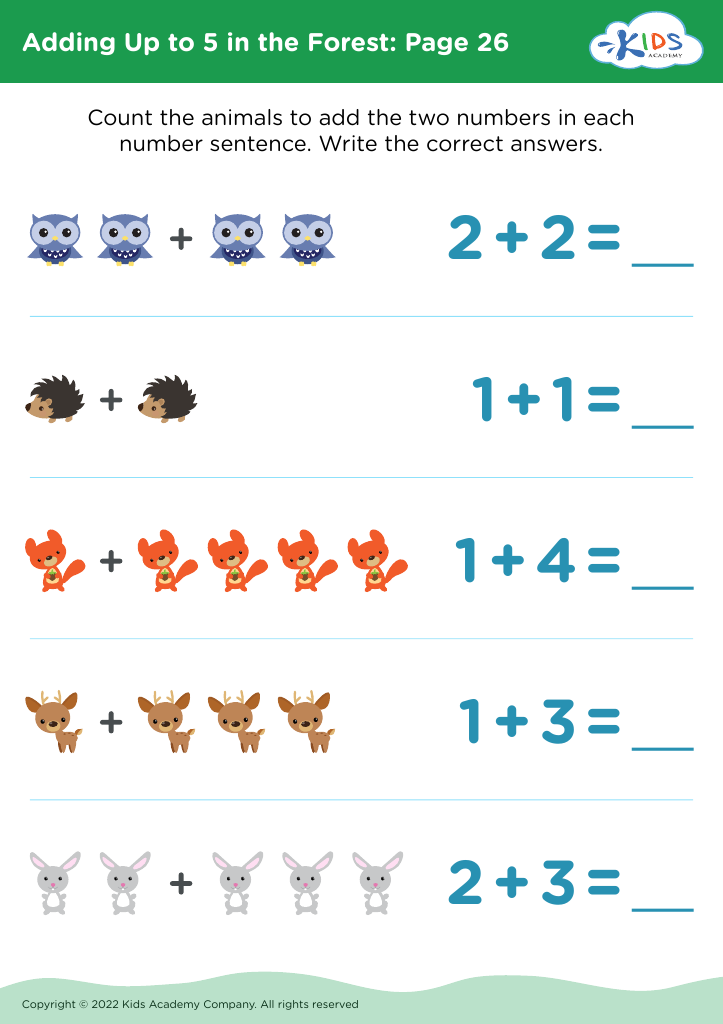
Adding Up to 5 in the Forest: Page 26
Worksheet
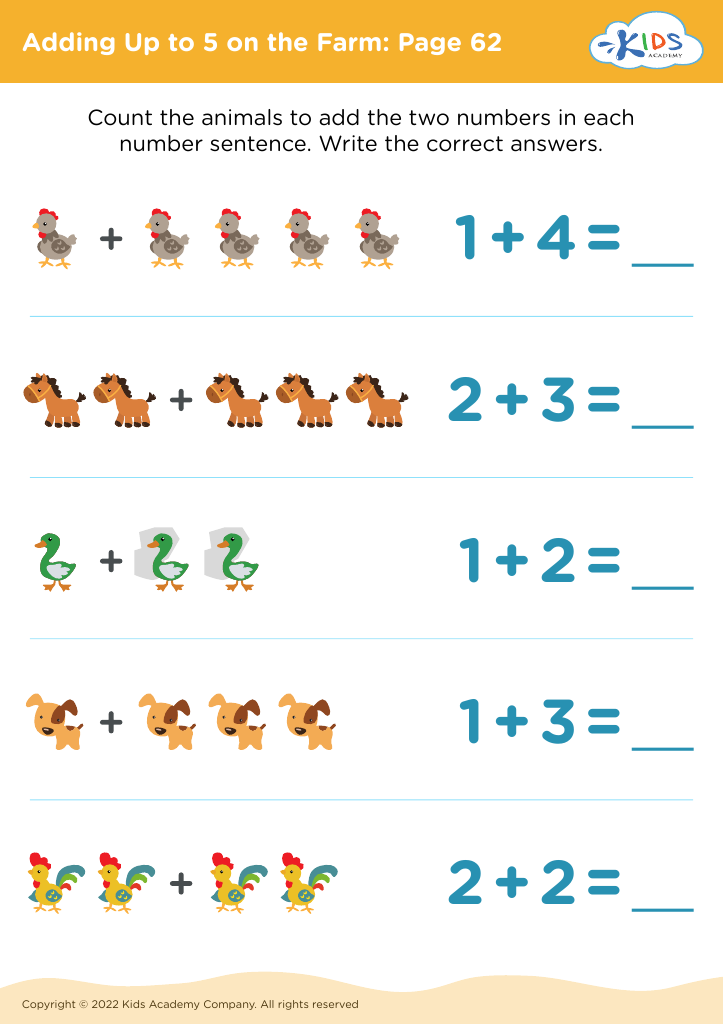
Adding Up to 5 on the Farm: Page 62
Worksheet
none
none

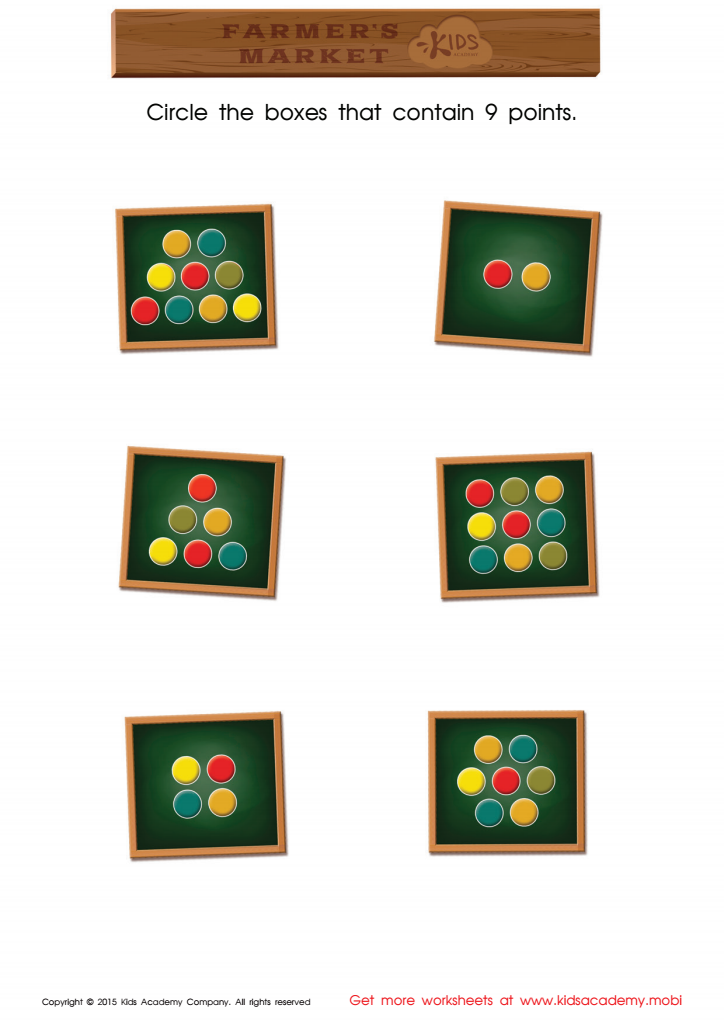
Count and Match Points 9 Math Worksheet
Circle the boxes with 9 points. Examine and count the colorful points in each of the 6 boxes. It's not easy as points are not arranged similarly, so have your child think hard and count carefully.
Count and Match Points 9 Math Worksheet
Worksheet
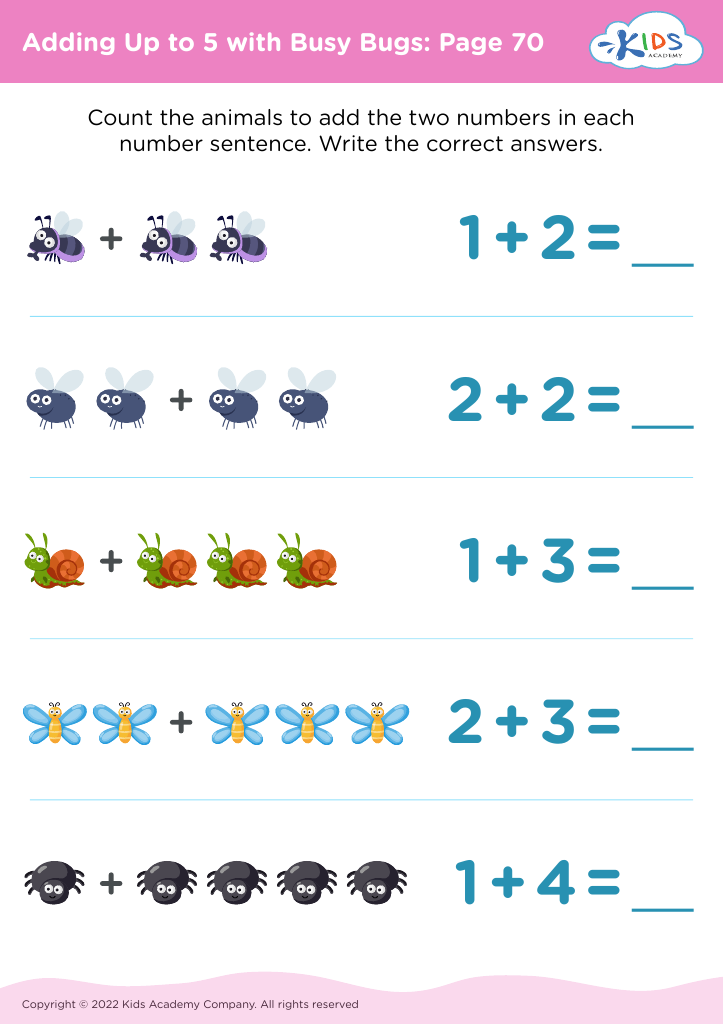
Adding Up to 5 with Busy Bugs: Page 70
Worksheet
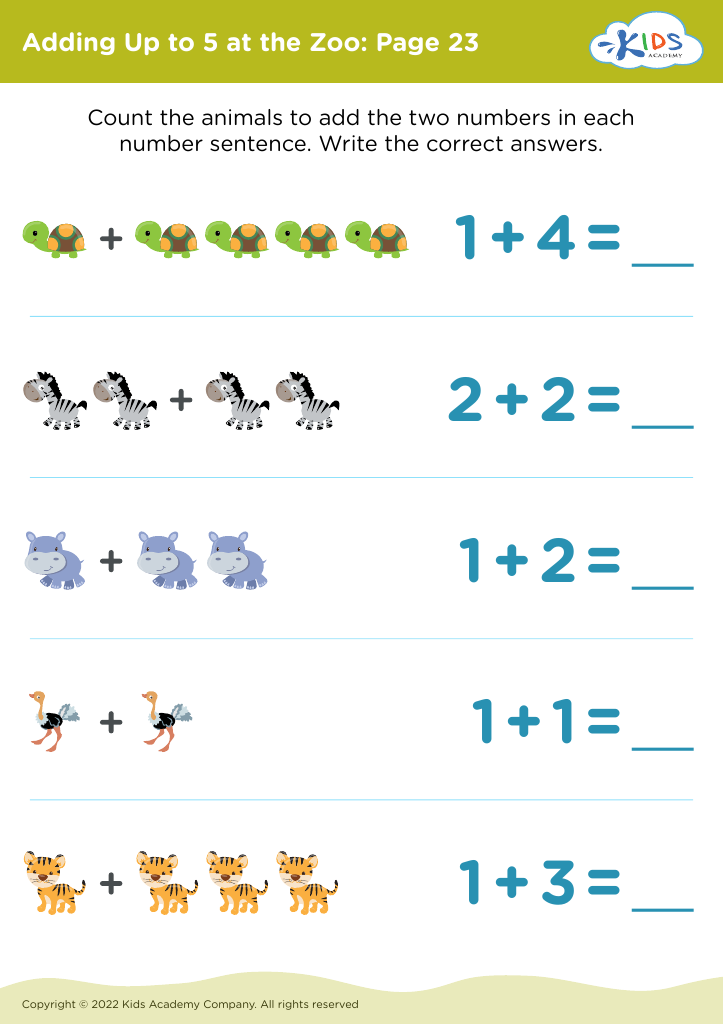
Adding Up to 5 at the Zoo: Page 23
Worksheet
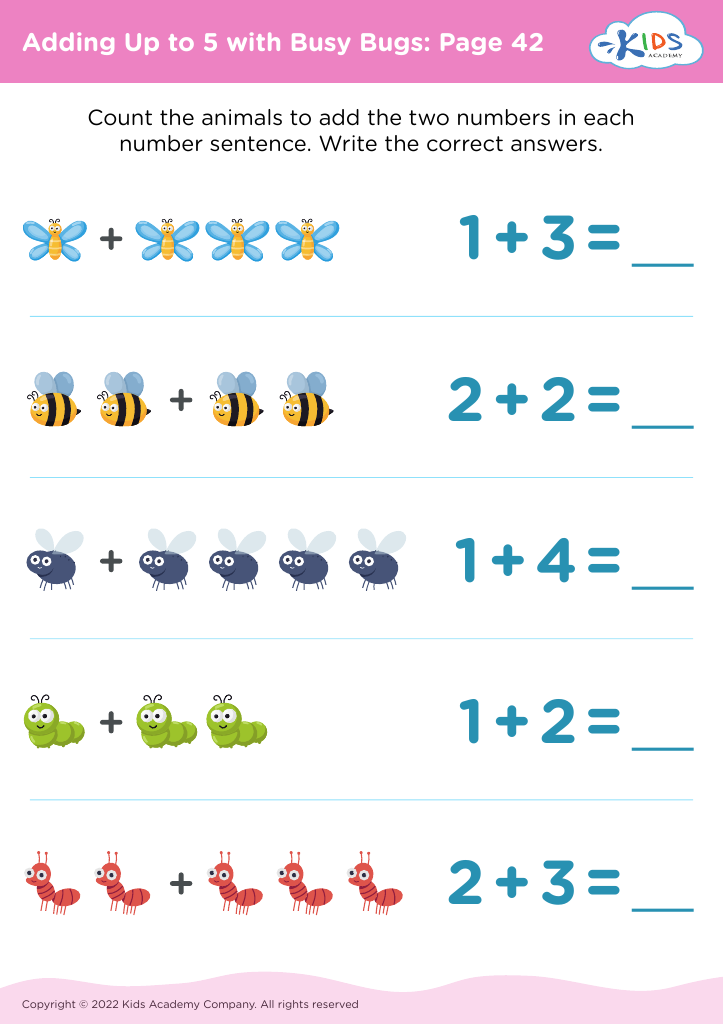
Adding Up to 5 with Busy Bugs: Page 42
Worksheet
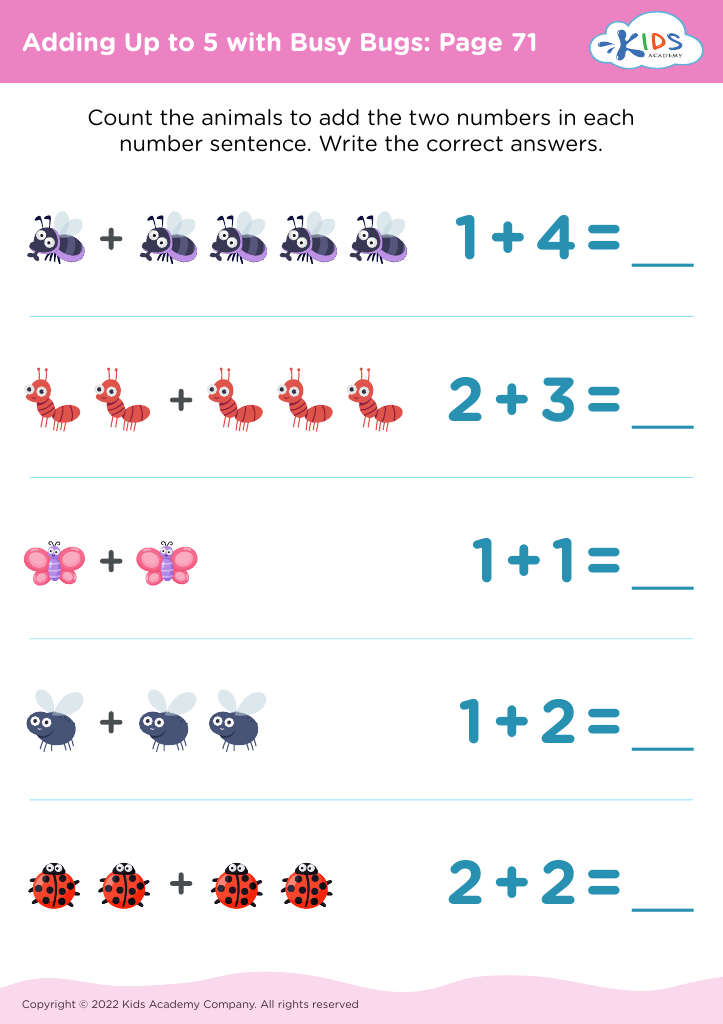
Adding Up to 5 with Busy Bugs: Page 71
Worksheet
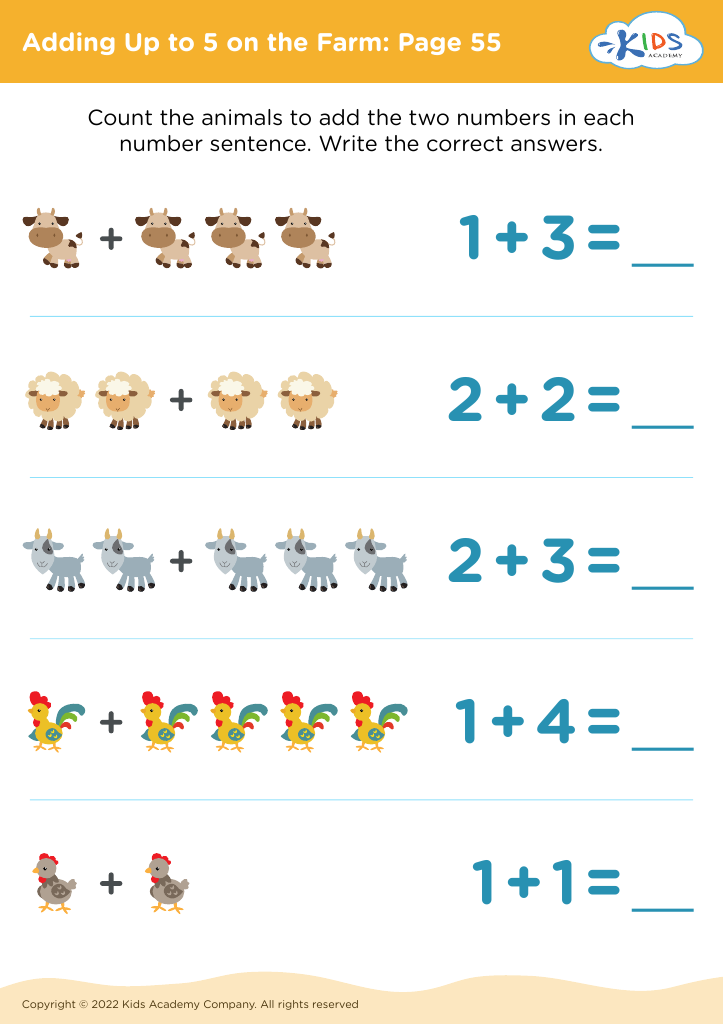
Adding Up to 5 on the Farm: Page 55
Worksheet
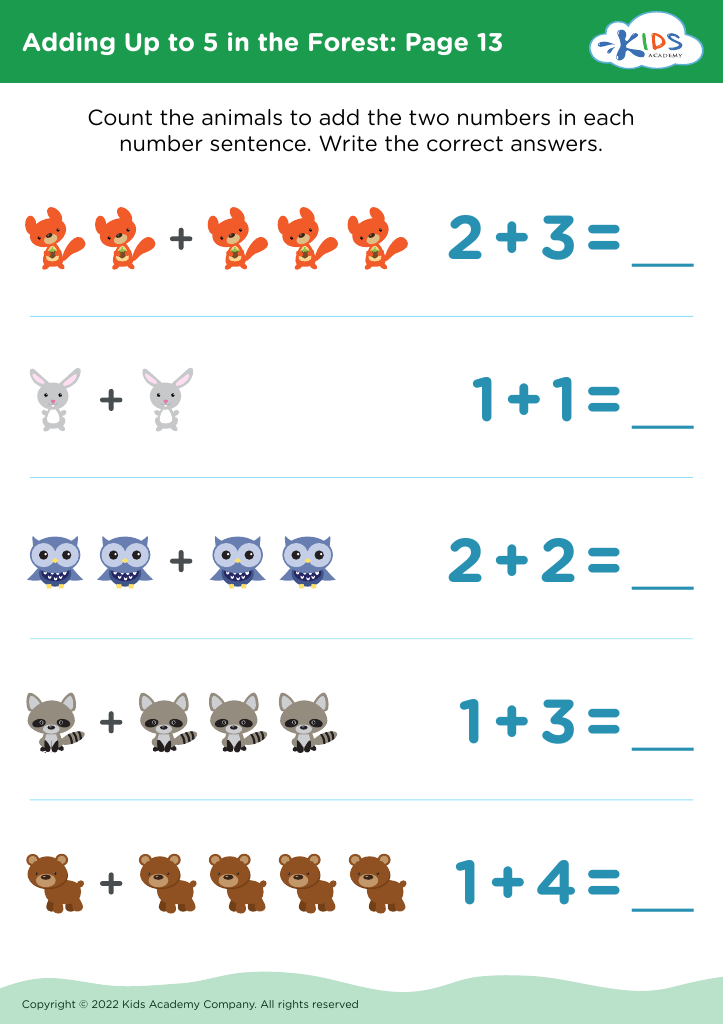
Adding Up to 5 in the Forest: Page 13
Worksheet
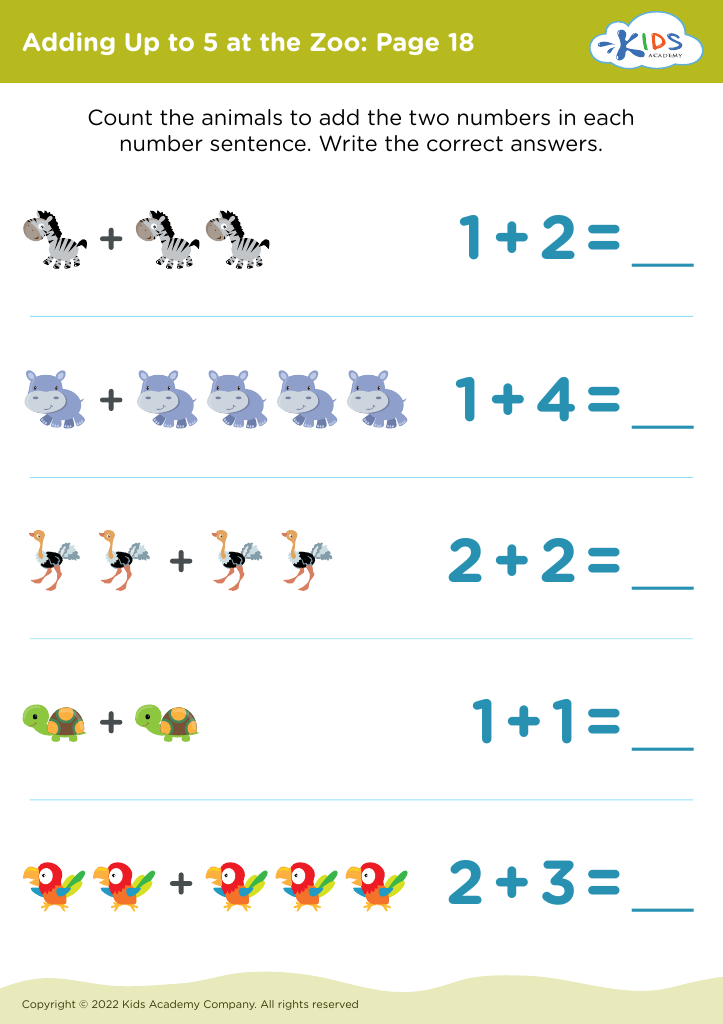
Adding Up to 5 at the Zoo: Page 18
Worksheet


Number recognition is a fundamental skill that plays a crucial role in early childhood education for ages 5-8. Parents and teachers should prioritize this skill because it serves as the building block for all future mathematical learning. Recognizing numbers enables children to understand quantities, engage in basic arithmetic, and develop problem-solving skills, which are essential for their academic growth.

Furthermore, number recognition enhances cognitive development and boosts self-confidence. Children learn to associate numbers with real-world concepts, such as counting objects or telling time, fostering a sense of independence and competence. This cognitive understanding is essential for supporting literacy skills as well since many aspects of reading comprehension rely on an understanding of numerical information.

Additionally, early exposure to number recognition helps instill a positive attitude toward math. Children who feel confident with numbers are more likely to embrace challenges in mathematics later on. This early foundation influences attitudes toward STEM subjects, often carrying into their educational journeys and shaping future career possibilities.

In summary, prioritizing number recognition between ages 5-8 equips children with essential skills for life, promotes cognitive growth, and lays the groundwork for future academic success in mathematics and beyond.