Practical math application Worksheets for Ages 5-8
10 filtered results
-
From - To
Our Practical Math Application Worksheets for Ages 5-8 provide engaging and educational activities designed to strengthen mathematical understanding in young learners. Perfect for early learners, these printable worksheets focus on real-world math applications to make learning both fun and relevant. Each worksheet combines colorful illustrations and clear instructions, covering essential topics like addition, subtraction, measurement, and data interpretation. By connecting math concepts to everyday scenarios, these resources help children develop critical thinking and problem-solving skills, ensuring a solid foundation in math that will support their academic journey. Enhance learning at home or in the classroom with these effective tools!
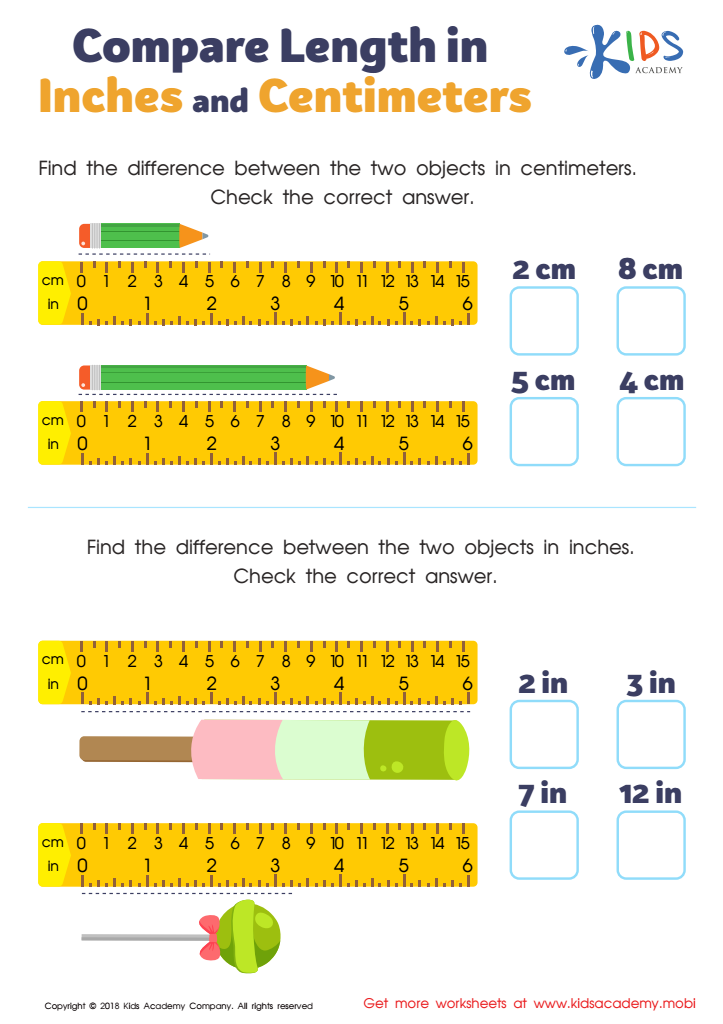
Compare Length in Inches and Centimeters Worksheet
 Assign to My Students
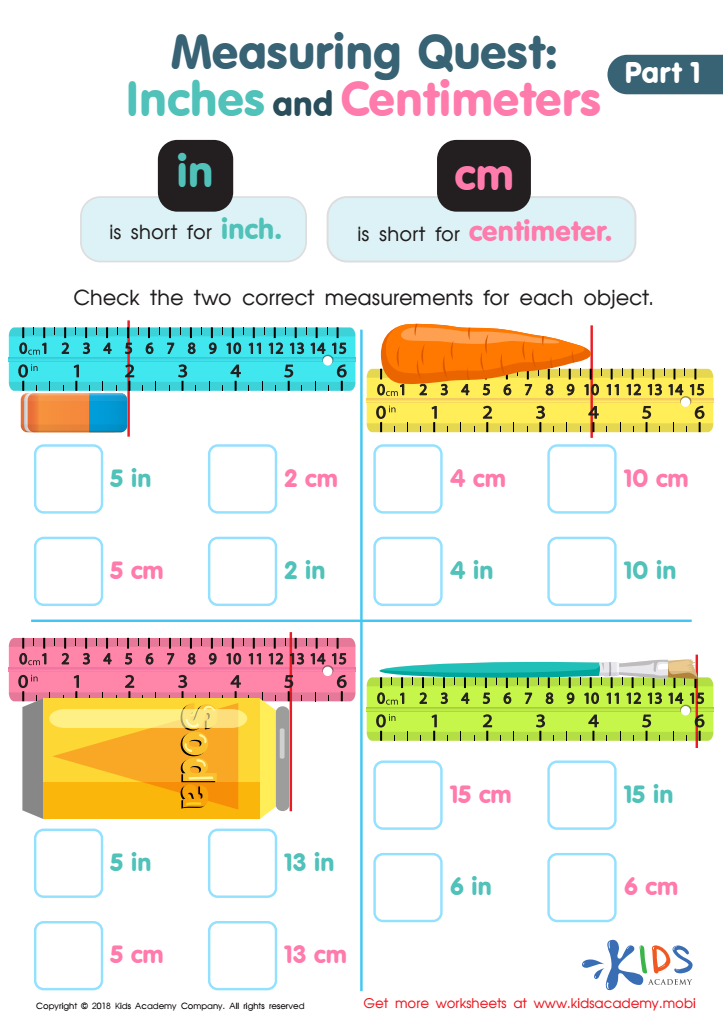
Measuring Quest: Inches and Centimeters Worksheet
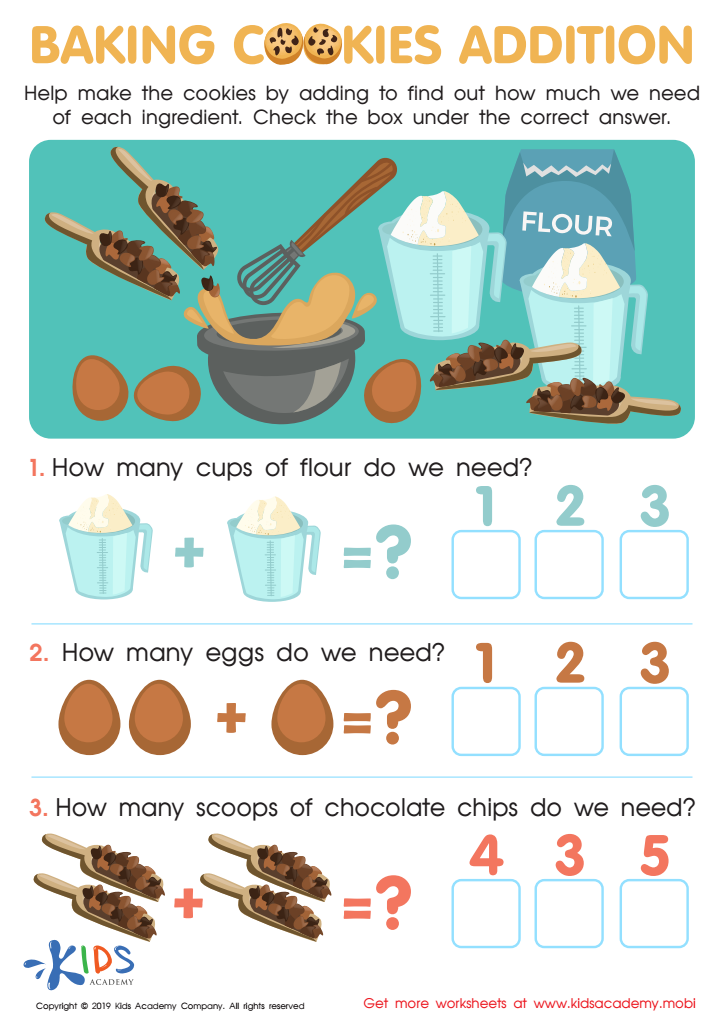
Baking Cookies Addition Worksheet
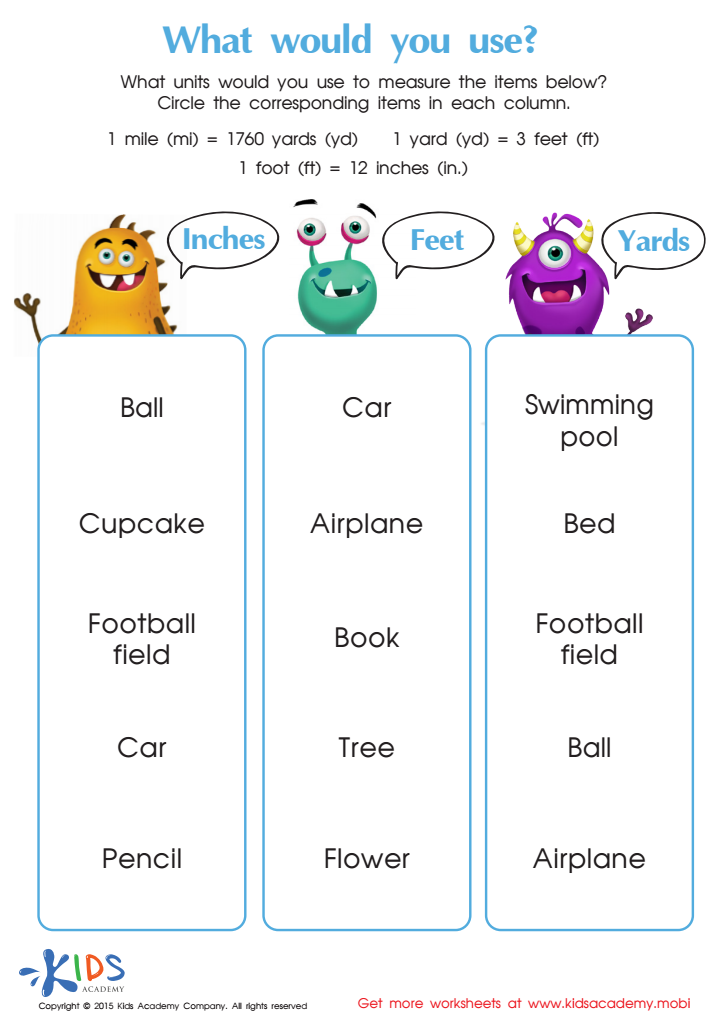
Learning about measuring objects in inches, feet and yards Worksheet
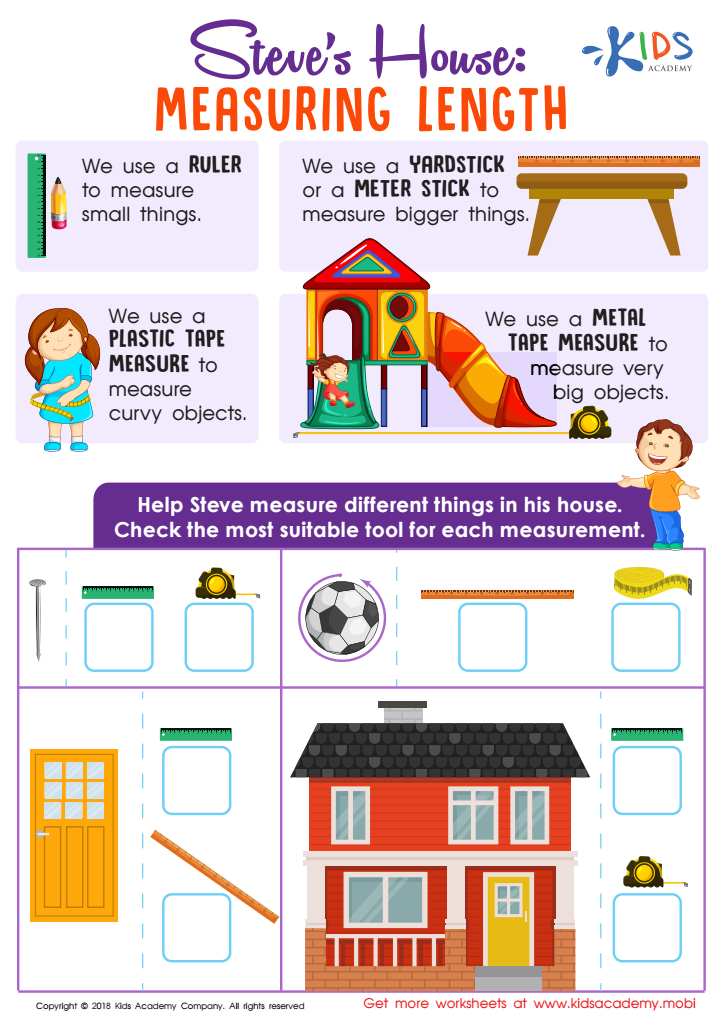
Steve's House: Measuring Length Worksheet
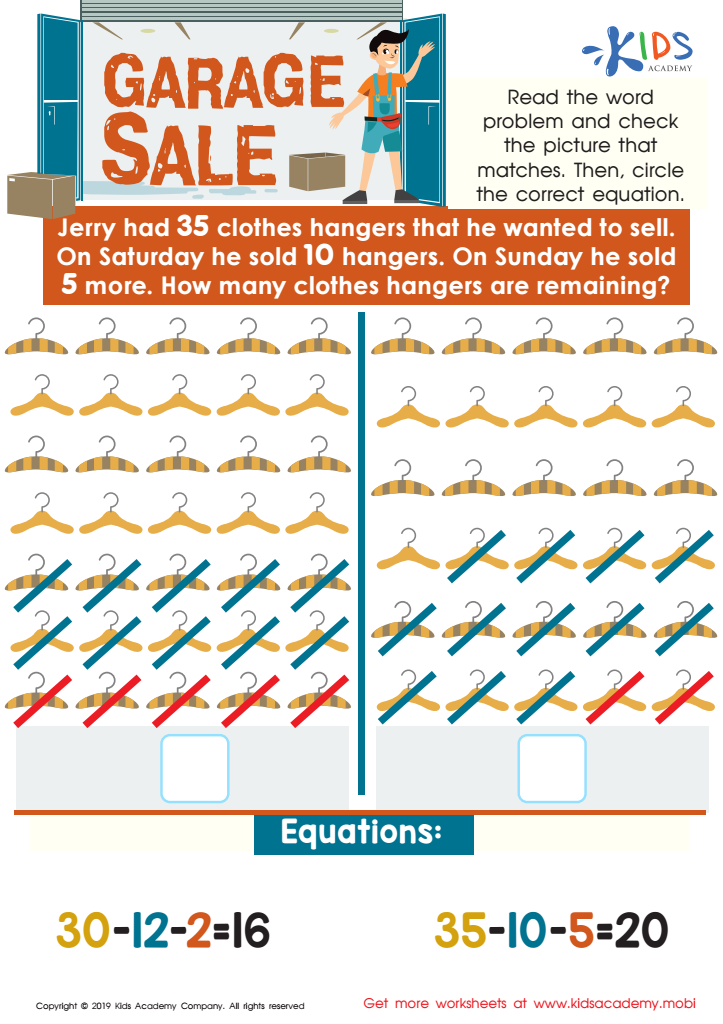
Garage Sale Worksheet
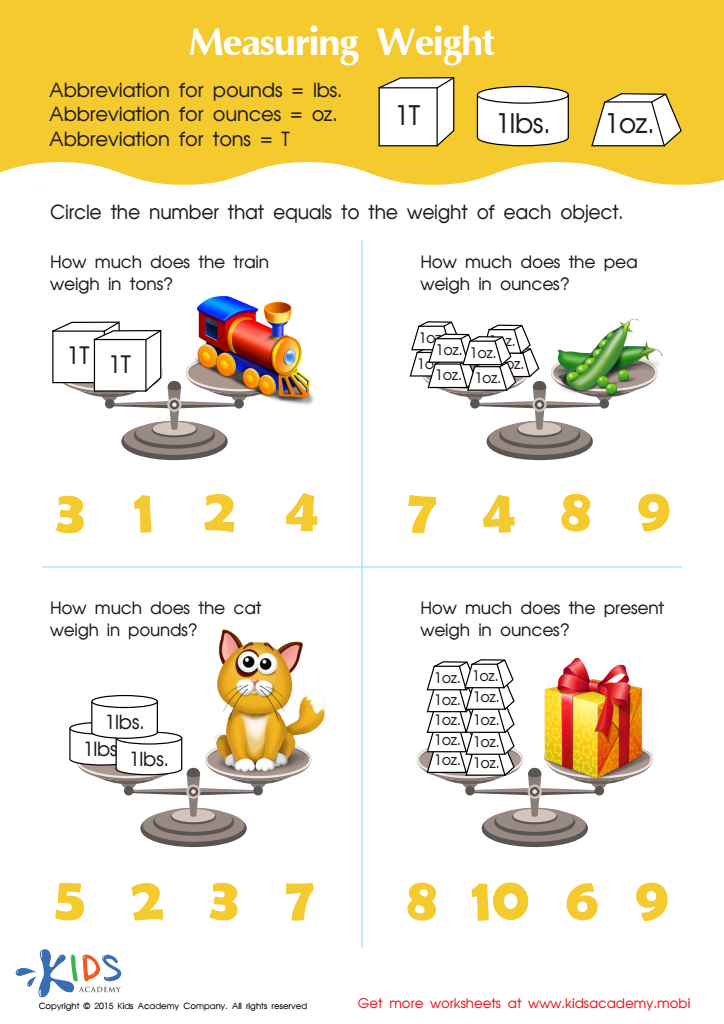
Measuring Weight in Ounces, Pounds and Tons Worksheet
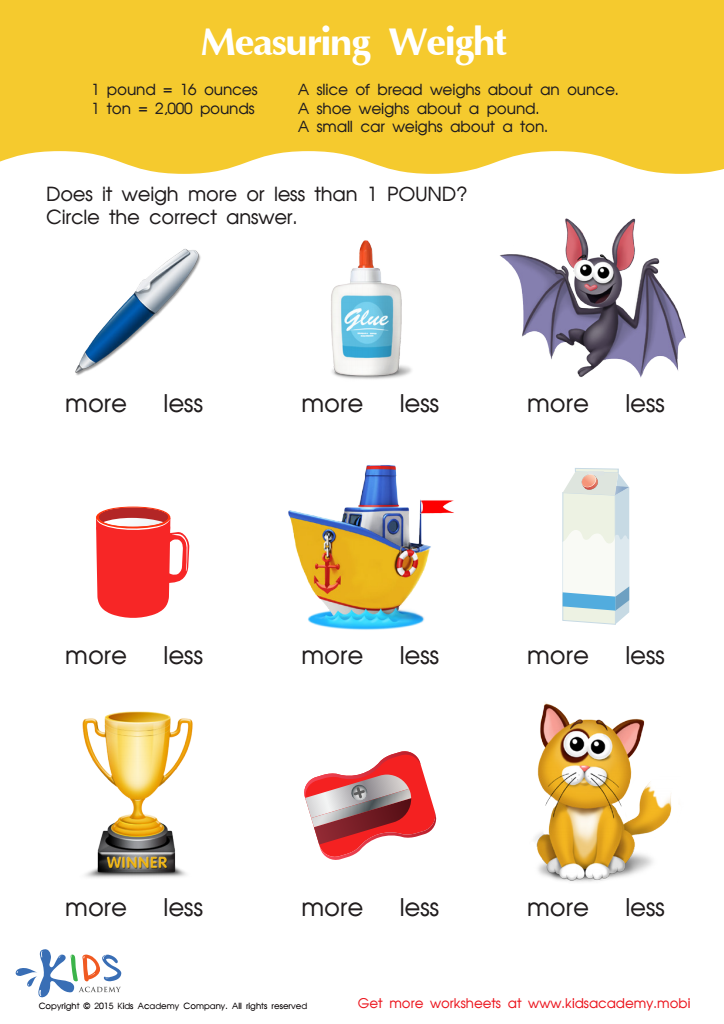
Measuring weight in pounds Worksheet
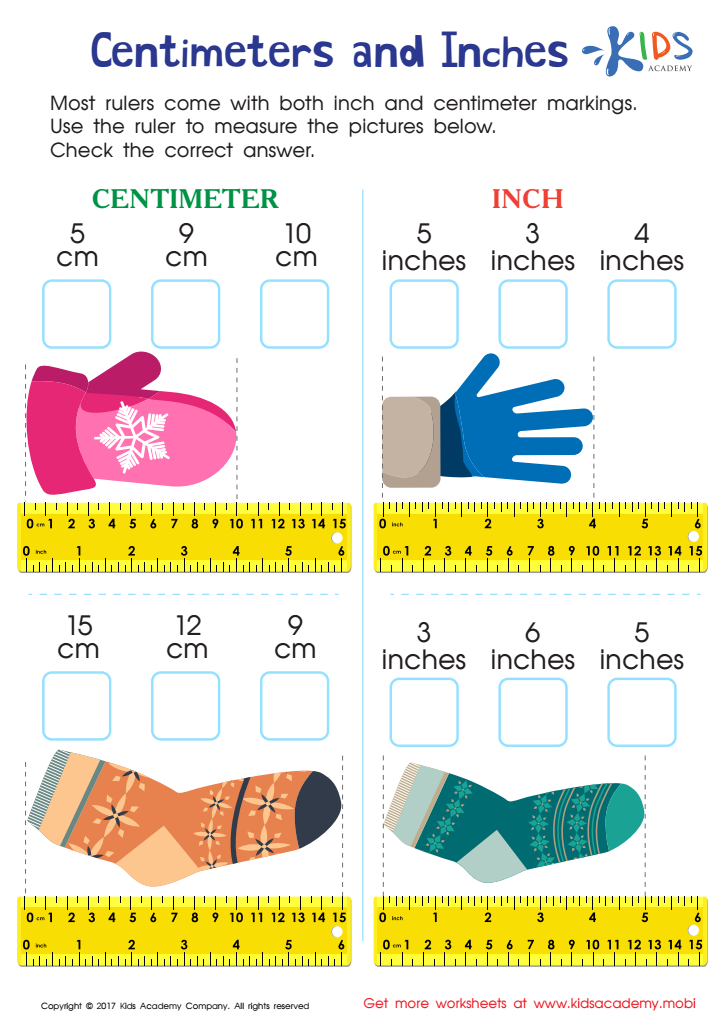
Centimeters and Inches Worksheet
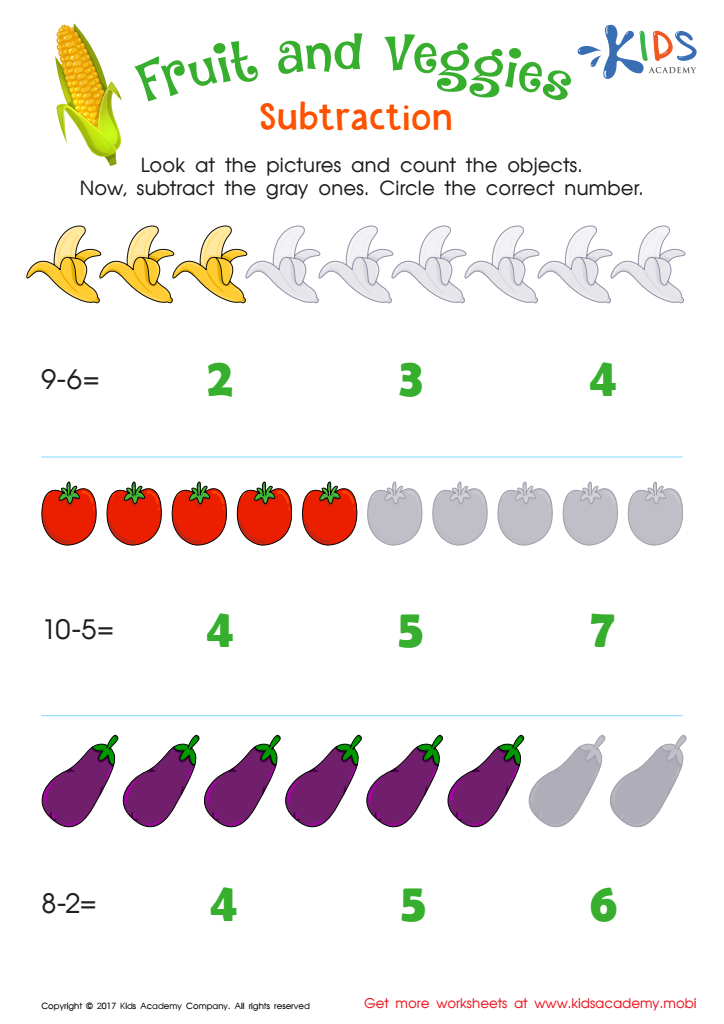
Fruit and Veggies Subtraction Worksheet







Practical math applications are crucial for children ages 5-8 because they lay the foundation for critical thinking and problem-solving skills that are indispensable throughout life. At this early stage, kids are naturally curious and inclined to explore the world around them. Introducing math in a practical context—such as through counting toys, measuring ingredients for a recipe, or recognizing patterns in everyday objects—helps them understand the real-world relevance of math concepts.
When parents or teachers incorporate practical math into daily activities, it enhances children's cognitive development and fine motor skills. For example, simple tasks like sorting laundry by color or size, comparing heights, or using measuring cups can illustrate abstract mathematical principles such as classification, measurement, comparison, and quantity. These activities also support numeracy, which is as critical as literacy in a child's early education.
Moreover, practical math fosters a positive attitude toward the subject by making it fun and engaging, which can reduce math anxiety. Kids who see math as an integral part of daily life are likely to develop a growth mindset, viewing challenges as opportunities to learn rather than as obstacles. Together, these skills form a strong elementary framework that is essential for more advanced studies and real-life decision-making processes in the future.








