
Sound-letter association Worksheets for Ages 5-8
7 filtered results
Difficulty Level
Grade
Age
-
From - To
Subject
Activity
Standards
Unlock your child's reading potential with our Sound-Letter Association Worksheets, perfect for ages 5-8! Our expertly crafted worksheets are designed to help young learners make the crucial connection between sounds and letters. Through engaging activities and fun exercises, children will improve their phonics skills, boosting their reading confidence. Our worksheets cater to different learning styles, ensuring that each child can progress at their own pace. Ideal for both classroom settings and home practice, these resources will lay a strong foundation for literacy development. Make learning enjoyable and effective with our expertly designed Sound-Letter Association Worksheets today!
Favorites
With answer key
Interactive
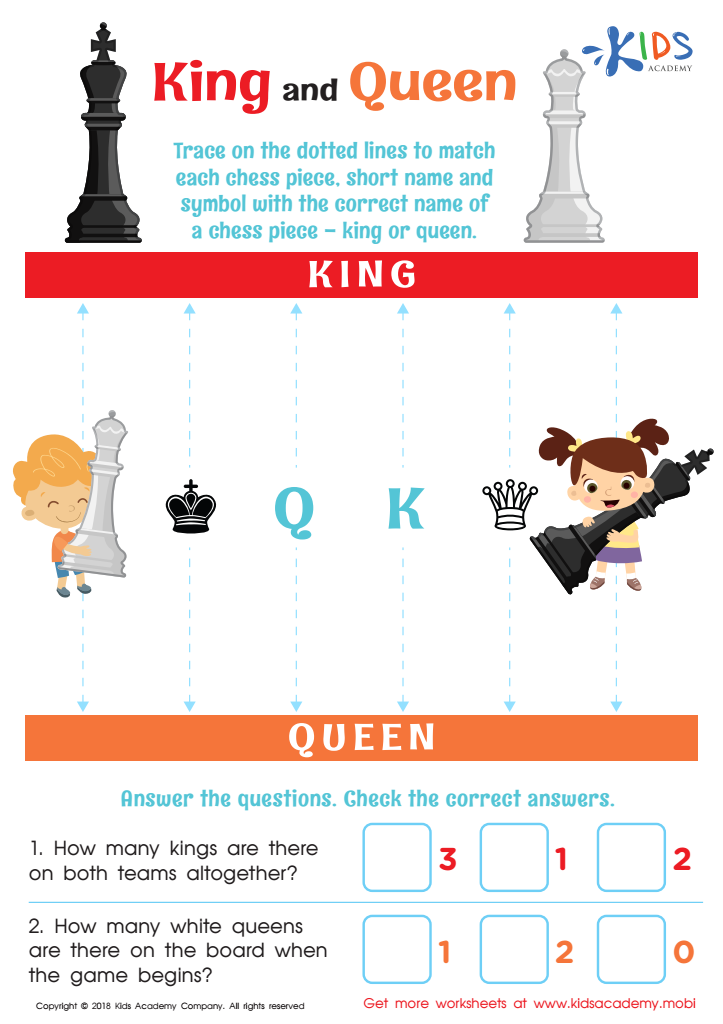
King and Queen Worksheet
Instruct your kids to trace the dotted lines to match each chess piece, short name, and symbol with either king or queen.Answer the questions at the bottom and check the answers. This exercise will help your children to differentiate between a king and queen chess piece and know their symbols.
King and Queen Worksheet
Worksheet
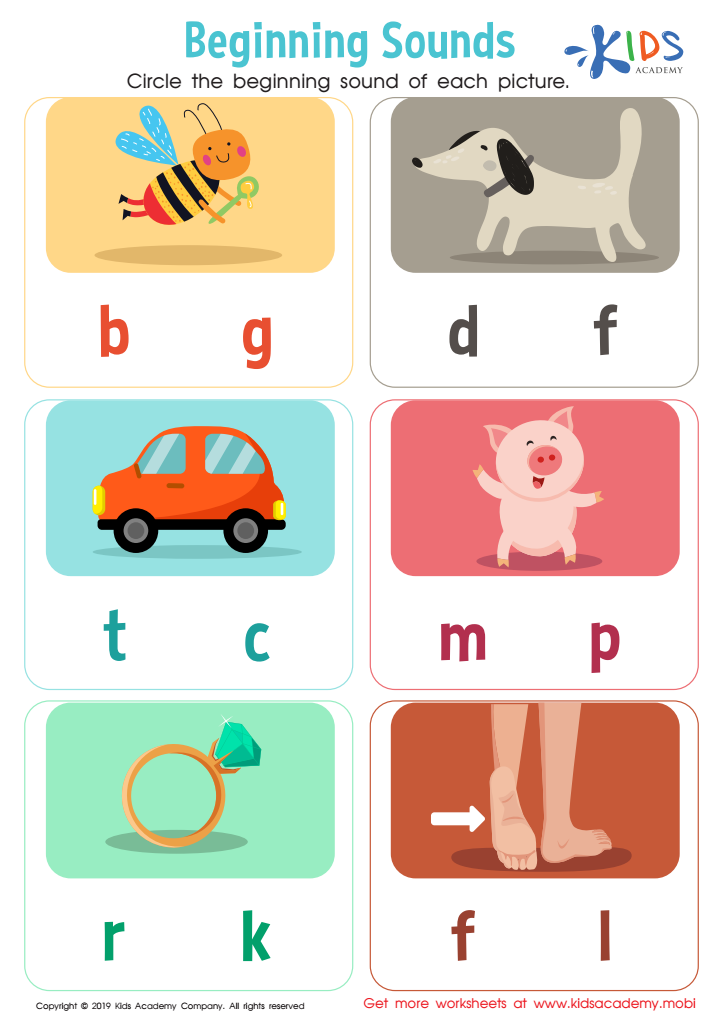
Beginning Sounds Worksheet
Test your child's knowledge with this colorful worksheet! Before beginning, have your kids recite the alphabet and sound them off. Give examples and ask them to do the same, then help them circle the beginning sound of each picture to complete the exercise.
Beginning Sounds Worksheet
Worksheet
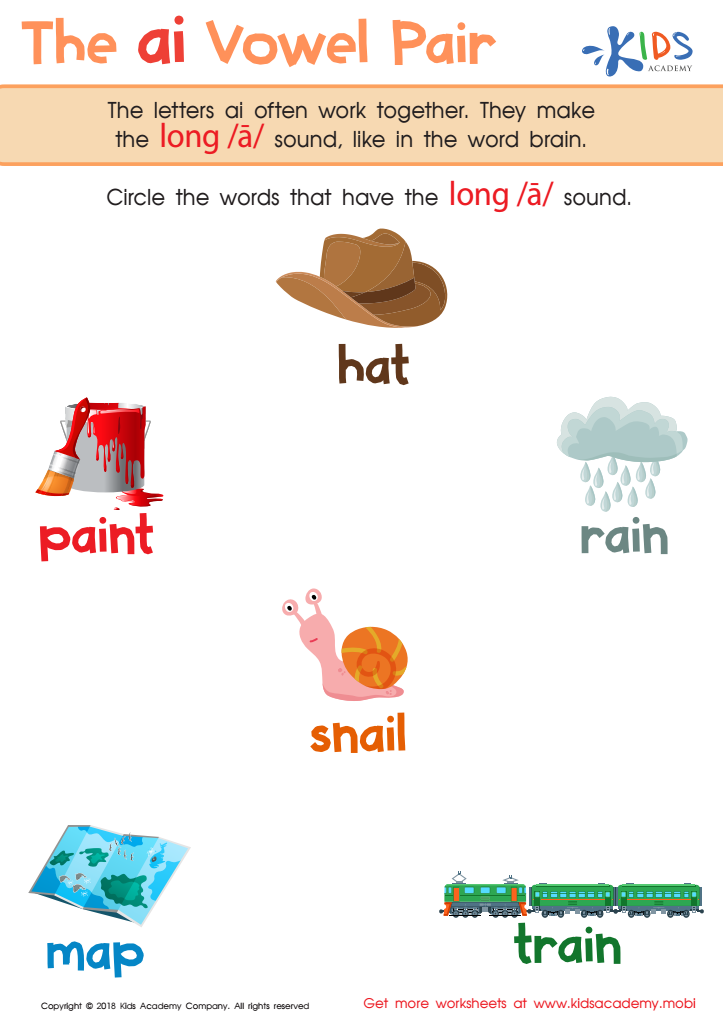
The AI Vowel Pair Worksheet
Vowel pairs make different sounds than individual letters. The 'ai' combination often forms the long /a/ sound, like in 'brain' and 'strain'. Get your kids to look at the pictures in the worksheet, identify each and say the name aloud. Help them circle the words with the long /a/ sound.
The AI Vowel Pair Worksheet
Worksheet
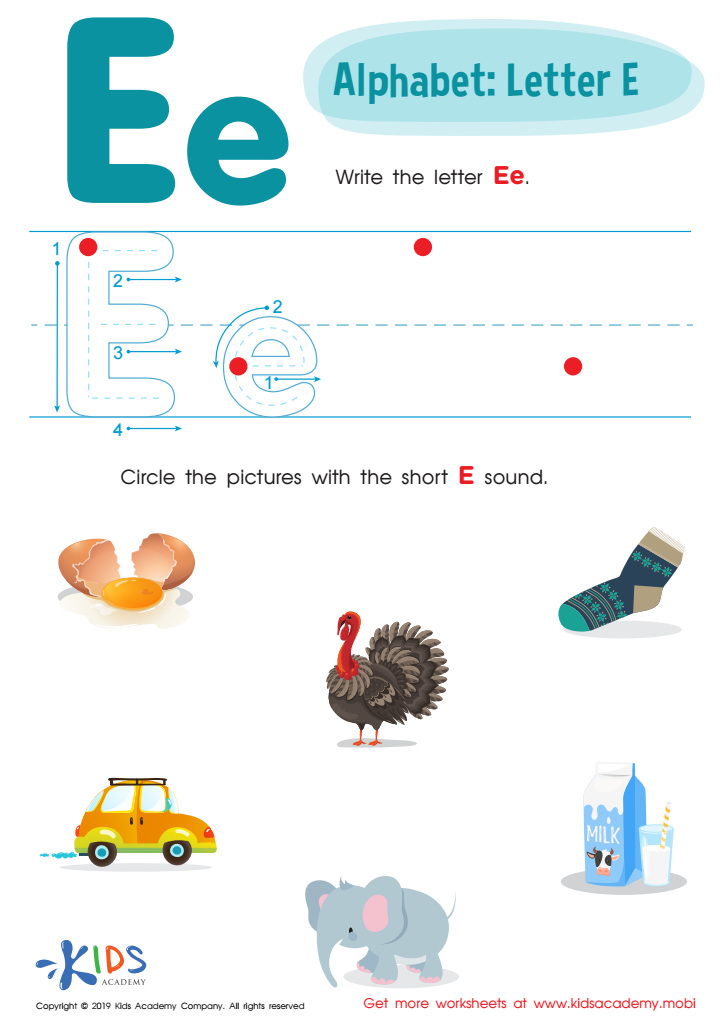
Letter E Tracing Worksheet
Students trace and write uppercase and lowercase letter E. They sound out "E" words, choosing those with short "E" sounds. Preschoolers identify the difference between the 'E' sounds in words like "egg" and "turkey." A tracing sheet helps them to understand.
Letter E Tracing Worksheet
Worksheet
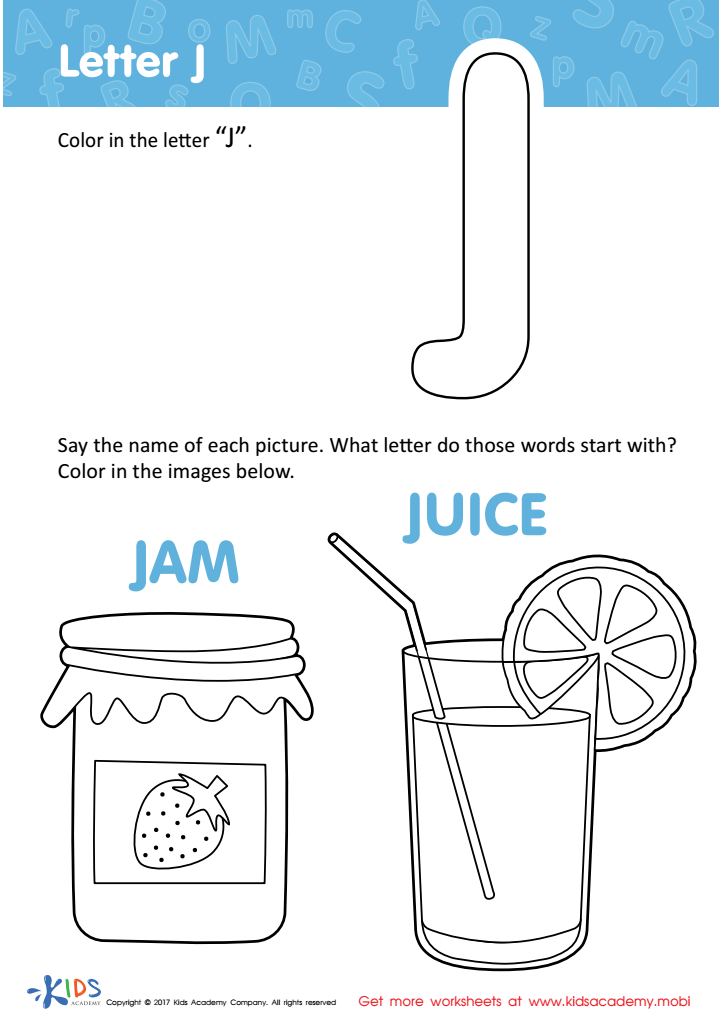
Letter J Coloring Sheet
Practice the letter 'J' with your little one with this fun coloring page! Pictures of jar, juice, jam and jelly make it an enjoyable experience for kids. Learning the letter and coloring is fun for even the youngest learners.
Download (PDF)
 Assign to My Students
Assign to My Students
Letter J Coloring Sheet
Worksheet
Join Kids Academy for Free
Who is primarily going to use this learning content?







Sound-letter association is the crucial skill of matching sounds (phonemes) with their corresponding letters (graphemes), and it is foundational for young children aged 5-8 as they embark on their journey to literacy. Parents and teachers should prioritize it for several compelling reasons. Firstly, understanding this relationship is essential for developing reading and writing proficiency. Children who can fluidly connect sounds to letters can decode new words effectively, promoting reading fluency. This skill also underlies spelling, as it helps children to segment words into their smallest sound units and represent them with the correct letters.
Moreover, strong sound-letter association forms the bedrock for advanced literacy skills, including phonemic awareness, which is a critical predictor of later reading success. Without this foundation, children may struggle with reading comprehension and may lag in other academic areas. Additionally, mastering this concept builds children's confidence and fosters a love for reading, opening doors to imagination and knowledge.
Engaging young learners in activities that strengthen this association, such as phonics games, repetitive reading, and writing exercises, equips them with the tools needed for academic success. By nurturing sound-letter association early on, parents and teachers set the stage for lifelong literacy and learning.








