Syllable identification Worksheets for Ages 5-8
7 filtered results
-
From - To
Discover our engaging syllable identification worksheets designed for children ages 5-8. Perfect for early learners, these worksheets help kids break down words into manageable parts, enhancing their reading and pronunciation skills. With vibrant illustrations and interactive exercises, children can count, clap, and emphasize syllables in a fun and educational manner. These activities are great for classroom use or homeschooling, providing a solid foundation in phonics and early literacy. Foster your child's language skills and boost their confidence in reading with our expertly crafted syllable identification worksheets. Visit our website and download today!
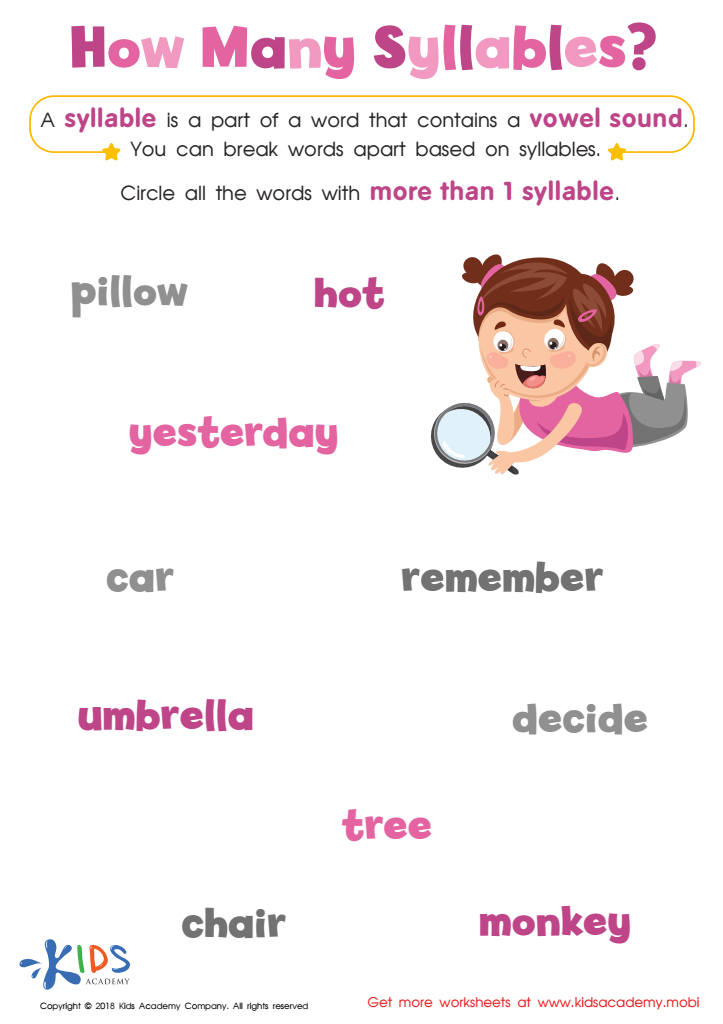
Reading: How Many Syllables Worksheet
 Assign to My Students
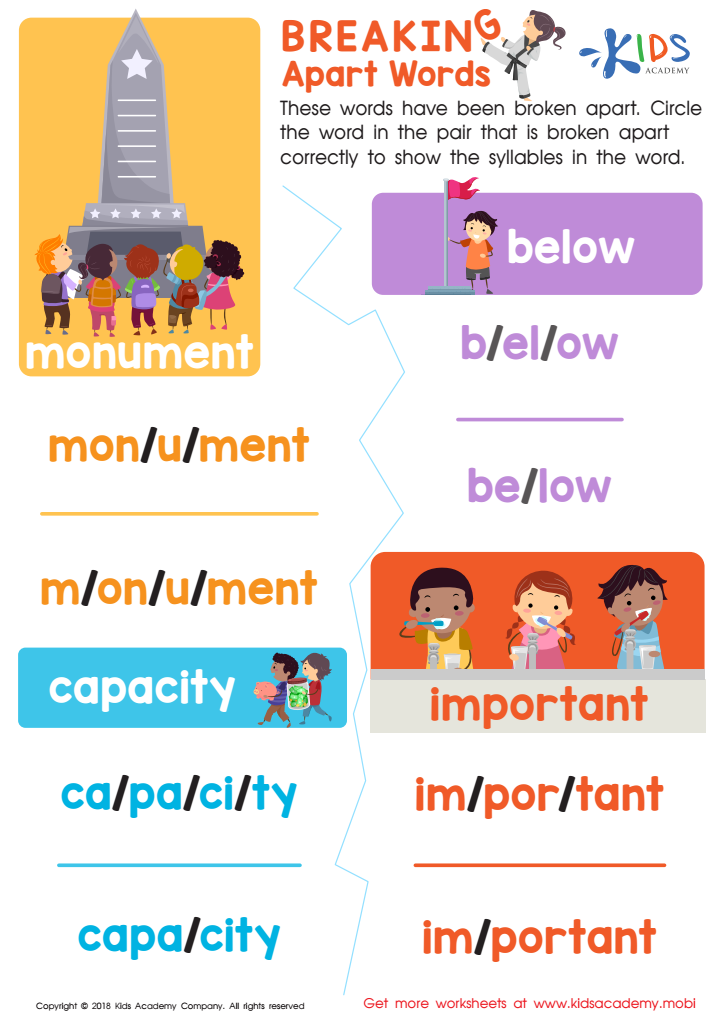
Breaking Apart Words Worksheet
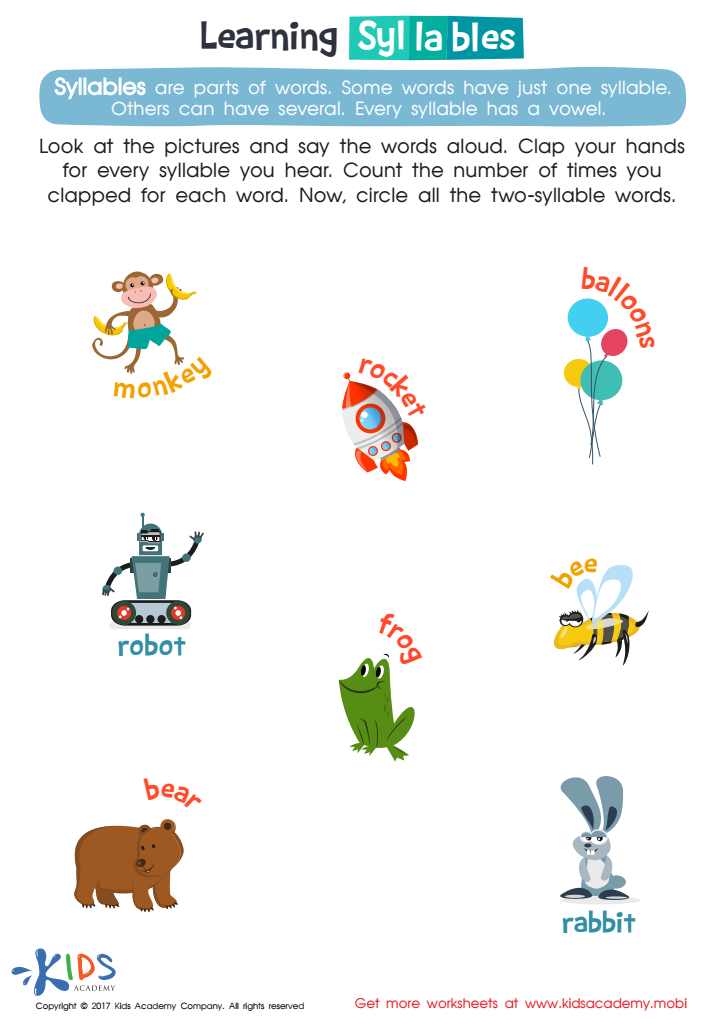
Learning Syllables Word Structure Worksheet
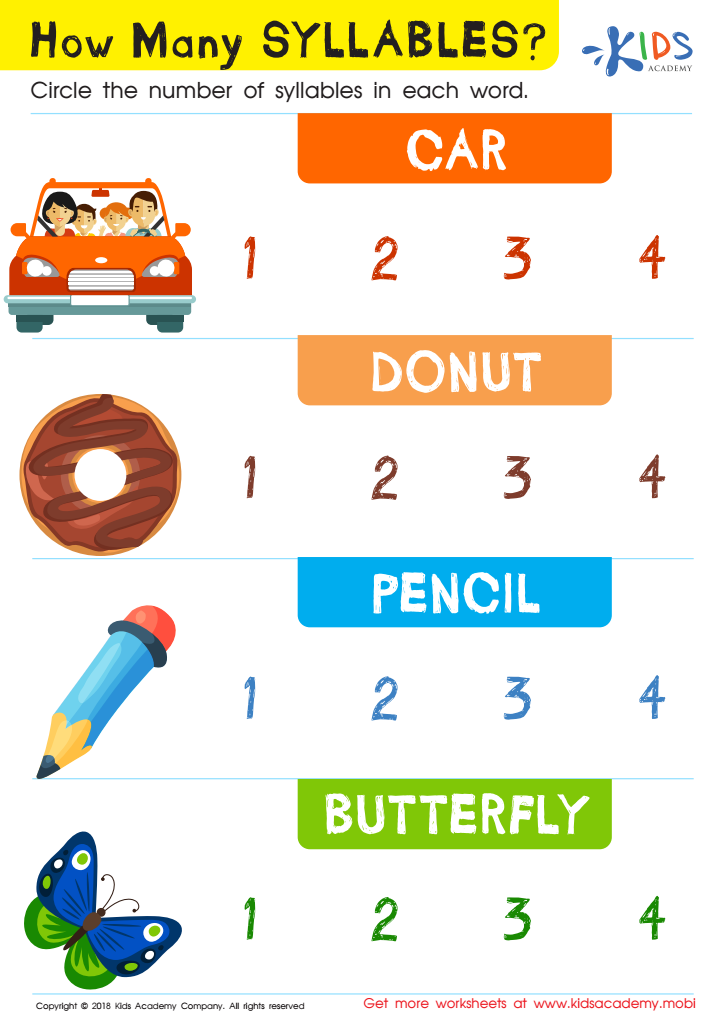
How Many Syllables? Worksheet
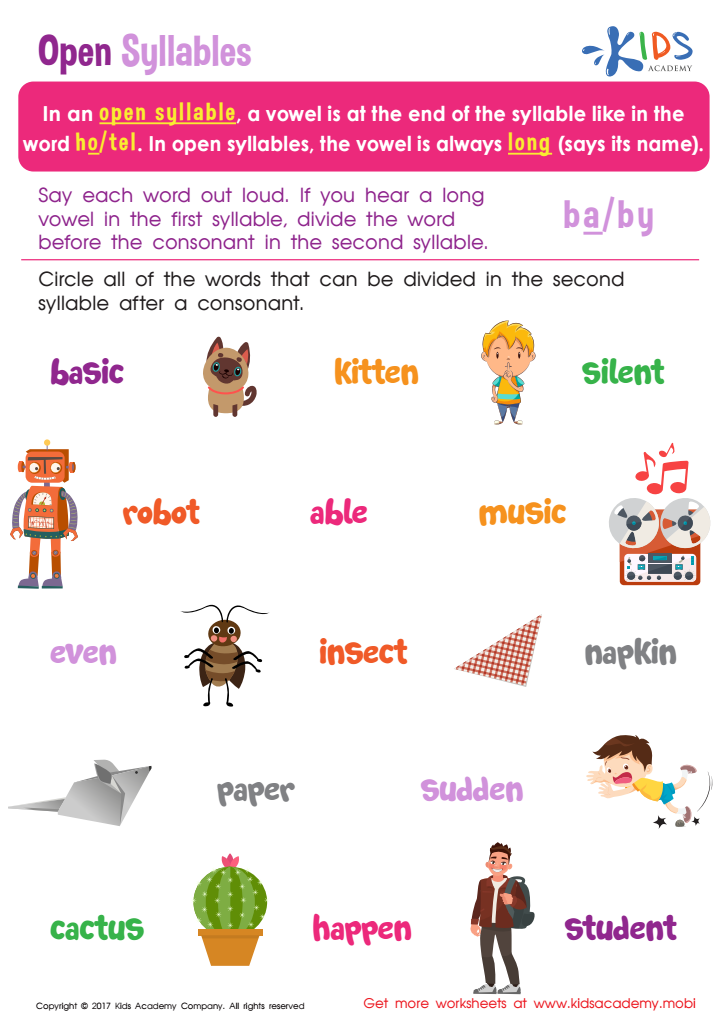
Open Syllable Printable Worksheet
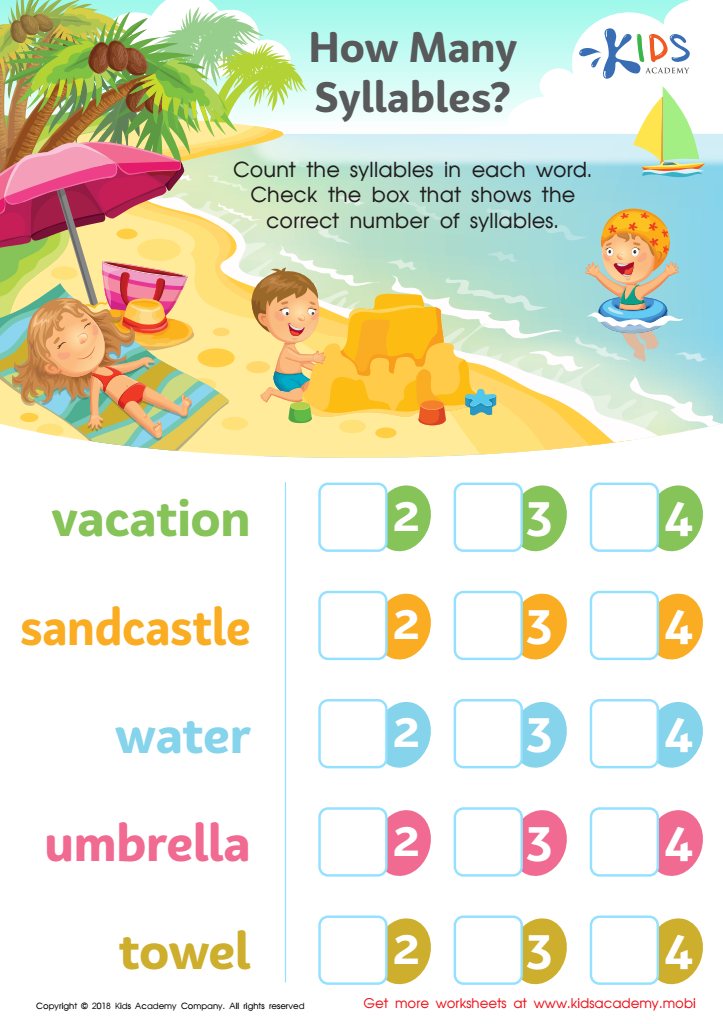
How Many Syllables Worksheet
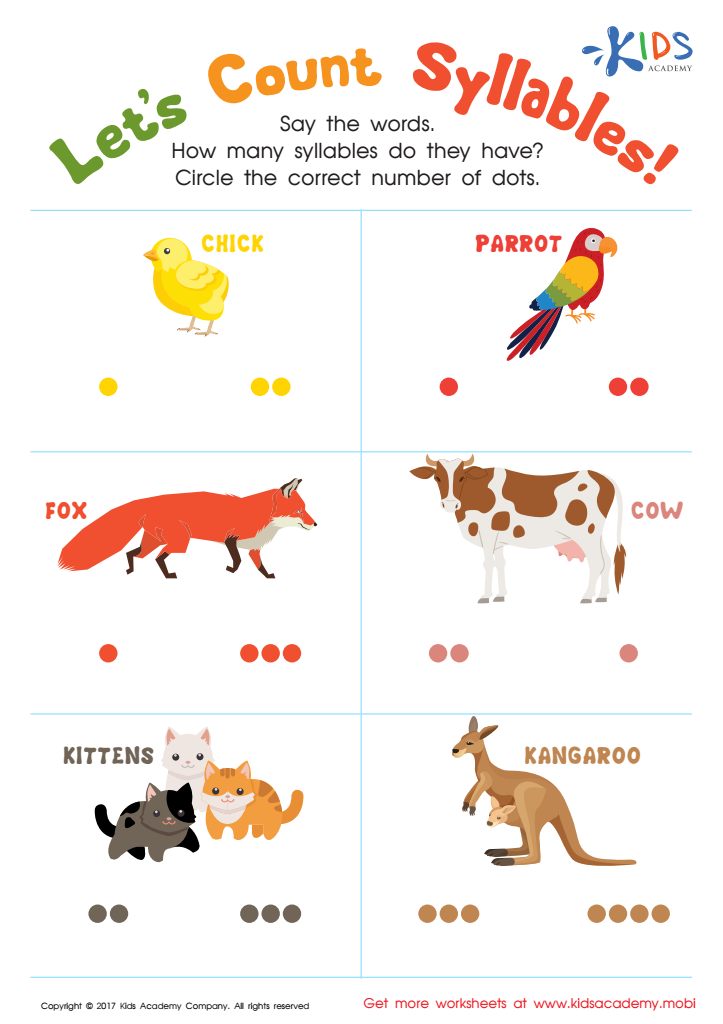
Lets Count Syllables Worksheet



.jpg)

.jpg)

.jpg)
Syllable identification is a crucial skill for children aged 5-8 because it forms the foundation for reading and spelling. During these formative years, understanding and breaking down words into syllables helps children decode new words more easily. This capability simplifies reading, contributing significantly to their literacy development.
When children can identify syllables, they enhance their phonological awareness, an essential component of reading skills. It allows them to hear, identify, and manipulate sounds in spoken language, making it easier to blend sounds to make words and break words into individual sounds. This groundwork is crucial for reading fluency, enabling children to read smoothly with accurate comprehension.
Spelling also becomes less daunting. Recognizing syllables helps children learn spelling patterns and rules by segmenting words into smaller, more manageable parts. For instance, knowing that "kitten" is split into two syllables "kit-ten" makes it simpler to spell.
Moreover, syllable identification aids in vocabulary growth and pronunciation, helping children articulate words correctly and improve their speaking skills. This progress boosts their confidence, fostering a more positive attitude toward learning.
In essence, focusing on syllable identification equips children with the tools needed for literacy, forming a robust base for their future academic success. Parents and teachers who emphasize this skill help nurture competent, confident young readers and communicators.








