Understanding more/less concept Worksheets for Ages 5-8
3 filtered results
-
From - To
Explore our engaging "Understanding More/Less Concept Worksheets" designed for children ages 5-8. These interactive resources help young learners grasp fundamental math skills by comparing quantities in fun and meaningful ways. Featuring colorful visuals and relatable scenarios, our worksheets encourage children to identify "more" and "less" through hands-on practice. Perfect for at-home learning or classroom activities, these worksheets support essential cognitive development while keeping learning enjoyable. Enhance your child's confidence in numbers with clear instructions and diverse exercises that gradually build their understanding. Dive into interactive learning and lay a strong foundation for future math success with our expertly crafted resources!
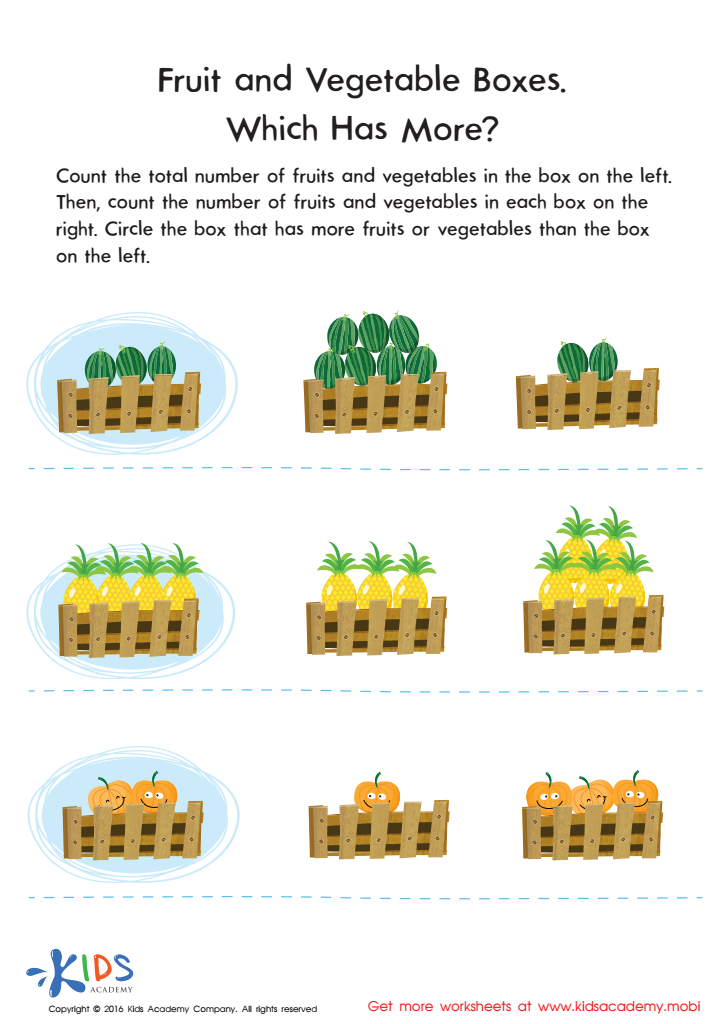
Which Has More? Size Worksheet
 Assign to My Students
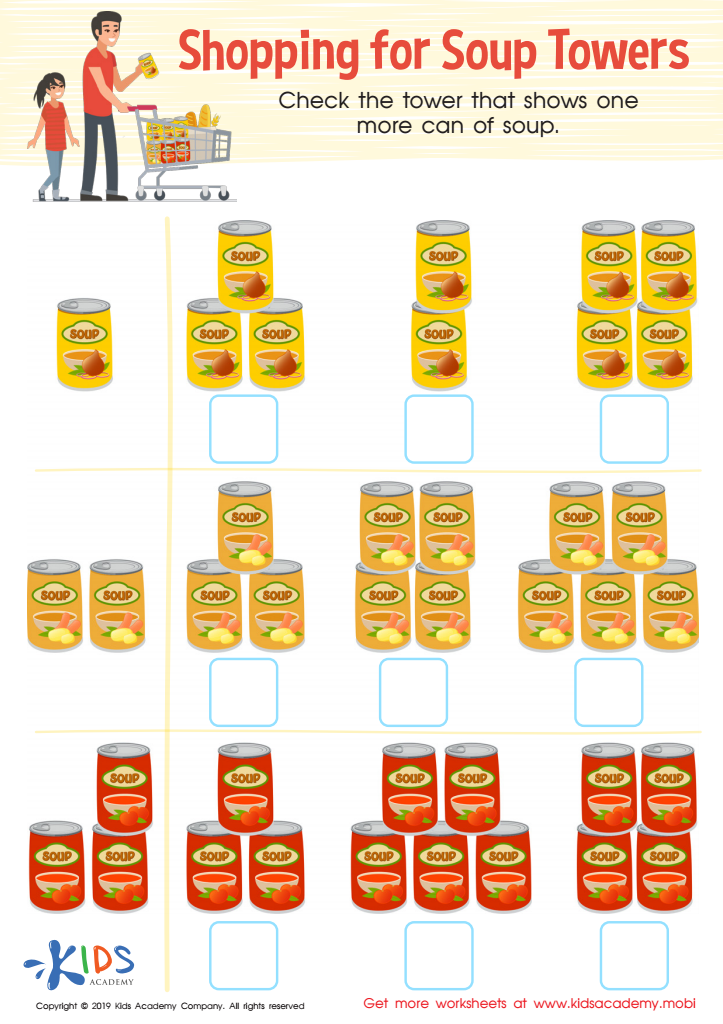
Soup Towers Worksheet
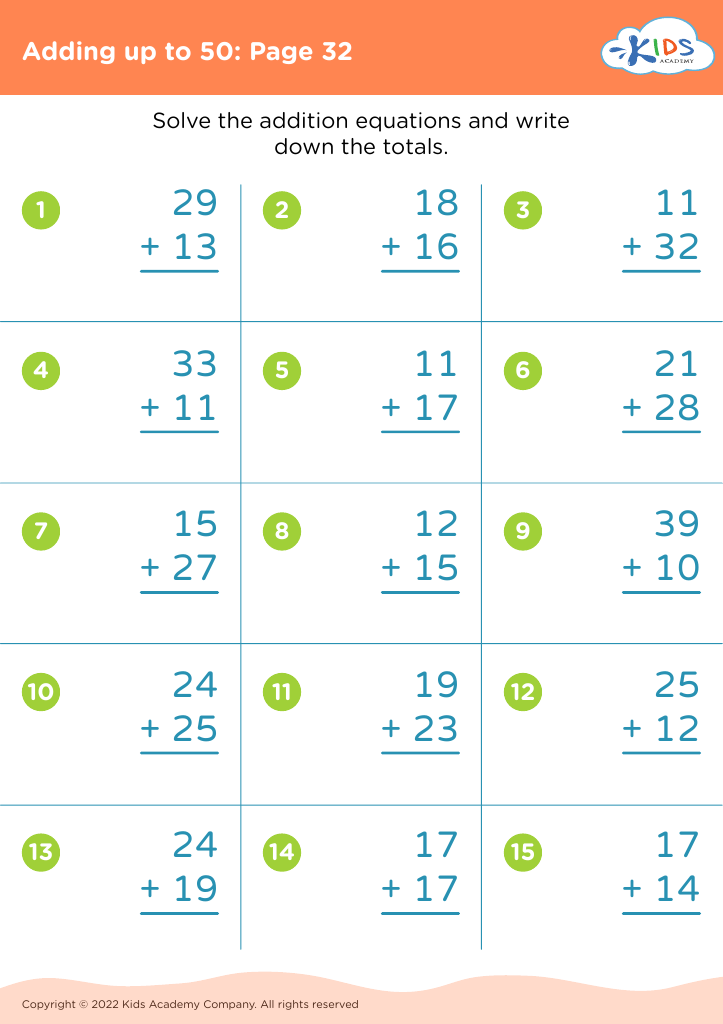







Understanding the concepts of "more" and "less" is fundamental for children aged 5-8 as it provides a foundation for essential mathematical skills and critical thinking. At this age, children are beginning to develop their abilities to compare quantities, which is crucial not just for mathematics, but for everyday decision-making. Recognizing "more" and "less" helps children make sense of their environments, understand relationships between objects, and process information more effectively.
Mastering these concepts promotes cognitive development, as children learn to categorize and give value to different quantities. For example, they might compare the number of apples in two baskets or understand the concept of sharing based on more or less – skills that are important in social scenarios and conflict resolution. By building a solid understanding of comparison and quantity, students also lay the groundwork for more complex concepts such as addition and subtraction.
Moreover, caring about these concepts fosters critical thinking and problem-solving abilities essential for academic success. Encouraging exploration of "more" and "less" in various contexts—fun games, real-life scenarios, or practical activities—engages children and cultivates a lifelong appreciation for math and logical reasoning. Thus, parents and teachers play a pivotal role in nurturing these foundational skills.








