Explore "Understanding Multiplication Worksheets for Ages 5-8" by Kids Academy, designed to make learning multiplication fun and effective for young learners. These worksheets offer engaging activities that help children grasp basic multiplication concepts through visual aids, hands-on practice, and interactive challenges. Ideal for both classroom and home use, each worksheet aims to build a solid foundation in multiplication, fostering confidence and foundational math skills. Tailored specifically for kids aged 5-8, these resources support and enhance the math curriculum, ensuring students develop a strong understanding of multiplication in an enjoyable and stress-free manner.

Check out this FREE "Understanding multiplication" Trial Lesson for age 5-8!

Skip Counting and Your Fingers to Divide

Favorites
With answer key
Interactive
  • 5-8
  • Understanding multiplication
Matching and Sorting  for Kindergarten: Assessment 3 Worksheet

Matching and Sorting for Kindergarten: Assessment 3 Worksheet

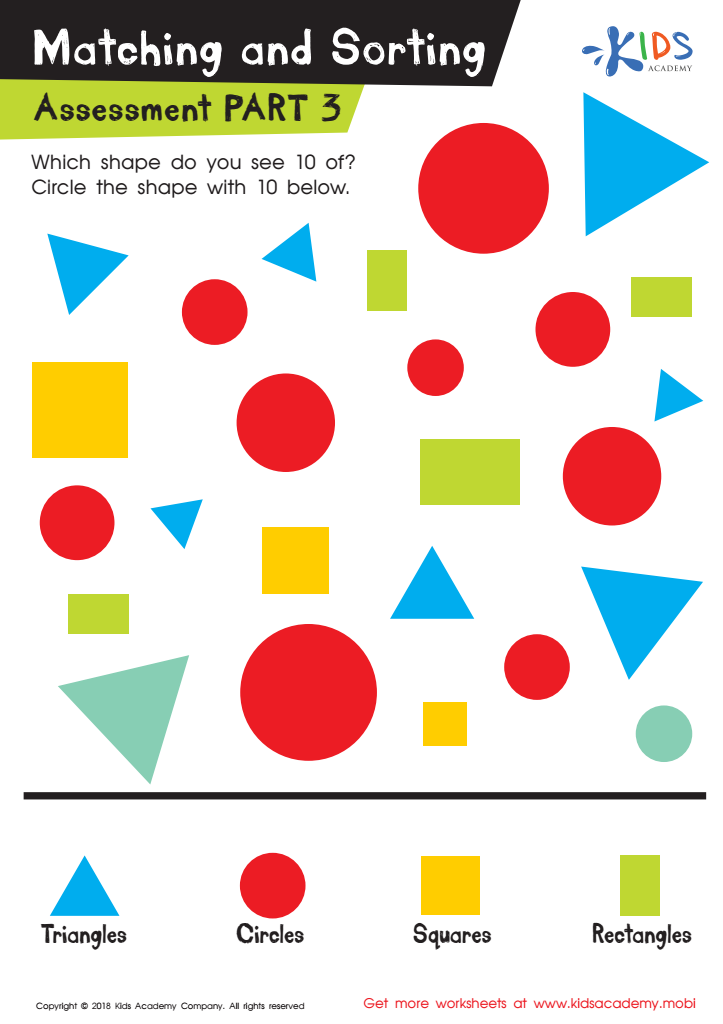
Assess your child's basic geometry skills and properties with a colorful worksheet! Utilize visual discrimination and number sense to identify groups of ten and sort objects by bold colors. Challenge them to differentiate shapes and sizes.
Matching and Sorting for Kindergarten: Assessment 3 Worksheet
Worksheet
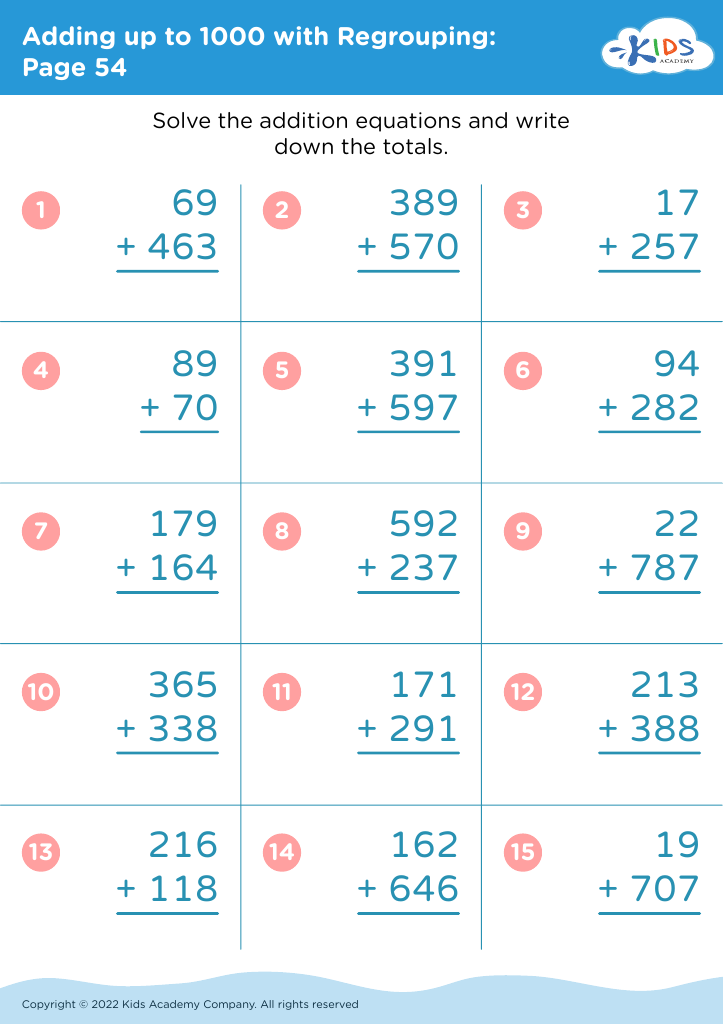
Adding up to 1000 with Regrouping: Page 54
Worksheet
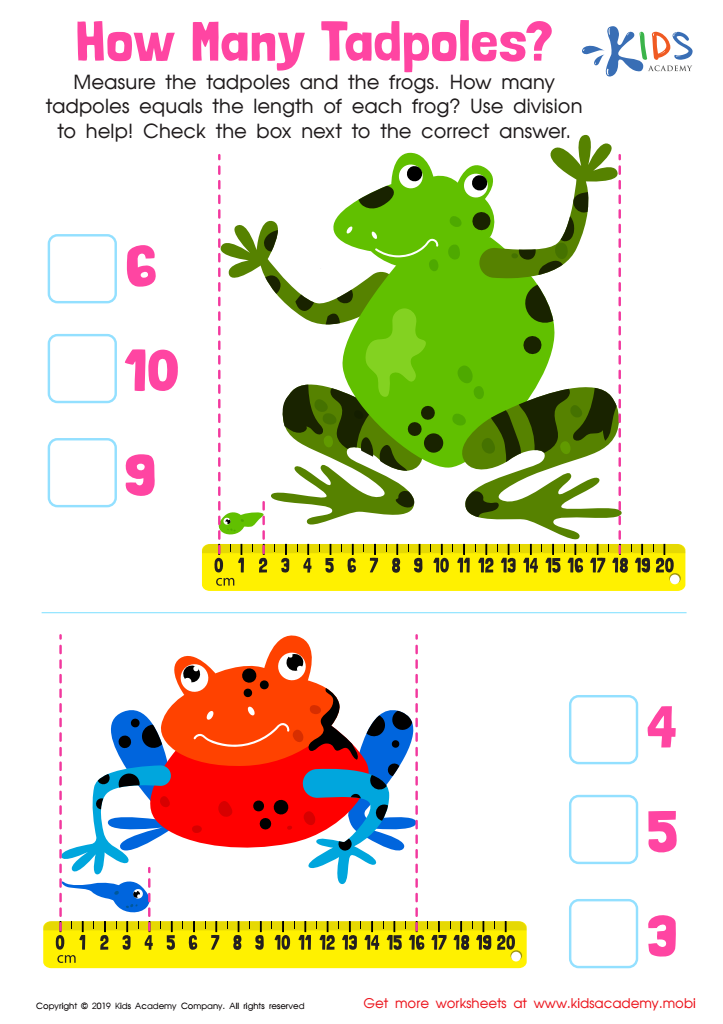
How Many Tadpoles Worksheet

How Many Tadpoles Worksheet

Kids love tadpoles! They'll have fun using them to work out the measurements of their frog friends. By dividing the length of the frogs by the length of the tadpoles, children can deduce how many tadpoles it takes to equal a frog. With the use of 'how many' and 'each' they'll solve math problems without realizing it!
How Many Tadpoles Worksheet
Worksheet
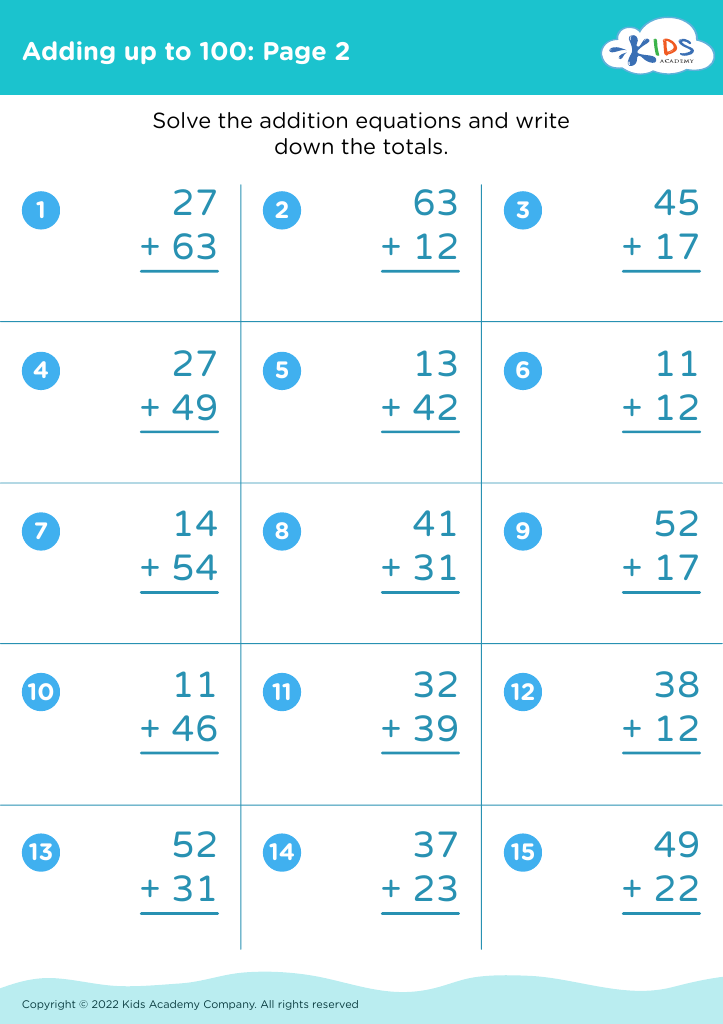
Adding up to 100: Page 2

Adding up to 100: Page 2

Adding up to 100: Page 2
Worksheet
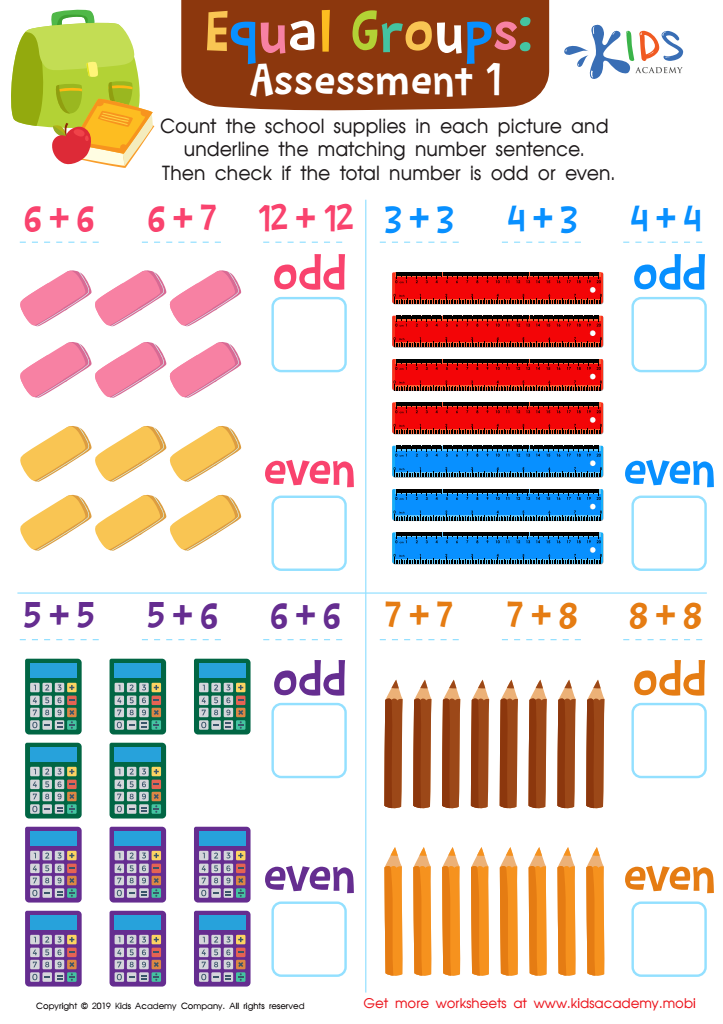
Equal Groups: Assessment1 Worksheet

Equal Groups: Assessment 1 Worksheet
Have your students count the school supplies in each picture. Underline the number sentence that matches. Ask them if the total number is odd or even. Help your eager little preschoolers explore their classroom, which is full of pencils, chairs, desks, a blackboard and the teacher's desk.
Equal Groups: Assessment 1 Worksheet
Worksheet
Adding up to 100 Without Regrouping: Page 68
Worksheet
Busy Farmers: Problem Matching Worksheet
Busy Farmers: Problem Matching Worksheet

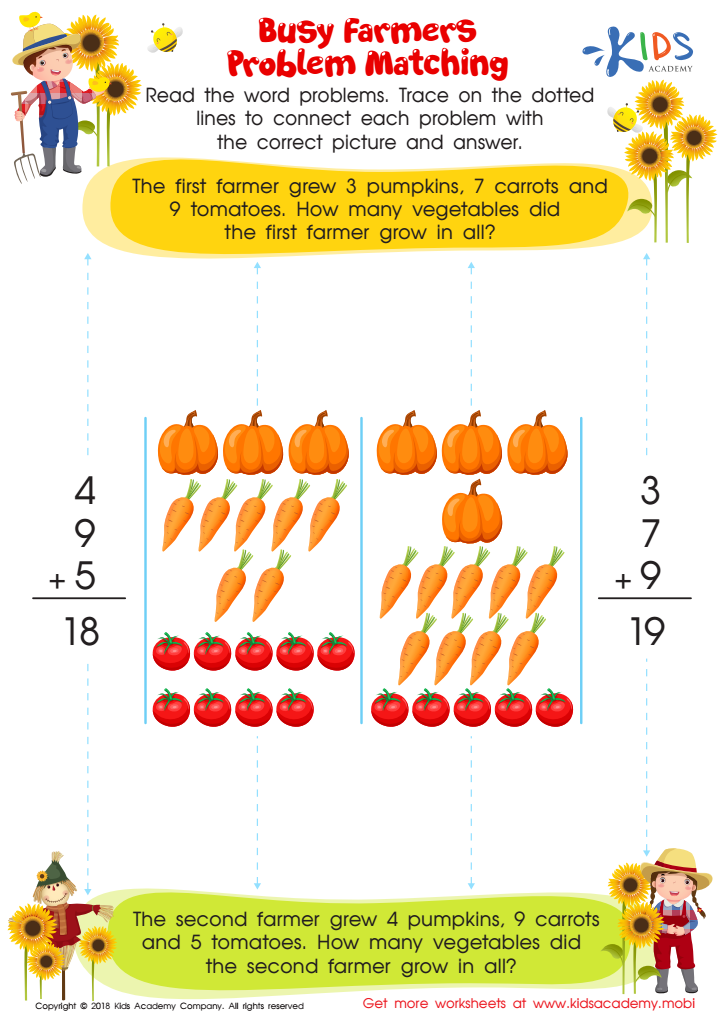
Farming is tough, so help your mathematician out with this fun and stimulating worksheet! They'll read word problems and connect each to its correct picture, using traceable lines. They'll practice addition with three addends, and use the harvest veg pictures to ensure accuracy.
Busy Farmers: Problem Matching Worksheet
Worksheet
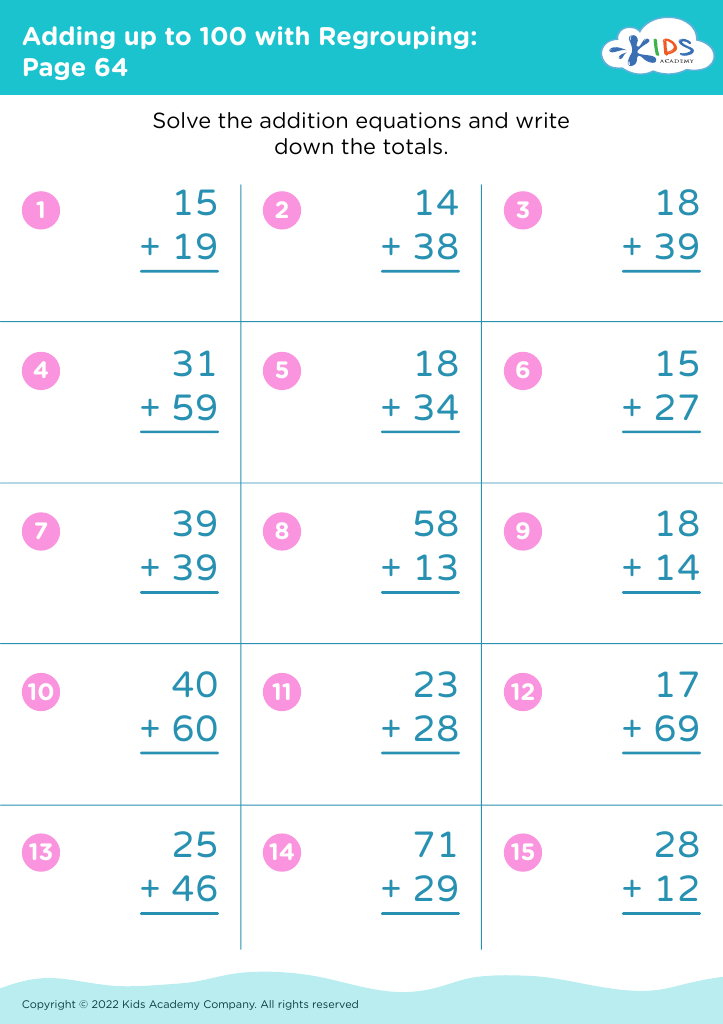
Adding up to 100 with Regrouping: Page 64
Worksheet
Counting: Assessment 2 Worksheet

Counting: Assessment 2 Worksheet

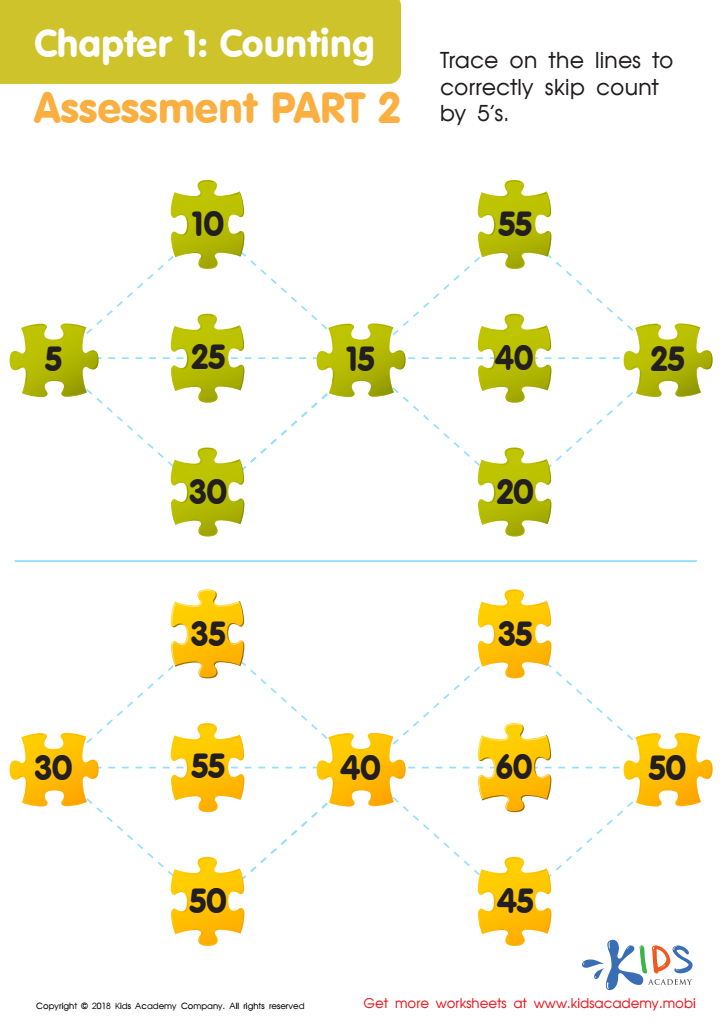
By now, your child should be able to count up to the hundreds. If they're still learning the tens, that's okay - as long as they're going at their own pace. This worksheet will be easy if they can count to ten. Ask them to trace the lines and skip count by 5's.
Counting: Assessment 2 Worksheet
Worksheet
Repeated Addition = Multiplication Worksheet
Repeated Addition = Multiplication Worksheet

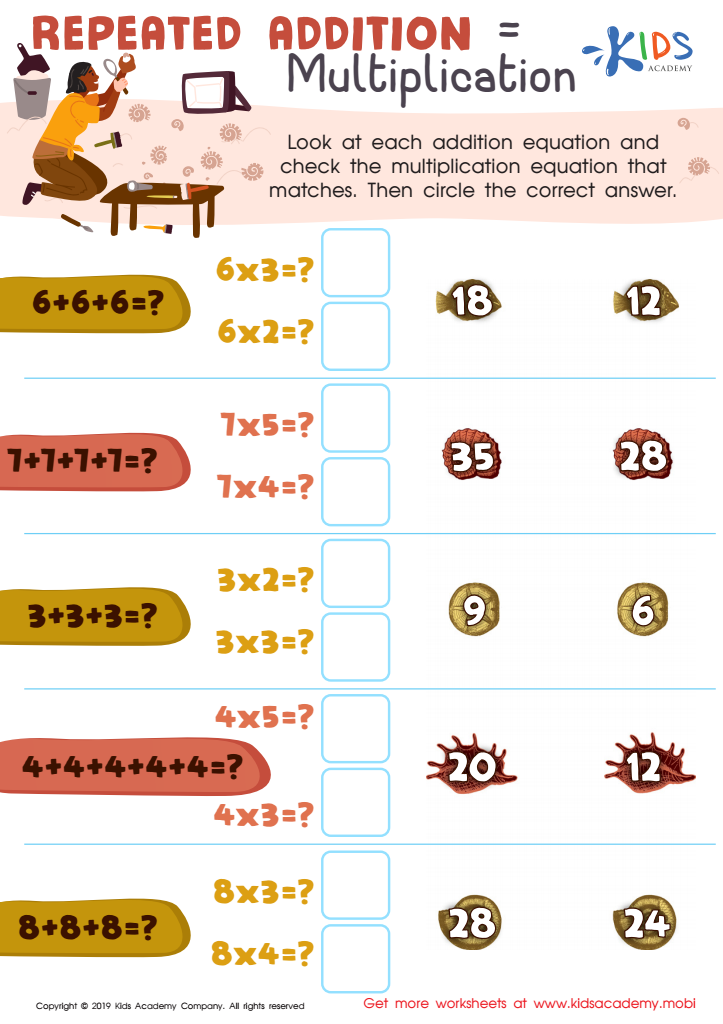
If your child is having trouble with math, worksheets like this can help them get more practice. Addition, subtraction, and multiplication go together. Look over each addition equation and pick the matching multiplication equation, then circle the correct answer. This can give your child the necessary practice to understand mathematics better.
Repeated Addition = Multiplication Worksheet
Worksheet
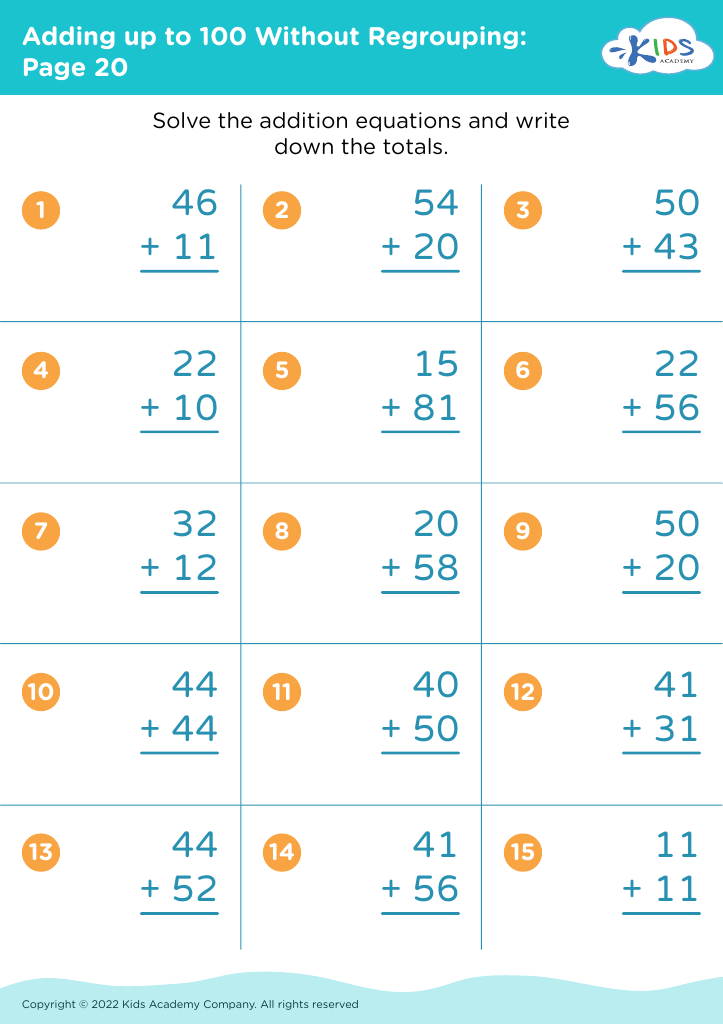
Adding up to 100 Without Regrouping: Page 20
Worksheet
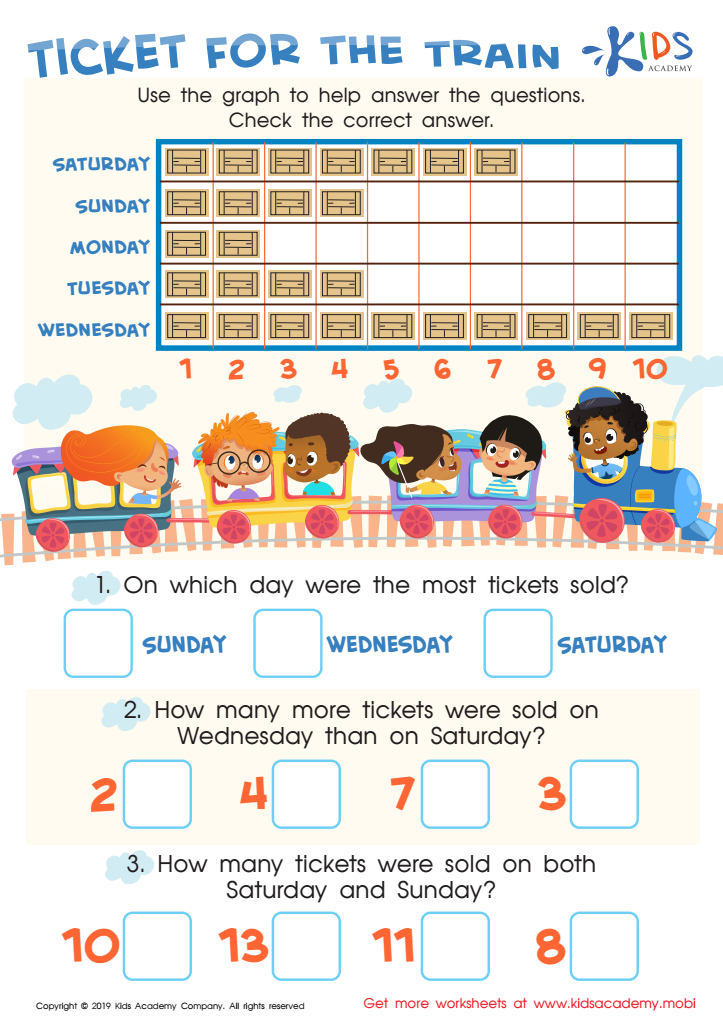
Ticket for the Train Worksheet
Ticket for the Train Worksheet
It's important to use fun scenarios with familiar objects when teaching kids. Try discussing train rides and the accompanying picture graph. Ask questions about it, then help kids check the correct answers. Let them enjoy the learning process!
Ticket for the Train Worksheet
Worksheet
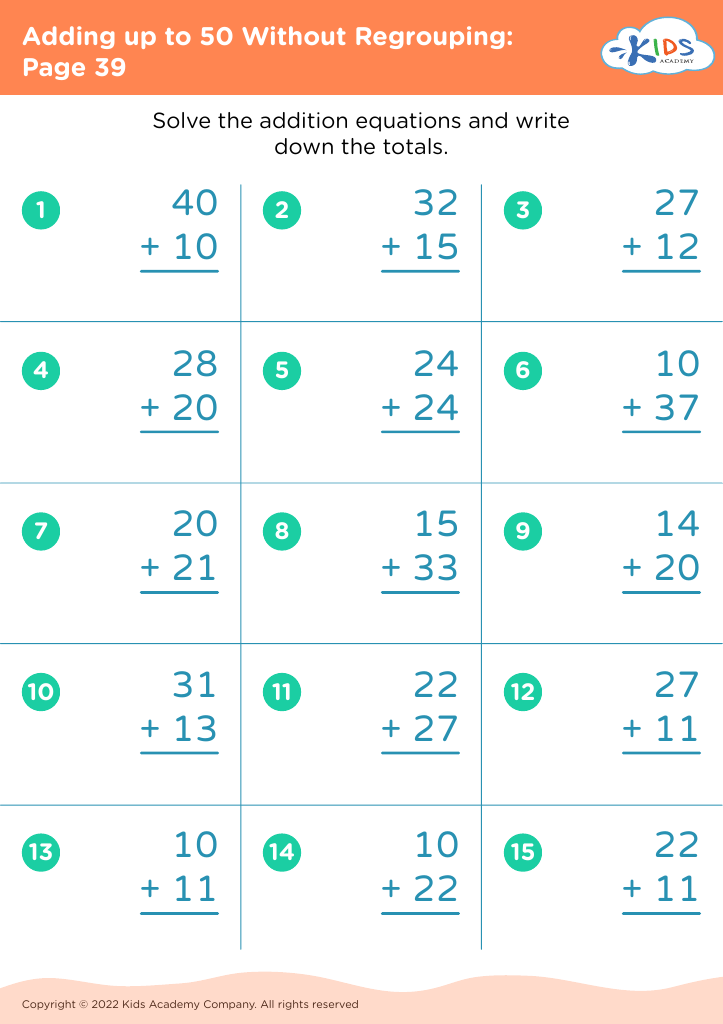
Adding up to 50 Without Regrouping: Page 39
Worksheet
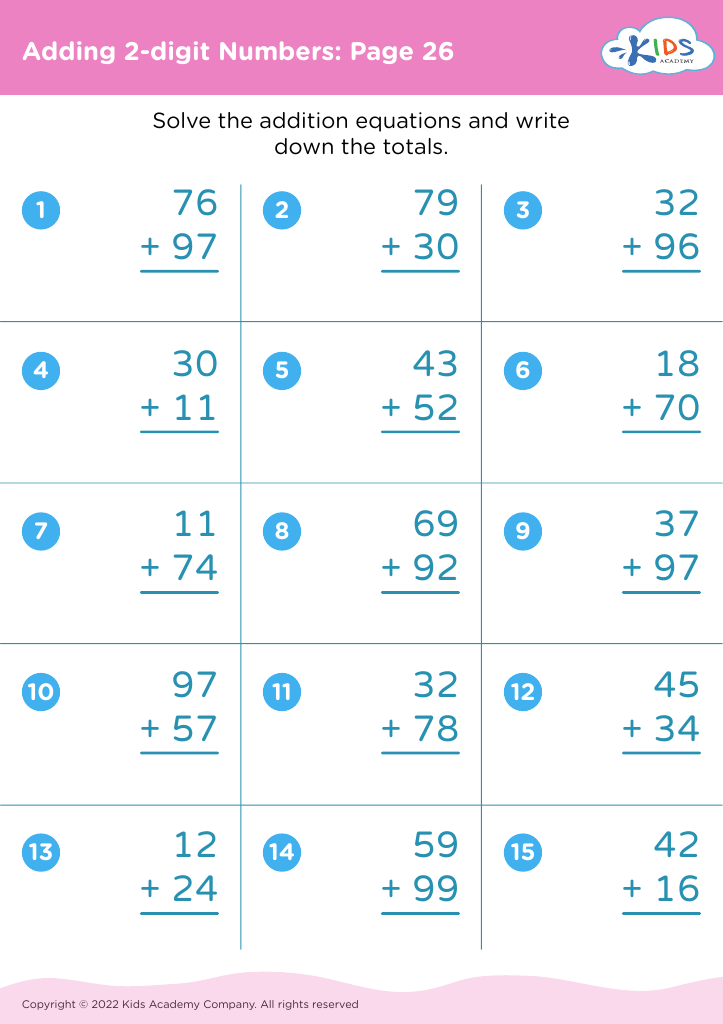
Adding 2-digit Numbers: Page 26

Adding 2-digit Numbers: Page 26

Adding 2-digit Numbers: Page 26
Worksheet
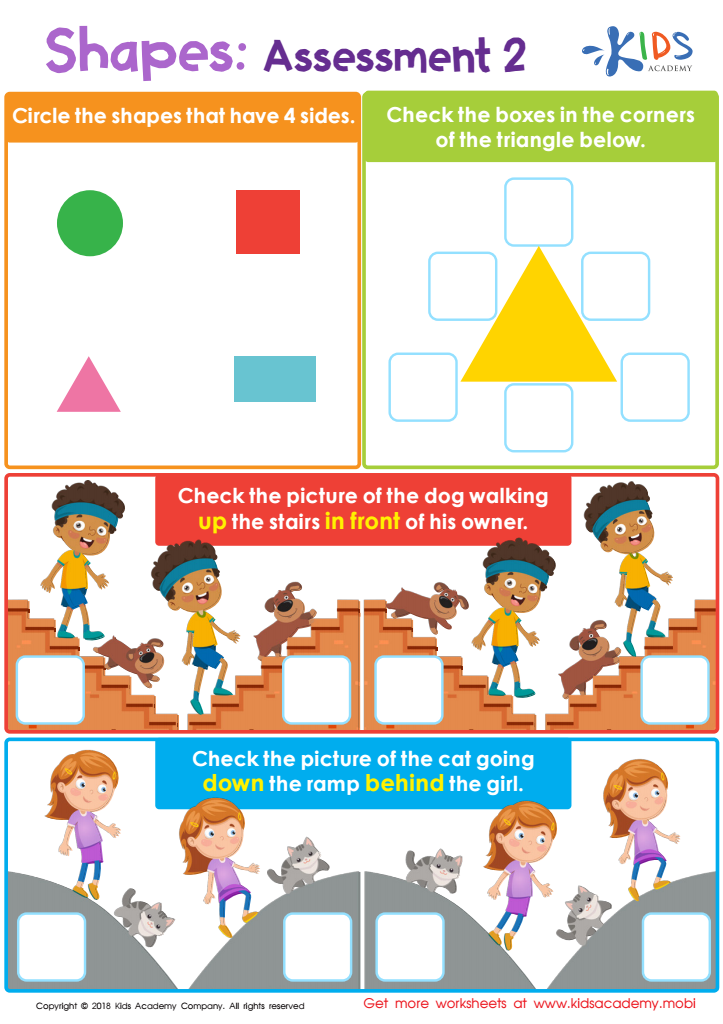
Shapes: Assessment 2 Worksheet
Shapes: Assessment 2 Worksheet
This geometry worksheet assesses a student's knowledge of shapes and positional words. They must identify shapes with 4 sides and corners on a triangle. The worksheet also tests understanding of words like "up", "front", "down" and "behind". Easily determine what your student knows about these concepts with this downloadable worksheet!
Shapes: Assessment 2 Worksheet
Worksheet
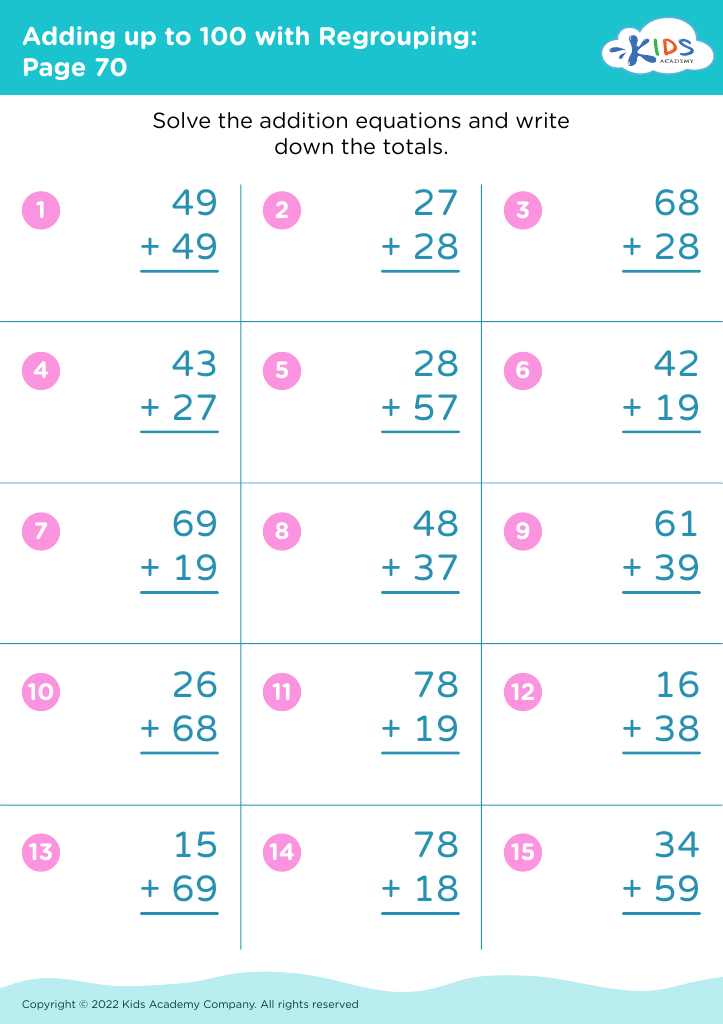
Adding up to 100 with Regrouping: Page 70
Worksheet
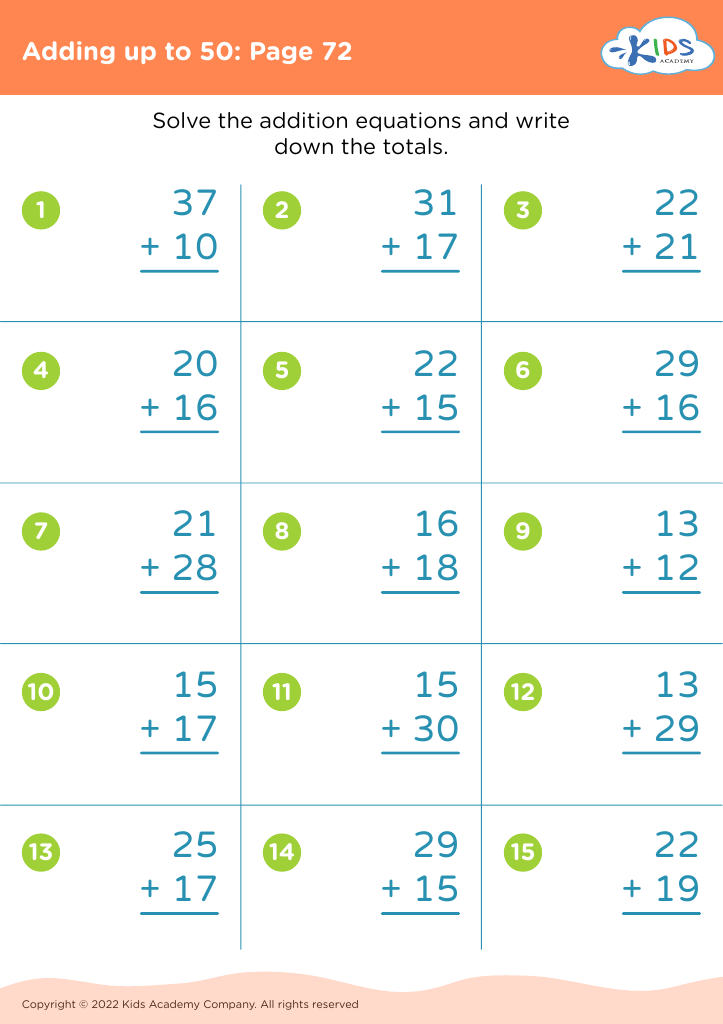
Adding up to 50: Page 72

Adding up to 50: Page 72

Adding up to 50: Page 72
Worksheet
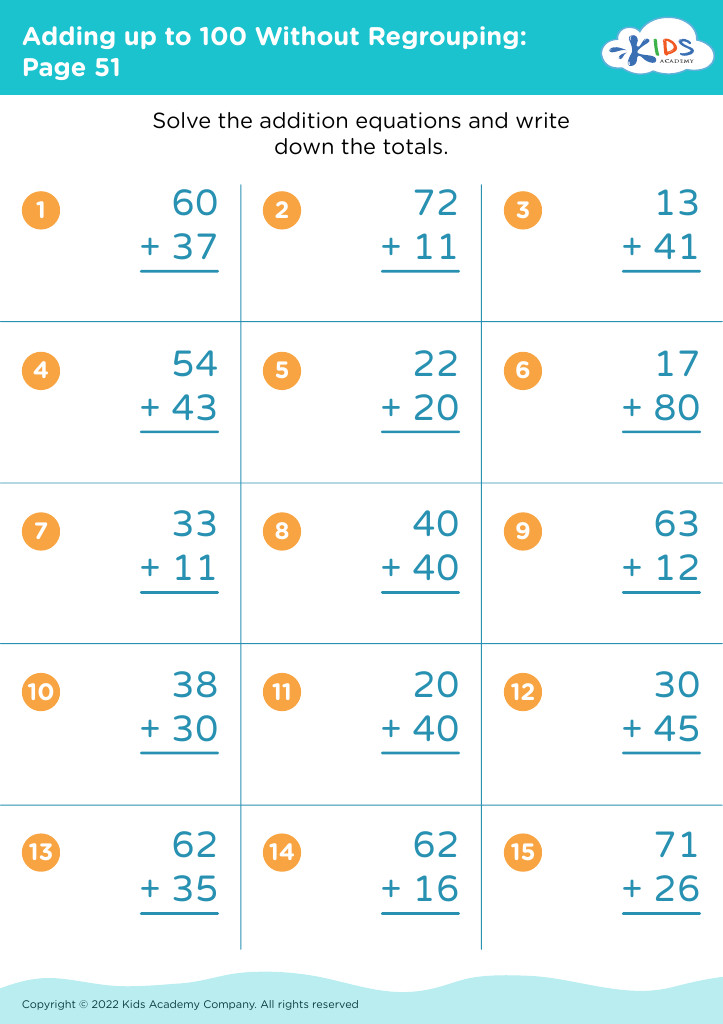
Adding up to 100 Without Regrouping: Page 51
Worksheet
Multiplying Invertebrates Worksheet

Multiplying Invertebrates Worksheet

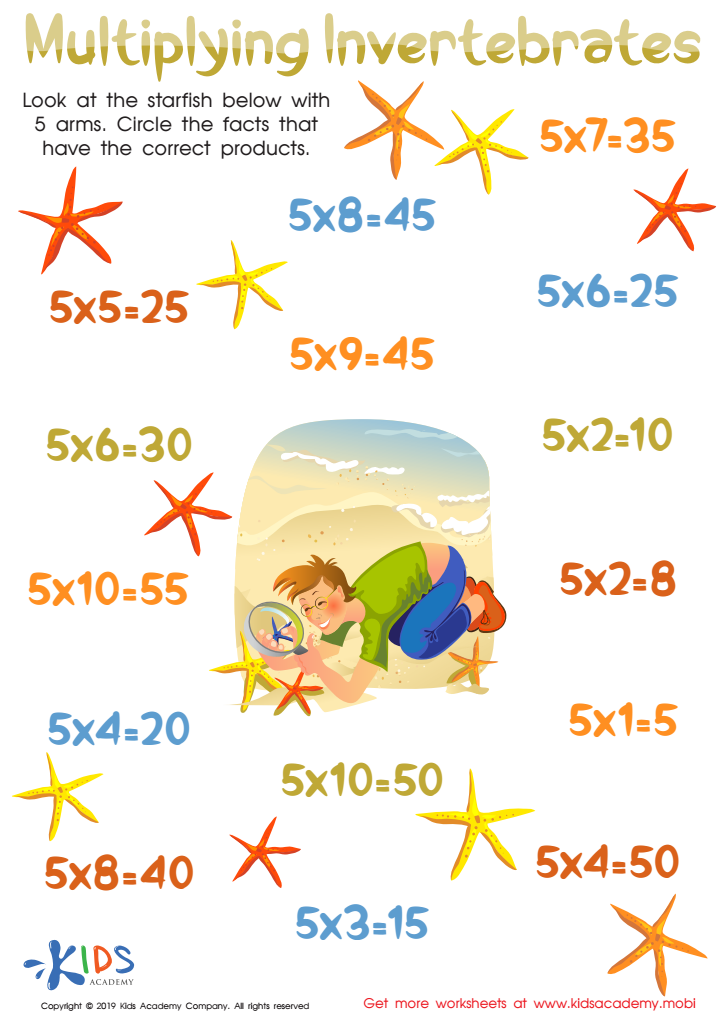
Explain to your kids an invertebrate is an animal without a backbone. Examples: squid, jellyfish, octopus. Now, look at the starfish in the picture and help your kids circle the correct facts.
Multiplying Invertebrates Worksheet
Worksheet
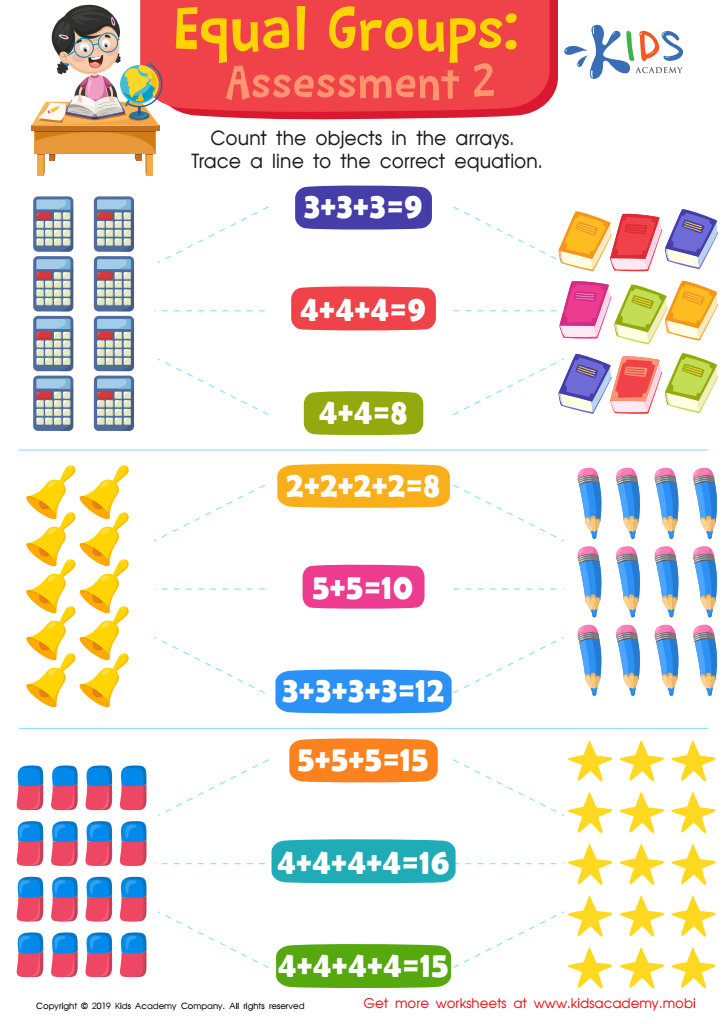
Equal Groups: Assessment 2 Worksheet
Equal Groups: Assessment 2 Worksheet
Get your kids to pay attention to learning with familiar objects, bright colors, and this worksheet. It has six arrays - ask kids to identify them and count the objects. Then, help them trace a line to the correct equation.
Equal Groups: Assessment 2 Worksheet
Worksheet
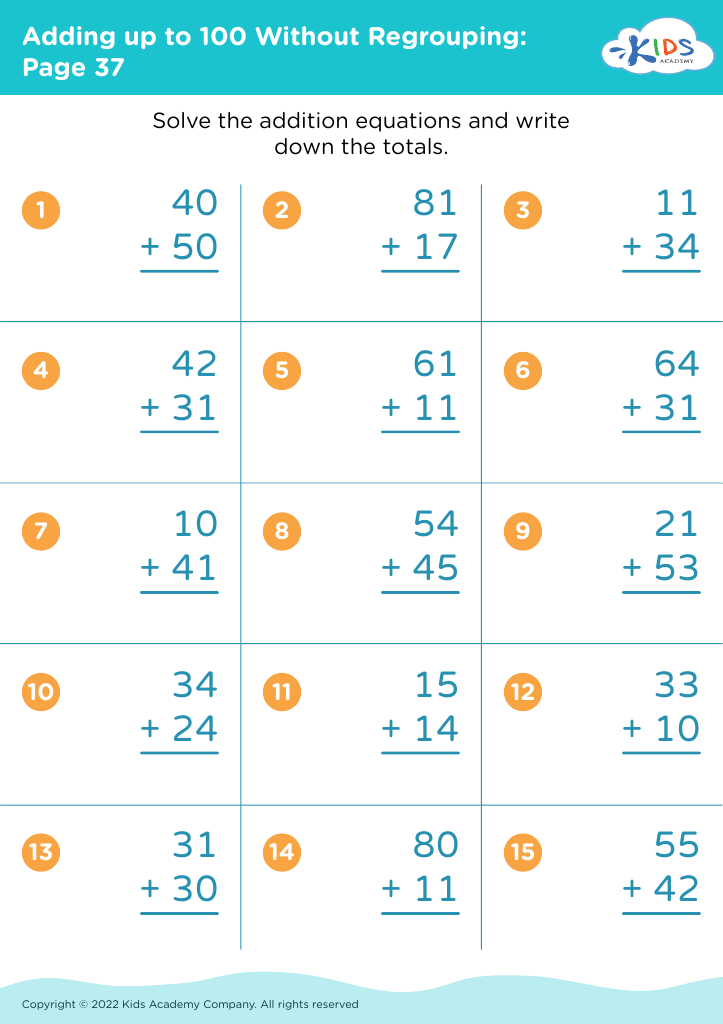
Adding up to 100 Without Regrouping: Page 37
Worksheet
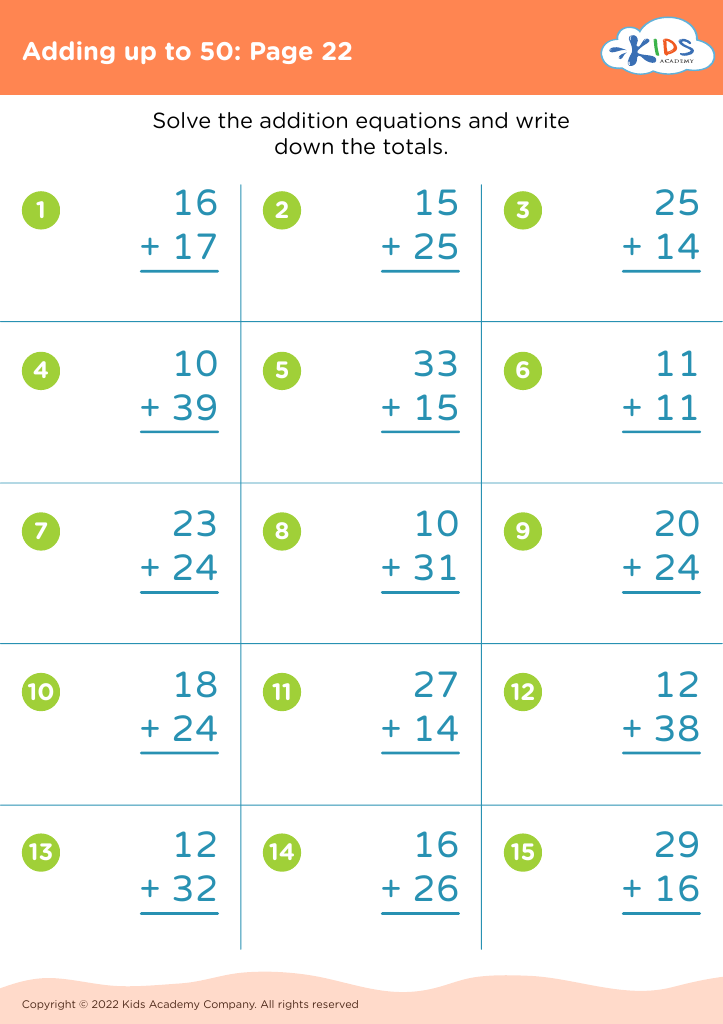
Adding up to 50: Page 22

Adding up to 50: Page 22

Adding up to 50: Page 22
Worksheet
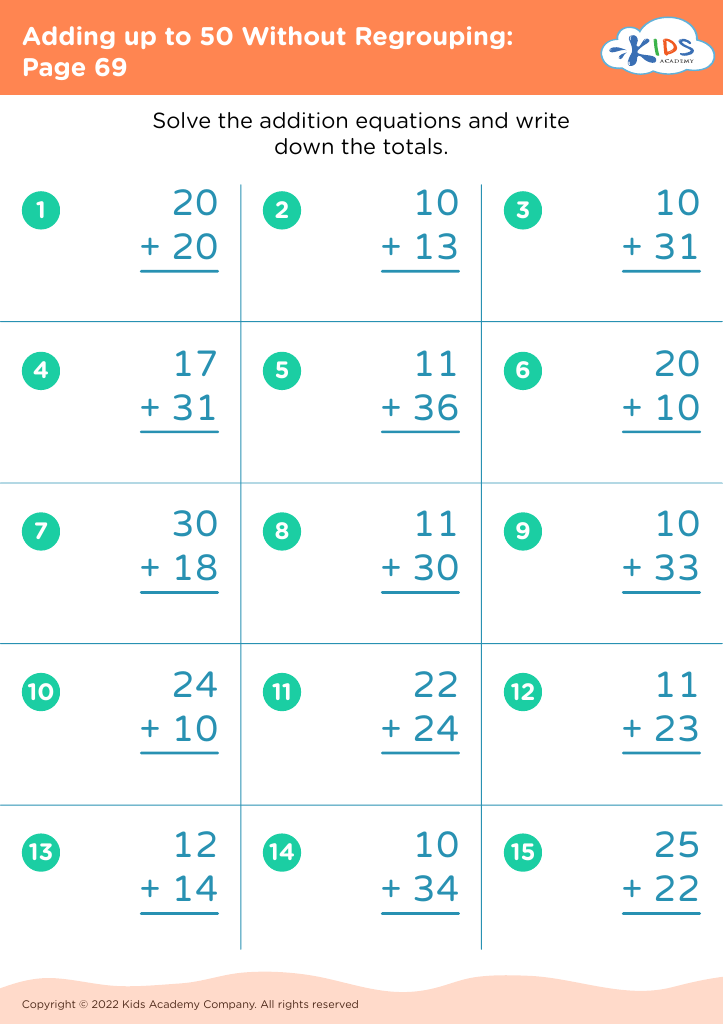
Adding up to 50 Without Regrouping: Page 69
Worksheet
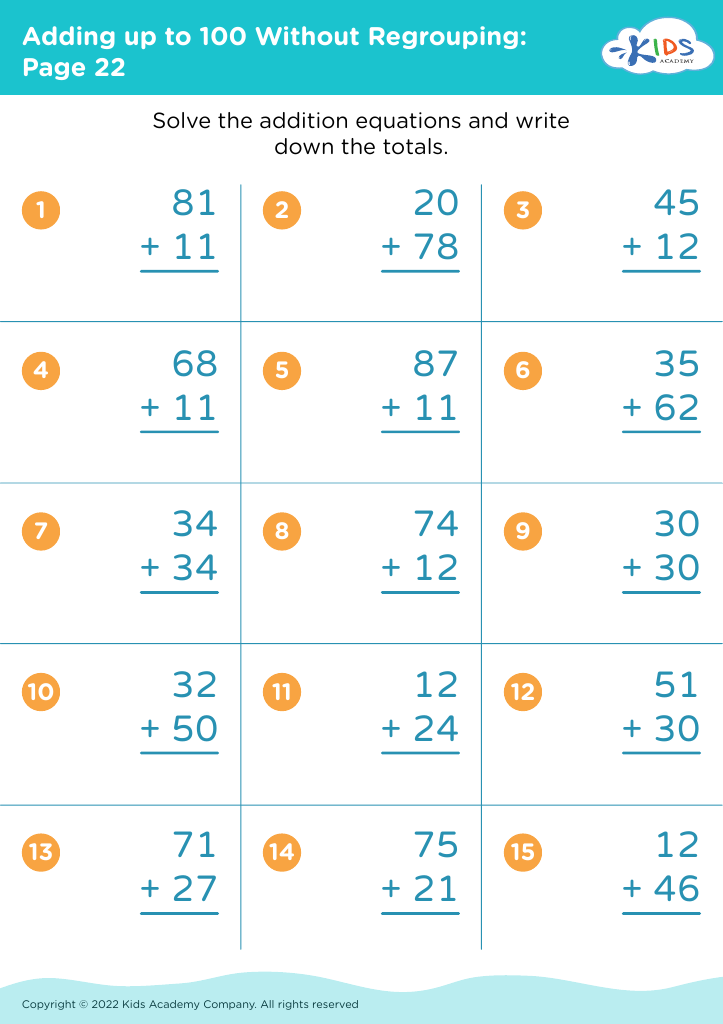
Adding up to 100 Without Regrouping: Page 22
Worksheet


Understanding multiplication for children ages 5-8 is crucial for their overall arithmetic and cognitive development. At this early stage, children are building foundational math skills that will serve as building blocks for more complex mathematical concepts. Gaining a solid grasp on multiplication not only facilitates proficiency in math but also enhances problem-solving skills, logical thinking, and the ability to recognize patterns.

Multiplication is essentially repeated addition, which helps children comprehend how numbers can be grouped and combined efficiently. This understanding is essential, as it connects directly to division, fractions, algebra, and other math topics. Introducing it early ensures that children develop a positive attitude toward math, making them more likely to approach the subject with confidence and curiosity later in their education.

Moreover, early multiplication skills are practical in everyday life. Whether they are sharing toys equally, understanding spatial arrangements, or helping with shopping, the ability to effectively use multiplication makes many daily tasks more manageable. By ensuring that young children grasp these concepts early, parents and teachers empower them with a critical tool that underpins significant aspects of their academic and day-to-day activities, laying a strong foundation for future success in both math and broader real-life contexts.