Check out this FREE "Visual Learning" Trial Lesson for age 5-8!

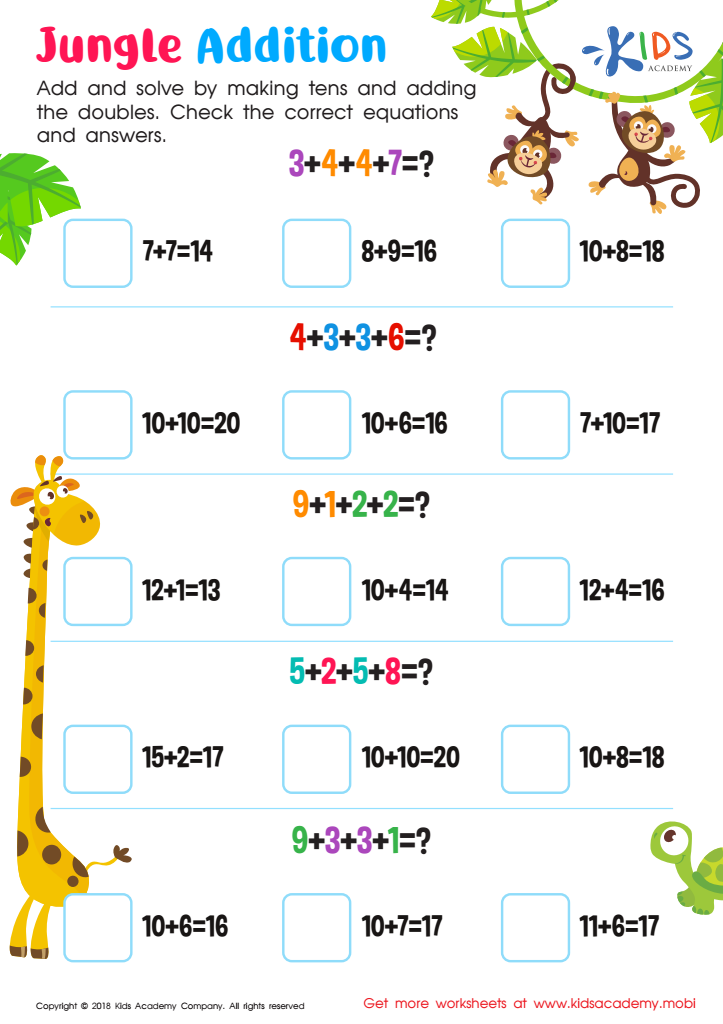
Adding more than 2 numbers- Making a Ten

Favorites
With answer key
Interactive
  • 5-8
  • Visual Learning
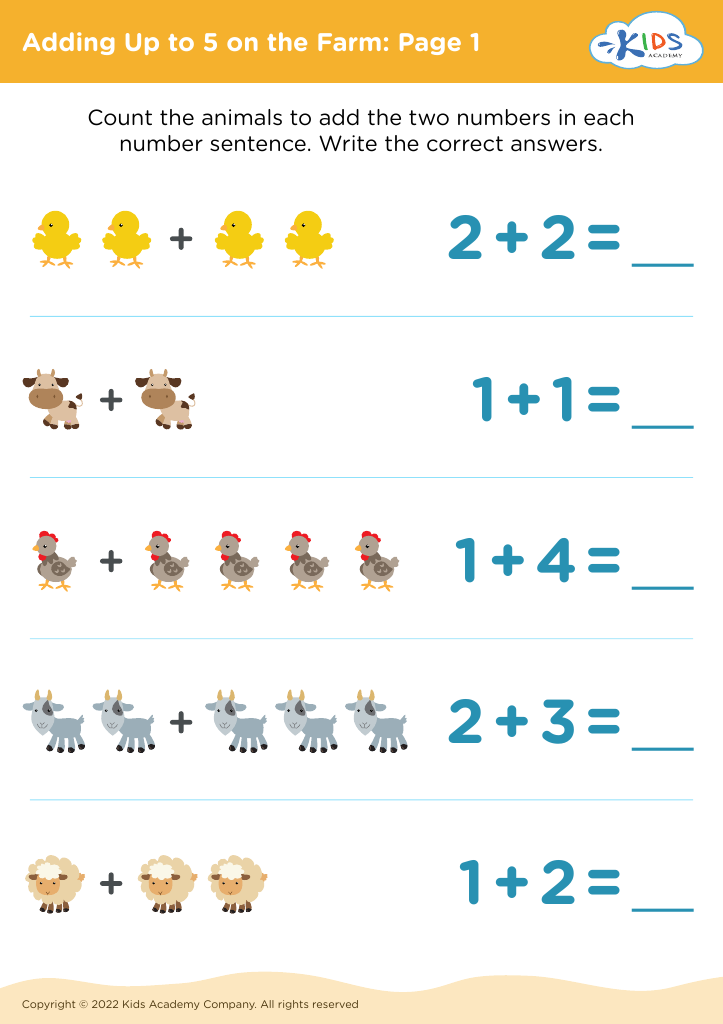
Adding Up to 5 on the Farm: Page 1
Worksheet
Life Cycle Frog Printable

Life Cycle Frog Printable

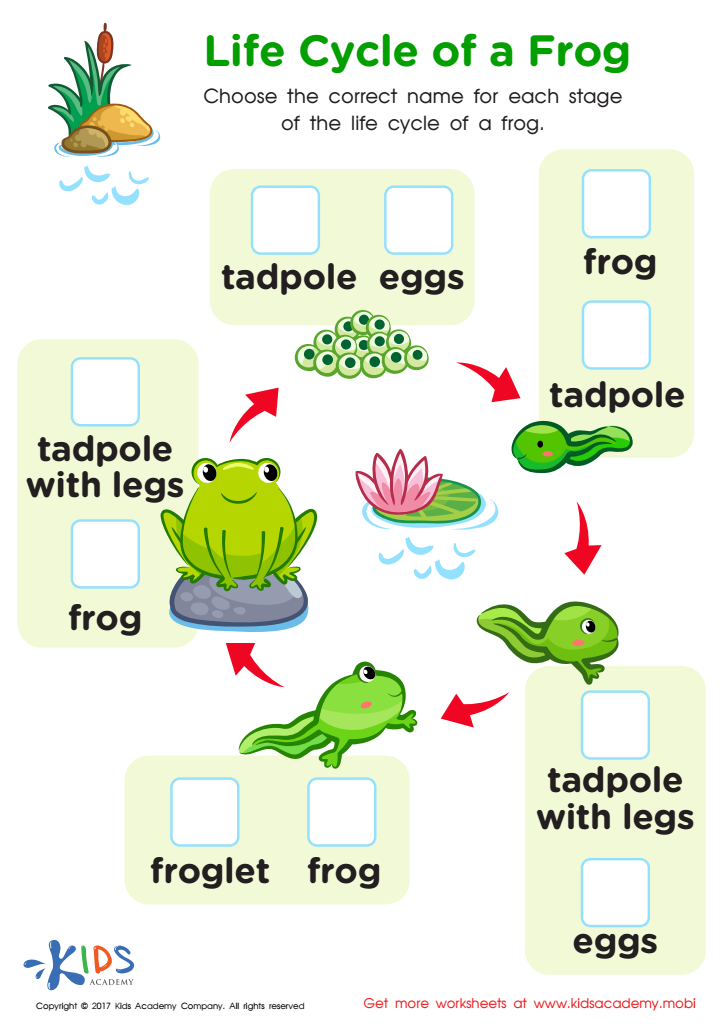
Kids can explore the life cycle of frog with this fun worksheet! Draw lines from one stage to the next to follow the transformation from tadpole to frog and learn about the cycle of life.
Life Cycle Frog Printable
Worksheet
Jungle Addition Worksheet

Jungle Addition Worksheet

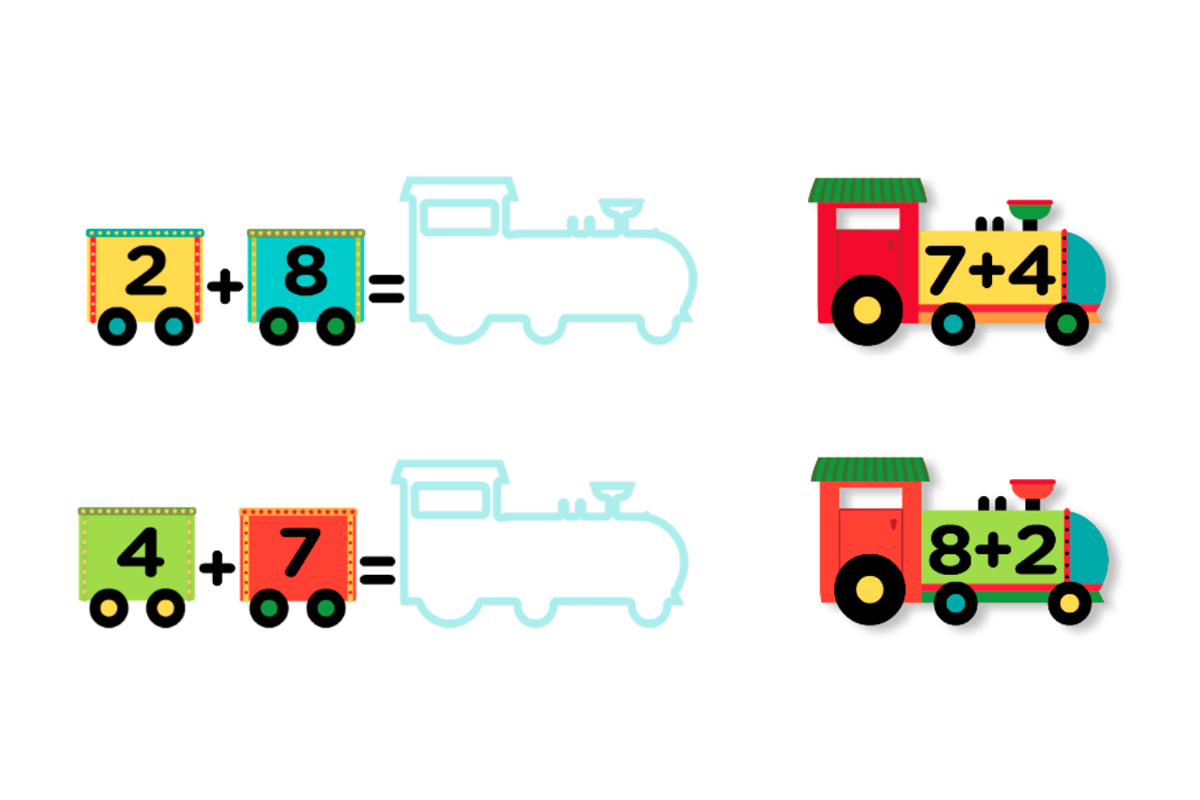
With this worksheet, kids can use the strategies of making tens and adding doubles to add numbers with more than three addends. They'll practice choosing the right method and become more confident in their calculations, enabling quicker, more efficient computation.
Jungle Addition Worksheet
Worksheet
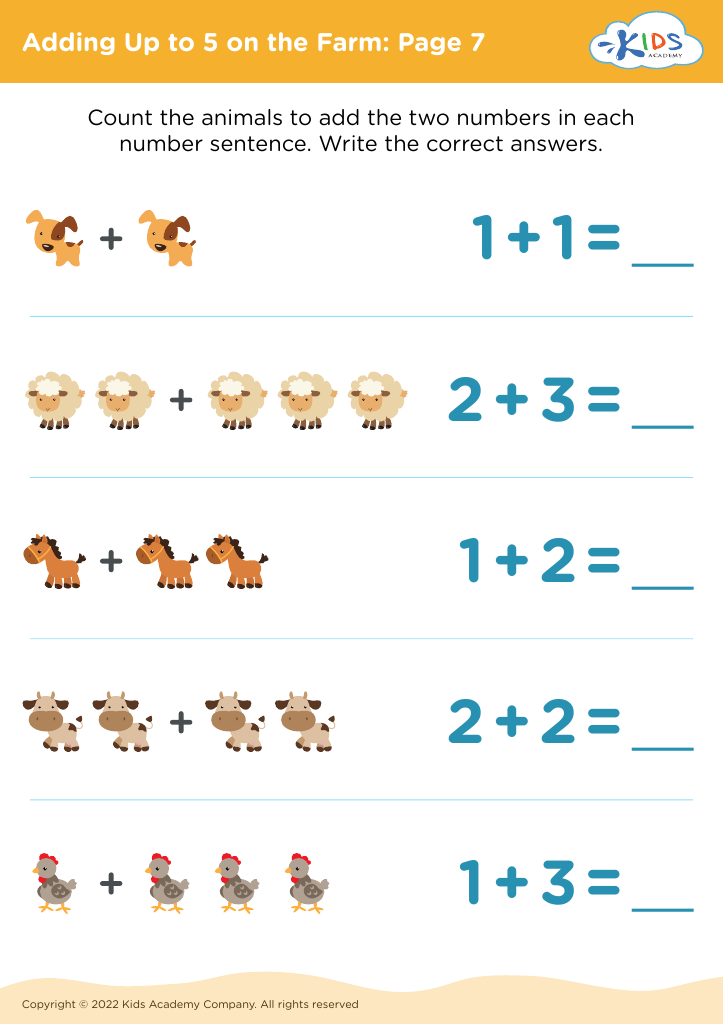
Adding Up to 5 on the Farm: Page 7
Worksheet
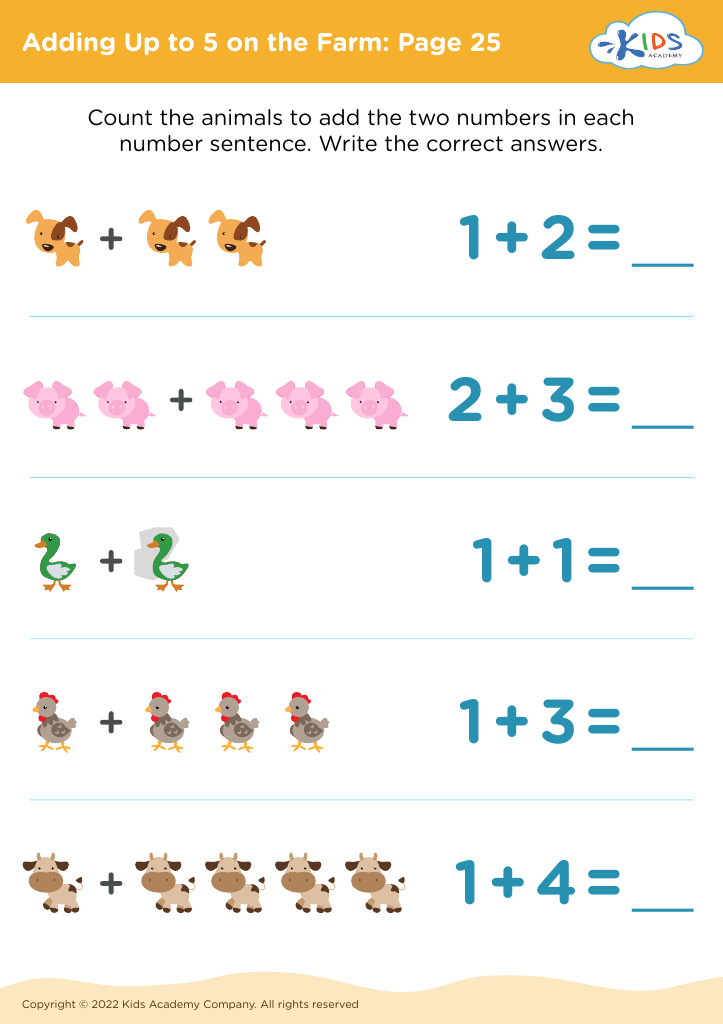
Adding Up to 5 on the Farm: Page 25
Worksheet
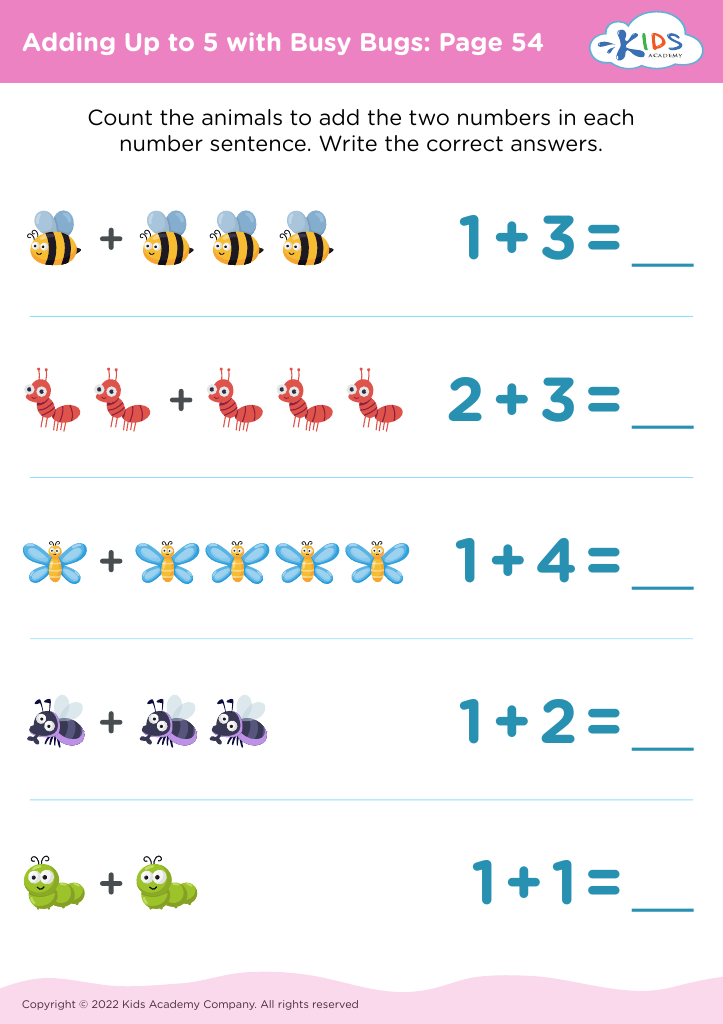
Adding Up to 5 with Busy Bugs: Page 54
Worksheet
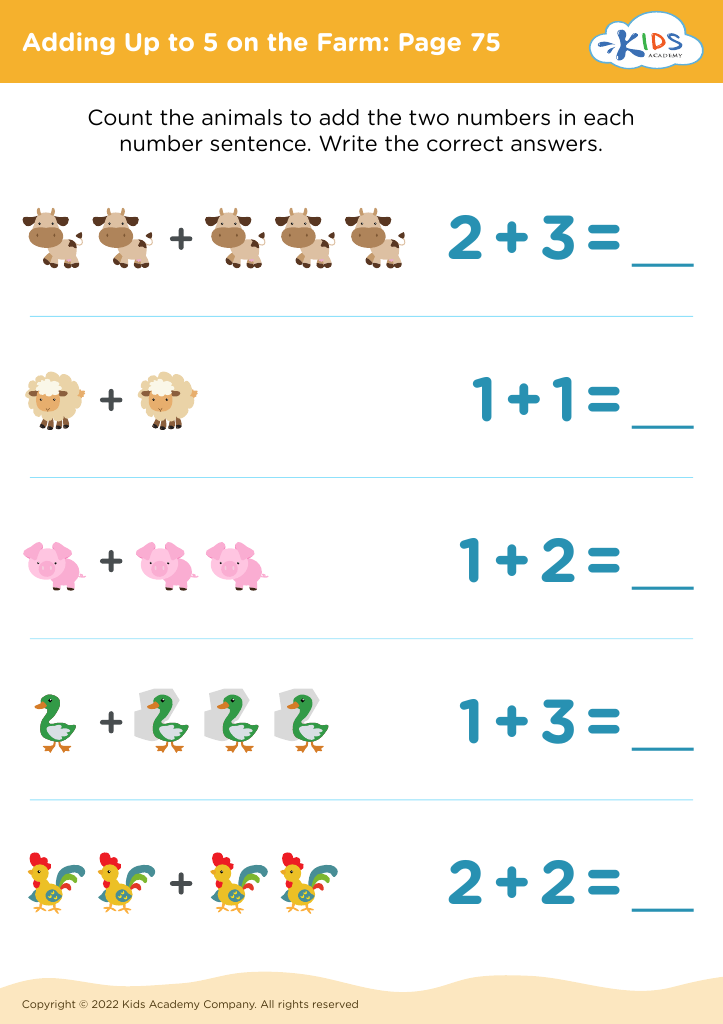
Adding Up to 5 on the Farm: Page 75
Worksheet
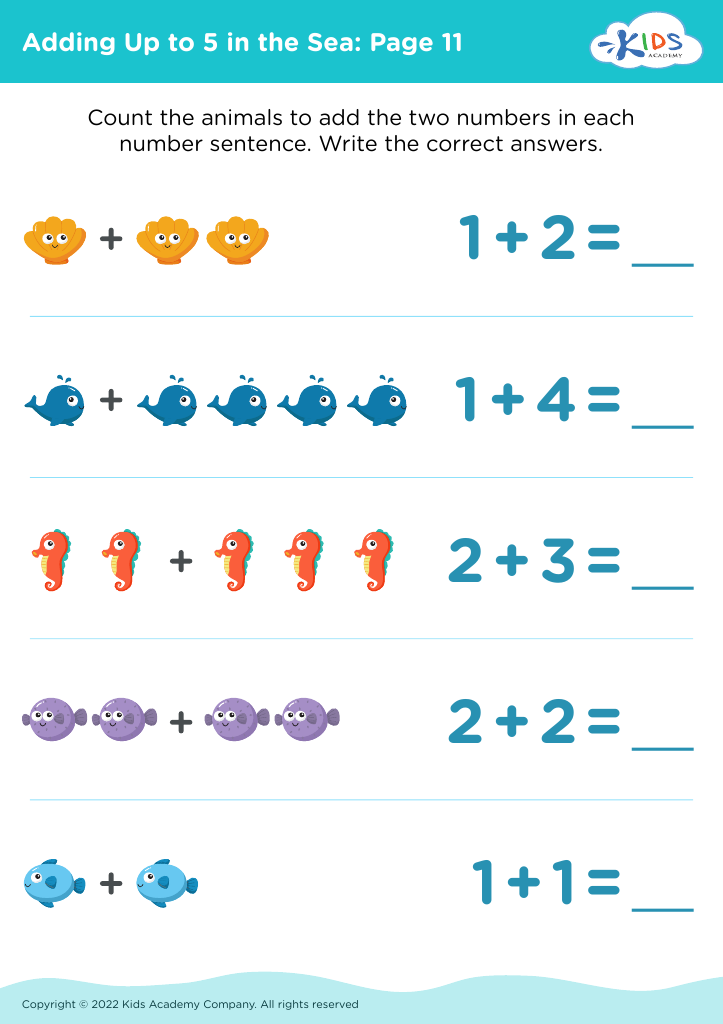
Adding Up to 5 in the Sea: Page 11
Worksheet
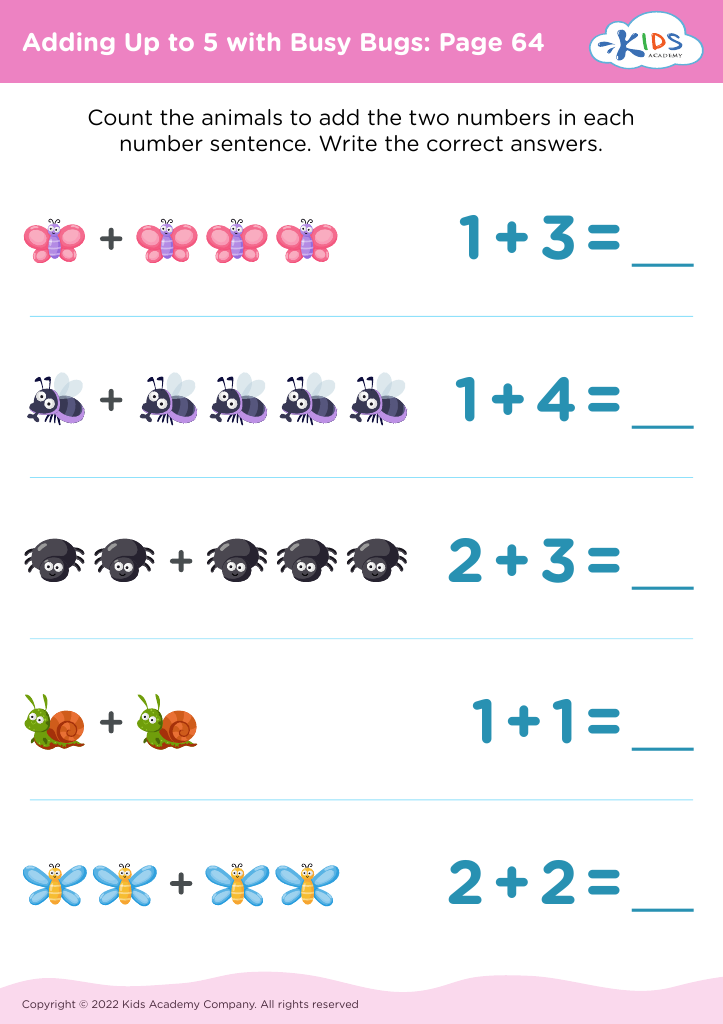
Adding Up to 5 with Busy Bugs: Page 64
Worksheet
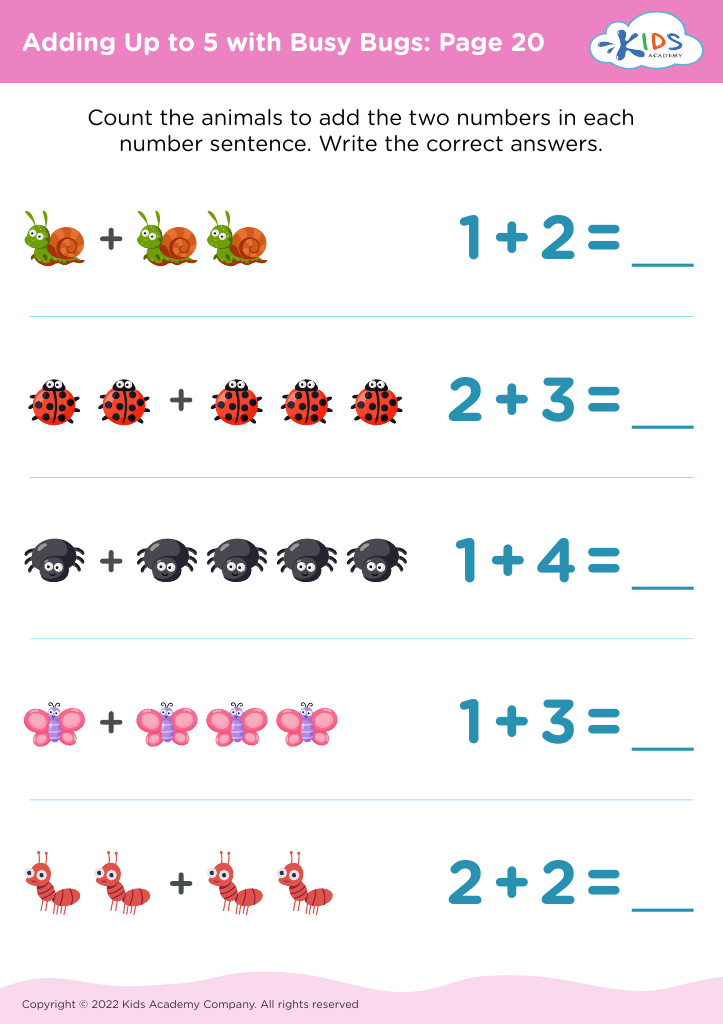
Adding Up to 5 with Busy Bugs: Page 20
Worksheet
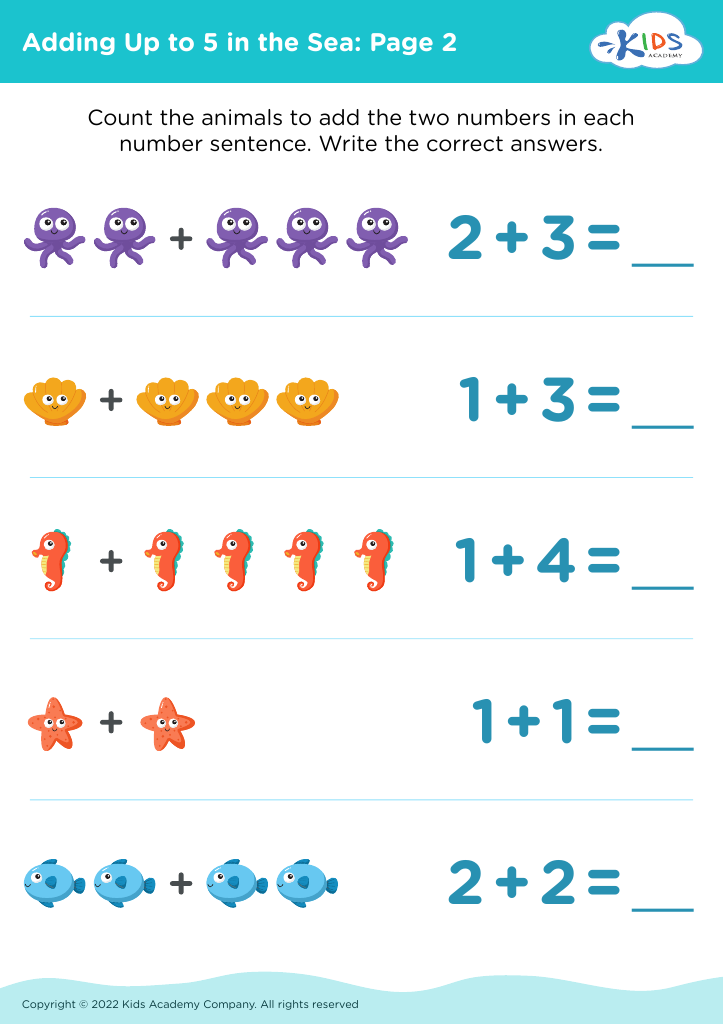
Adding Up to 5 in the Sea: Page 2

Adding Up to 5 in the Sea: Page 2

Adding Up to 5 in the Sea: Page 2
Worksheet
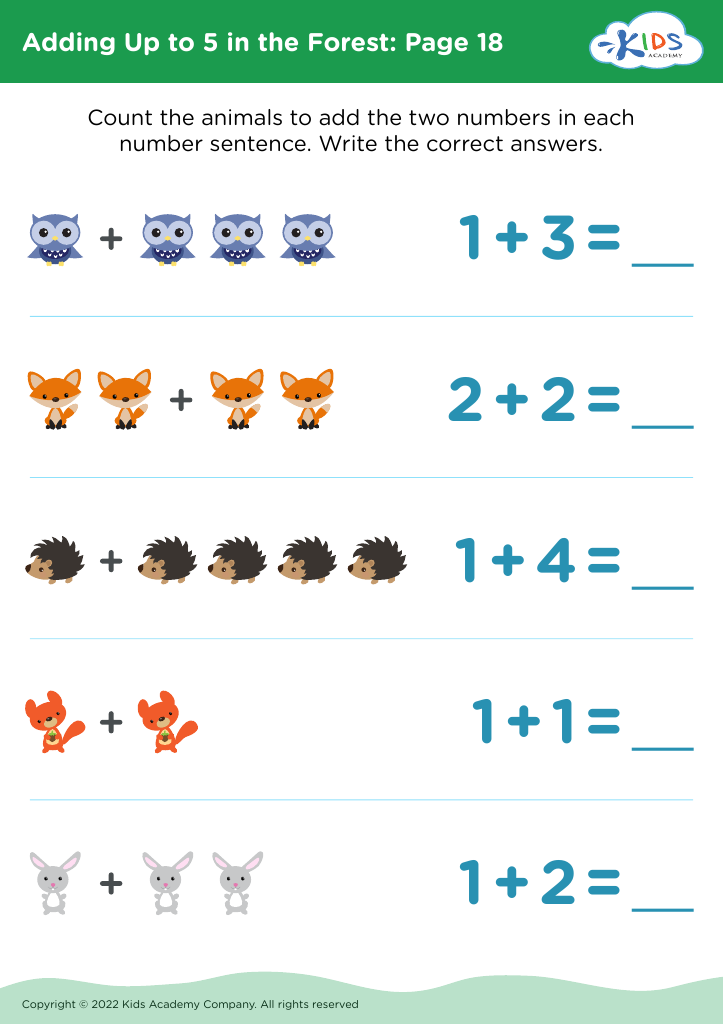
Adding Up to 5 in the Forest: Page 18
Worksheet
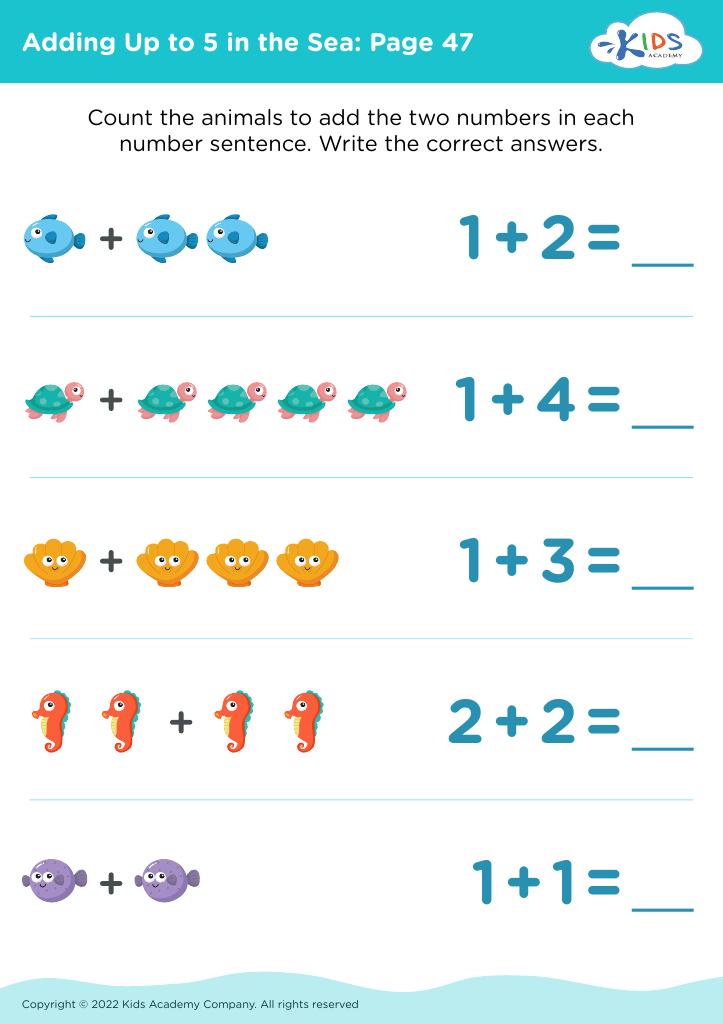
Adding Up to 5 in the Sea: Page 47
Worksheet
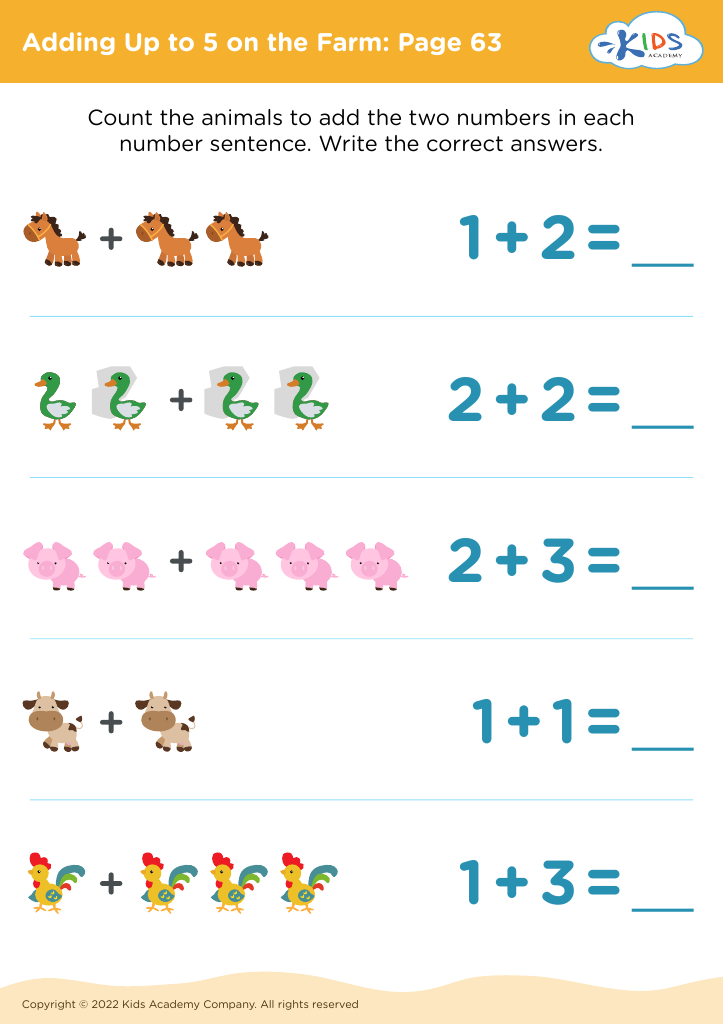
Adding Up to 5 on the Farm: Page 63
Worksheet
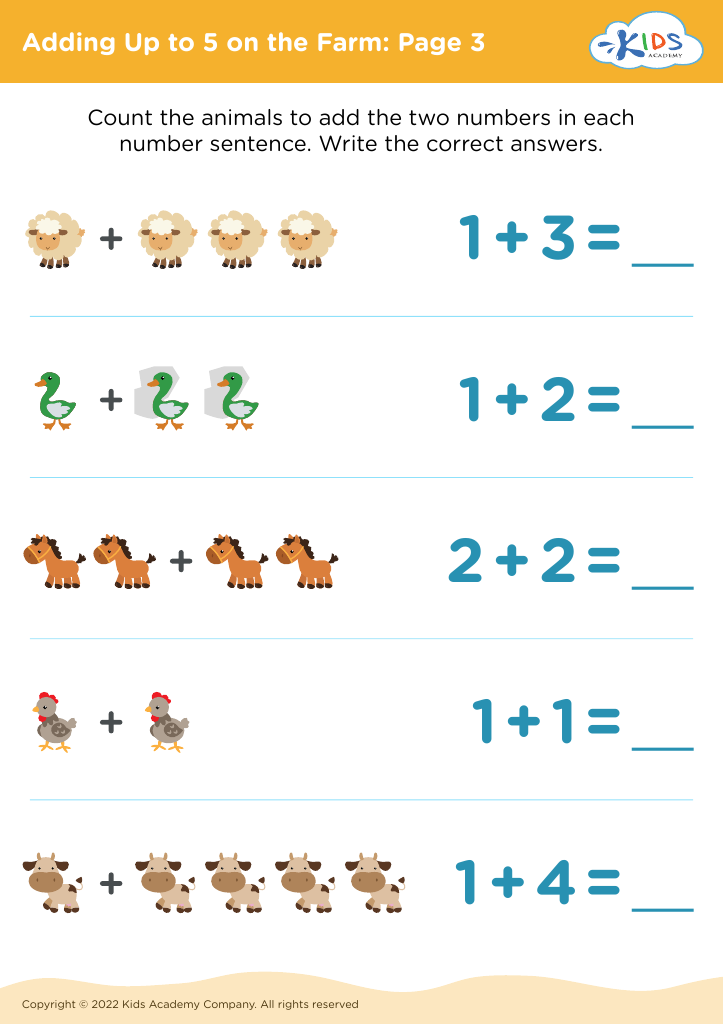
Adding Up to 5 on the Farm: Page 3
Worksheet
Addition at the Zoo Worksheet
Addition at the Zoo Worksheet
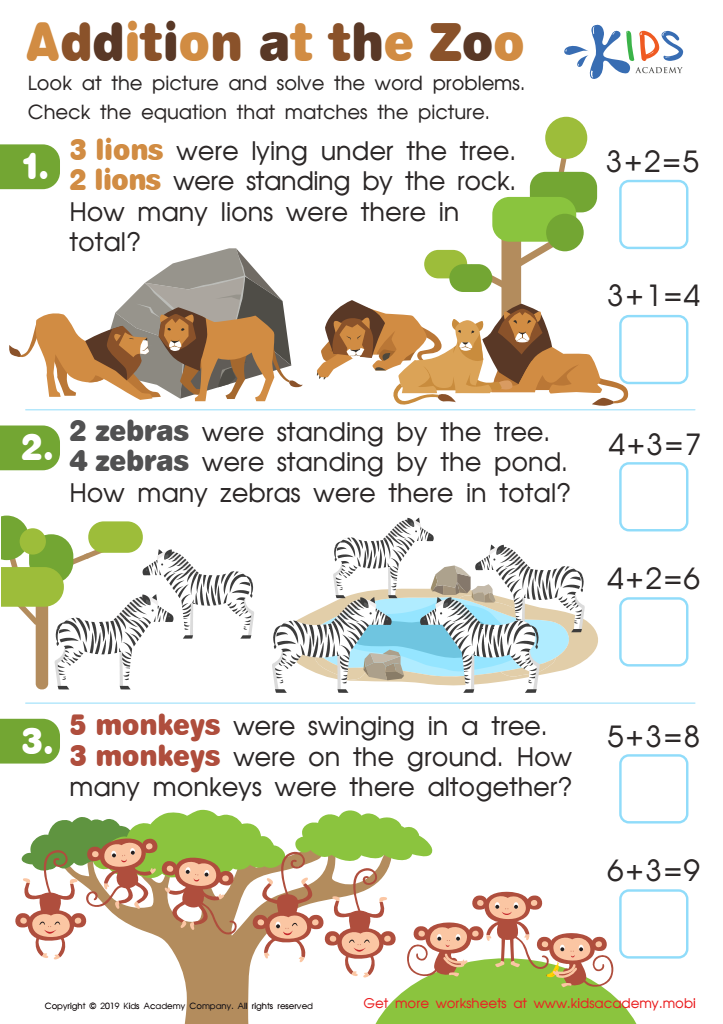
Visit the zoo with your kids and point out all the different animals. Ask them to name their favorites and identify animals on a worksheet. Challenge them to solve word problems related to the pictures. Ask them for the equation that fits the picture and check the answer.
Addition at the Zoo Worksheet
Worksheet
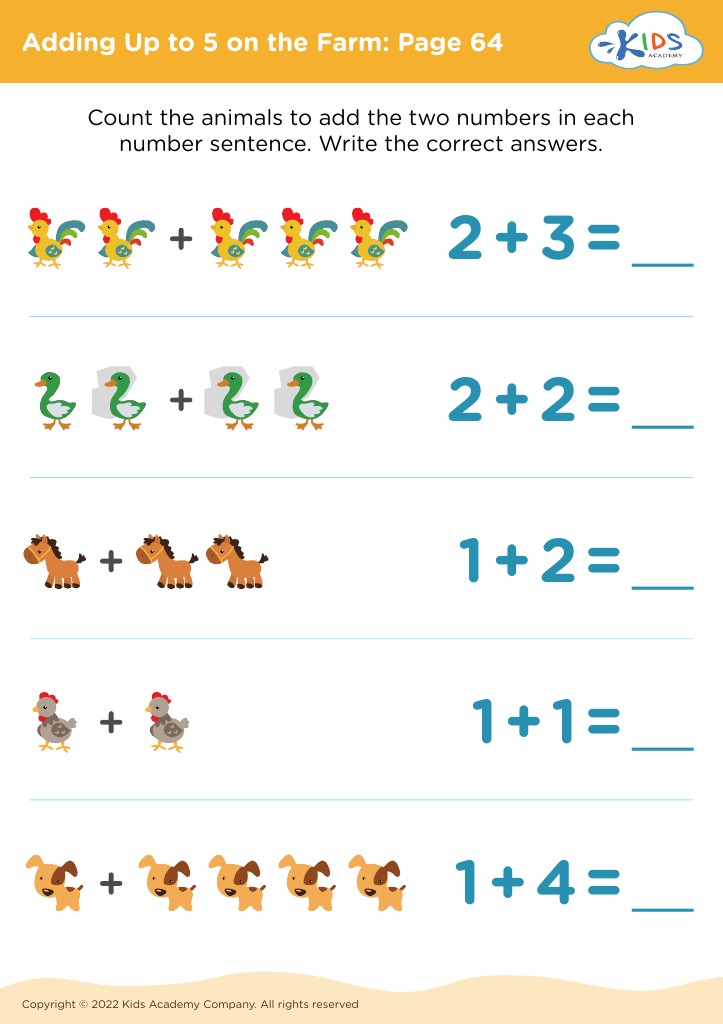
Adding Up to 5 on the Farm: Page 64
Worksheet
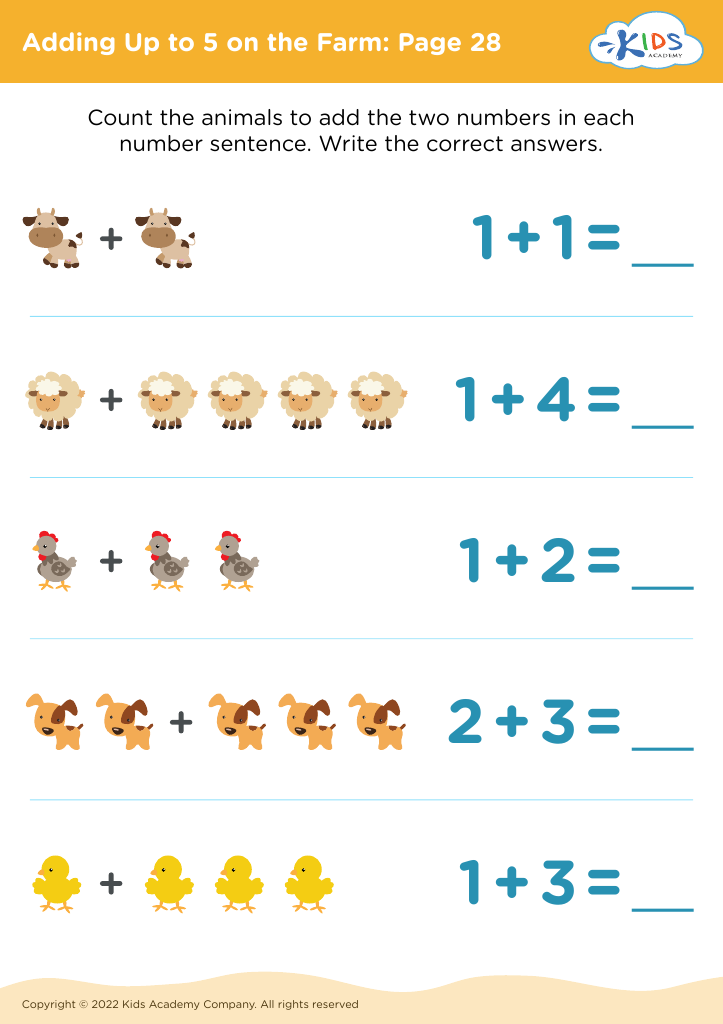
Adding Up to 5 on the Farm: Page 28
Worksheet
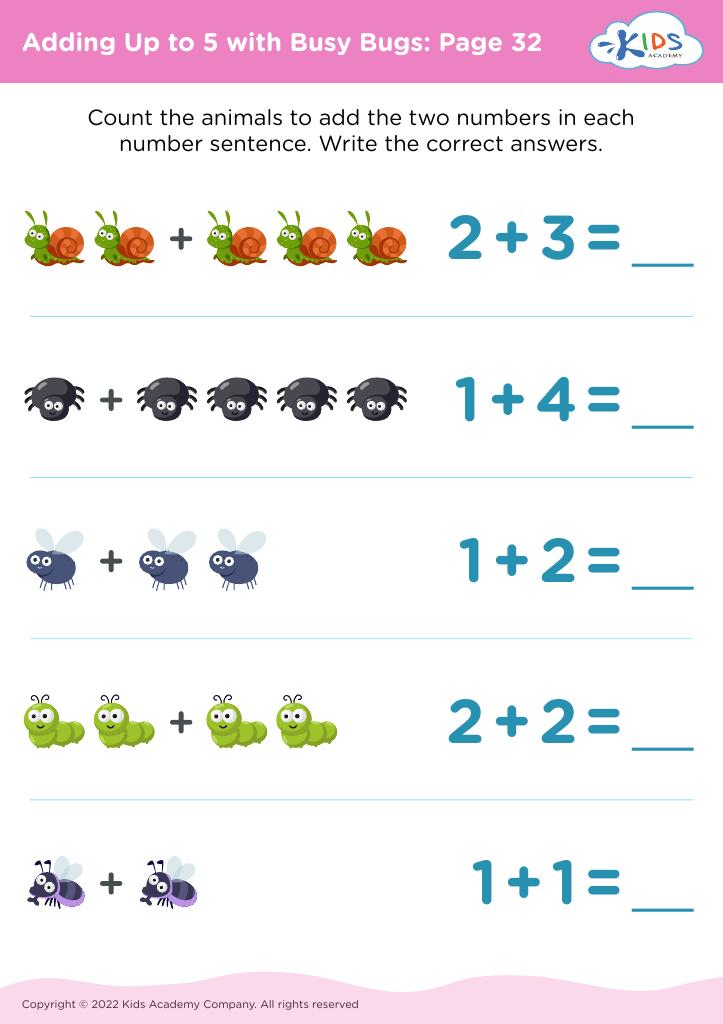
Adding Up to 5 with Busy Bugs: Page 32
Worksheet
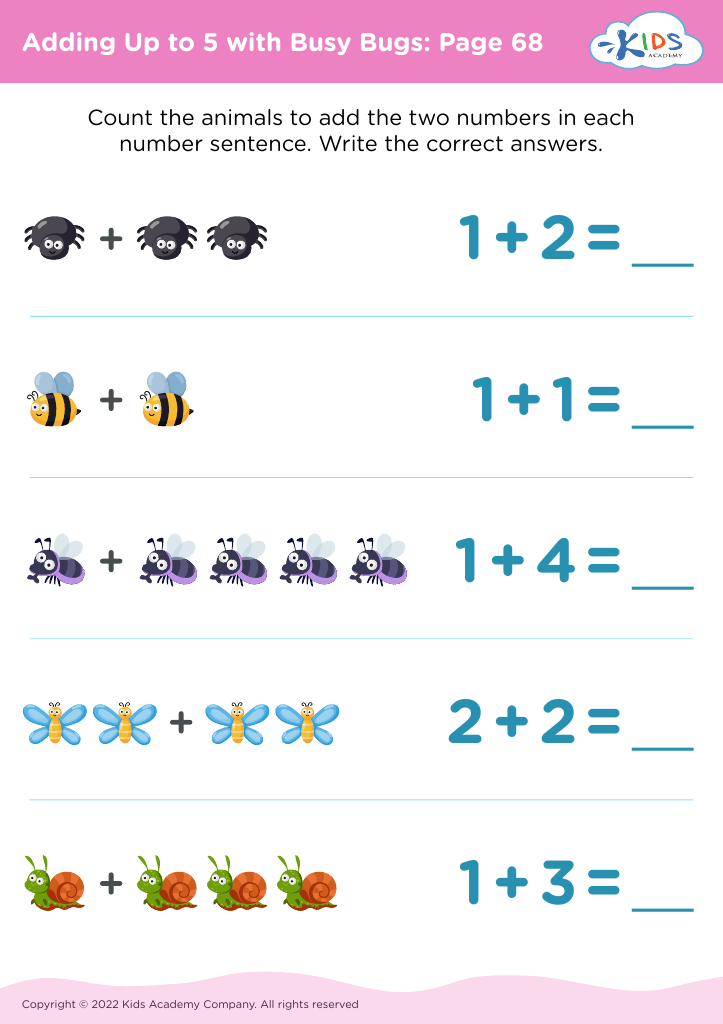
Adding Up to 5 with Busy Bugs: Page 68
Worksheet
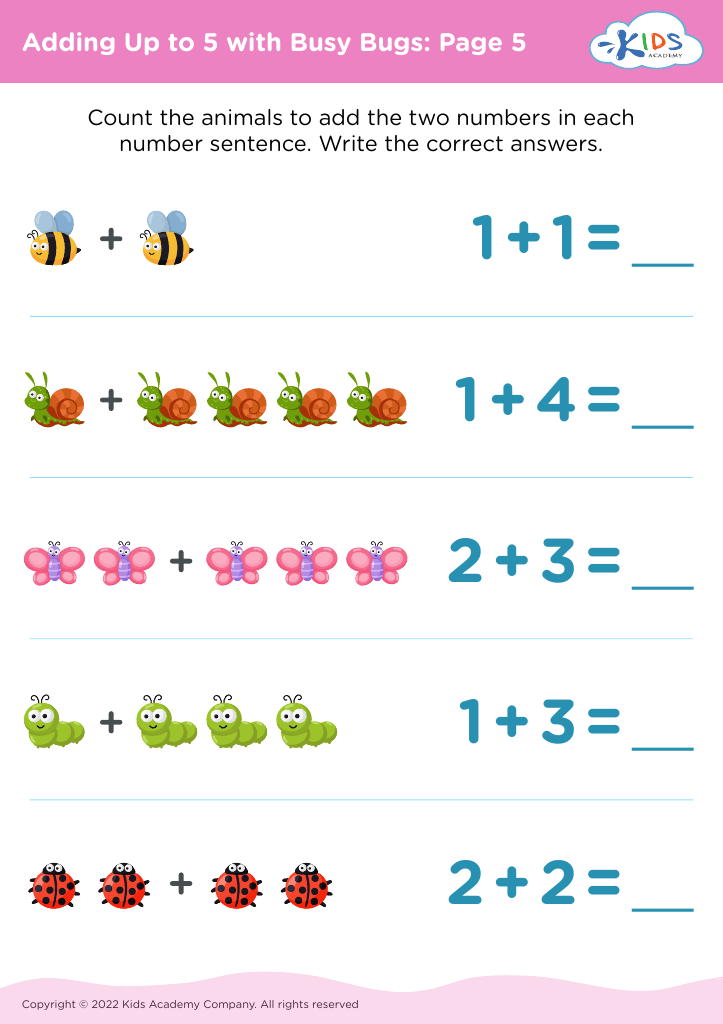
Adding Up to 5 with Busy Bugs: Page 5
Worksheet
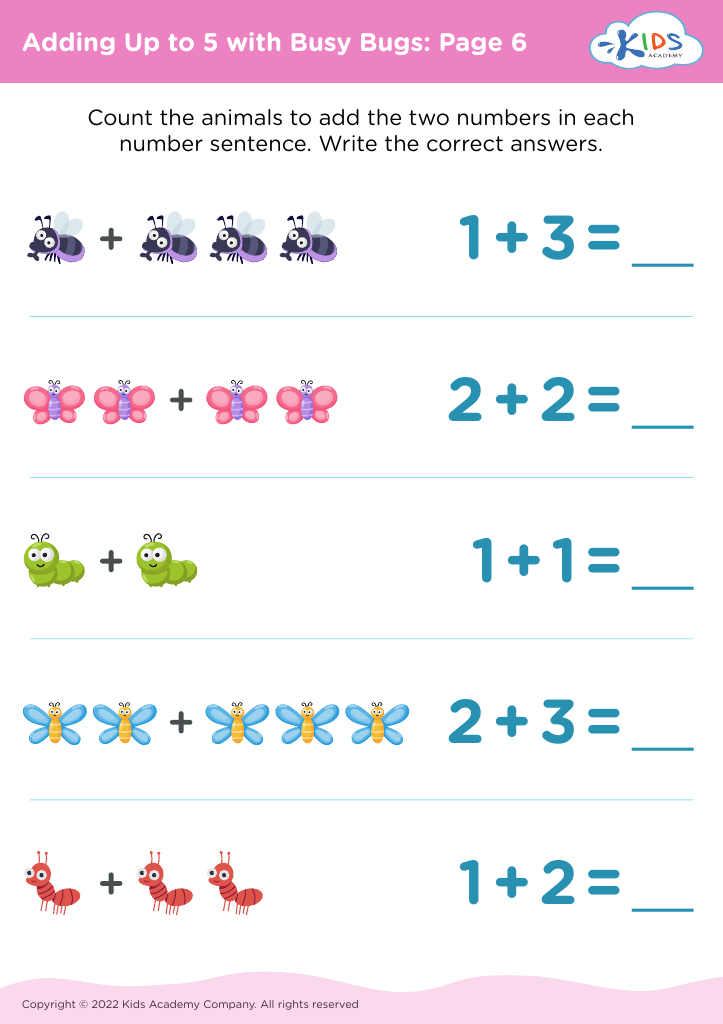
Adding Up to 5 with Busy Bugs: Page 6
Worksheet
Sources of Heat Energy Worksheet

Sources of Heat Energy Worksheet

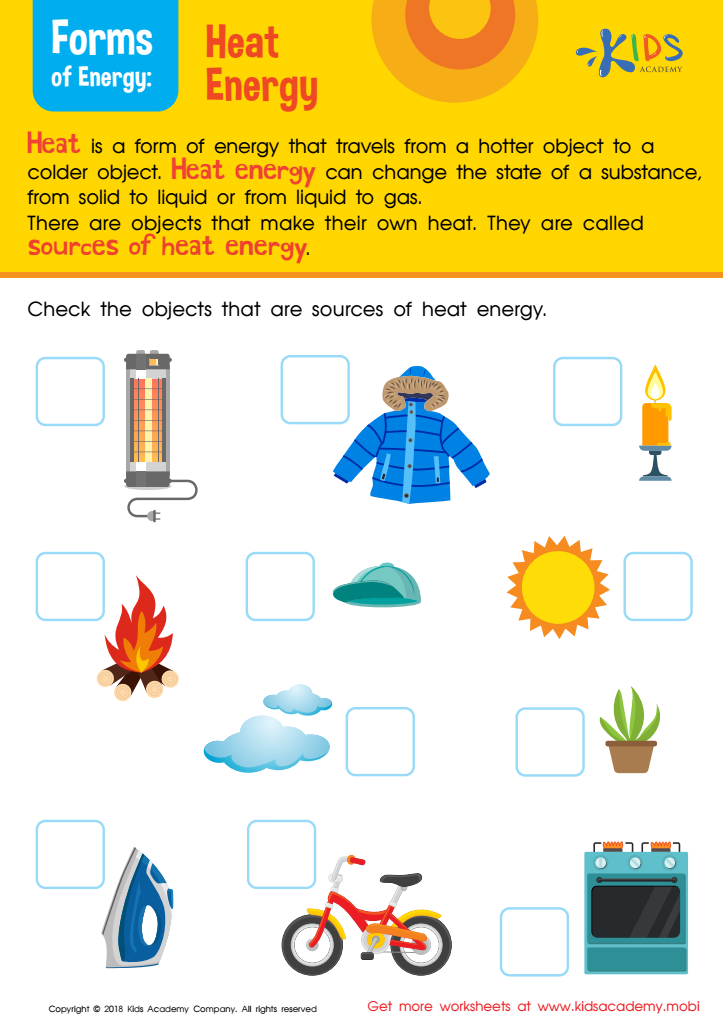
Heat energy is everywhere - from inside our homes to outside in the sun. Natural sources include the sun, geothermal energy, and volcanic activity. This worksheet helps kids identify and learn about these sources and more!
Sources of Heat Energy Worksheet

Worksheet
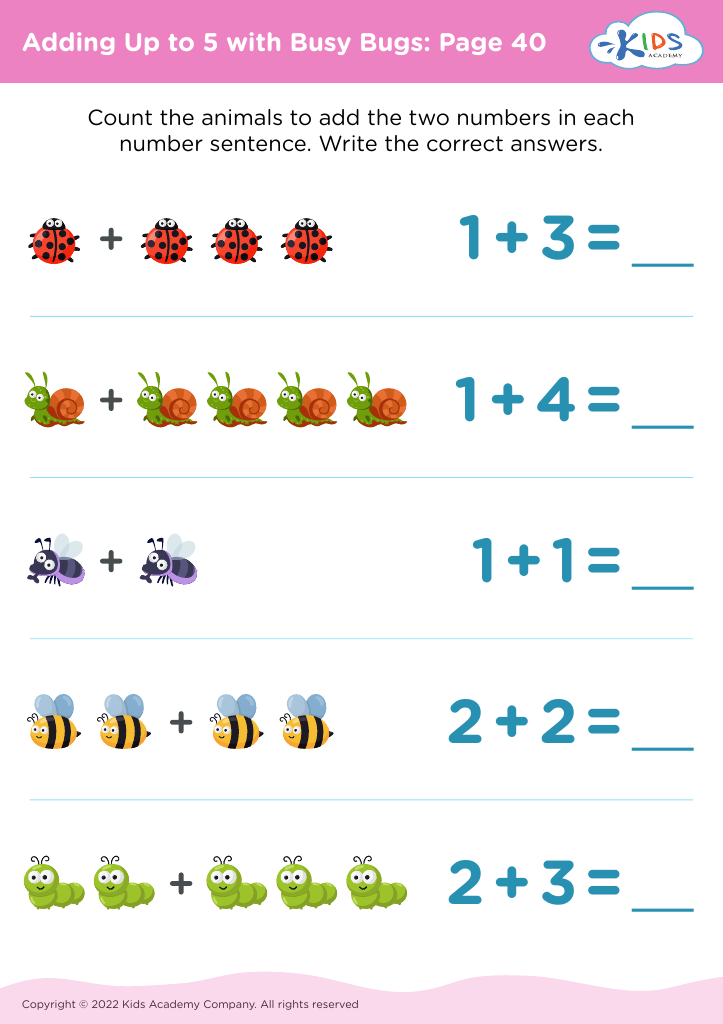
Adding Up to 5 with Busy Bugs: Page 40
Worksheet


Parents and teachers should prioritize visual learning for children aged 5-8 because this period is critical for cognitive development, and young children are naturally inclined to process visual information effectively. At this age, children learn best through engaging, multi-sensory approaches, and visual aids can make complex ideas more concrete and tangible. Bright colors, pictures, charts, and videos can capture children's attention more effectively than verbal explanations alone, facilitating better understanding and retention of information.

Furthermore, visual learning also supports language development by providing context and meaning to new words and concepts. Pictures, storybooks with illustrations, and interactive digital tools can make it easier for young learners to grasp vocabulary and sentence structures. Incorporating visual elements in lessons can also address various learning styles, ensuring that visual-spatial learners, who understand and remember information through images and spatial understanding, receive the support they need.

Additionally, nurturing visual learning skills can foster creativity and critical thinking. Activities such as drawing, coloring, and building with blocks enhance fine motor skills and spatial awareness, laying a foundation for more complex subjects like mathematics and science. By integrating visual learning techniques, parents and teachers can create a stimulating and inclusive educational environment that is pivotal to a child's academic and personal growth.