Visual-motor skills Worksheets for Ages 5-8
6 filtered results
-
From - To
Enhance your child’s visual-motor skills with our engaging worksheets designed for ages 5-8! These printable activities promote coordination between visual perception and physical movements, essential for tasks like writing and drawing. Our worksheets offer a variety of fun exercises that encourage practice and development, suitable for home or classroom settings. From tracing shapes to completing mazes, children will strengthen their hand-eye coordination while enjoying creative challenges. Perfect for early learners, these resources are an excellent way to support your child's foundational skills. Explore and download our visual-motor skills worksheets today to boost your child's confidence and abilities!
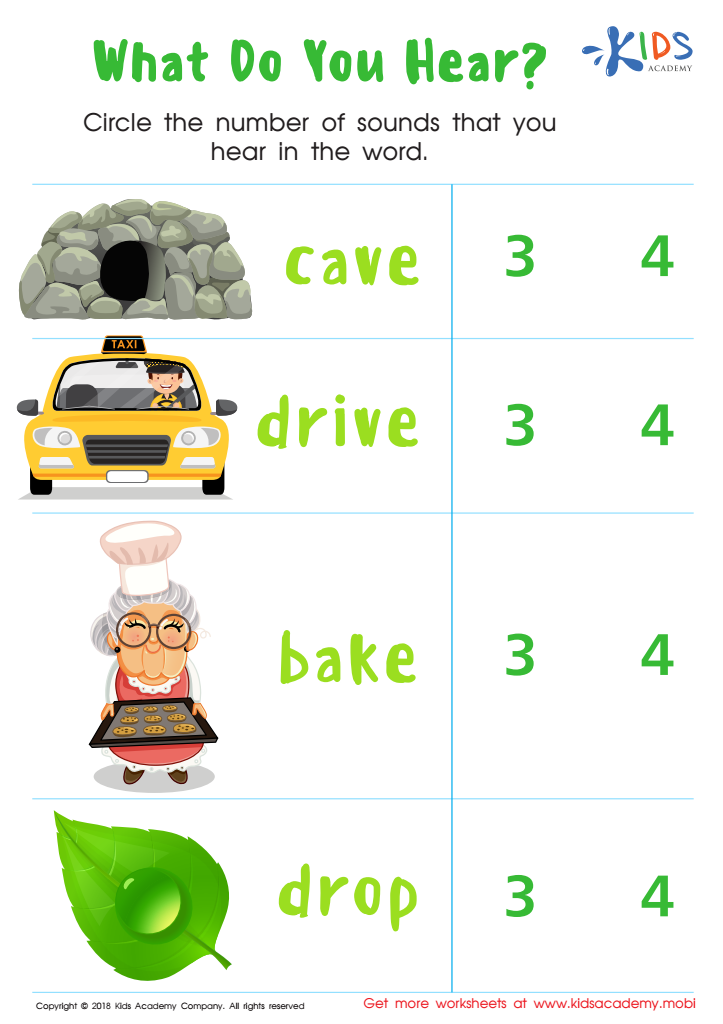
What Do You Hear? Worksheet
 Assign to My Students
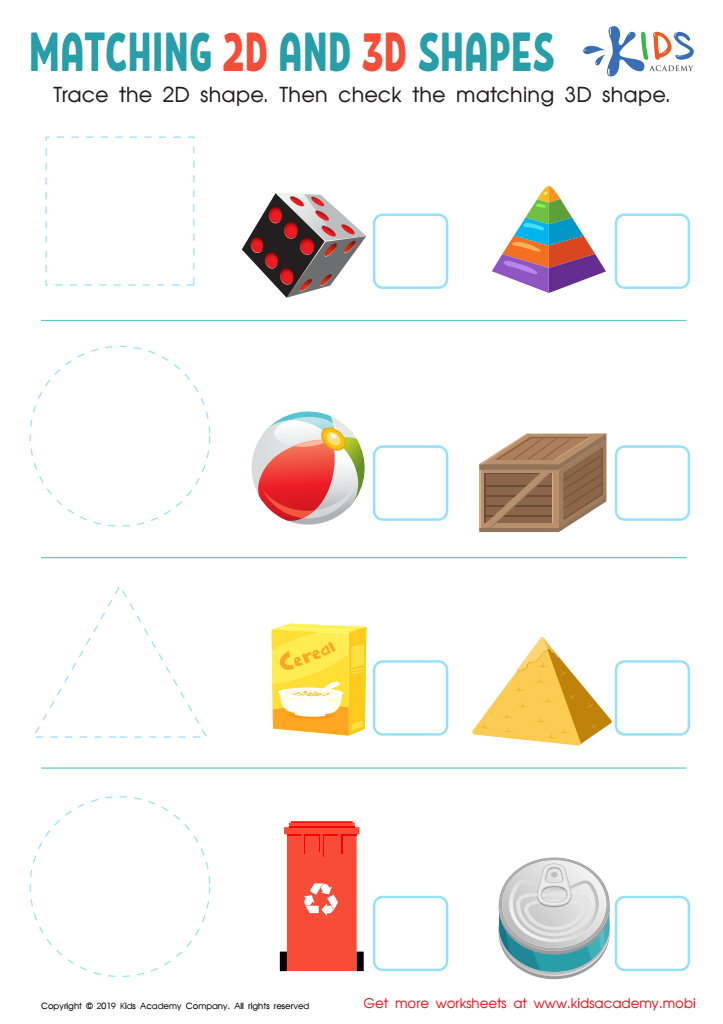
Matching 2D and 3D Shapes Worksheet






.jpg)

Parents and teachers should prioritize the development of visual-motor skills in ages 5-8 because these skills are fundamental for a child's overall learning and daily functioning. Visual-motor skills involve the coordination of visual perception and hand movements, enabling children to execute tasks like writing, drawing, and cutting with scissors effectively. Well-developed visual-motor skills are crucial for academic success; they contribute to a child's ability to read, write, and engage in various hands-on activities.
In early education, adequate visual-motor skills foster confidence and independence in learning. Children who struggle with these skills may find it more challenging to keep up with classmates, leading to frustration and disengagement. This can hinder their motivation to learn and negatively impact their self-esteem.
Moreover, activities promoting visual-motor skill development, such as puzzles, arts and crafts, and sports, can be enjoyable for children, allowing them to learn holistically. By focusing on improving these skills, parents and teachers can not only enhance academic readiness but also support children's social-emotional development, helping them build resilience and positive attitudes towards challenges as they advance in their education. Overall, investing in visual-motor skills is essential for nurturing well-rounded, capable youngsters.








