Word segmentation Worksheets for Ages 5-8
3 filtered results
-
From - To
Explore our engaging Word Segmentation Worksheets designed specifically for children aged 5-8! These interactive resources help young learners develop essential reading and phonemic awareness skills. By breaking down words into syllables and sounds, students enhance their ability to decode language, paving the way for improved reading proficiency. Our worksheets feature a variety of fun activities, including matching games, fill-in-the-blanks, and visual aids that captivate children's interest and encourage independent learning. Perfect for classroom use or at-home practice, these worksheets support early literacy development in a playful and stimulating way. Help your child embark on a rewarding reading journey today!
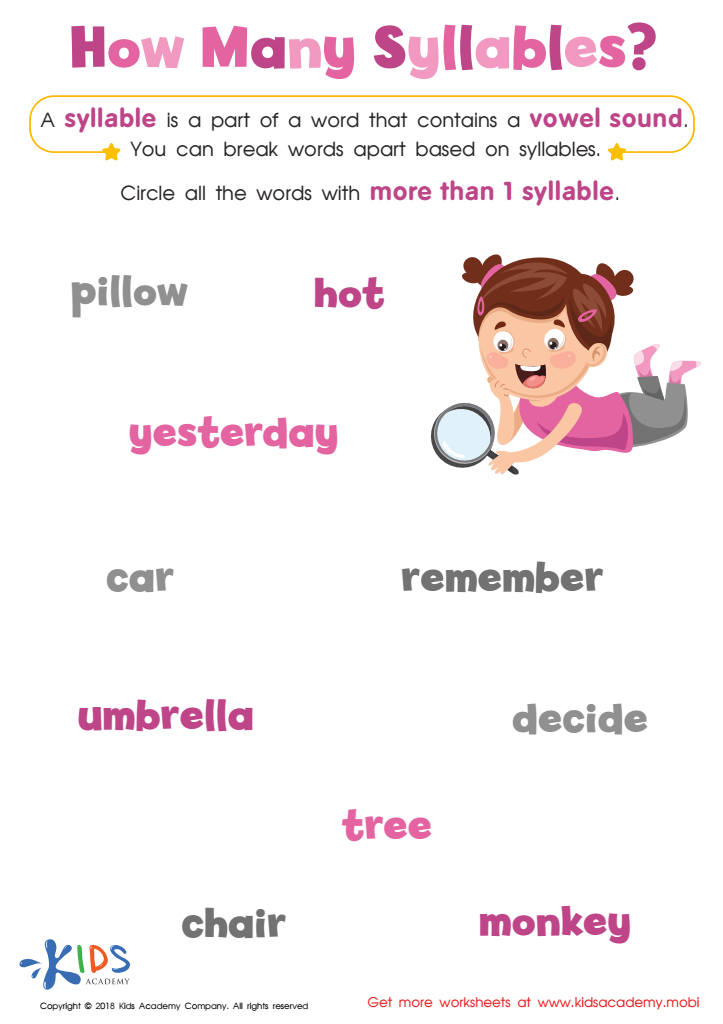
Reading: How Many Syllables Worksheet
 Assign to My Students
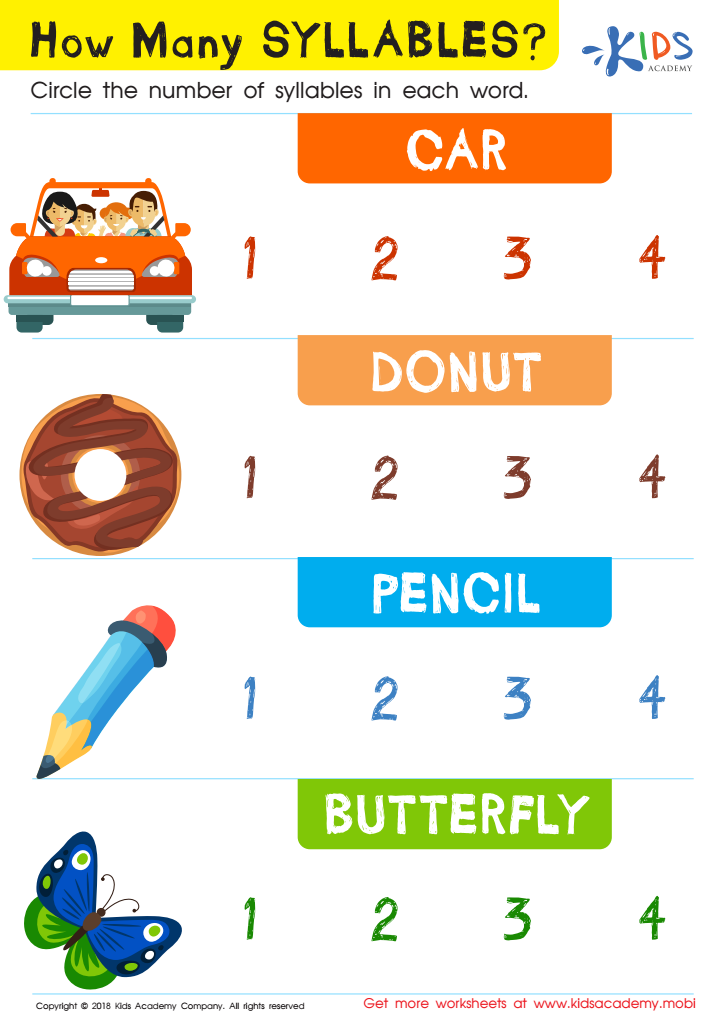
How Many Syllables? Worksheet
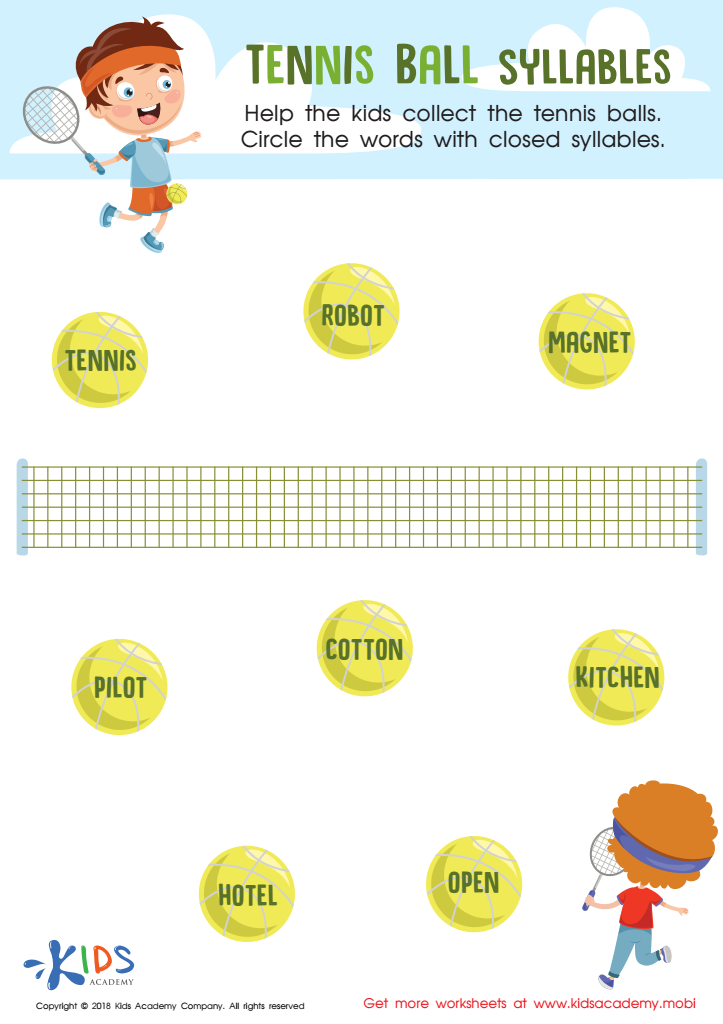
Tennis Ball Syllables Worksheet






Word segmentation is a crucial skill for children aged 5-8 as it forms the foundation for proficient reading, writing, and comprehension. At this age, children are developing their phonological awareness, which is the ability to hear, identify, and manipulate sounds in spoken language. Mastery of word segmentation enables children to recognize individual words within continuous speech, facilitating their ability to decode text accurately.
When parents and teachers prioritize word segmentation, they enhance children's reading fluency and comprehension. This skill helps students break down complex sentences and grasp the meaning of unfamiliar words, thus aiding vocabulary expansion. Moreover, word segmentation forms the basis for spelling and writing skills, allowing children to write coherently and structure their thoughts effectively.
Additionally, focusing on word segmentation can boost a child's confidence and enjoyment in reading. A solid understanding of word boundaries often translates to improved academic performance, setting the stage for lifelong learning. Engaging in activities that promote word segmentation, such as rhyming games and syllable clapping, not only makes learning fun but also strengthens the parent-teacher bond through collaborative efforts in literacy development. Therefore, investing time and resources in this skill is essential for helping children thrive in their academic journey.








