Adding at the Zoo Worksheets for Ages 5-8 - Page 4
77 filtered results
-
From - To
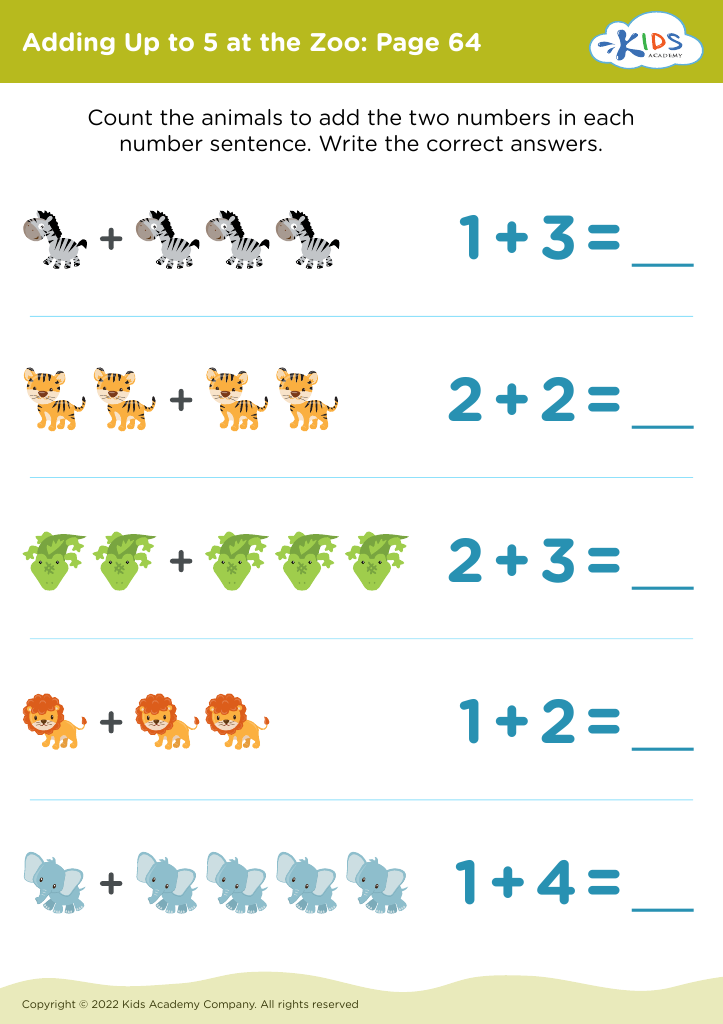
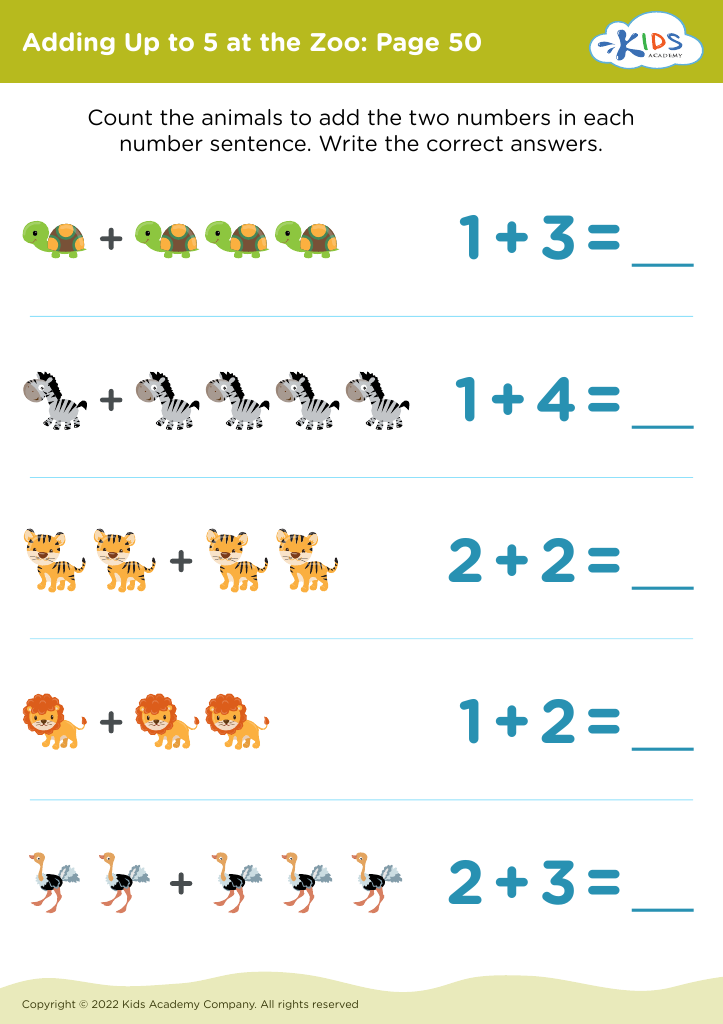
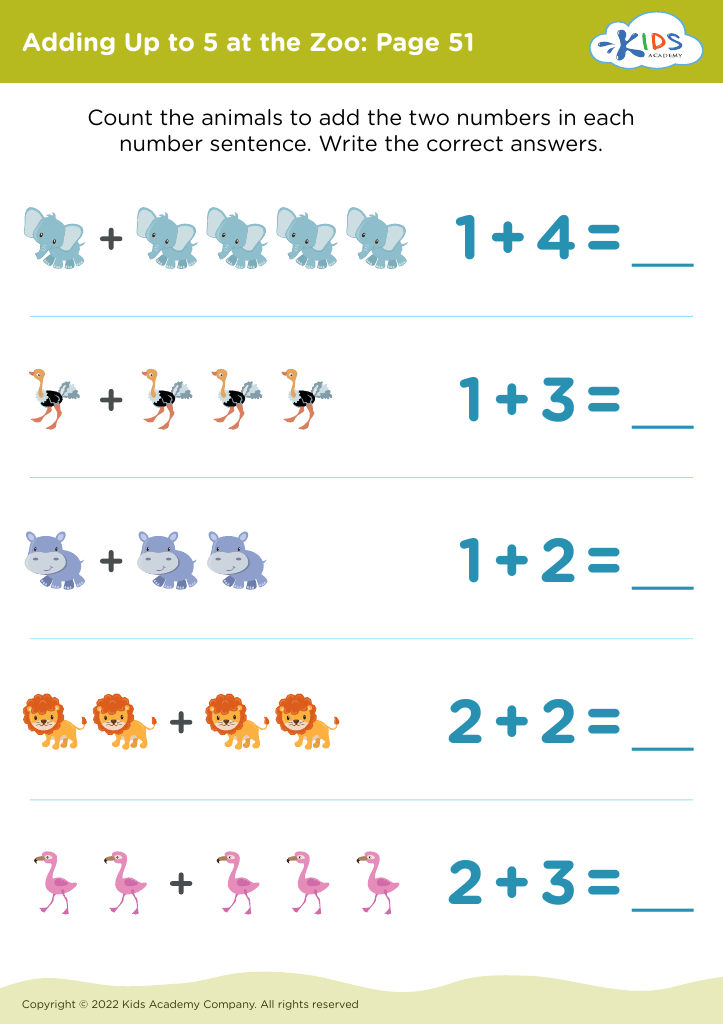
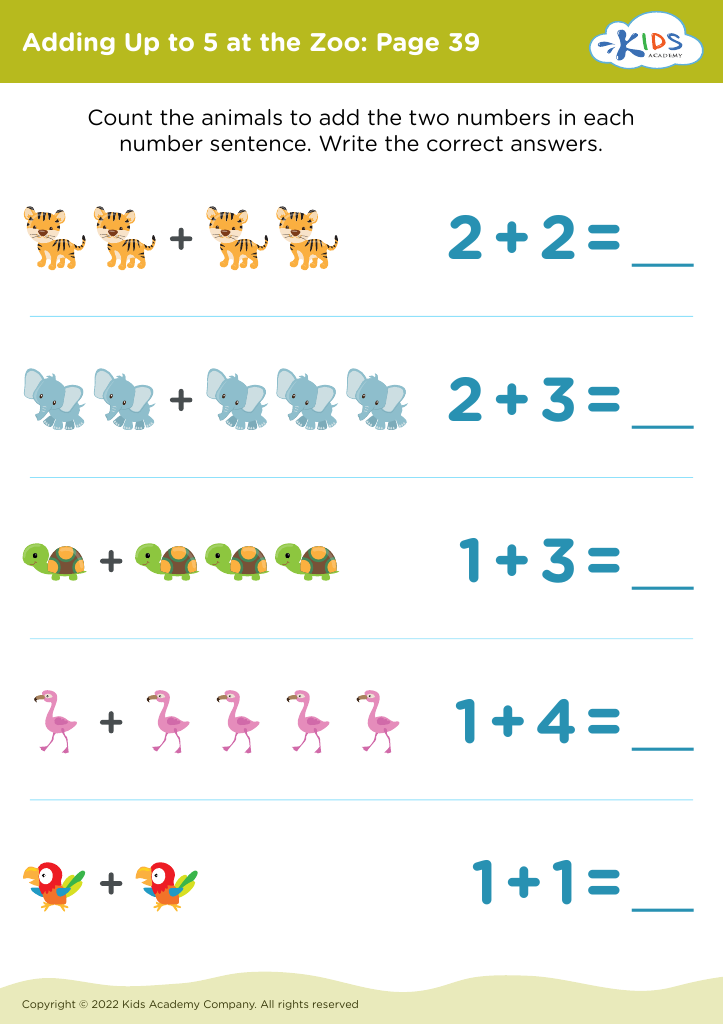
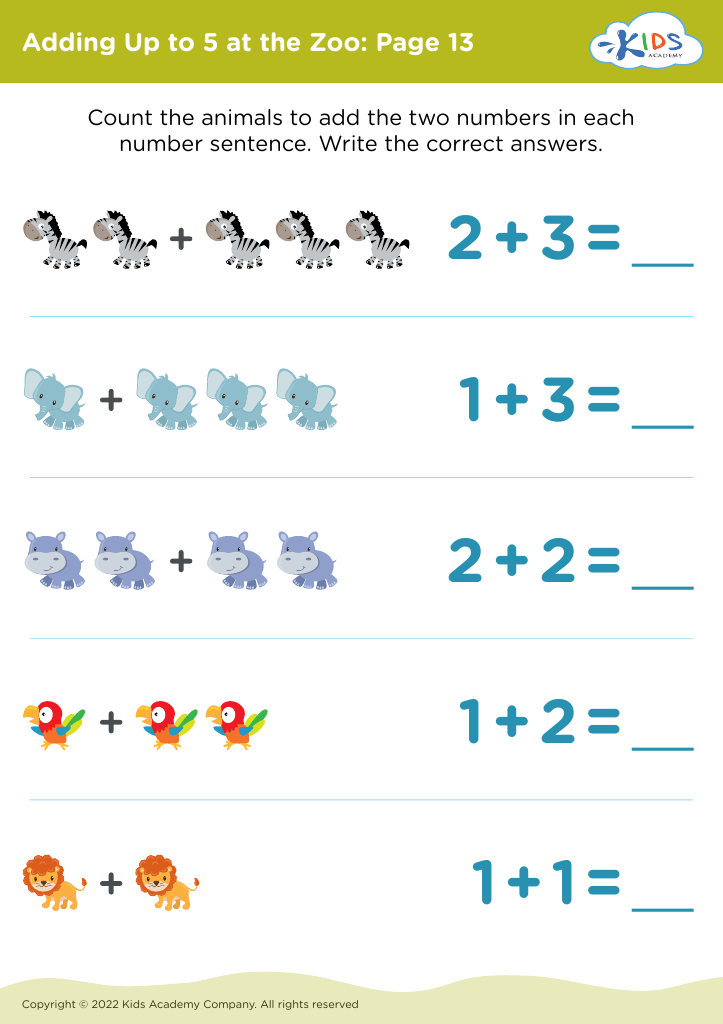



Adding at the Zoo is a highly engaging and educational activity for young learners aged 5-8 that parents and teachers should care about due to its multiple developmental benefits. Firstly, it introduces fundamental math concepts in a fun and relatable context. By associating numbers with captivating zoo animals, children are more likely to maintain their interest and enthusiasm for learning addition.
Moreover, this activity blends learning with play, adhering to the natural learning tendencies of young children. Interactive settings, such as zoo-themed problems, help solidify basic addition facts in a memorable way. Animal characters and zoo scenarios transform abstract numbers into tangible experiences, thereby improving comprehension and retention.
The engaging narrative can also foster critical thinking and problem-solving skills. For instance, asking how many lions and tigers are in the zoo encourages children to apply their addition skills while situating them in a story context. This not only makes learning enjoyable but also mimics real-world scenarios where math is applicable.
Furthermore, the zoo setting can spark interest in animals and nature, promoting cognitive and emotional development. It opens avenues for interdisciplinary learning, combining math with lessons on zoology and environmental awareness.
In summary, Adding at the Zoo is a delightful and educational tool that makes learning addition an enjoyable, multifaceted experience while fostering a lifelong love for math and knowledge.