Adding up to 50 Misc Worksheets for Ages 5-8 - Page 2
73 filtered results
-
From - To
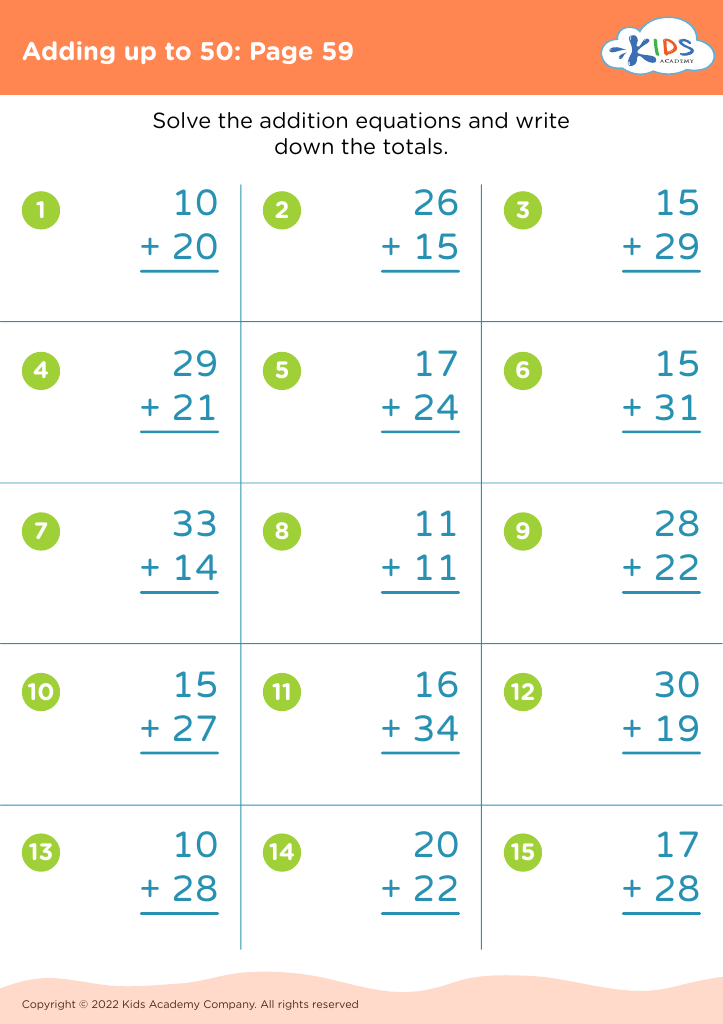
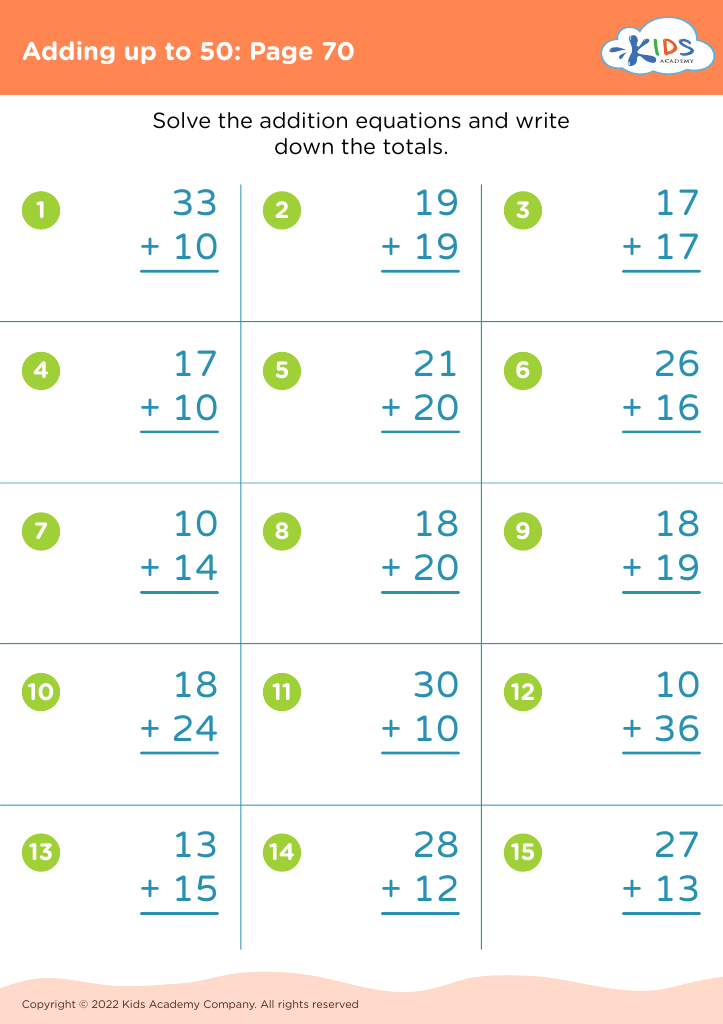
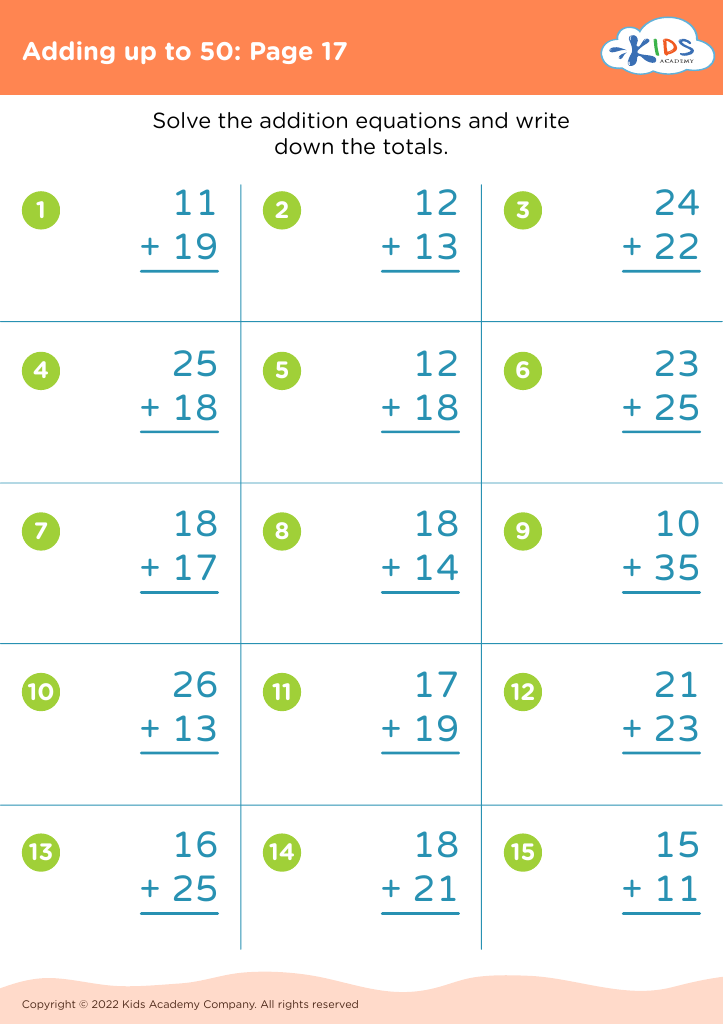
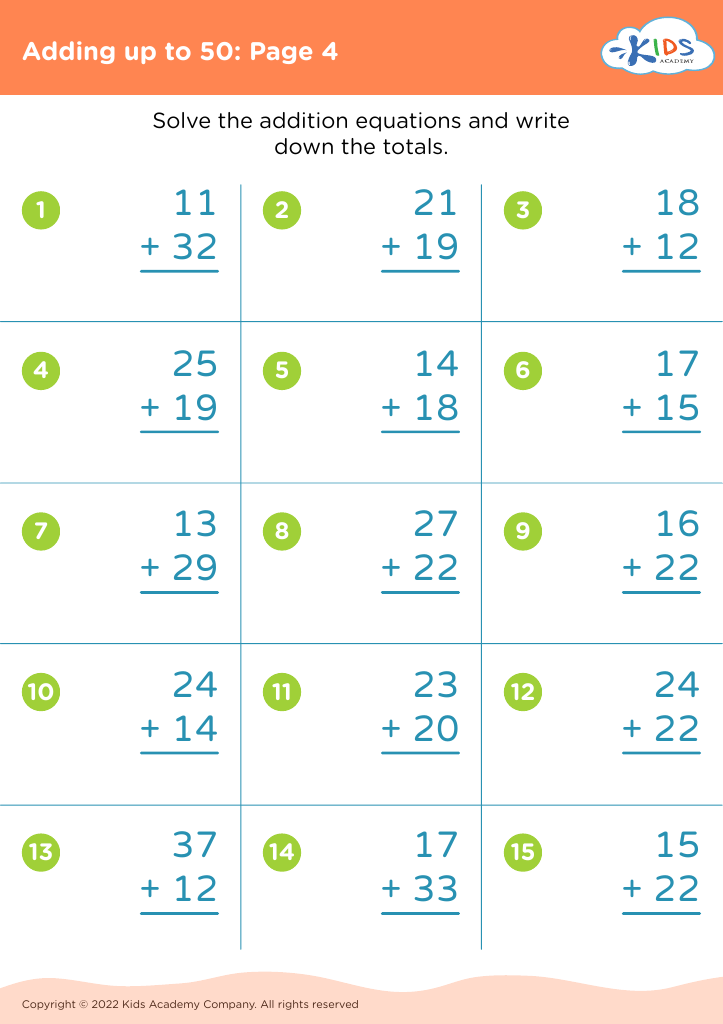
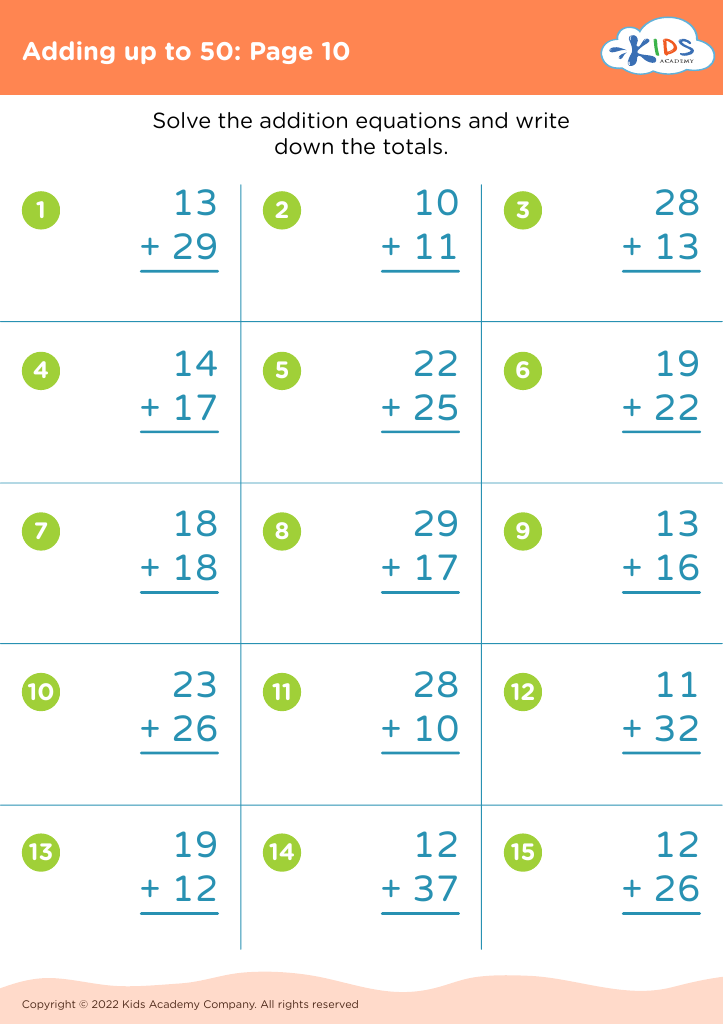
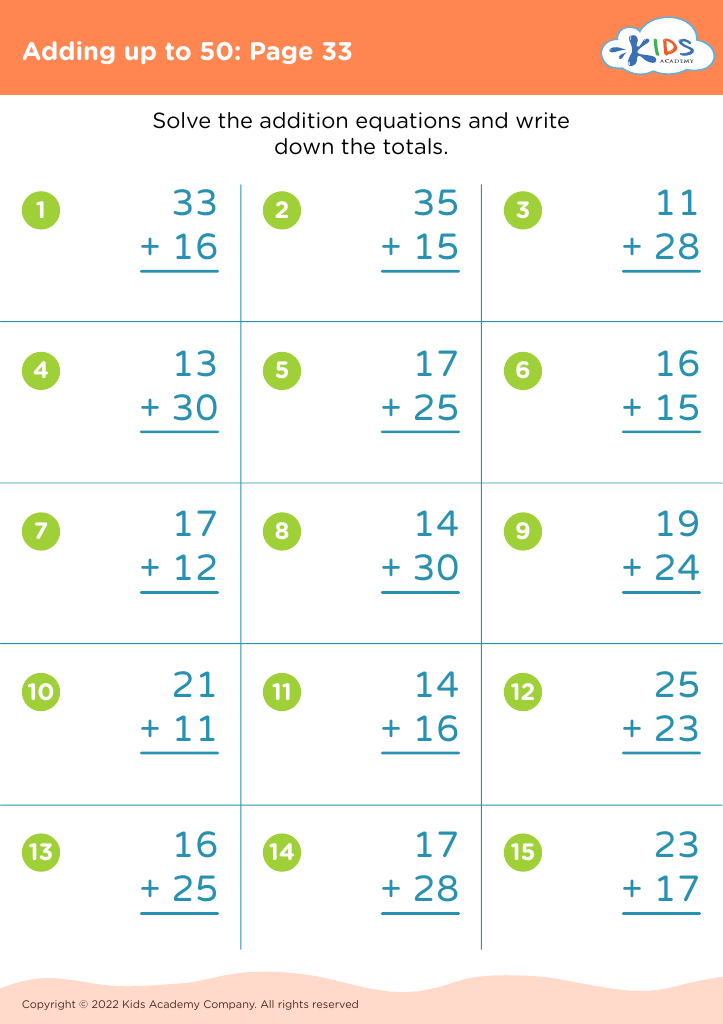
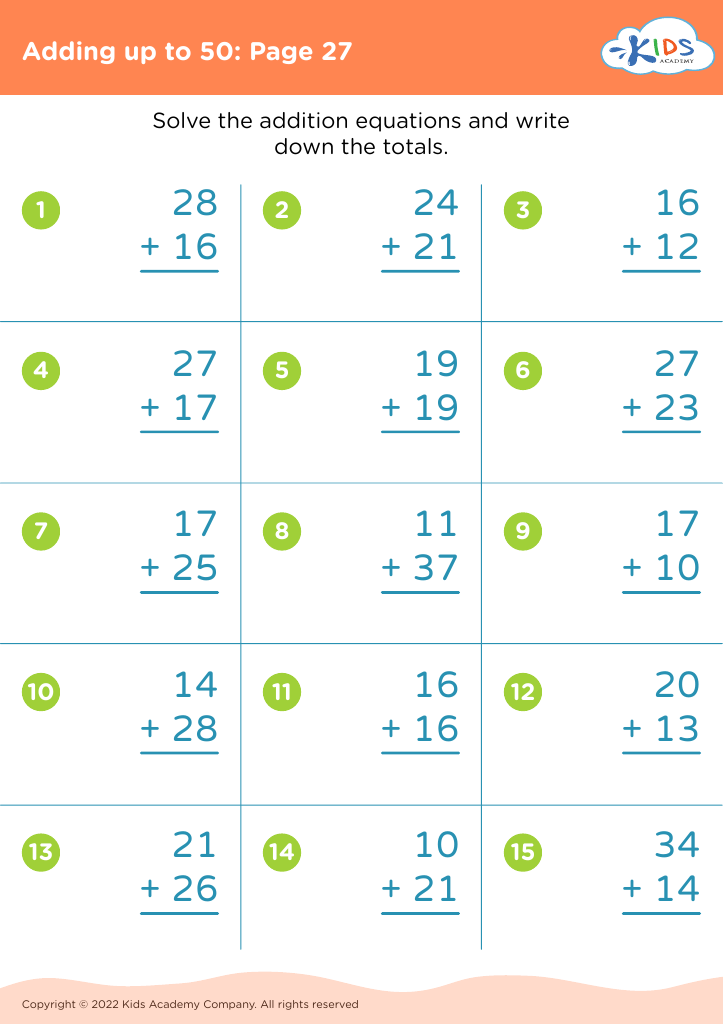
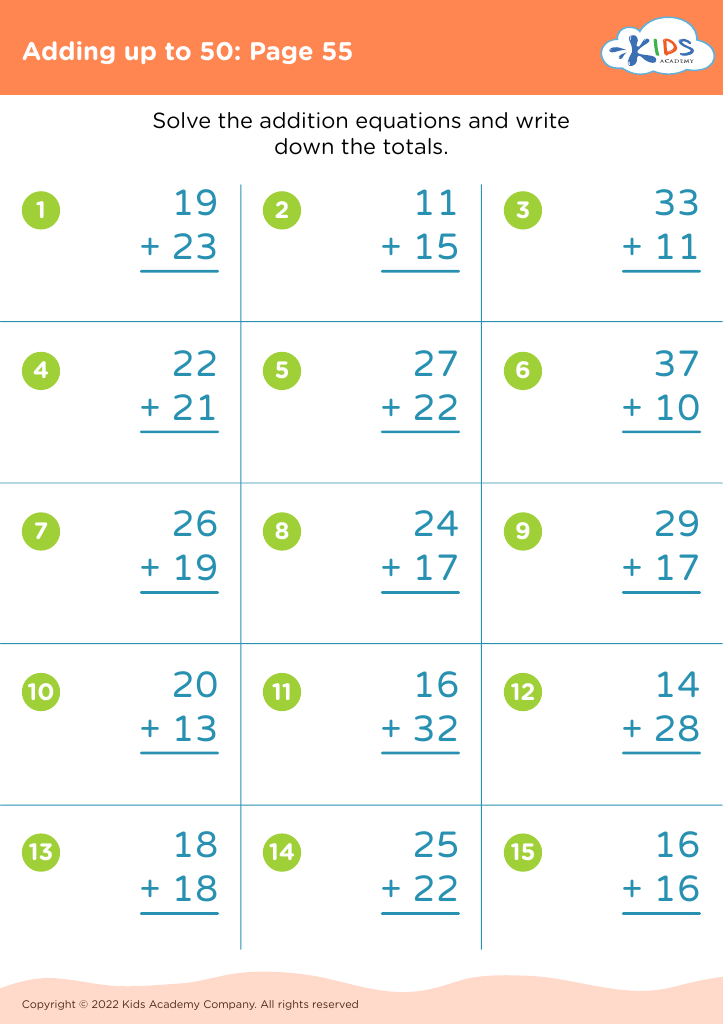
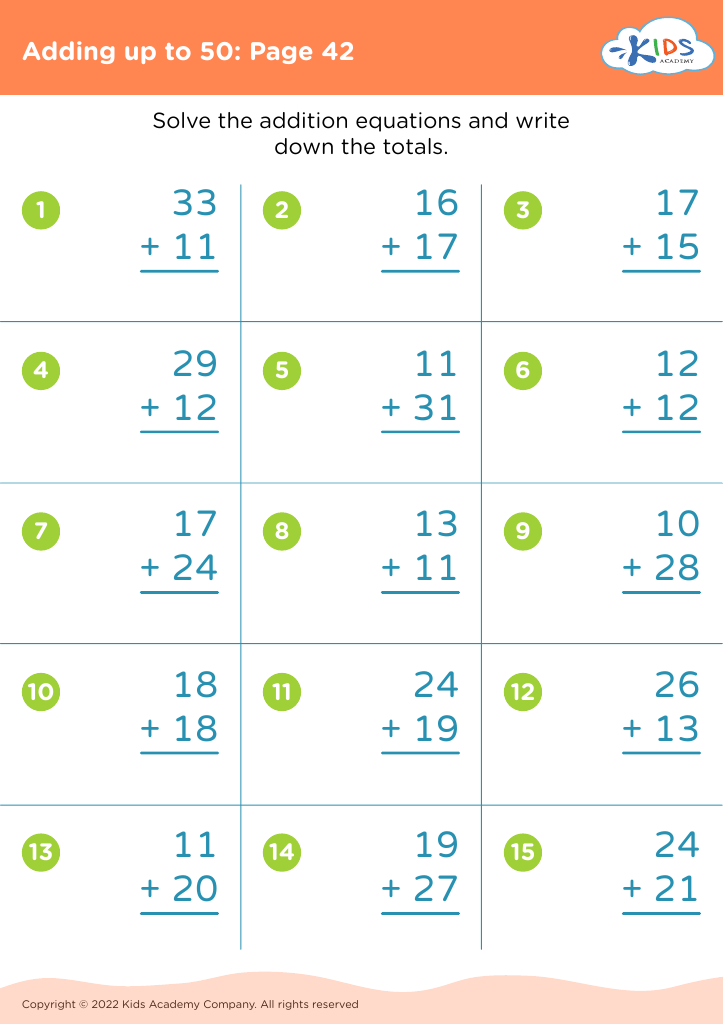
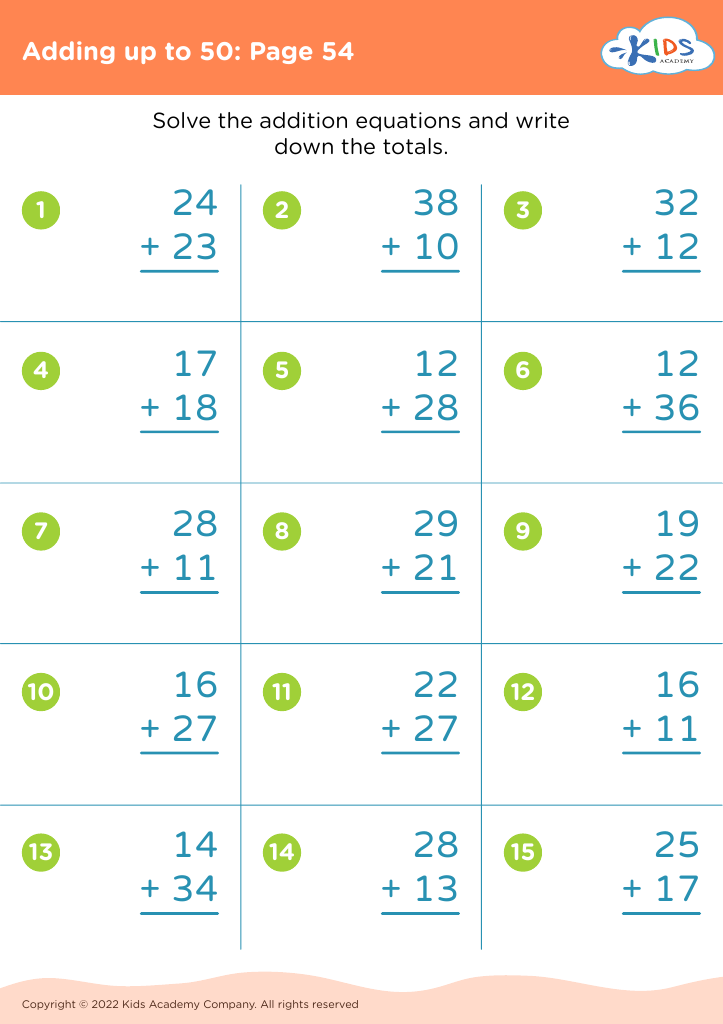
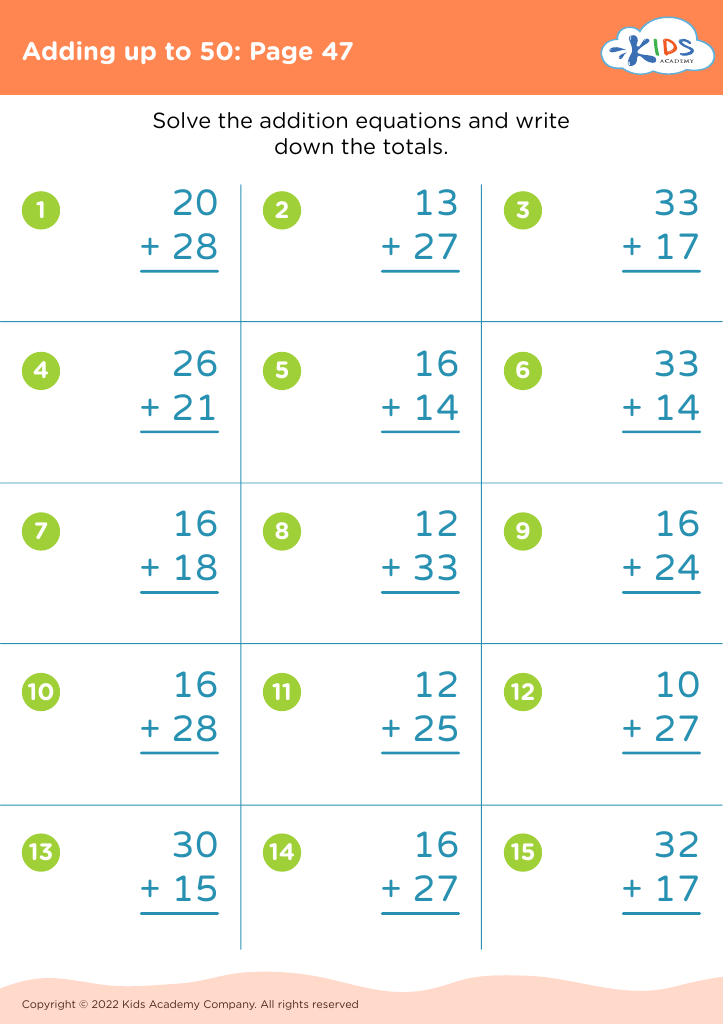
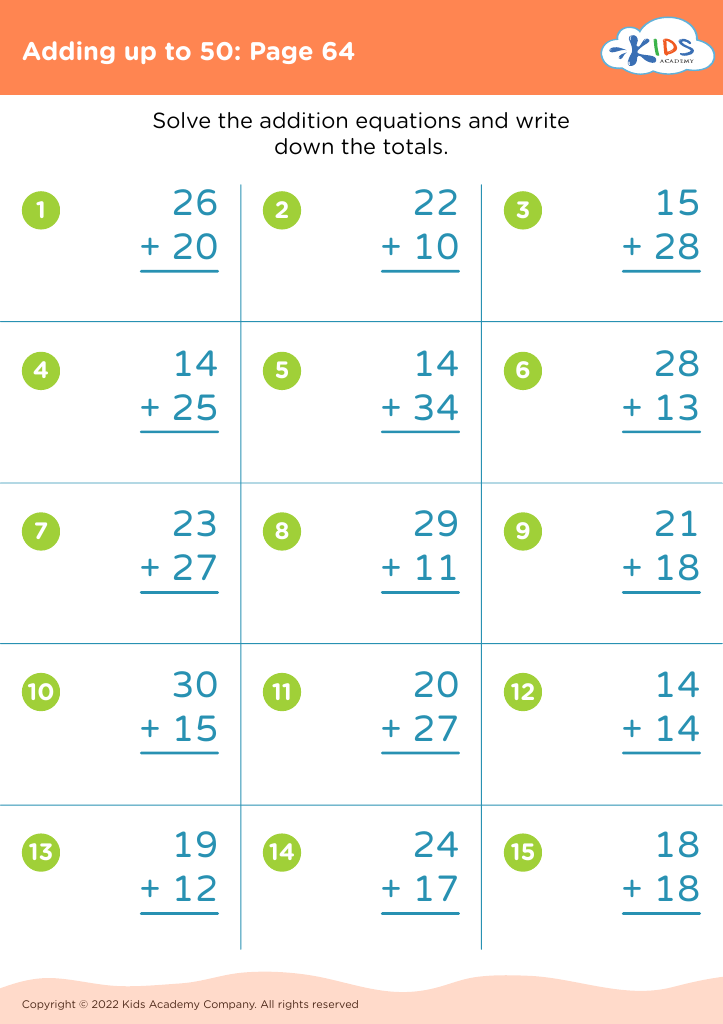
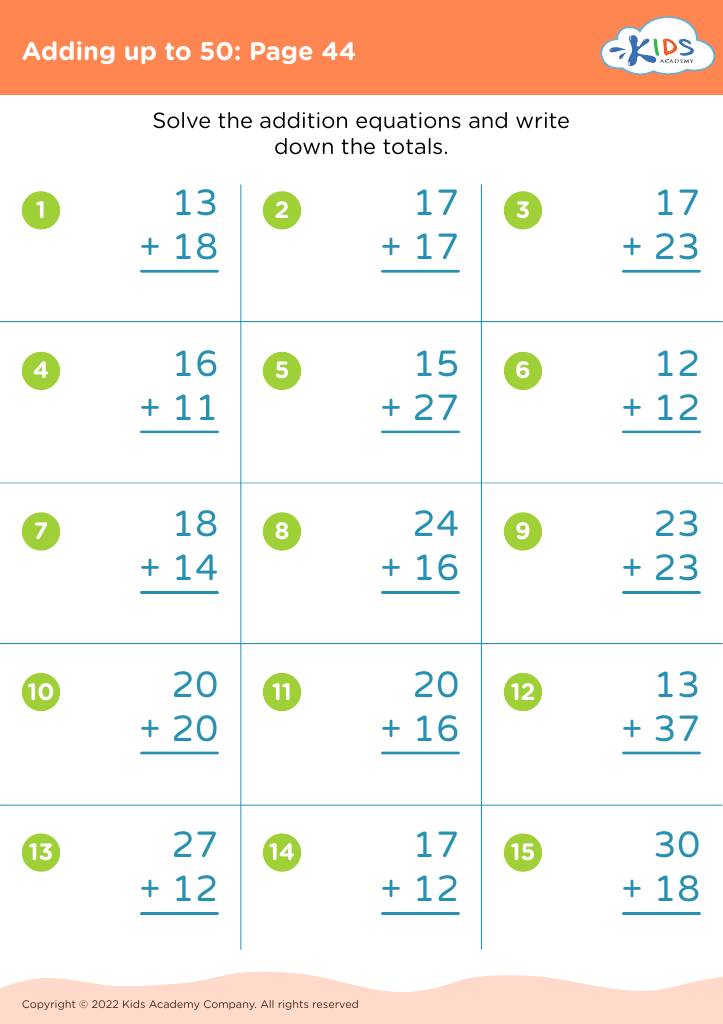
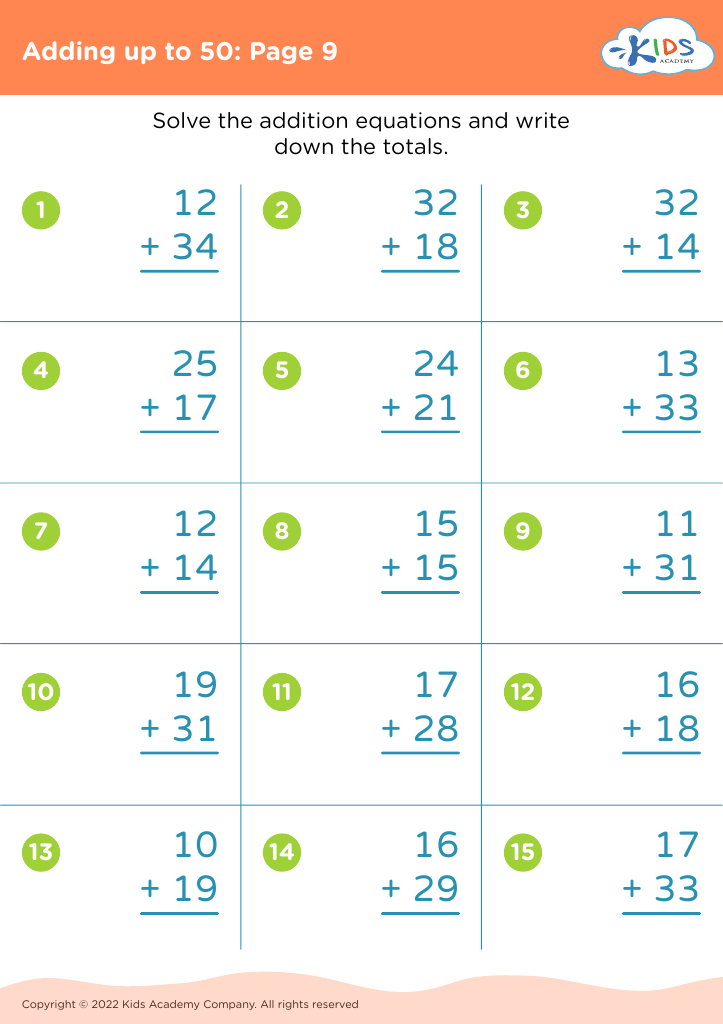
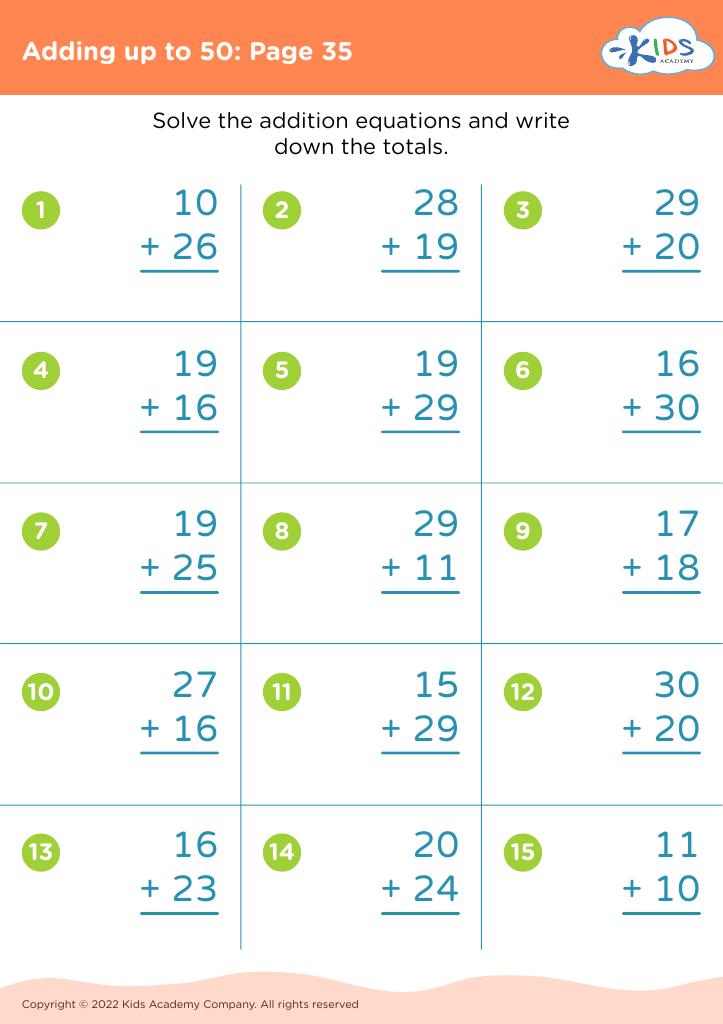
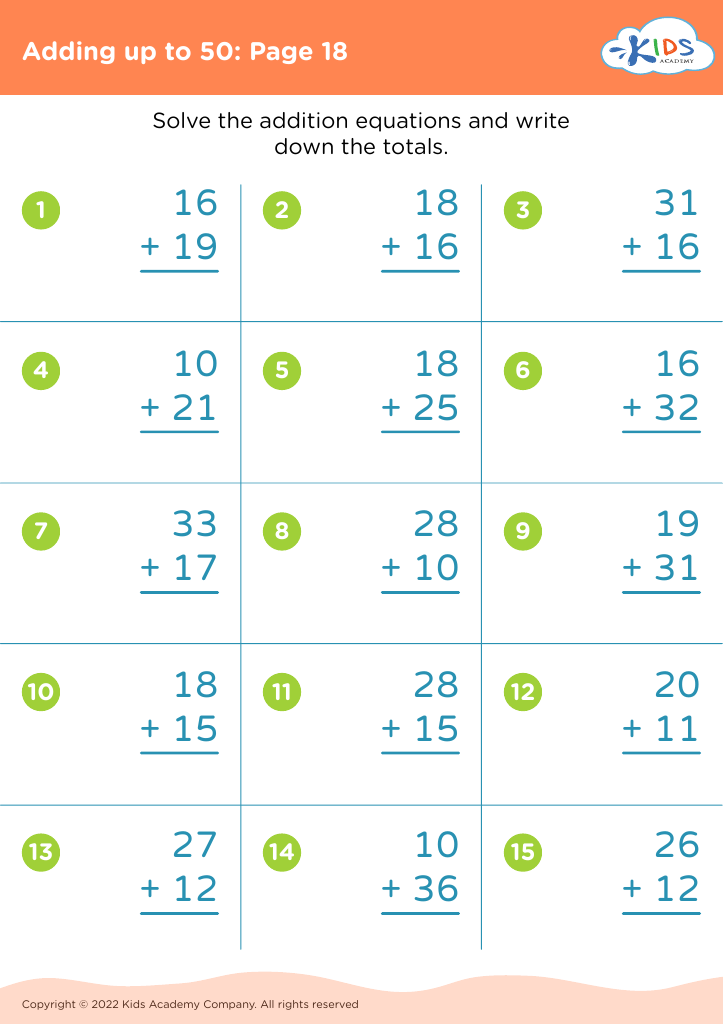
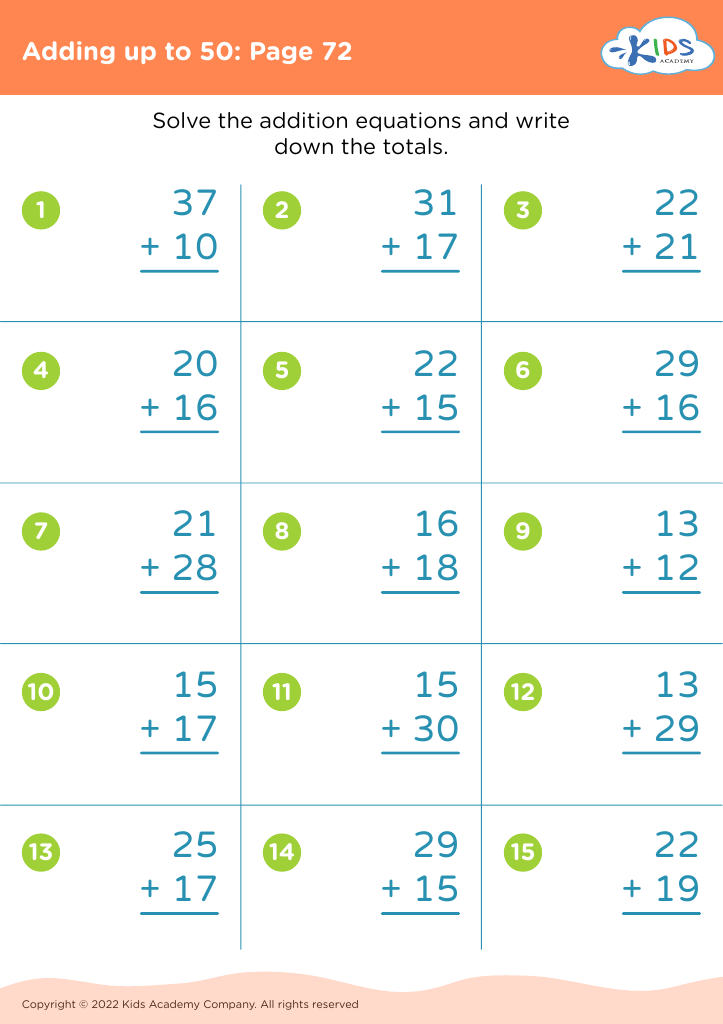
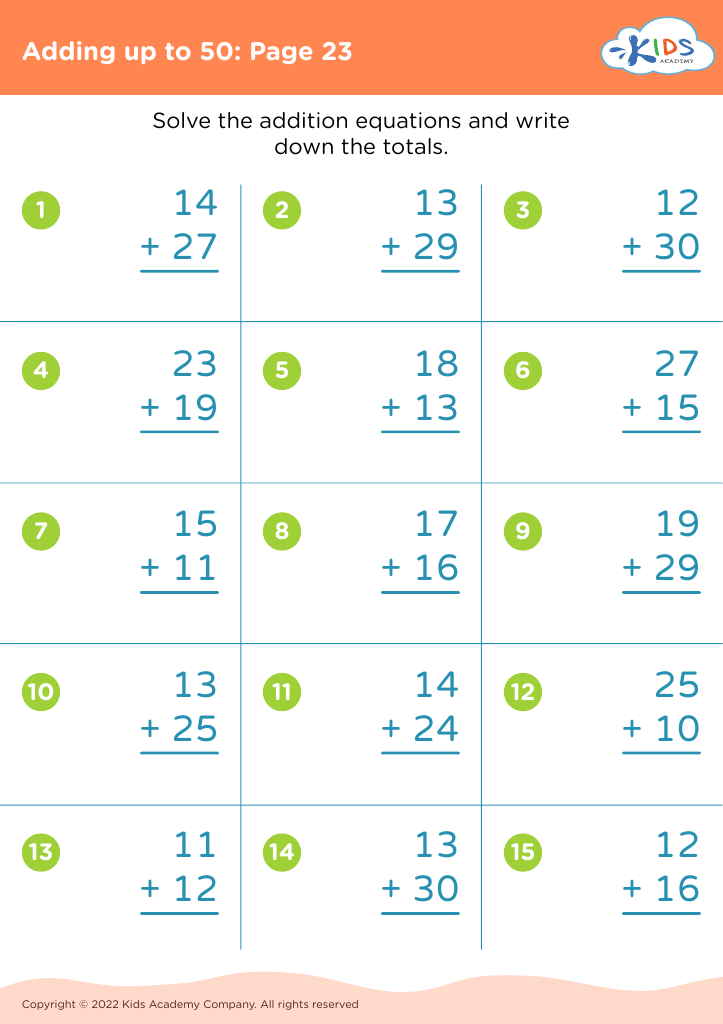
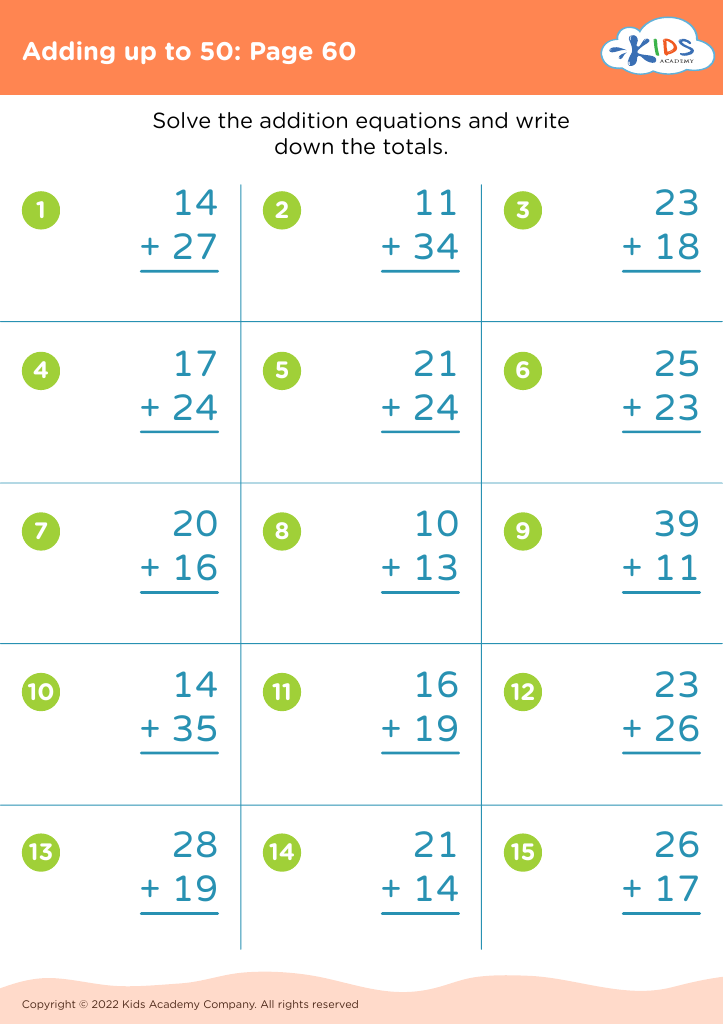
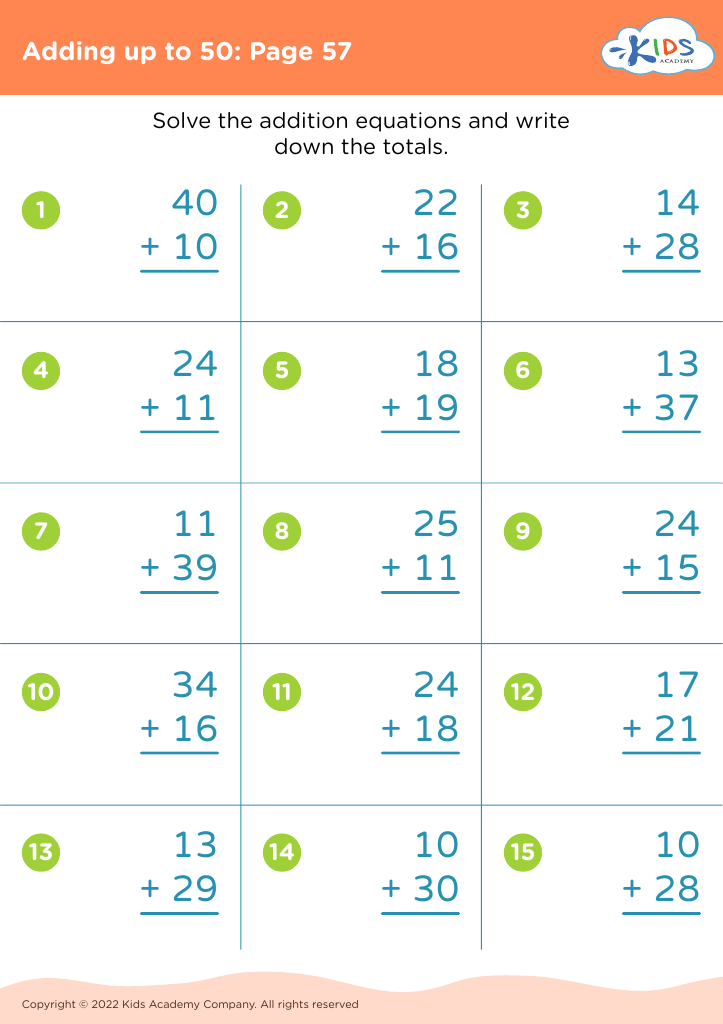
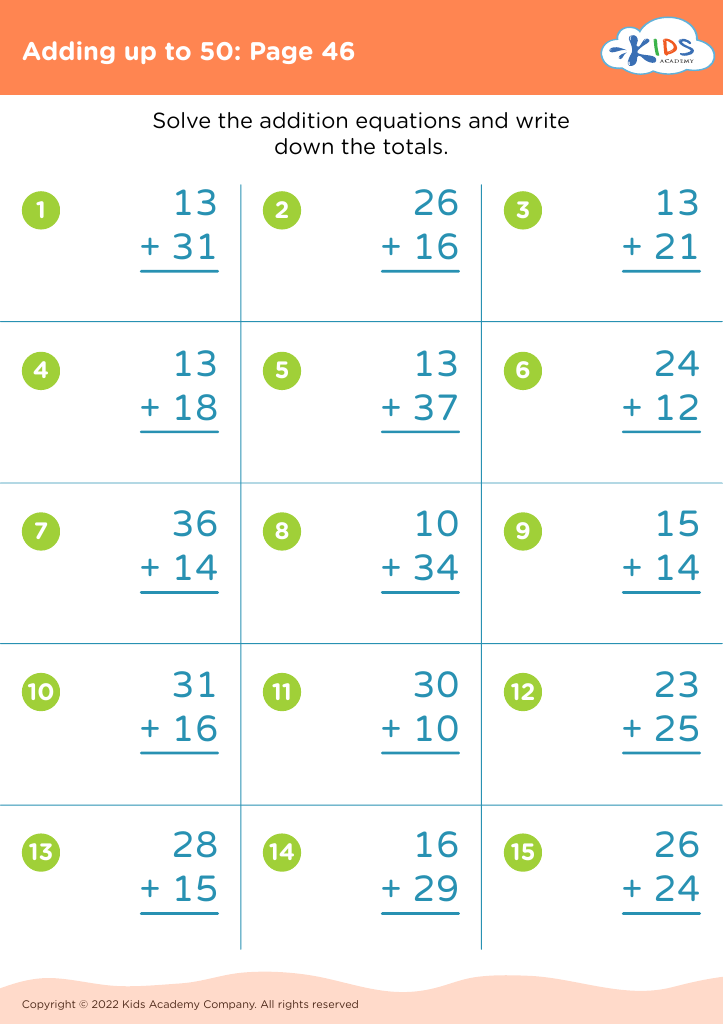
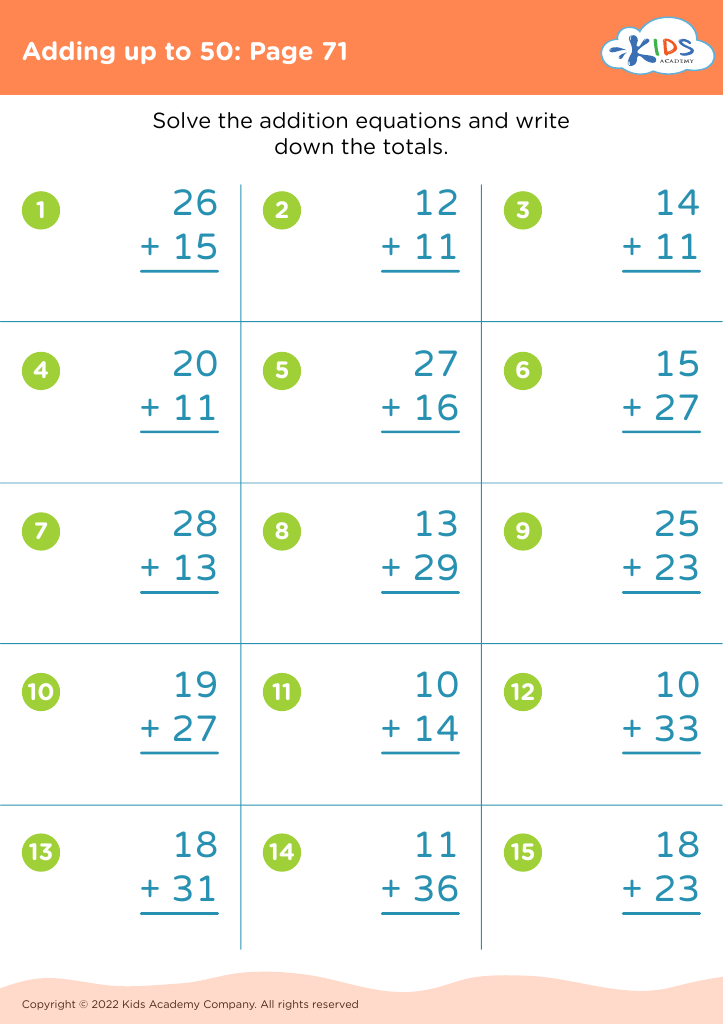
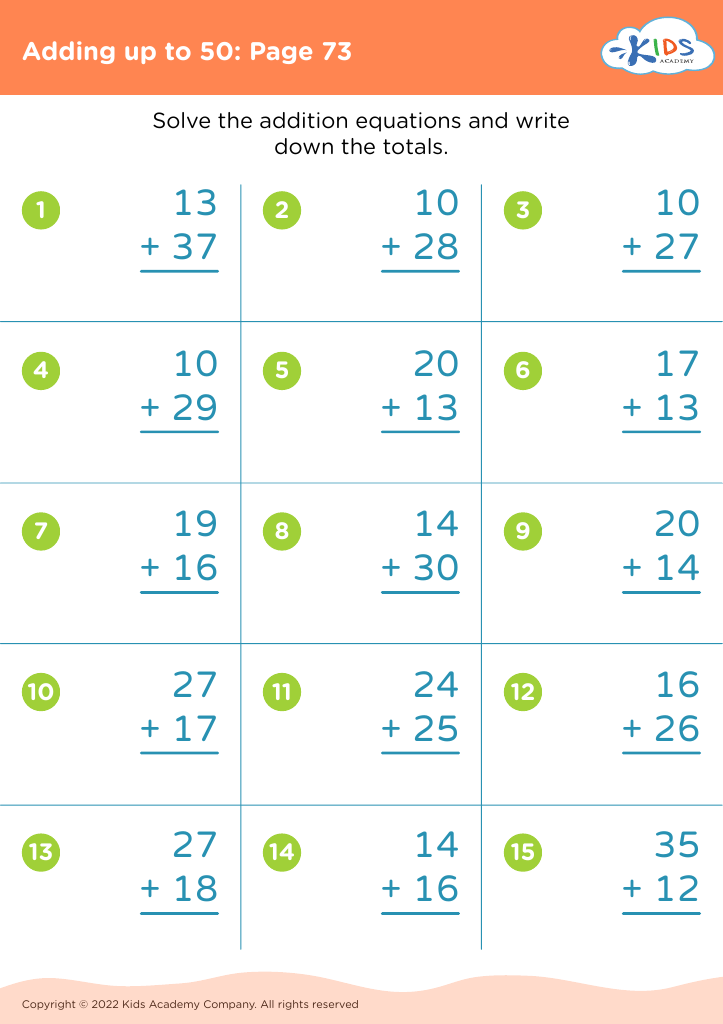
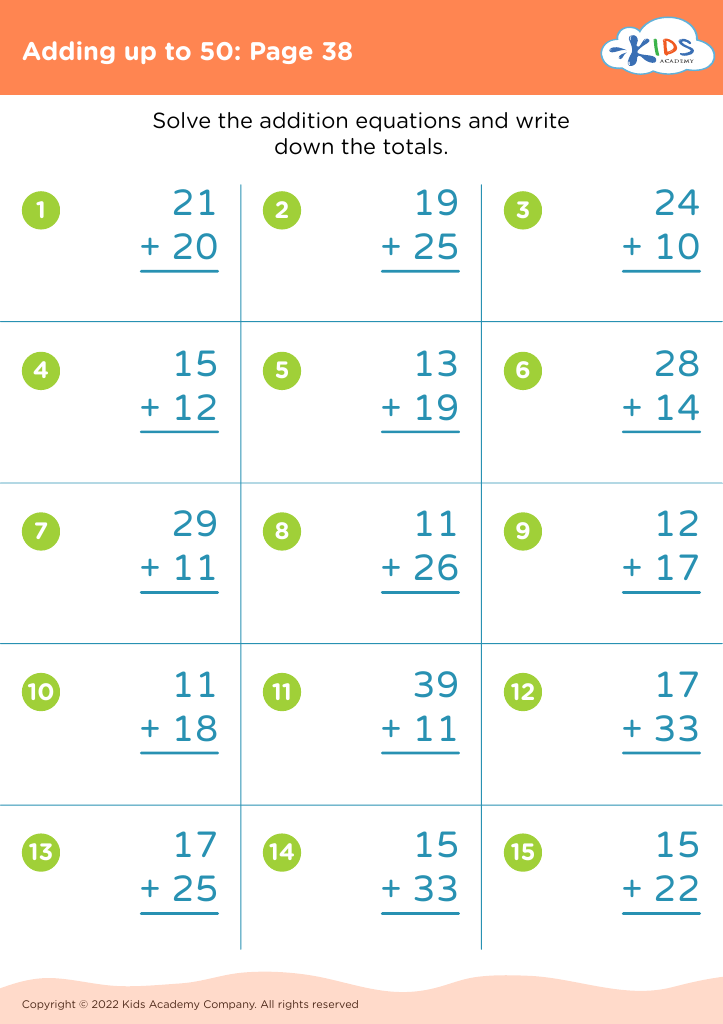


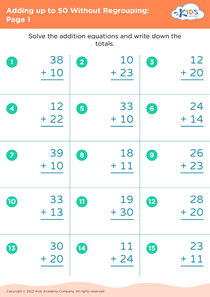
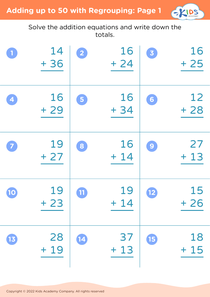
Parents and teachers should prioritize activities like "Adding up to 50" for children ages 5-8 because early math skills are foundational to future academic success and lifelong problem-solving abilities. At this developmental stage, kids are extremely receptive to and capable of absorbing new information. Encouraging them to practice adding numbers up to 50 provides them with a solid grasp of basic arithmetic, which is crucial for more complex mathematical concepts they'll encounter later.
Early competence in addition fosters confidence and likability towards math, transforming the subject from a potential stumbling block into a point of interest and enjoyment. Moreover, practicing math problems enhances cognitive skills such as logical reasoning, critical thinking, and the ability to follow sequences. It also strengthens attention to detail and perseverance. These skills are not only pivotal in education but also in everyday activities and long-term personal and professional scenarios.
Besides, when parents and teachers invest time in teaching and practicing these skills, it reinforces the importance of academics in the child’s life and nurtures a strong parent-child or teacher-student bond, grounded in shared achievements and learning. Making math fun and connected to real life also helps alleviate anxiety and build a positive mindset towards lifelong learning.