Adding with Busy Bugs Worksheets for Ages 5-8 - Page 4
77 filtered results
-
From - To
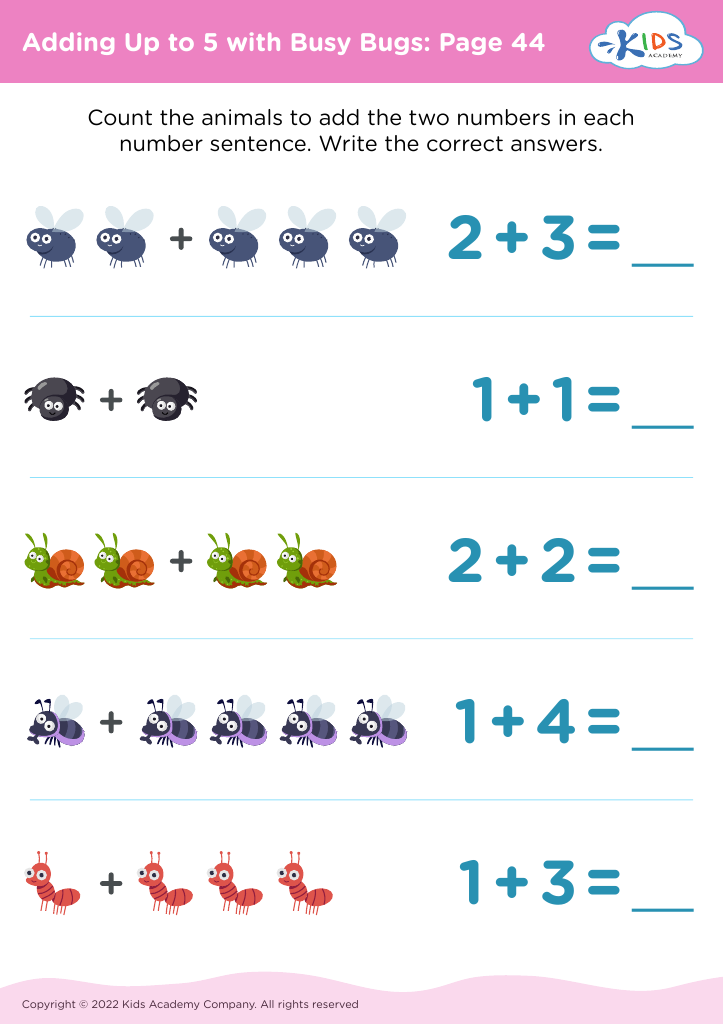
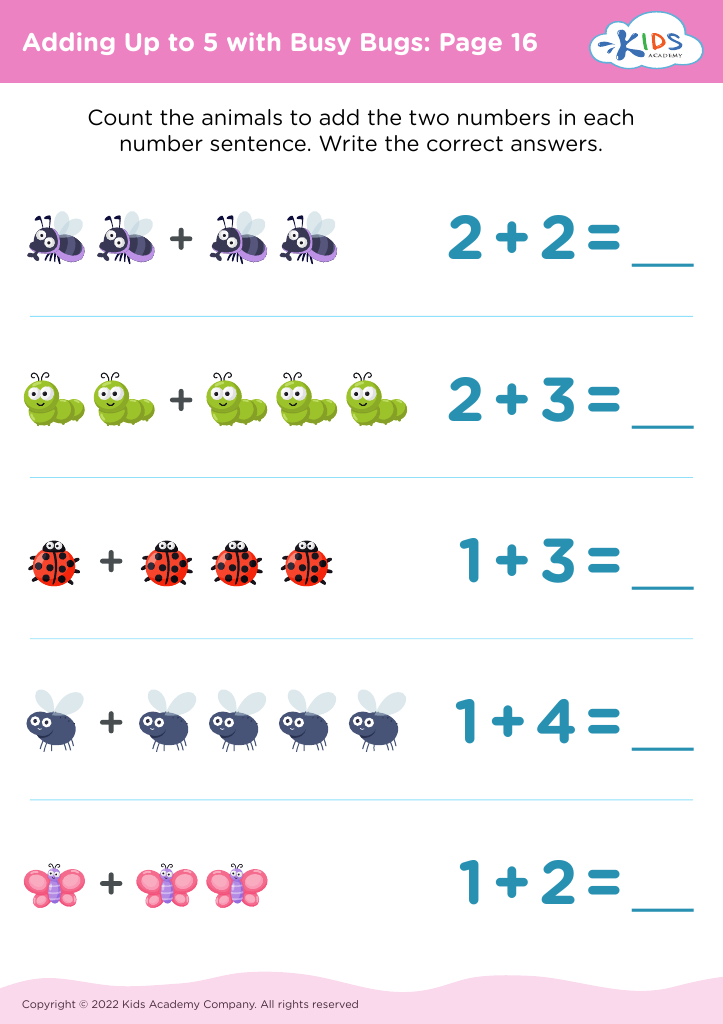
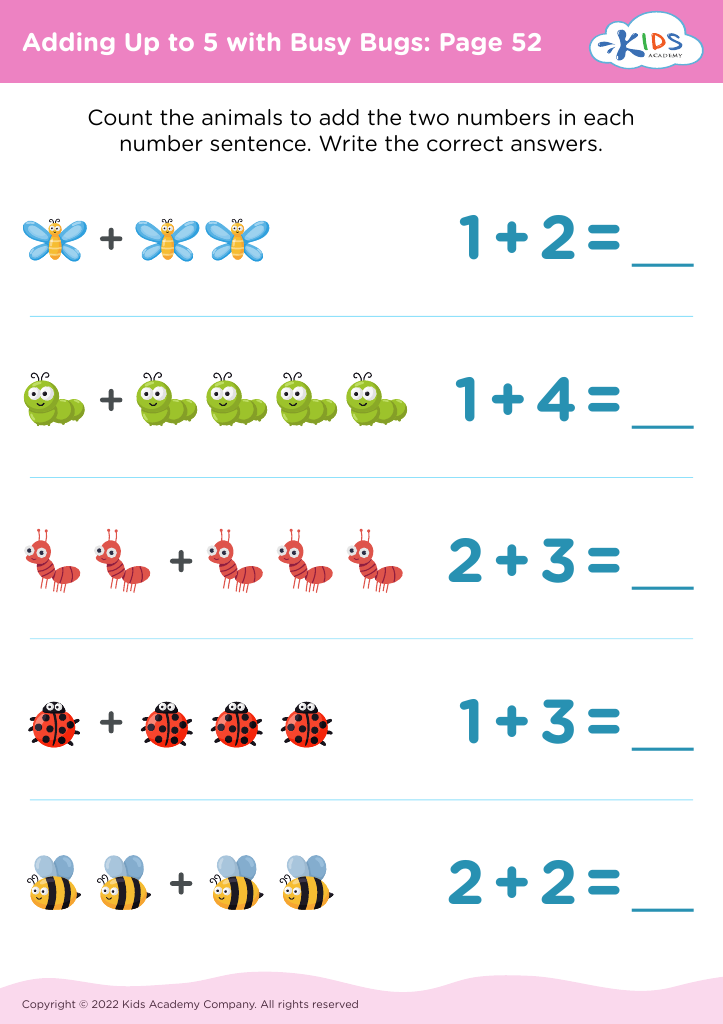
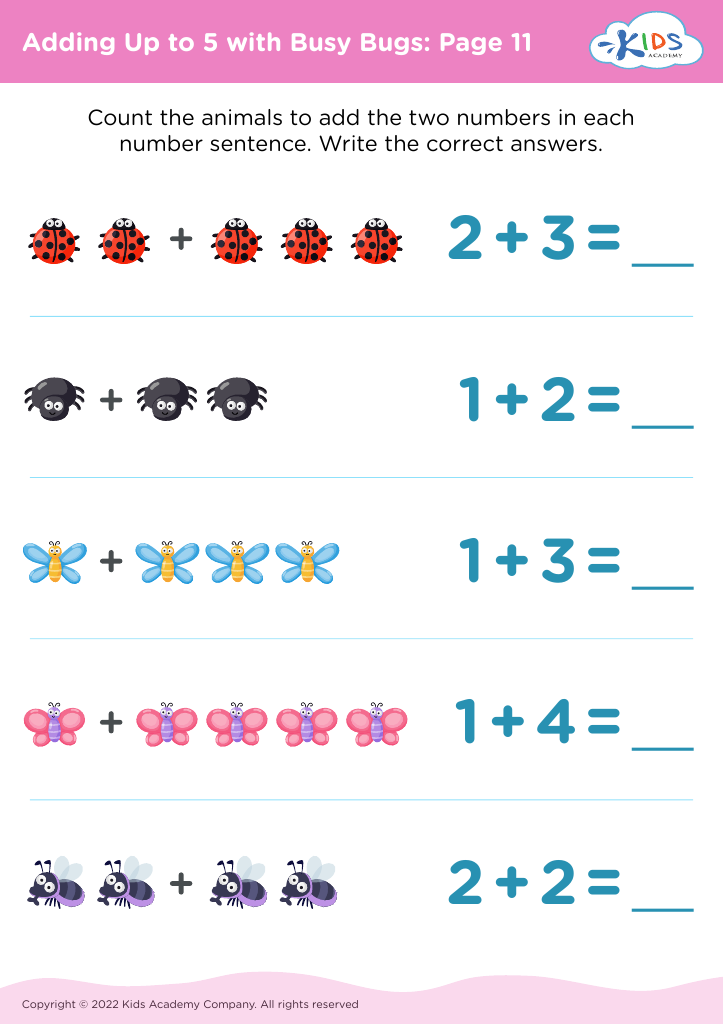
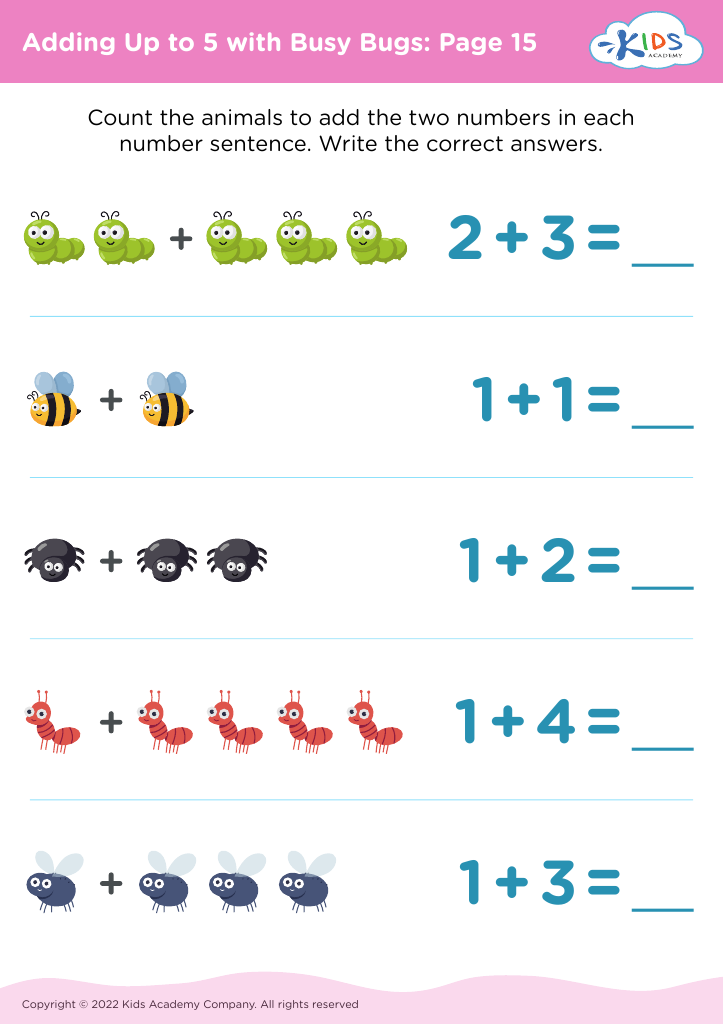



Parents and teachers should care about "Adding with Busy Bugs" for children ages 5-8 because it offers an engaging and effective approach to teaching foundational math skills. At this stage, children are developing critical thinking and problem-solving skills, and introducing addition in a playful manner can make learning enjoyable and memorable. The interactive nature of the "Busy Bugs" concept captures children’s attention and encourages them to participate actively in their learning process.
The colorful and dynamic bug characters act as relatable tools that can simplify abstract math concepts, making them easier for young learners to grasp. This thematic approach fosters curiosity and creativity, helping children relate math to everyday experiences. Additionally, it promotes cognitive skills such as counting, number recognition, and basic problem-solving.
“Adding with Busy Bugs” can also facilitate discussions about strategies, encouraging collaboration between peers, which is crucial during this developmental stage. By incorporating visual and kinesthetic elements, the program appeals to various learning styles, ensuring inclusivity in math education. Ultimately, fostering strong math foundations through such innovative methods can motivate a lifetime of learning and enthusiasm for mathematics, which parents and teachers will undoubtedly value.