Filters

305 filtered results

Clear all filters
Favorites
With answer key
Interactive

305 filtered results

Difficulty Level

Grade


Check out this FREE Trial Lesson on Addition & Subtraction for age 5-8!

H

Favorites
With answer key
Interactive
  • 5-8
  • Counting practice
  • Addition & Subtraction
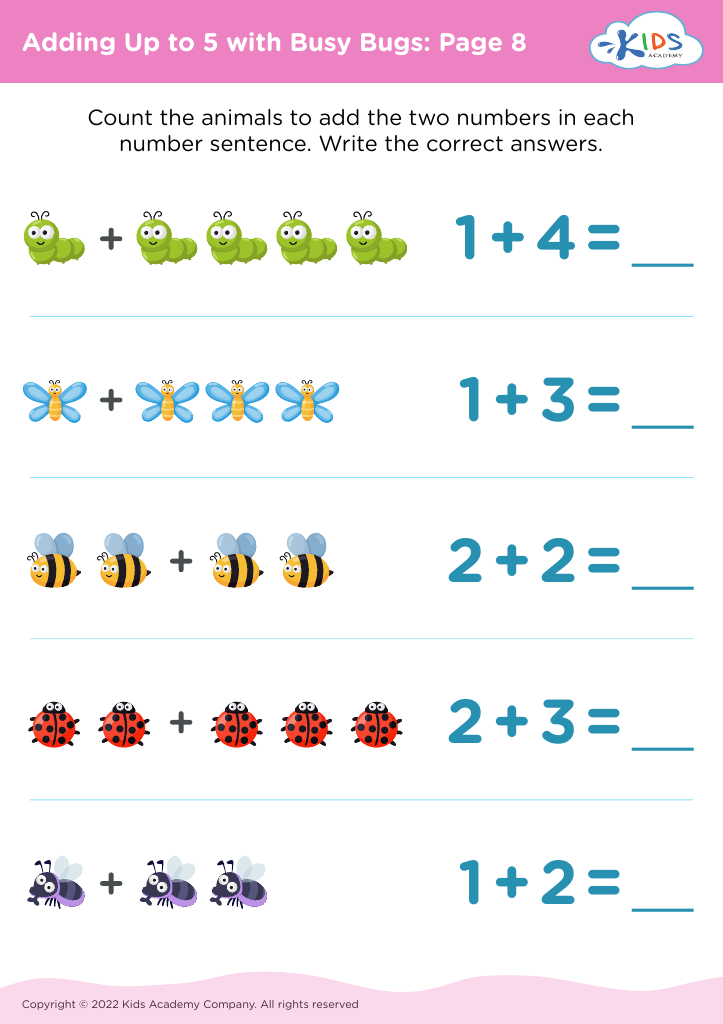
Adding Up to 5 with Busy Bugs: Page 8
Worksheet
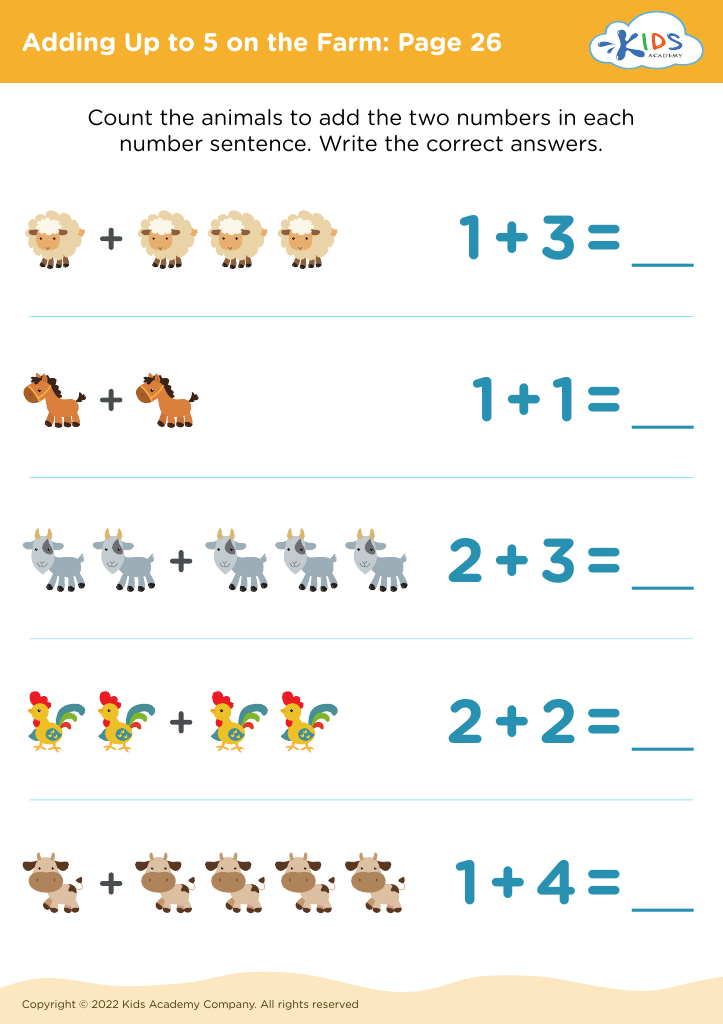
Adding Up to 5 on the Farm: Page 26
Worksheet
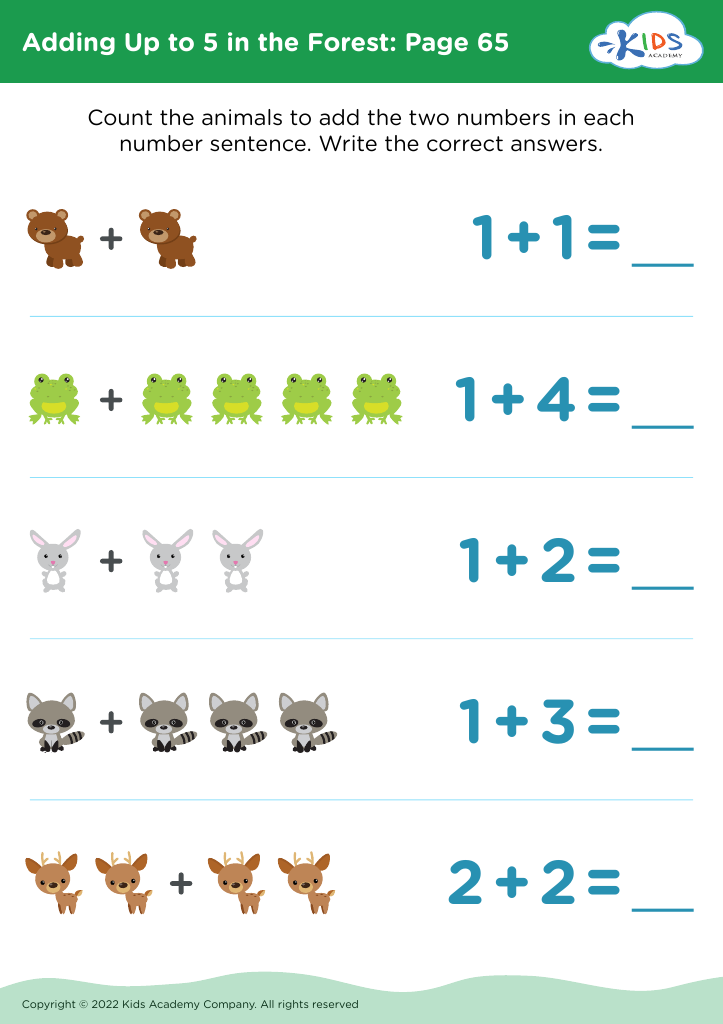
Adding Up to 5 in the Forest: Page 65
Worksheet
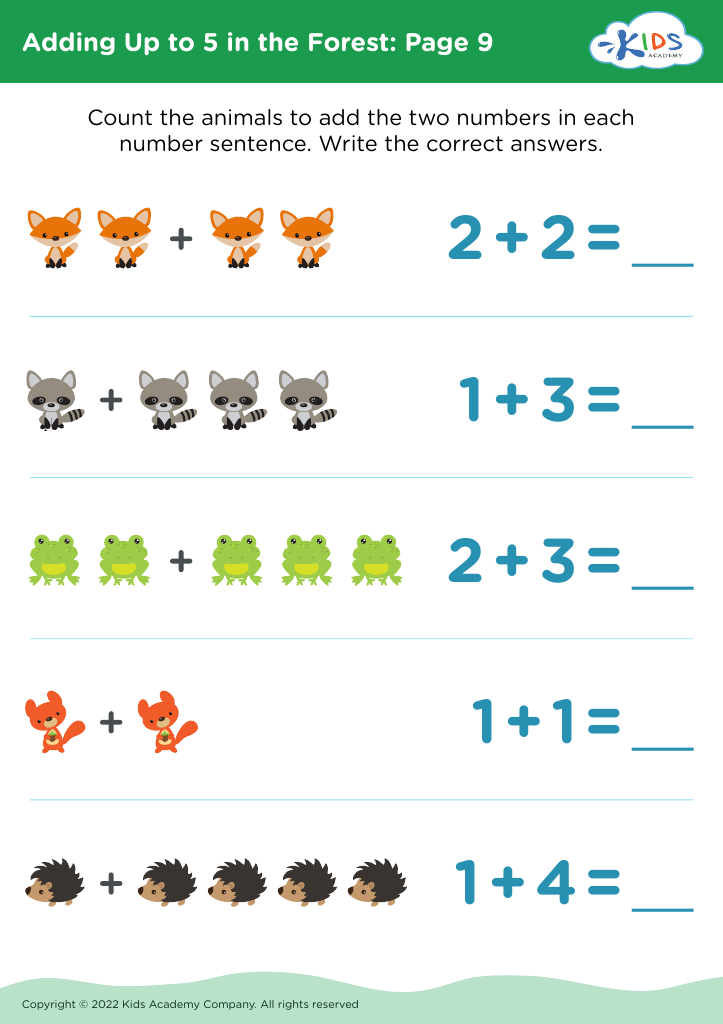
Adding Up to 5 in the Forest: Page 9
Worksheet
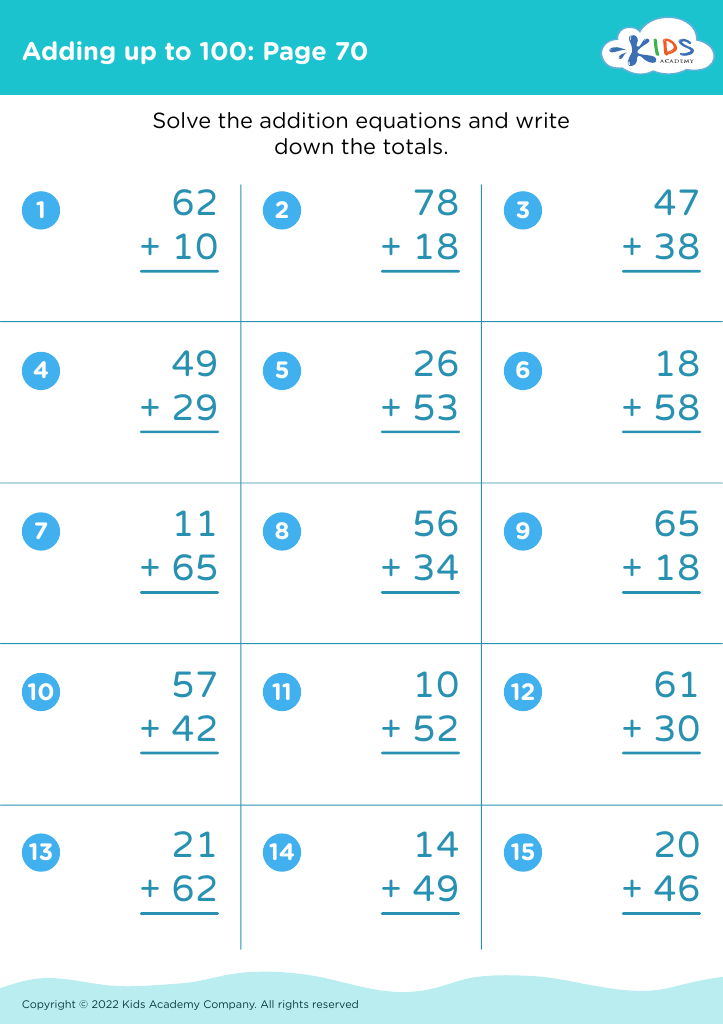
Adding up to 100: Page 70

Adding up to 100: Page 70

Adding up to 100: Page 70
Worksheet
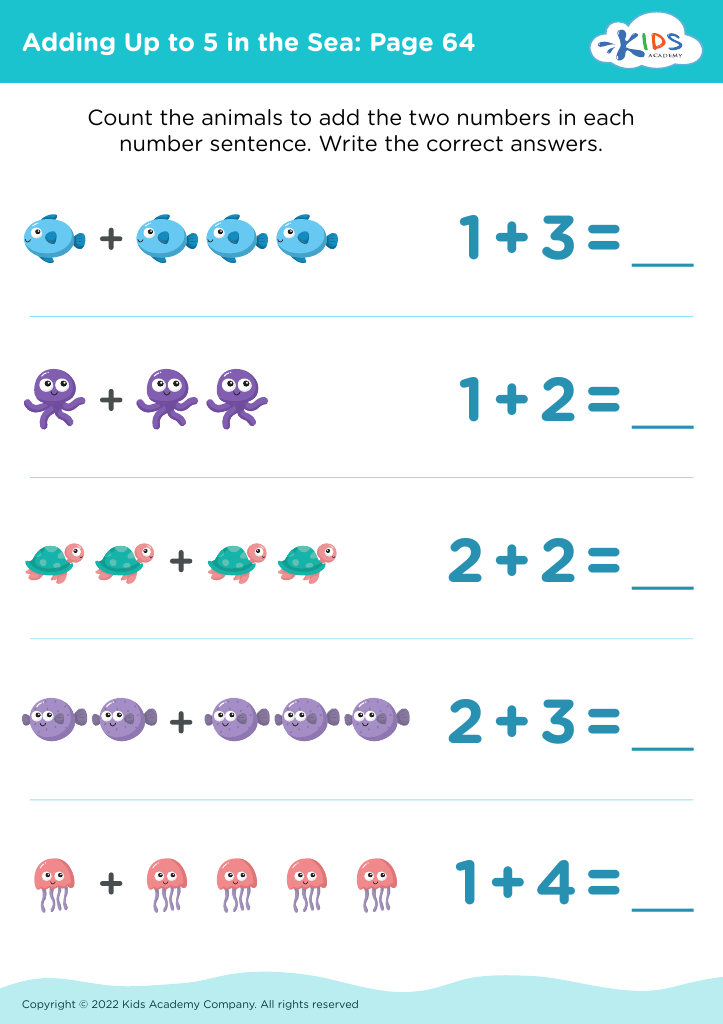
Adding Up to 5 in the Sea: Page 64
Worksheet
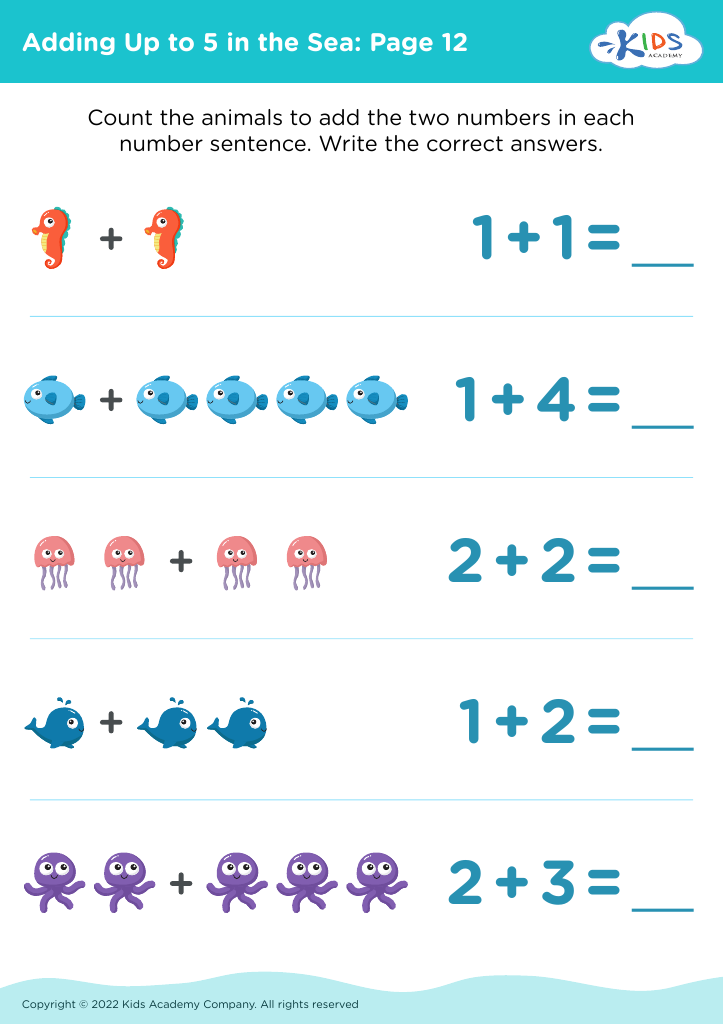
Adding Up to 5 in the Sea: Page 12
Worksheet
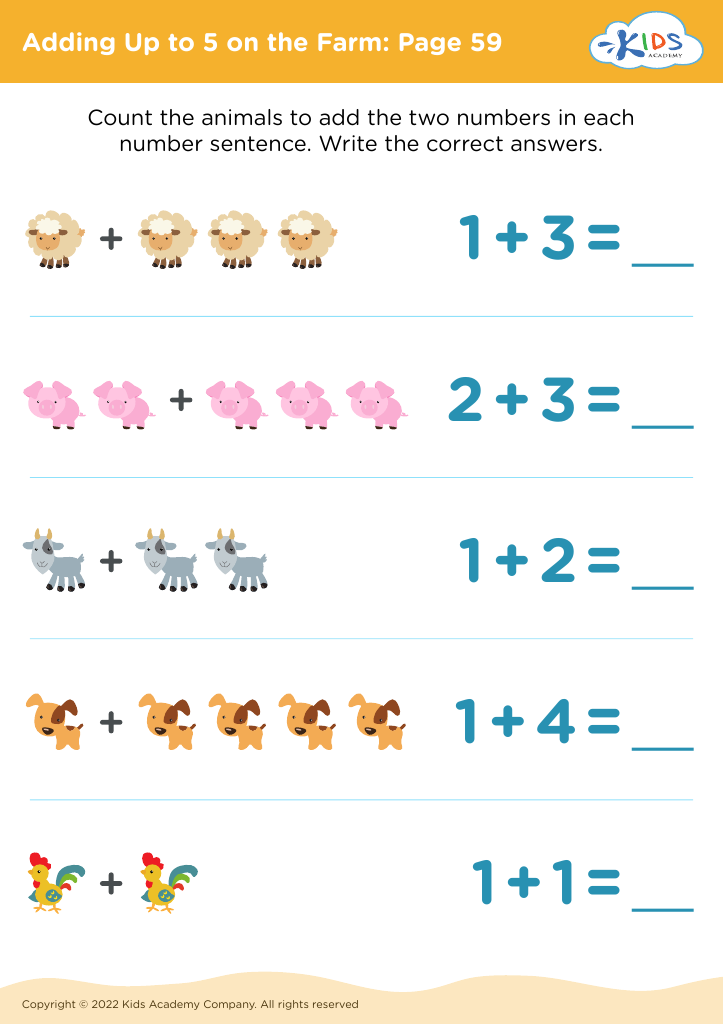
Adding Up to 5 on the Farm: Page 59
Worksheet
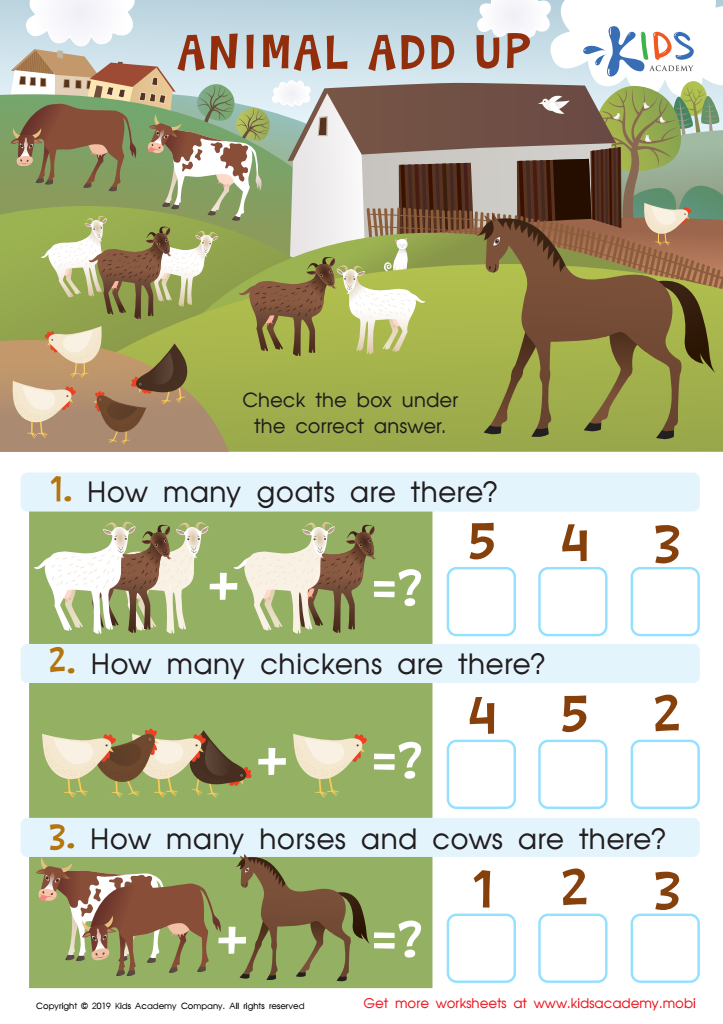
Animal Add Up Worksheet

Animal Add Up Worksheet

Animals are fun to observe and interact with. They can be seen at the zoo, parks, farms and in homes with pets. This worksheet helps kids identify animals, and build addition skills. Look at the picture with them and help name each animal. After that, add the animals up and check the box for the correct answer. 80 words.
Animal Add Up Worksheet
Worksheet
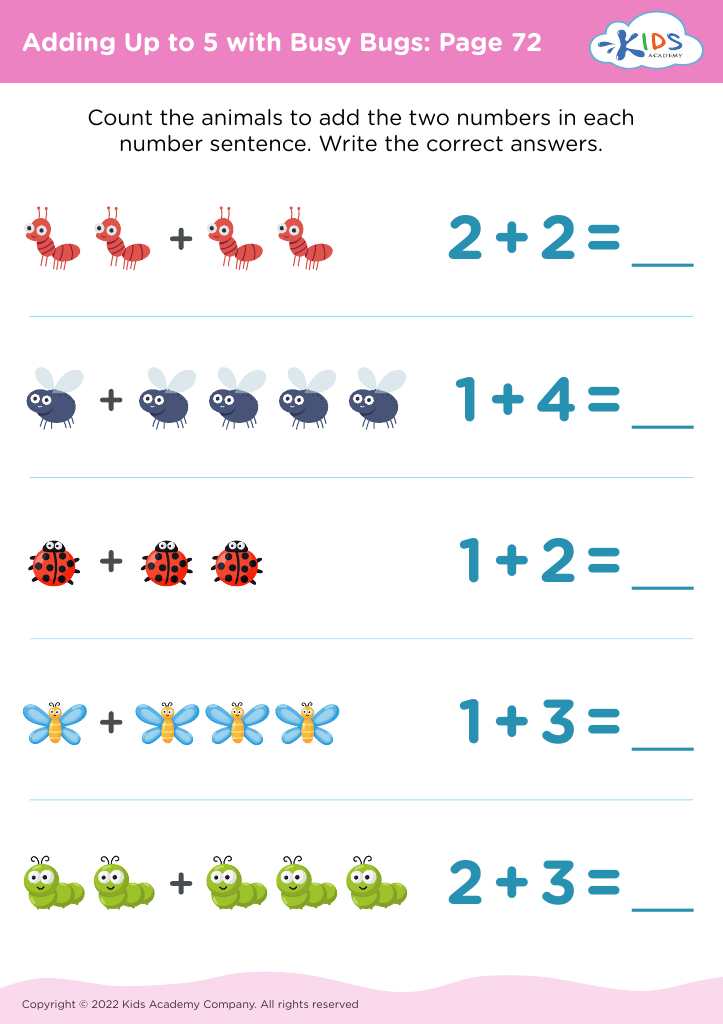
Adding Up to 5 with Busy Bugs: Page 72
Worksheet
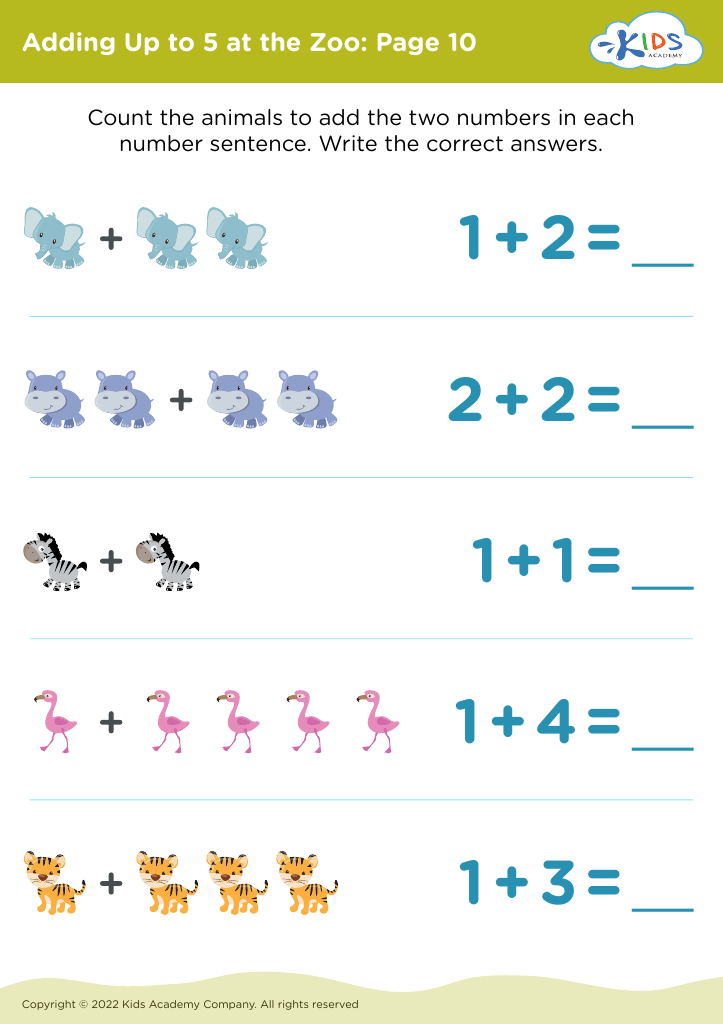
Adding Up to 5 at the Zoo: Page 10
Worksheet
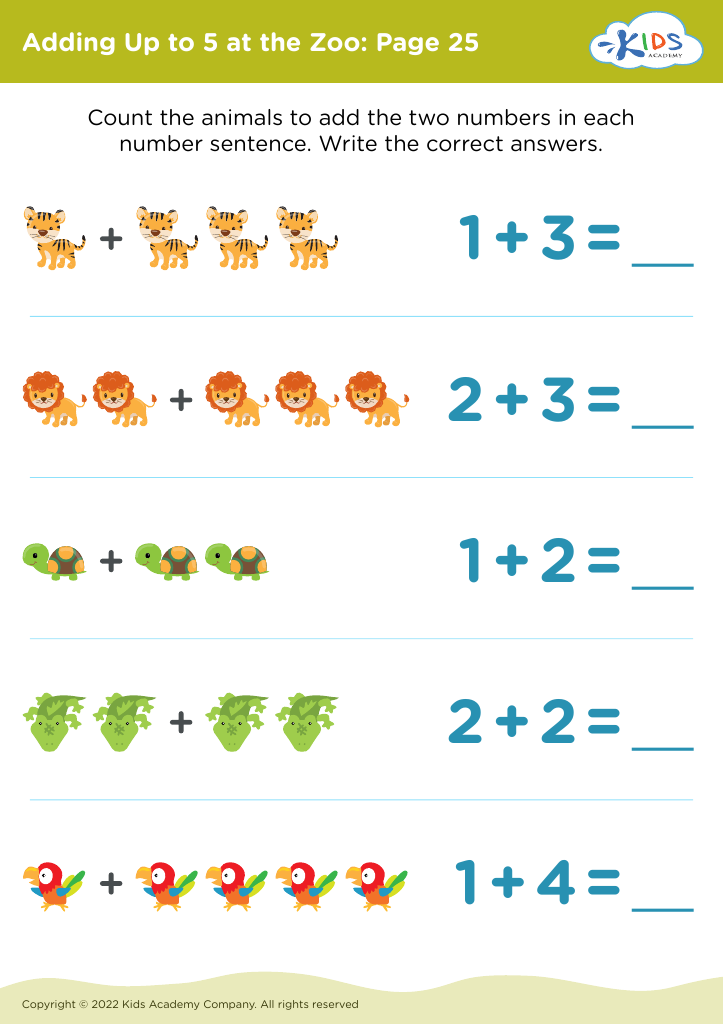
Adding Up to 5 at the Zoo: Page 25
Worksheet
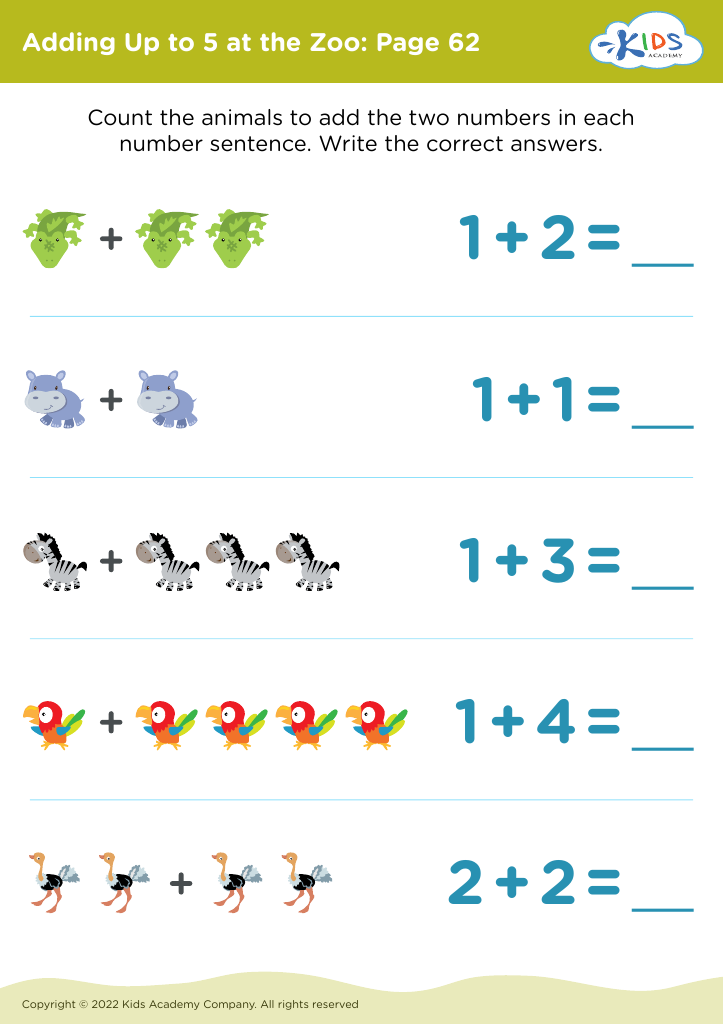
Adding Up to 5 at the Zoo: Page 62
Worksheet
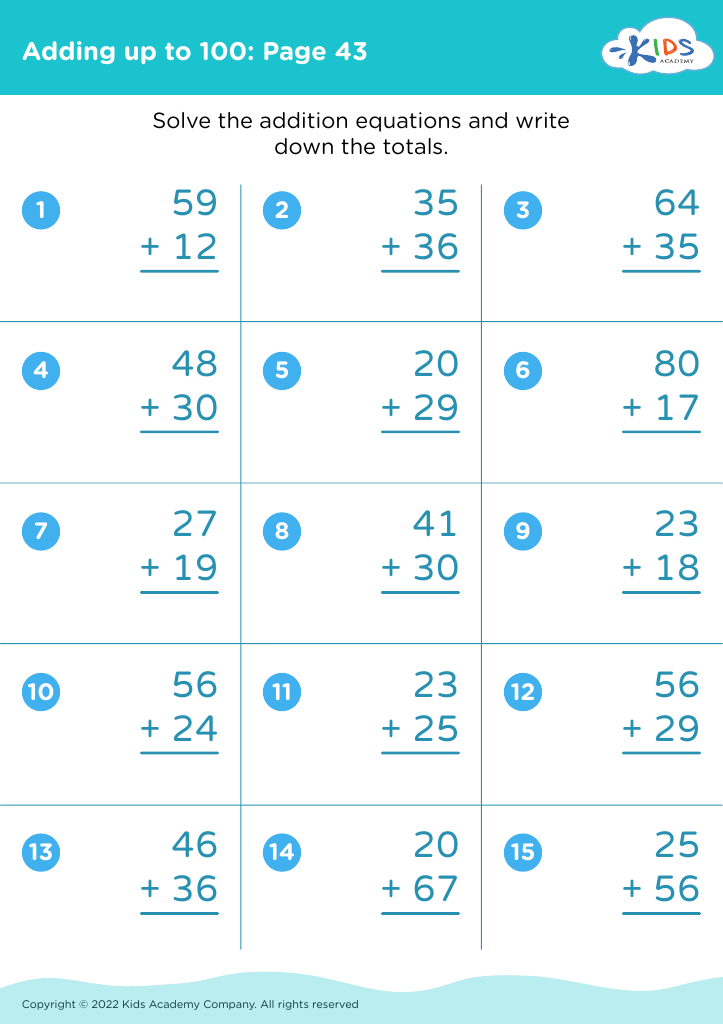
Adding up to 100: Page 43

Adding up to 100: Page 43

Adding up to 100: Page 43
Worksheet
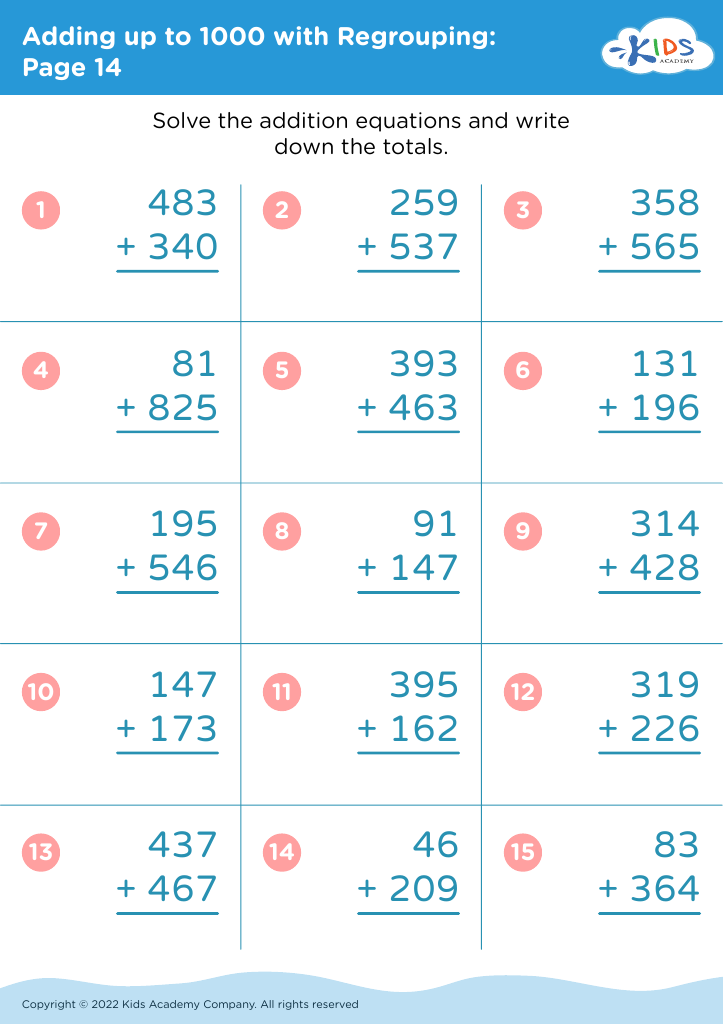
Adding up to 1000 with Regrouping: Page 14
Worksheet
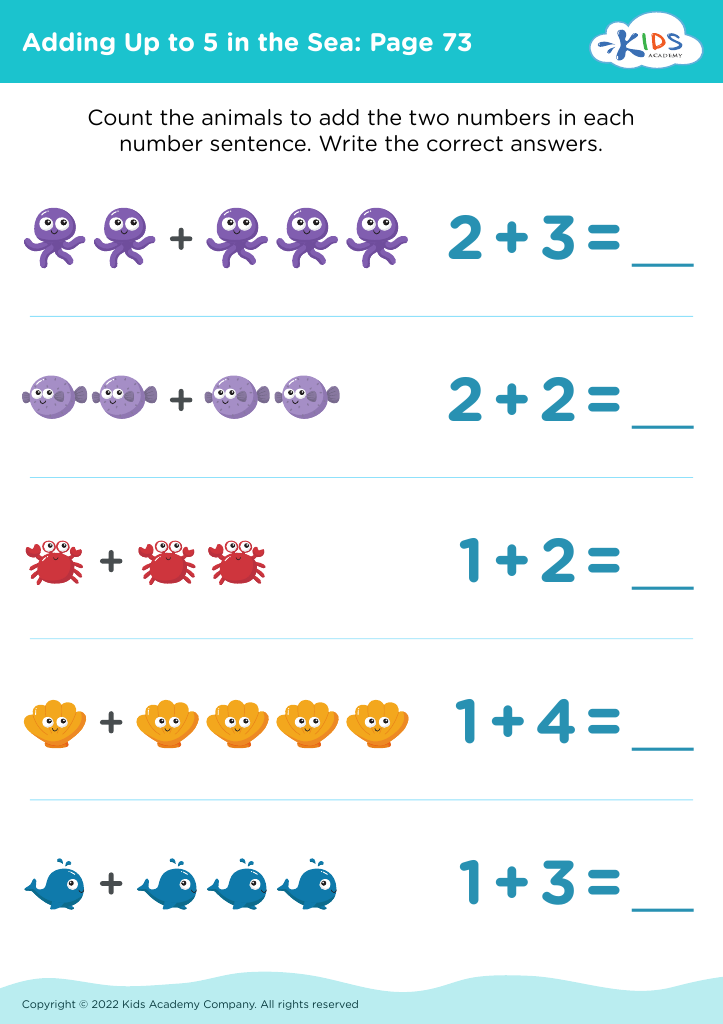
Adding Up to 5 in the Sea: Page 73
Worksheet
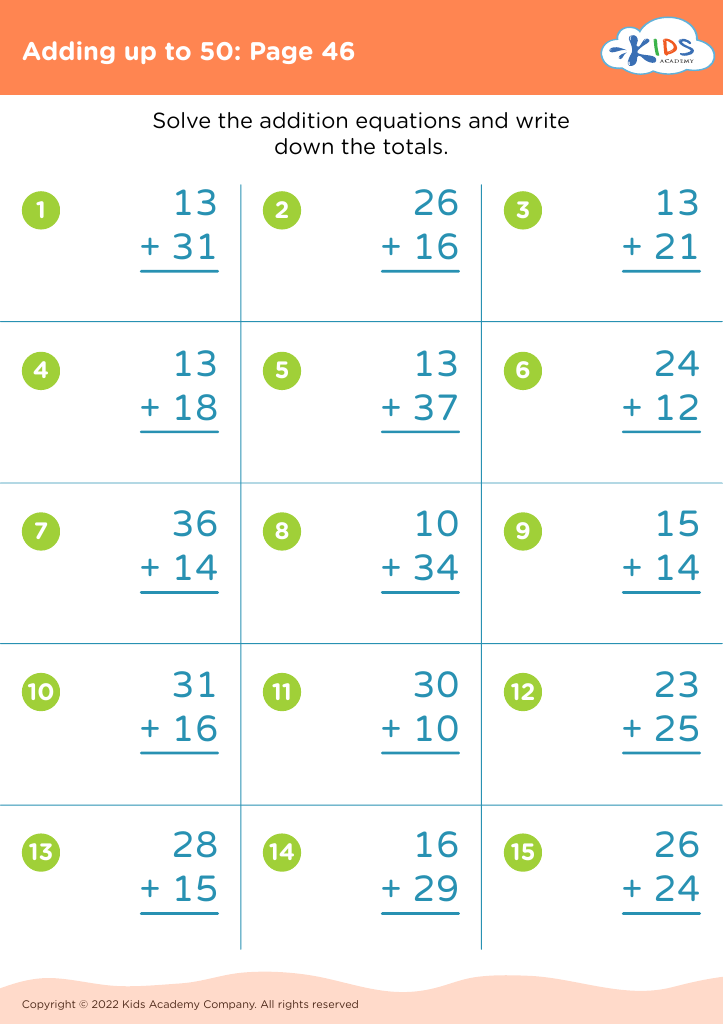
Adding up to 50: Page 46

Adding up to 50: Page 46

Adding up to 50: Page 46
Worksheet
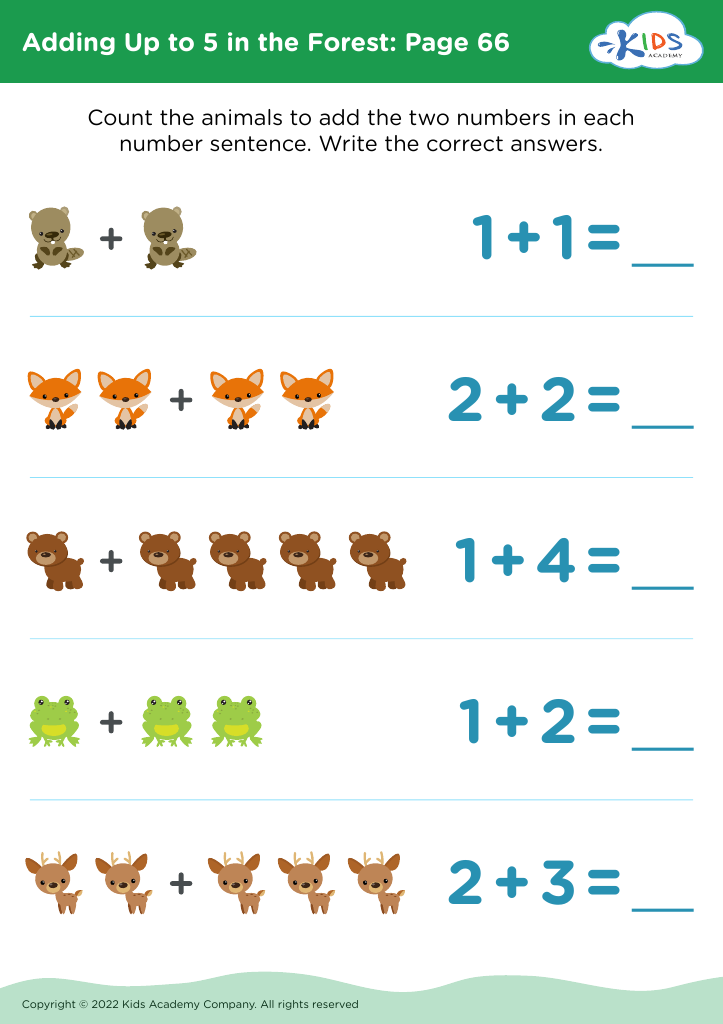
Adding Up to 5 in the Forest: Page 66
Worksheet
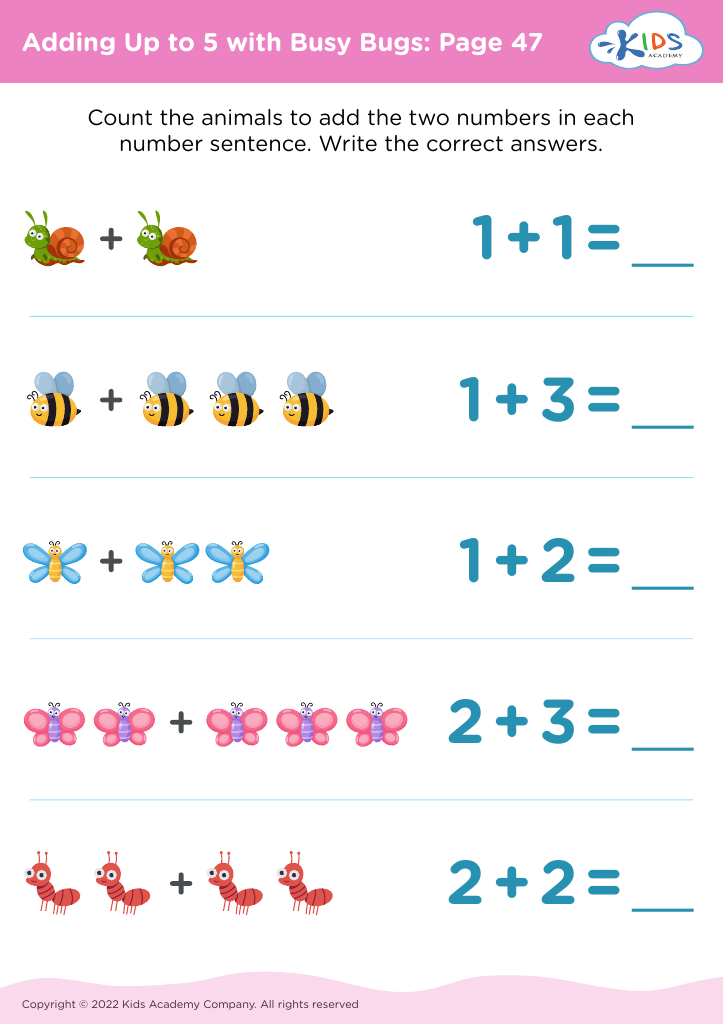
Adding Up to 5 with Busy Bugs: Page 47
Worksheet
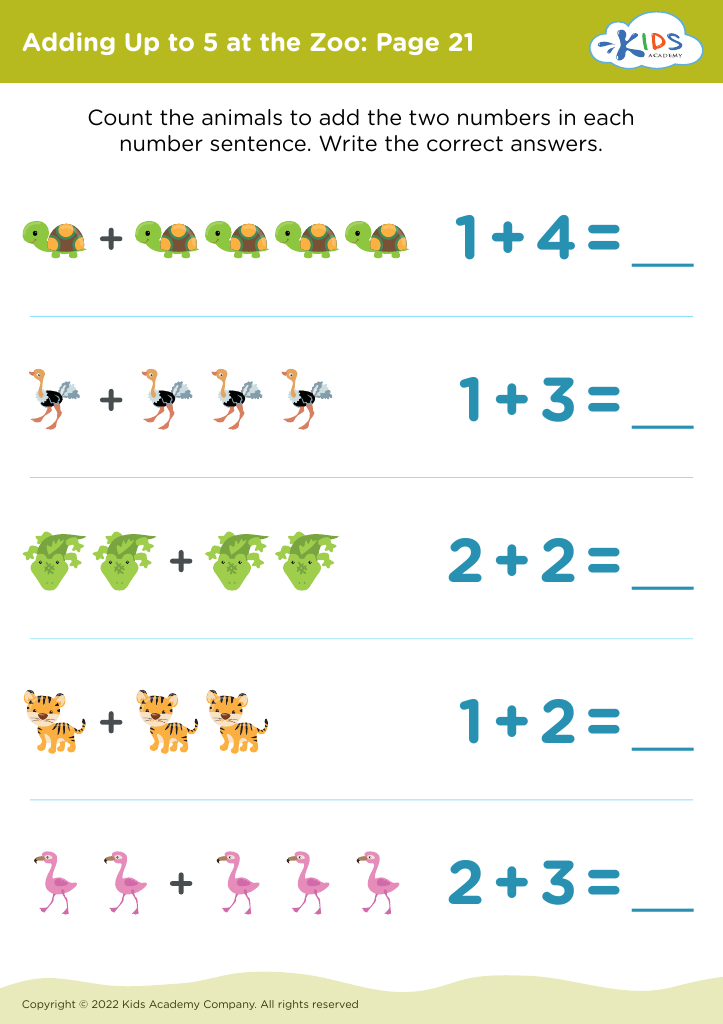
Adding Up to 5 at the Zoo: Page 21
Worksheet
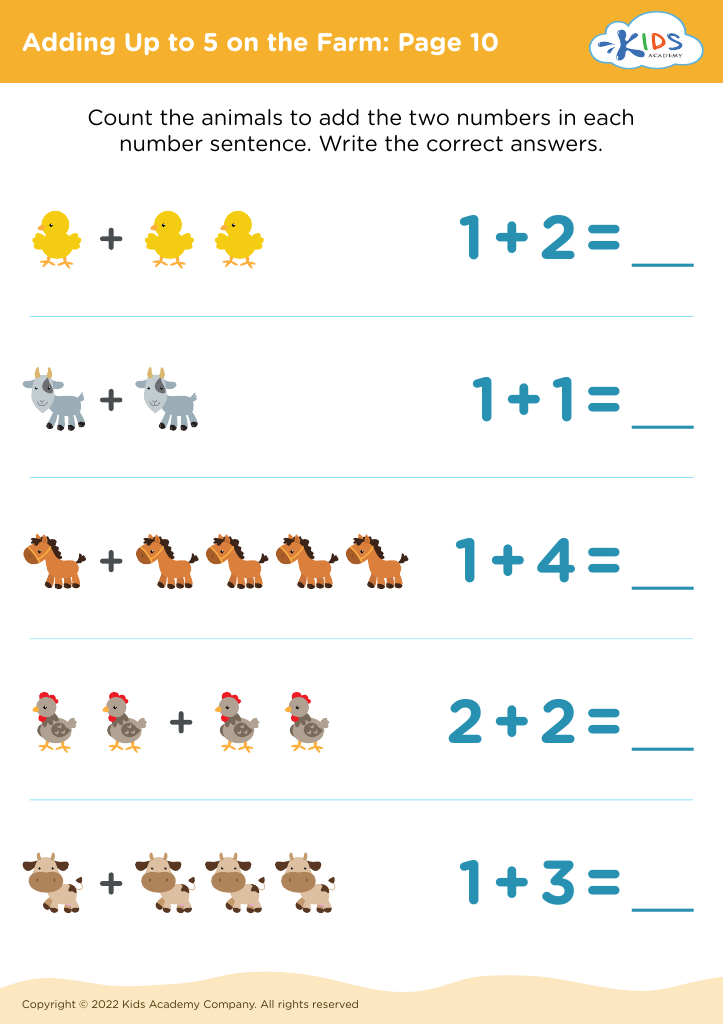
Adding Up to 5 on the Farm: Page 10
Worksheet
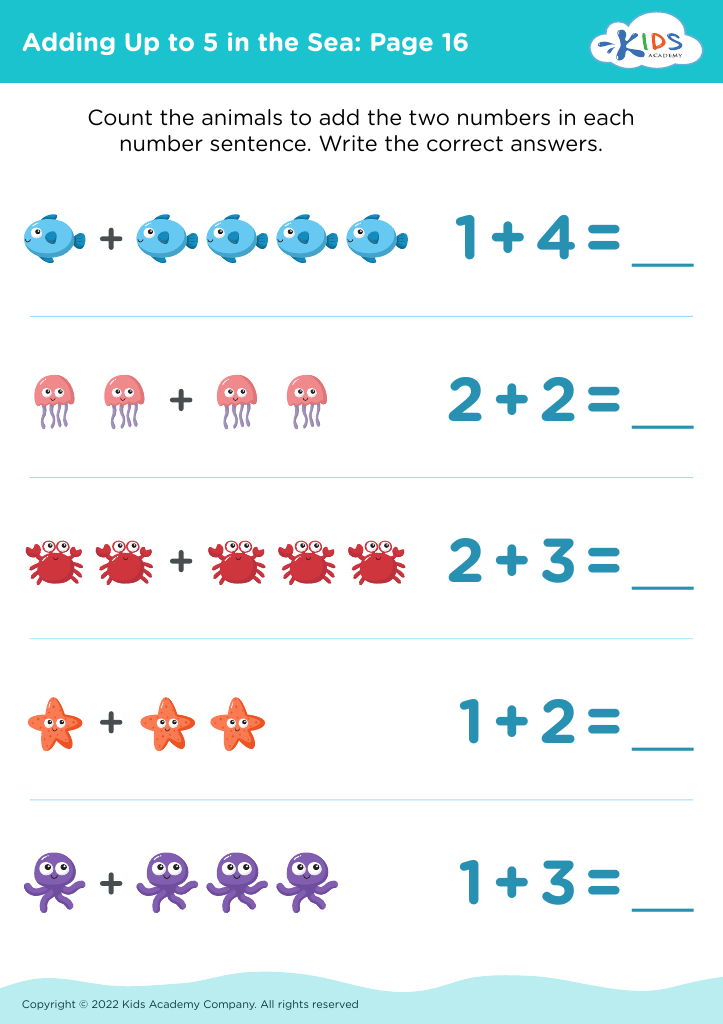
Adding Up to 5 in the Sea: Page 16
Worksheet
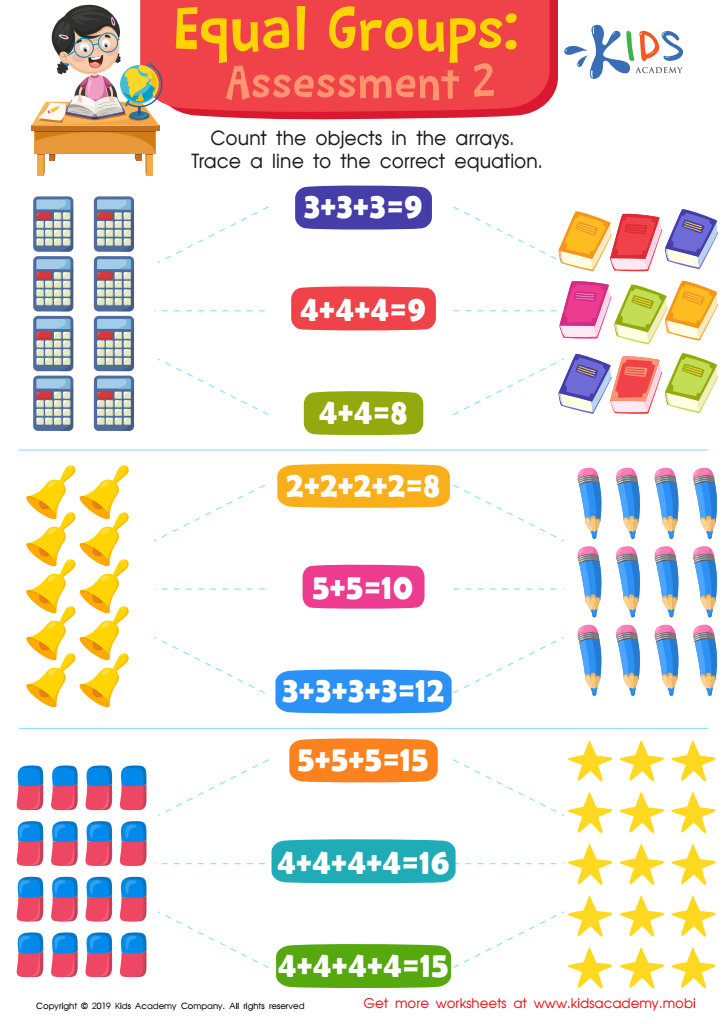
Equal Groups: Assessment 2 Worksheet

Equal Groups: Assessment 2 Worksheet

Get your kids to pay attention to learning with familiar objects, bright colors, and this worksheet. It has six arrays - ask kids to identify them and count the objects. Then, help them trace a line to the correct equation.
Equal Groups: Assessment 2 Worksheet

Worksheet
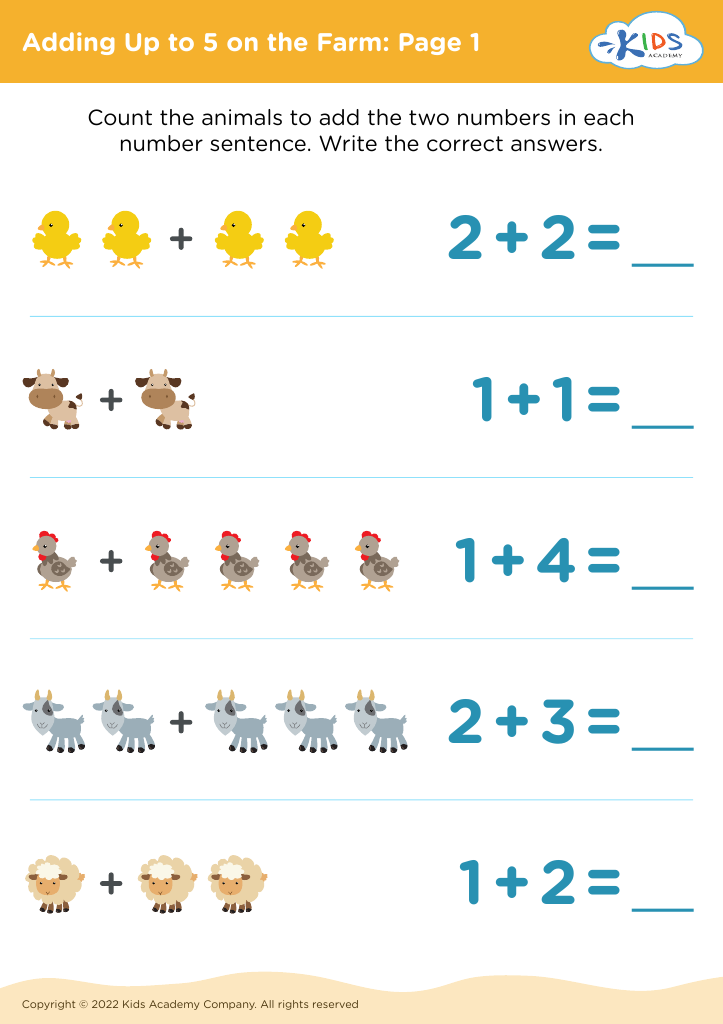
Adding Up to 5 on the Farm: Page 1
Worksheet


Counting practice, addition, and subtraction are foundational skills for children ages 5-8, critical for their cognitive and academic development. Parents and teachers should care deeply about these early math skills because they form the basis for future learning in increasingly complex mathematical concepts.

Firstly, counting helps children understand the value of numbers and their order. This comprehension is fundamental as it sets the stage for recognizing patterns, which are essential for all kinds of problem-solving tasks later in life. Addition and subtraction, as extensions of counting, introduce the principles of arithmetic, aiding in the development of logical thinking and analytical skills.

Moreover, engaging with these elementary math skills fosters a positive attitude towards learning. Success in early math can boost a child’s confidence and spark interest in STEM (Science, Technology, Engineering, and Mathematics) fields.

Also, early math skills are predictive of later academic achievement. Research has shown that proficiency in these areas during early education correlates with higher performance in various subjects as children progress through school. By prioritizing counting practice, addition, and subtraction, parents and teachers are making a tangible investment in a child’s educational future, ensuring that they become proficient problem solvers and critical thinkers, which are invaluable skills in our complex and ever-changing world.